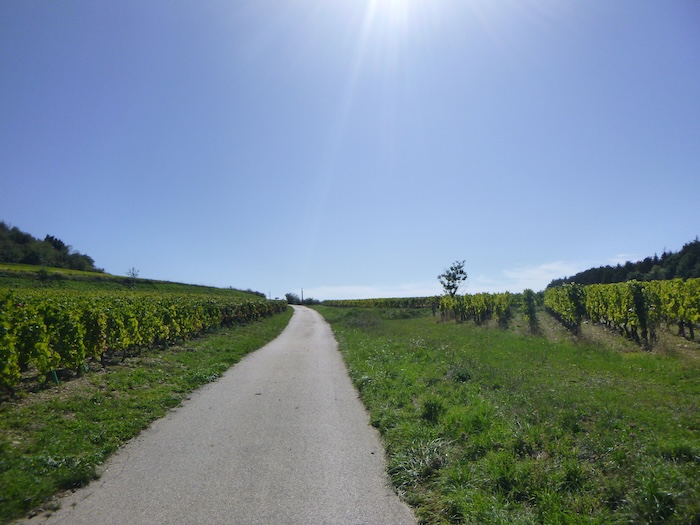
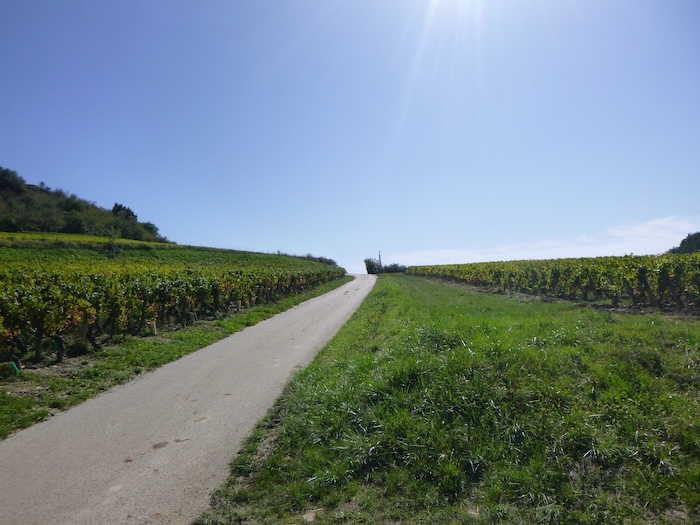
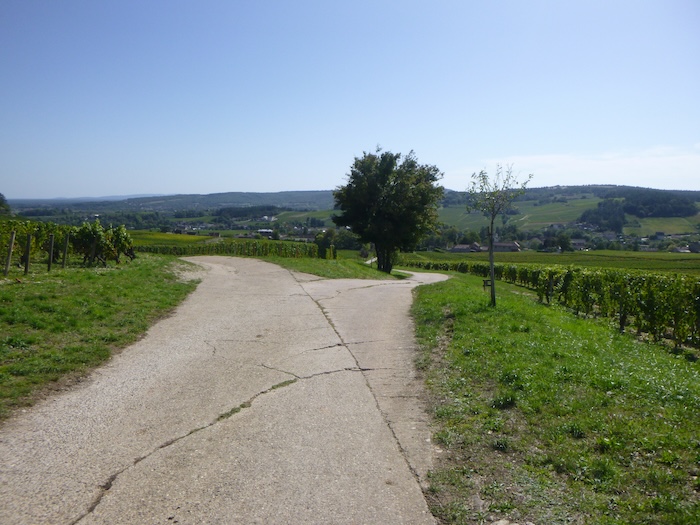
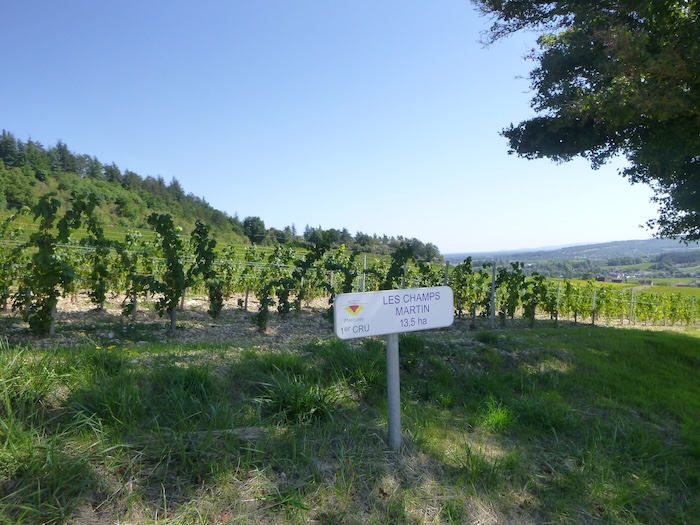
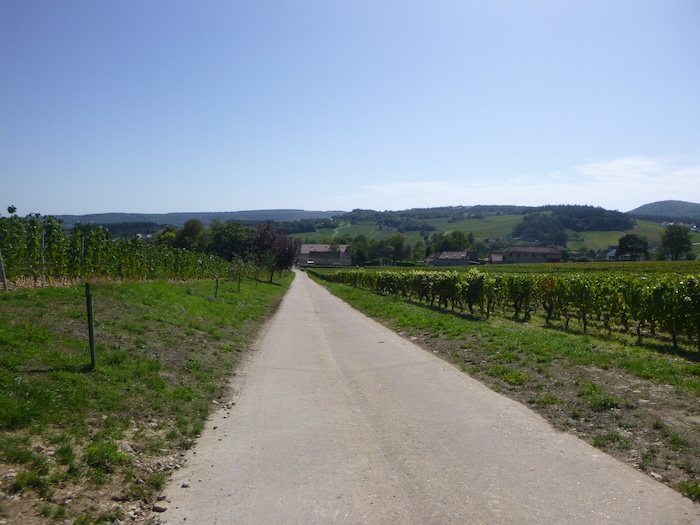
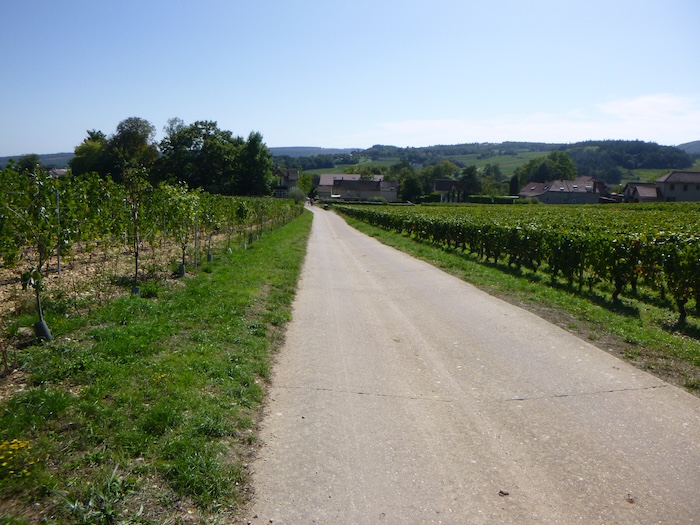
In the vineyards of the Côte chalonnaise
DIDIER HEUMANN, ANDREAS PAPASAVVAS
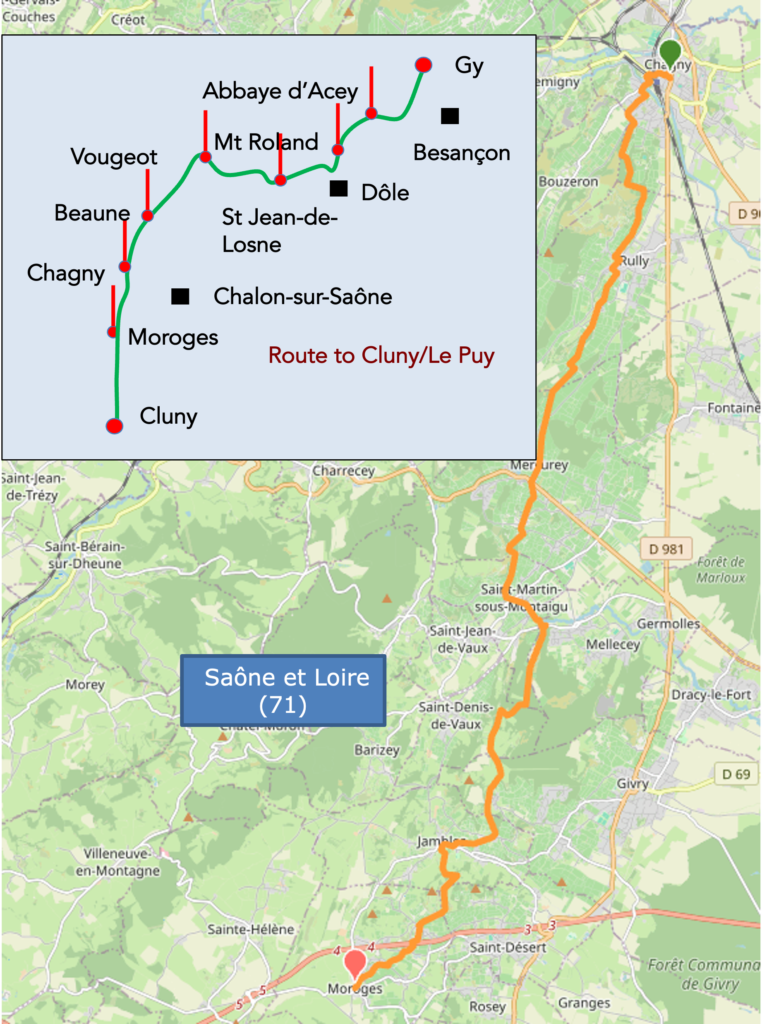
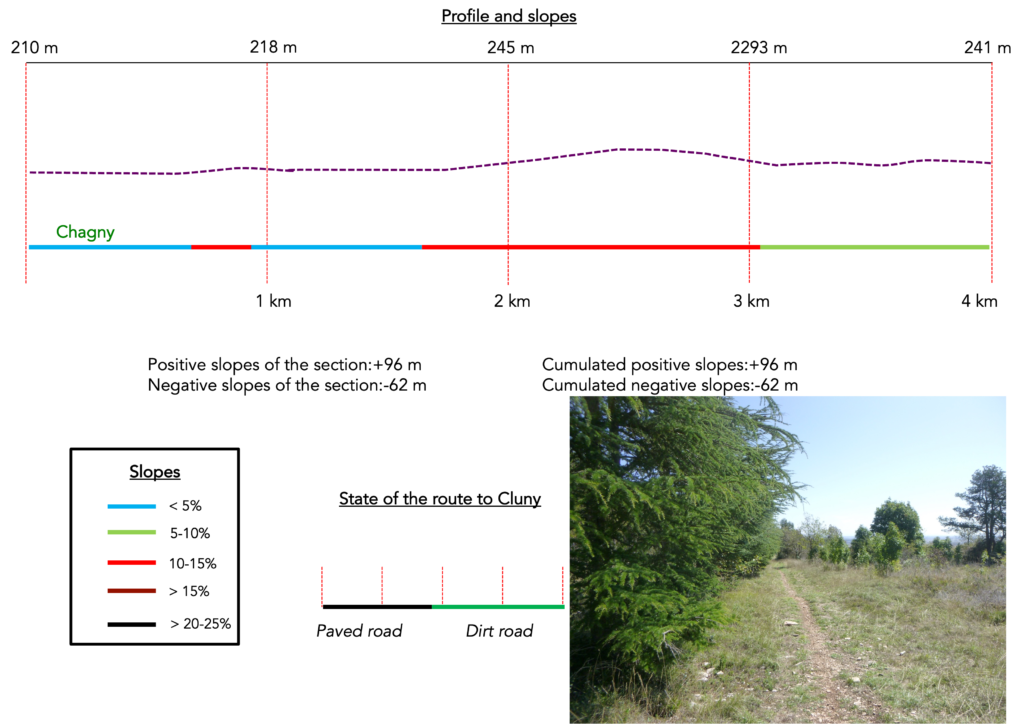
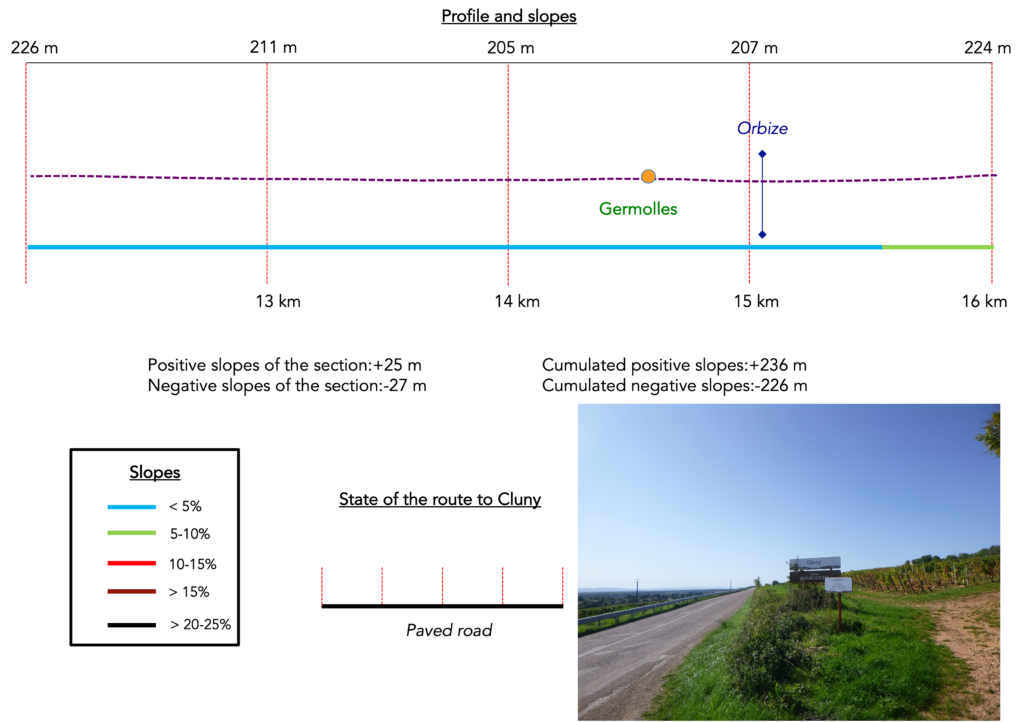
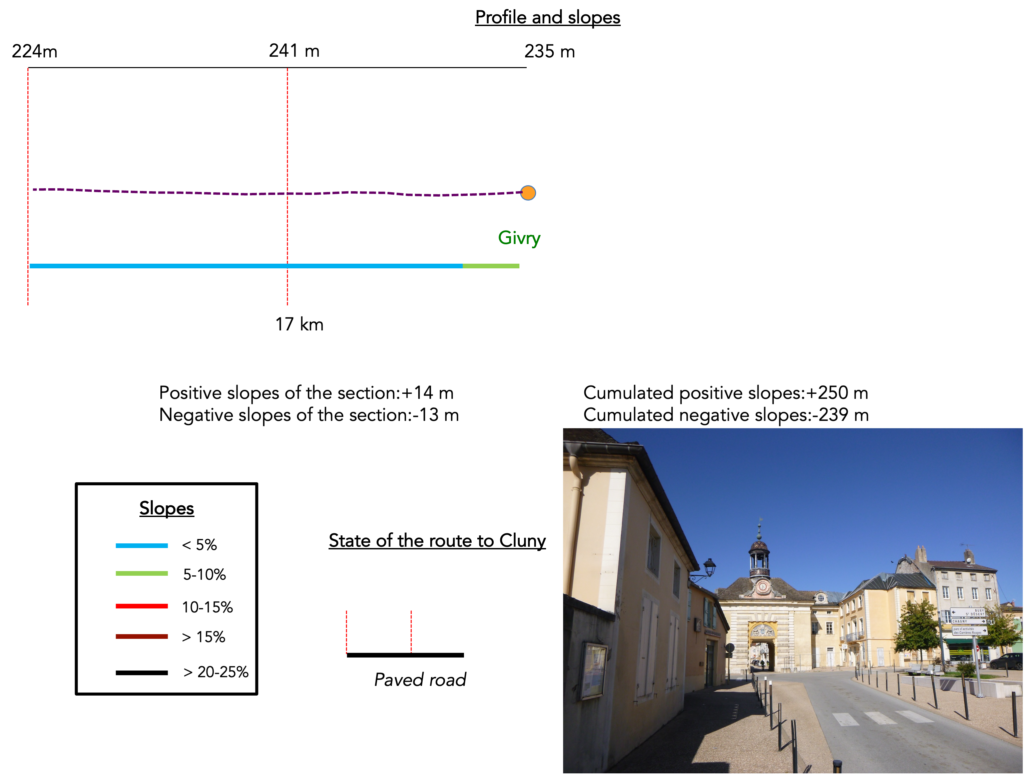
We divided the course into several sections to make it easier to see. For each section, the maps show the course, the slopes found on the course, and the state of the route (paved or dirt roads). The courses were drawn on the « Wikilocs » platform. Today, it is no longer necessary to walk around with detailed maps in your pocket or bag. If you have a mobile phone or tablet, you can easily follow routes live.
For this stage, here is the link:
https://fr.wikiloc.com/itineraires-randonnee/de-chagny-a-givry-jusqua-marcurey-sur-le-chemin-de-compostelle-puis-sur-la-route-jusqua-givry-232096799
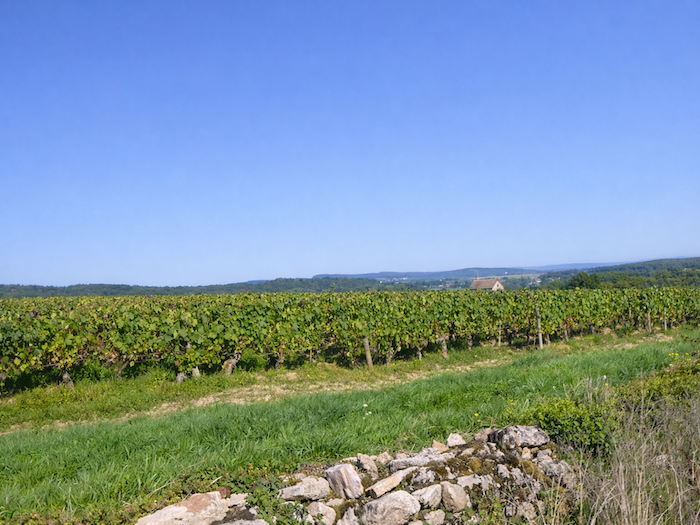
Between the Côte de Beaune and the Mâconnais stretches the Côte chalonnaise, a gentle landscape of rolling hills, meadows and vineyards that seems to breathe a certain balance, a distinctly Burgundian sense of measure. Here, winding roads lead from village to village, crossing small valleys where the vines alternate with groves and open fields. Less prestigious than its northern neighbors, the Côte chalonnaise charms with its simplicity, its sincerity and the quality of its wines, offering a balance between allure and authenticity that many seek today. The reds, made from Pinot Noir, are supple, refined and delicately fruity, wines meant for sharing, made for the table. The whites, born of Chardonnay, often display admirable freshness and directness, with notes of white flowers, almond and light honey. These are wines that speak plainly, without emphasis, faithful to their limestone soils and to their exposure. Five villages stand out in particular: Bouzeron, the only Burgundy cru dedicated to Aligoté; Rully, elegant and aromatic, whose whites sometimes rival those of the Côte de Beaune; Mercurey, the largest and most renowned, offering deep and powerful reds; Givry, cherished by King Henry IV, with fine tannins and vibrant fruit; and Montagny, all finesse, where Chardonnay expresses itself with freshness and minerality. These vineyards, located in the Saône et Loire department, fully belong to the great Burgundian family. They are even among its most human expressions, less monumental than the Grands Crus, yet just as deeply rooted.
You might feel as though you have traveled across an immense vineyard in its entirety. Yet this is only part of the truth. For Burgundy, despite the radiant fame of its crus, remains a vineyard of modest size, about 30,000 hectares only, where Bordeaux counts more than 110,000. And yet what intensity within this modesty. Each acre is like a finely cut jewel, giving birth to wines whose reputation has long extended beyond French borders. Its annual production, 1.5 million hectoliters, barely 3 percent of national production, seems almost negligible in light of its universal aura. Burgundy nevertheless remains the most expensive region for lovers of great wines.
When you reach Mercurey, the route does not simply run straight ahead, it plays with the contours of the land. The route climbs the hill of Les Touches, briefly joins the GR7 trail, before descending toward Saint Martin sous Montaigu. There it gathers momentum again, climbing once more between forests and vineyards, sometimes at daunting gradients, then easing down toward Russilly. After this trial, the path grows gentler, turning into a series of softer rolling rises and falls that undulate as far as Moroges. But at this stage of the journey, even the Friends of Compostela offer a word of wisdom: why not leave the marked way after Russilly and join the Voie Verte near Saint Désert, south of Givry. After all, if the aim is not to set yourself a challenge but to simplify your route, why not reach this cycle path already from Mercurey. In doing so, you avoid many detours and climbs, and allow yourself to be carried toward Givry, where the Voie Verte (Greenway) also runs. It must also be said plainly: do not imagine that the Camino de Santiago follows a historical medieval route patiently trodden for centuries. Not at all, or only very rarely. The organizers of these itineraries have above all worked with what already exists, the marked trails and the major hiking routes already laid out. Here, the GR7 trail forms the backbone of the Burgundian itinerary. If you choose to remain faithful to the hills, it will be your own adventure, considerably more demanding. But then be doubly attentive, for it is so easy to lose your way on these capricious paths of Burgundy or Franche Comté when no one is there to guide you. As for us, we will not go to Moroges. In Mercurey, we will cut across by the roads to reach Givry, where the cycle path runs.
How do pilgrims plan their route. Some imagine that it is enough simply to follow the signs. But you will discover at your expense that the signage is often inadequate. Others use the guides available online, which are also frequently too basic. Others prefer GPS, provided they have imported onto their phone the Compostela maps of the region. By using this method, if you are experienced with GPS, you will not lose your way, even if at times the route suggested does not correspond exactly to that indicated by the scallop shell markers. Yet you will arrive safely at the end of the stage. In this matter, what is considered the official site is the European route of the Camino de Santiago. In today’s stage, we will therefore not follow the proposed itinerary. It is shown here for those who would like to take it.
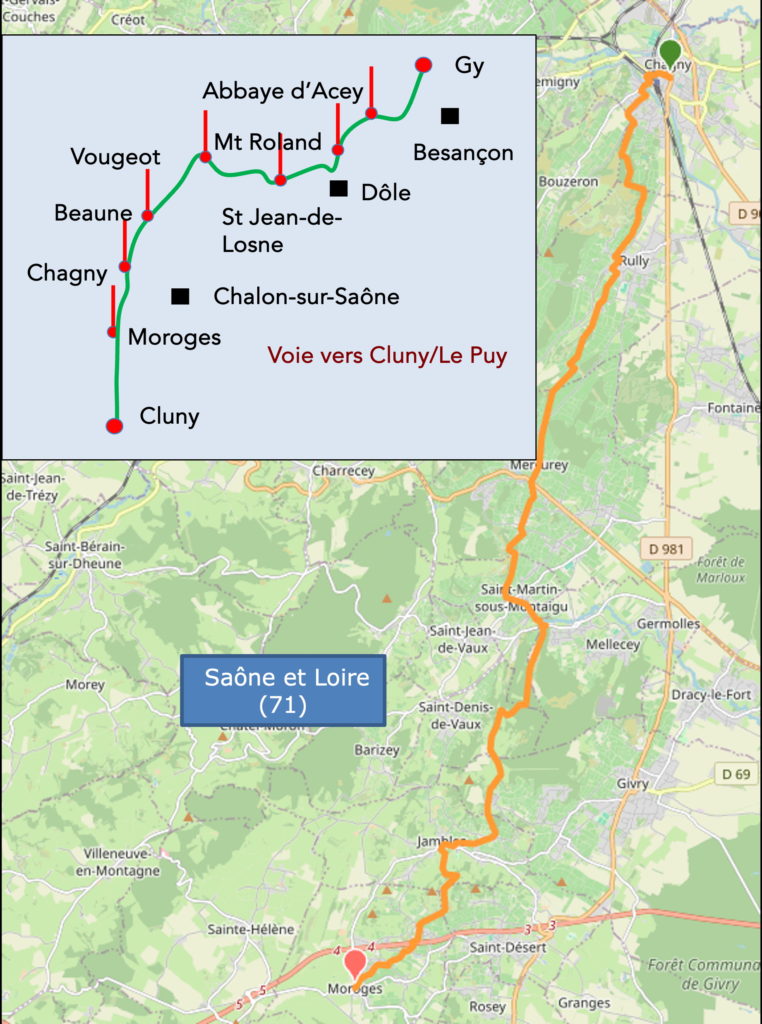
With GPS, it is even safer to use the Wikiloc maps that we make available, which describe the current marked route. But not all pilgrims are comfortable with this kind of approach, which for some distorts the spirit of the way. So, you may simply follow us and read along. Every junction of the route that is difficult to decipher has been indicated, to prevent you from losing your way.
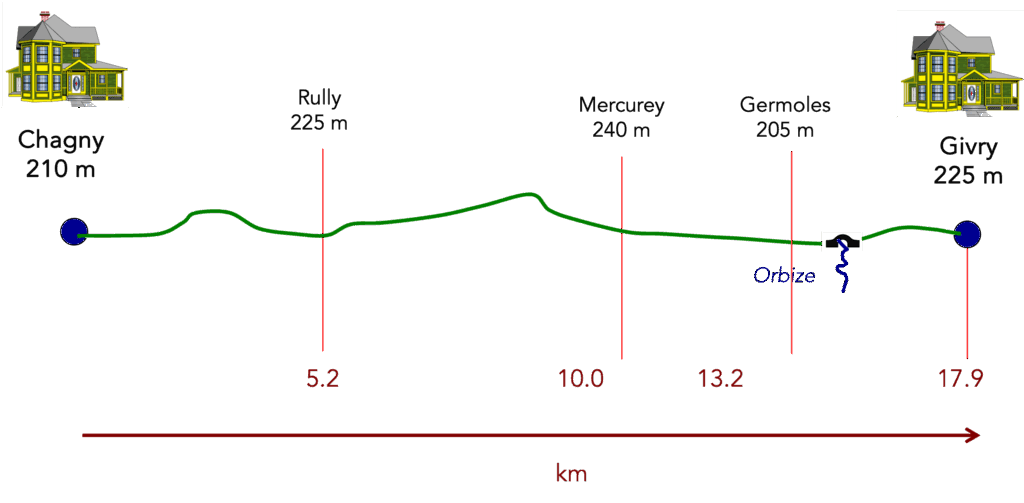
Difficulty level: The journey presents reasonable elevation changes (+250 meters/- 239 meters), if you follow the proposed itinerary. There are nevertheless two hills to climb, the one leading to the Domaine de la Folie, then the long ascent of the Plateau de Tartignats. If you follow the Camino de Santiago as far as Moroges, it will be more demanding, with greater elevation changes (+655 meters/-534 meters).
State of the route: Today’s stage includes considerably more asphalt than dirt track:
- Paved roads: 13.0 km
- Dirt roads: 4.9 km
Sometimes, for reasons of logistics or housing possibilities, these stages mix routes operated on different days, having passed several times on these routes. From then on, the skies, the rain, or the seasons can vary. But, generally this is not the case, and in fact this does not change the description of the course.
It is very difficult to specify with certainty the incline of the slopes, whatever the system you use.
For those seeking « true elevations » and enthusiasts of genuine altimetric challenges, carefully review the information on mileage at the beginning of the guide.

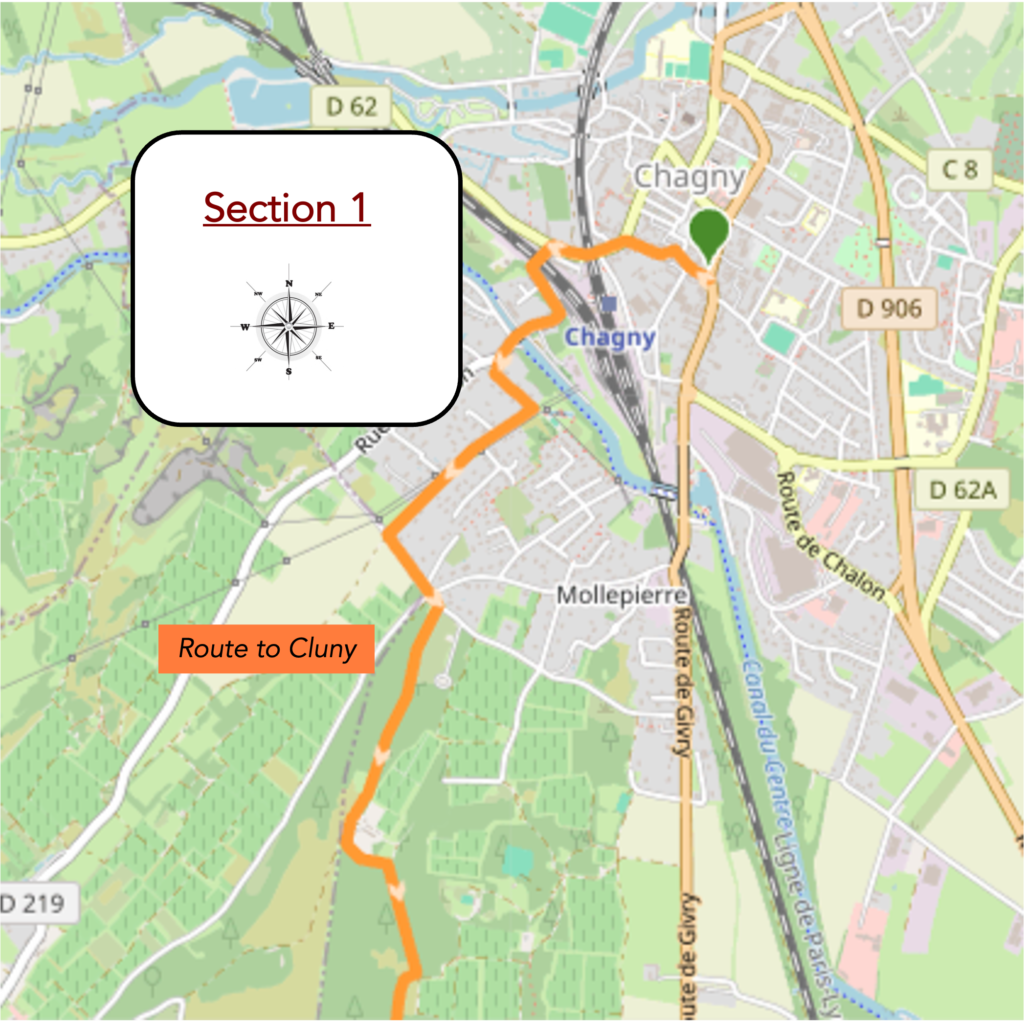
Section 1: Passing by the Domaine de la Folie
Overview of the route’s challenges: a route with, at times, marked gradients, both uphill and downhill.
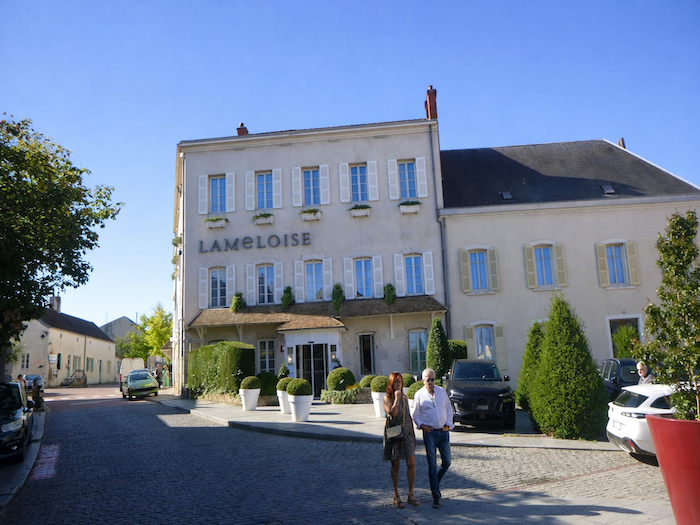
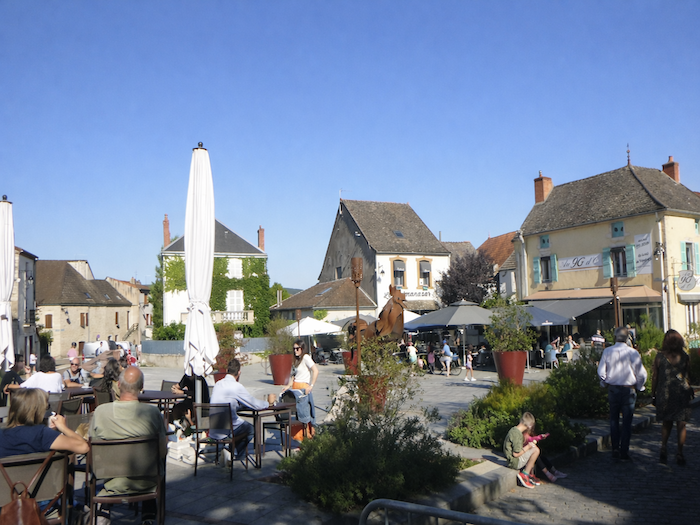
| In the center of Chagny, there is neither arrow nor marker to indicate the direction of the Camino de Santiago. It is an absence that has become customary, as if the pilgrim were expected to rely here on intuition more than on painted signs. To avoid losing your way, it is best to set out from Maison Lameloise, a gastronomic beacon and a radiant symbol of the town, whose reputation reaches far beyond Burgundy. From there, you must cross the vast and luminous Place d’Armes, the beating heart of Chagny. |
 |
 |
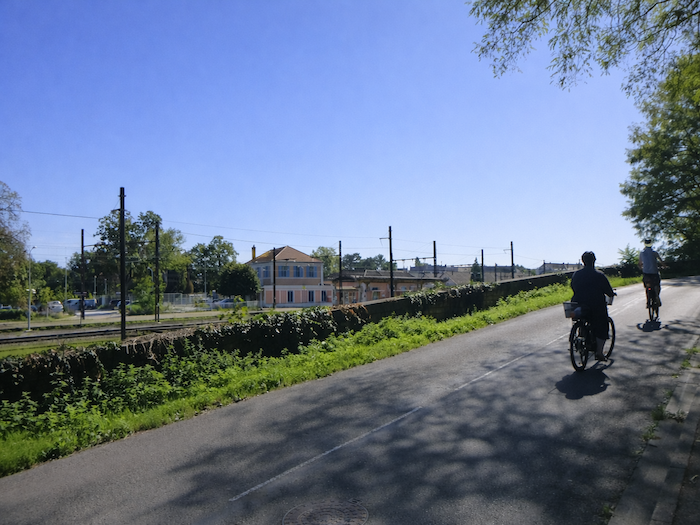
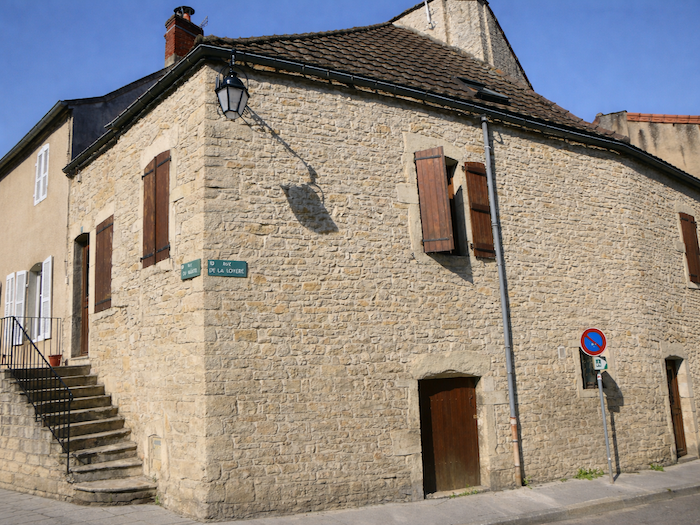
| A little farther on, to the left, Rue de la Loyère opens before you. It guides your steps toward the cycle path, whose gentle momentum carries you toward Rue de la Boutière, the thoroughfare officially known as departmental road D62. The gray ribbon, lined with houses, stretches ahead like a discreet invitation to leave the urban bustle behind for the open countryside. |
 |
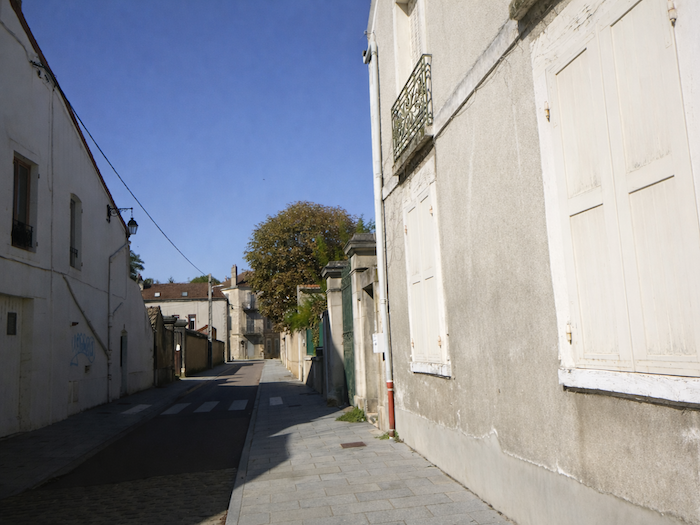 |
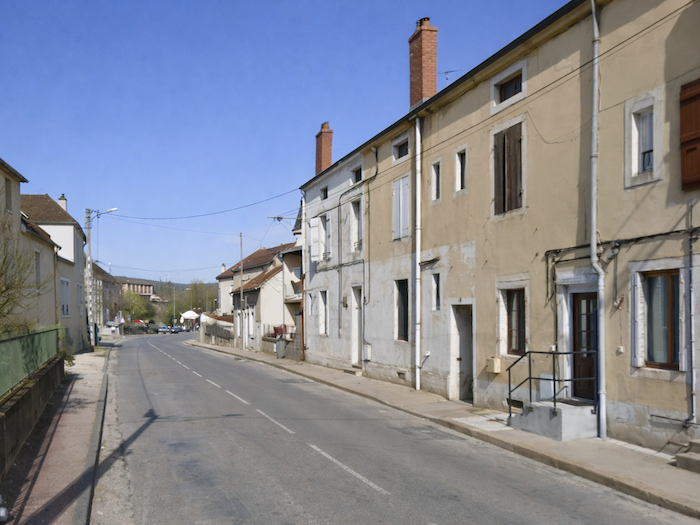
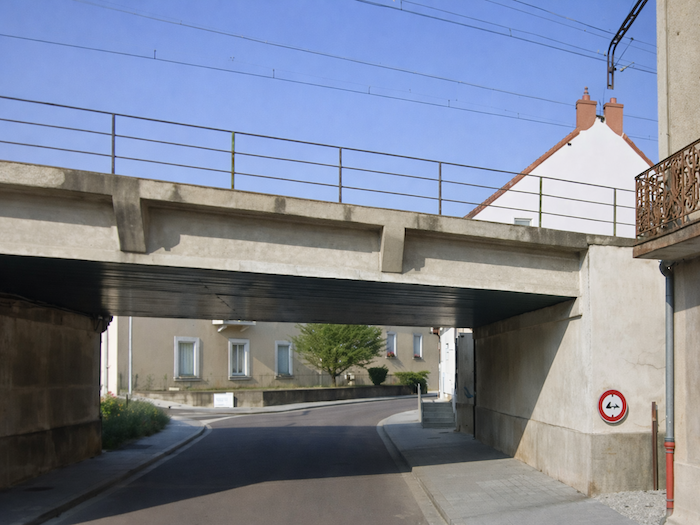
| The departmental road, unruffled, soon comes to cross the railway line. |
 |
 |
At the end of the street, an intersection opens like a crossroads. The route, faithful to its guiding line, follows the cycle path here as it branches toward the D219, Rue du Pont de Bouzeron. In that instant, you leave behind the town center, its old stones and lively squares, and turn toward calmer horizons.
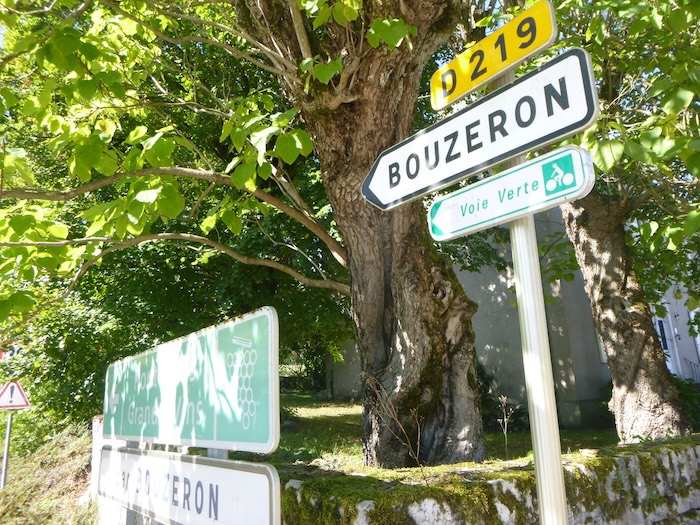
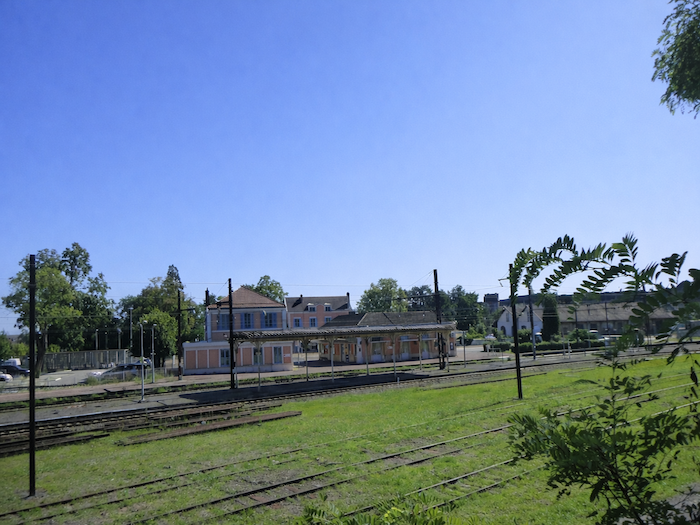
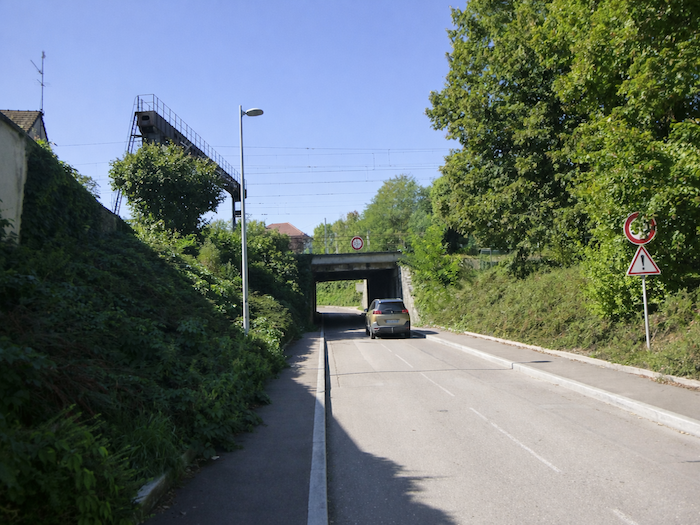
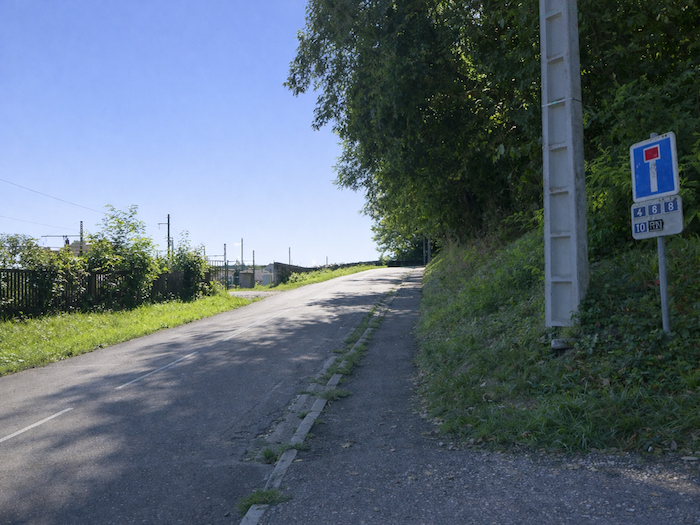
| The road, straight and resolute, crosses the railway again, then climbs above the station. From up there, your gaze takes in both the tracks stretching into the distance and the peaceful outline of the small town. It is a suspended passage, like a breath between two worlds, that of urban movement and that of meditative walking. |
 |
 |
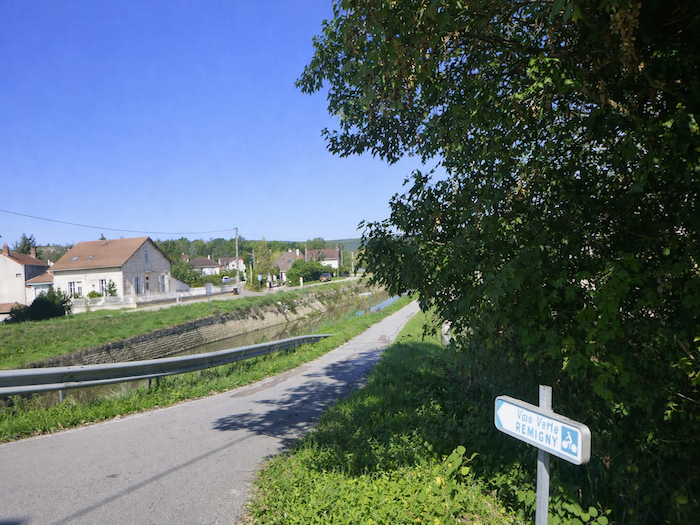
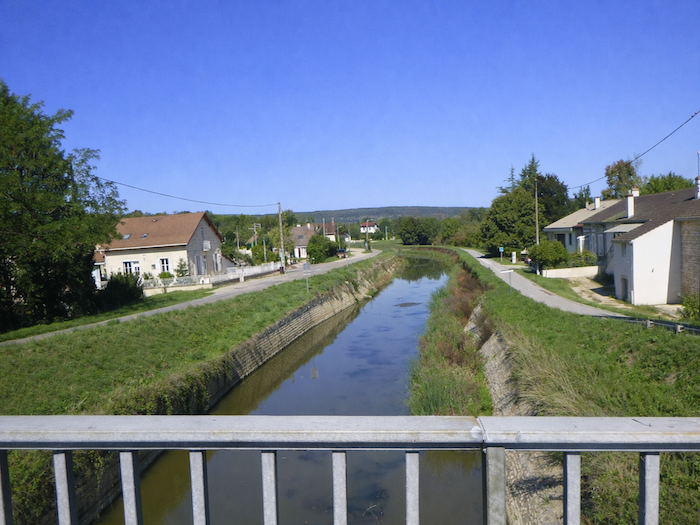
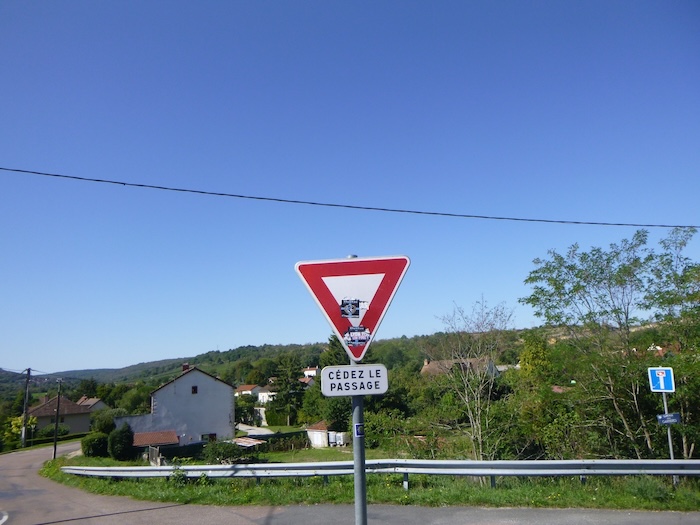
| Soon, the Canal du Centre accompanies your steps. The road follows its quiet course for a moment before crossing it on the Pont du Bouzeron. The temptation is strong to follow the cycle path that runs under the arch, gliding along the calm water. But that would be a lure, a false route, because the pilgrim’s route does not follow the canal, it turns away from it, faithful to its own line. |
 |
 |
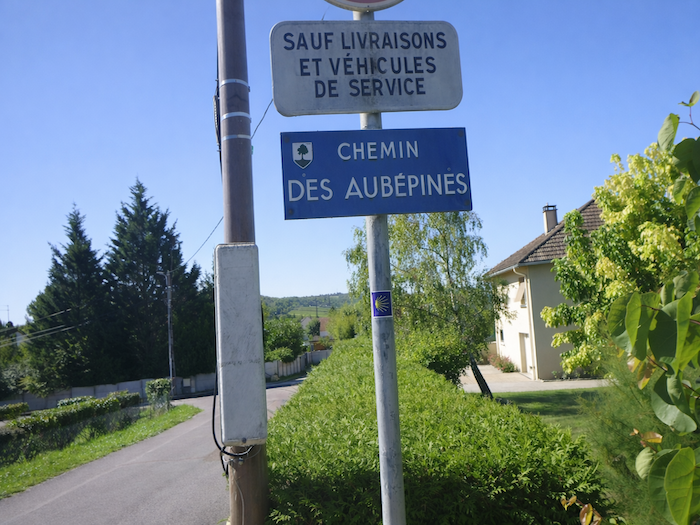
| Beyond the bridge, the itinerary takes on the rural name Chemin des Aubépines. There, at last, the arrows of the Camino de Santiago resume their role, reassuring and true. Under their sign, the pilgrim recovers the certainty of walking in the right direction. |
 |
 |
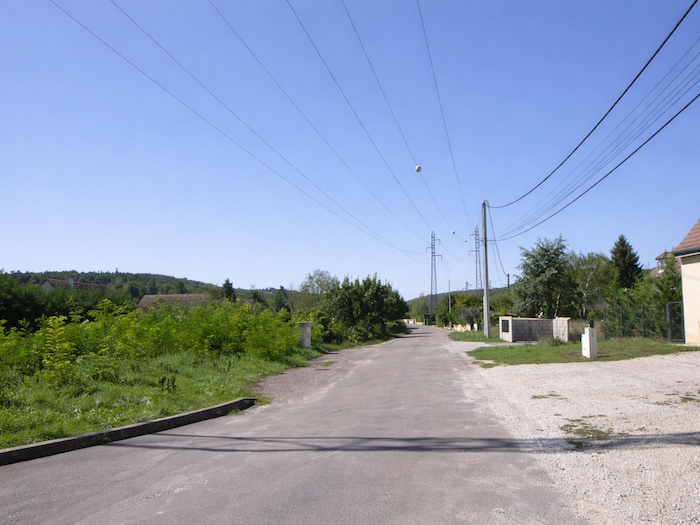
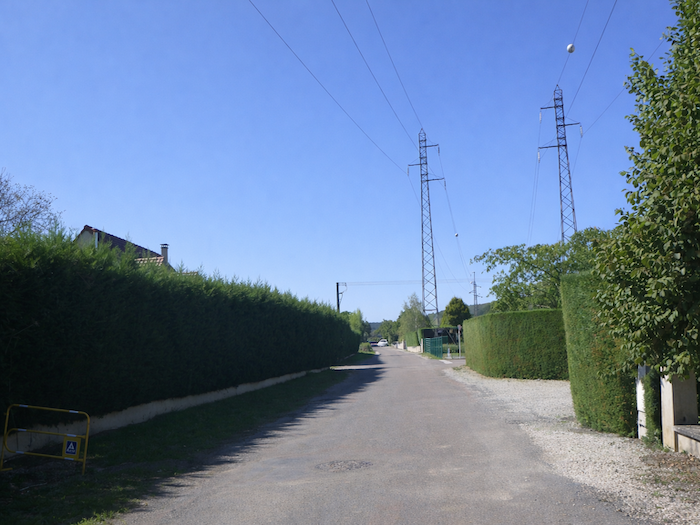
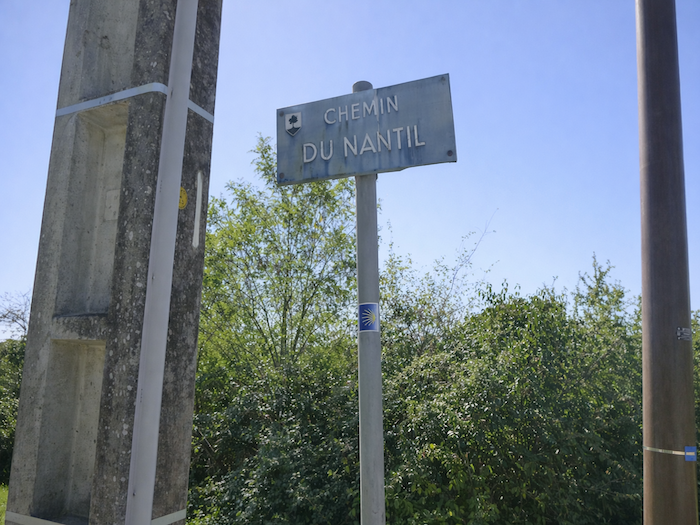
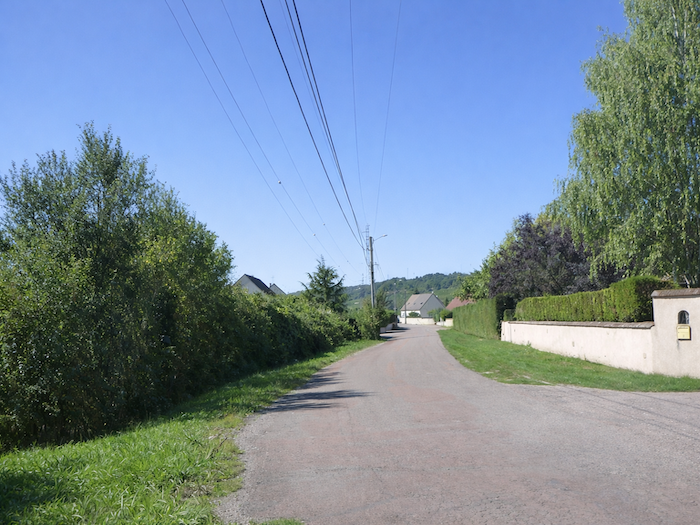
| Shortly afterward, the route turns onto Chemin de Nantil, where a poorly oriented scallop shell seems intent on misleading the distracted walker. Yet the way rises gently, bordered by housing developments aligned with care, with thuja hedges trimmed like green ramparts. |
 |
 |
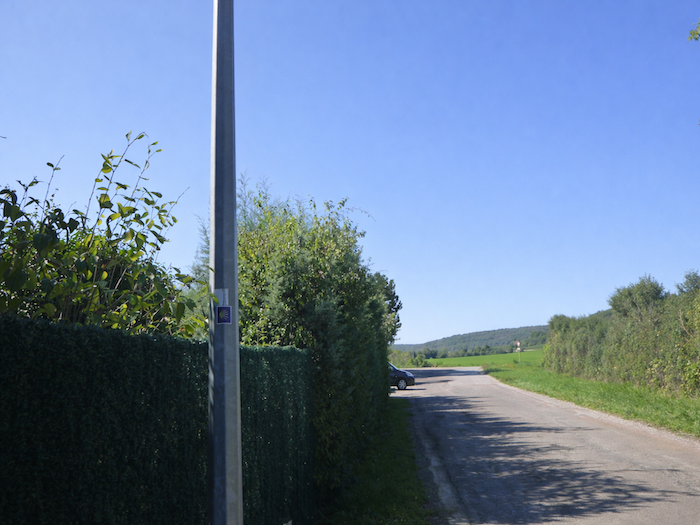
| At the end of this street, the line turns left and joins Rue des Croisées. Here, the scallop shell, correctly oriented for once, reassures the traveler, it shines like a small light, confirming the chosen direction. |
 |
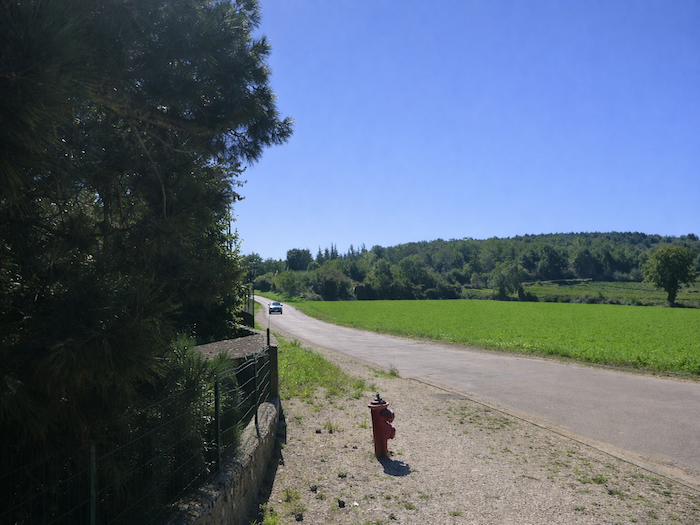 |
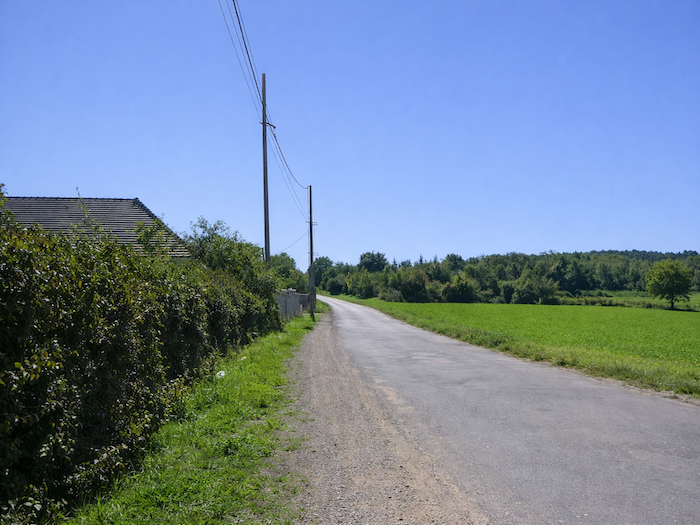
| Then the slope begins to make itself felt. The road tilts upward, rears slightly, and the pilgrim’s breath falls into rhythm with the effort. The road climbs to an intersection, where it briefly joins Route de la Montagne. |
 |
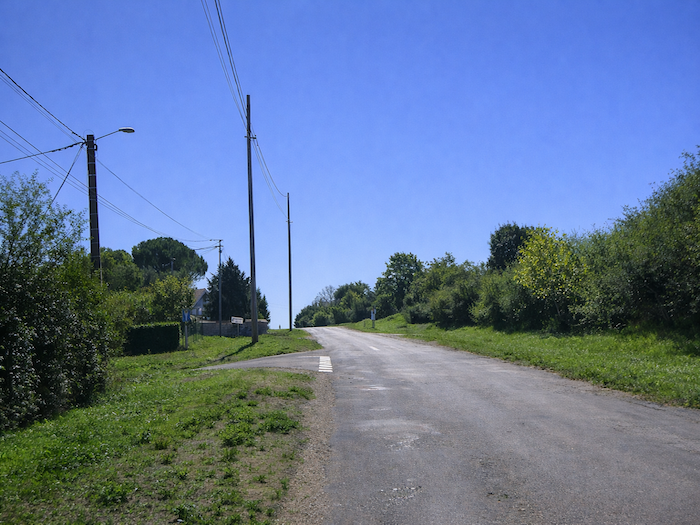 |
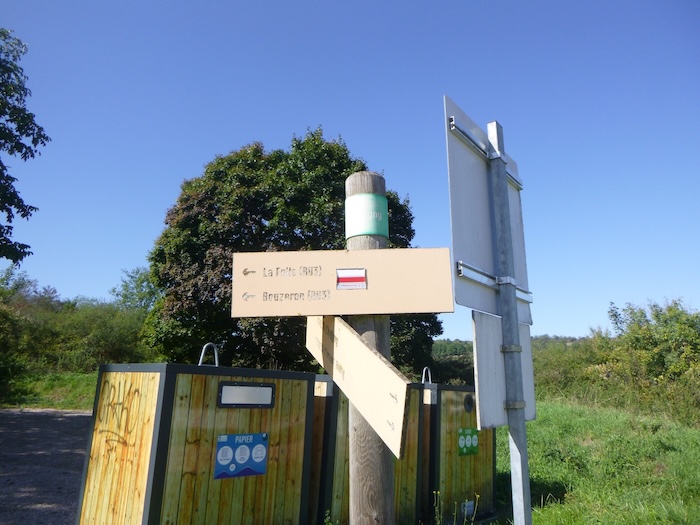
Soon, a surprise awaits the traveler, a rather comical loop, a kind of mischievous roundabout where the signs seem to contradict one another. The scallop shell, faithful but stubborn, points straight ahead, while another marking, that of the GR, tells you to turn right. In that moment, the pilgrim faces a dilemma, follow the call of the symbol or the discipline of the route?
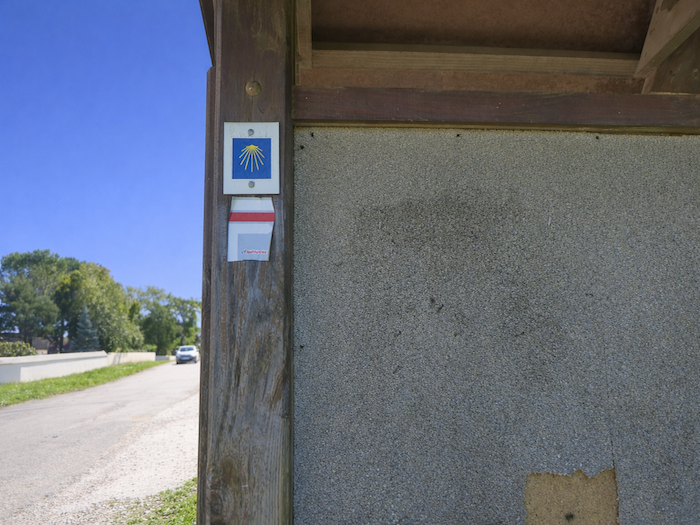
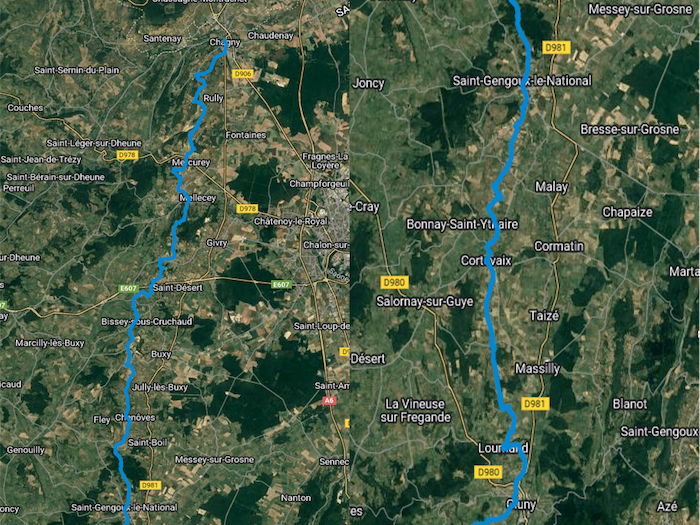
Of course, it is to the right that you must go, in the wake of the red and white GR markings. Why? Because the Camino de Santiago here follows the same route as the GR76, with only rare exceptions. The GR76, a long-distance hiking trail, crosses Burgundy, revealing its hills, vineyards and villages while following the Saône et Loire valley. It is the pilgrim’s discreet and faithful companion, a guiding thread that leads as far as Cluny, a spiritual capital whose echo still resonates in stone and memory.
| From then on, by following the GR signage, the route sets out along Chemin du Réservoir, climbing toward the Domaine de la Folie. The name alone seems to promise the walk an adventure, an ascent toward a place still hidden from view, tucked away at the top of the hill. |
 |
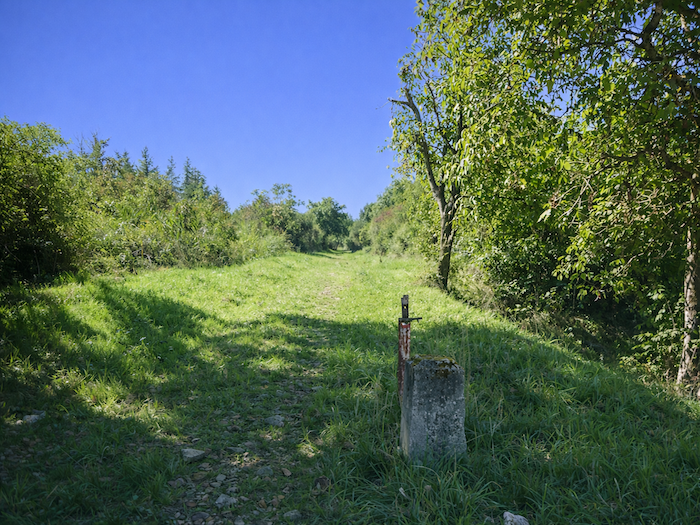 |
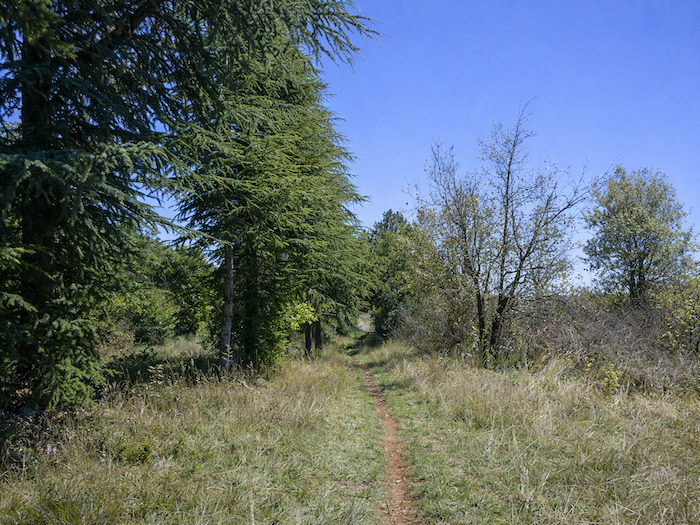
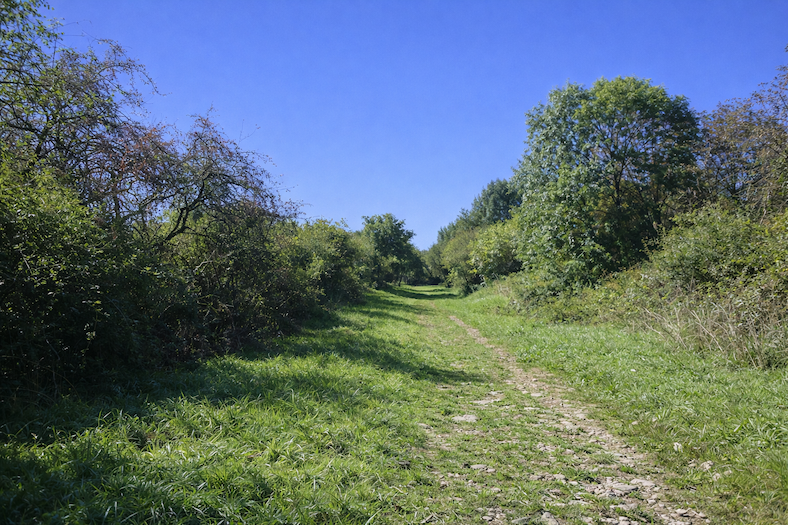
| It is a lovely, wide grassy path that climbs vigorously through the undergrowth. Each step sinks into green growth, and the gradient forces you to lift your breath, as if to feel more keenly the rhythm of the surrounding nature. |
 |
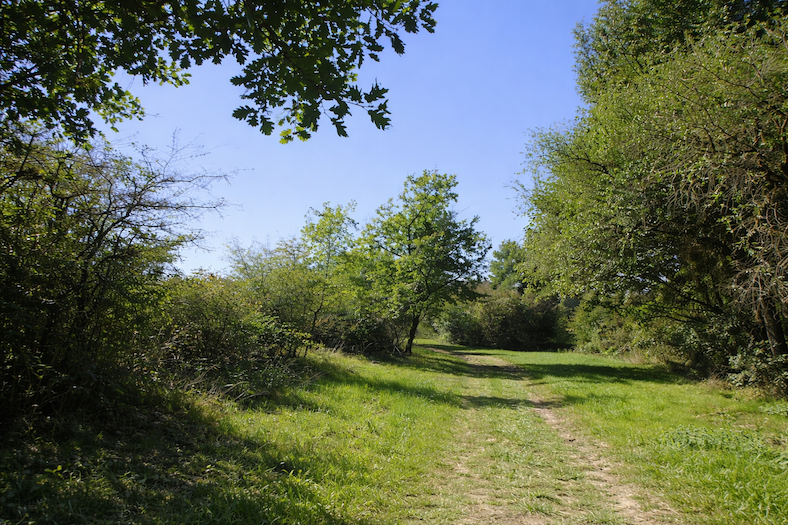 |
| Oaks dominate here, majestic and sturdy, like immobile guardians. Around them, chestnut trees raise their branches, field maples add their more delicate flashes, and a profusion of bushes lines the path, sketching a living hedge. . |
 |
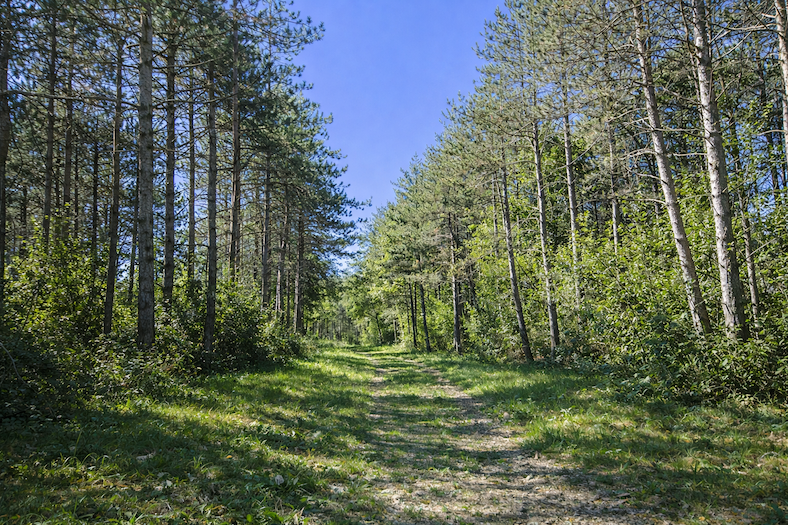 |
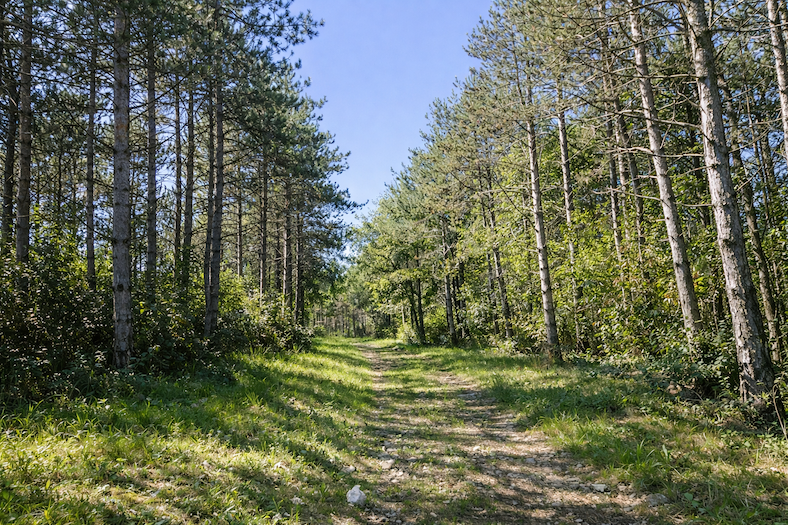
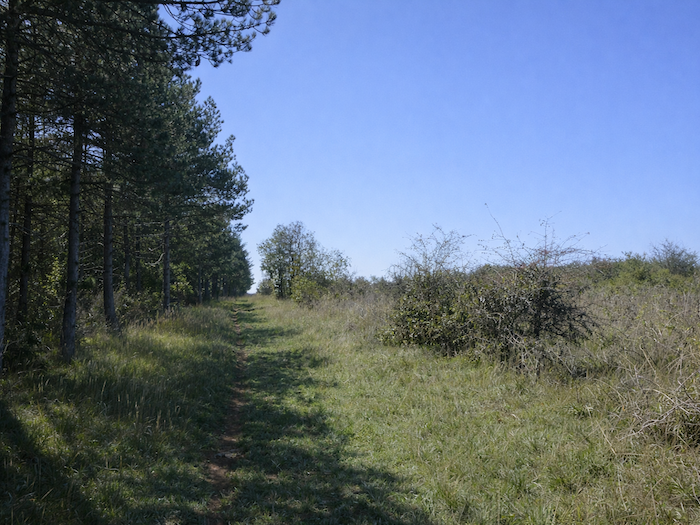
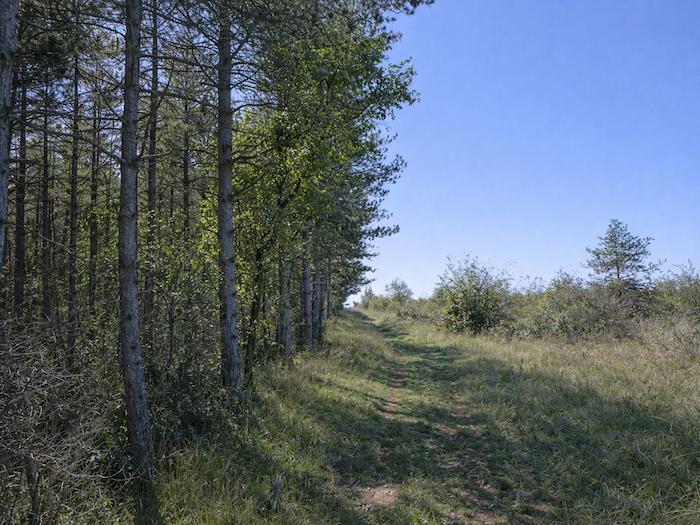
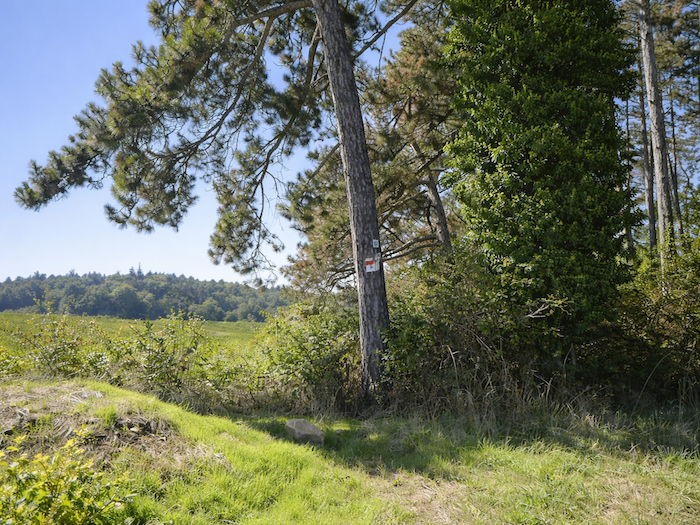
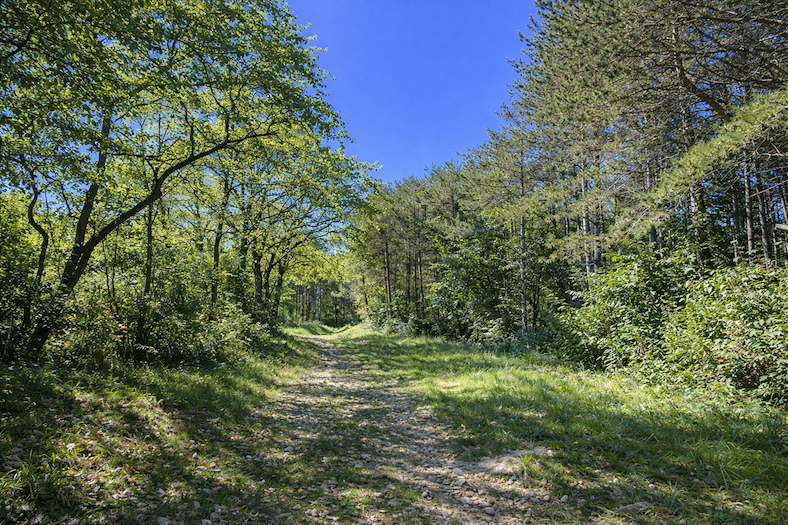
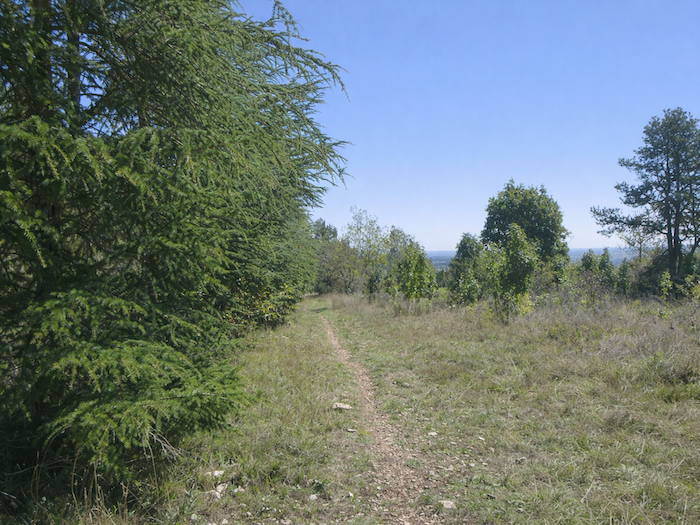
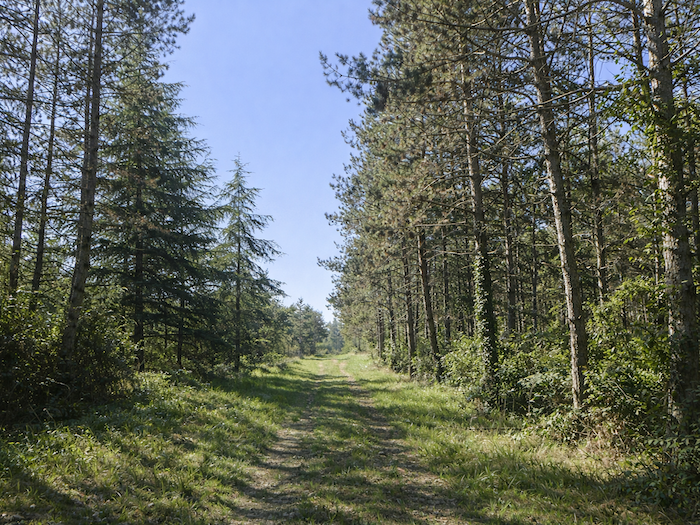
| Higher up, the forest changes its face, conifers take over. Pines, straight and numerous, colonize the slope, sometimes joined by spruces that lift their dark silhouettes. Nature here seems to sing through the diversity of its voices, a vegetal symphony in which each species finds its note. |
|
|
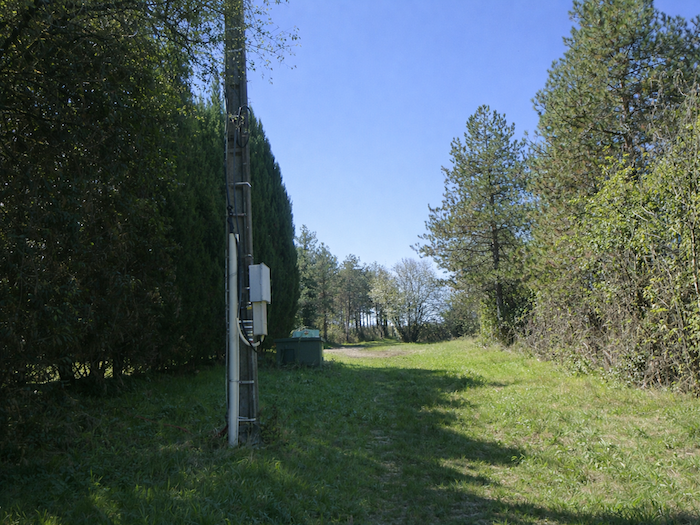
| Higher still, the path emerges into a clearing where a reservoir stands. Its simple, discreet presence marks a pause in the ascent. |
 |
 |
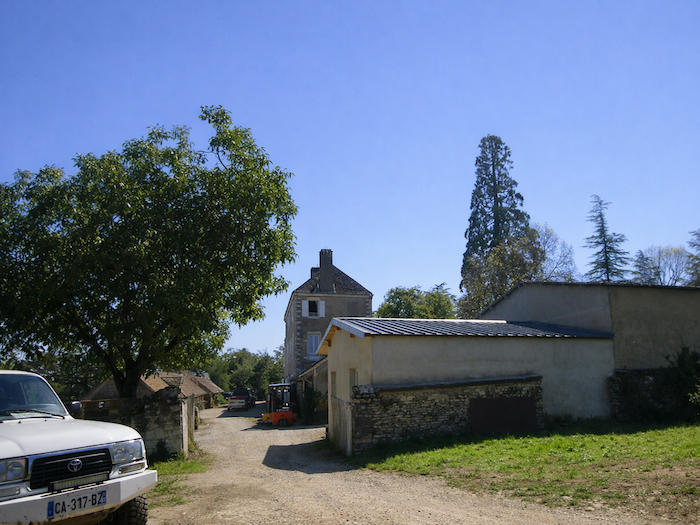
| Seen from a distance, it might pass for a farm, but the truth lies elsewhere, it is a wine estate, for vineyards spread out below the woodland. |
 |
 |
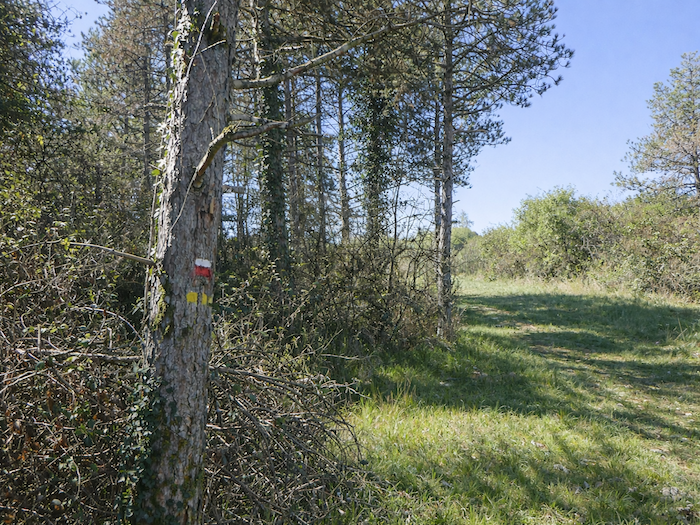
| Here, the scallop shell has disappeared, replaced only by the GR markings. This might seem trivial, but it is not, few people know that the Camino de Santiago and the GR almost entirely coincide in these parts. Even the small guide published by the Friends of Compostela fails to mention it. This is one of those walking mysteries, where you learn that following a sign already means trusting a story larger than yourself. |
 |
|
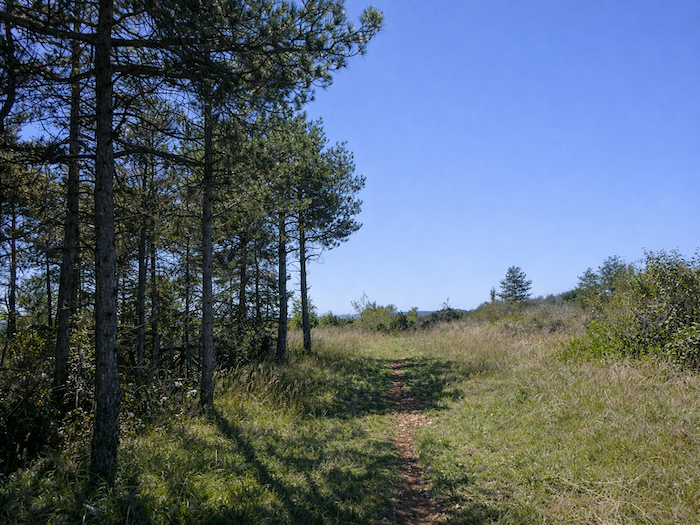
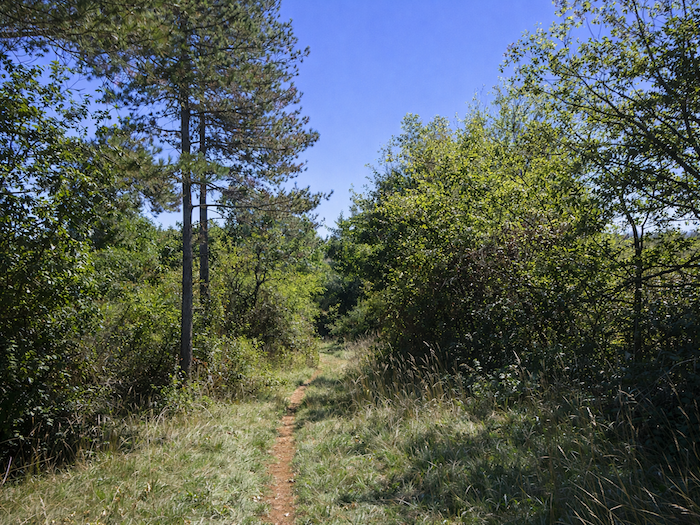
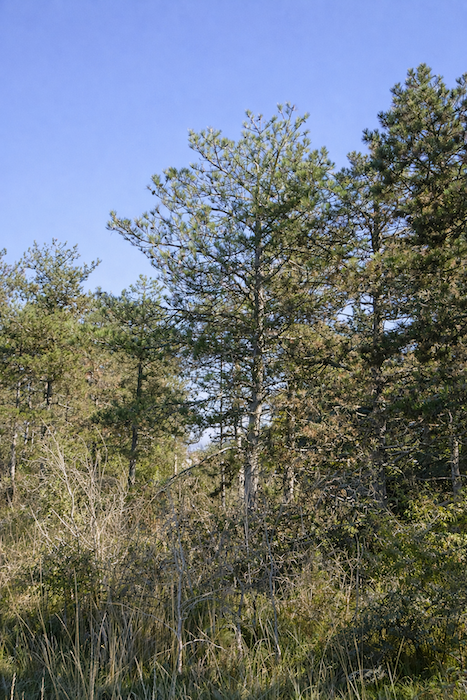
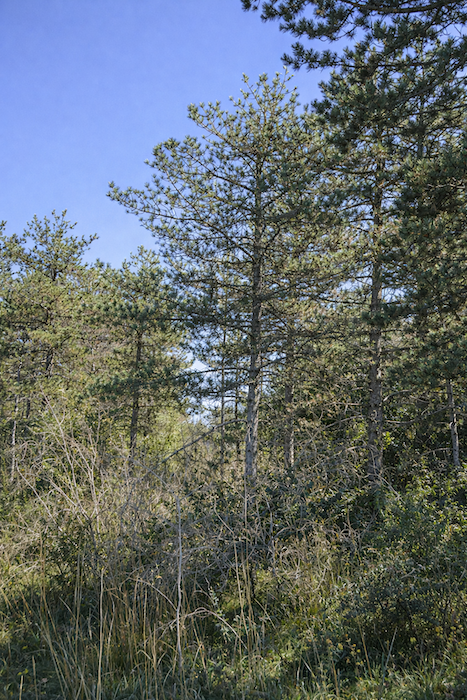
| From now on, there are only spindly pines, standing like slender silhouettes along the way. Nature becomes wilder, more stripped back, as if you were leaving the familiarity of deciduous woods to enter a harsher land, yet one inhabited by austere beauty. |
 |
 |
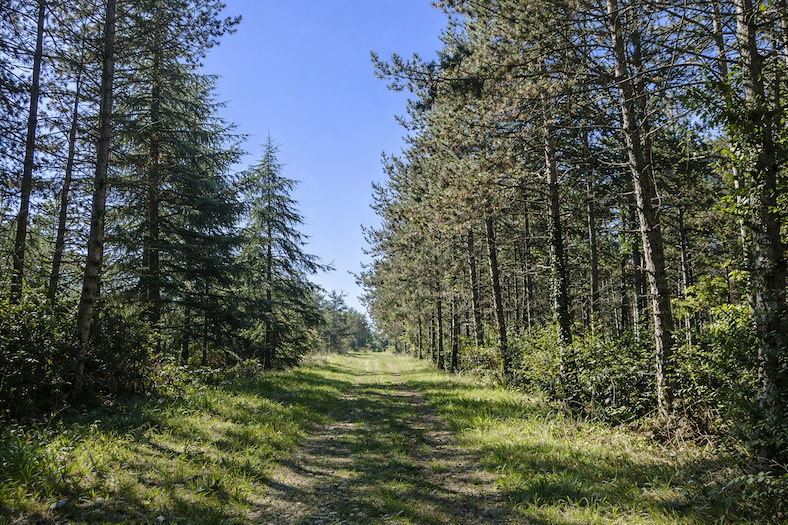
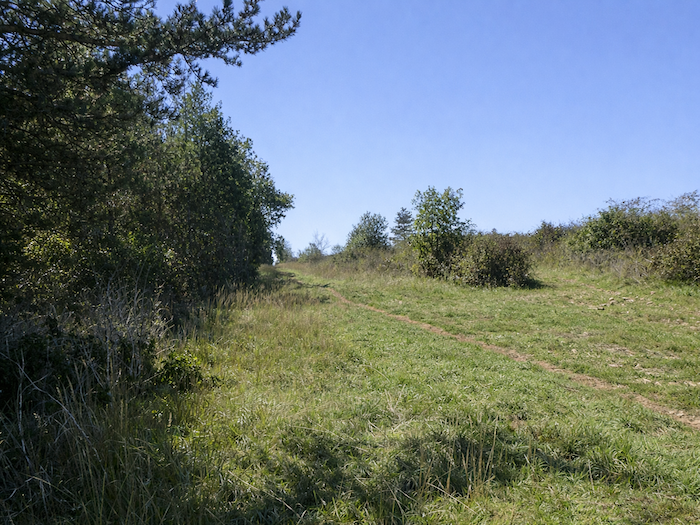
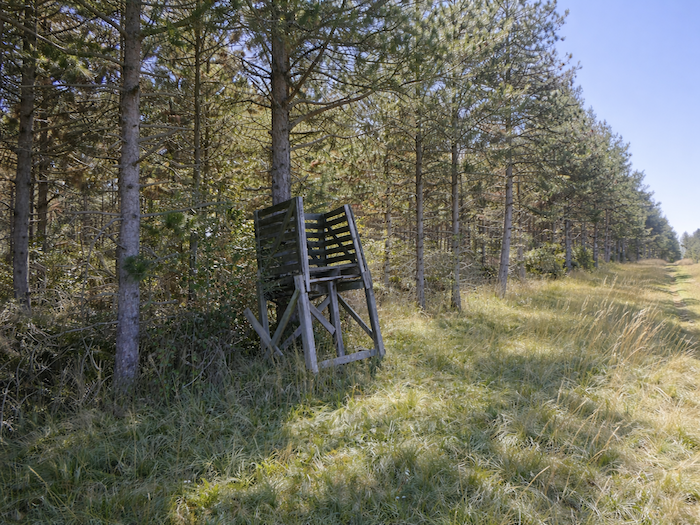
| The path then runs gently through the grass alongside rows of pines stretching like vegetal sentinels. Here, in autumn, an attentive pilgrim might catch the heavy flight of wood pigeons, those palombes that cross the sky in shifting bursts, while hunters watch for them from their pigeon hides. |
 |
 |
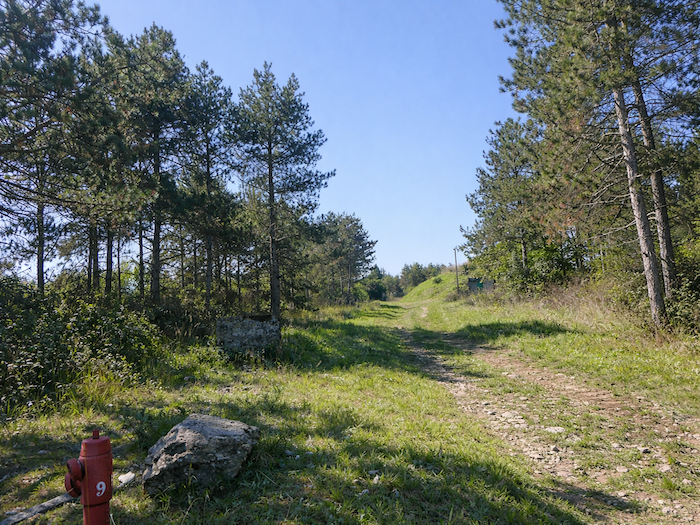
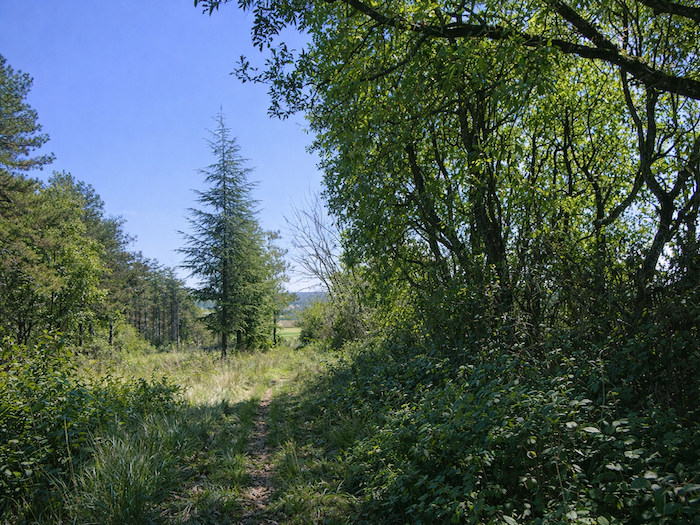
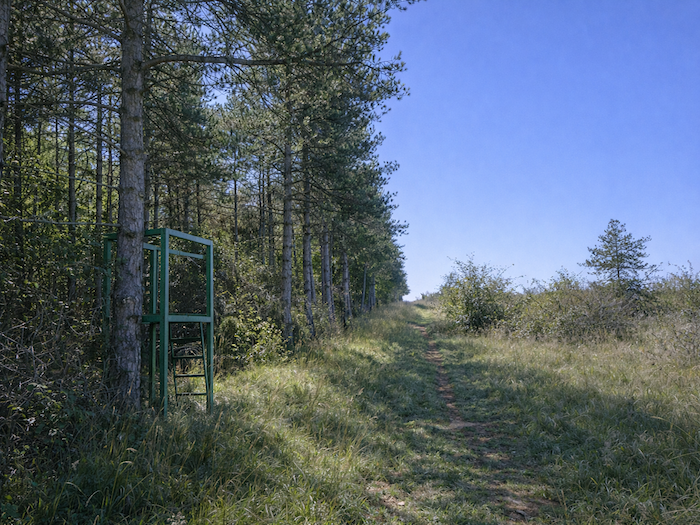
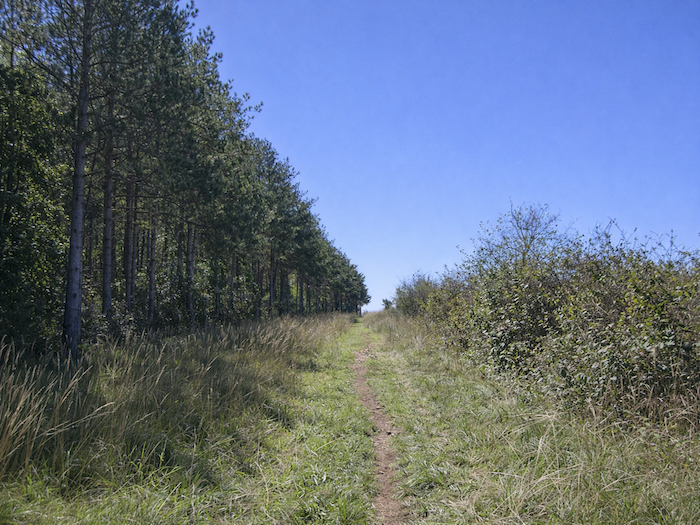
| At the end of the ridge, the path narrows and begins a steady descent. The landscape suddenly changes, taking on the look of steppe, with dry grasslands where scattered oaks alternate with conifers. The walk becomes more meditative, as if the land itself were inviting you to slow down and better taste its austere beauty. |
 |
 |
Section 2: Above Rully
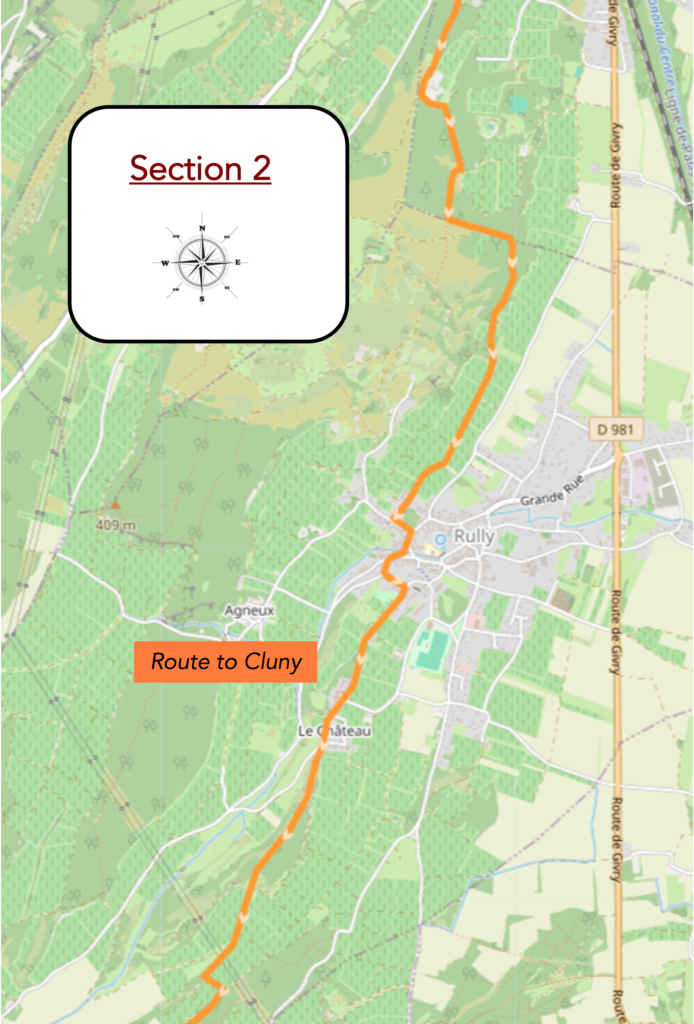
Overview of the route’s challenges: a route with at times marked uphill gradients beyond Rully.
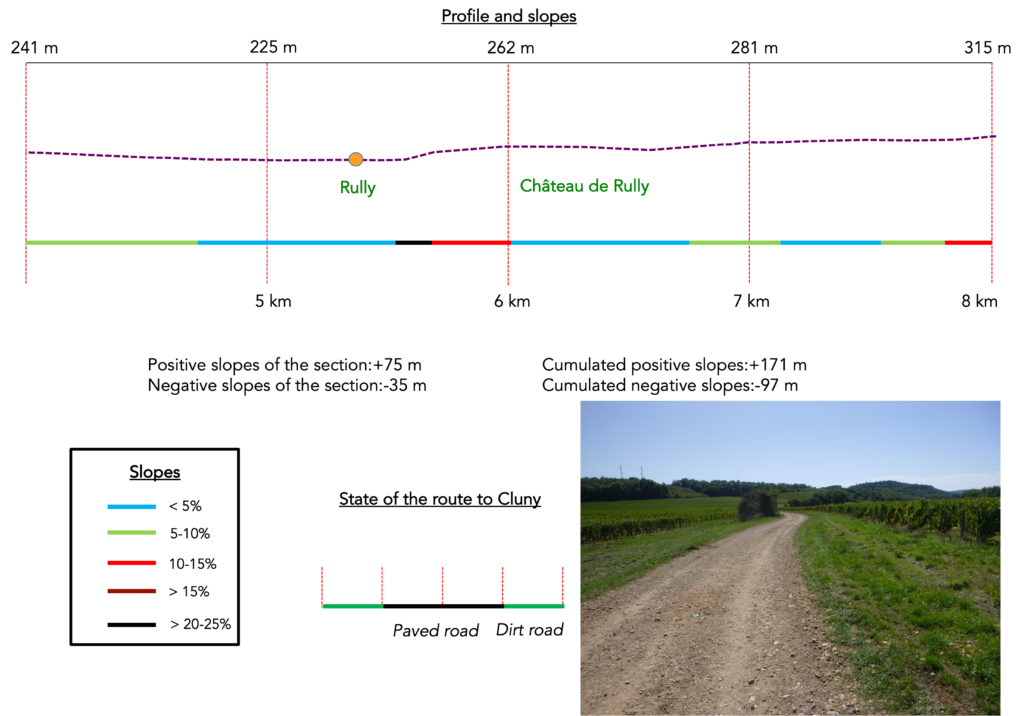
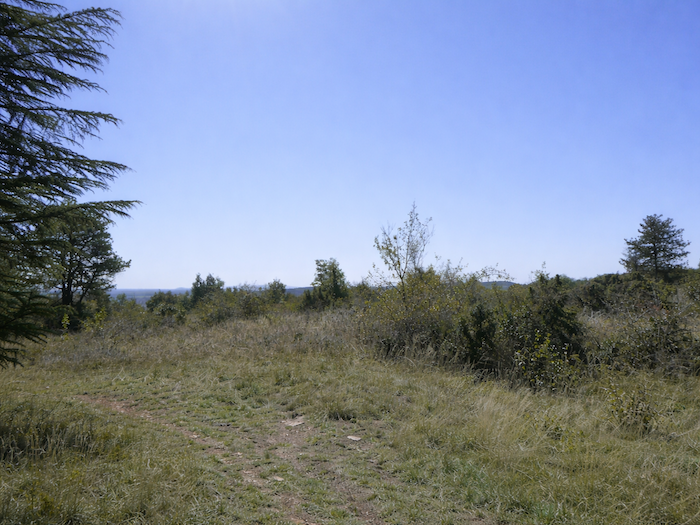
| The path, now narrow, begins its descent. It pushes into the undergrowth, as if wishing to hide for a moment before revealing the landscape once more. |
 |
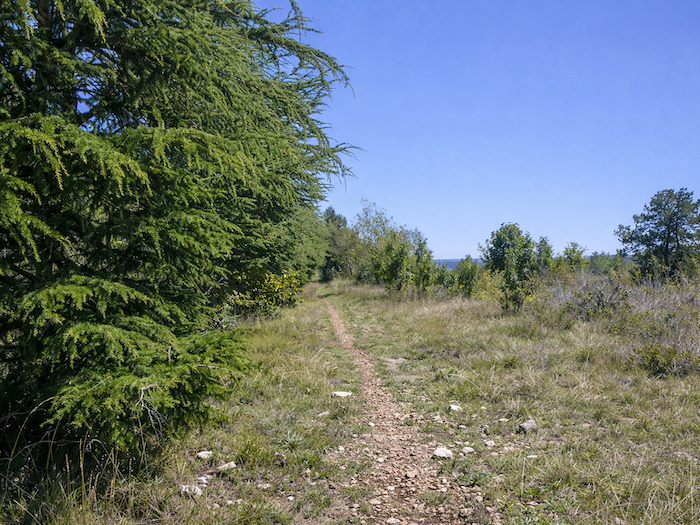 |
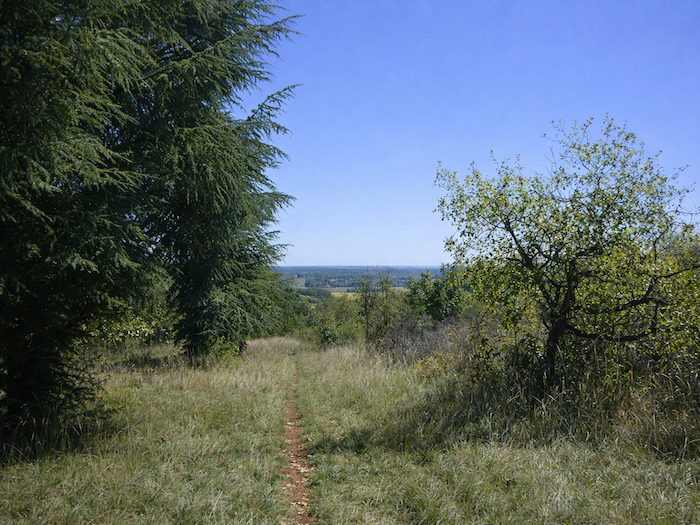
| Only the great oaks and the spruces remain above the dense vegetation, carrying on their branches the shade and majesty that shelter the walker. |
 |
 |
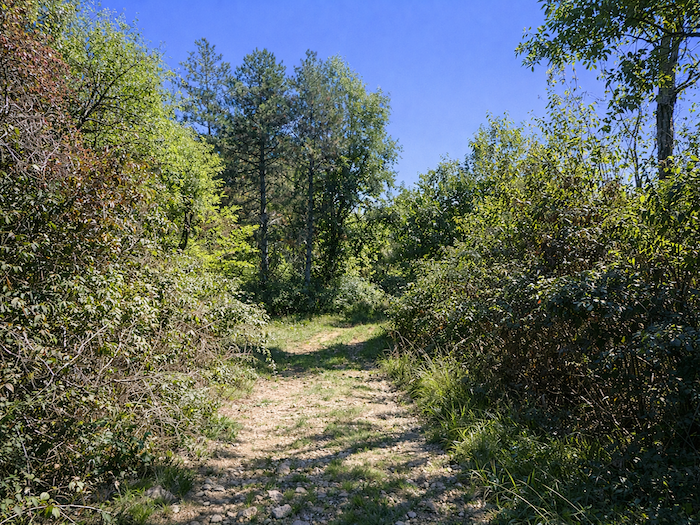
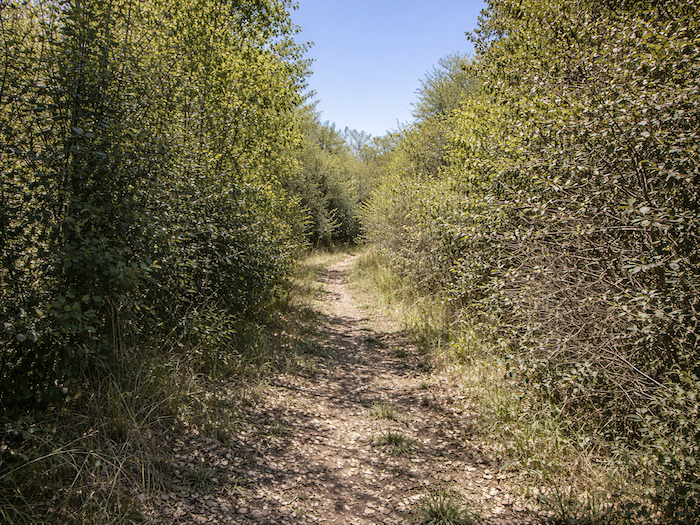
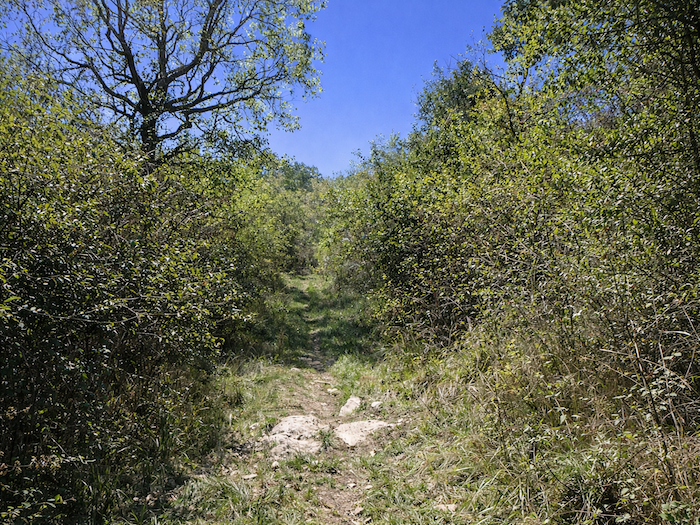
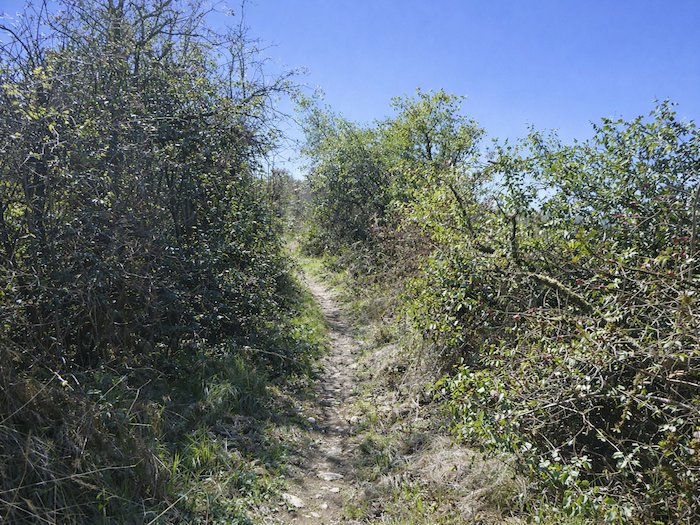
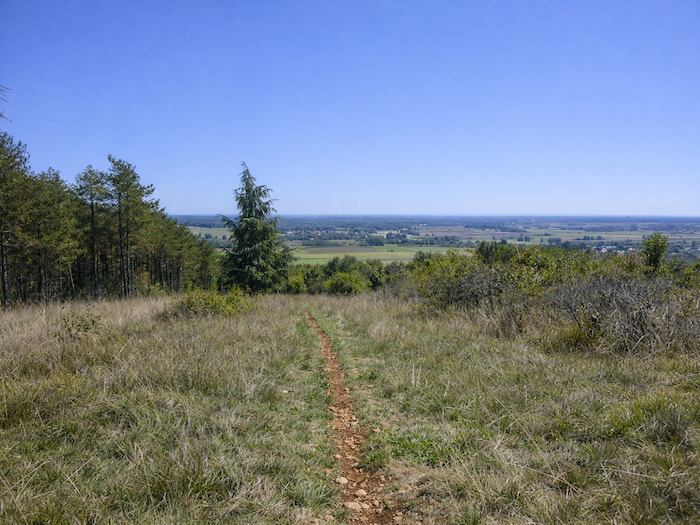
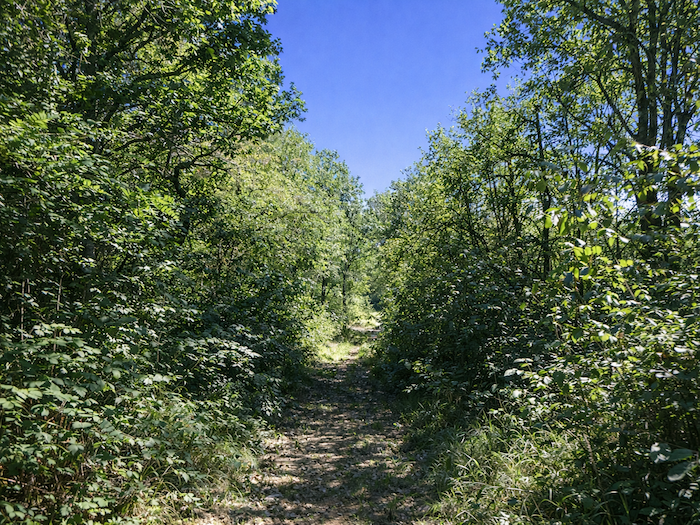
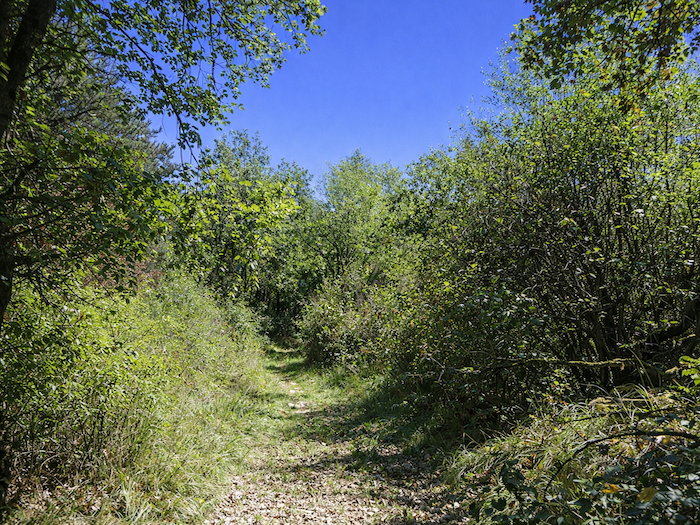
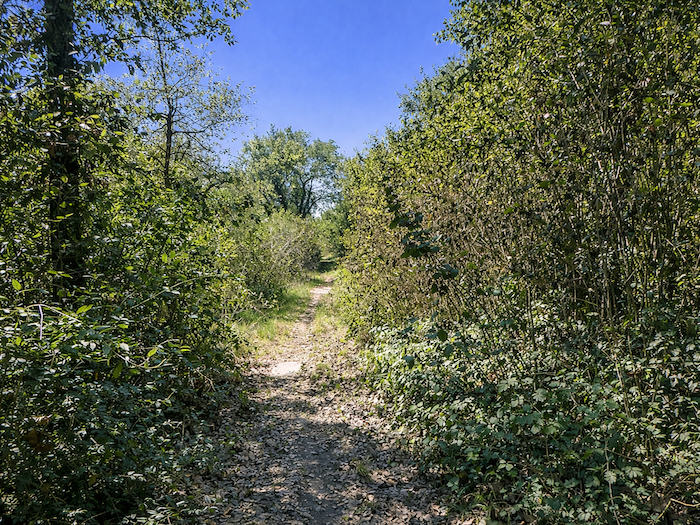
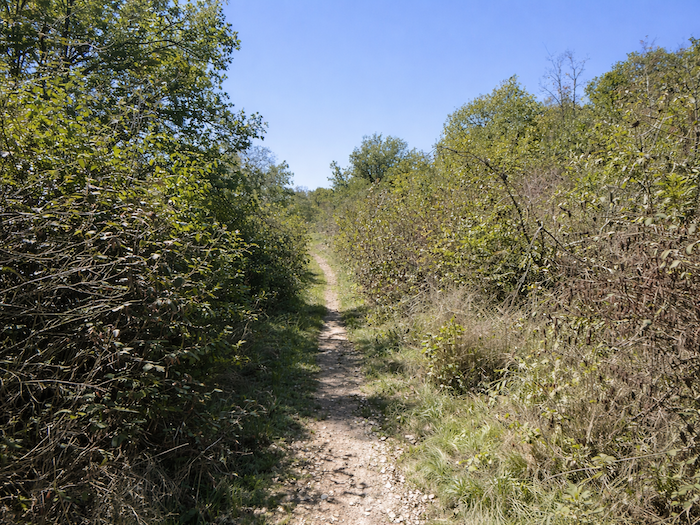
| Lower down, a trail slips through shaggy brush and rocky ground. Nature here is wild to excess. |
 |
 |
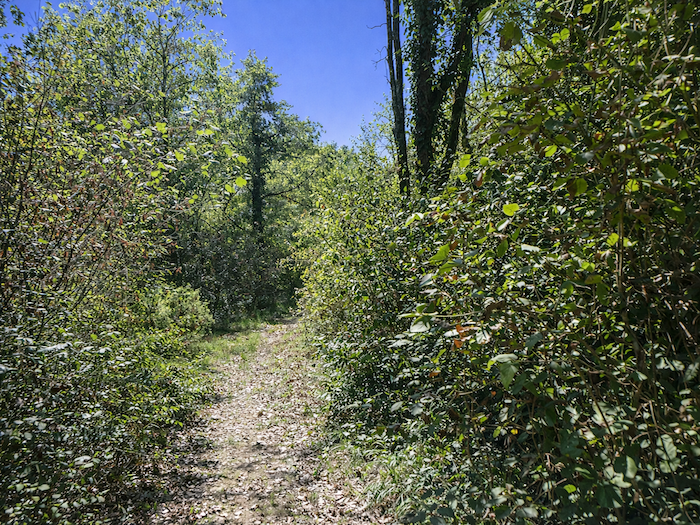
| A few more steps through this thick brush… |
 |
 |
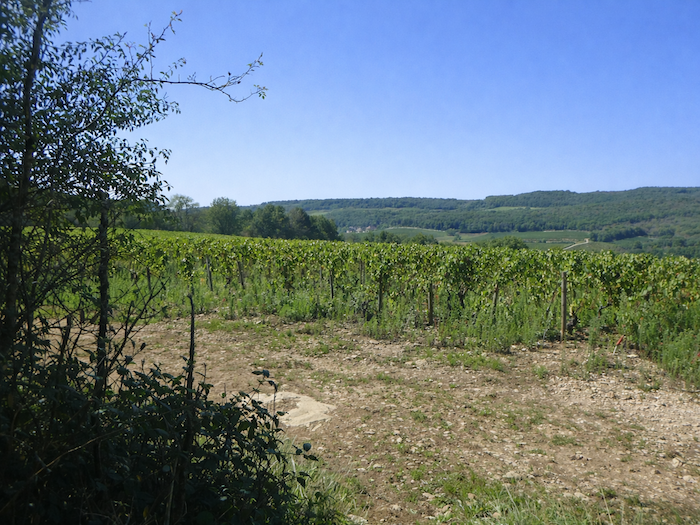
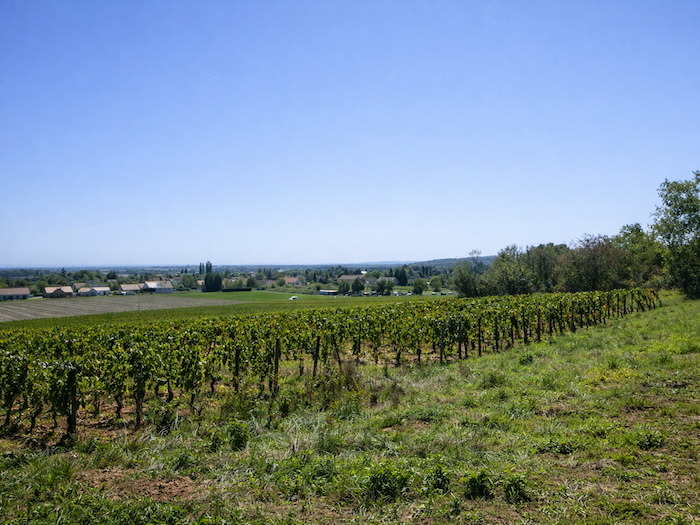
| …and then suddenly, clarity bursts forth, the vineyard of Rully appears in all its order. What a striking contrast between the murmuring disorder of wild vegetation and the rigor of the vine rows, drawn with almost military discipline. One moves from the cacophony of brushwood to the ordered score of the vineyard, as if nature and cultivation had arranged to meet in this theater of hills. |
 |
 |
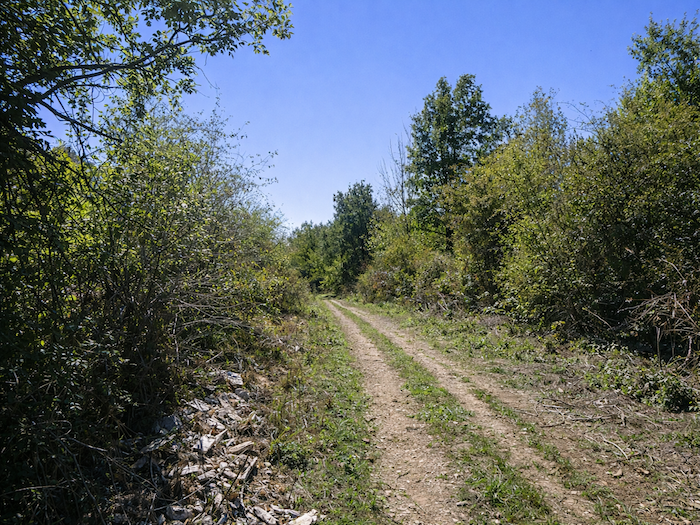
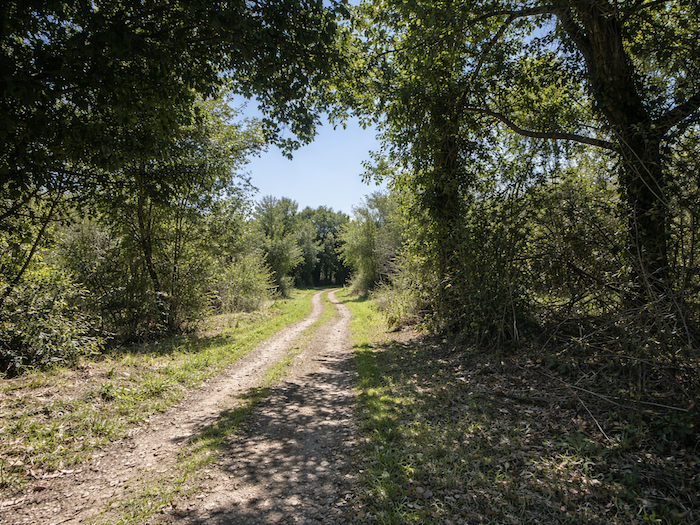
| But the open vineyard space is fleeting here. At once, a wider path rejoins the undergrowth above the vineyard. |
 |
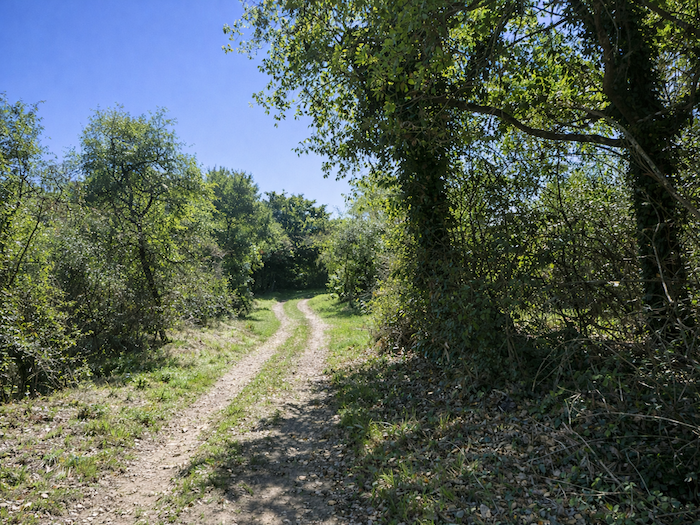 |
| This brief passage through woodland soon reveals the vineyard of Rully in its full grandeur. |
 |
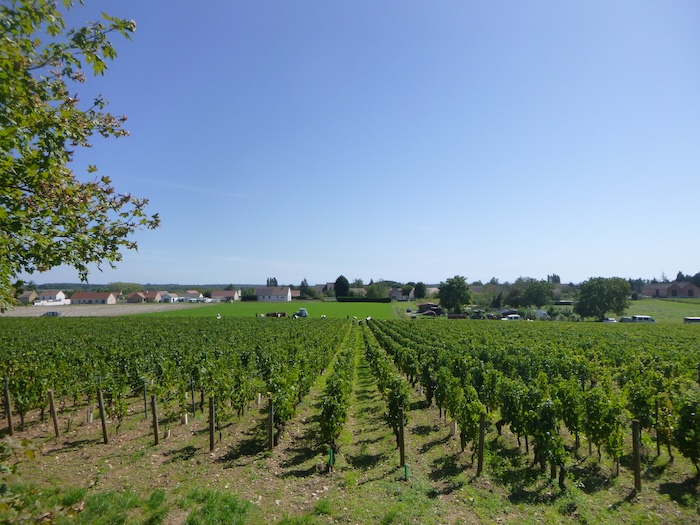 |
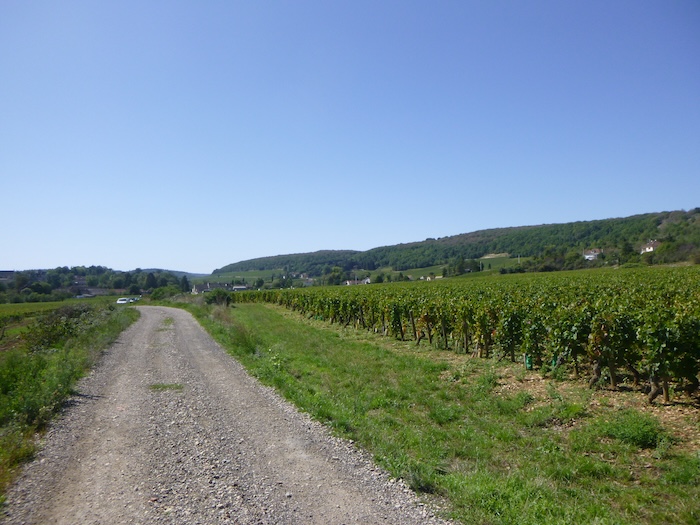
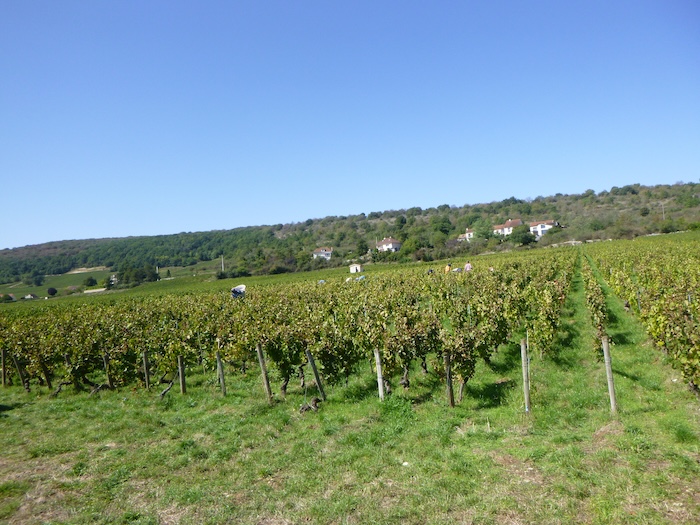
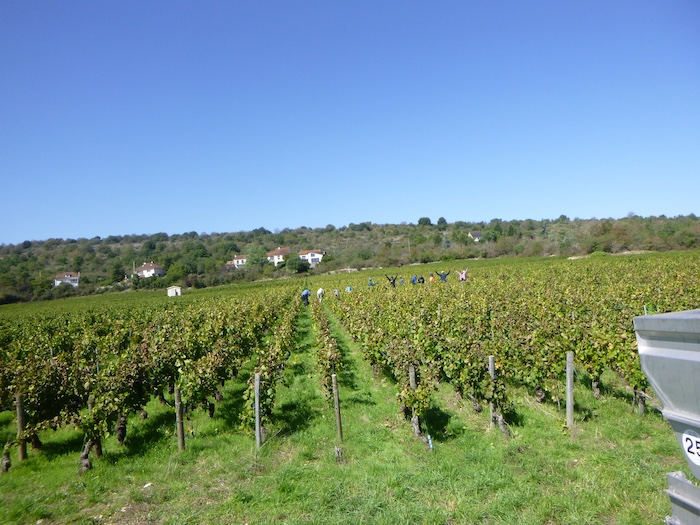
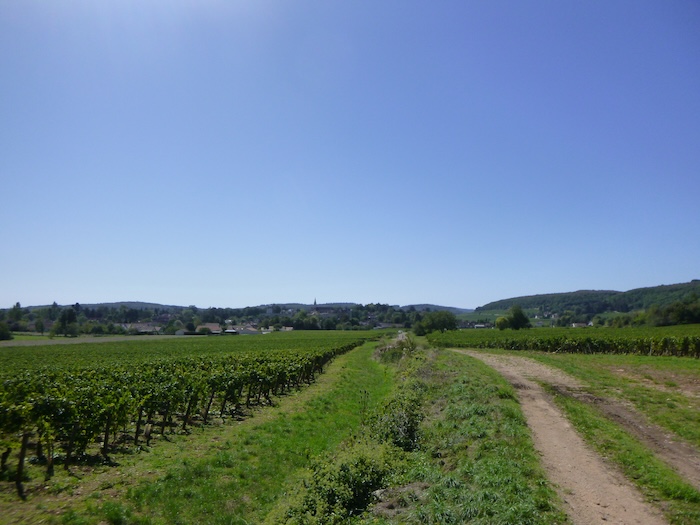
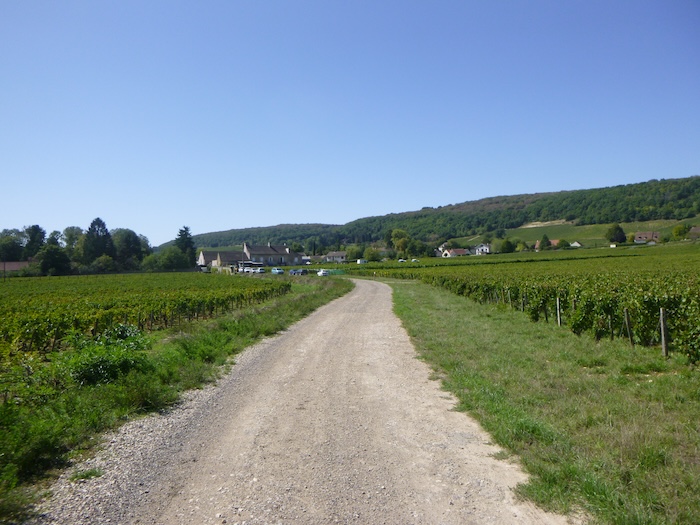
| Shortly afterward, a wide path wanders level across the vineyard. It is a dirt track, stony and firm underfoot. It is the Chemin de Branges, running straight toward Rully. |
 |
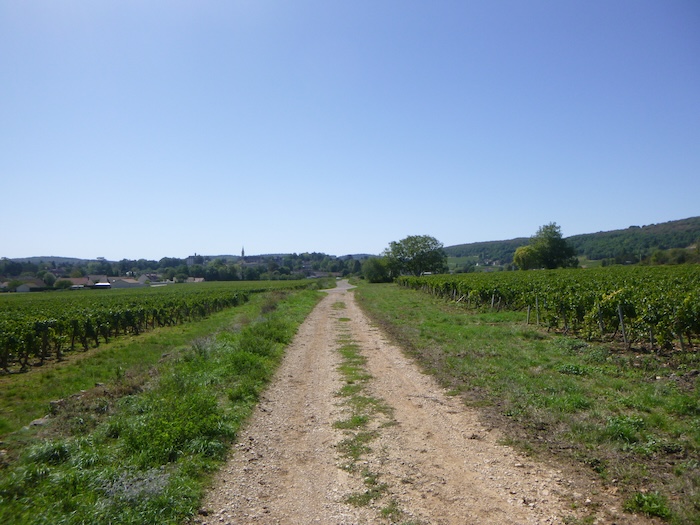 |
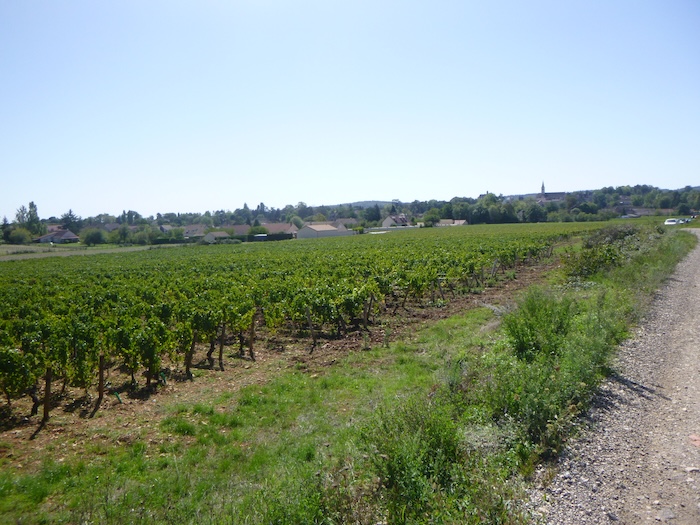
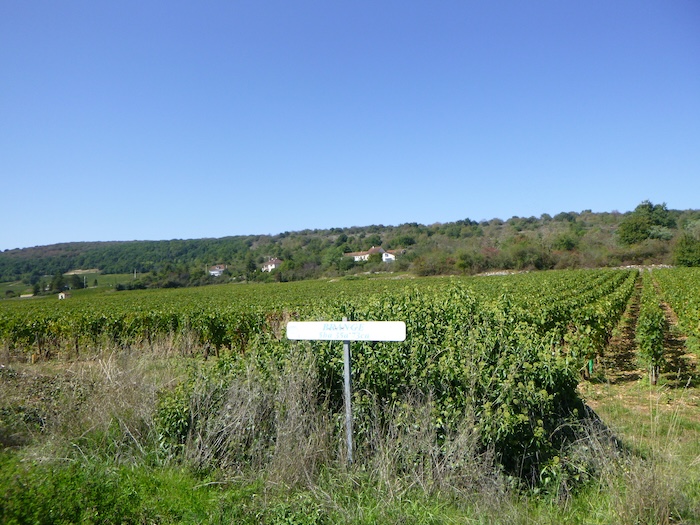
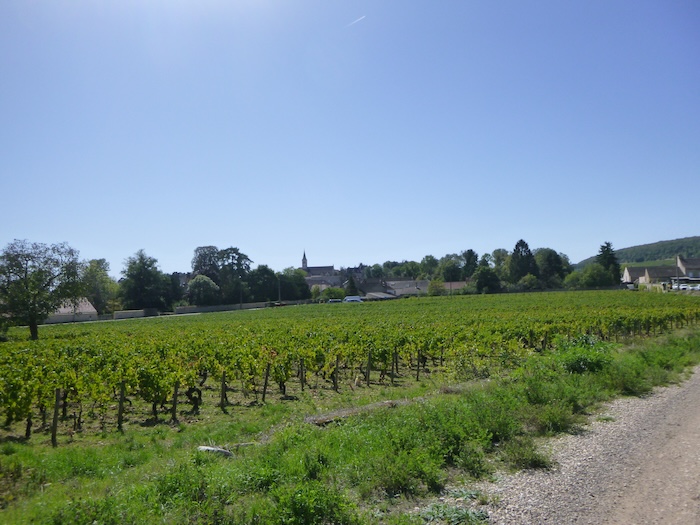
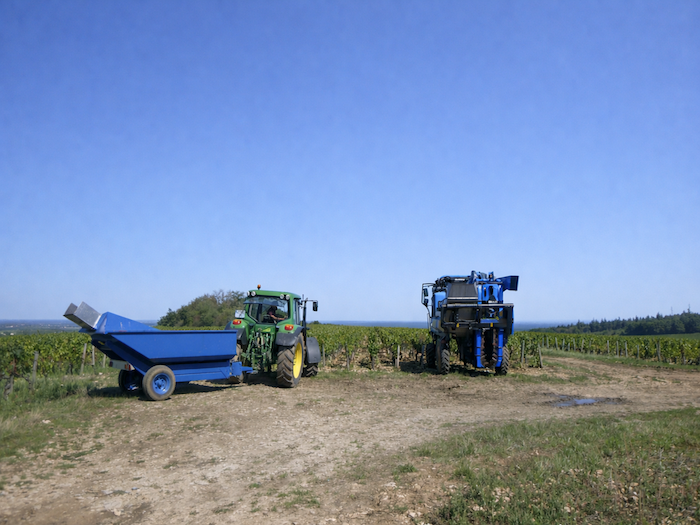
| The harvest is still in full swing in the vineyard. Everywhere, vans line the roads, ready to drop the pickers among the tight rows and collect the heavy crates of grapes. In the vineyard of Rully, priority is given to white Chardonnay, the noble grape variety that brings renown to these slopes. The harvesters you may meet might lift their heads for a moment to greet your passing. But do not be misled, behind their smiles, their task is harsh and exhausting. The harvest is labor and patience, an ordeal repeated each year, where backs bend and hands are stained, yet where the joy of a completed gathering ultimately triumphs over fatigue. |
 |
 |
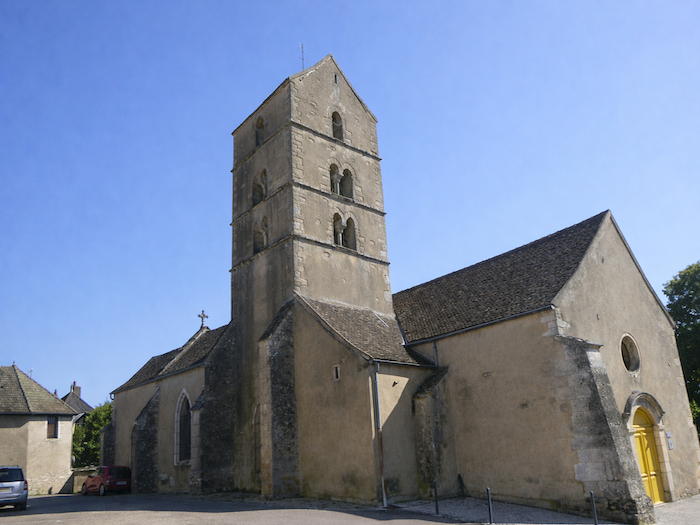
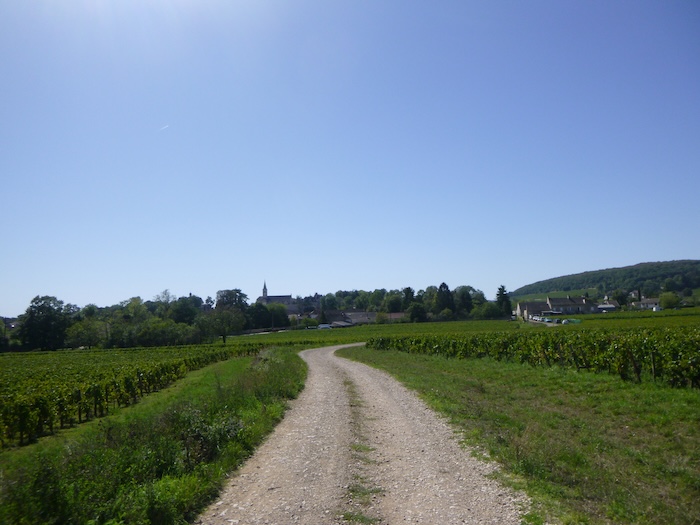
| In Rully, the church, proud and unchanging, dominates the village. The Chemin de Branges draws rapidly closer to the village. |
 |
 |
| The dirt track soon reaches the first winegrowers’ houses of the village. |
 |
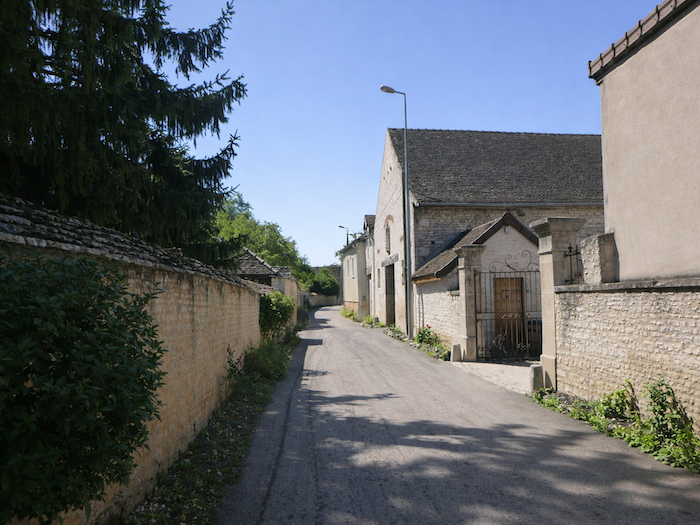 |
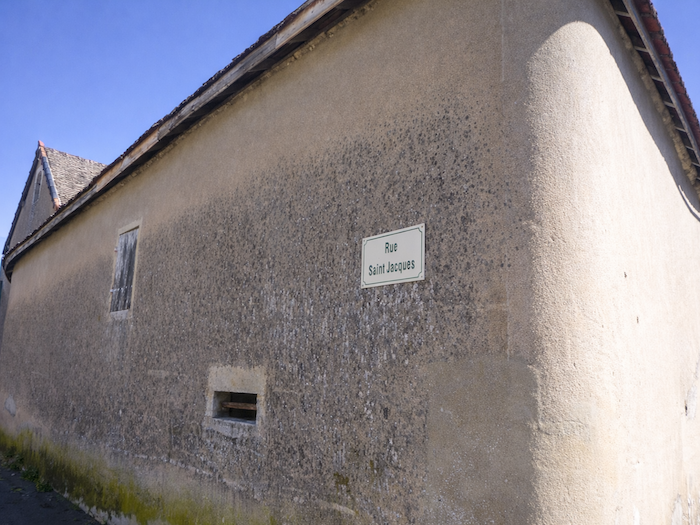
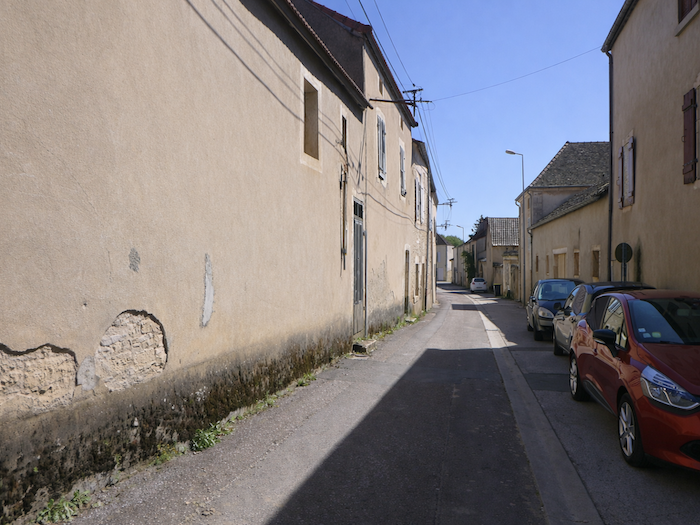
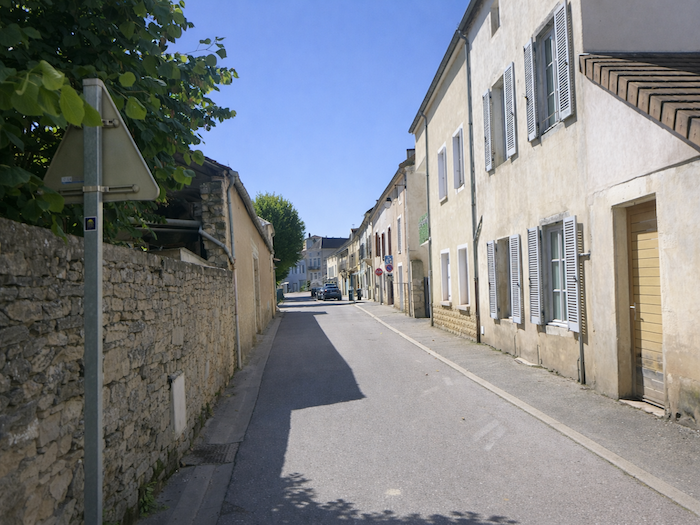
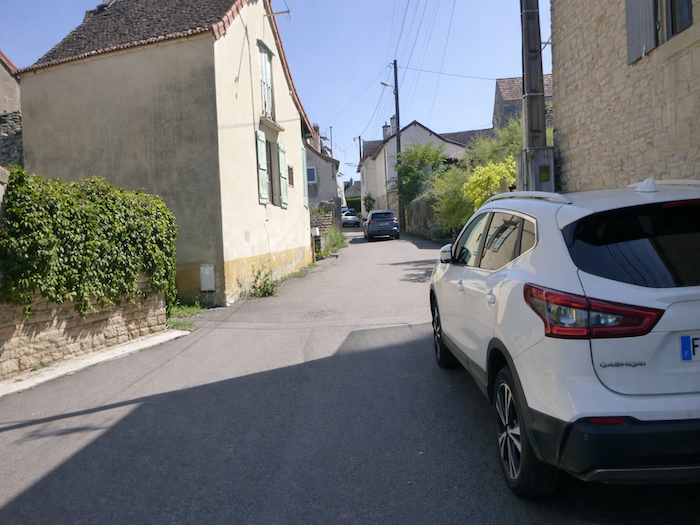
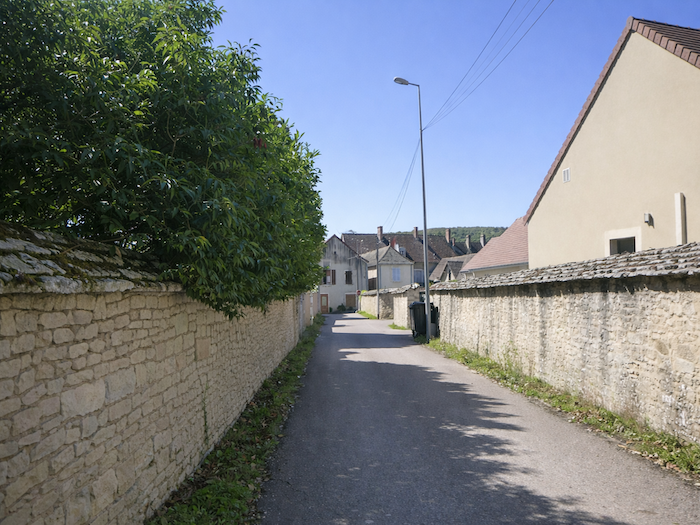
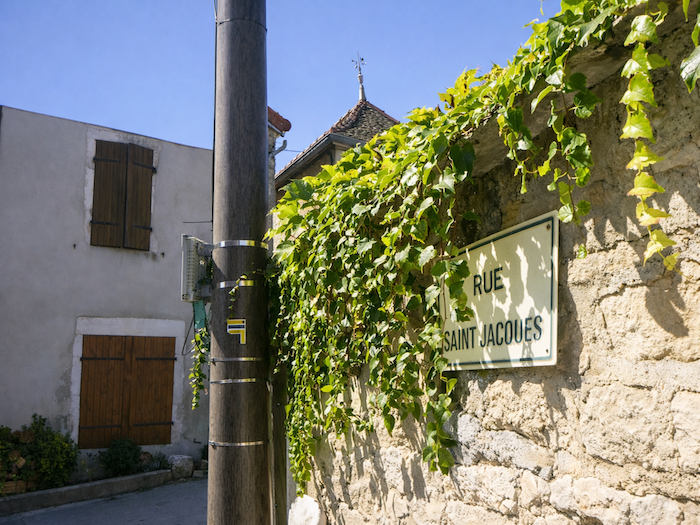
| The route enters along Rue de Saint Jacques, a discreet nod to the ancient pilgrimage to which it belongs. Many of the houses are covered in ochre plaster, giving a gentle unity to the village. |
 |
 |
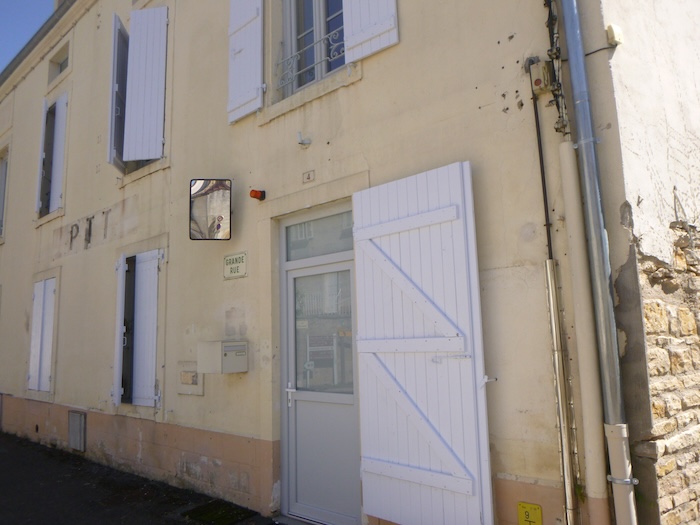
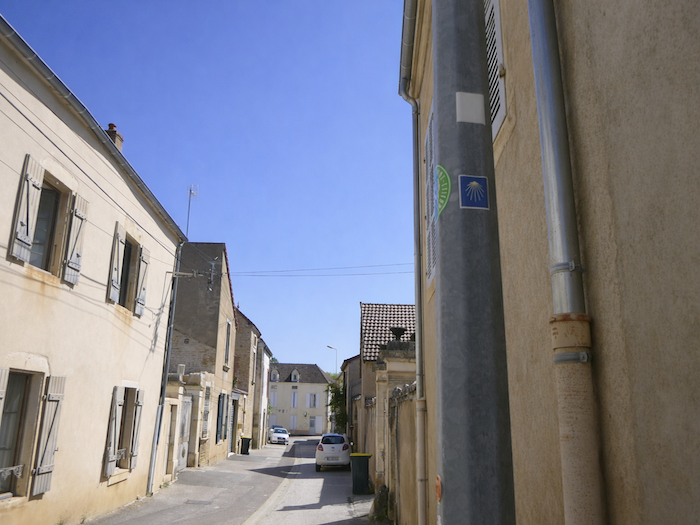
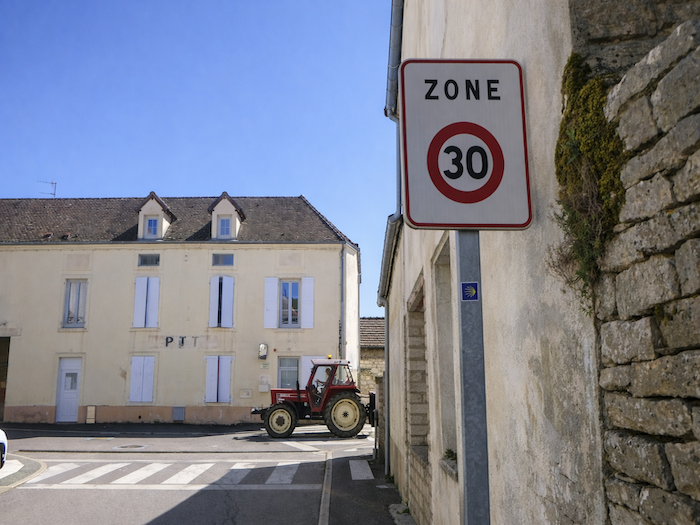
| It then winds through the village lanes, winding its way to the Grande Rue. The stone façades and shuttered windows create a setting both humble and dignified, faithful to the Burgundian spirit. |
 |
 |
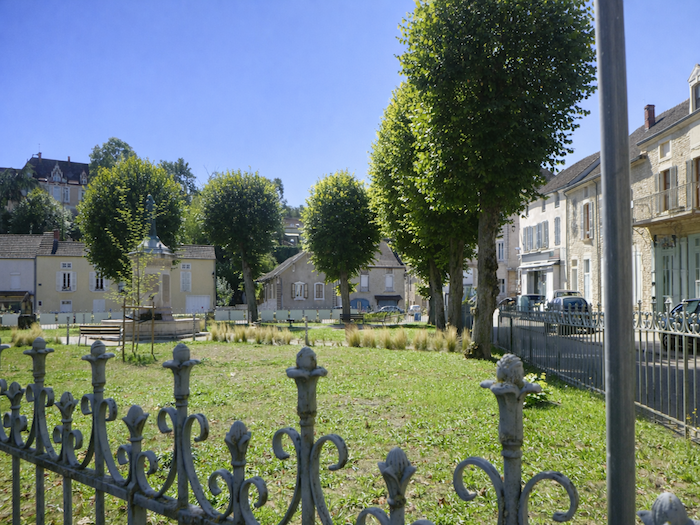
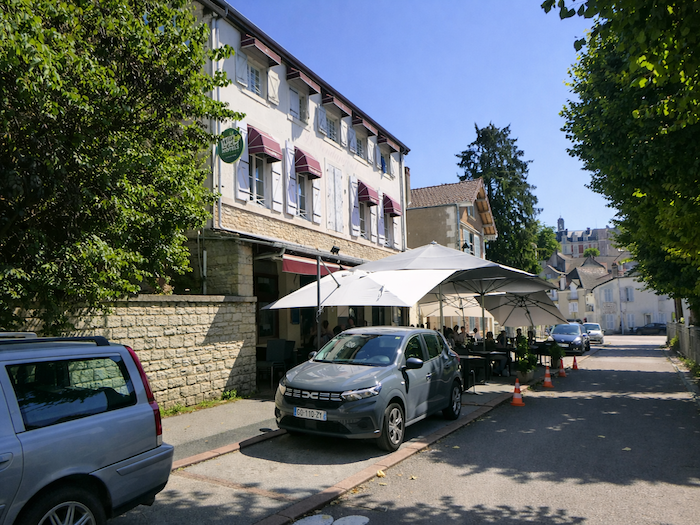
| At the center of the village stands a welcoming hotel restaurant, nestled in the shade of a small green park. Broad and generous trees spread their branches like a protective canopy, offering a haven of freshness to travelers and residents alike. |
 |
 |
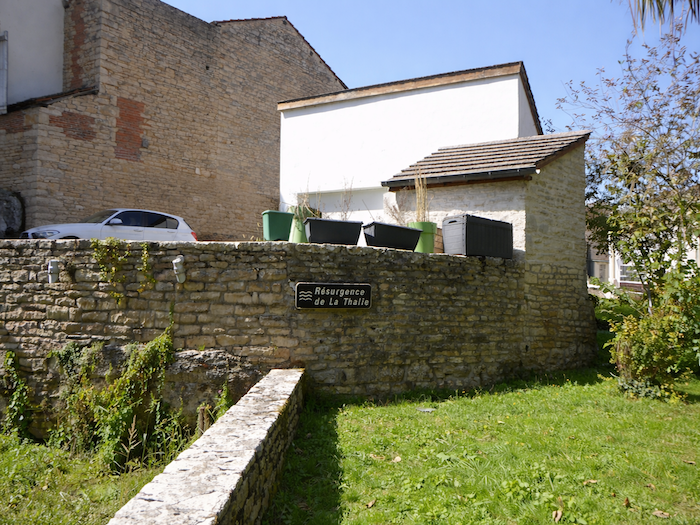
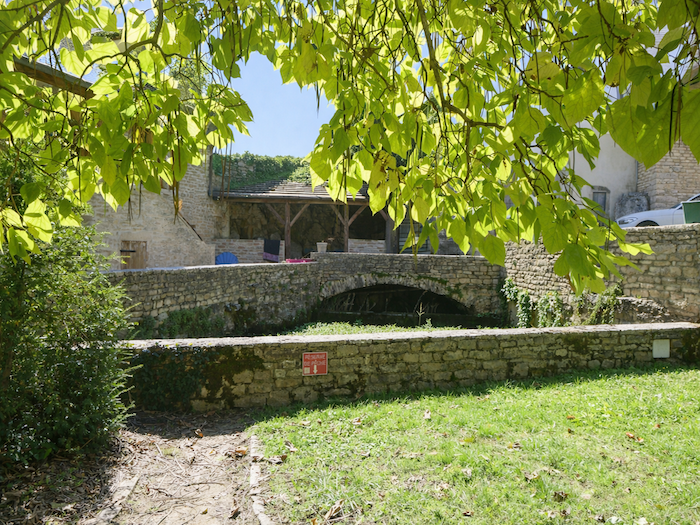
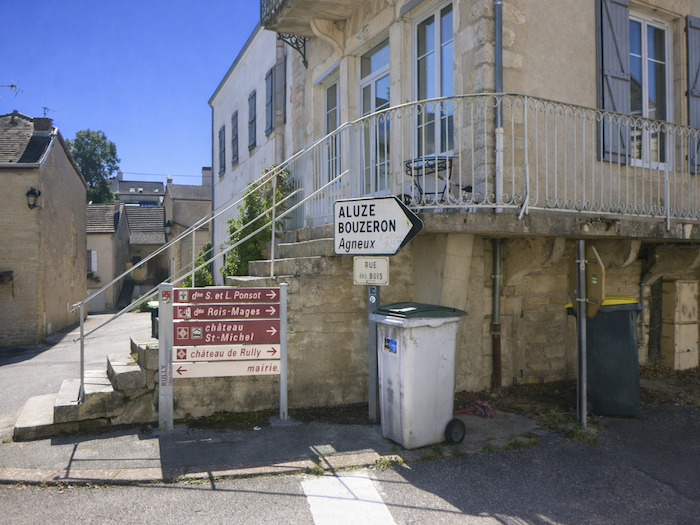
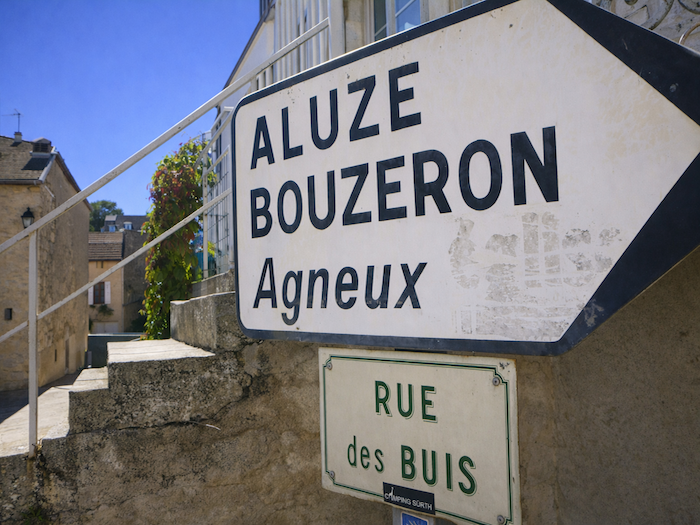
| Here, the route turns toward Rue des Buis, where a beautiful resurgence of the Thalie lies hidden. This small stream, discreet and clear, springs from cut stones covered in moss, like a confidence whispered by the earth. |
 |
 |
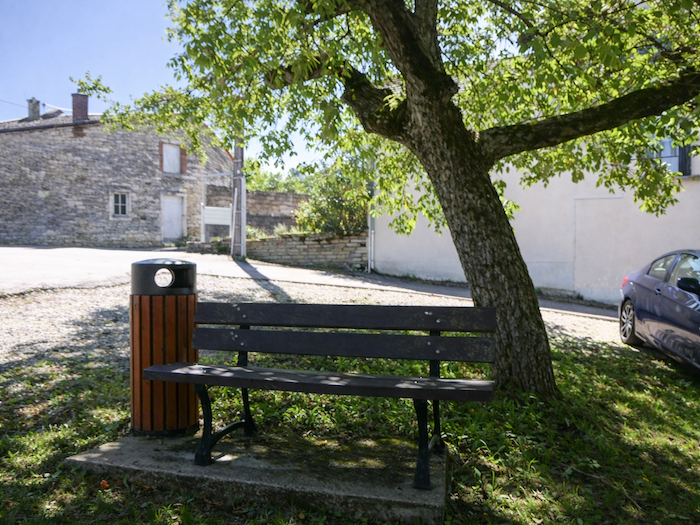
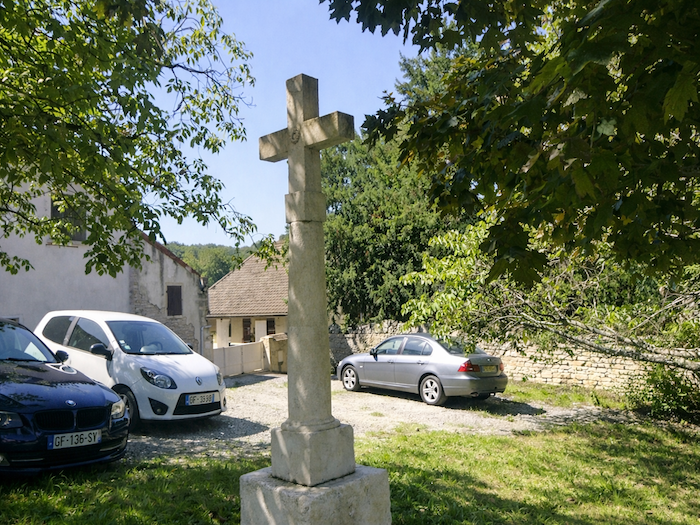
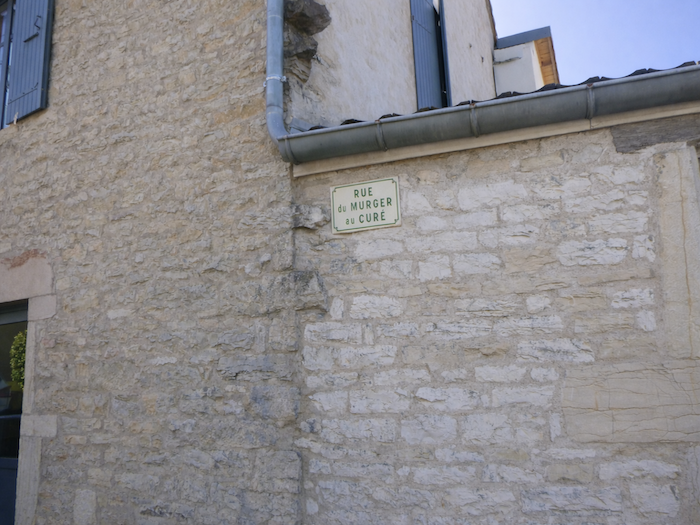
| But it does not remain long on this street. At the level of a cross, the route launches into a sustained climb, ascending Rue du Murger au Curé toward a small park where another cross stands. The gradient is so steep that you will likely feel the urge to rest on the park bench, just long enough to catch your breath and contemplate the surroundings. |
|
|
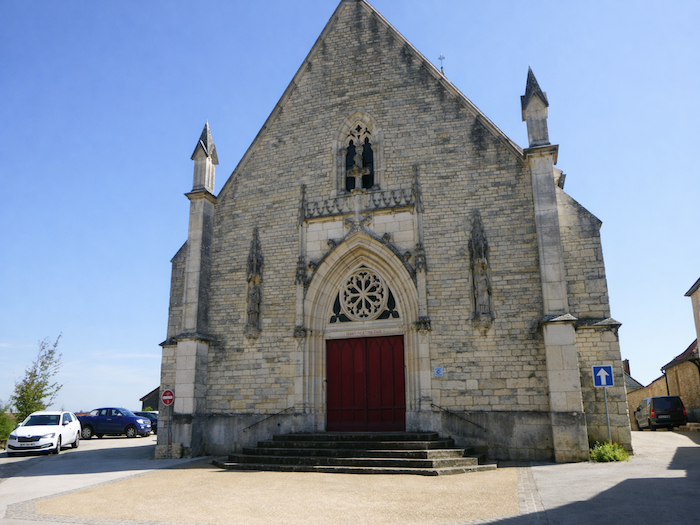
| Fortunately, the ascent, severe as it may be, remains brief. The street then softens, rising with a gentler slope toward Saint Laurent Church. This sanctuary, overlooking the village, dates from the thirteenth century. Its stones, worn smooth by time, bear witness to numerous transformations across the ages, reflections of the patience and faith of those who have maintained it. |
 |
 |
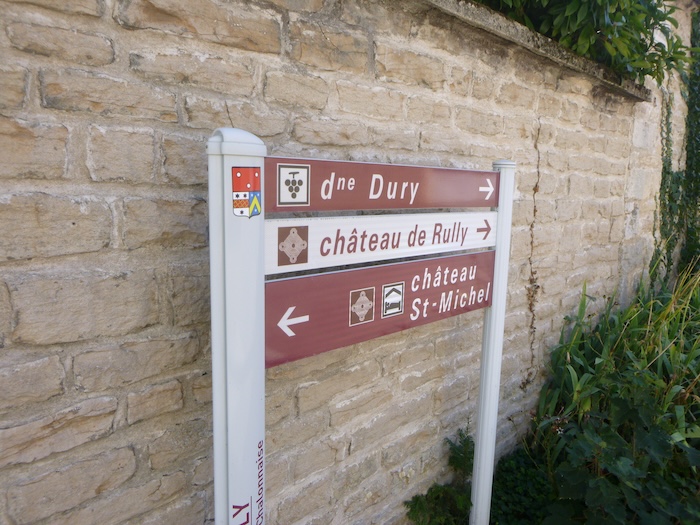
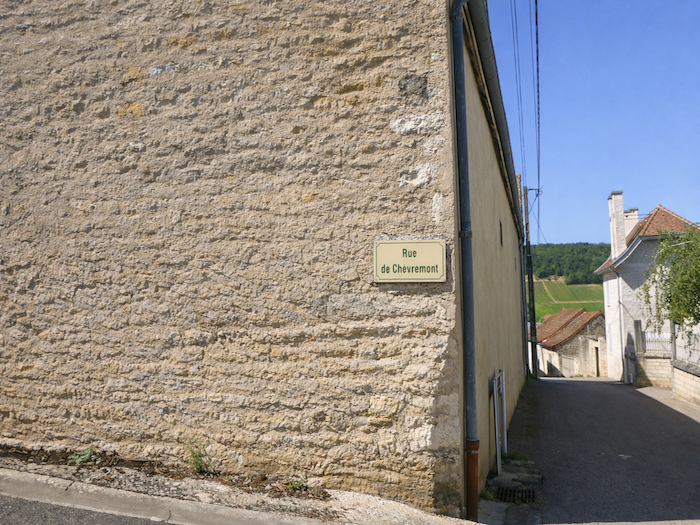
| The route then heads toward the château, following Rue de Chèvremont. |
 |
 |
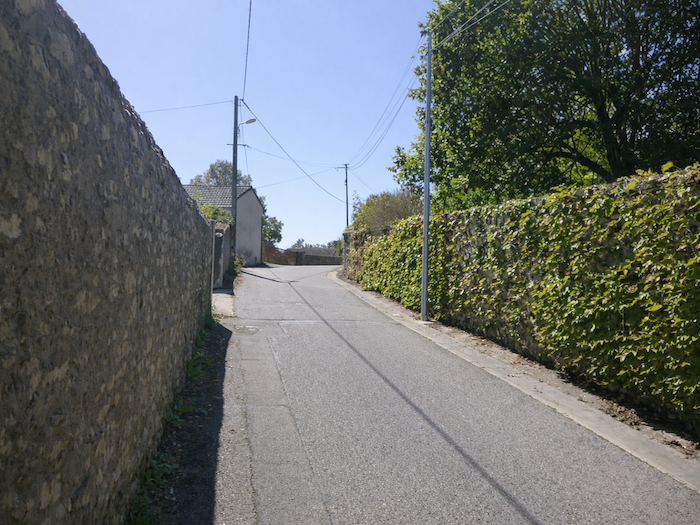
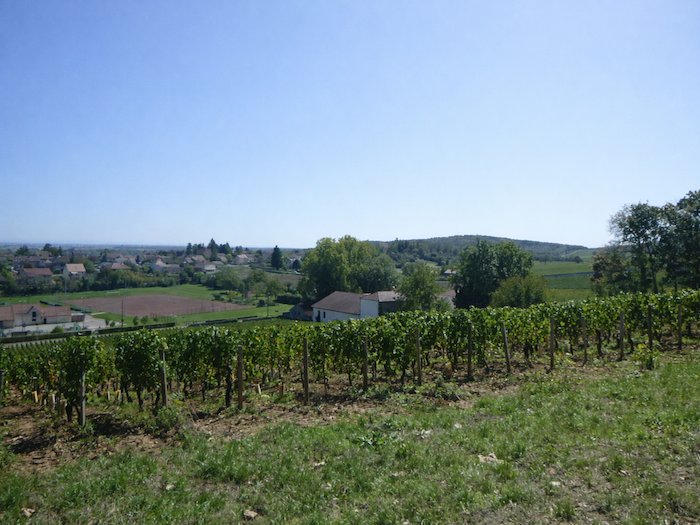
| Soon, vineyards reappear on the other side of the village, a reminder that here the vine reigns everywhere. |
 |
 |
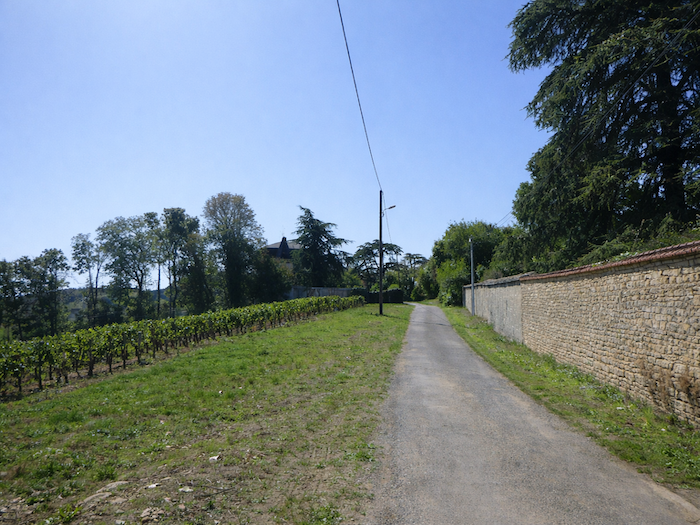
| Farther on, the road passes before an elegant residence, nestled behind a curtain of trees. The shutters are closed, a sense of slumber envelops the house, yet it is not yet the Château de Rully. |
 |
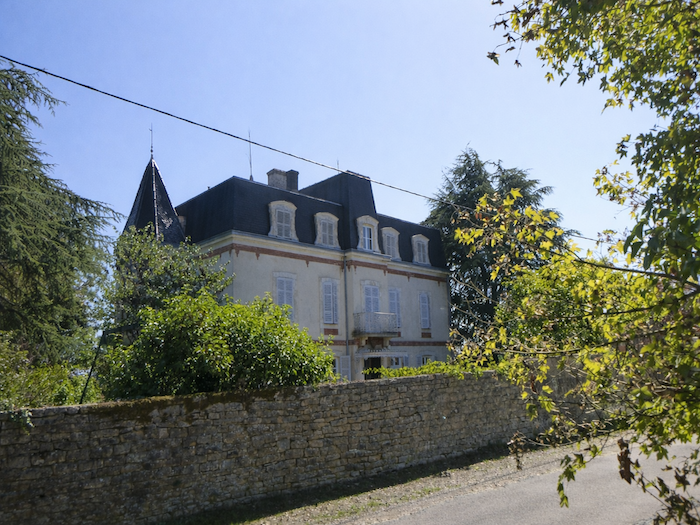 |
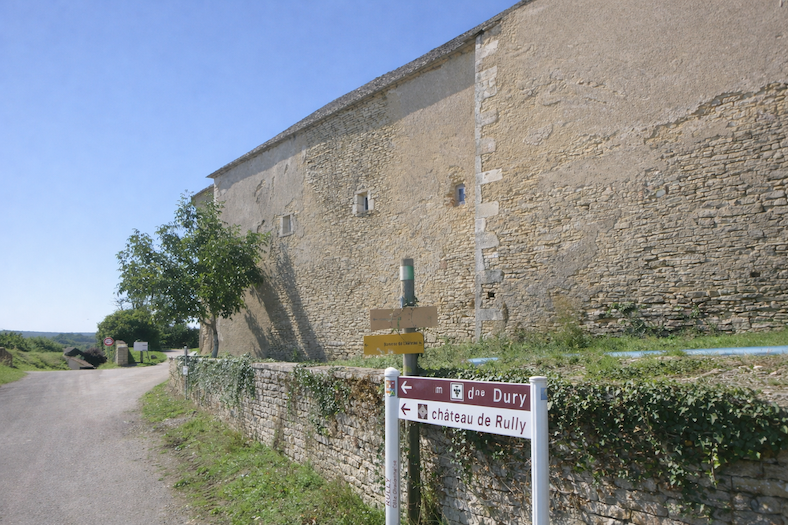
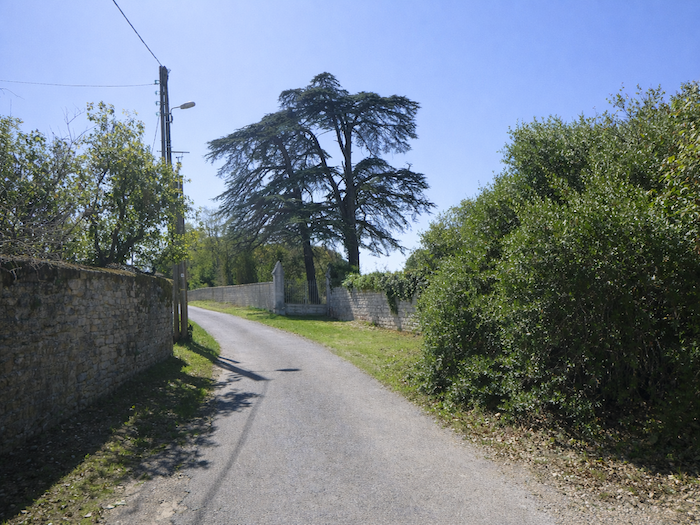
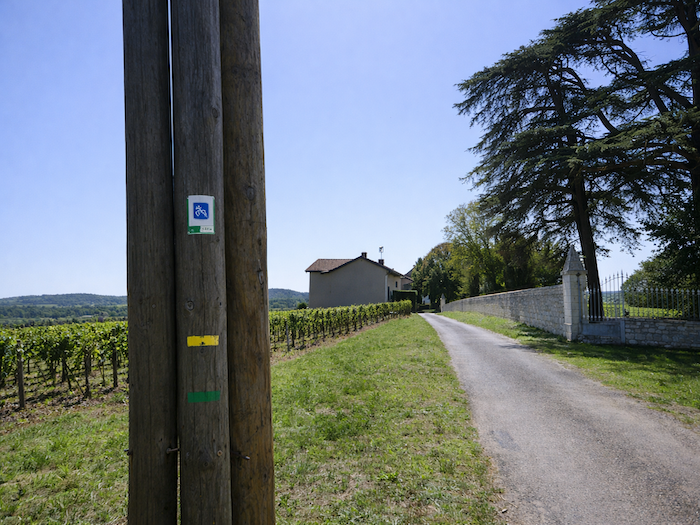
| Then suddenly, you enter the grounds of the château. Its enclosing walls, discreet yet carefully kept, define the space with restraint. The château itself partly withdraws behind a vast park. The scallop shell here indicates that you should go straight ahead. For what purpose. Likely none, except to affirm its presence on an available post where the sign could be fixed. |
 |
 |
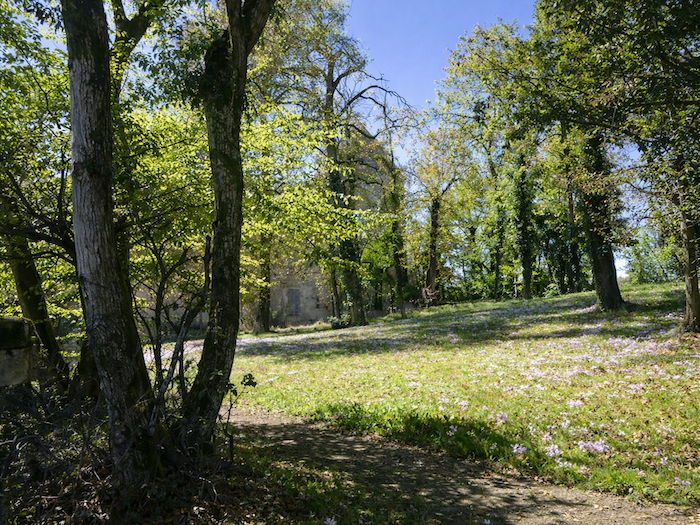
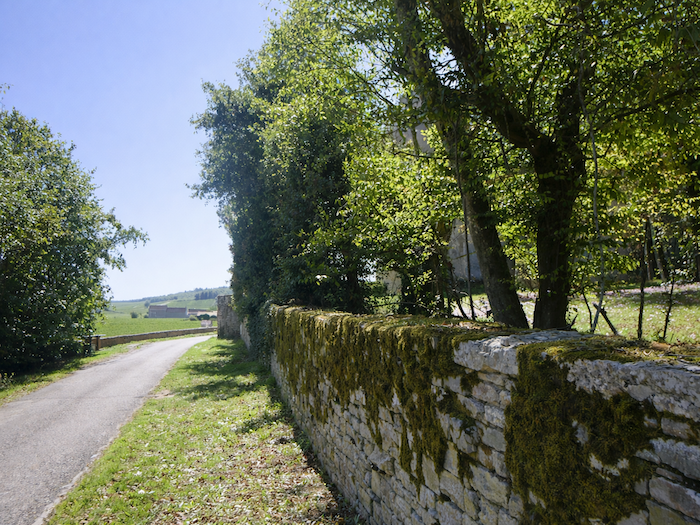
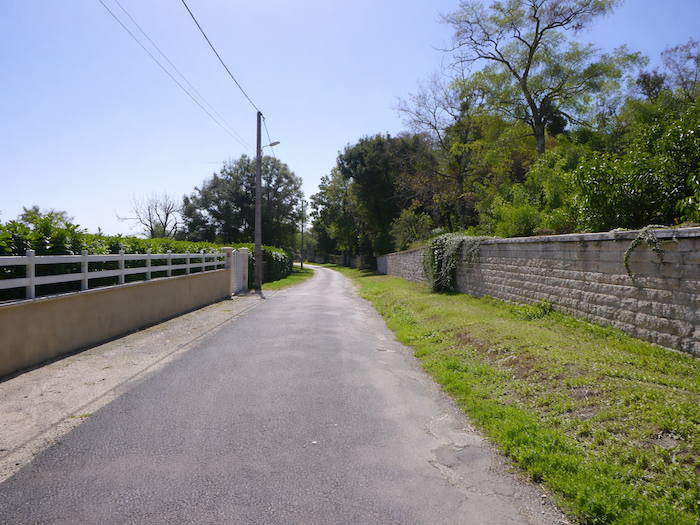
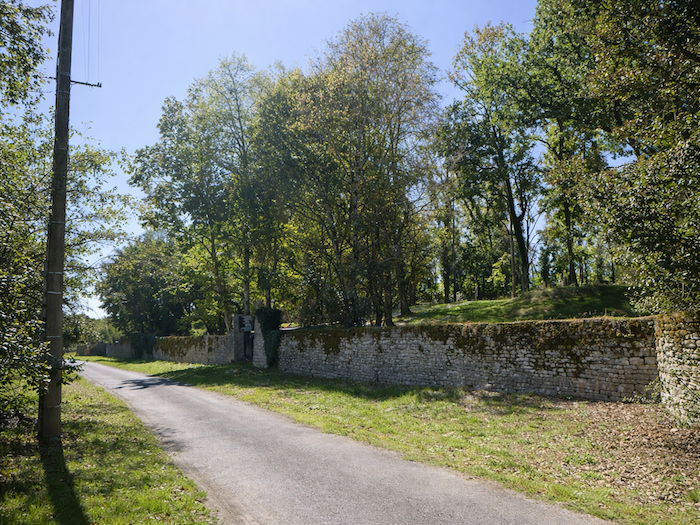
| The road then runs alongside the château, nestled within a magnificent wooded park, protected by high walls. |
 |
 |
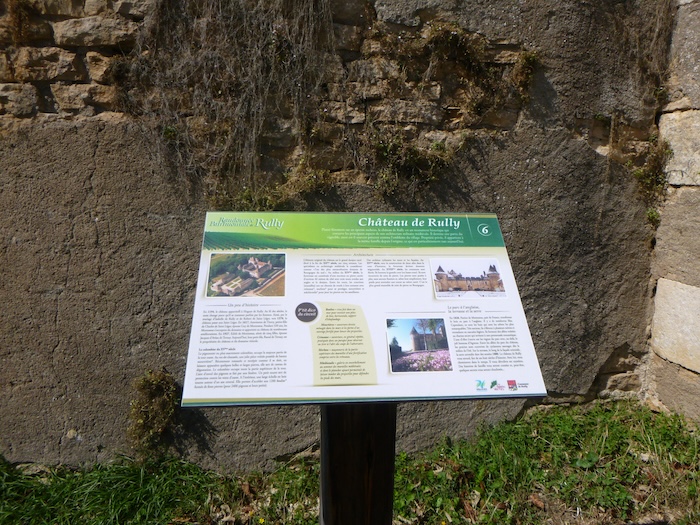
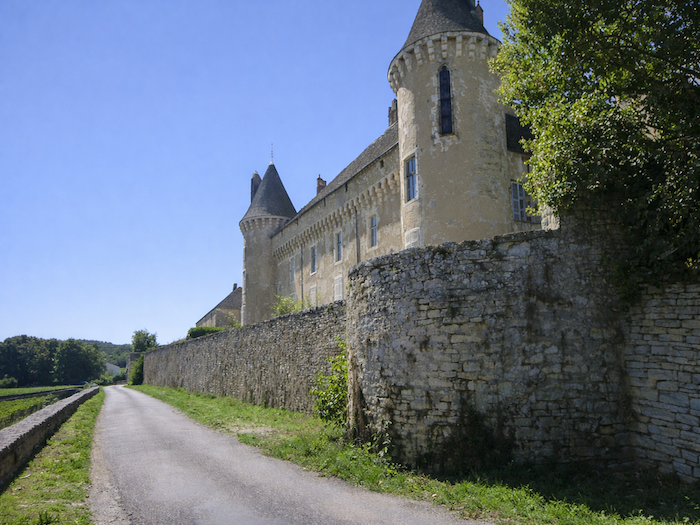
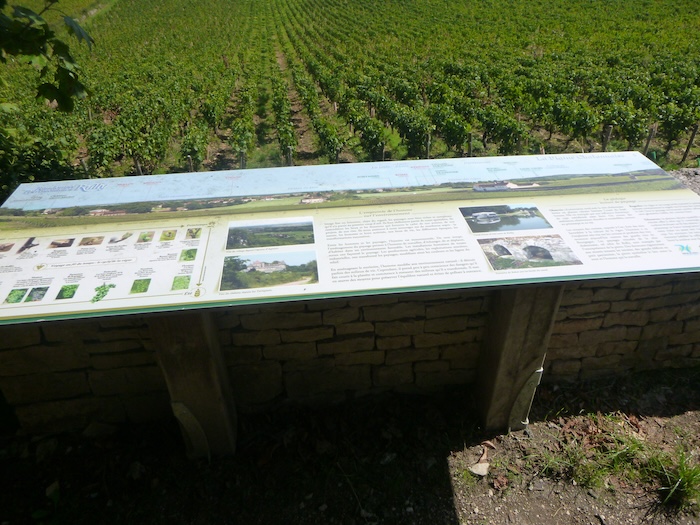
| The château is a true twelfth century fortress, proudly standing amid the vineyards of the Côte chalonnaise. Though a private property, it invites visitors to a magnificent journey through time. The owner, a direct descendant of the Lord of Rully who built this residence more than eight centuries ago, opens his doors with generosity. And the discovery, of course, is accompanied by a tasting, sometimes followed by the purchase of the estate’s wines, the liquid memory of these historic lands. |
 |
 |
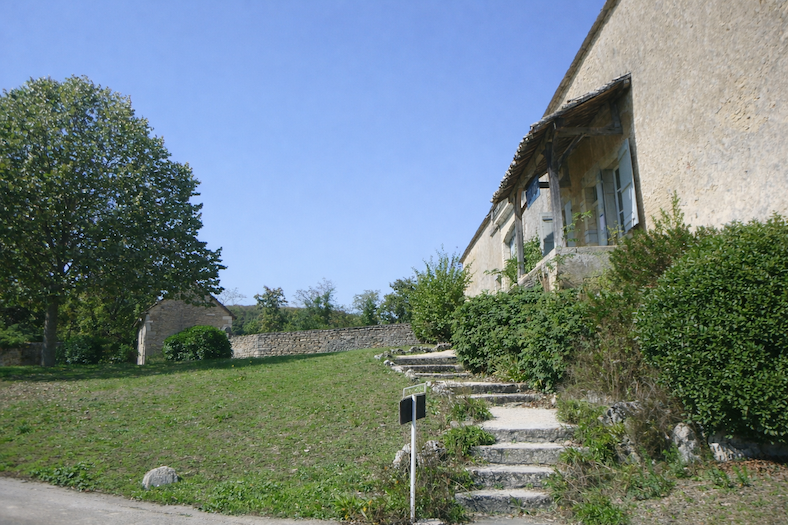
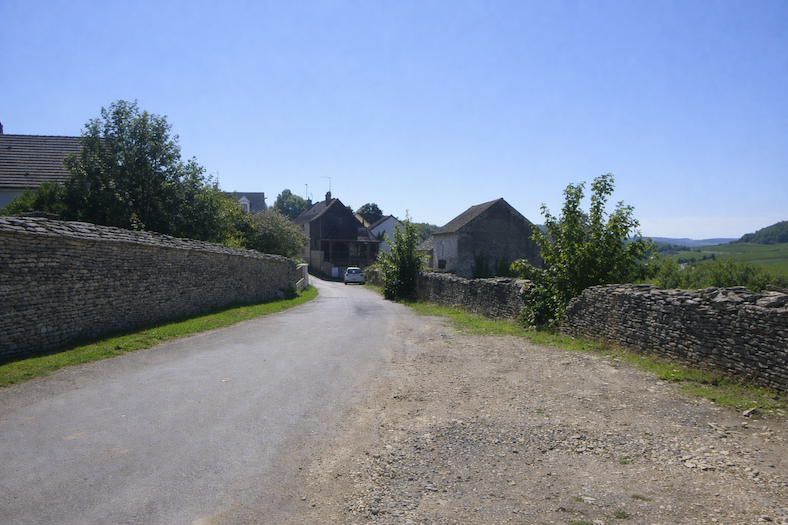
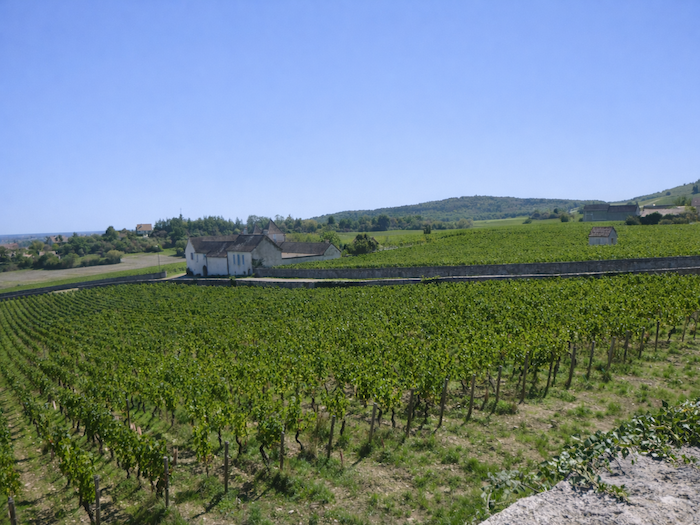
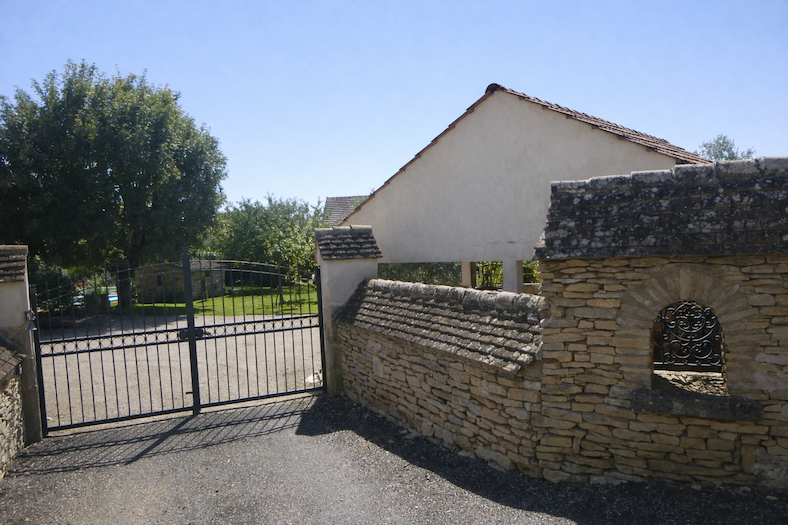
| The road then descends gently toward the fine stone houses of the hamlet, solid and time worn, immobile witnesses to generations of winegrowers. |
 |
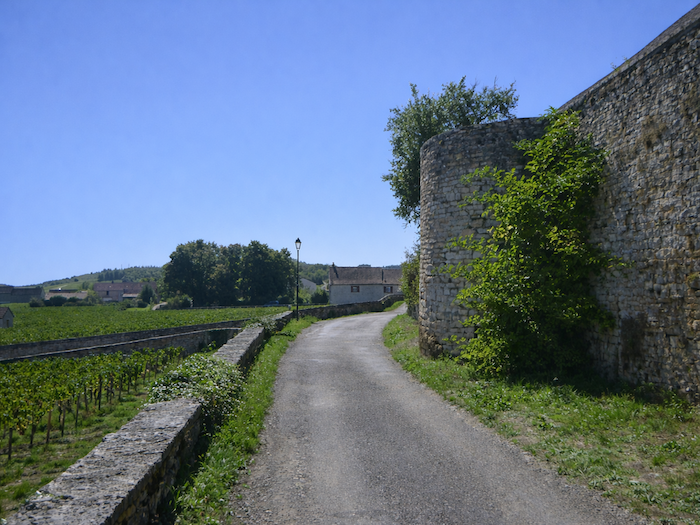 |
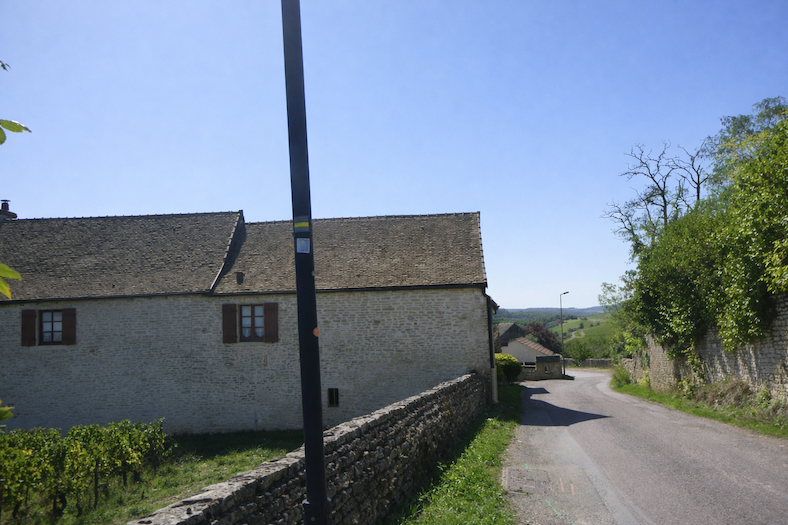
| Sturdy winegrowers’ houses adorn the landscape with quiet pride |
 |
 |
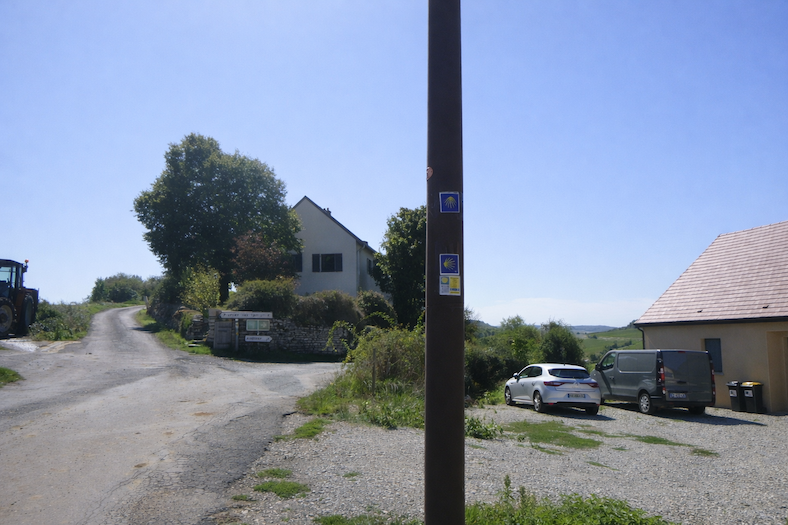
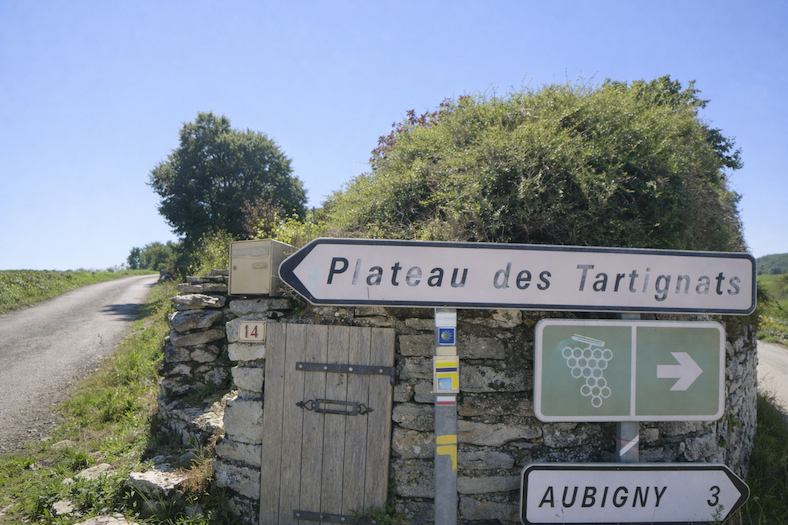
| Here, the GR76 resurfaces and joins the Camino de Santiago. From now on, the two itineraries merge, and you walk toward the Plateau des Tartignats. The combined presence of the signage is a true comfort to the walker; everyone knows how the scallop shells of the Camino can sometimes become scarce or poorly oriented. |
 |
 |
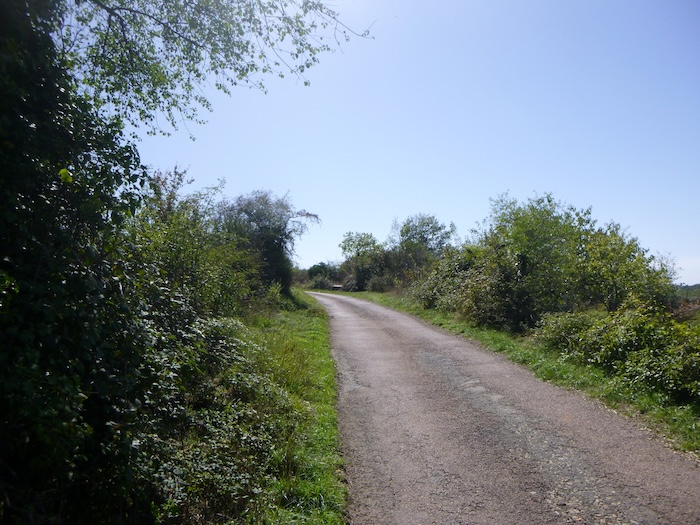
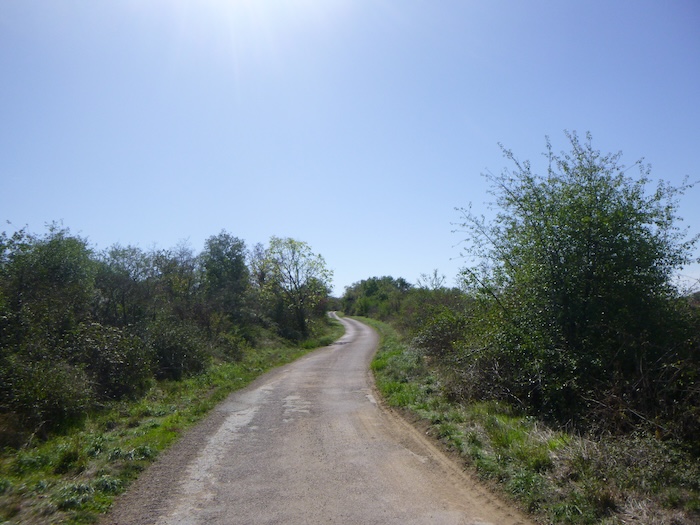
| A small paved road leaves the vineyard to climb patiently, almost gently, along the wild bushes that line its course. The ascent is steady, never too demanding, yet at this stage the landscape becomes more austere, stripped down, almost without charm. The walker advances with a more mechanical step than a dreaming one. |
 |
 |
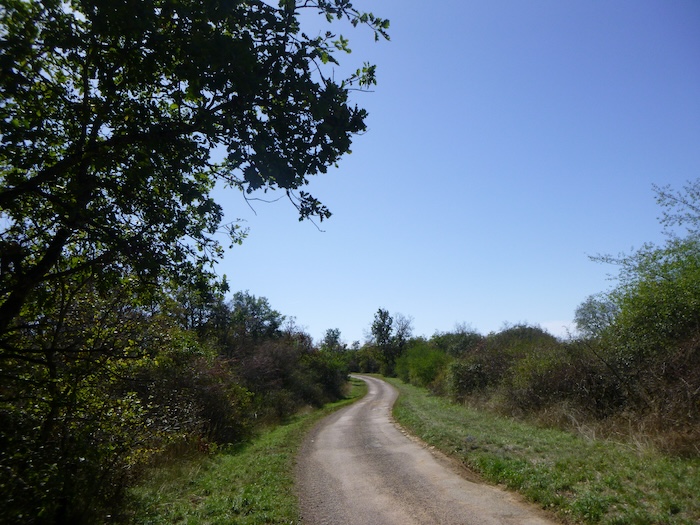
| Fortunately, higher up, the oaks reappear, majestic, bringing back a familiar and reassuring note. Their foliage seems to announce the approach of the plateau. |
 |
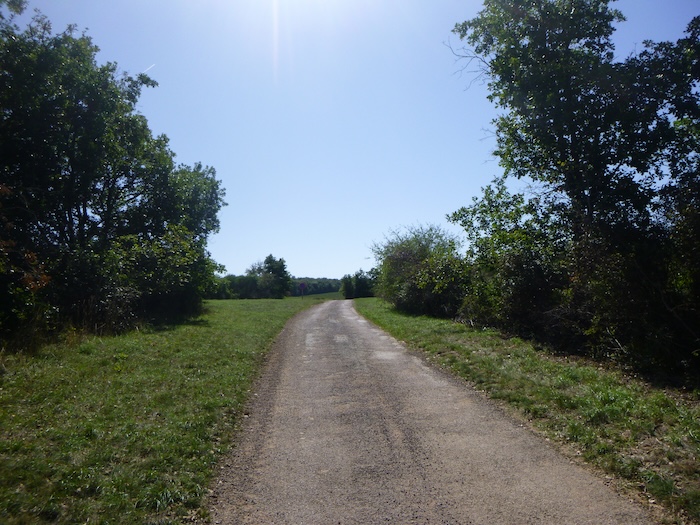 |
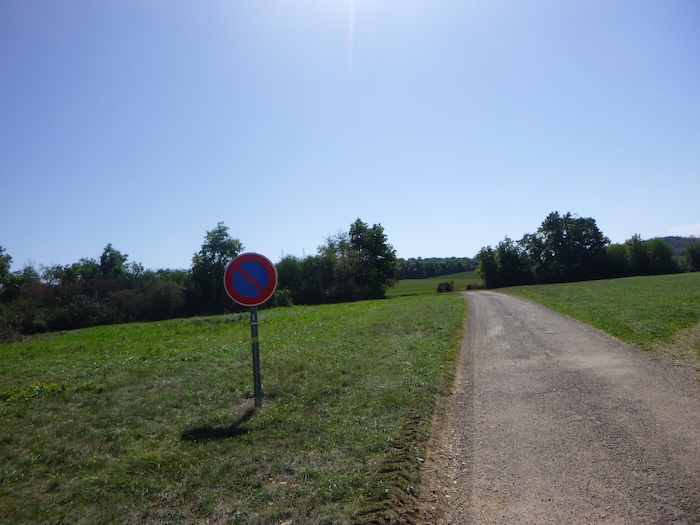
| At the very level of the plateau, where at last the Camino de Santiago signage and that of the GR76 meet without ambiguity, the asphalt disappears. It gives way to dirt, and with it, the vineyard is reborn. |
 |
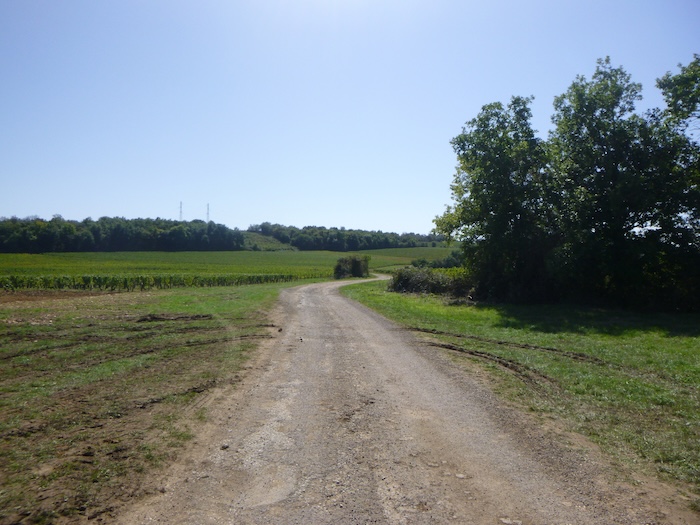 |
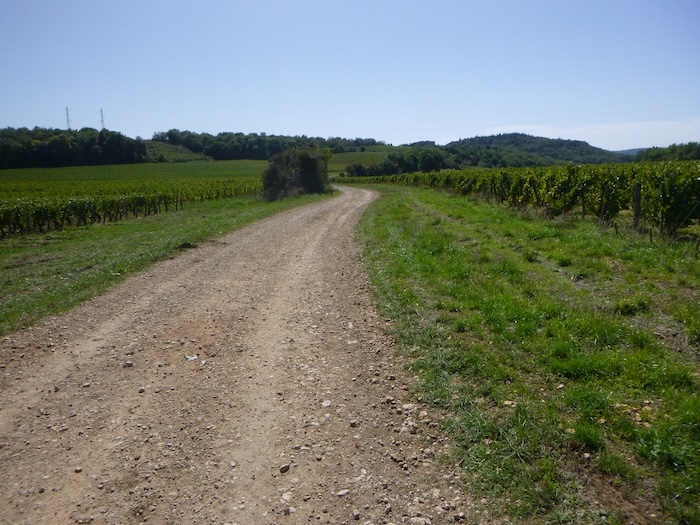
| On either side of a wide stony path, the vines align with geometric rigor, drawing endless rows. You remain in the heart of the vineyard of Rully, this time on the plateau, where the vines continue their silent reign. |
 |
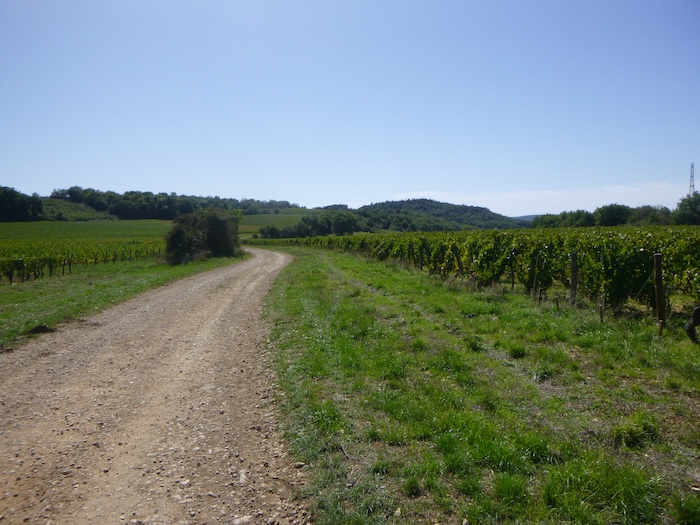 |
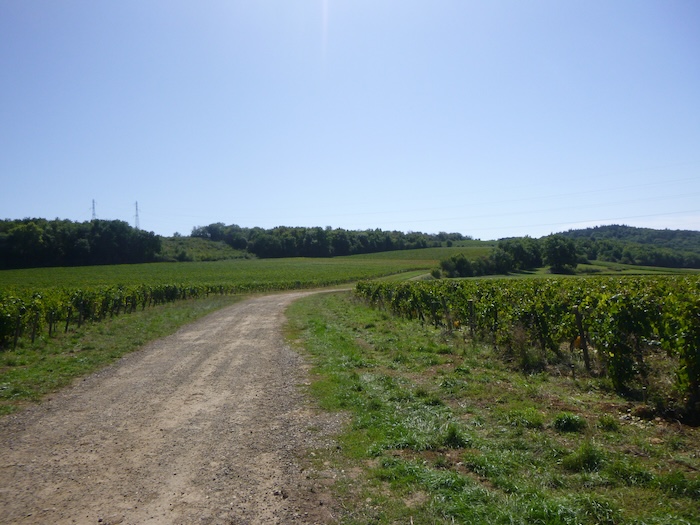
And yet, before you stands a riddle. It is flat and for a moment you believe the path has reached the Plateau des Tartignats. But where to continue. To the right. Straight ahead. Even the small guide of the Friends of Compostela remains silent at this deceptive crossroads. Here, only intuition or chance guides your steps. We ourselves needed the help of a benevolent winegrower, who rescued us from uncertainty by assuring us that we had to continue straight ahead. You, now, will no longer hesitate, the plateau path climbs still higher, toward the hill.
Section 3: En transit par Mercurey
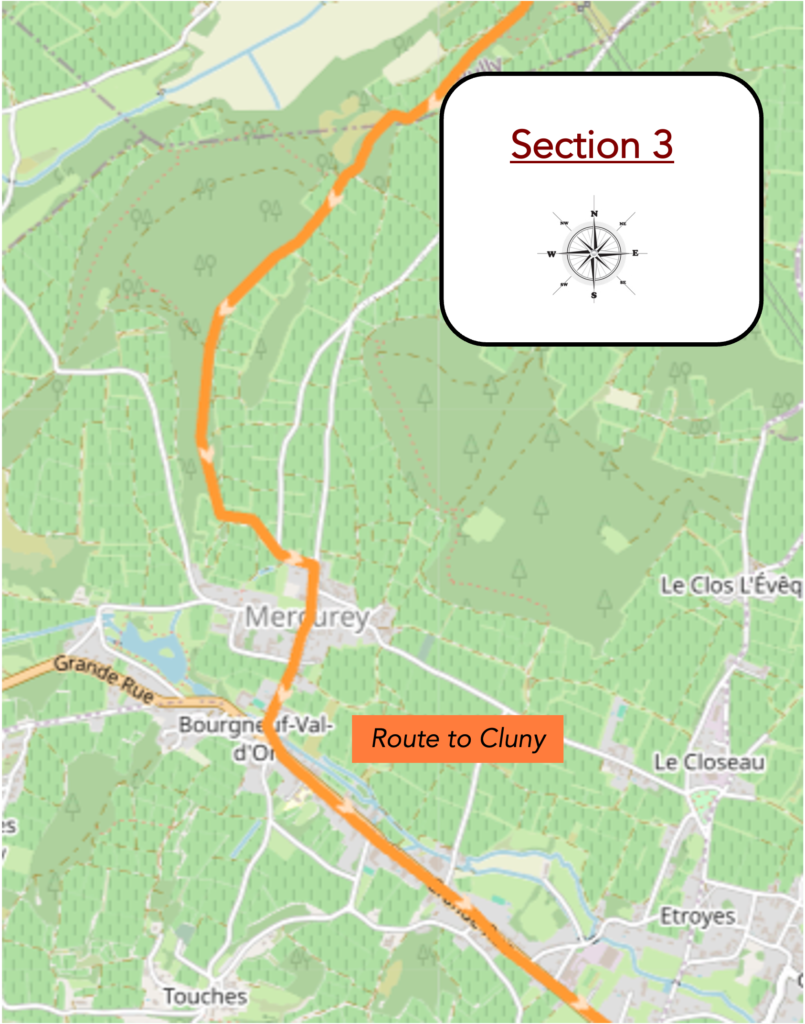
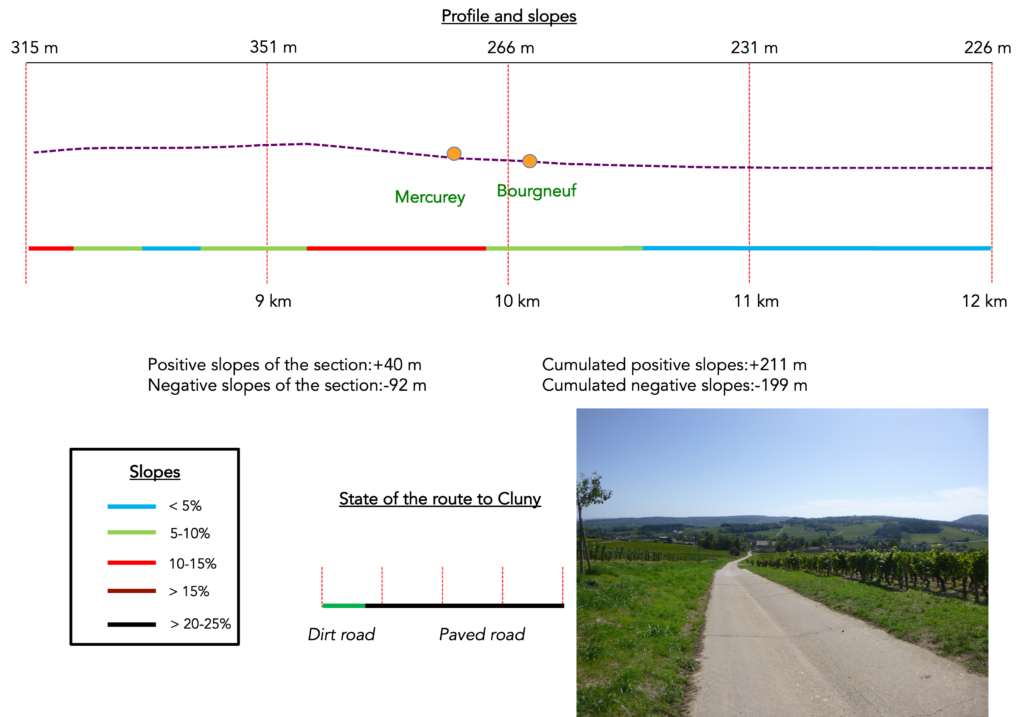
Overview of the route’s challenges: a route with at times marked downhill gradients toward Mercurey, then level along the road.
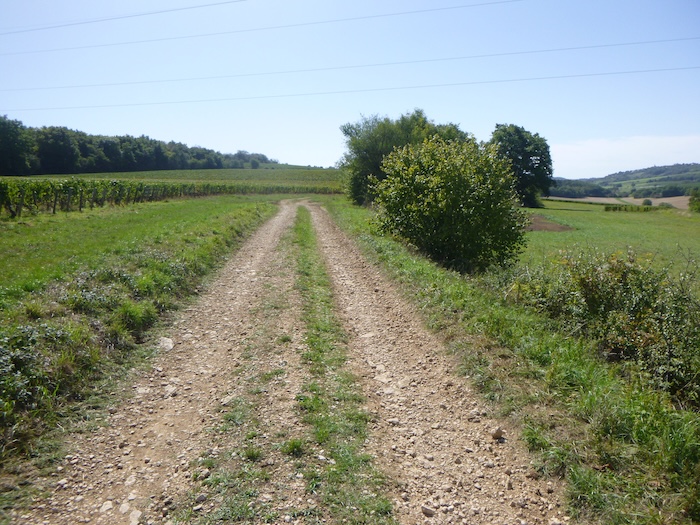
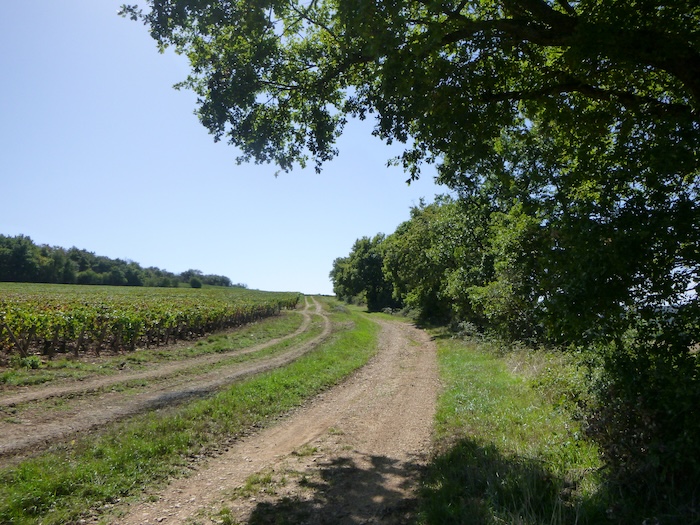
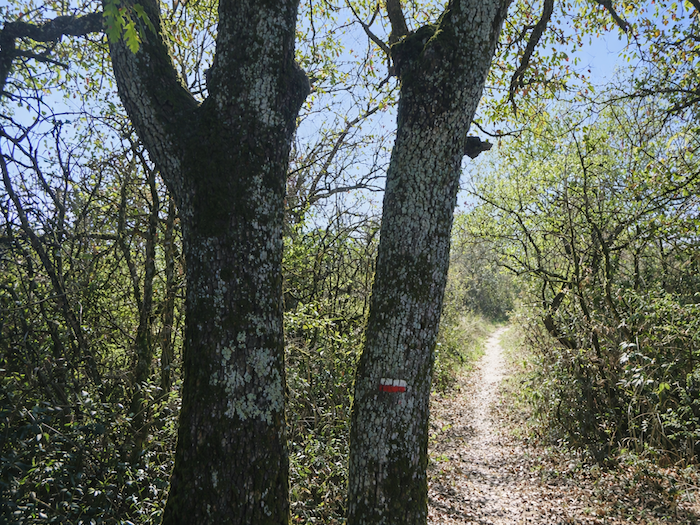
| The stony path climbs with a steady gradient, ascending slopes carpeted with vines. Higher up, it becomes more intimate, brushing against woodland of thick shrubs and tall oaks that raise their massive trunks to your right, like guardians of stone and shadow. |
 |
 |
| Then suddenly, the itinerary becomes confused. The markings indicate a halt to the path. |
 |
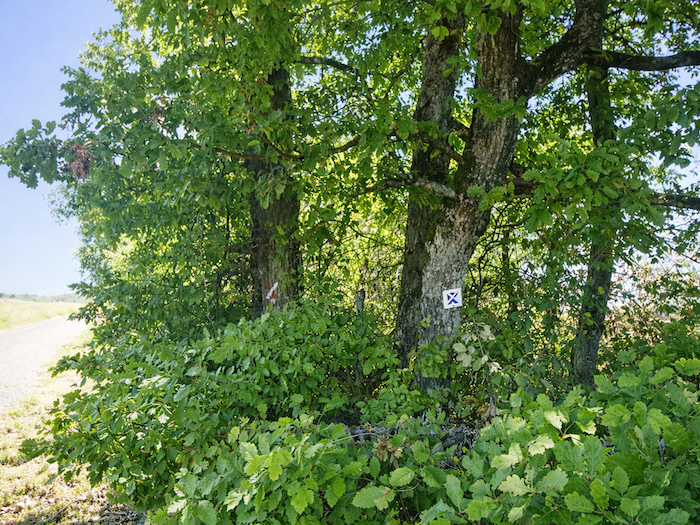 |
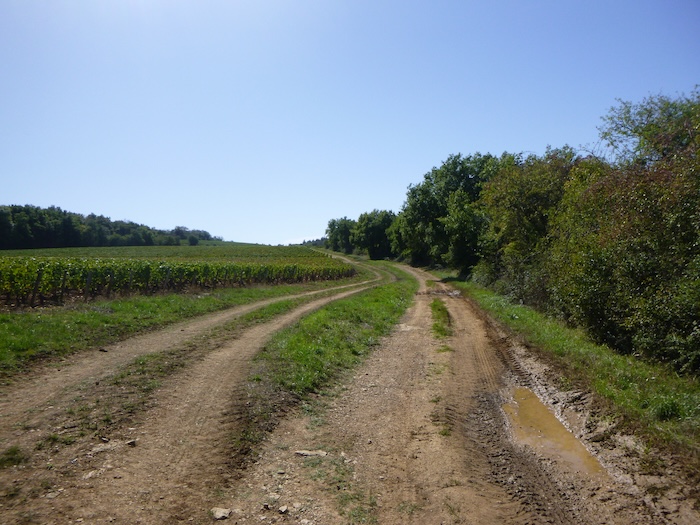
But a path slips away to the left, pushing into the vineyard. That is the one you must take, even though it bears no clear indication. The walker’s instinct here is worth more than any guide.
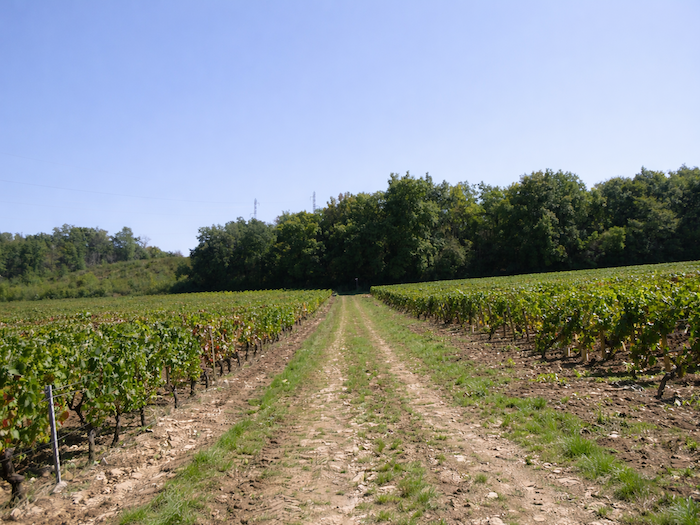
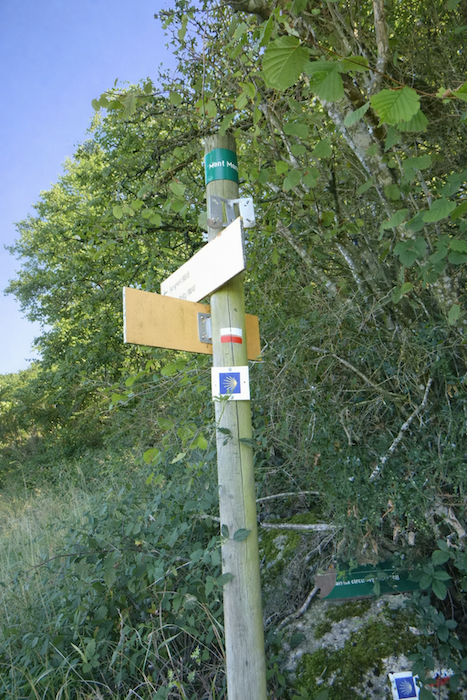
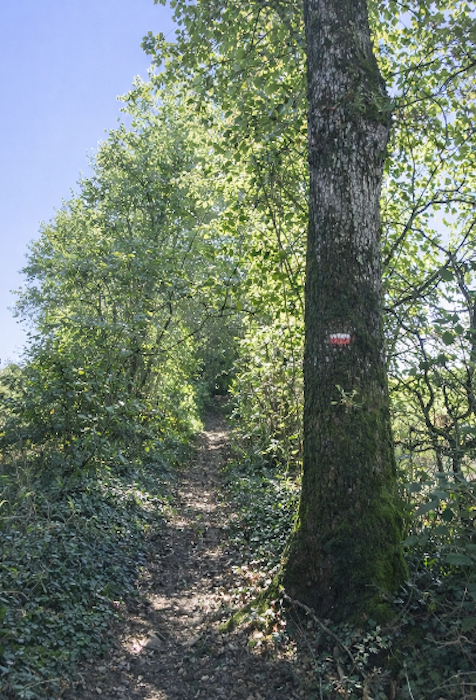
| And now you reach the place called Montmorin. What relief to find there, at last, reliable markings that restore your confidence. The direction of the path becomes clear again. It feels like a return to the obvious, almost a reassuring caress. |
 |
 |
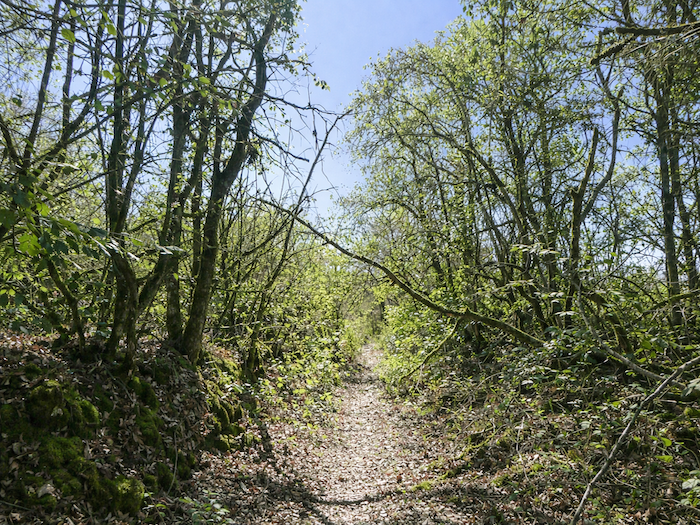
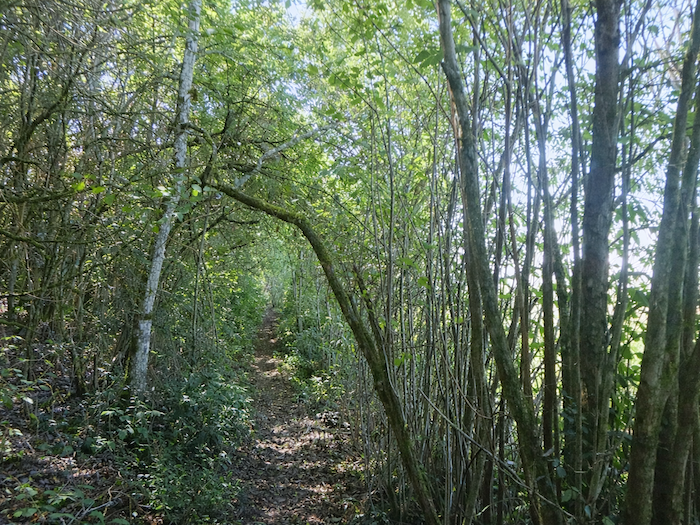
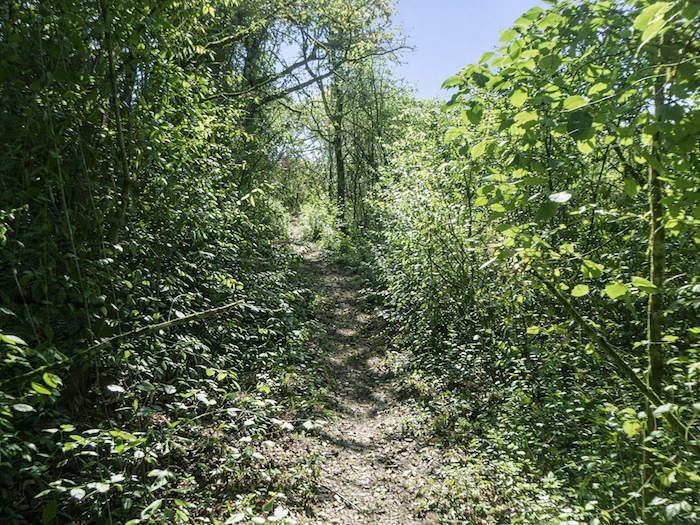
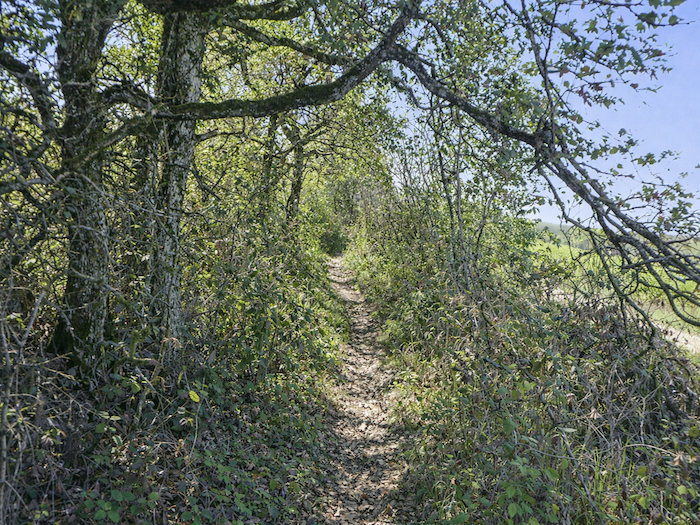
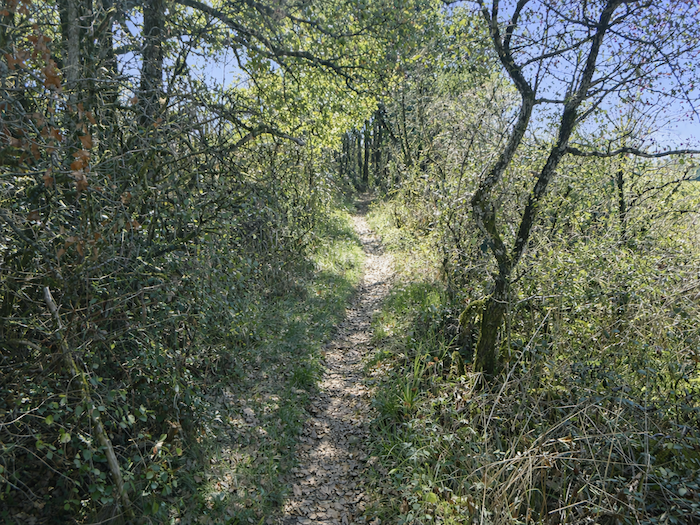
| The Montmorin path then reveals itself as a charming little trail. It winds gracefully, climbing gently through wild woodland. One might think it dances lightly among the trees, playing with their roots and shadows. |
 |
 |
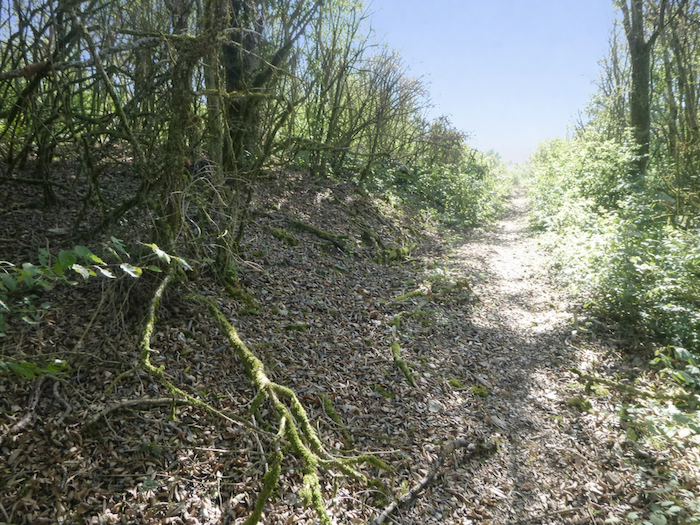
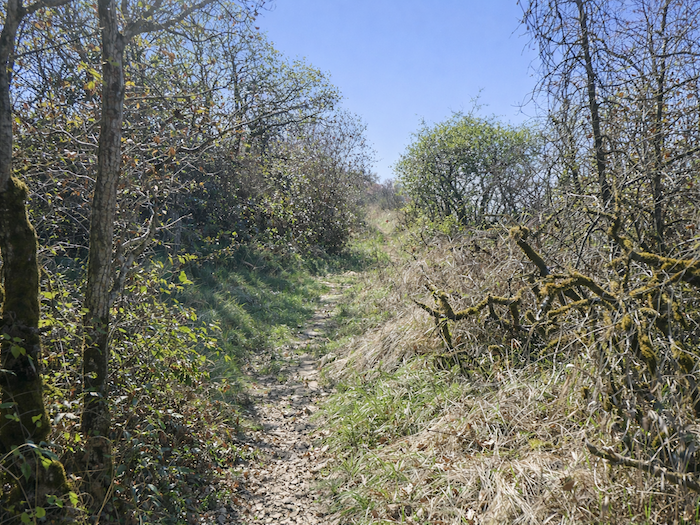
| Beneath your steps, the stony trail takes on another appearance, moss and lichen cling to it, embed themselves in the brush, and compose an almost unreal scene. It is a setting from a tale, a fantastical spectacle where green and gray intertwine in fragile harmony. |
 |
 |
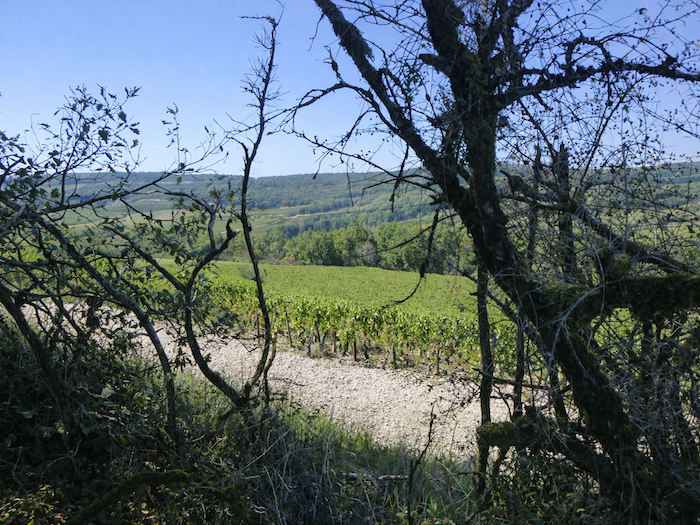
| Higher up, the vines return, asserting themselves below the path, orderly and luminous. After shadow, light, the vineyard reclaims its rights. |
 |
 |
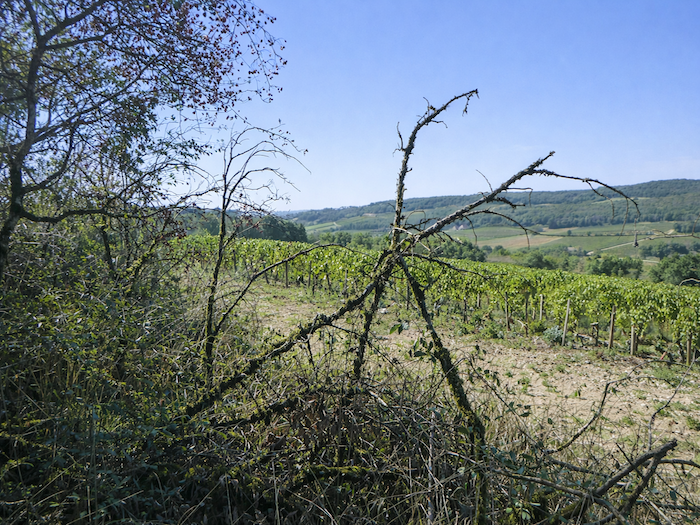
| And soon, the trail leaves the woodland for good. |
 |
 |
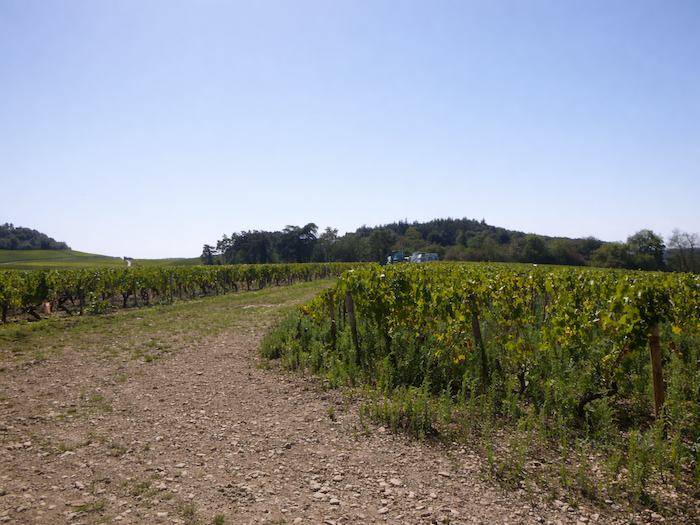
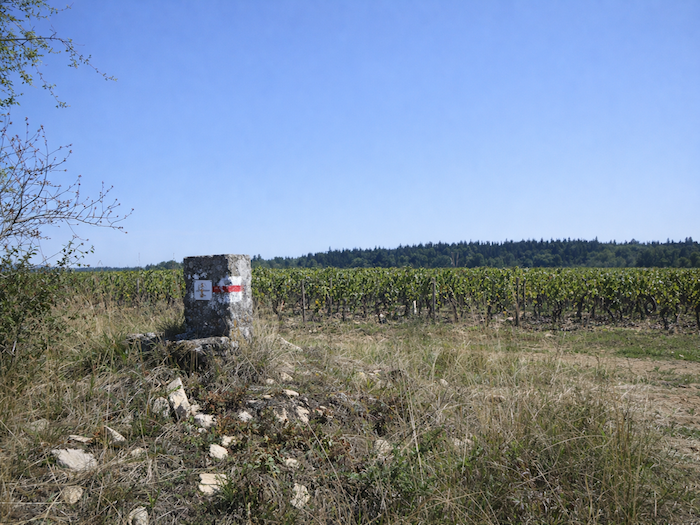
| Light bursts in from every side, flooding the vines that align across the plateau. Perhaps you have reached, this time, the true Plateau des Tartignats, that high place where Rully and Mercurey share the kingdom of vines. But who can say with certainty. The boundary remains invisible, mysterious, like a secret jealously guarded by the land itself. |
 |
 |
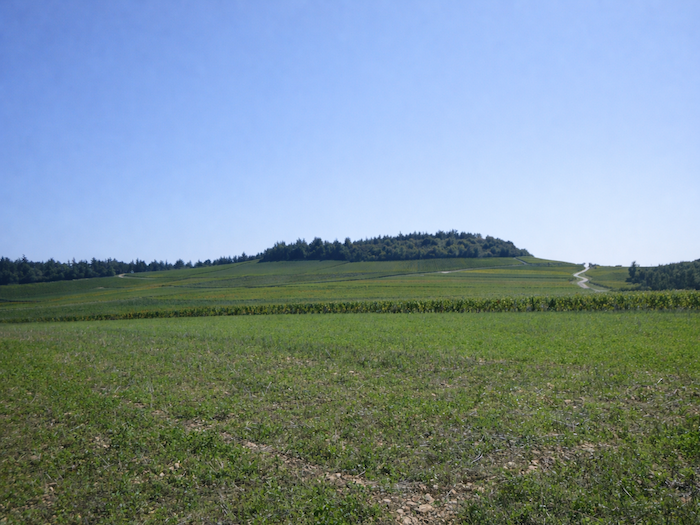
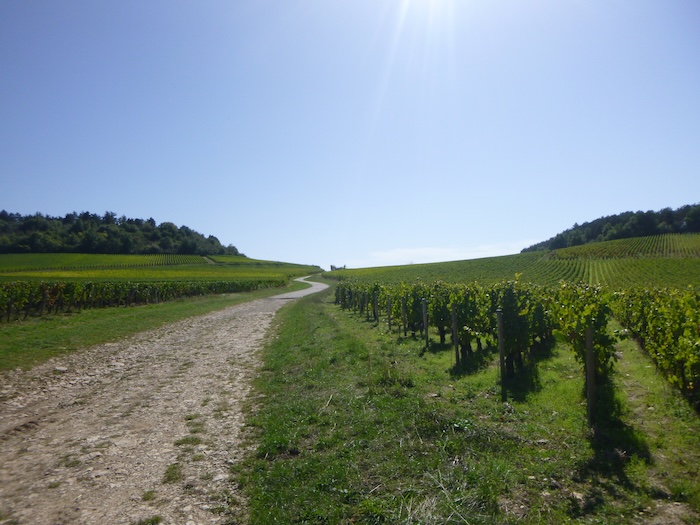
| Here, it is still harvest time. Before you, the path winds, sinuous as a ribbon laid upon the earth, and climbs patiently to the summit of the hill. |
 |
 |
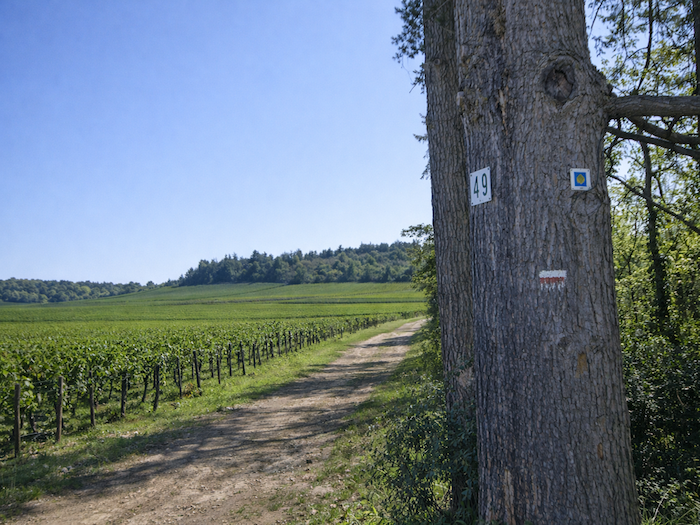
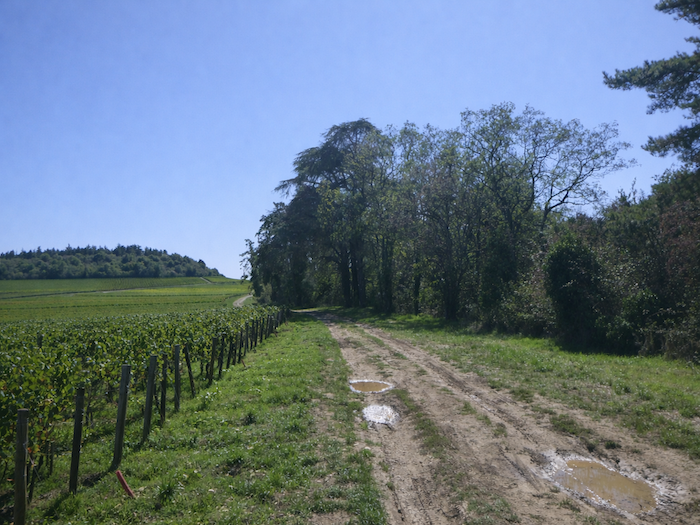
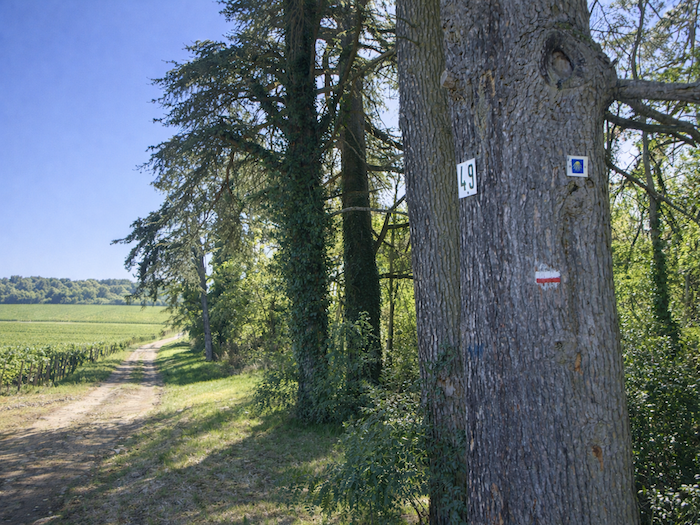
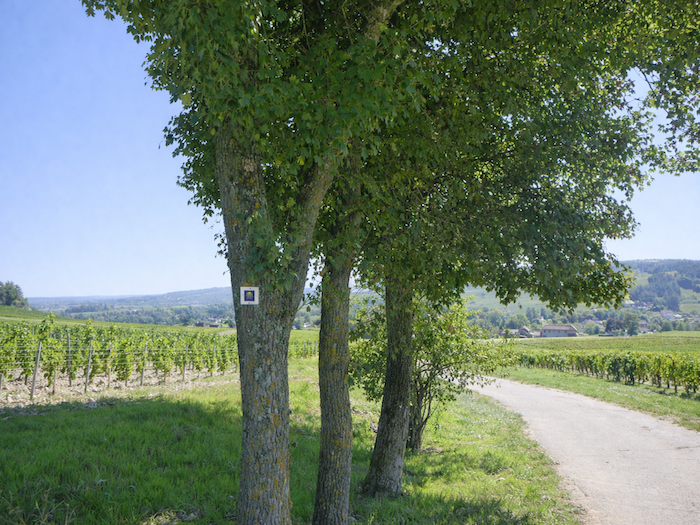
| The wide path stretches between vineyards and woodland. The route markings, blue scallop shells and the red and white bands of the GR, appear fixed to the trunks of oaks. Ironically, it is precisely here, where no one would risk losing the way, that the signage is most generous, almost overwhelming. As if the forest itself wished to hold you back, insisting on a direction it scarcely needs to give. |
 |
 |
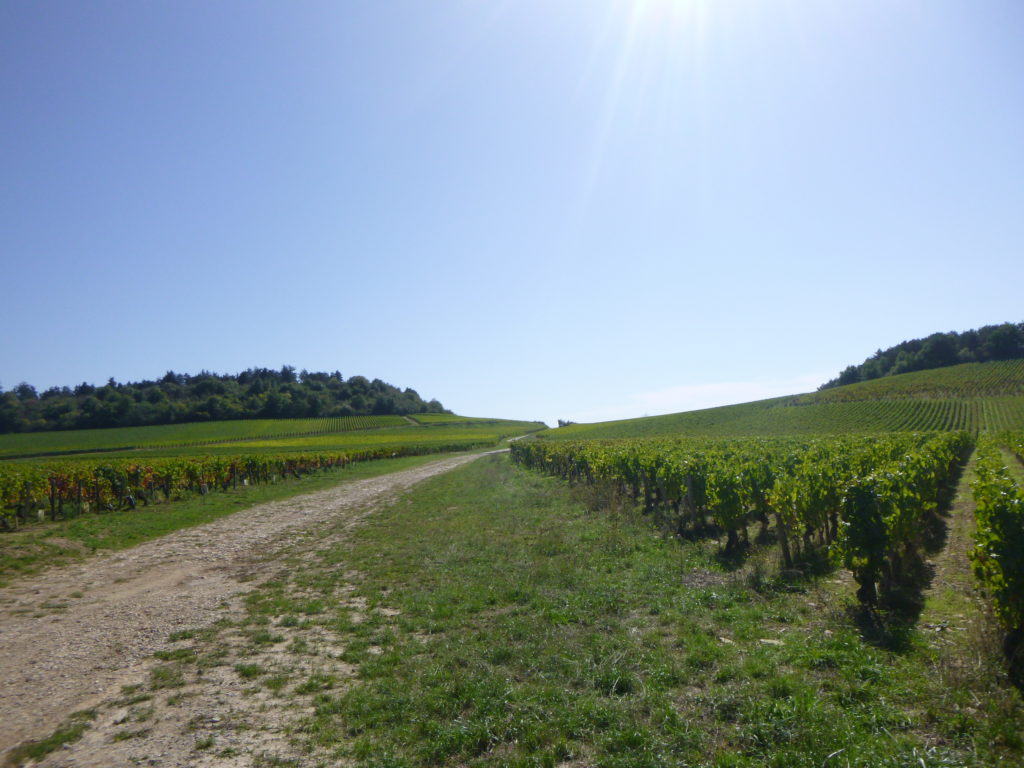
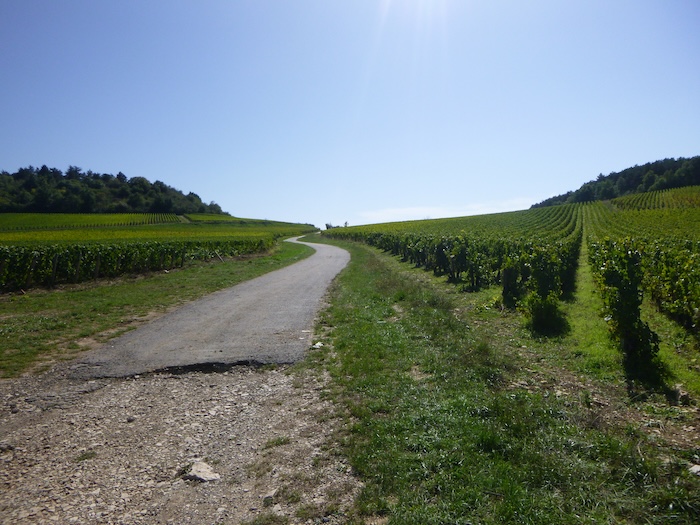
| In this luminous vineyard, the dirt finally yields to asphalt, a discreet sign that you are rising toward another world. |
 |
 |
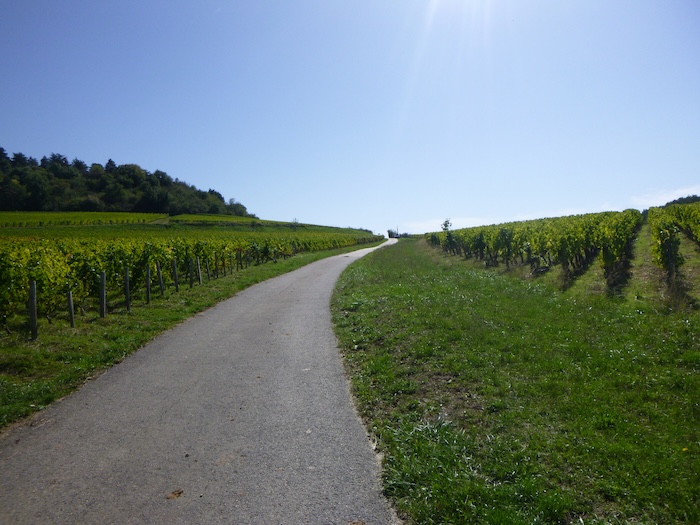
| The road then steepens, climbing more directly to the crest of the hill. Here, you have left Rully to enter the realm of the wines of Mercurey. The vines change in nature, luminous Chardonnay gives way to dark and profound Pinot Noir, which anchors its roots in these ancient slopes. Each vine seems to carry within it the shadow of a cellar, the promise of a structured and ardent wine that only time will soften. |
 |
 |
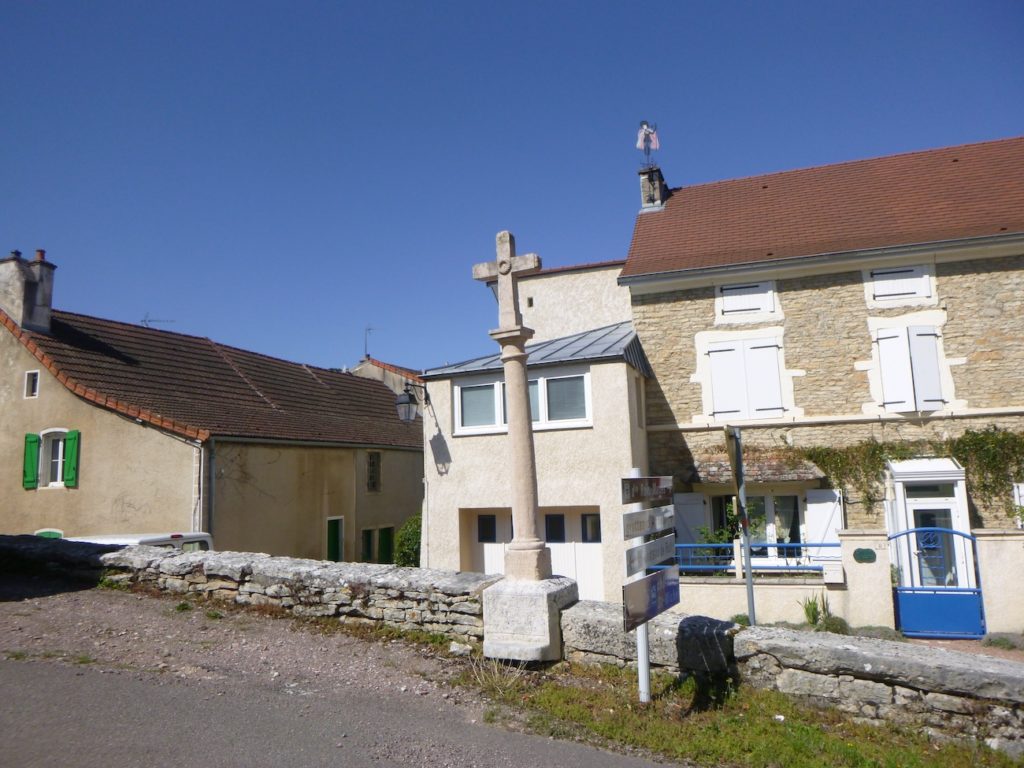
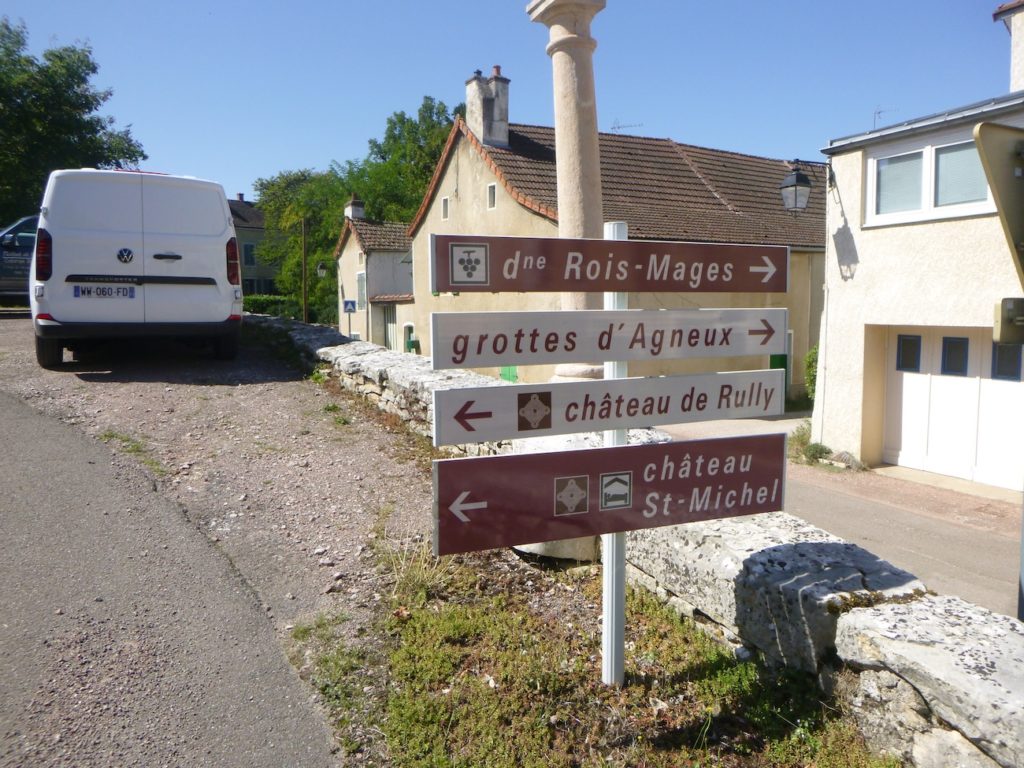
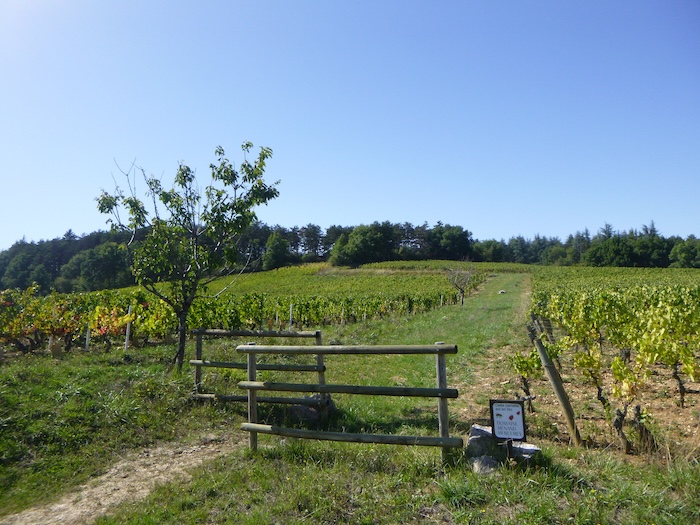
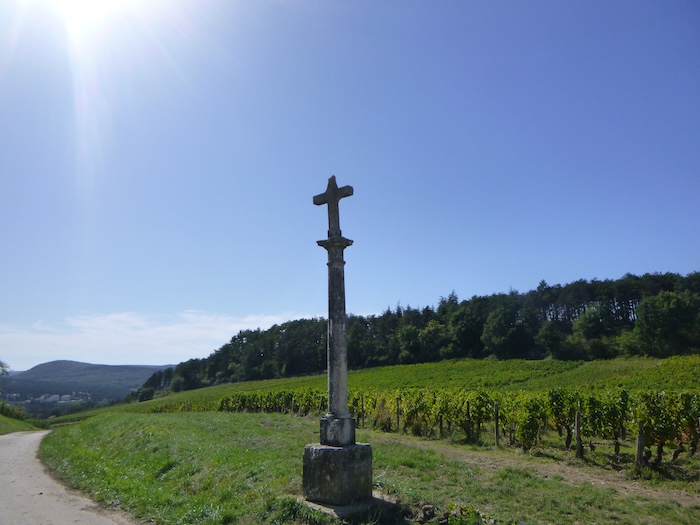
| At the summit, a stone cross stands, motionless and vigilant. For centuries it has watched over the vineyard and its people, a silent witness to seasons, labors and prayers. Like a beacon, it dominates the horizon, reminding you that the path is never only earthly. |
 |
 |
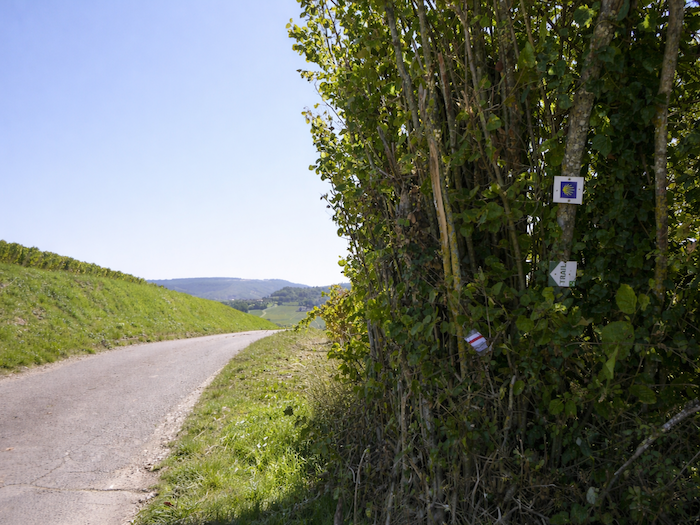
| The road then detaches itself from the hill and begins its descent toward Mercurey. |
 |
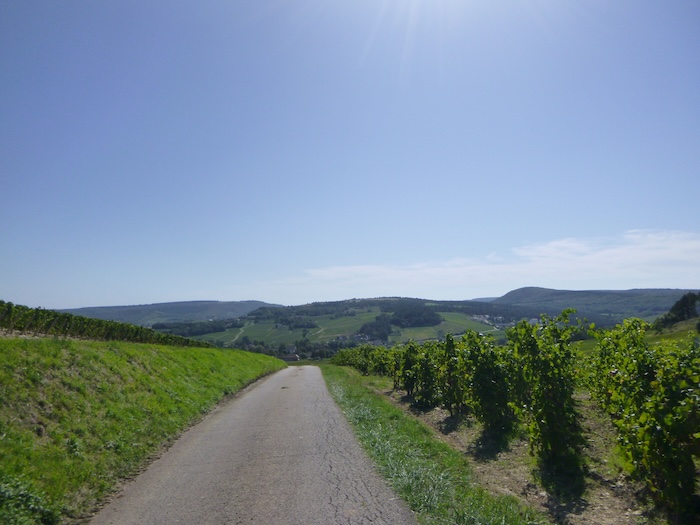 |
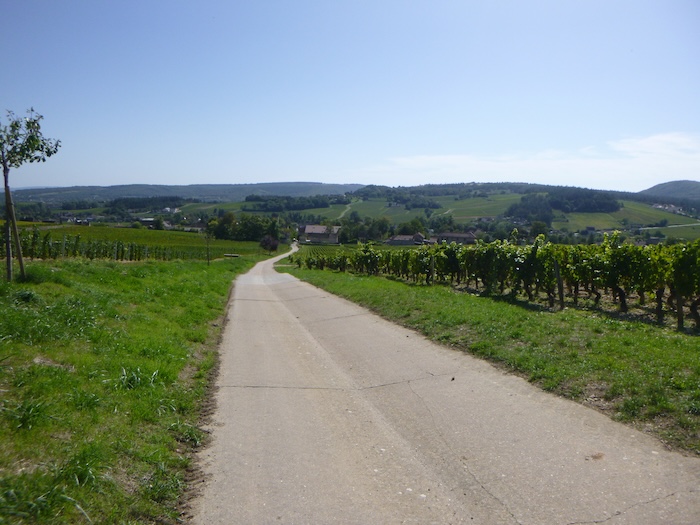
| The gradient is steady, sometimes close to 15 percent, plunging into the heart of the vineyard. |
 |
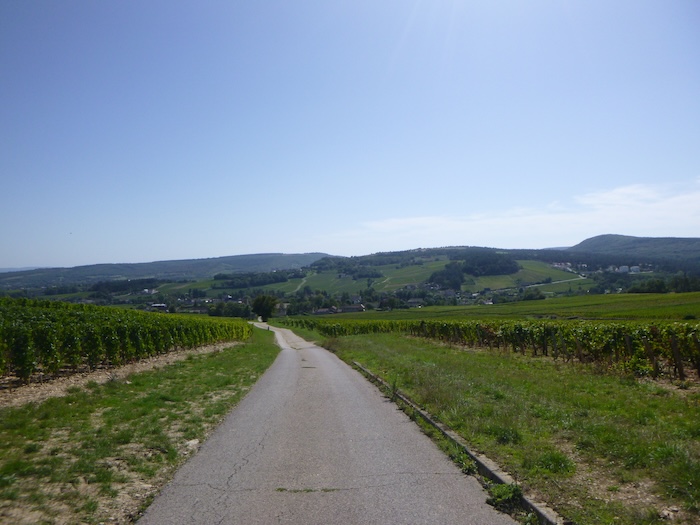 |
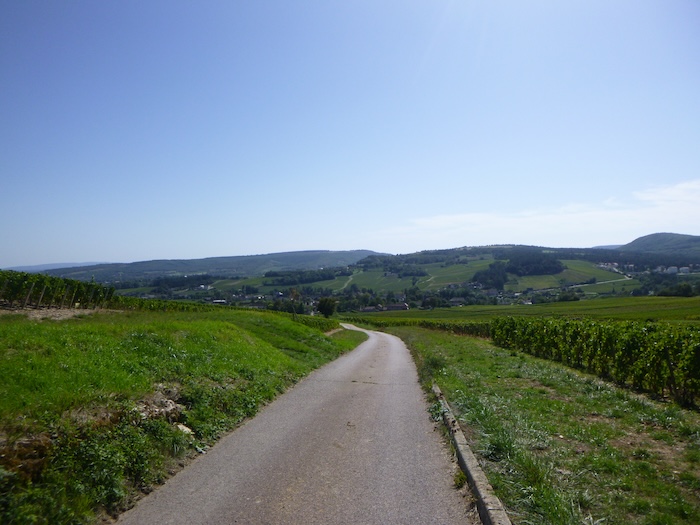
| The vines rise in tiers on either side, imperturbable, as if to slow the traveler drawn down toward the village. |
 |
 |
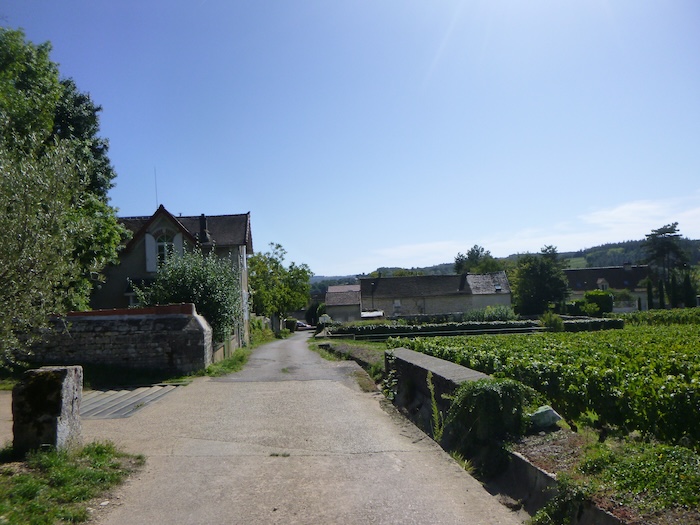
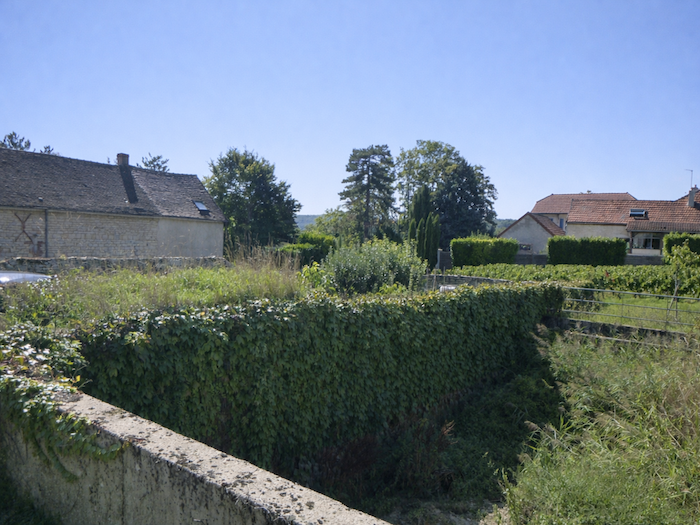
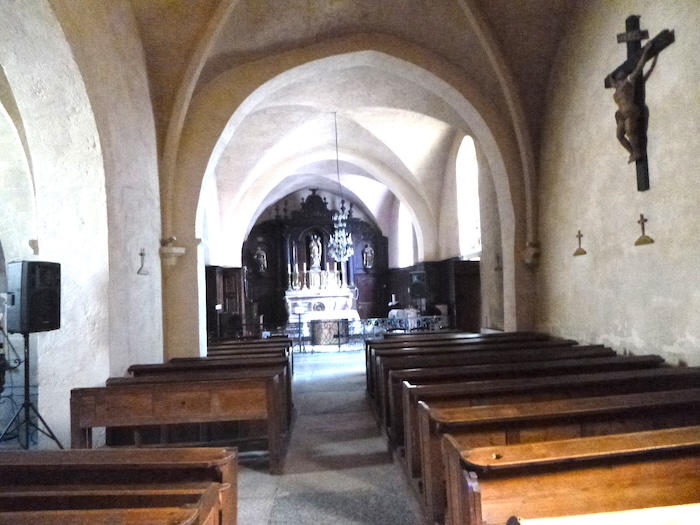
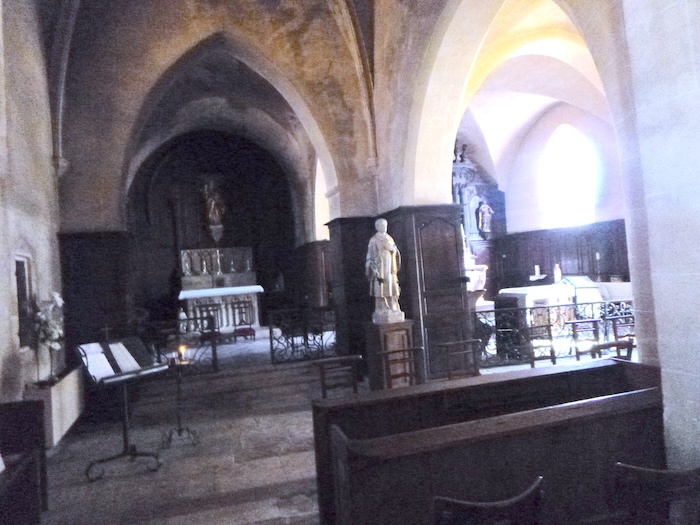
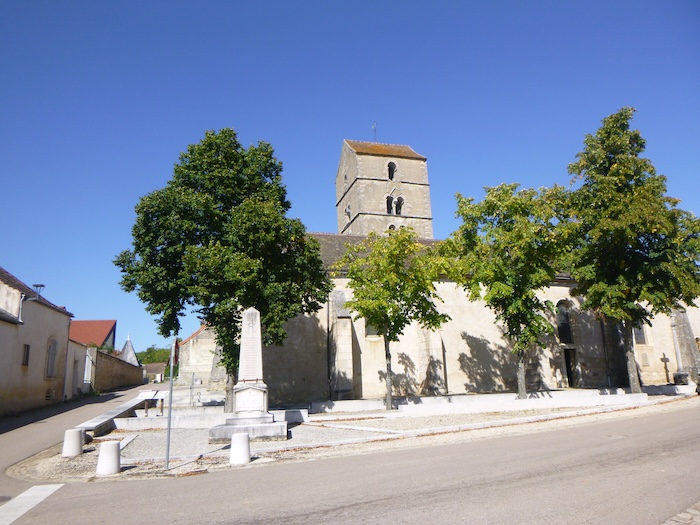
| The upper part of the village reveals itself in stone. There, winegrowers’ houses stand aligned, substantial, dark and solid. Their thick walls seem to carry the memory of the generations who lived within them. Soon, the road leads to the edge of the massive church of Notre Dame de l’Assomption. |
 |
 |
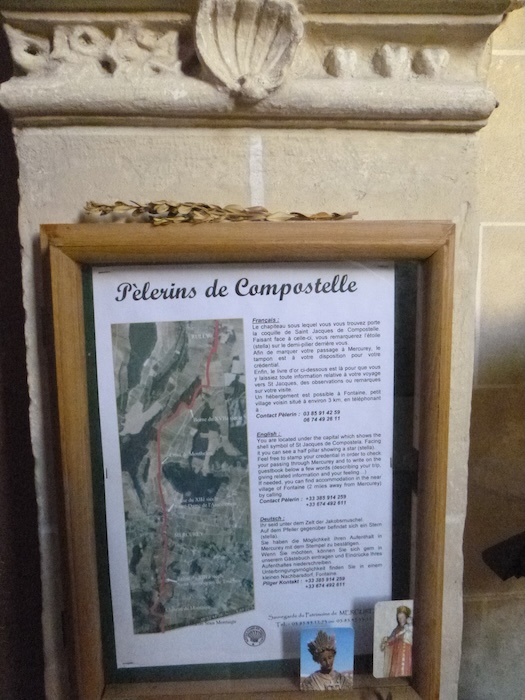
| This building, whose origins likely date back to the twelfth century, blends Romanesque and Gothic influences, like layers of time laid one upon another. A scallop shell carved on a capital recalls, without ambiguity, that the church long served as a halt along the Camino de Santiago. The footsteps of pilgrims, yesterday and today, still echo in its stones. |
 |
 |
| From the church, the road slopes gently down toward the center of the village, home to its 1,250 inhabitants. |
 |
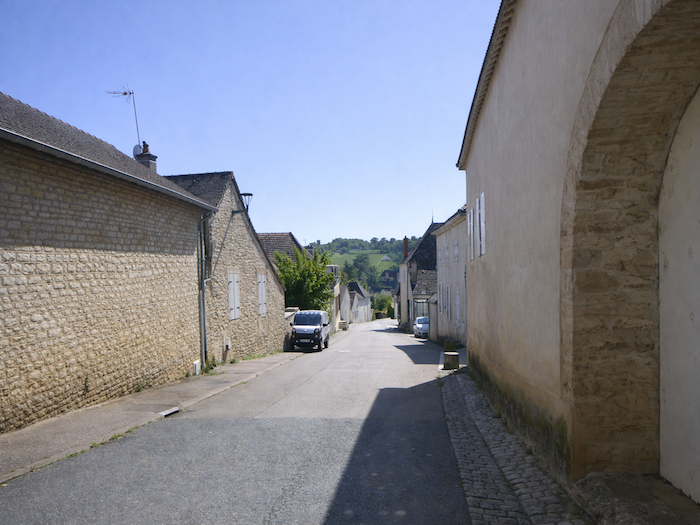 |
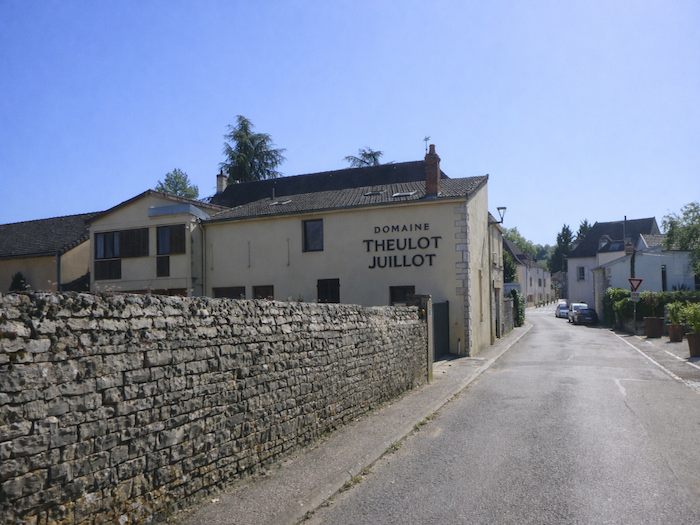
| The route then joins the main departmental road to Châlons sur Saône. |
 |
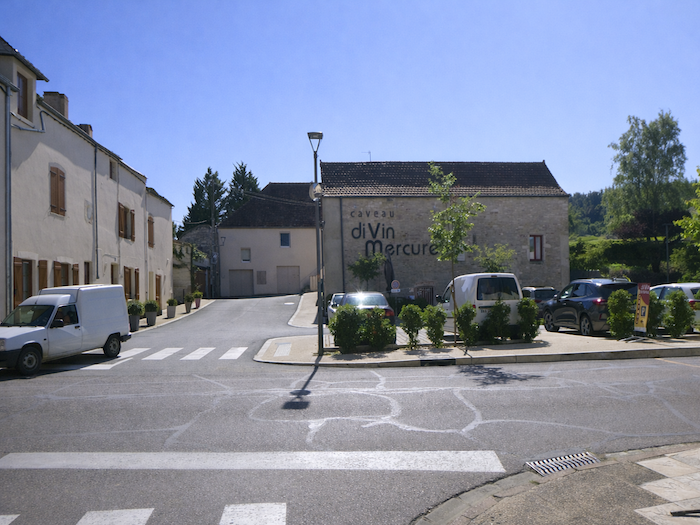 |
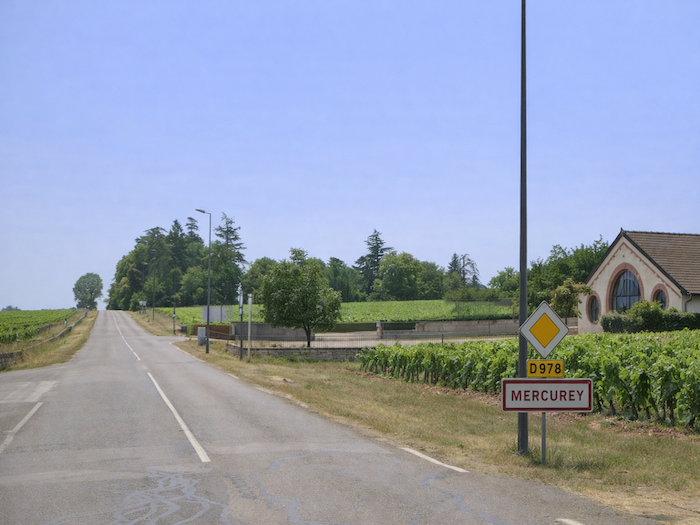
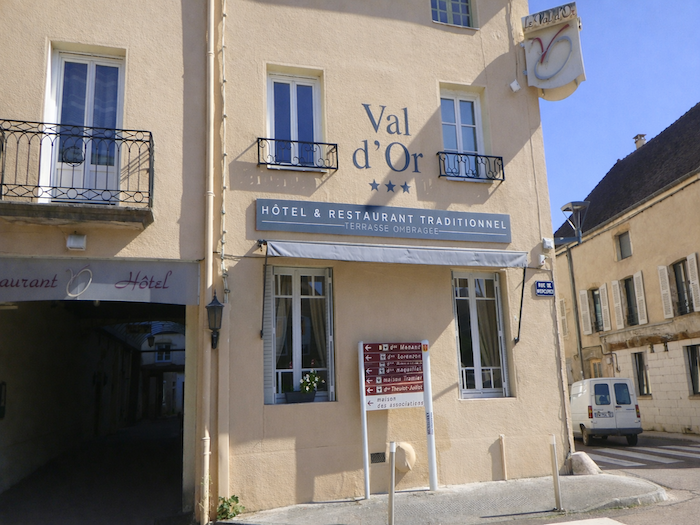
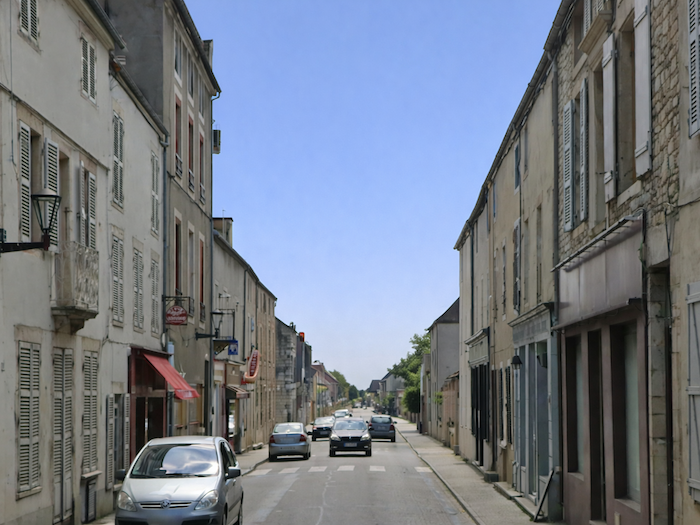
| Mercurey does not present itself as a town, but as a winegrowing village. It is a simple line of houses aligned along the departmental road. There is nevertheless a hotel and a restaurant, a welcome oasis for the walker seeking a halt. For Mercurey, despite the renown of its wines, does not live from tourism. Its shops are few, its lanes quiet. For broader needs, residents go to Chalon sur Saône, a large commercial town located barely ten kilometers away. |
 |
 |
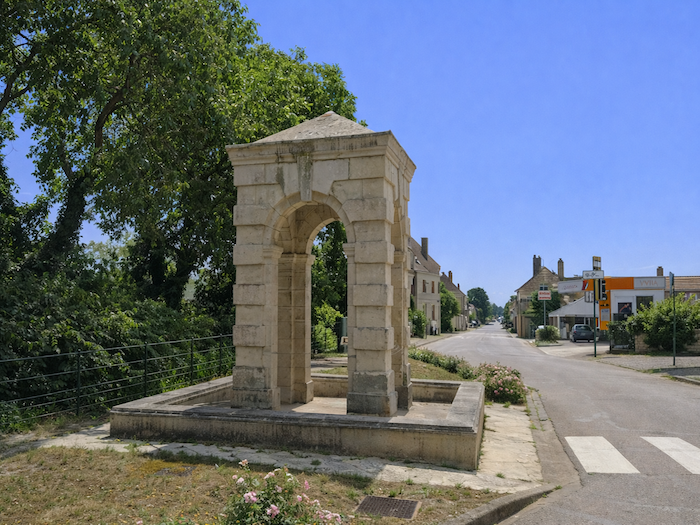
| As announced at the beginning of this journey, you will now leave the Camino de Santiago and head toward Givry, following the road that stretches out before you.
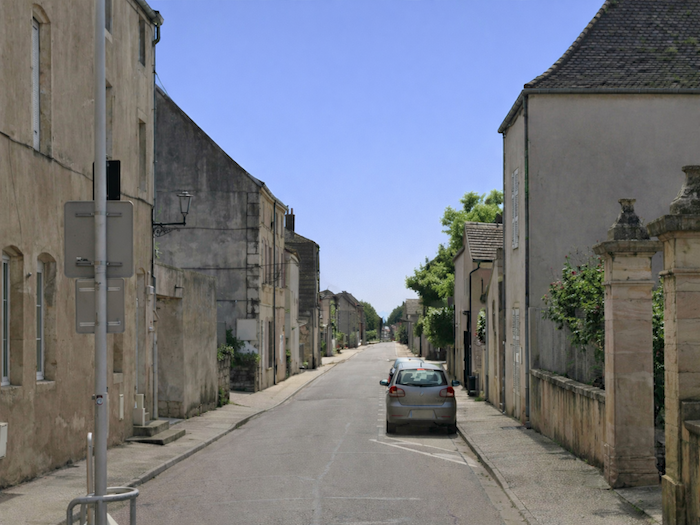
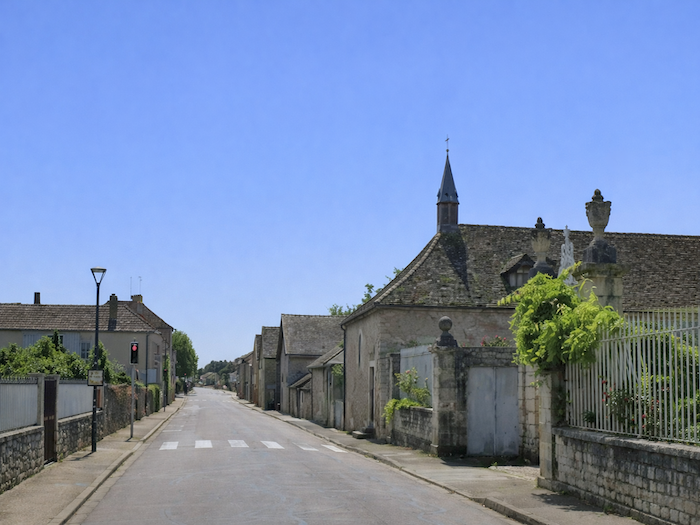
Mercurey and Bourgneuf share the territory, though the name of the latter, meaning new, may raise a smile. There is no modern district here, no visible novelty on the horizon, only the endless crossing of this old village that bears the marks of time far more than those of innovation. |
 |
 |
 |
 |
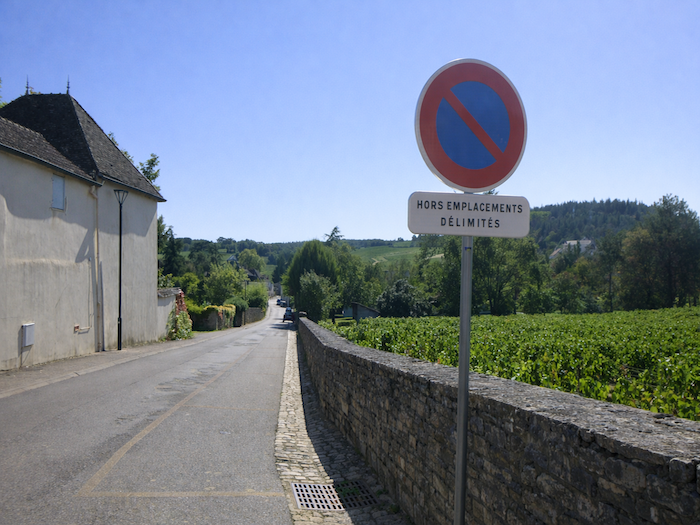
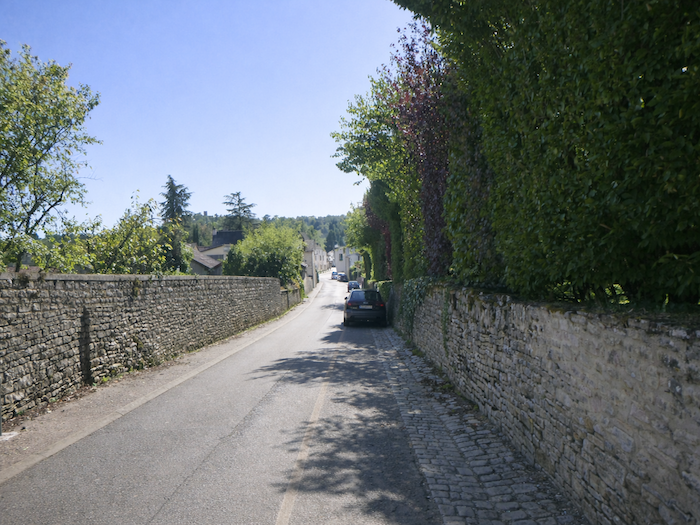
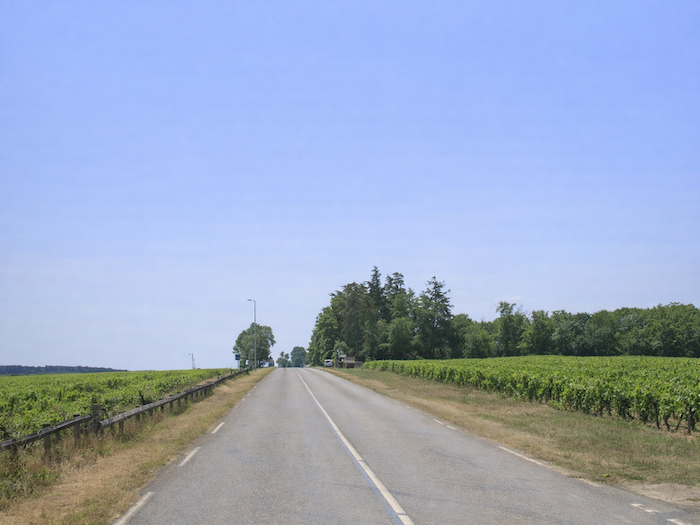
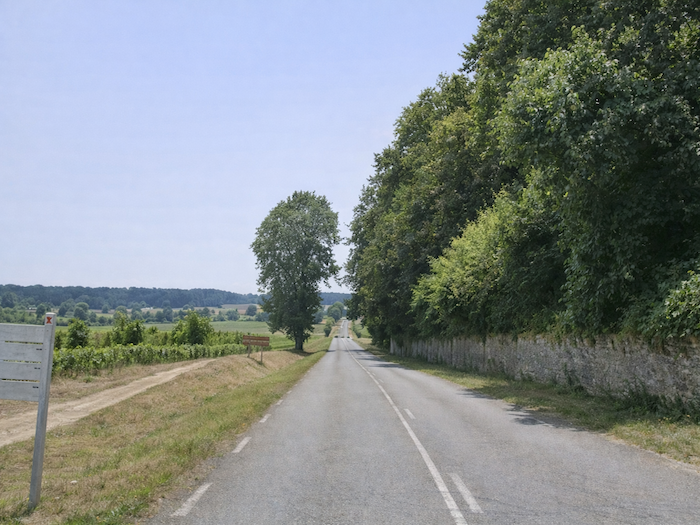
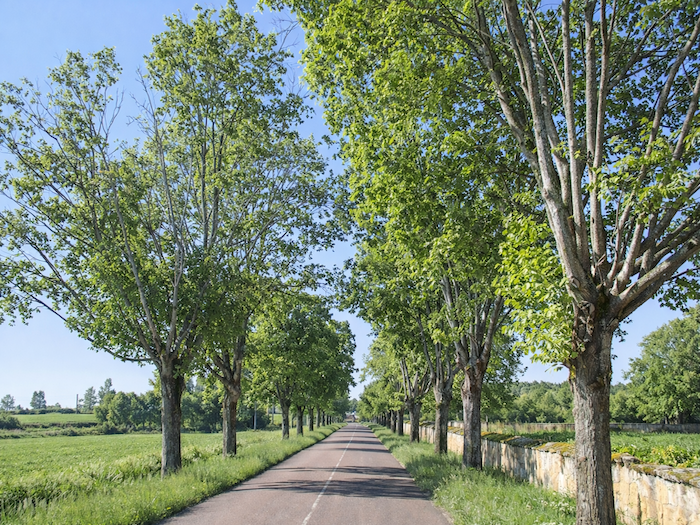
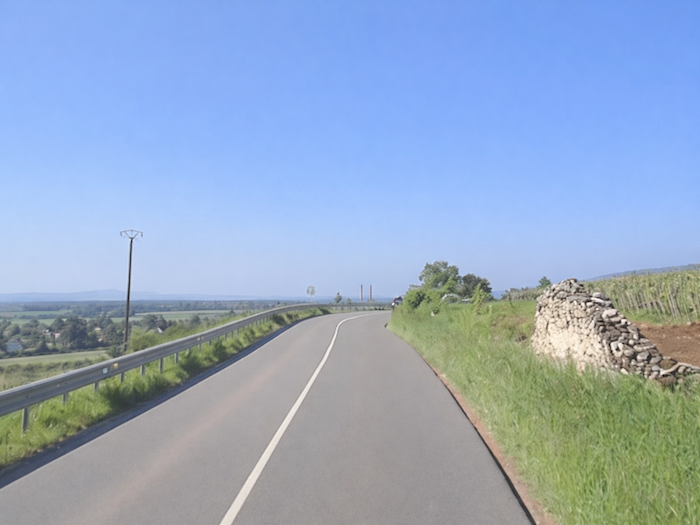
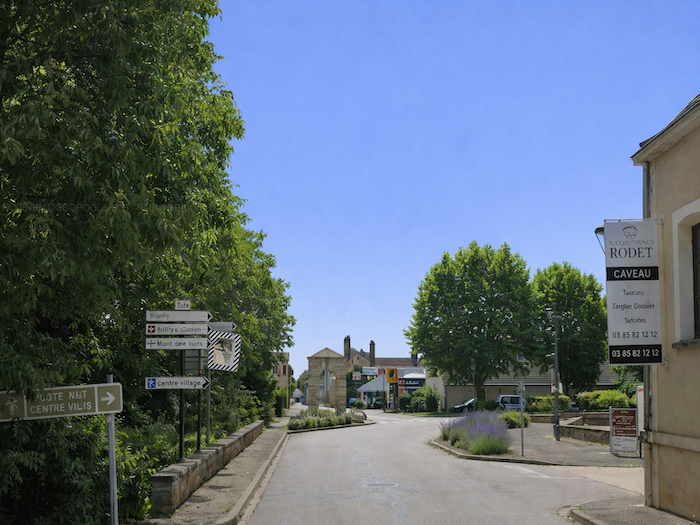
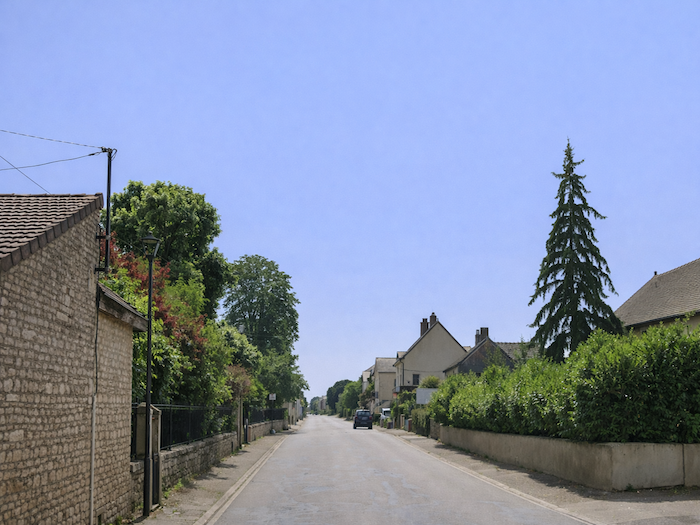
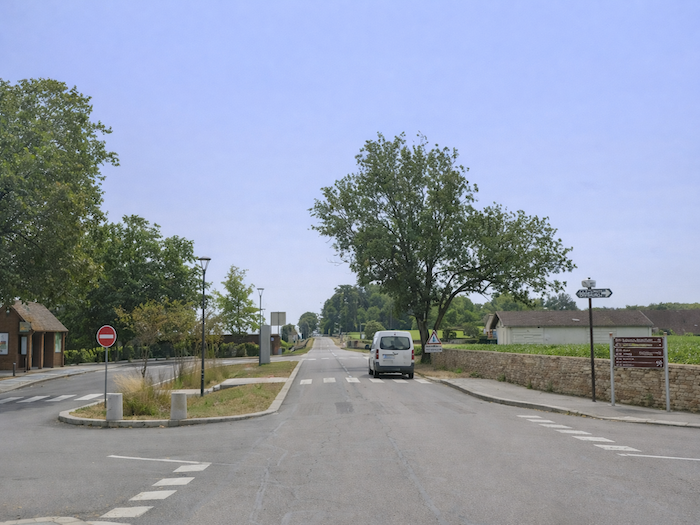
| An attentive eye may sometimes glimpse, above the roadway, lines of vines stretching like a regular frieze along the slopes, yet the vineyard of Mercurey remains modest here, like a brief breath within Burgundian immensity. As you gradually leave the outskirts behind, the road lengthens, running alongside the vineyard like a quiet ribbon. The traffic, far from oppressive, flows gently, and the walker, if careful with each step, can easily progress along the grassy verge that borders the road, finding there a softer ground than a simple pavement. Silence is sometimes broken by the rumble of an engine. |
 |
 |
Section 4: On the road toward Givry
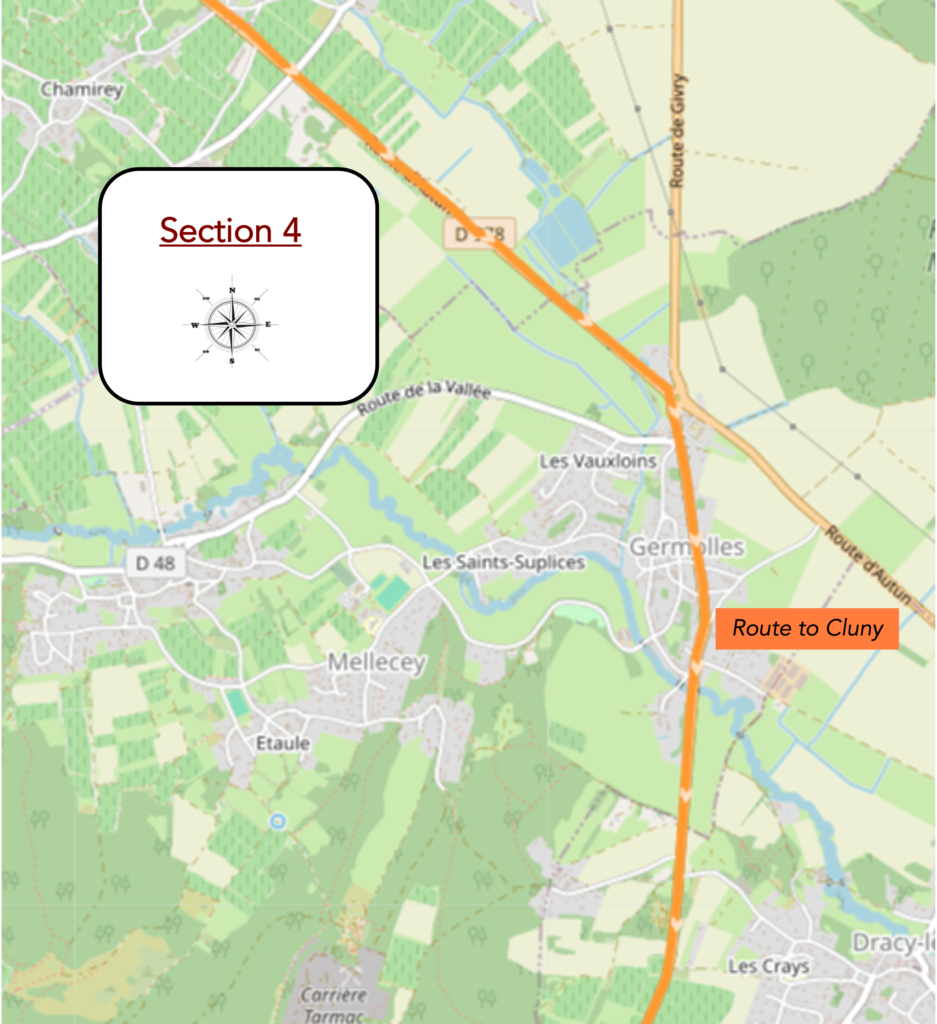
Overview of the route’s challenges: a route with no difficulty at all.
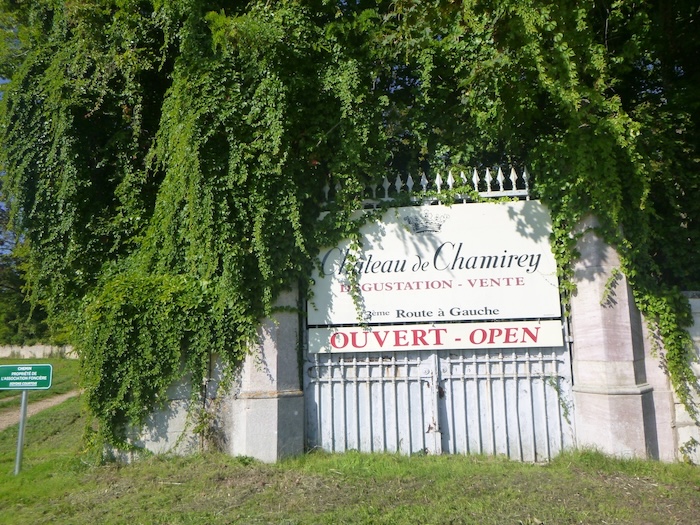
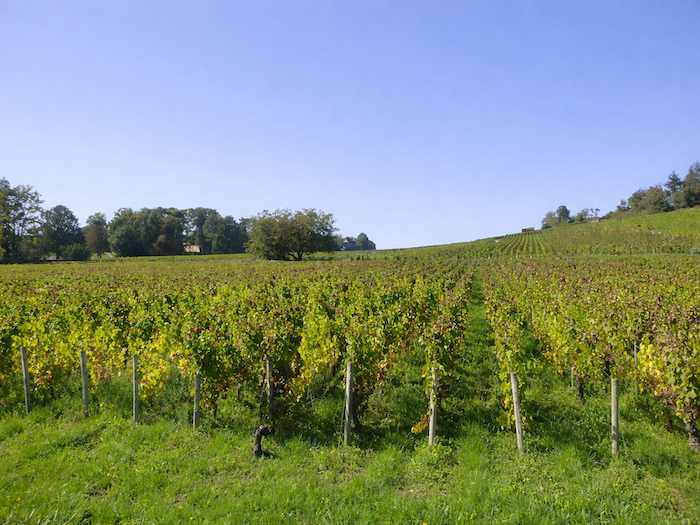
| Here the vineyard of Mercurey still stretches across the heights, passing the tasting room of the Château de Chamirey at the roadside. |
 |
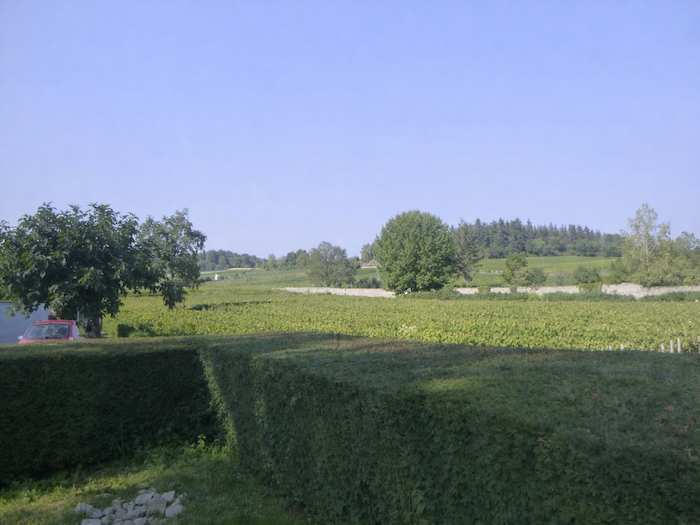 |
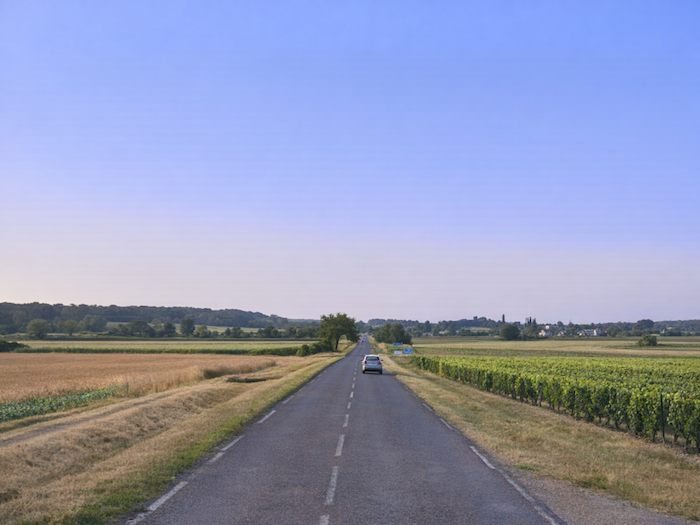
| The landscape also becomes more varied, sharing vines and cereal fields across the plain. |
 |
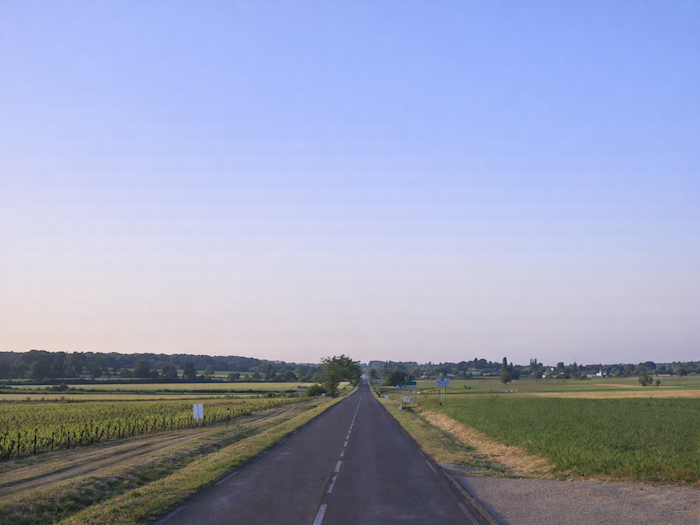 |
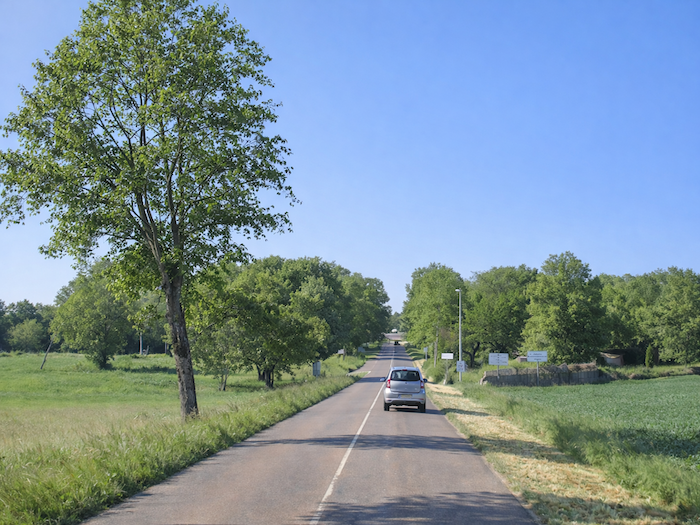
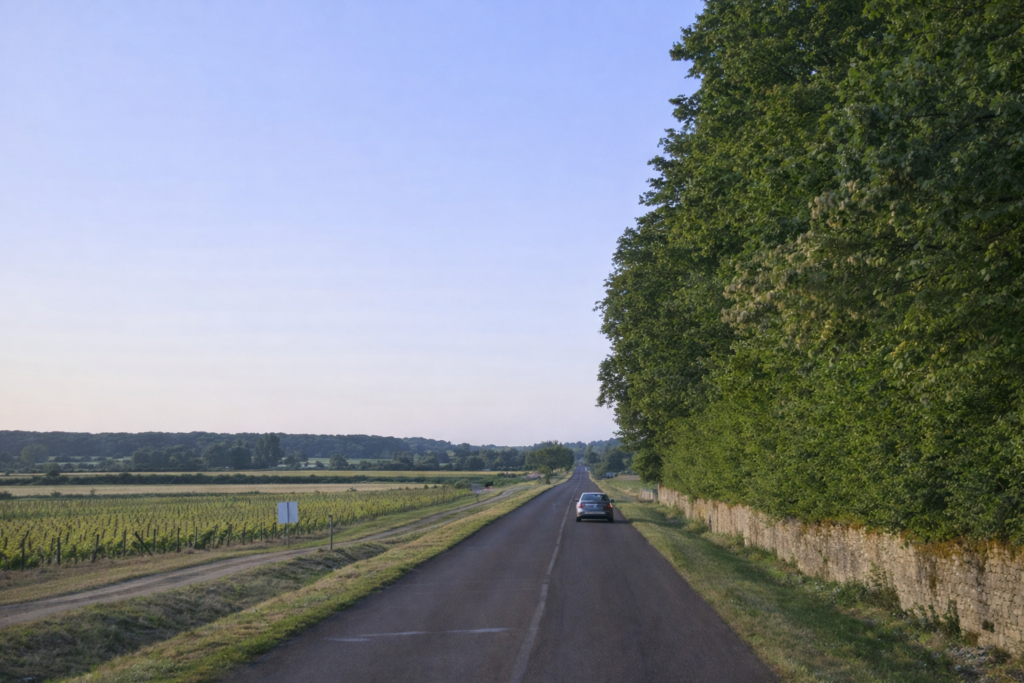
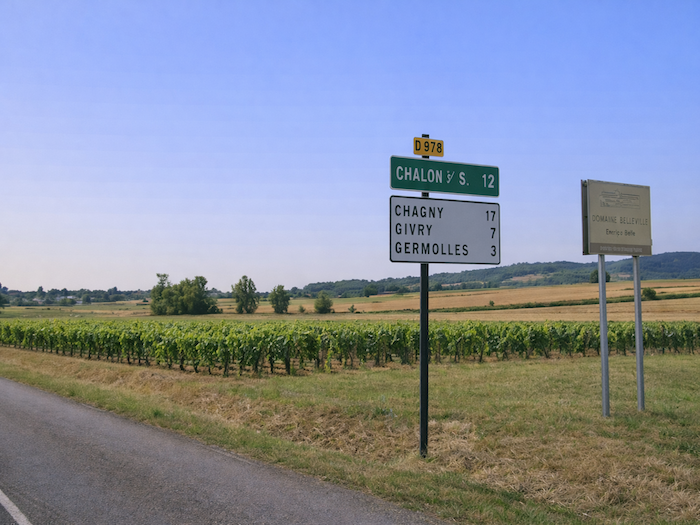
| On this long and monotonous plain, where traffic will rarely trouble you, signs announce Châlons sur Saône at 12 kilometers and Givry at 7 kilometers. |
 |
 |
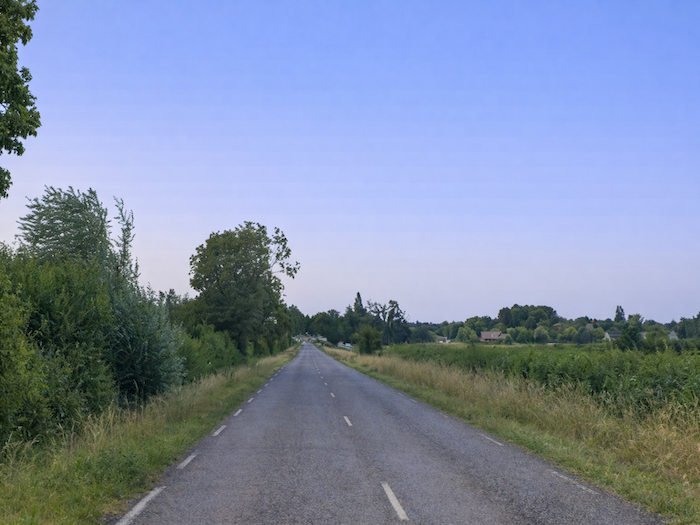
| The walk becomes lingering, drawing you gradually toward a crossroads. |
 |
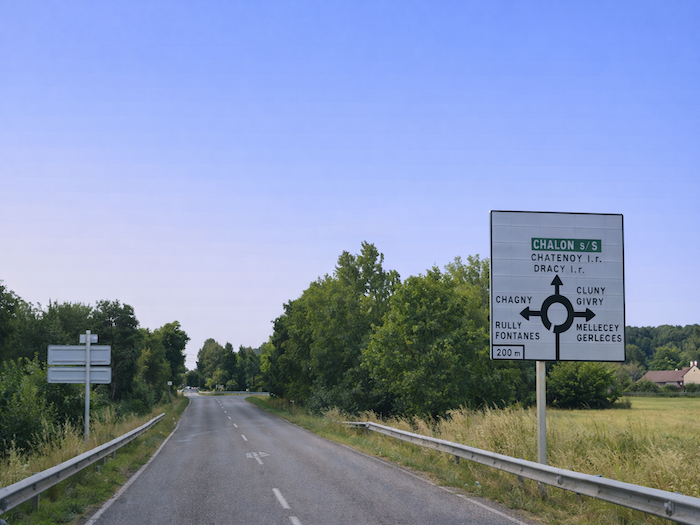 |
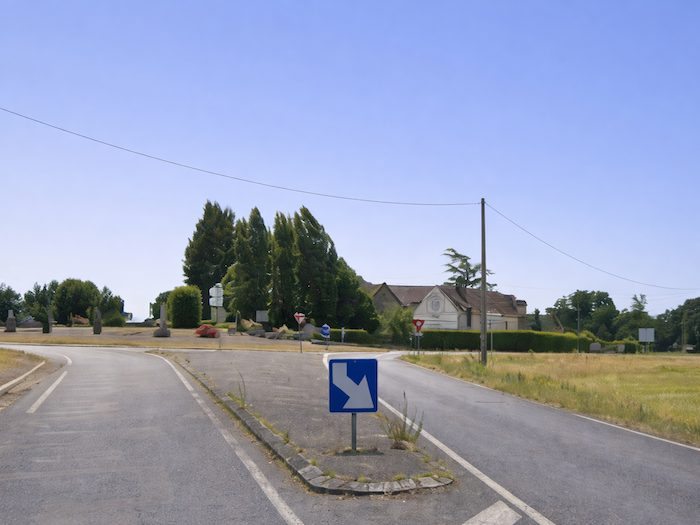
| Three kilometers after leaving the center of the village, your steps lead you to an intersection, like an invitation to choose your traveler’s fate. Ahead of you still stretches the axis leading to Chalon sur Saône, with its discreet call toward a larger and livelier town. But you must turn, leave the straight line of the departmental road, and take the one that bends toward Givry. |
 |
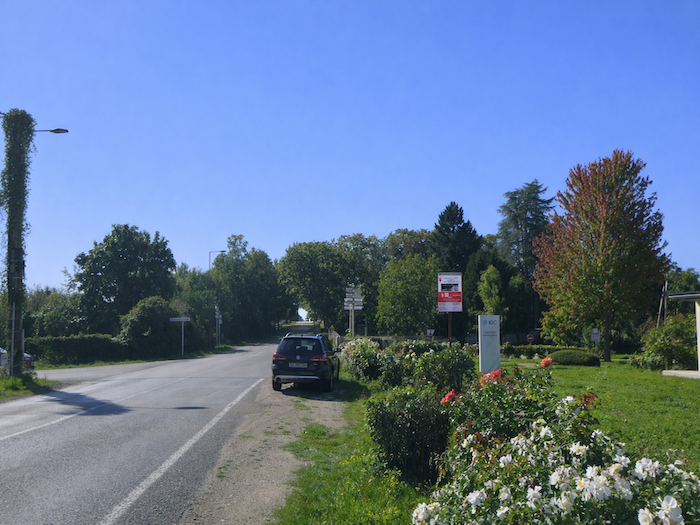 |
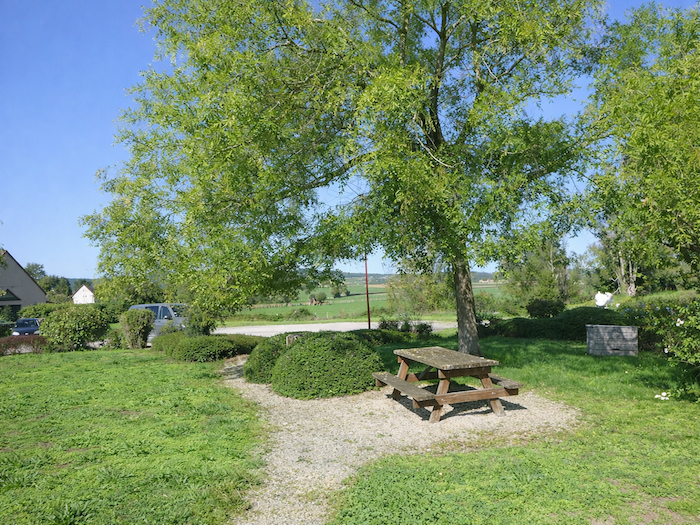
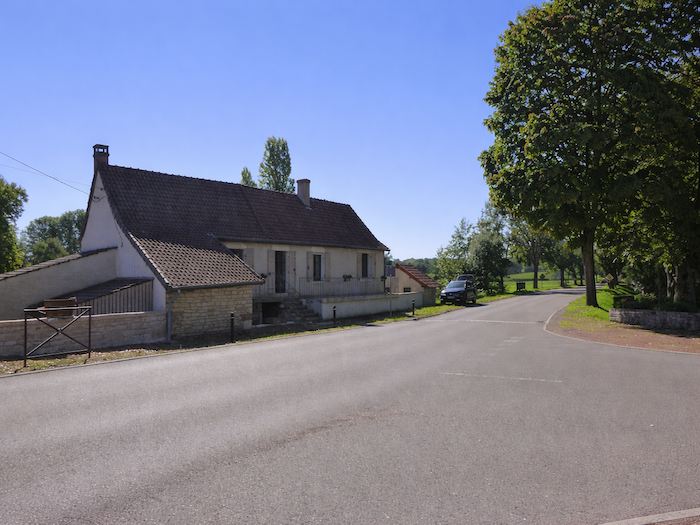
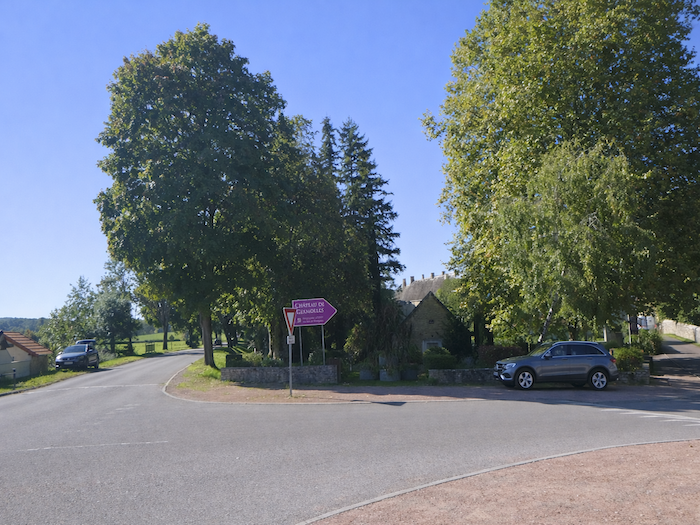
| At the intersection, the road curves gently and leads toward Germolles. It is an almost unexpected passage, for suddenly a park of greenery opens before the traveler, a vast shaded clearing that seems to invite a pause. There, among the trees, a picnic area welcomes walkers, like a breath granted to the rhythm of the journey. |
 |
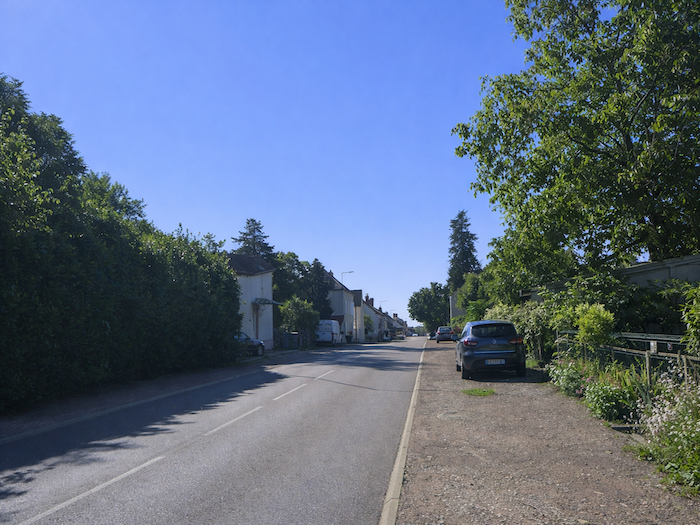 |
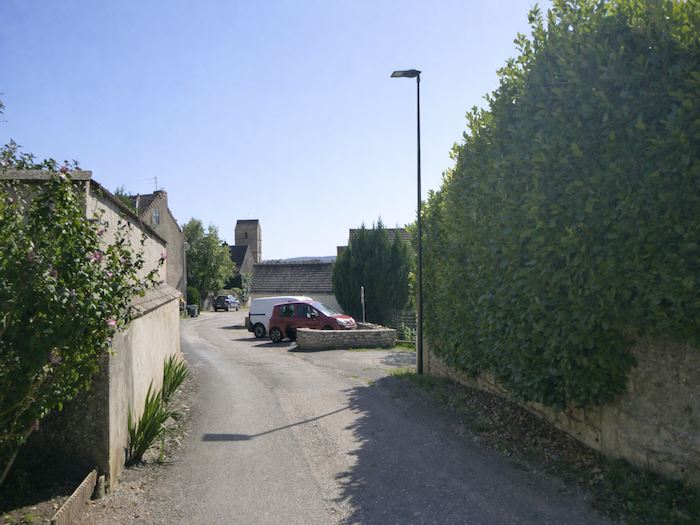
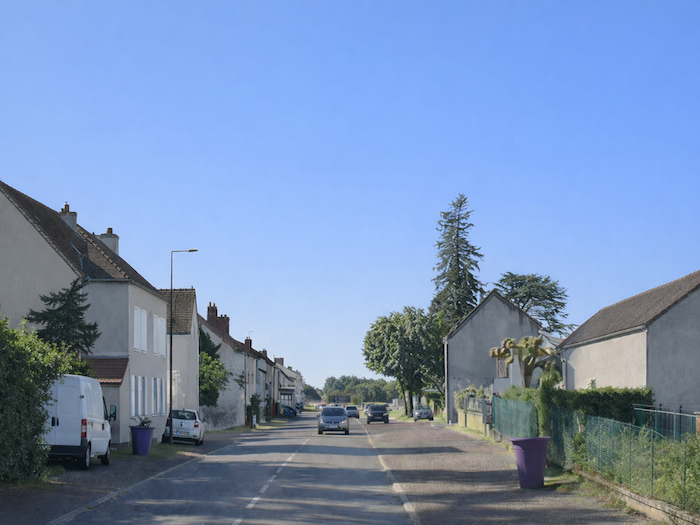
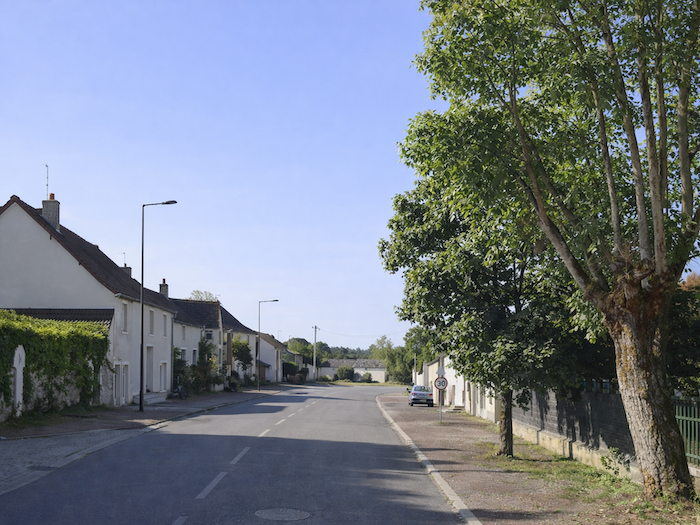
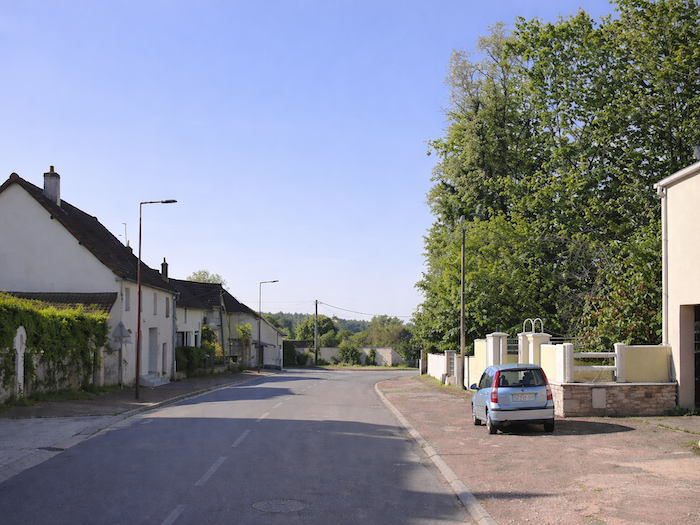
| The crossing of the village, however, offers at first glance only the humility of simple houses aligned on either side of the road, like witnesses of a rural time. Some dwellings still bear the mark of the patient labor of winegrowers, low doors, discreet cellars, stones without display or ornament. It is not wealth that is told here, but a modest existence rooted in the work of the vine, a sobriety that nonetheless retains its dignity. |
 |
 |
 |
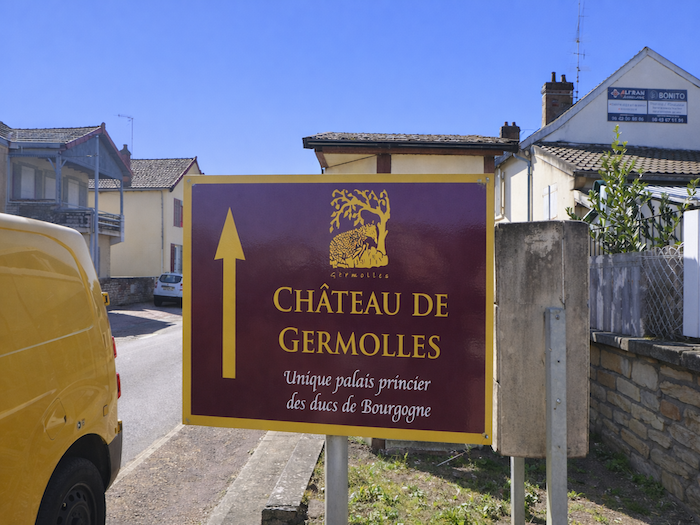 |
| But soon, a striking contrast appears. Just steps from the road, hidden within a frame of foliage, the Château de Germolles reveals itself. This residence, undoubtedly one of the most precious in Burgundy, was built in the second half of the fourteenth century and ranks among the best-preserved ducal residences. Its walls, heavy with history, still echo with the splendor of the court at the dawn of the Renaissance, when Burgundy rivaled the greatest kingdoms in prestige. Here princes, dignitaries and illustrious guests were received, for the owners were proud to display their home, a symbol of authority and refinement. The Château de Germolles remains today a rare example of a ducal residence from the fourteenth and early fifteenth century still standing, preserved in a way that both astonishes and instructs. Open to visitors, it invites you to cross its threshold as one crosses into another time, rediscovering the brilliance of a vanished era. |
 |
 |
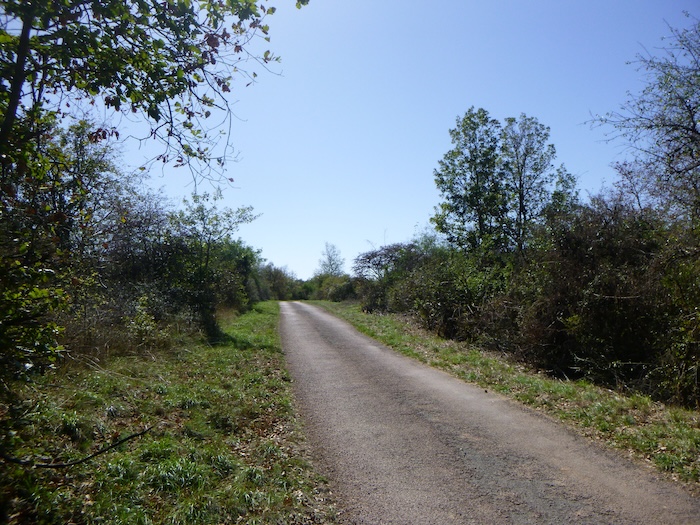
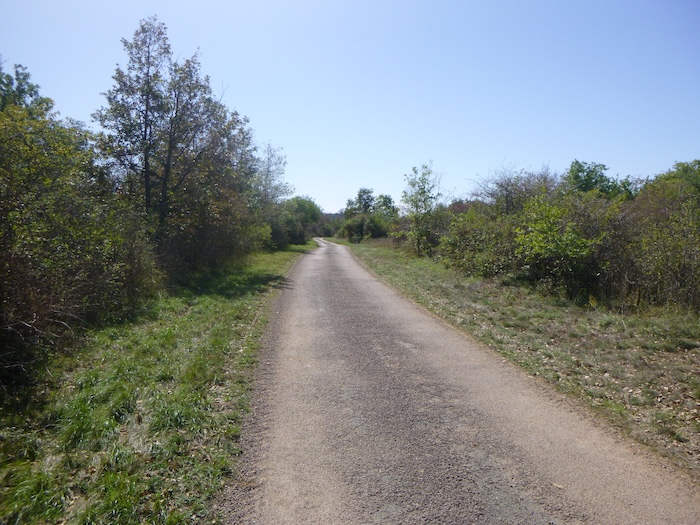
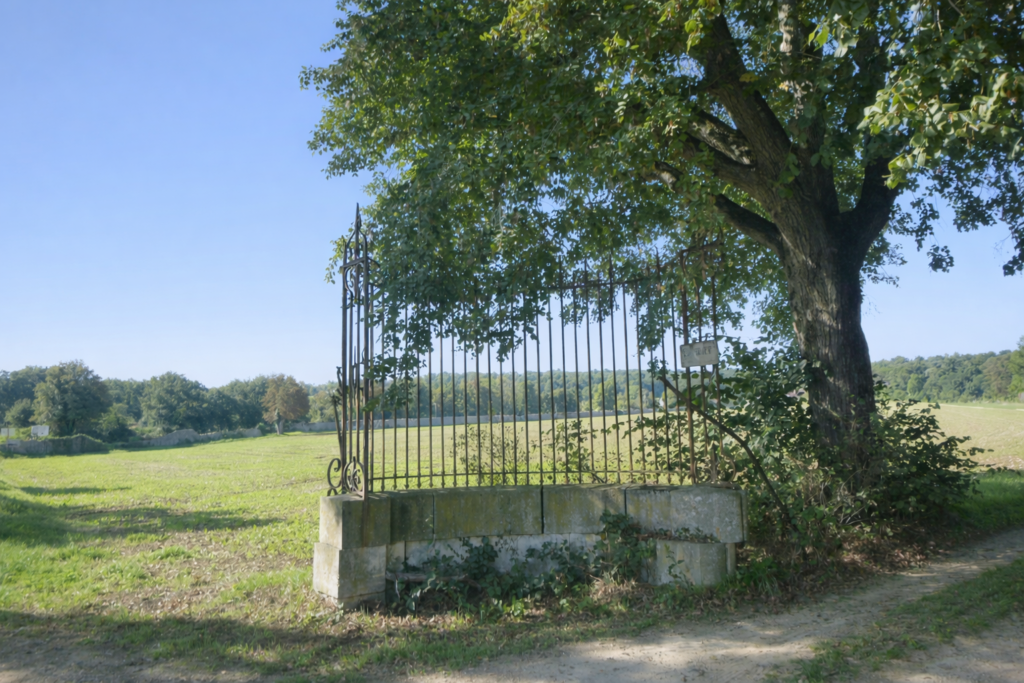
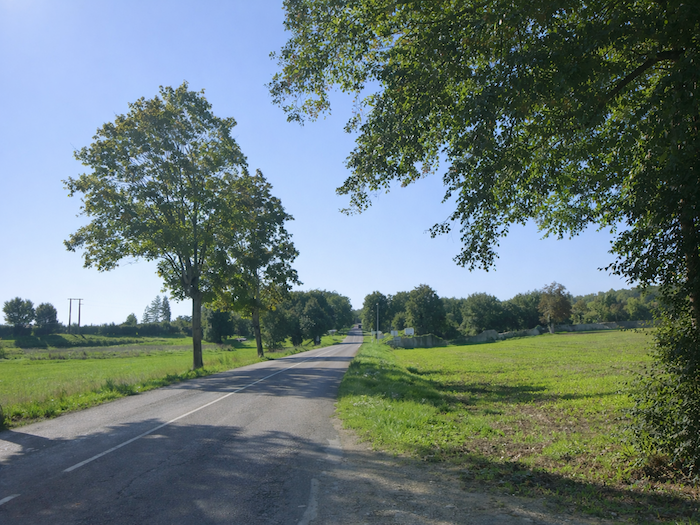
| From Germolles, three kilometers remain before reaching Givry. From the very first steps, you notice that the vines seem to have withdrawn, almost vanished as if by enchantment, as though the landscape wished to grant a pause, a vegetal silence before the vineyard reappears. Your gaze then wanders across barer fields, green embankments, softer horizons where one almost hears the earth drawing breath. To your relief, traffic is not intense along this axis. |
 |
 |
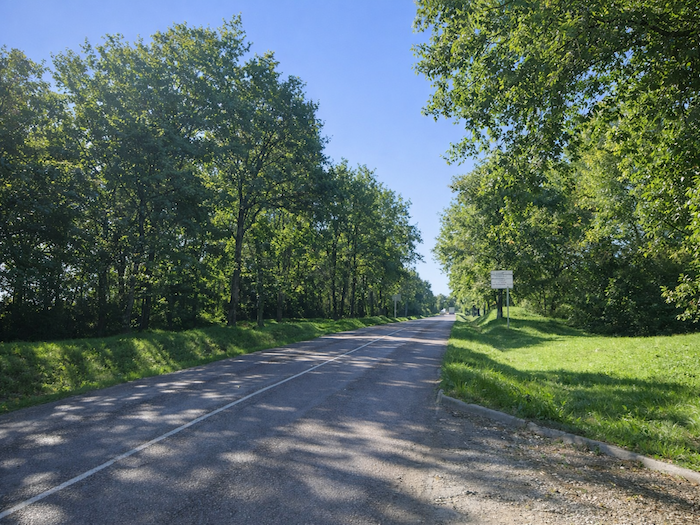
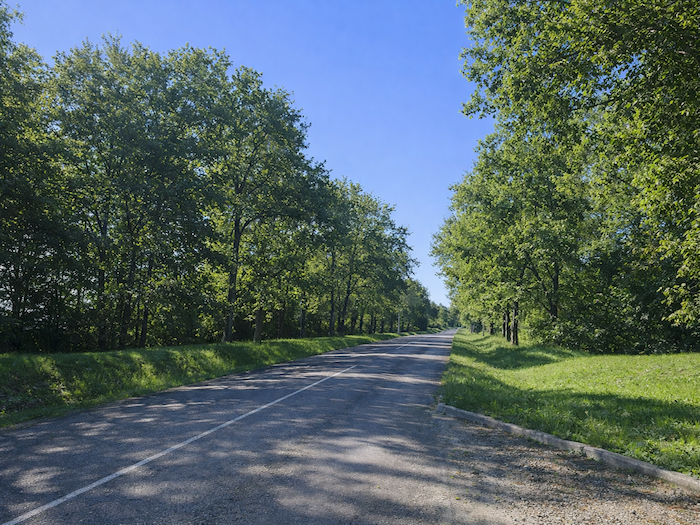
| The road then stretches out, long and patient, crossing a light woodland. The gradient, almost imperceptible, weighs nothing upon your steps. On the contrary, it accompanies the traveler with steady gentleness, as if nature had wished to make this passage easy, suited to reverie. |
 |
 |
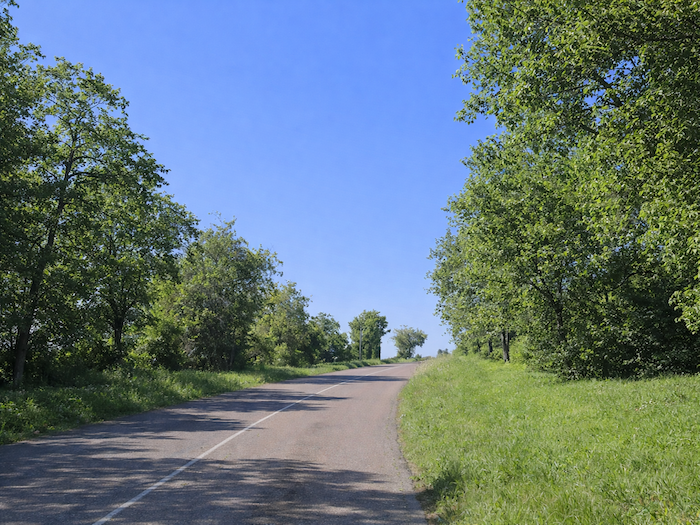
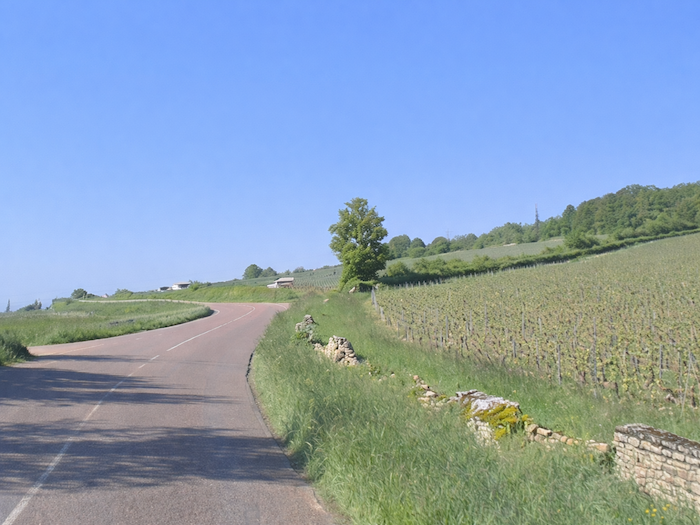
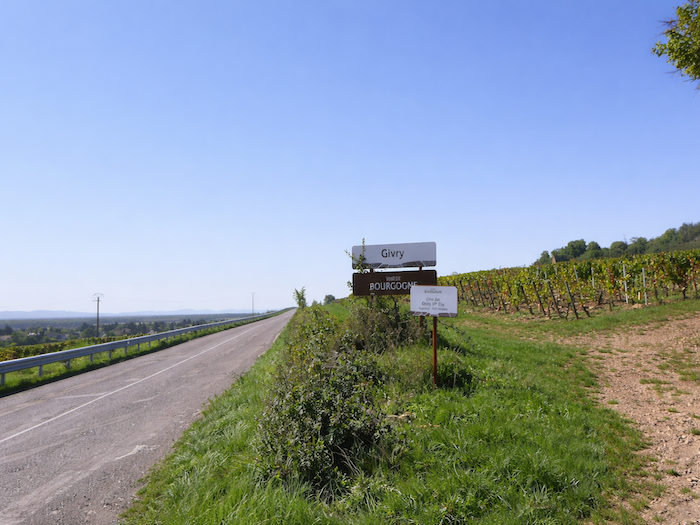
| Then suddenly, at the edge of the woodland, the vineyard of Givry unfolds, like a stage prepared behind a curtain. Rows of vines, arranged with rigor, fill the space and remind you that you are entering one of the high places of the Côte chalonnaise. Once again, it is Pinot Noir that reigns supreme, a discreet yet unquestioned sovereign, giving the reds of Givry their nobility, their ardent character and their nuanced elegance. |
 |
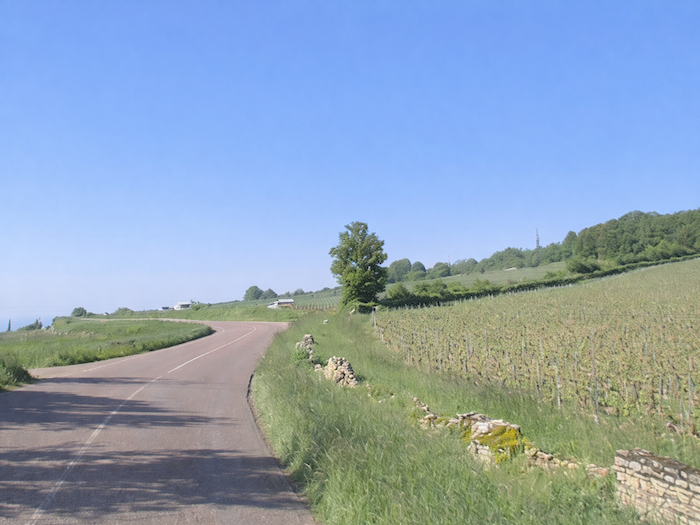 |
| The vineyard spreads with grace, sometimes across the plain, sometimes along the low hills that fringe the horizon. These gentle undulations draw a landscape in which the vine seems to converse with the earth, like a patient script traced century after century by peasant hands. |
 |
 |
Section 5: In Givry, at the end of the Côte Chalonnaise vineyard
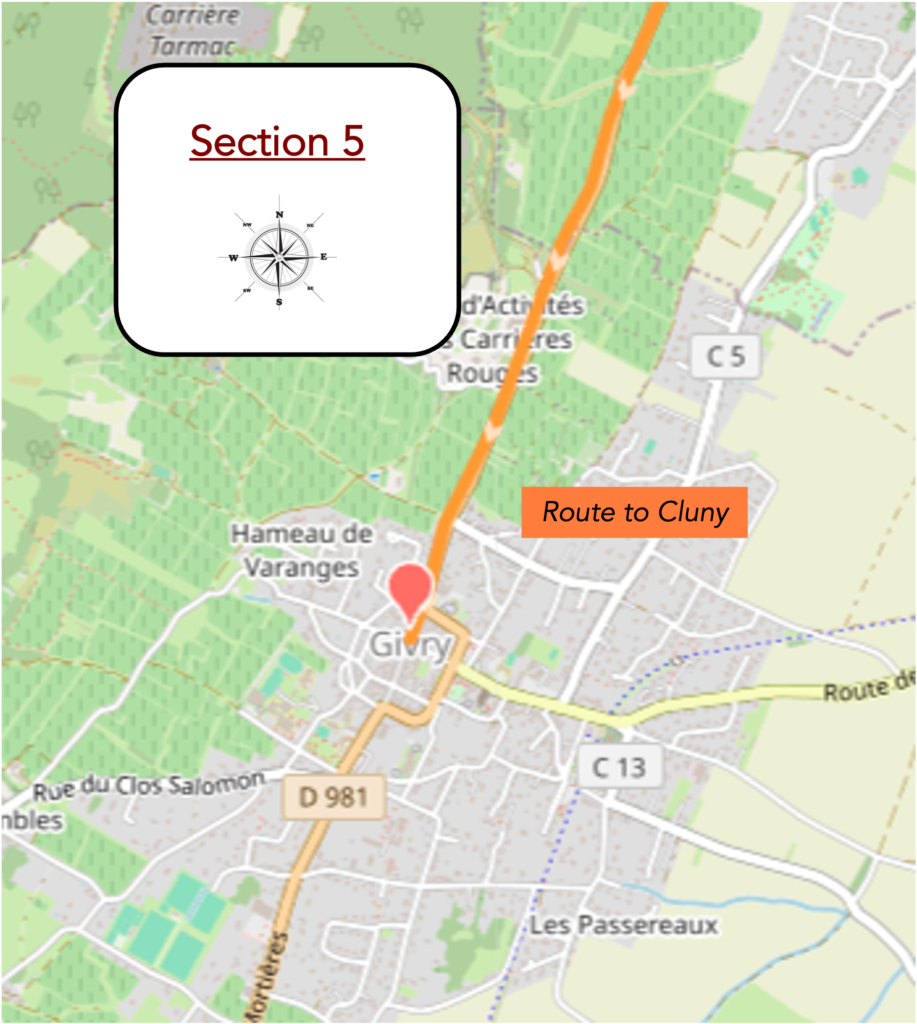
Overview of the route’s challenges: a route with no difficulty at all.
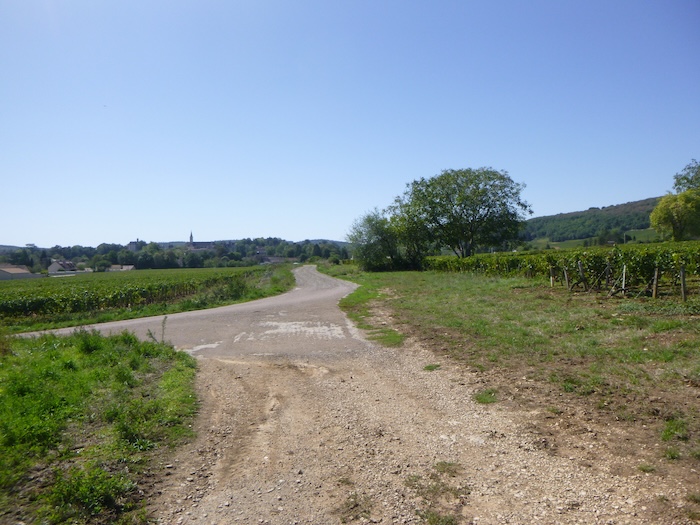
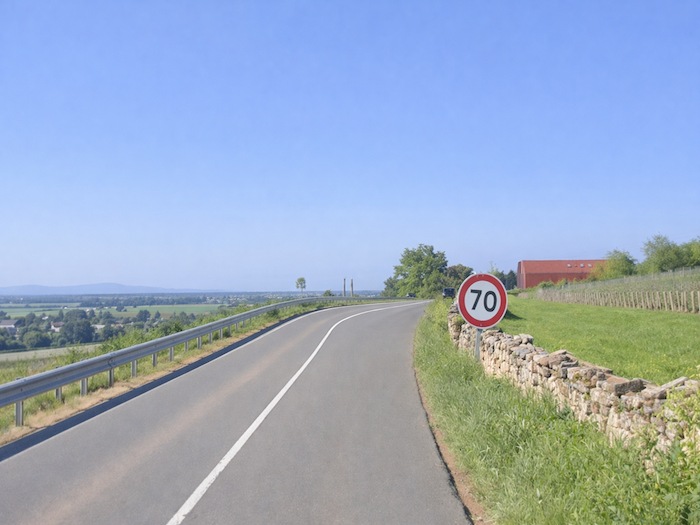
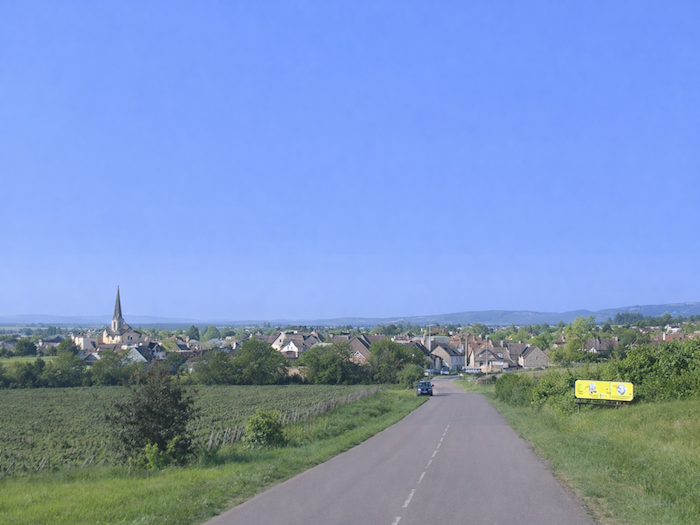
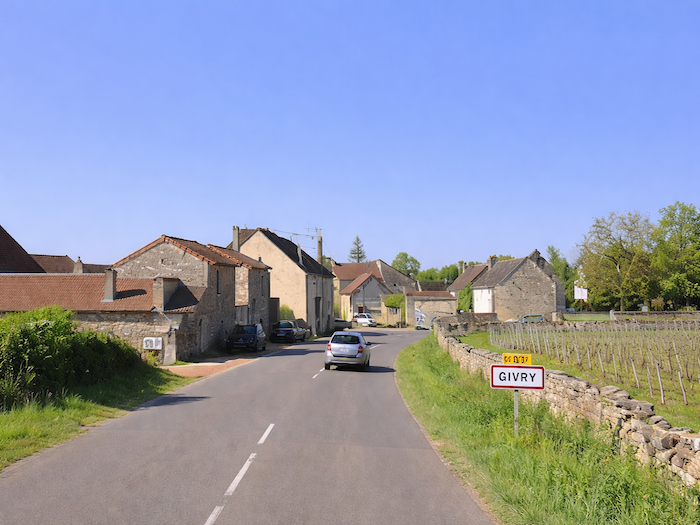
| And then, at the bend of one final curve, Givry at last appears, offered entirely to the eye. The bell tower of its church rises above the rooftops. The village, nestled in the hollow of its vineyards, invites discovery, revealing itself little by little in a vision where history, wine and memory intertwine. |
 |
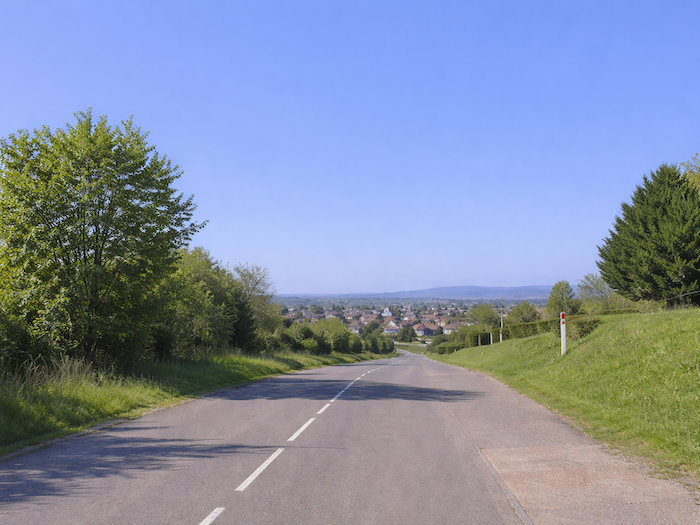 |
| The road then slopes gently down toward the village… |
 |
 |
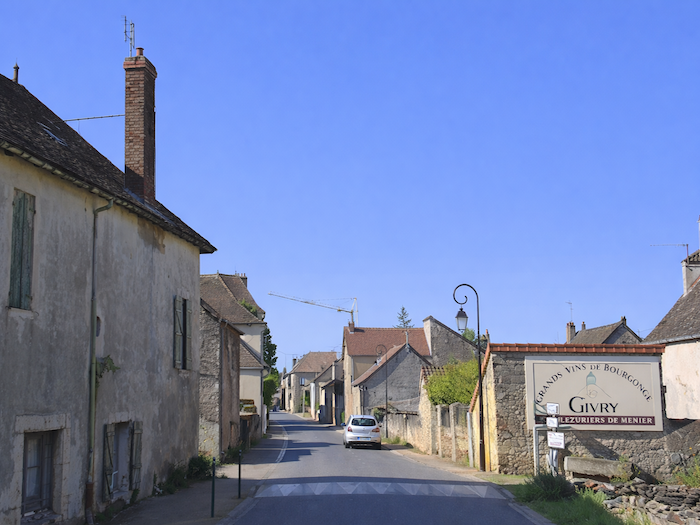
| …and reaches the center. |
 |
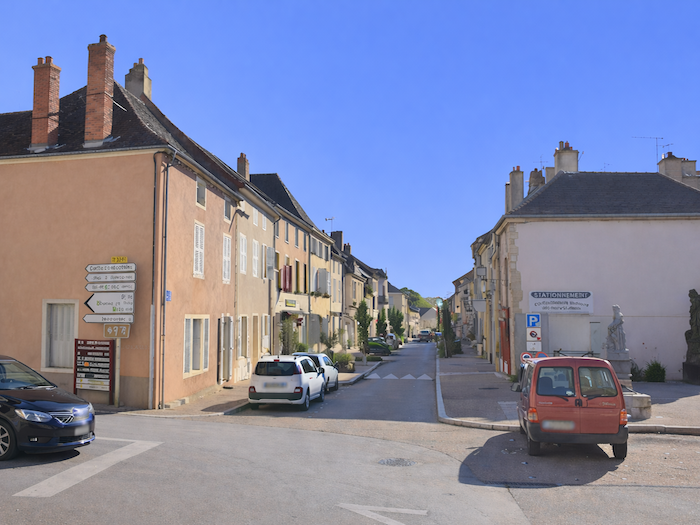 |
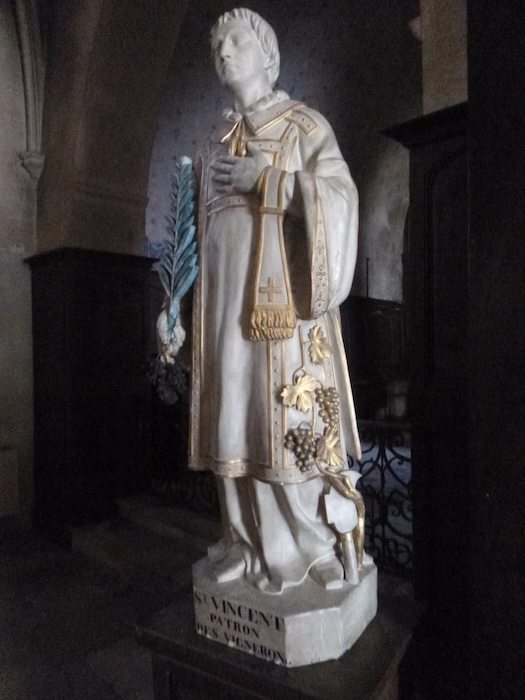
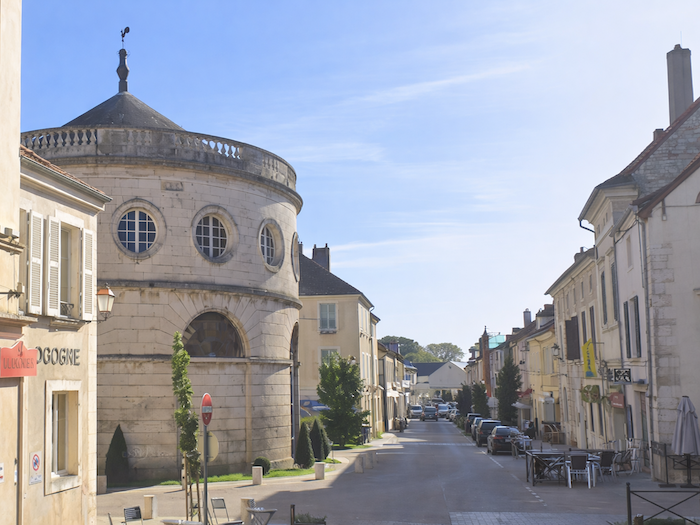
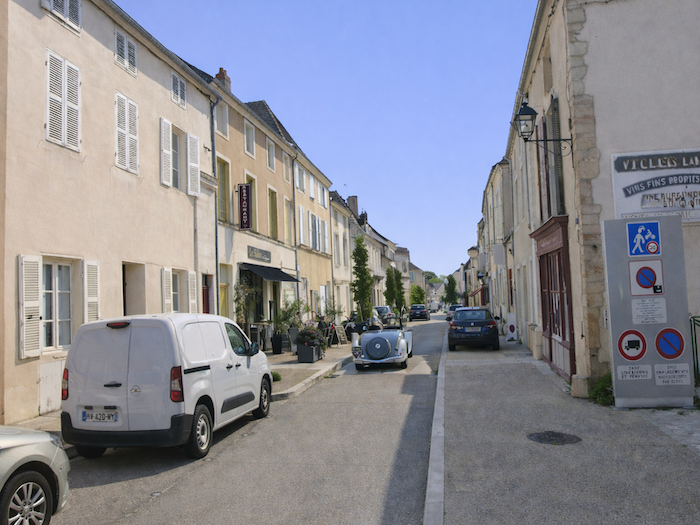
| Givry is a magnificent village of some 3,600 inhabitants, whose old heart unfolds in an almost rectangular layout. The visitor discovers a tangle of narrow lanes bordered by houses whose façades, often centuries old, bear the marks of time and tell a story of patient stone and successive generations. The town center reads like a living parchment, where the life of former days can still be discerned. Along the Grande Rue, the street of shops, stands the Halle Ronde, an elegant construction from the early nineteenth century, crowned with a small bell tower. In the past, this circular hall sheltered the grain market, alive with the murmur of rural trade. Today it has been transformed into a place of culture, hosting art exhibitions. The Halle Ronde also becomes the stage for local events such as wine fairs, flea markets and festive gatherings.Around the town center and its tight lanes, a ring road forms a protective setting, easing access while preserving the village’s quietness. It is within this lively space that the great festival of the Saint Vincent Tournante is organized, the entire village then adorns itself with colors, garlands and songs to honor its winegrowers. On that day, the whole community pays tribute to those who shape the land and the wine, in a fervor where religious tradition, village fellowship and popular joy mingle. |
 |
 |
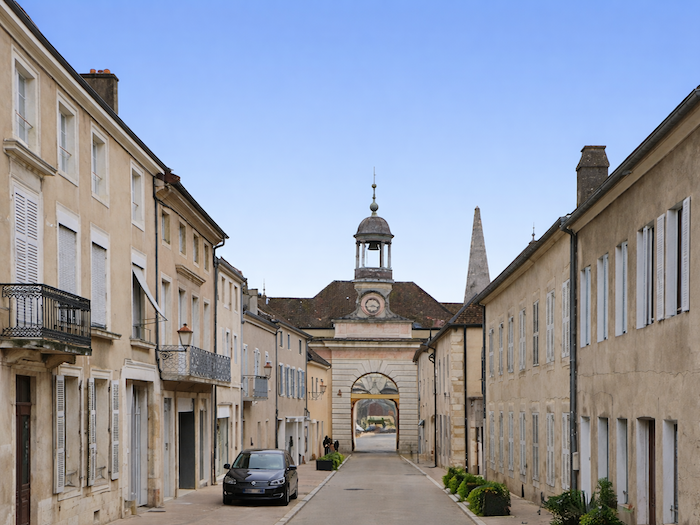
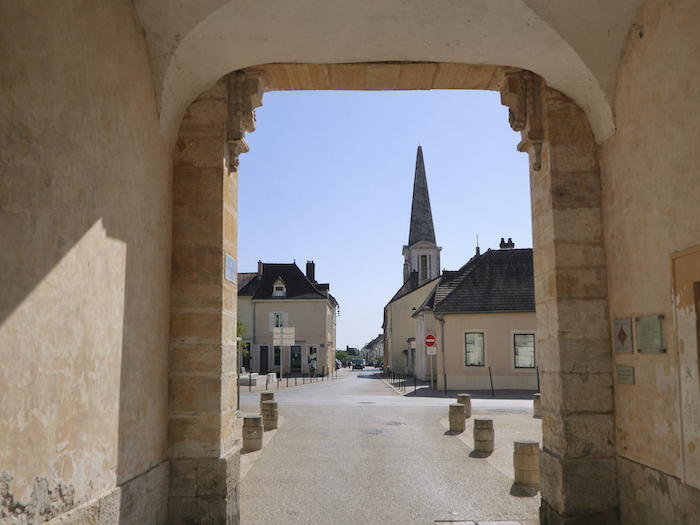
| The town hall, built at the end of the seventeenth century, occupies a singular place, as it rises within the former city gate known as the Porte de l’Horloge. With an appearance both sober and majestic, it remains one of the most beautiful town halls in France, a witness to the subtle balance between administrative rigor and civic pride. |
 |
 |
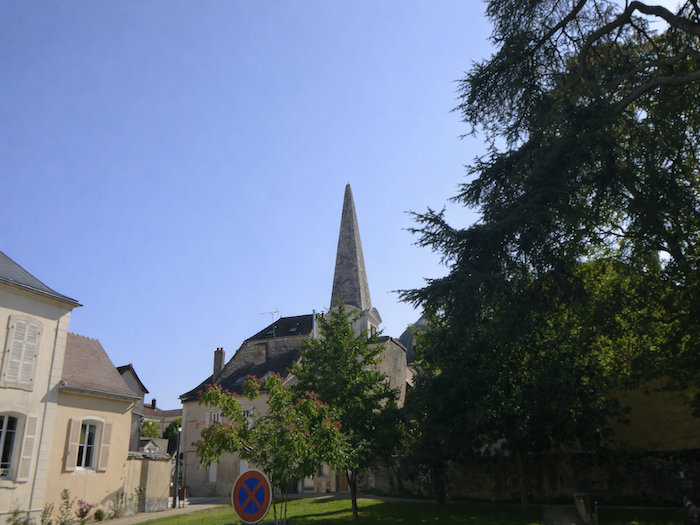
| Finally, slightly apart from the central rectangle, stands the church of Saint Pierre and Saint Paul, a neoclassical silhouette whose sobriety converses with monumentality. Its pyramidal spire, rising with elegance, was built in the eighteenth century, and more recent alterations have completed the building without disturbing its harmony. |
 |
 |
Official accommodations in Burgundy/Franche-Comté
- Hôtel-restaurant Le Vendangerot, 6 Place Ste Marie, Rully; 03 85 8720 09; Hotel
- Hotellerie du Val d’or, 140 Grande Rue, Mercurey; 03 85 49 23 85; Hotel
- Chez Flo, 14 Rue de l’Amandier, Givry; 06 80 46 95 48; Guestroom
- Au petit pressoir, 15 Avenue de Chalon, Givry; 06 83 21 02 73; Guestroom
Jacquaire accommodations (see introduction)
Airbnb
- Rully (16)
- Mercurey (10)
- Givry (15)
Each year, the route changes. Some accommodations disappear; others appear. It is therefore impossible to create a definitive list. This list includes only lodgings located on the route itself or within one kilometer of it. For more detailed information, the guide Chemins de Compostelle en Rhône-Alpes, published by the Association of the Friends of Compostela, remains the reference. It also contains useful addresses for bars, restaurants, and bakeries along the way. On this stage, there should not be major difficulties finding a place to stay. It must be said: the region is not touristy. It offers other kinds of richness, but not abundant infrastructure. Today, Airbnb has become a new tourism reference that we cannot ignore. It has become the most important source of accommodations in all regions, even in those with limited tourist infrastructure. As you know, the addresses are not directly available. It is always strongly recommended to book in advance. Finding a bed at the last minute is sometimes a stroke of luck; better not rely on that every day. When making reservations, ask about available meals or breakfast options..
Feel free to leave comments. That is often how one climbs the Google rankings, and how more pilgrims will gain access to the site.
|
 |
Next stage : Stage 18: Givry to St Gengoux-le-National |
|
 |
Back to menu |