Do you like cycle paths?
DIDIER HEUMANN, ANDREAS PAPASAVVAS
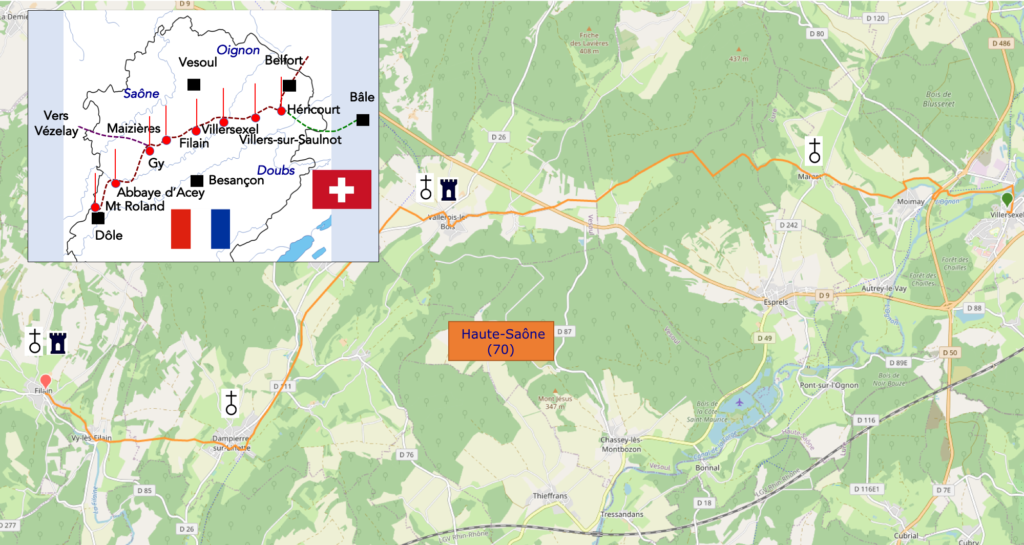
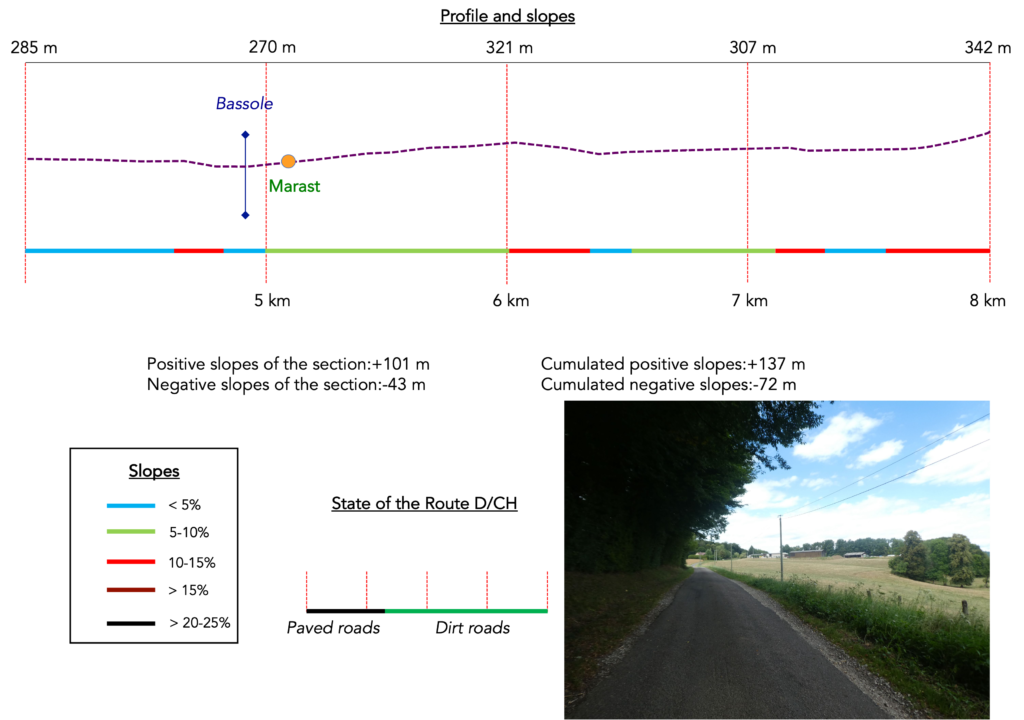
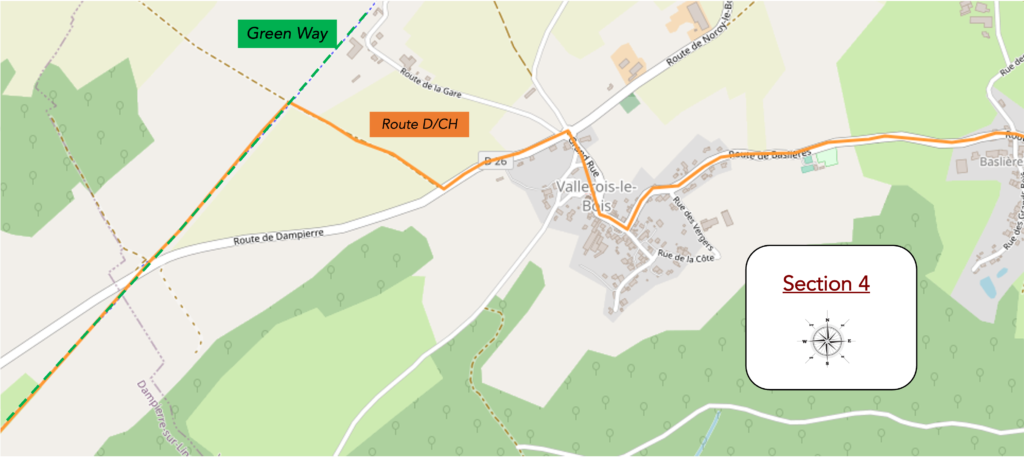
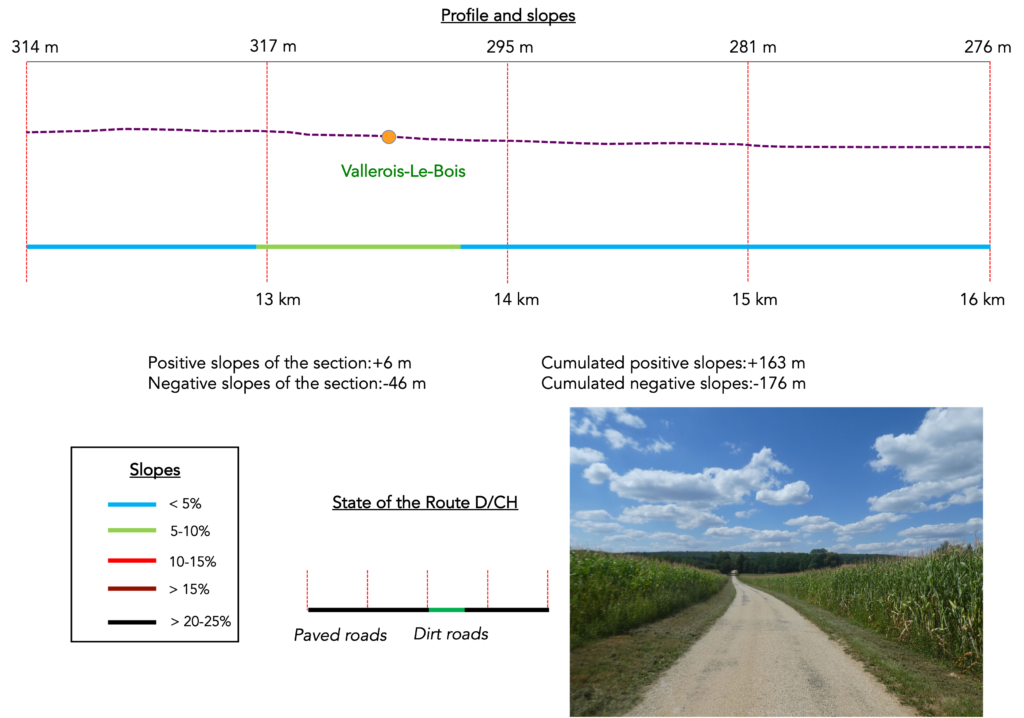
We divided the course into several sections to make it easier to see. For each section, the maps show the course, the slopes found on the course, and the state of the route (paved or dirt roads). The courses were drawn on the « Wikilocs » platform. Today, it is no longer necessary to walk around with detailed maps in your pocket or bag. If you have a mobile phone or tablet, you can easily follow routes live.
For this stage, here is the link:
https://fr.wikiloc.com/itineraires-randonnee/de-villersexel-a-filain-par-le-chemin-de-compostelle-80308012
| This is obviously not the case for all pilgrims, who may not feel comfortable reading GPS tracks and routes on a mobile phone, and there are still many places without an Internet connection. For this reason, you can find on Amazon a book that covers this route.
If you only want to consult lodging of the stage, go directly to the bottom of the page. |
 |
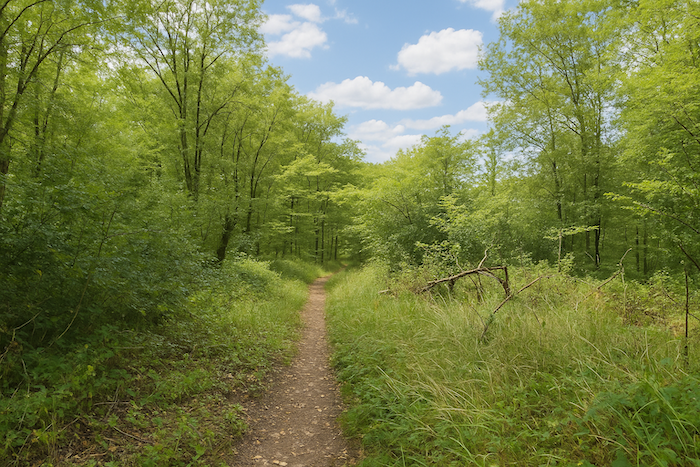
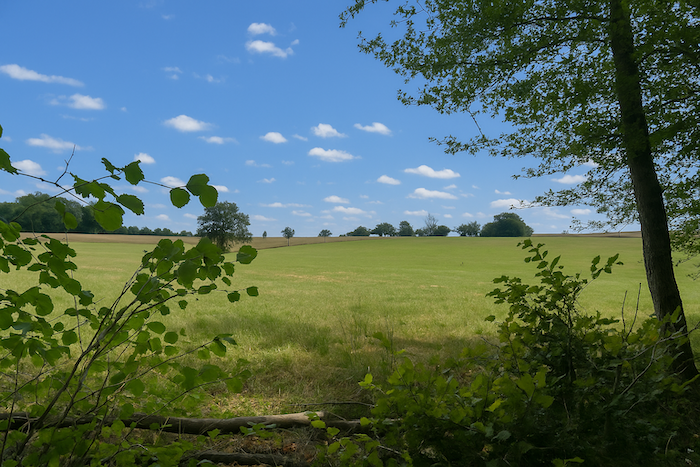
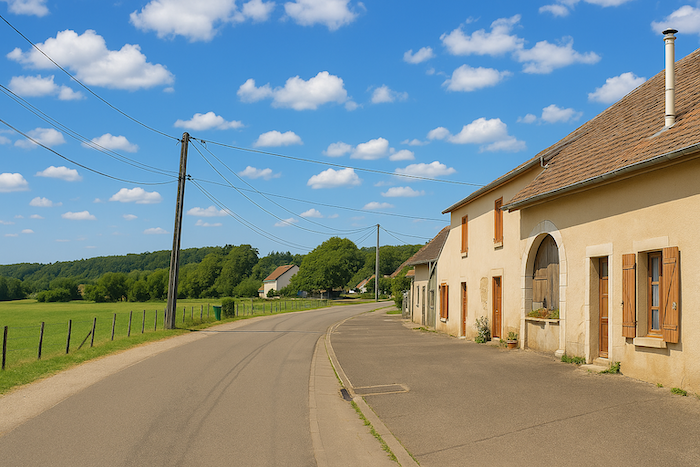
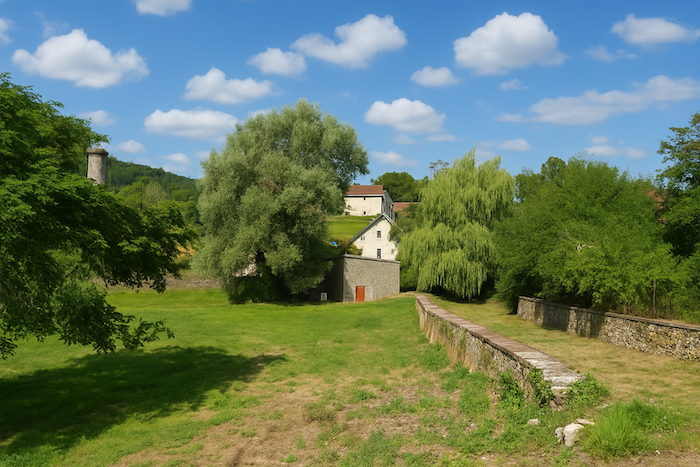
Your route today remains anchored in the peaceful lands of Haute-Saône. Here, life moves to another rhythm, far from the noise of the world. Of course, the region’s economy finds its heartbeat in Vesoul, in the vast PSA workshops where thousands of hands assemble, screw, and adjust, like an industrial beehive. But where your steps lead you, there is no sheet metal, no factory roar, only the broad breath of the countryside, the murmur of leaves, and the quiet labour of the fields. Here, agriculture reigns, modest, enduring, rooted in ancient gestures. Yet above all, it is the forest that asserts itself, sovereign and untamed. It surrounds you like a deep green cloak, sometimes swallowing you in its silence. This is no image. It is a living reality, almost insular, a world of its own crossed by pilgrims, cyclists, and dreamers. In this corner of France, slowly emptied of its inhabitants as rural exodus did its work like a persistent wind, people have nevertheless wished that the land should continue to live. Twenty-one cycling routes have been mapped here, like Ariadne’s threads on a chart, allowing one to escape and marvel along roads barely touched, sometimes even along true cycle paths. Among them is the Chemin Vert, which you will have the chance to follow. This green path traces the former railway line that once linked Vesoul to Besançon. Where the locomotive once whistled, today one hears only the ring of bicycle bells. The industrial past has become a place of peace, a recycling of time, in a way.
How do pilgrims plan their route. Some imagine that it is enough to follow the signposting. But you will discover, to your cost, that the signposting is often inadequate. Others use guides available on the Internet, which are also often too basic. Others prefer GPS, provided they have imported the maps of the region onto their phones. Using this method, if you are an expert in GPS use, you will not get lost, even if the route proposed is sometimes not exactly the same as the one indicated by the shells. You will nevertheless arrive safely at the end of the stage. In this context, the site considered official is the European Route of the Ways of St. James of Compostela, https://camino-europe.eu/. For today’s stage, the map is accurate, but this is not always the case. With a GPS, it is even safer to use the Wikilocs maps that we make available, which describe the current marked route. However, not all pilgrims are experts in this type of walking, which to them distorts the spirit of the path. In that case, you can simply follow us and read along. Every difficult junction along the route has been indicated in order to prevent you from getting lost.
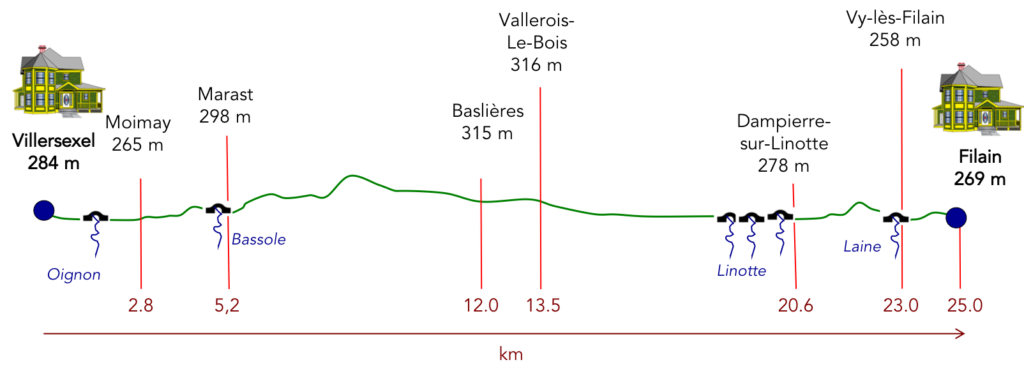
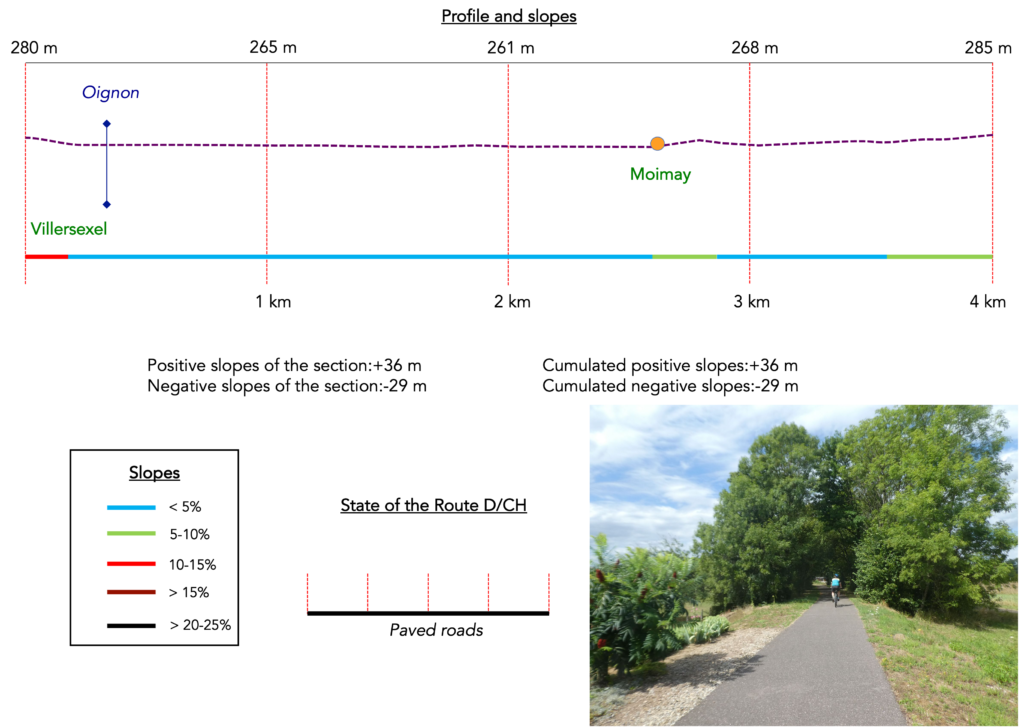
Difficulty level: The route today shows no major gradients (+222 metres / -235 metres). It is an easy and pleasant stage, with only a few slopes above 10%.
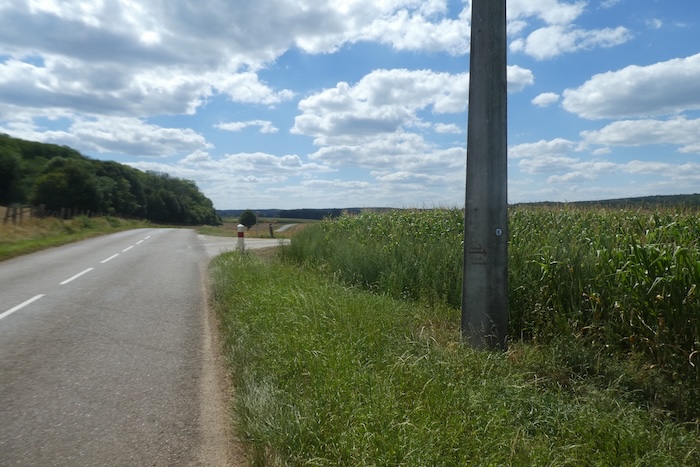
State of the route: Today, it is unfortunately often tarred. There is indeed tar, but most often it is the cycle path and not the departmental road:
- Paved roads: 17.2 km
- Dirt roads: 7.8 km
Sometimes, for reasons of logistics or housing possibilities, these stages mix routes operated on different days, having passed several times on these routes. From then on, the skies, the rain, or the seasons can vary. But, generally this is not the case, and in fact this does not change the description of the course.
It is very difficult to specify with certainty the incline of the slopes, whatever the system you use.
For those seeking « true elevations » and enthusiasts of genuine altimetric challenges, carefully review the information on mileage at the beginning of the guide.

Section 1: On the Oignon River side
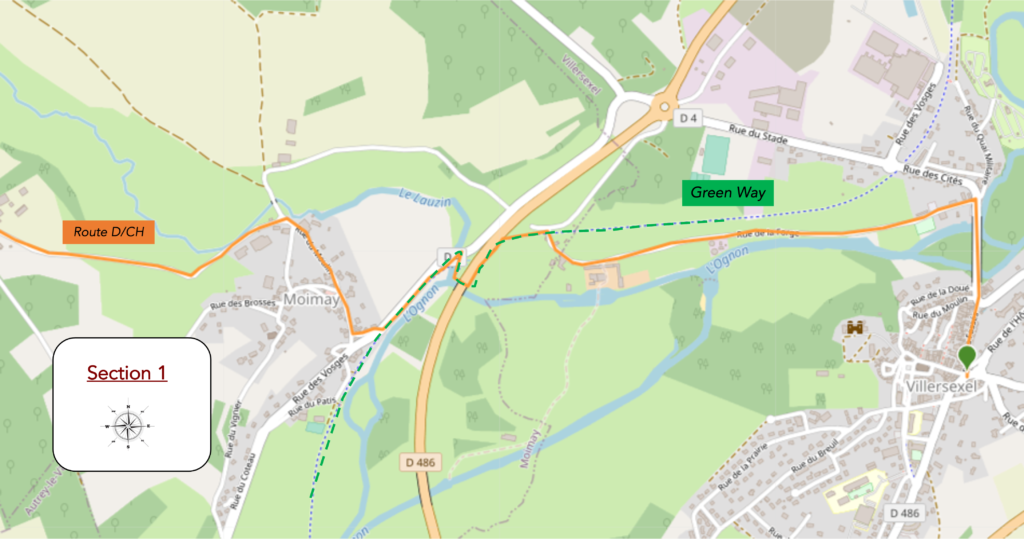
Overview of the route’s challenges: a route without difficulty.
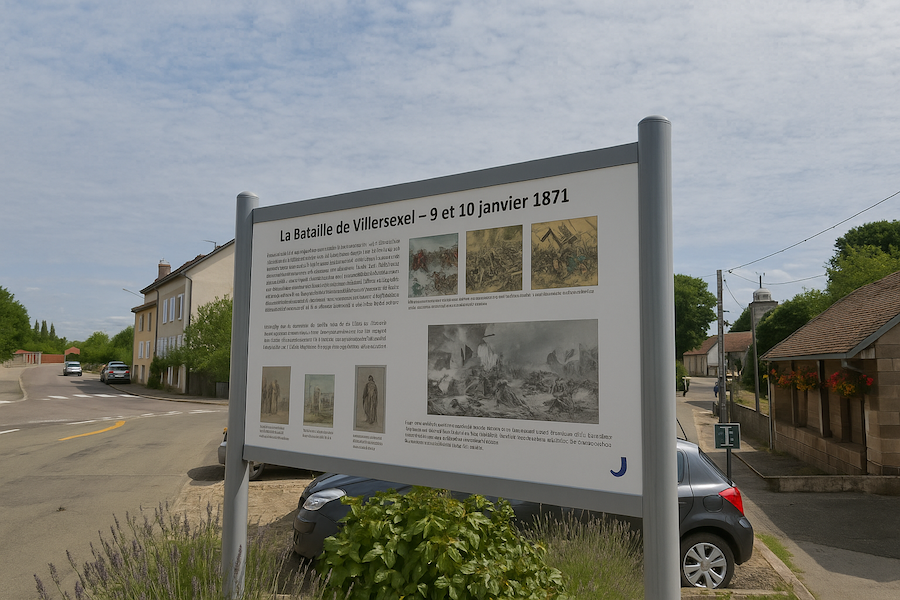
| From the center of Villersexel, you should then let yourself be carried, gently, toward the lower part of the town, in the direction of the river, as one goes down toward a beating heart that is still invisible but already nearby. |
 |
 |
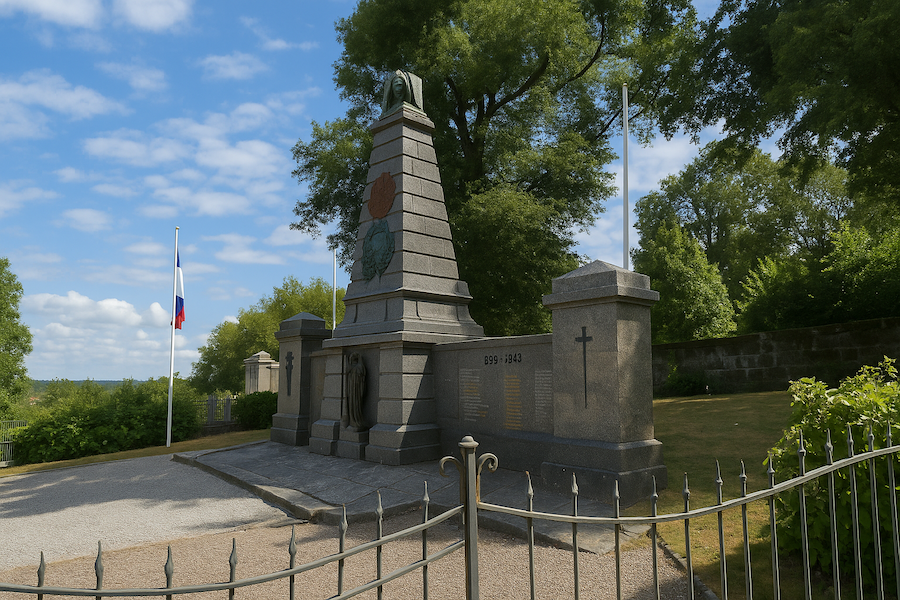
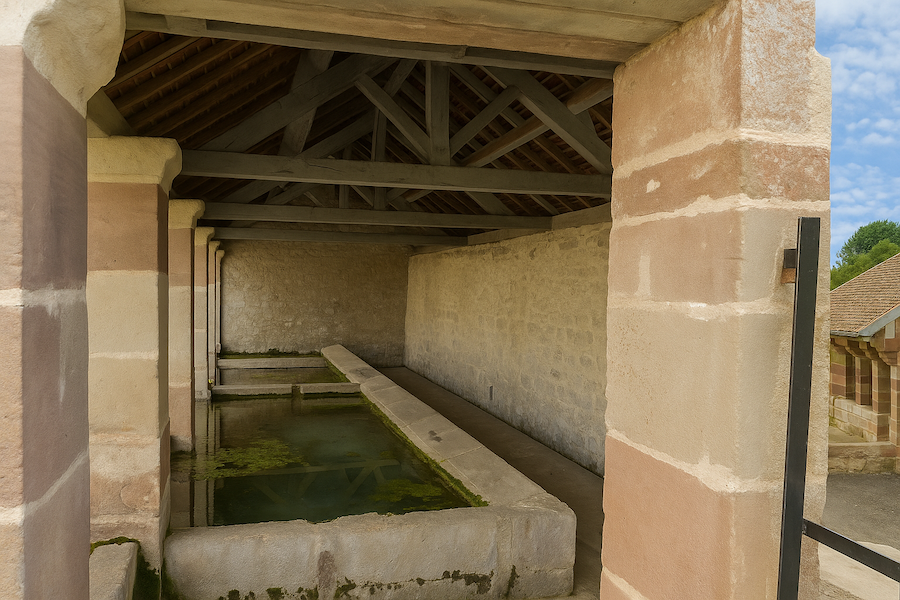
| Near an old-fashioned washhouse, people like to honor the local heroes who took part in the war of 1870. |
 |
 |
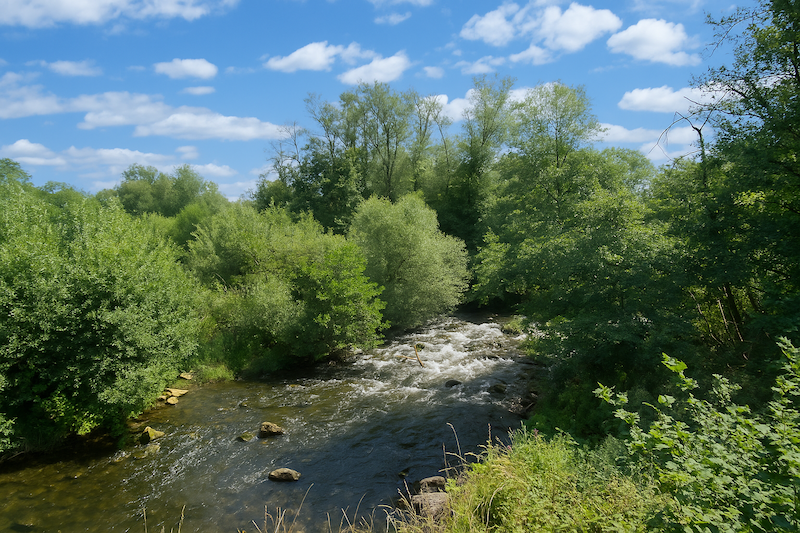
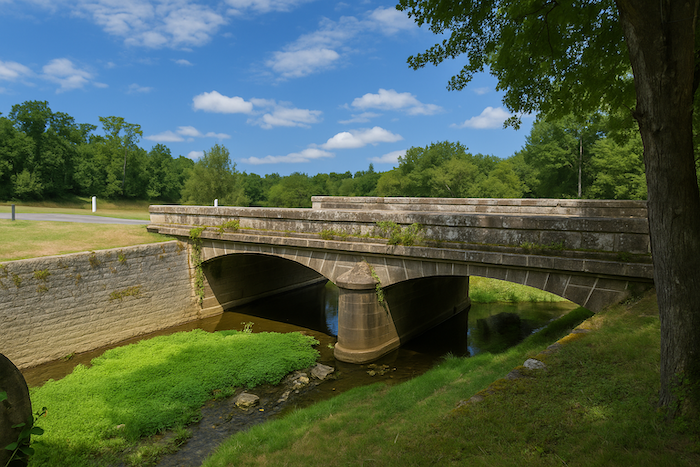
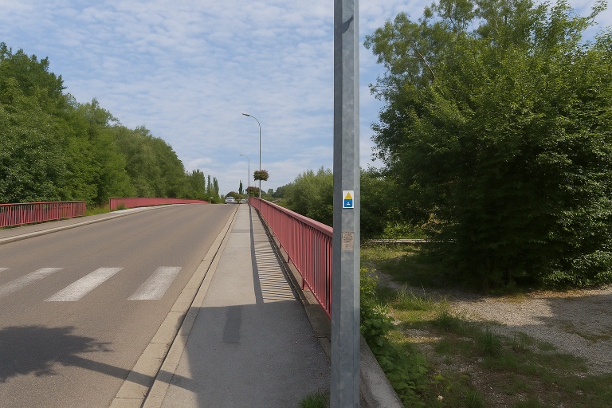
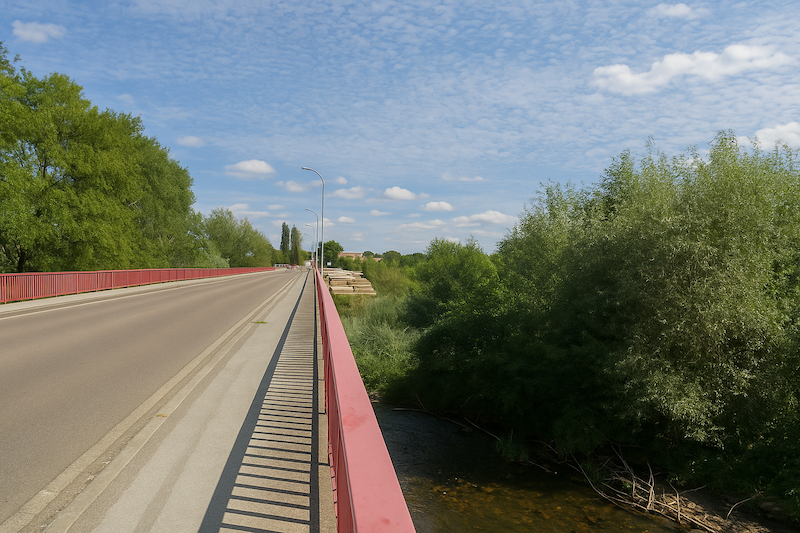
| Here, the route sets off across a large stone bridge, thrown like an arch of time over the Oignon. This river, with its singular and slightly familiar name, runs down from the Vosges, traces its wake through Haute-Saône, then through the Côte-d’Or, before meeting the Saône River further south. At this precise point its clear waters are nothing more than a narrow thread, skipping from rock to rock, almost hesitating between song and silence. |
 |
 |
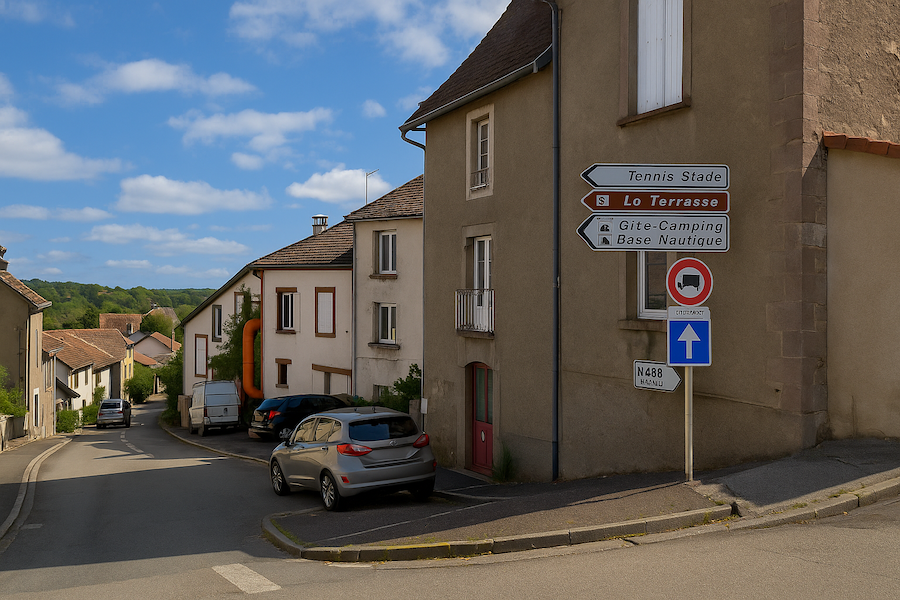
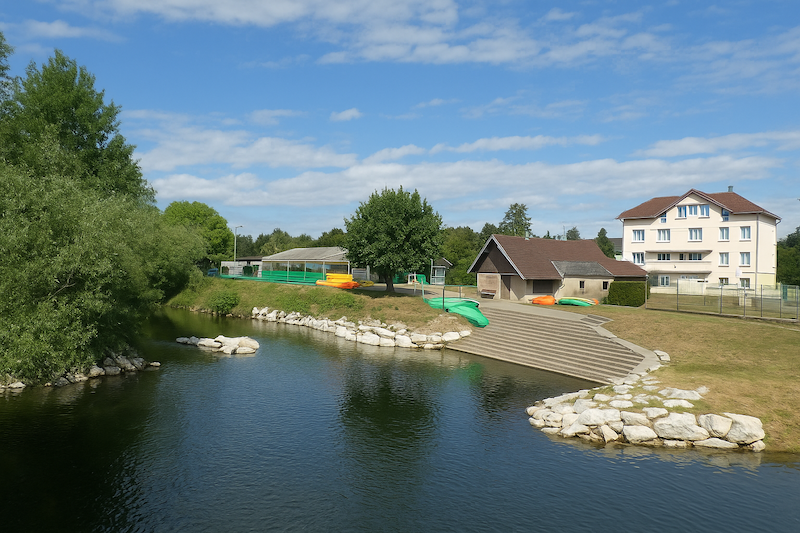
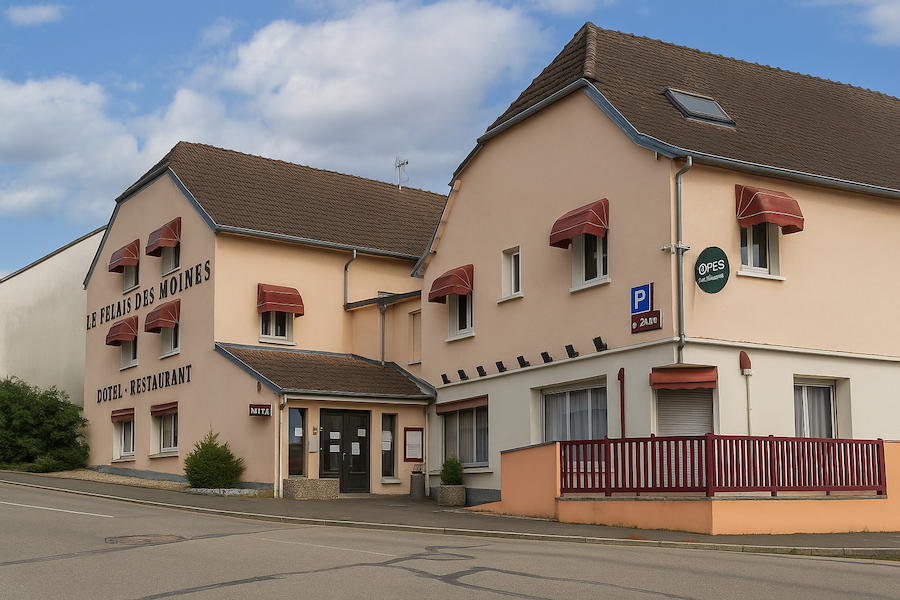
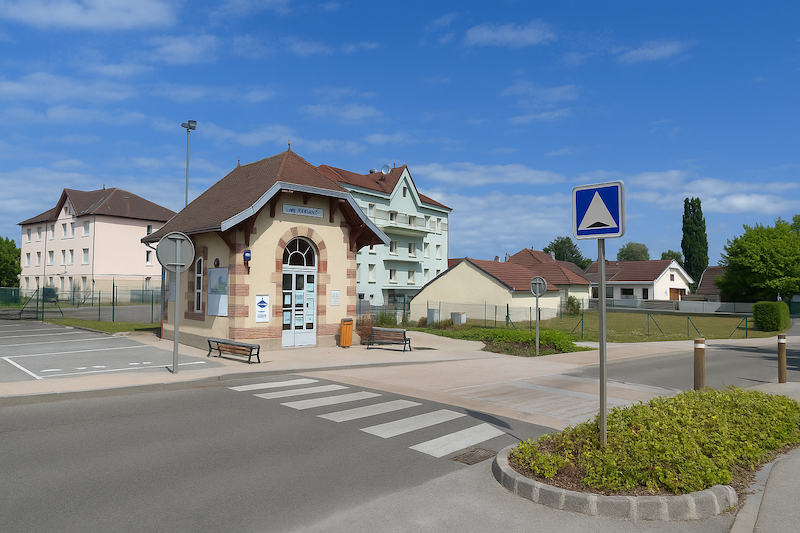
| On its banks, life hums softly, with a square that also shelters a small hotel, a green campground and a water sports base. Here, canoes glide like feathers on the water, while summer visitors scatter amid the gentle sounds of a simple life. The place has no glaring brilliance, yet it possesses a quiet grace. |
 |
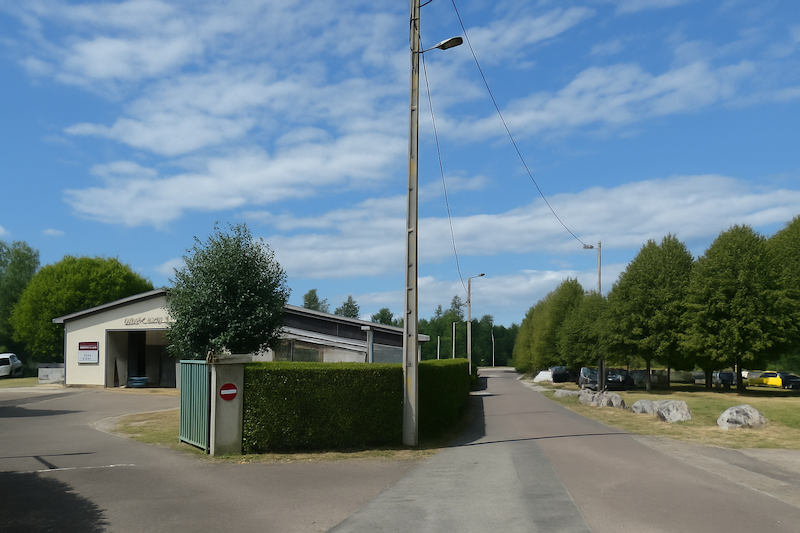 |
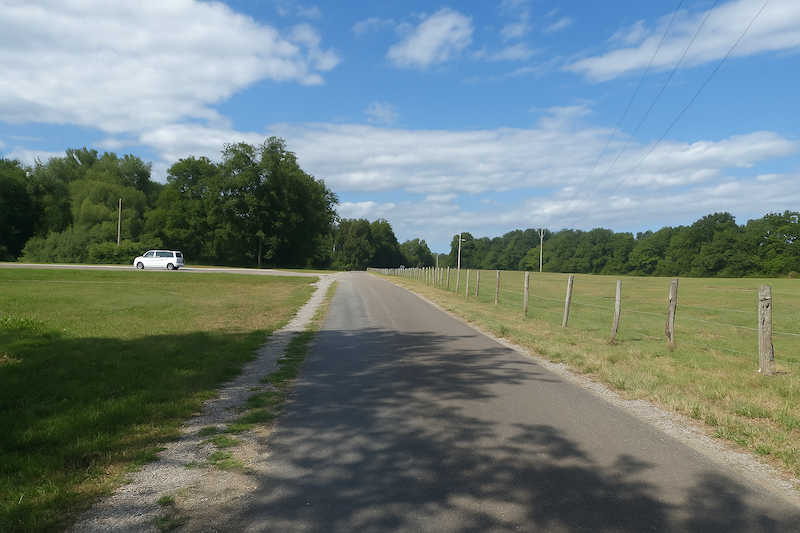
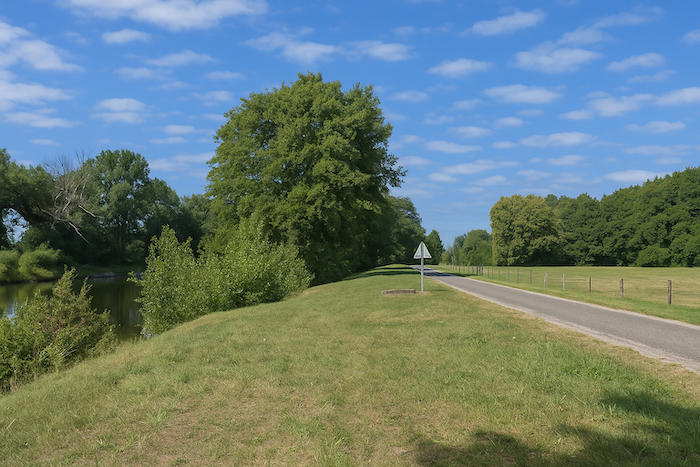
| Little by little, the road moves away from the light bustle of this leisure area, following the bank through meadows. The murmur of the current is never far, barely veiled by the leaves. |
 |
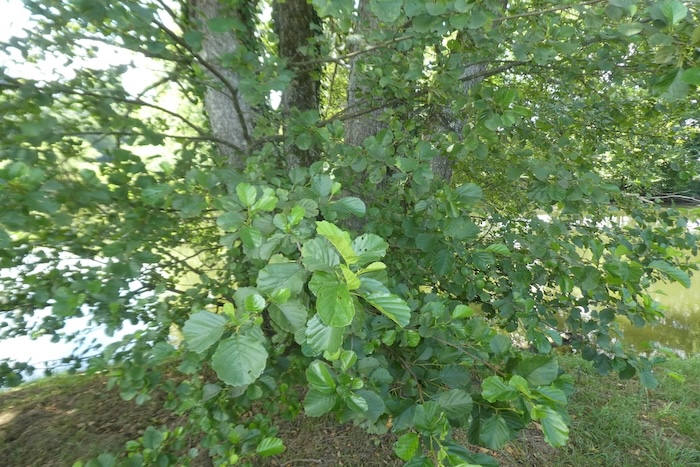 |
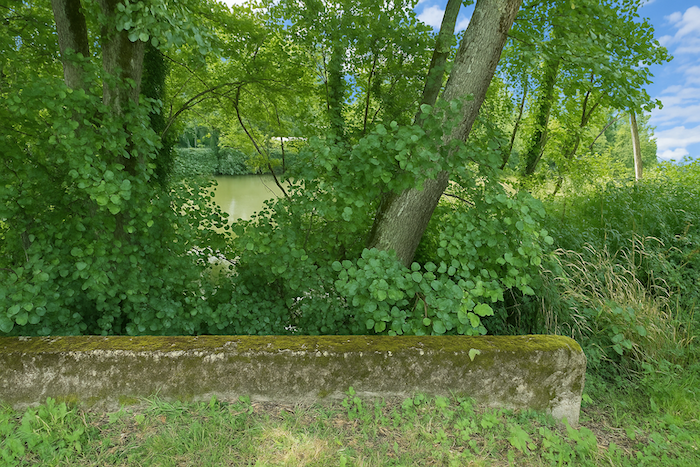
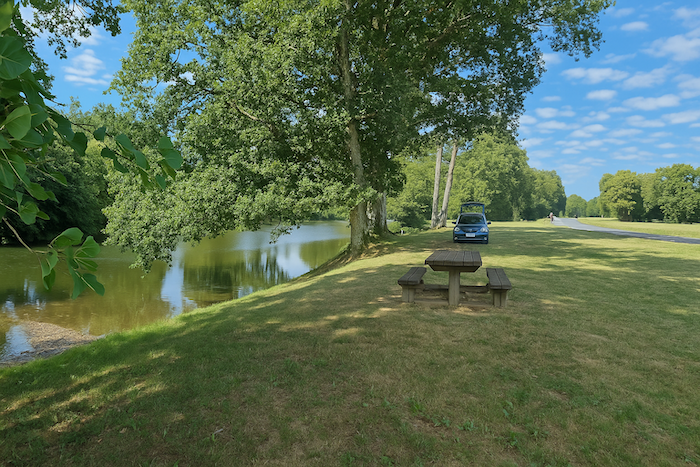
| Then the river reappears, loyal and companionable. On its edge, silent anglers stretch their lines under the welcoming shade of beeches and oaks. In the warm air there is a form of rural peace, almost pastoral, disturbed only by the beating of wings or the sliding of water. |
 |
 |
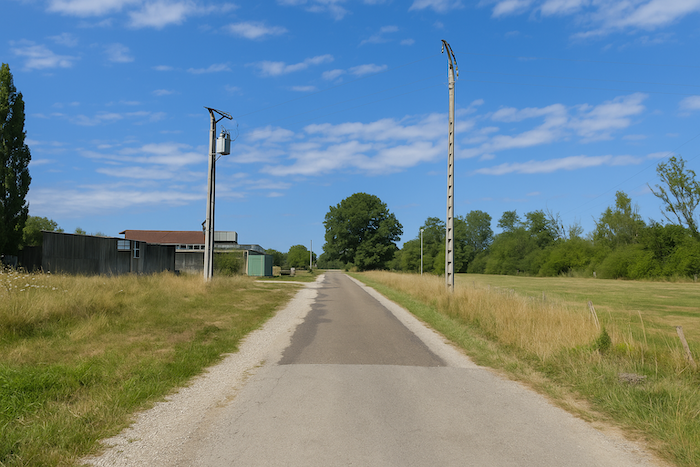
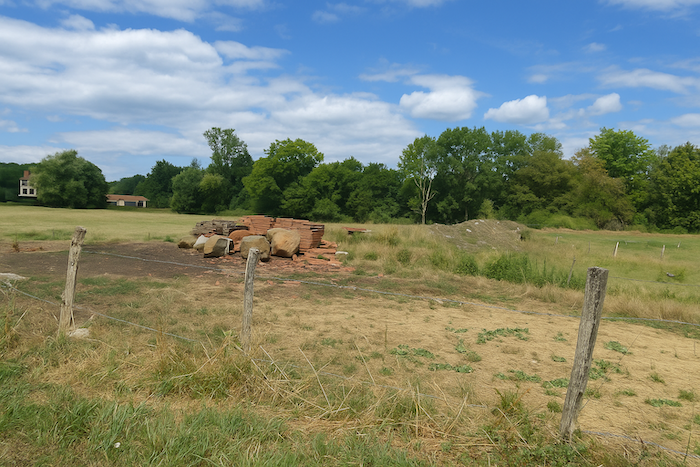
| A few more steps, and the road leaves this shaded stage and heads calmly toward a wastewater treatment plant. There is nothing worrying here, the ground remains flat and progress is easy. It is a modest passage, almost effaced, like a breath between two broader movements. |
 |
 |
 |
. |
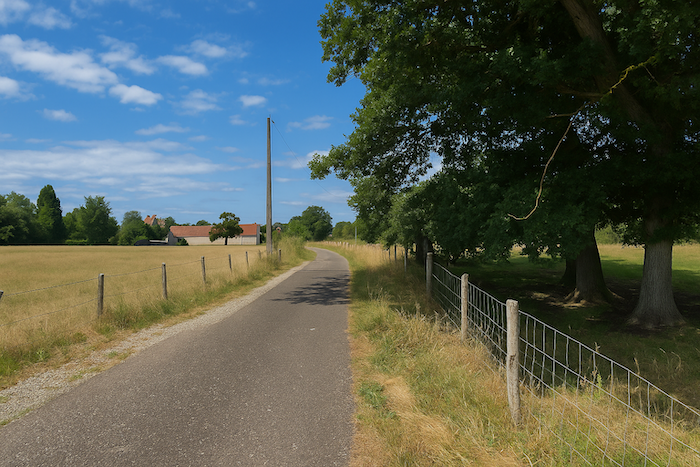
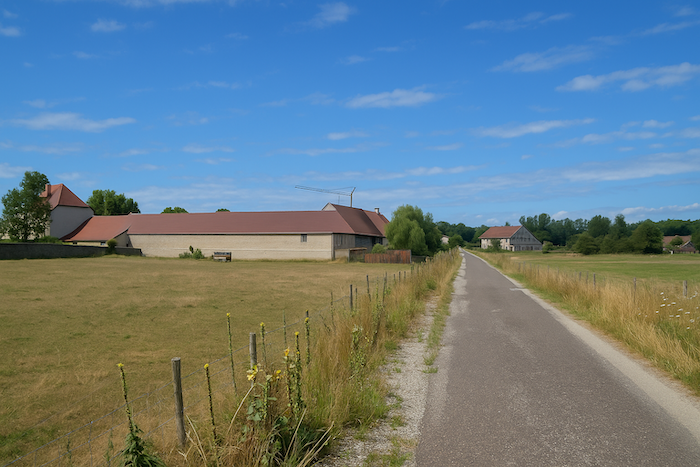
A little farther on, at the turn of a field, a massive farm stands out from the landscape. Its old walls seem to hold centuries of labor and patience.
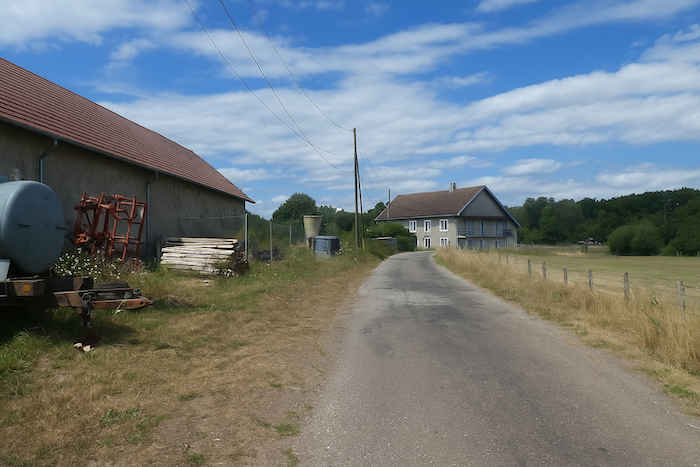
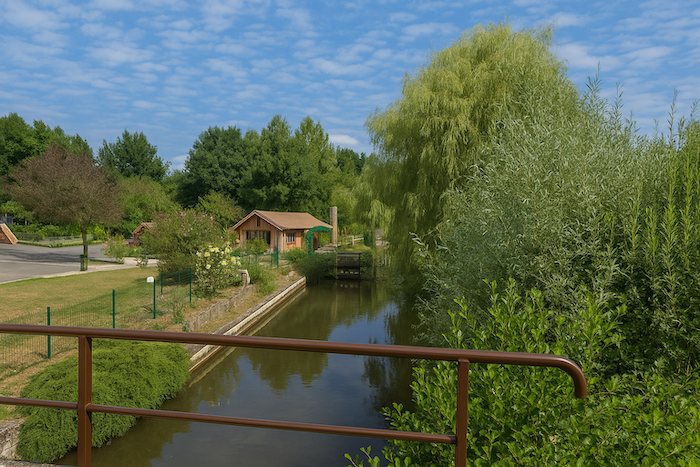
| Finally, at the corner of this farm, the road begins a curve, soft and rounded, and comes to brush against a small reservoir of water. It is a pause for the eyes, a moment of calm. |
 |
 |
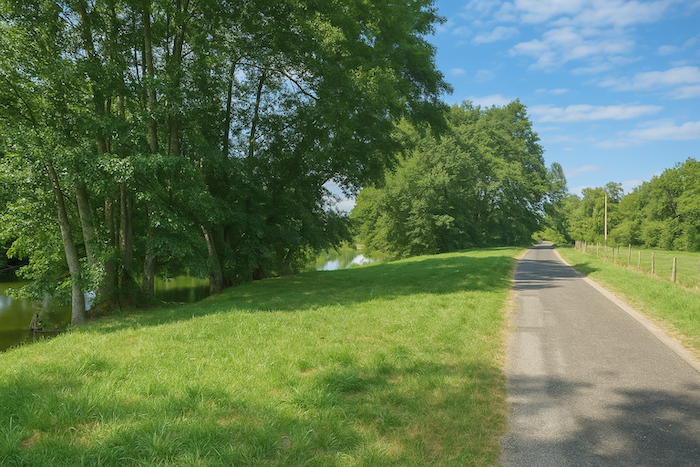
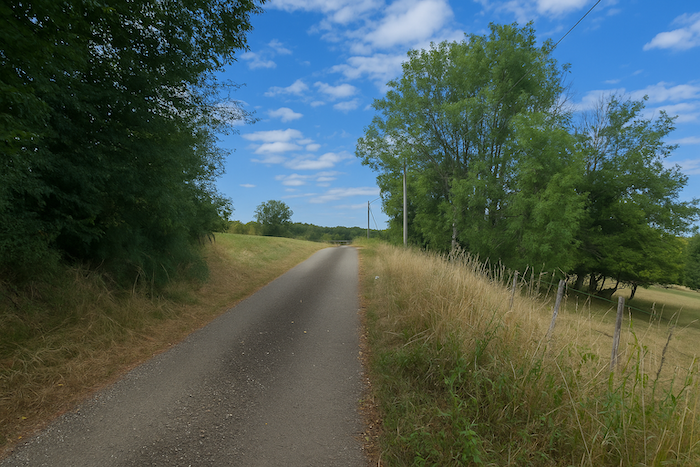
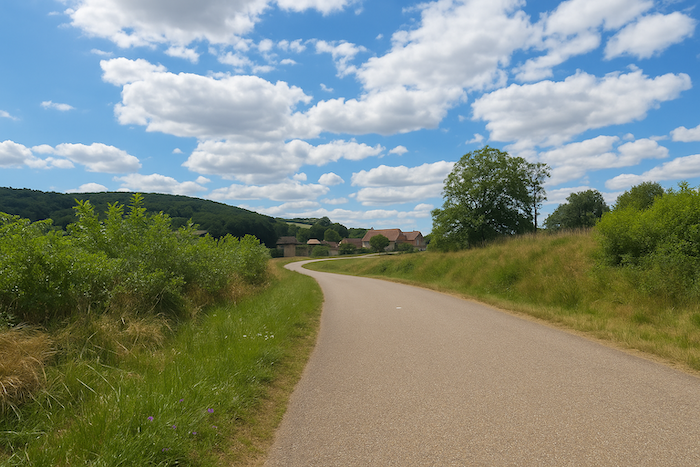
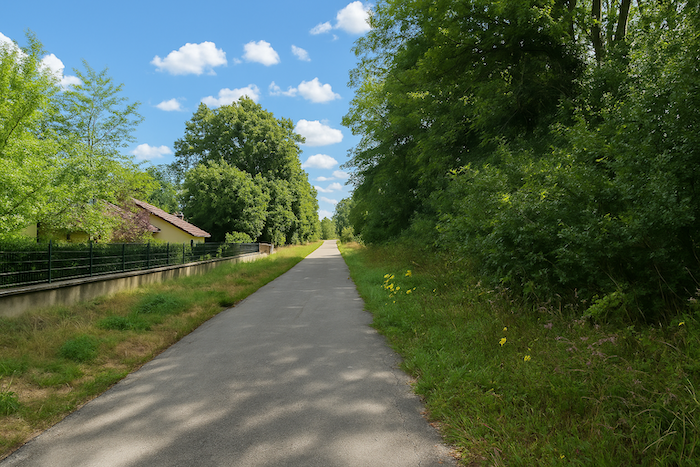
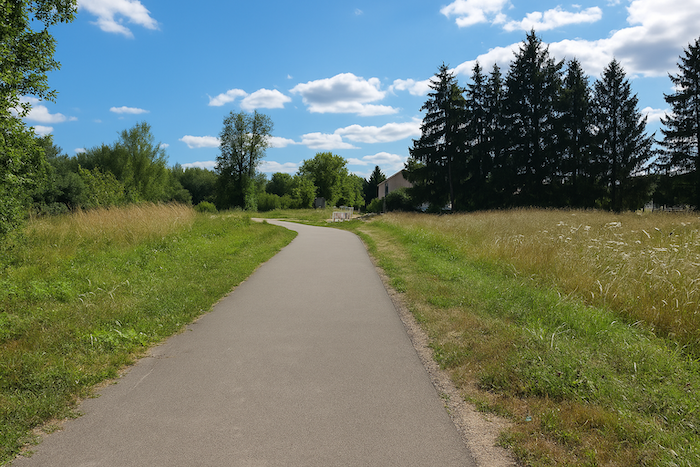
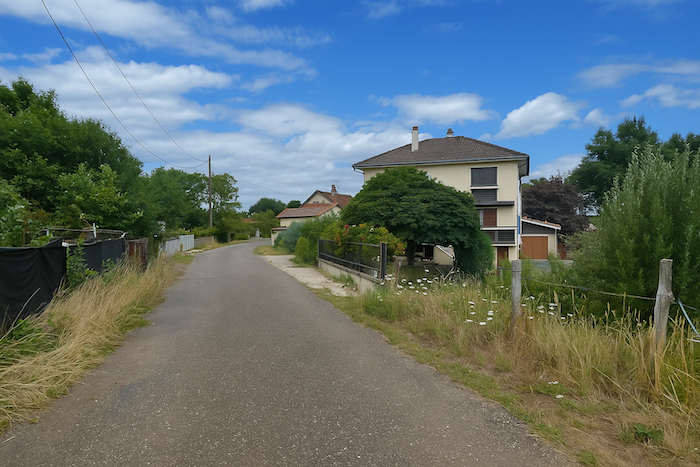
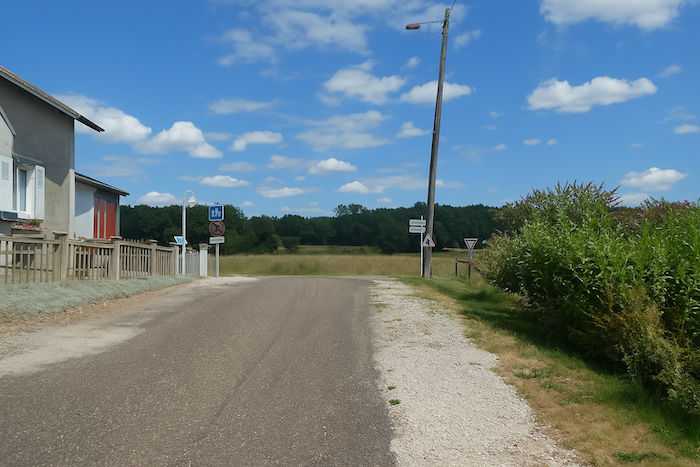
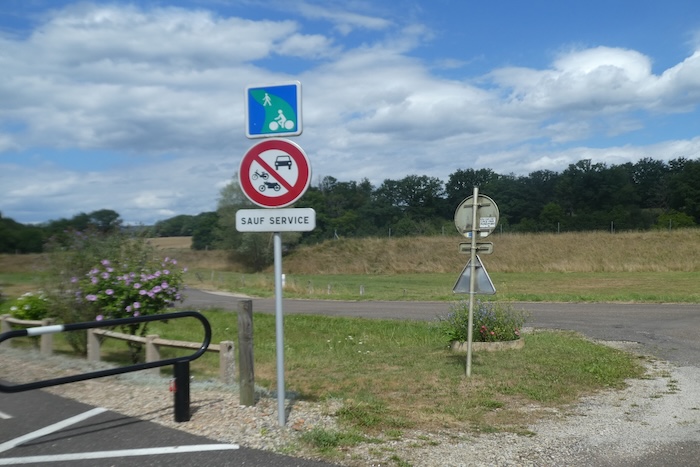
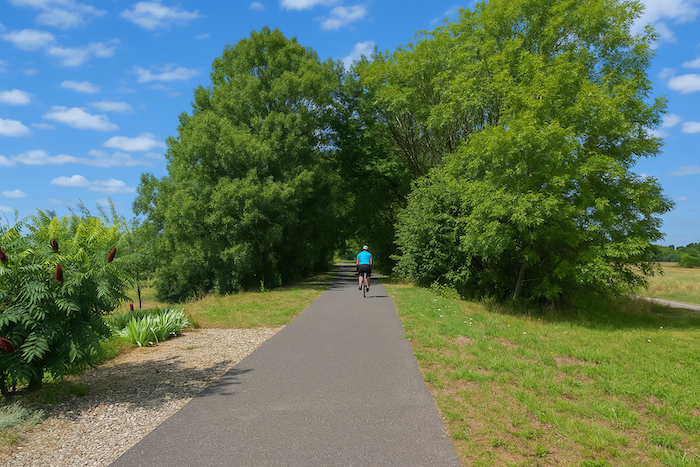
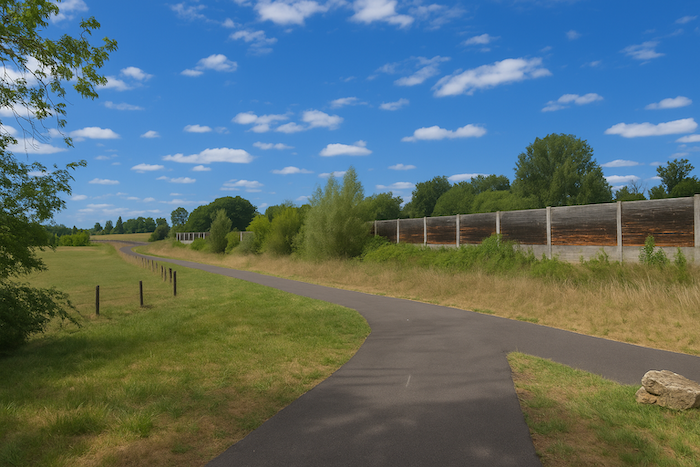
| Just after this peaceful pause, the route joins a cycle route, like a thread stretched across the landscape for dreamers on two wheels. In Franche-Comté these green ways are not only roads, they are invitations to slow travel, close to real nature. Here, there is no anonymous asphalt and no harsh engine noise, but a gentle route devoted to moving in a contemplative way. |
 |
 |
| The route now runs alongside the D486, an important road artery linking the Vosges to Haute-Saône. Yet despite the nearness of this busy road one feels protected, almost in a bubble, as if the traffic were only a distant murmur in the silence of the landscape. |
 |
 |
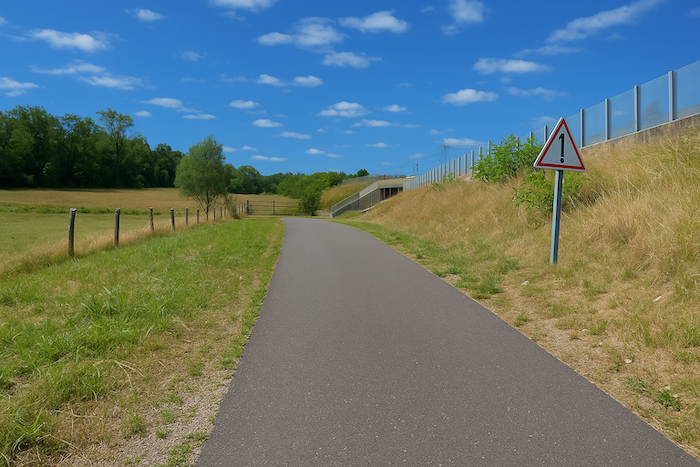
| Soon after, the cycle path slopes downward to pass under the departmental road. It is a quick shift, almost discreet, like a hidden backstage passage in the sceneryr. |
 |
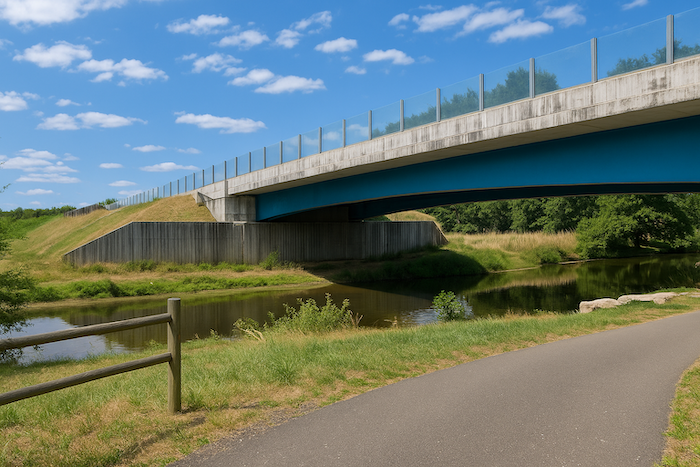 |
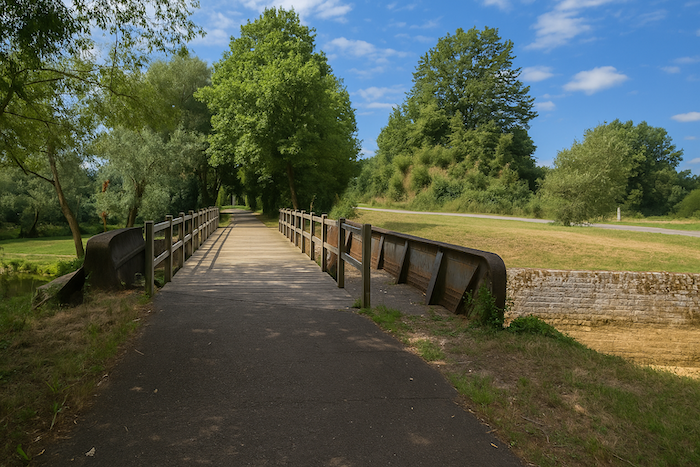
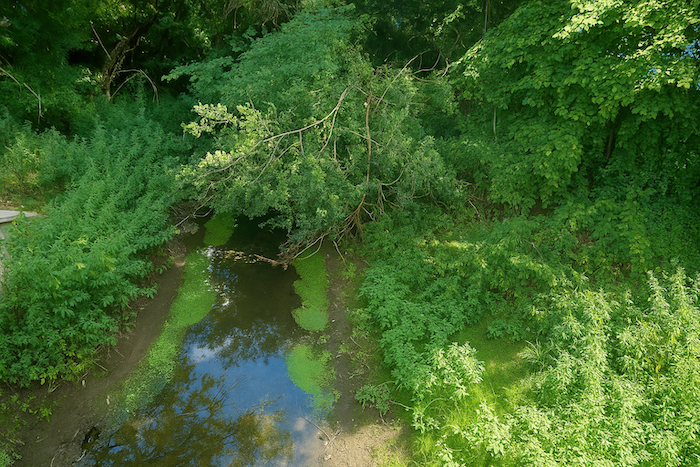
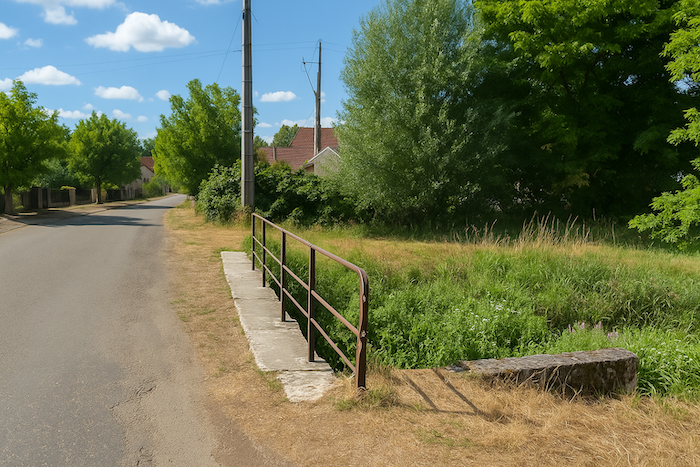
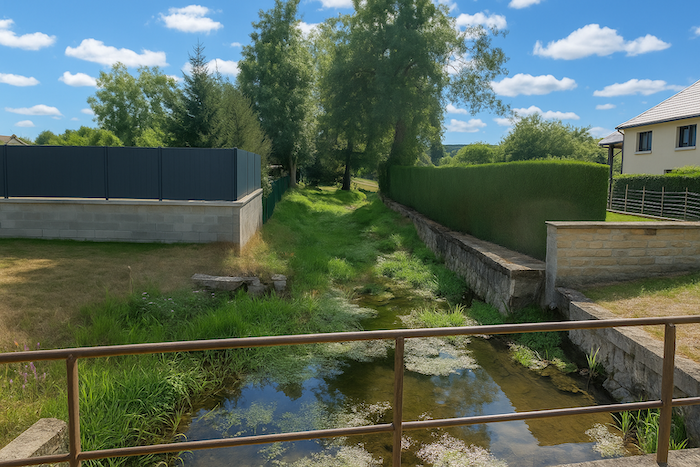
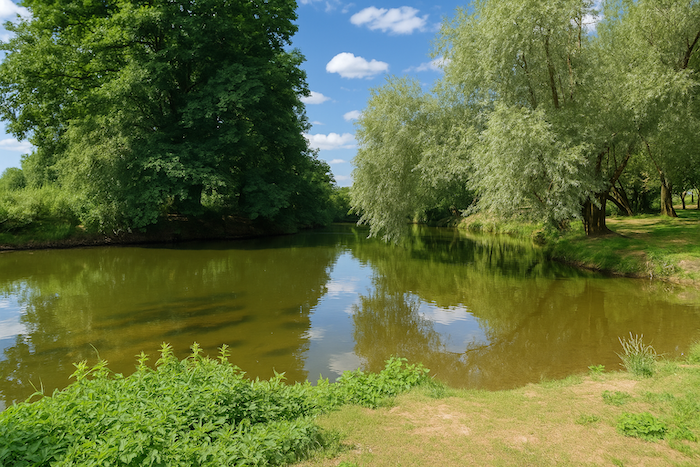
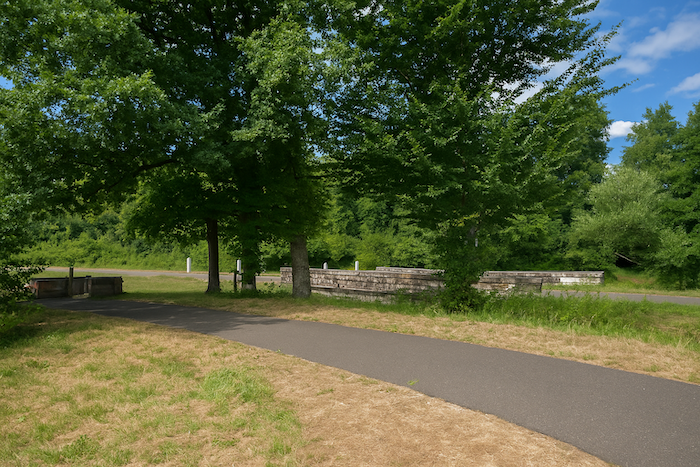
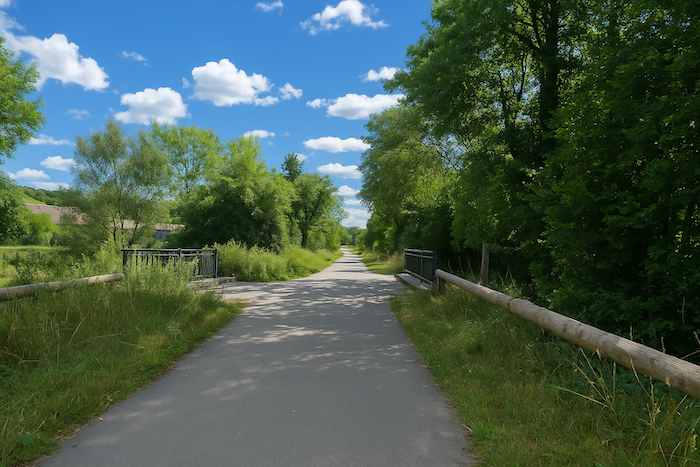
| Here, the cycle path seems to want to play, or perhaps to be cunning. It enters into a kind of unusual slalom, chaining curves over small bridges designed to follow the whims of the Oignon River. The river slips along like a sleeping snake beneath the structures, dragging its heavy and slightly muddy water between hesitant banks. |
 |
 |
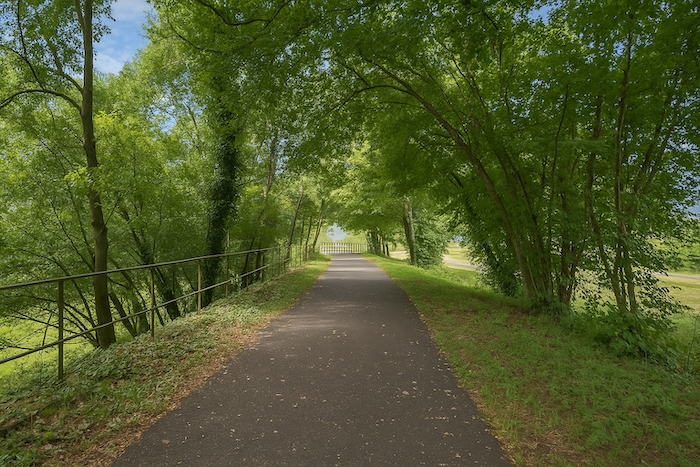
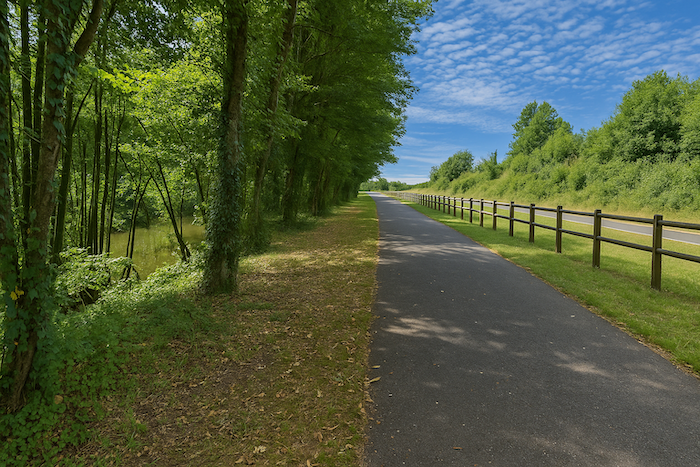
| Once this interlacing has been crossed, the cycle route regains its natural rhythm with assurance, once again following the calm course of the water. The pace becomes peaceful again, almost meditative. |
 |
 |
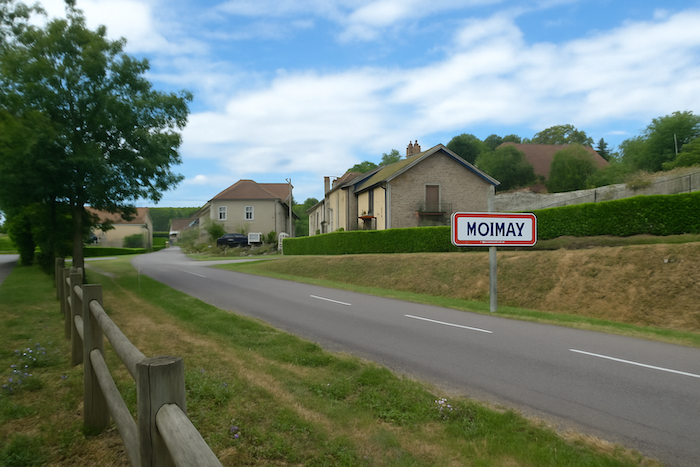
| Farther on, the cycling escape comes to its end at the entrance to the village of Moimay. The route then leaves the cycle route and gains height, climbing gently through the narrow streets. |
 |
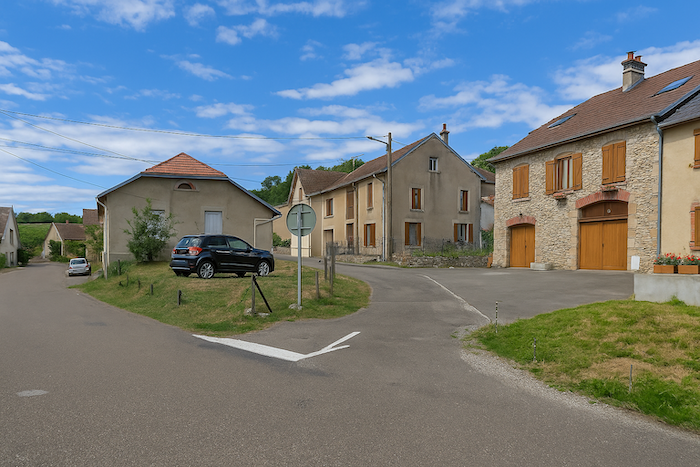 |
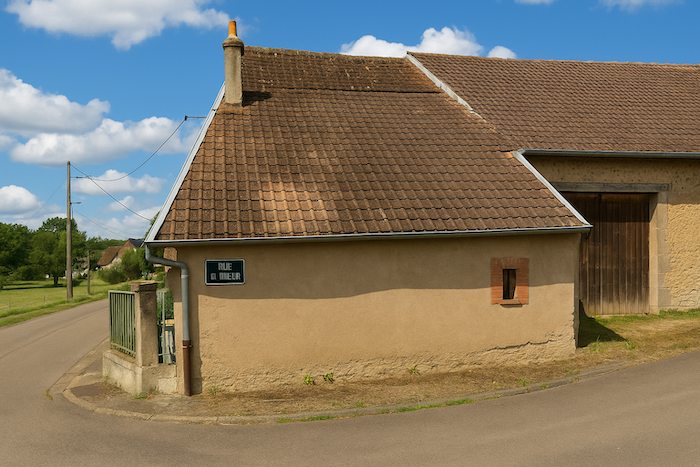
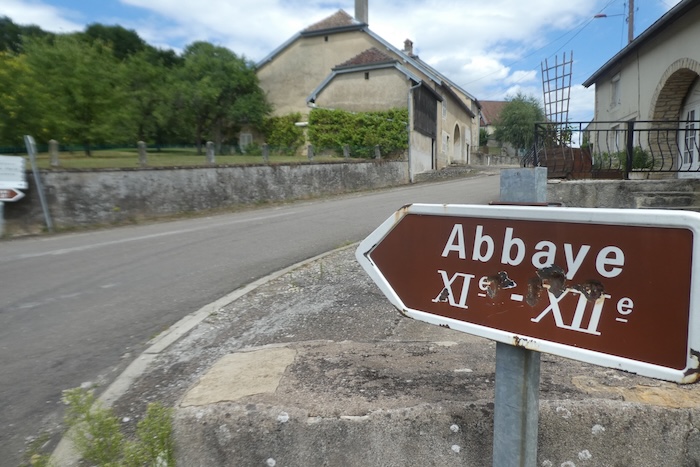
| It is the Rue du Lavoir that must be taken, a narrow road full of history that seems to draw a straight thread toward the Abbey of Marast farther on. The climb is gentle, like a prelude to a spiritual encounter. |
 |
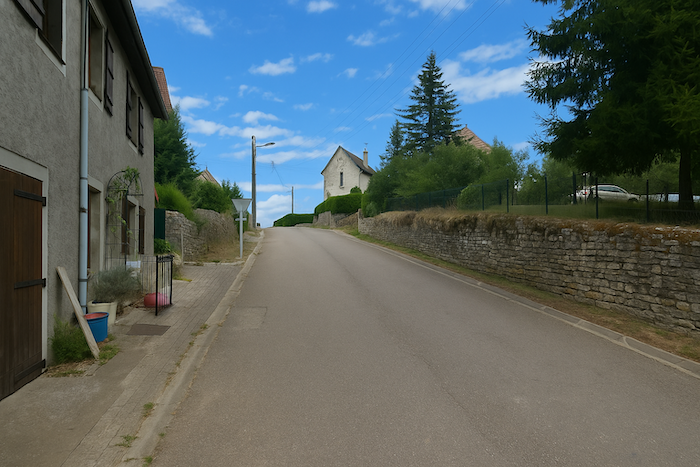 |
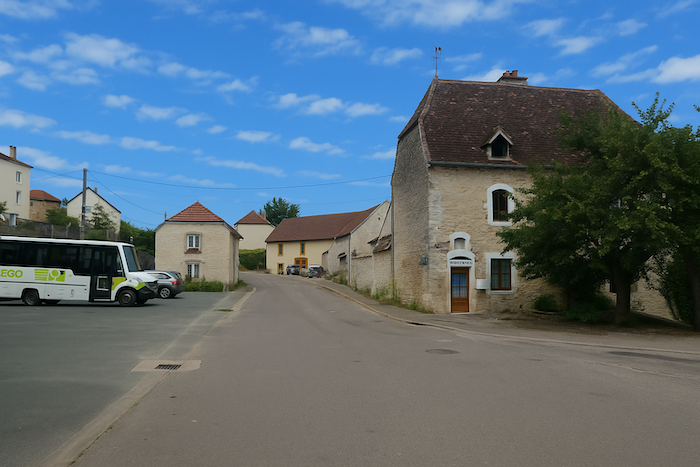
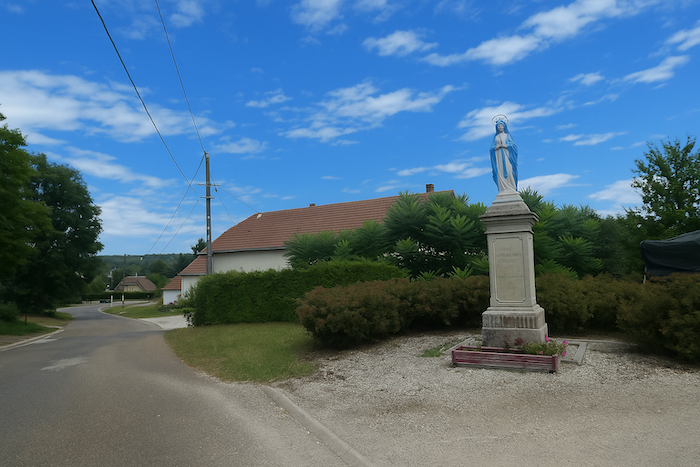
| As you leave the village, the slope softens even more, as if the path itself were inviting you to slow down. There, as a counterpoint to the landscape, a statue of the Virgin keeps watch, clad in blue and white. It is a familiar sight in these countryside landscapes of Franche-Comté, faith anchored in stone at the bend of a path. |
 |
 |
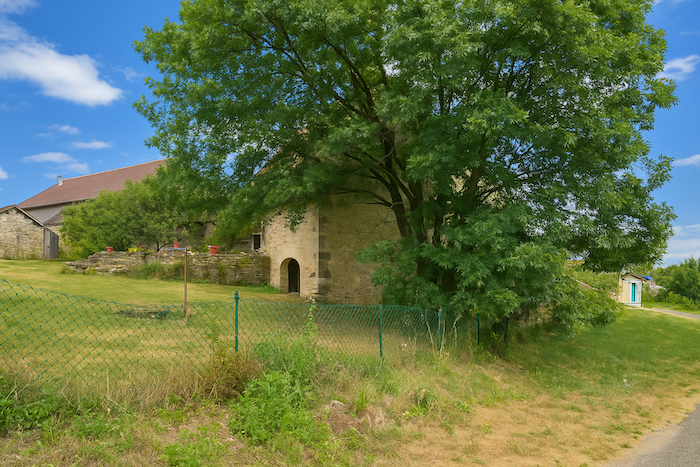
| A little farther on, after passing a black, rustic iron cross, the route finally leaves the last houses of the village. |
 |
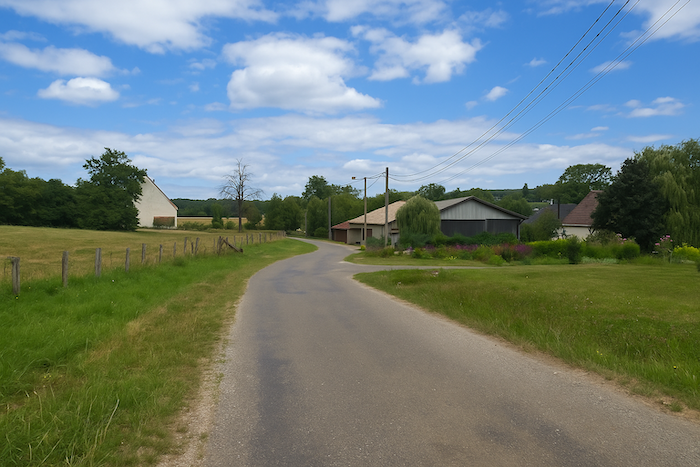 |
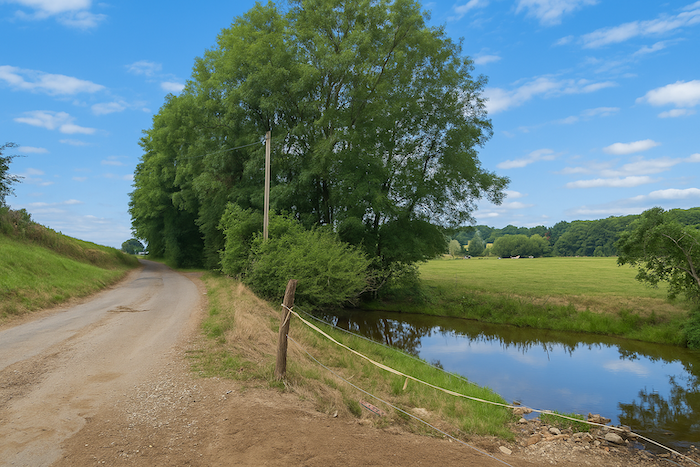
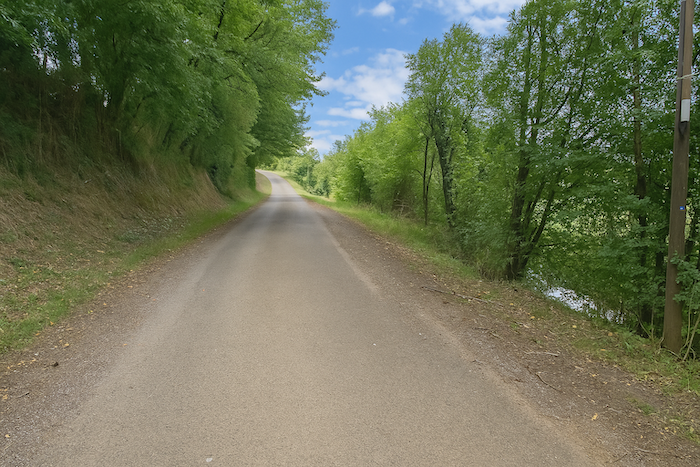
| The road then follows the curve of the Lauzin stream, entering the cool shade of deciduous trees. The water winds discreetly beneath low branches before going to join, farther down, the river Oignon, like a timid tributary returning to its elder. |
 |
 |
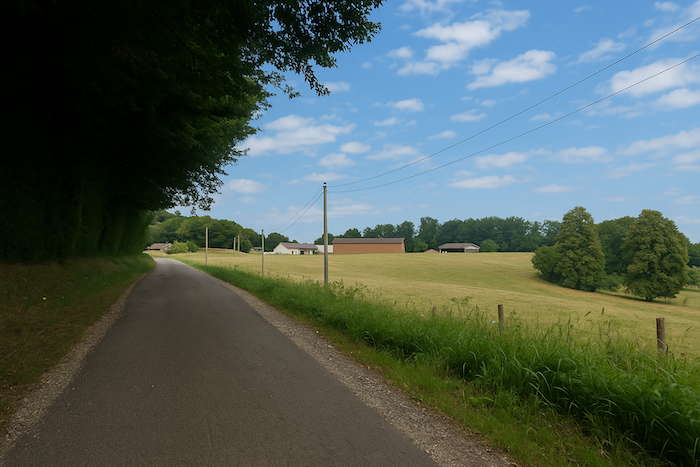
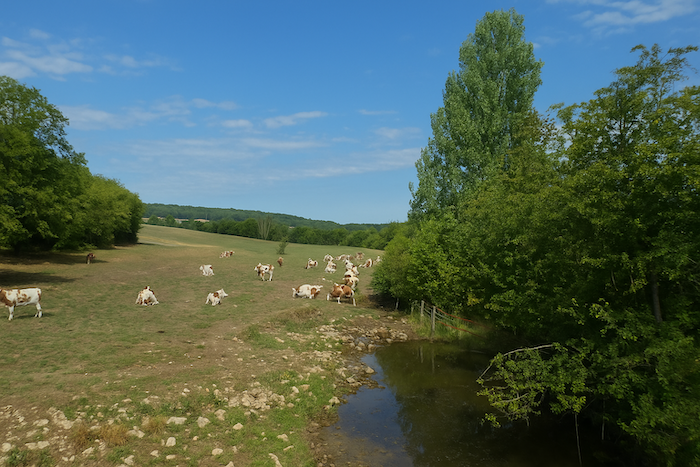
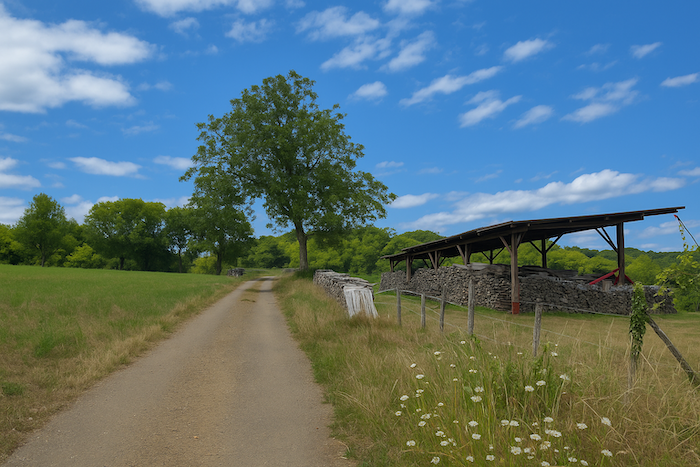
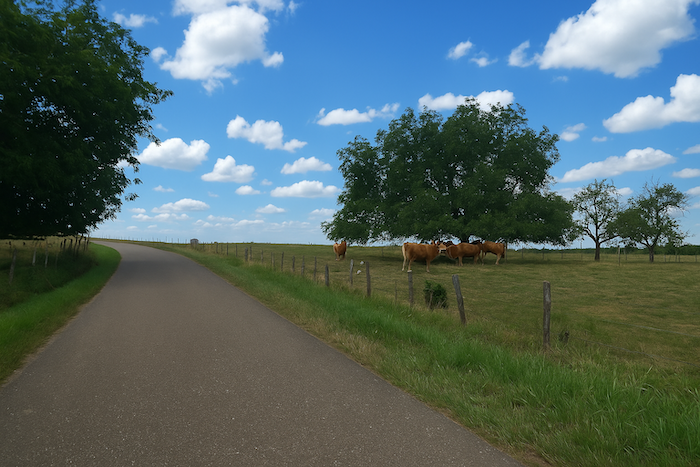
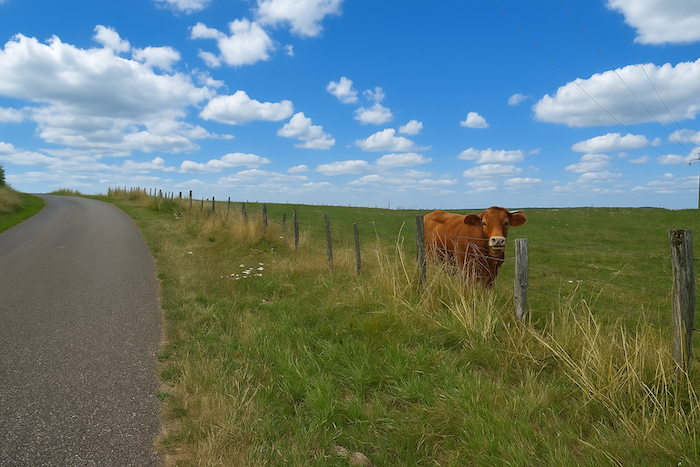
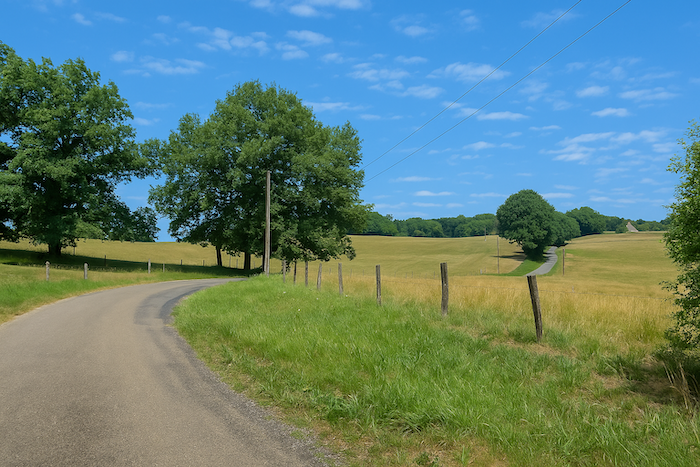
| But soon the path leaves the company of the stream and rises again, in a gentle slope, across the meadows. In front of you, within the opening of the landscape, a large farm is outlined along the ridge. In the nearby fields, Montbéliard cows rest in the shade. These cows with white and mahogany coats, peaceful and proud, are daughters of the region. One might think they were painted there, as if to reassure the walker with their calm indifference. |
 |
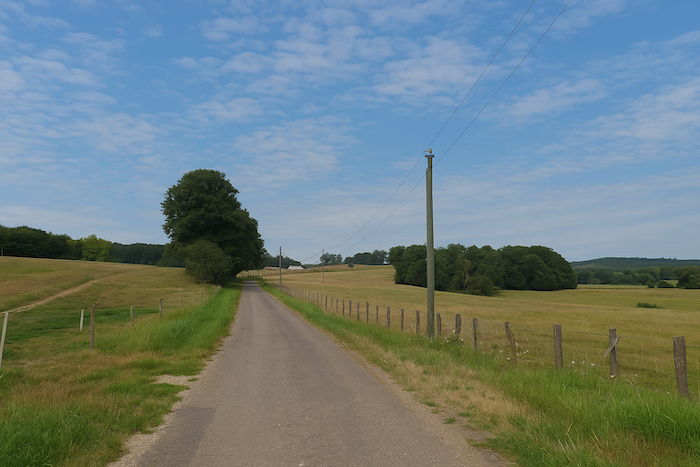 |
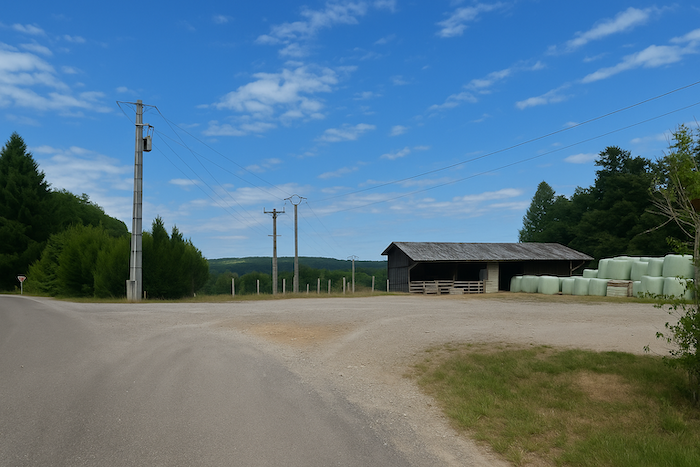
As you continue, the farm on the top of the hill imposes itself, growing larger in the field of vision. It almost becomes a monument, a silhouette of human activity in an ocean of greenery.
Section 2: A beautiful abbey and forests
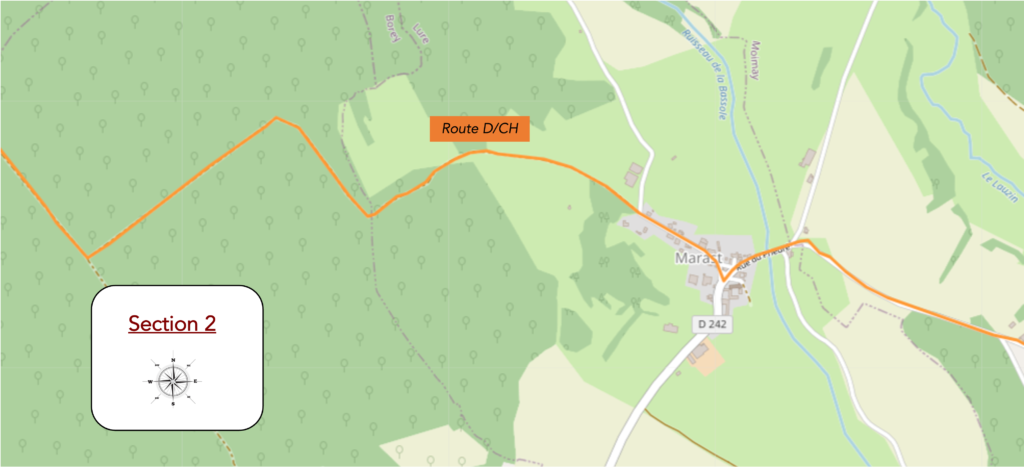
Overview of the route’s challenges: a route with no difficulty at all.
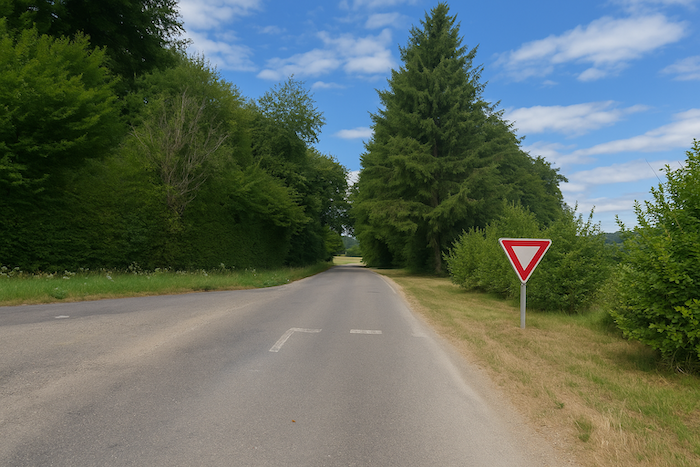
| From the farm, the route begins a slow descent, like a breath that calms after effort. The gentle slope glides down the opposite side of the hill, gradually opening the view over the valley, like a hand revealing a secret long kept. |
 |
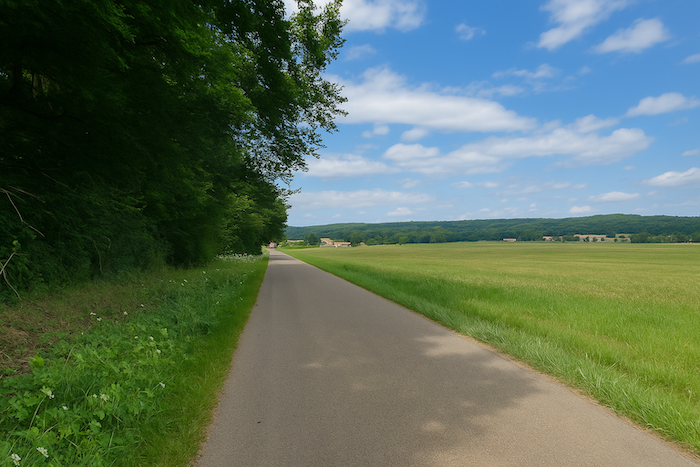 |
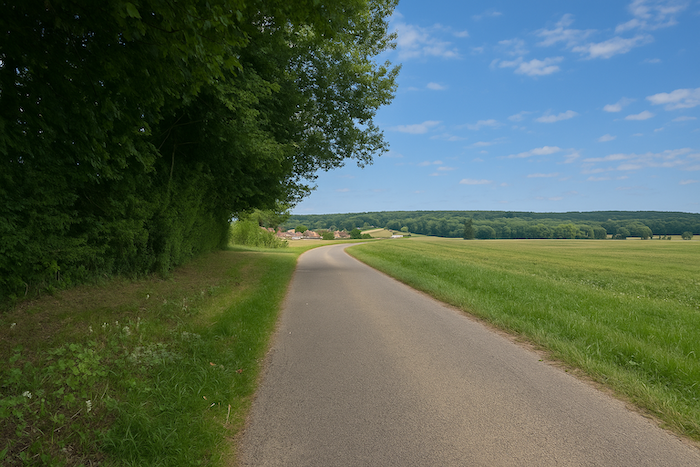
| The road here becomes straight like a promise. It cuts its furrow through the countryside, stretched toward the horizon. Marast, tiny at first, slowly grows, almost shyly, as if the village were waiting to be tamed. |
 |
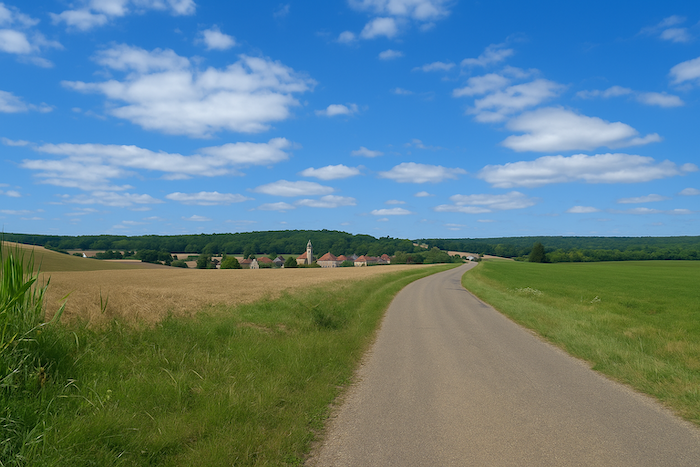 |
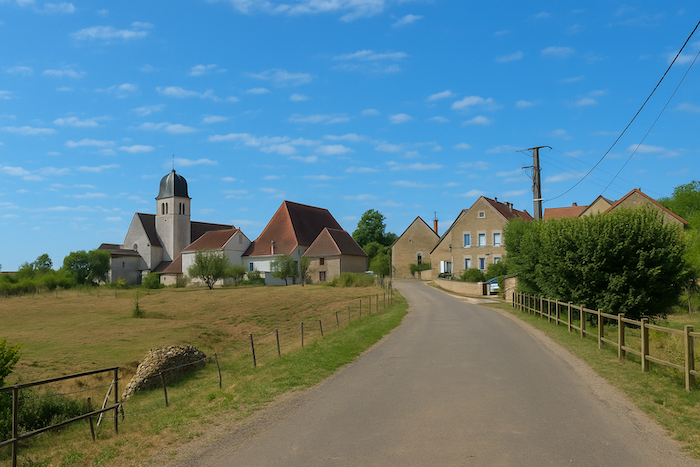
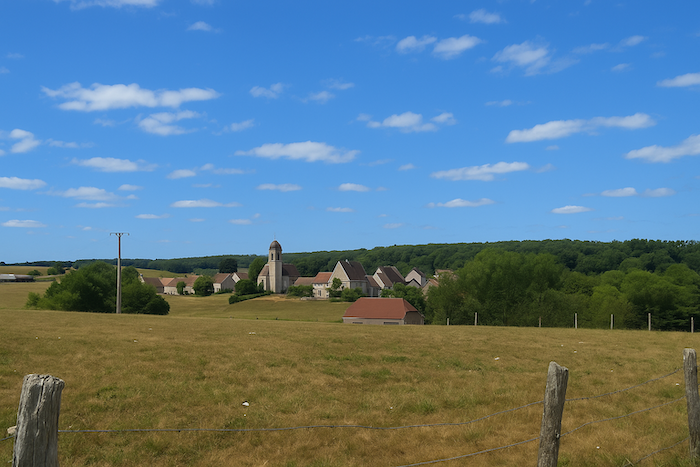
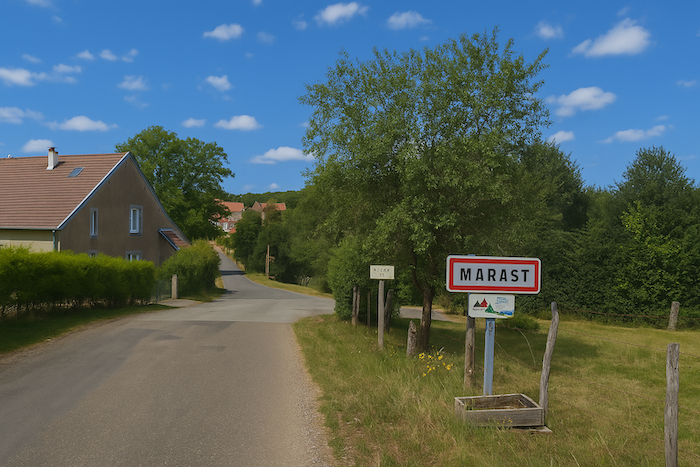
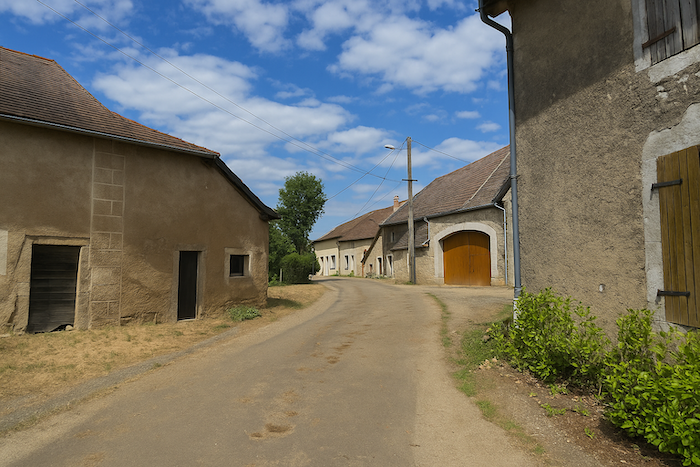
| As you approach Marast, the road becomes village. A thread of water, the Bossole, flows quietly at the entrance, like a caress offered to the cattle. The whole setting is harmonious and calm, united by that discreet beauty that the villages of Franche-Comté know how to preserve. |
 |
 |
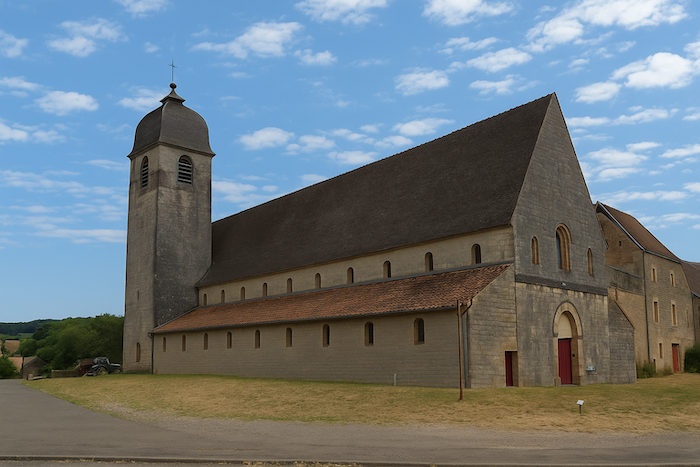
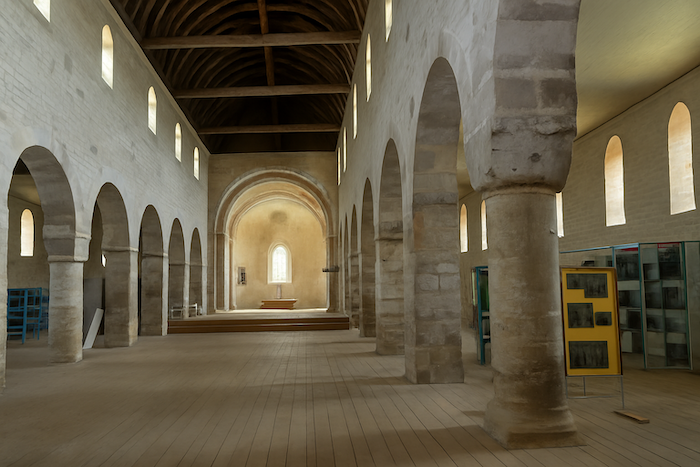
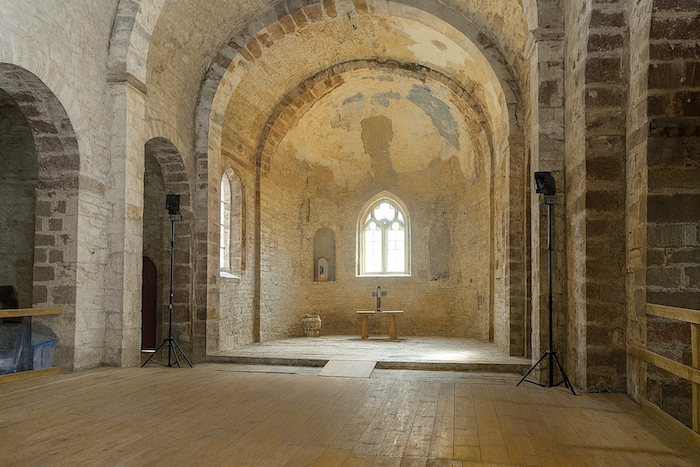
| In the center of this simple landscape rises a remarkable Romanesque church. First dedicated to the Virgin Mary, then placed under the protection of Mary Magdalene, it was built at the end of the twelfth century. Here, mass is said only once a year, on the patronal feast day. It is a rarity, almost a miracle frozen in time, where the sacred becomes intimate. |
 |
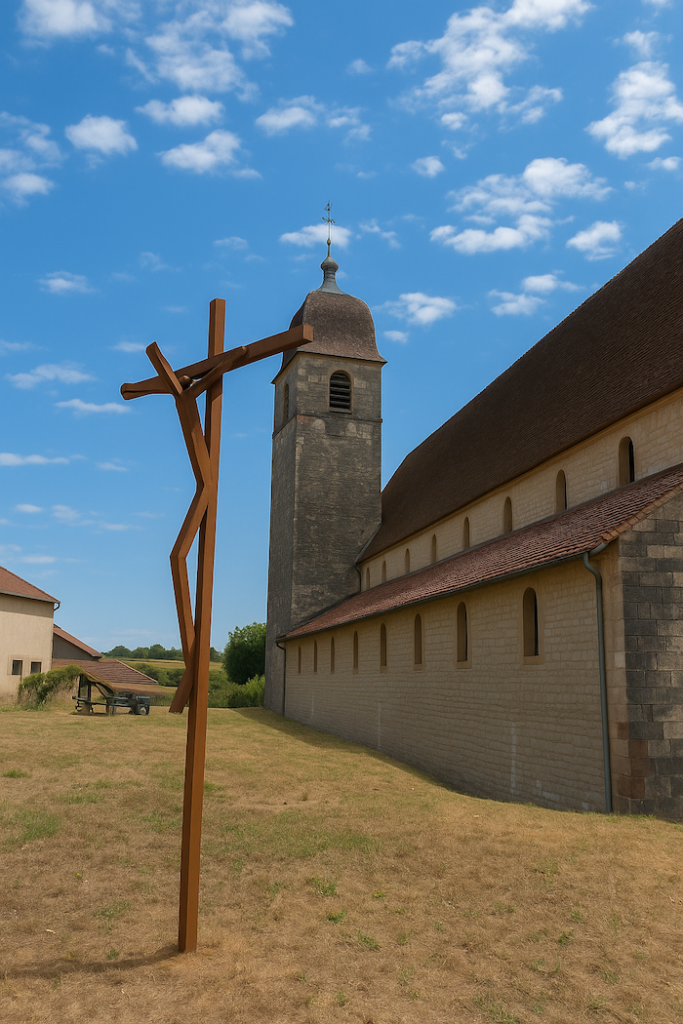 |
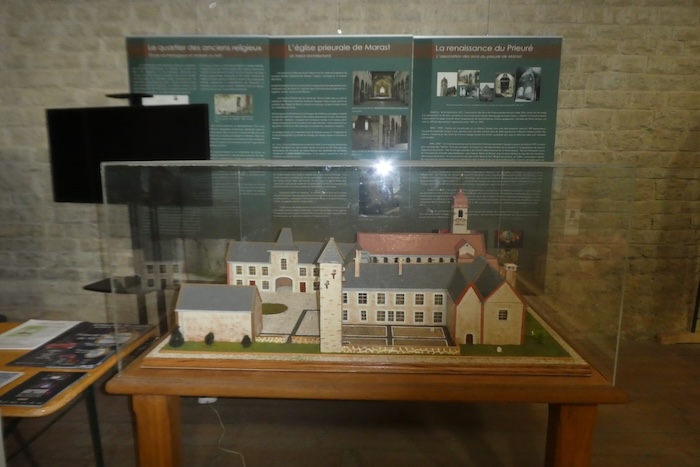
| In former times, this place housed a priory served by canons of the Order of St Augustine. Monastic life stretched on here for centuries before slowly fading away. The last religious breath escaped in the eighteenth century, with the death of the last canon. Then came the Revolution, the confiscation of property, and the abbey was sold as national property. Today only this Romanesque church remains, bare and beautiful, almost austere, yet filled with that silent spirituality that only Romanesque stone can retain. |
 |
 |
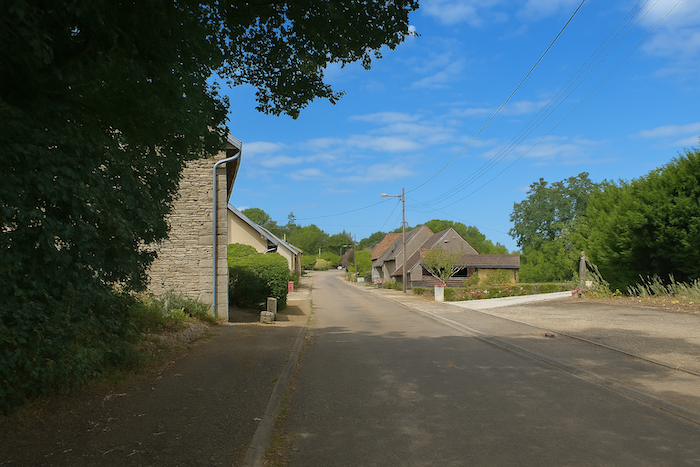
| From the village, a road that looks like a promise slopes up gently. It is the Rue de Compostelle, like an echo of other paths farther away but related in spirit. |
 |
 |
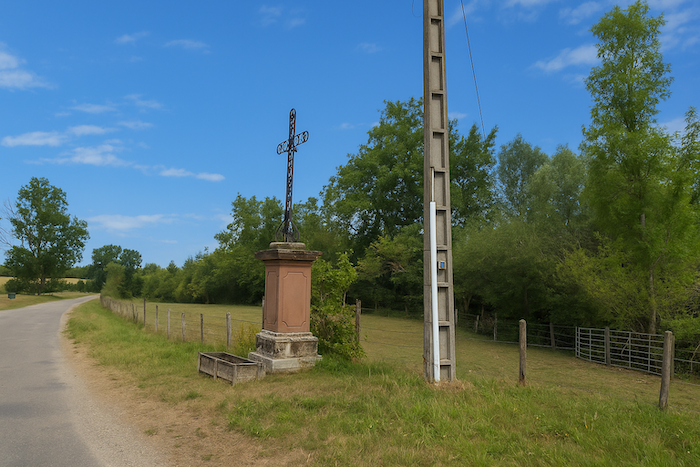
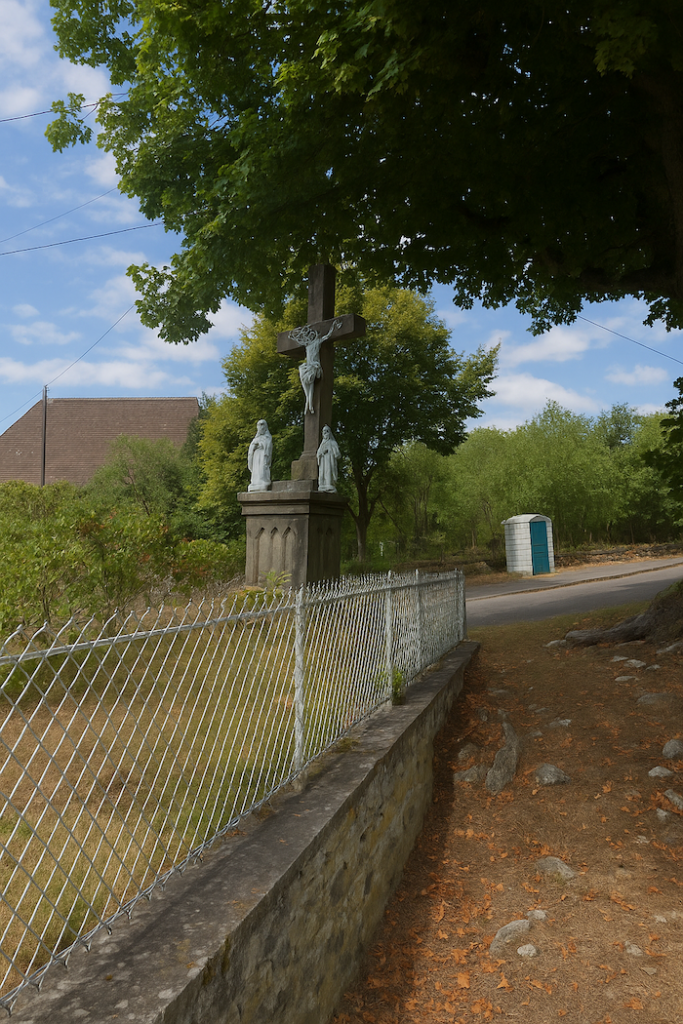
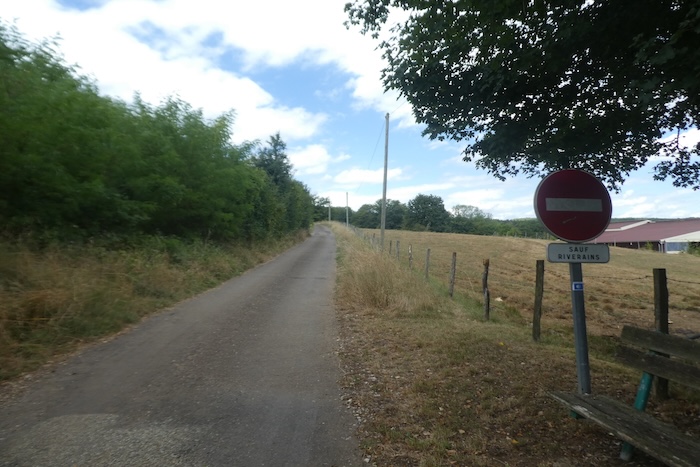
Soon, on the roadside, an iron cross rises, firmly set on a block of granite. It seems to keep watch like a beacon for the soul in the countryside, pointing the way to silence and to the forest.
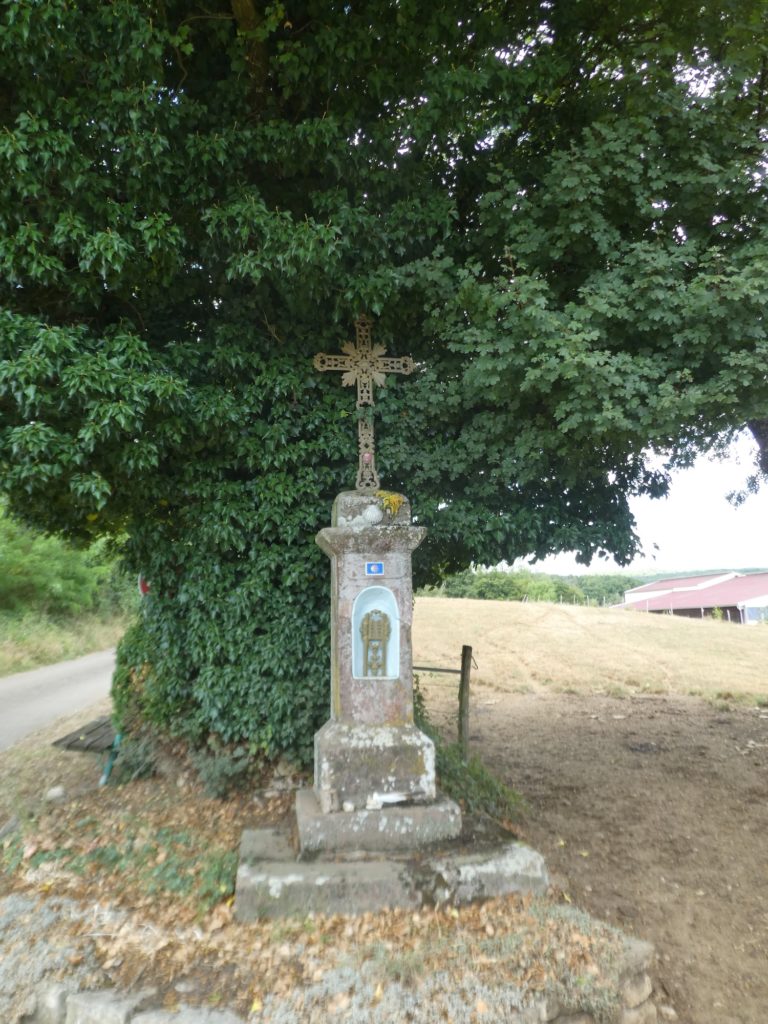
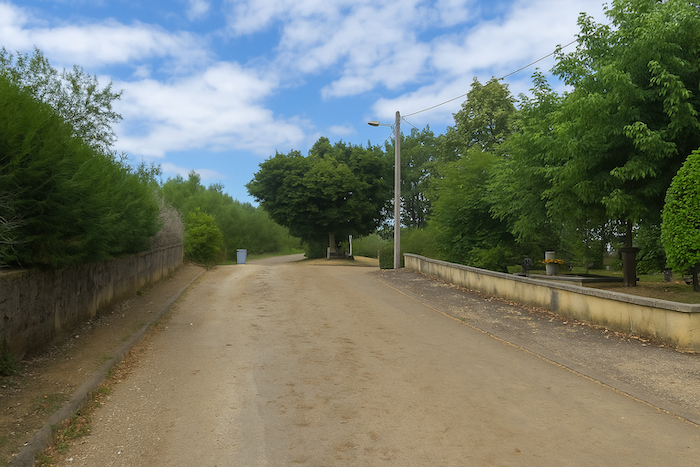
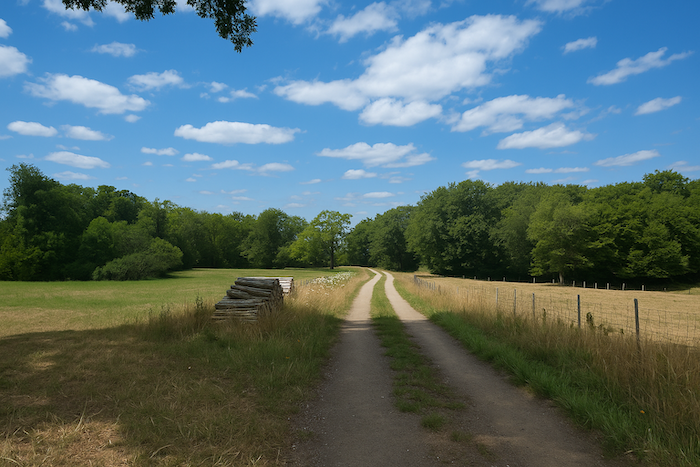
| The road then climbs again, slowly, drawing its curve between the meadows toward the foliage. |
 |
 |
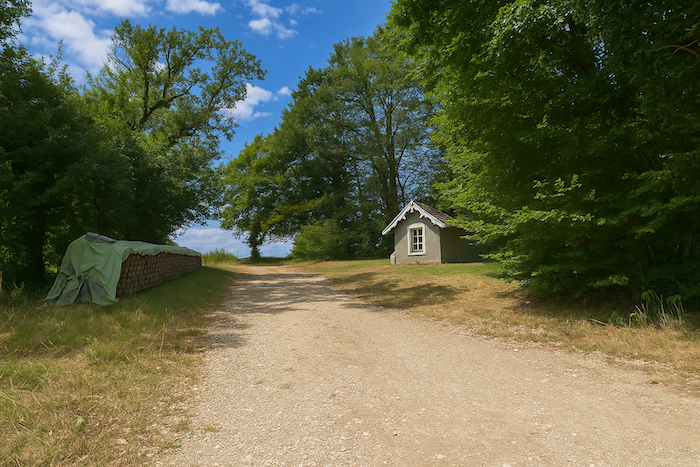
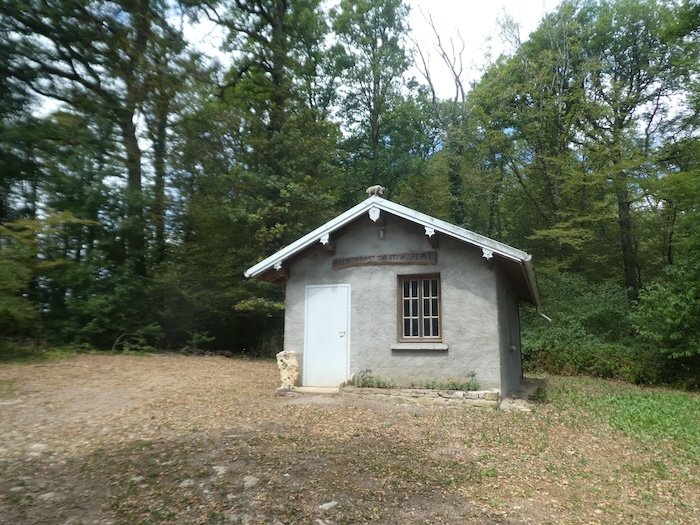
| At the top of the incline, nestled at the edge of the trees, a hunters’ shelter waits, discreet and sturdy, guardian of the woods. |
 |
 |
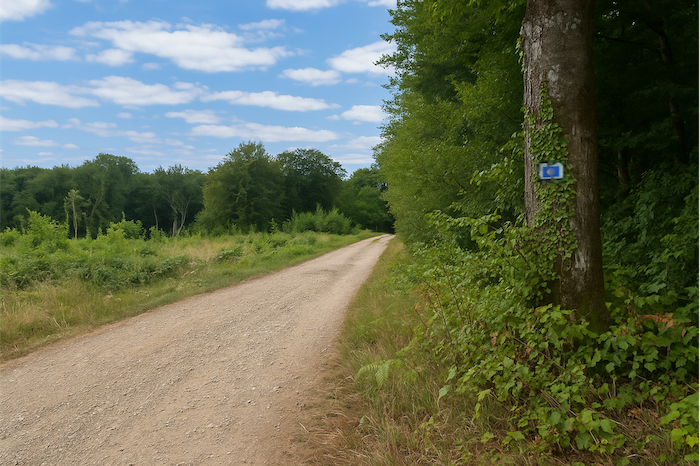
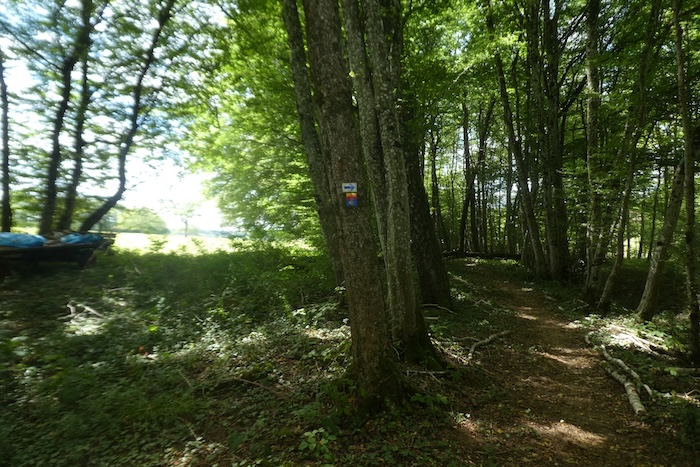
| You then enter the Grands Bois, that vast forest where, in 1871, the earth absorbed History. Here, during the battle of Villersexel, French and German troops clashed in the turmoil of the Franco-Prussian War. The Prussians occupied the woods for strategic reasons. The traces of the conflict have vanished, but the echo of combat still resonates for those who know how to listen. A GR long-distance path crosses this place, probably the GR9, as well as another path marked with a green circle, in the sober and subtle style loved by the walkers of Franche-Comté. Do not let yourself be distracted. It is the scallop shells you must follow. This path is yours. |
 |
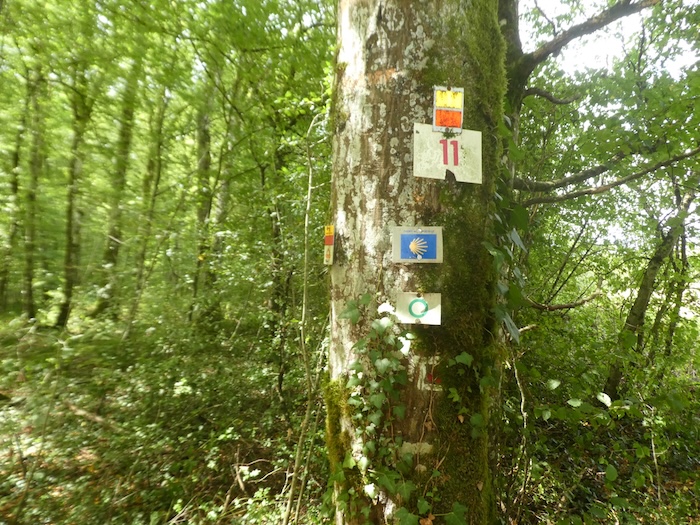 |
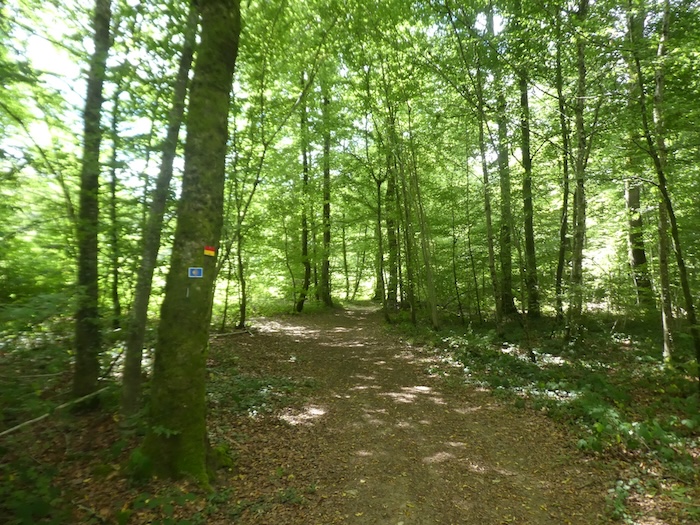
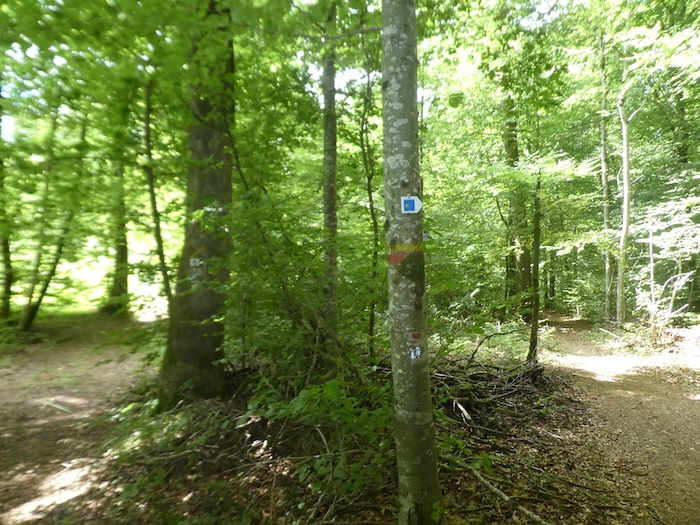
| And in this vast forest expanse, the shells become precious and almost vital. They guide, they reassure, they save you from losing your way. Follow them as one follows stars, even if they are not always oriented correctly, although sometimes the arrow gives the right direction. |
 |
 |
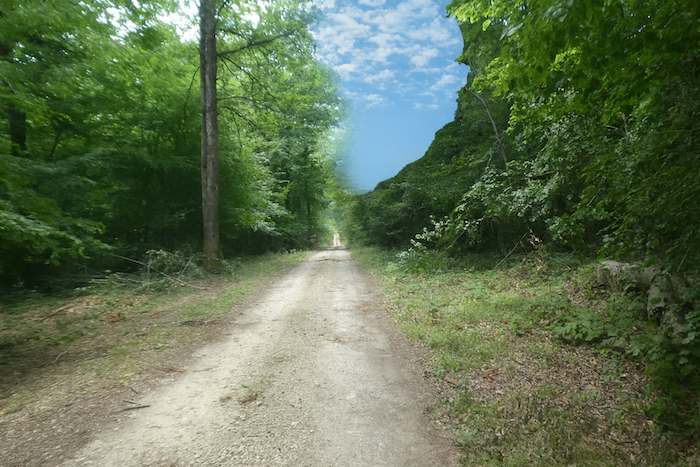
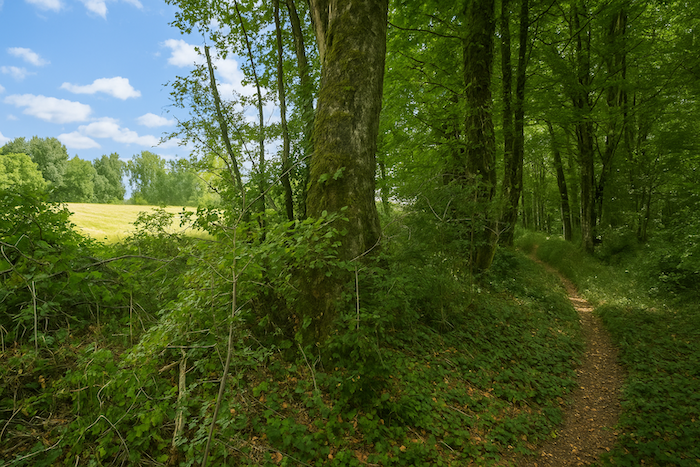
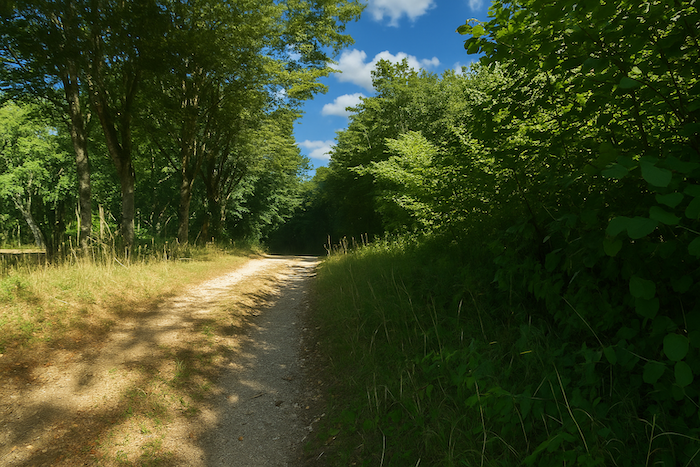
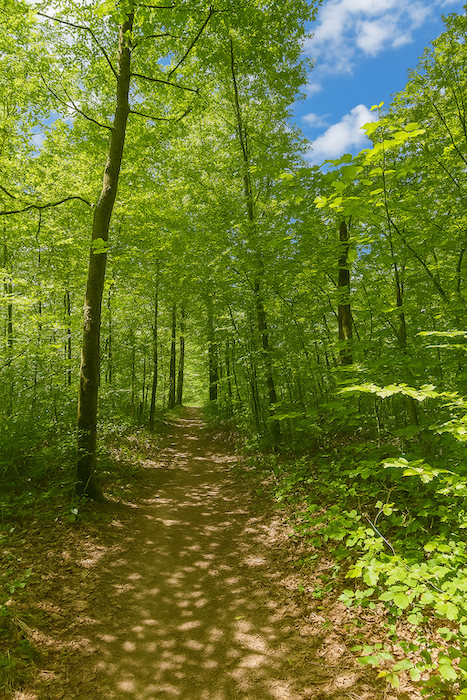
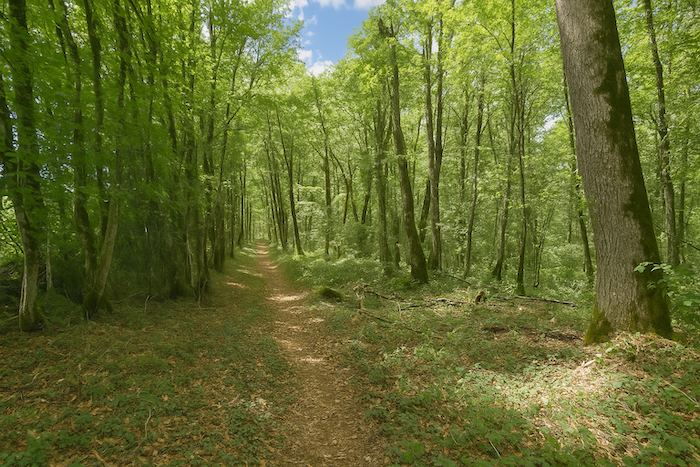
| At first, the forest offers itself in all its splendor, a vegetal cathedral where the trees rise toward the sky like living columns. |
 |
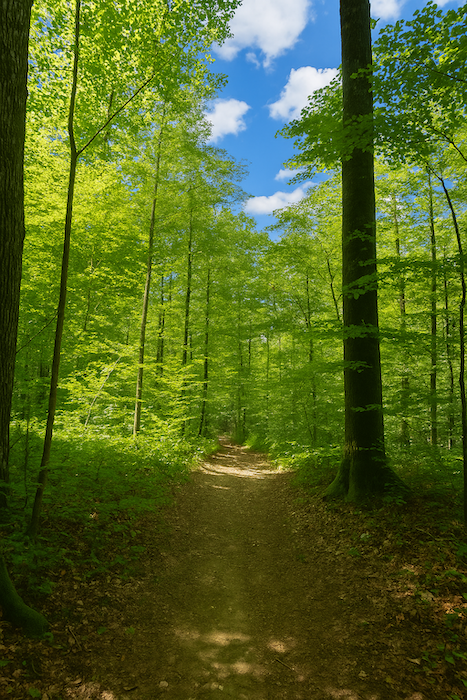 |
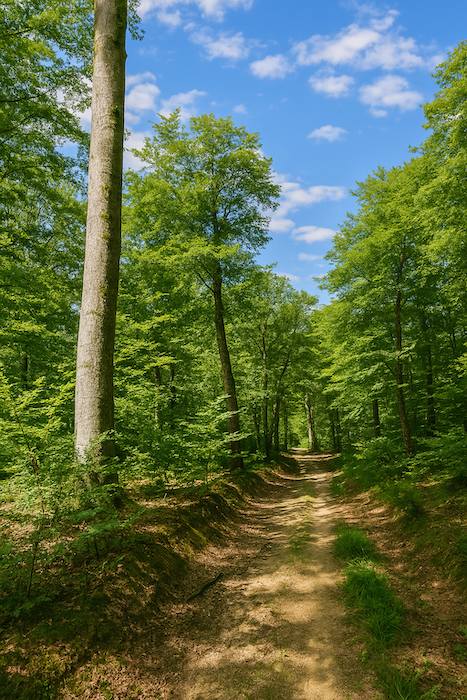
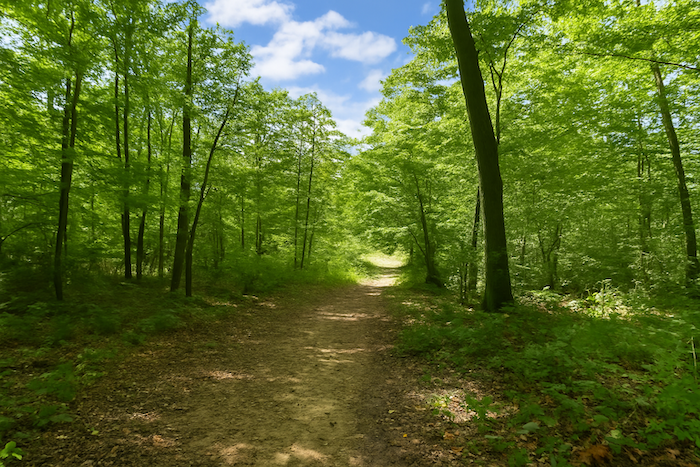
| They are above all majestic beeches, whose smooth, silvery trunks catch the soft morning light. At times, these giants give way to sturdy oaks standing like sentinels over the sacred silence of the undergrowth. Other deciduous species, more discreet, are rare, and no conifer comes to disturb this pure and ancient harmony. Here, the forest seems to breathe a suspended time, an emerald tapestry woven by centuries. |
 |
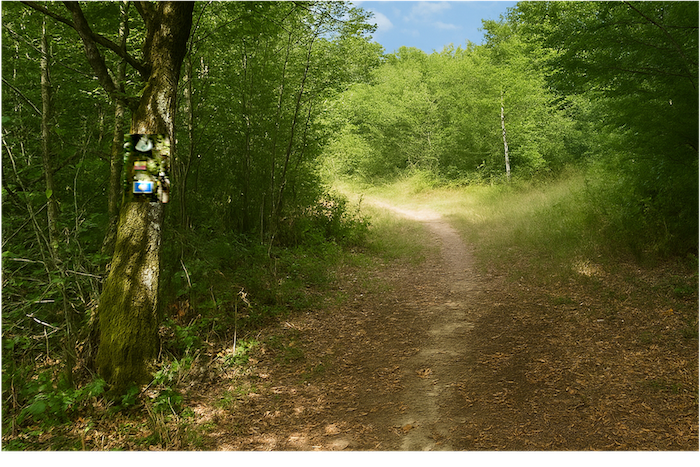 |
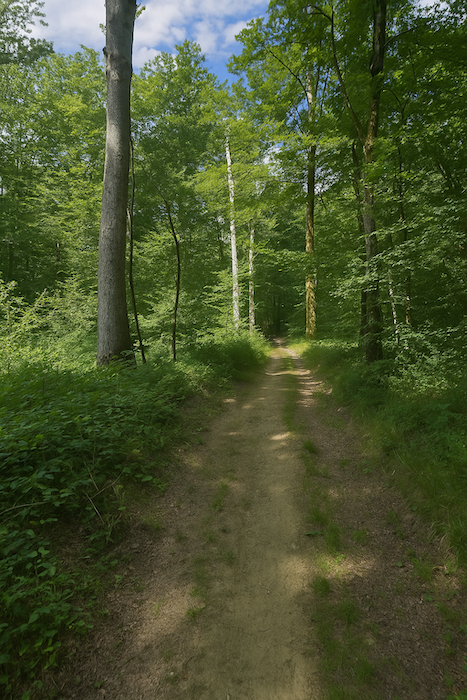
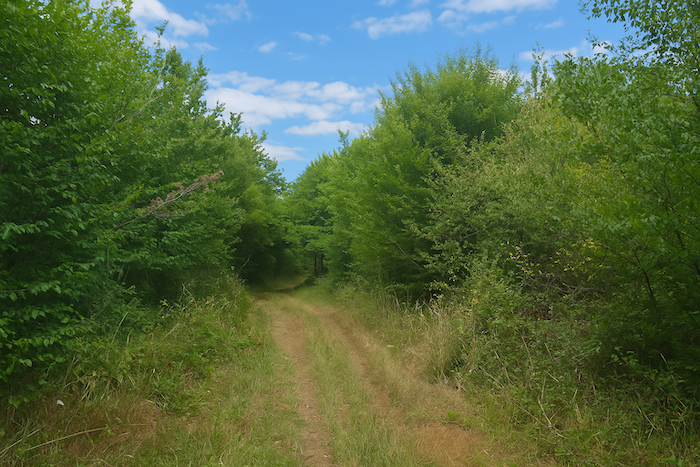
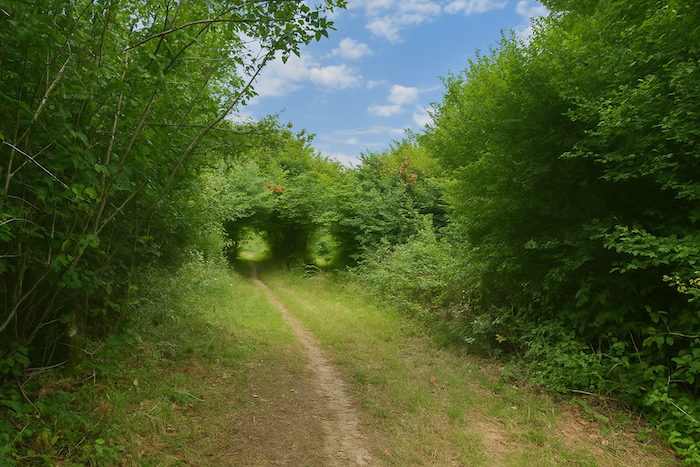
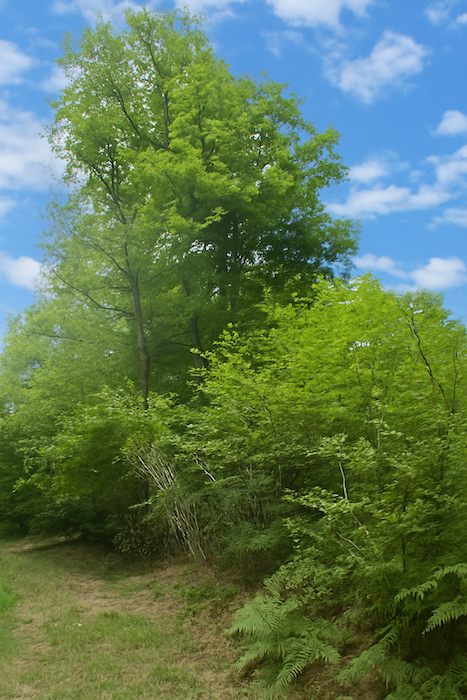
| Farther on, the grandeur of the trees becomes more modest, as if the forest itself were gently withdrawing to make room for a more intimate, almost secret passage. The path then slips beneath arches of greenery where the supple shoots of beech intertwine with hornbeam hedges, like delicate arabesques drawn by nature, as though one had entered a discreet kingdom reserved for the initiated. |
 |
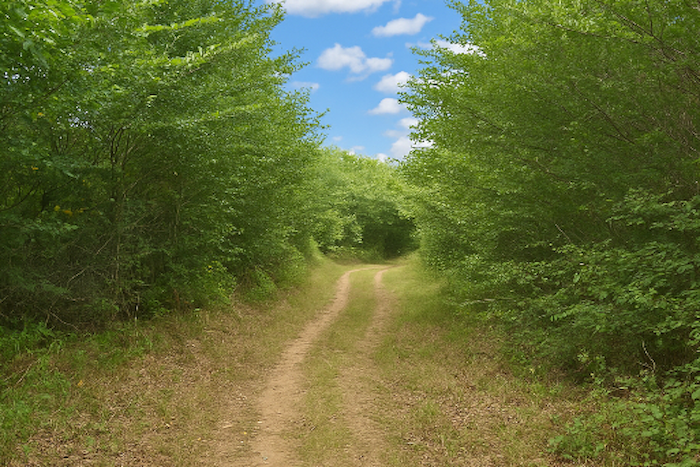 |
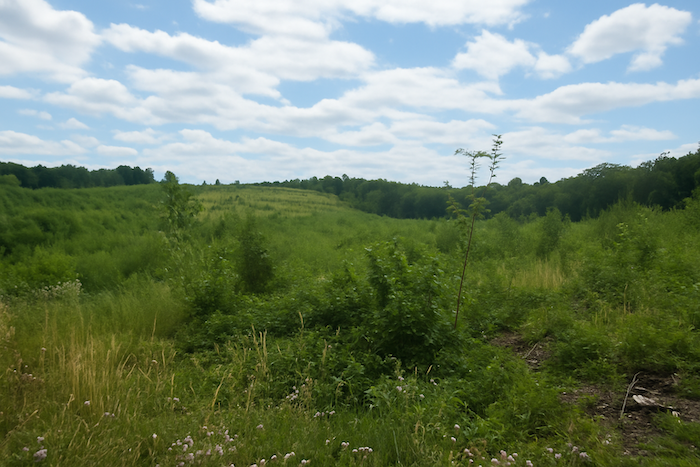
| Then the path widens again, venturing into a clearing where nature is rebuilding itself with fierce vitality. This area under reforestation appears like a living painting of wild, untamed nature. One can easily imagine the fleeting shadows of German soldiers of earlier times slipping beneath this dense foliage, seeking to disappear from the world’s view, accomplices of the ancestral silence. |
 |
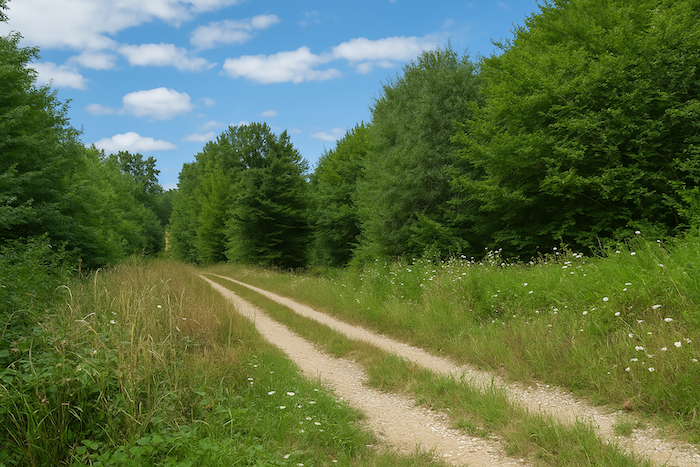 |
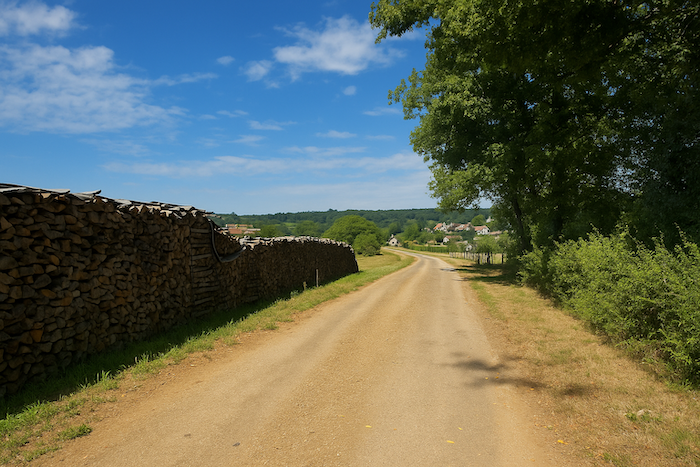
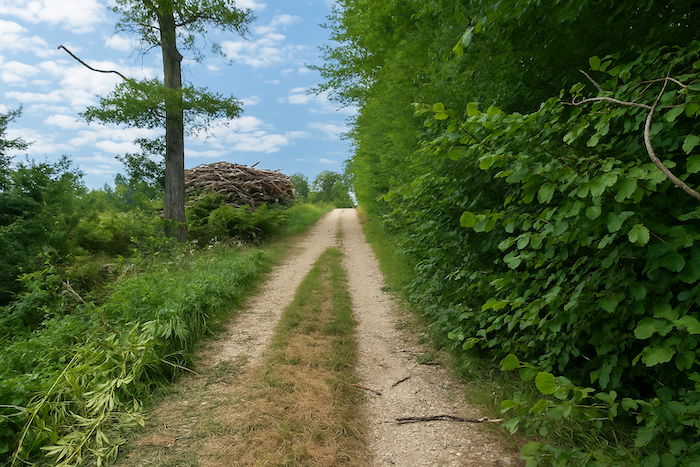
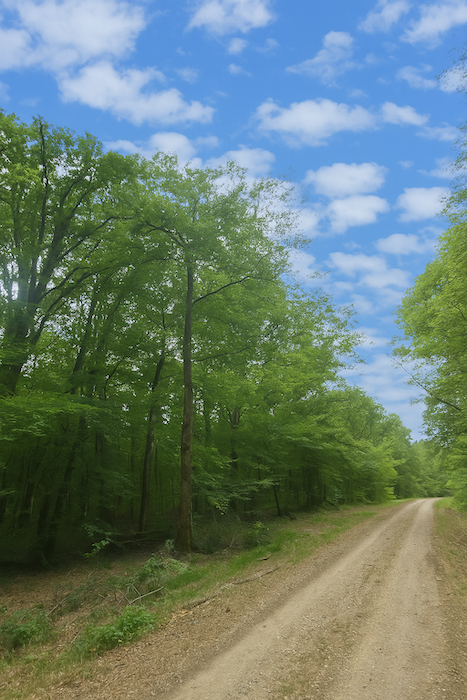
| Soon, the great deciduous trees take back their majestic reign, dominating the path that now stretches into a long straight line. Here, the forest becomes a place of work. Timber is harvested with respect, a sign of the fragile balance between humans and trees. |
 |
 |
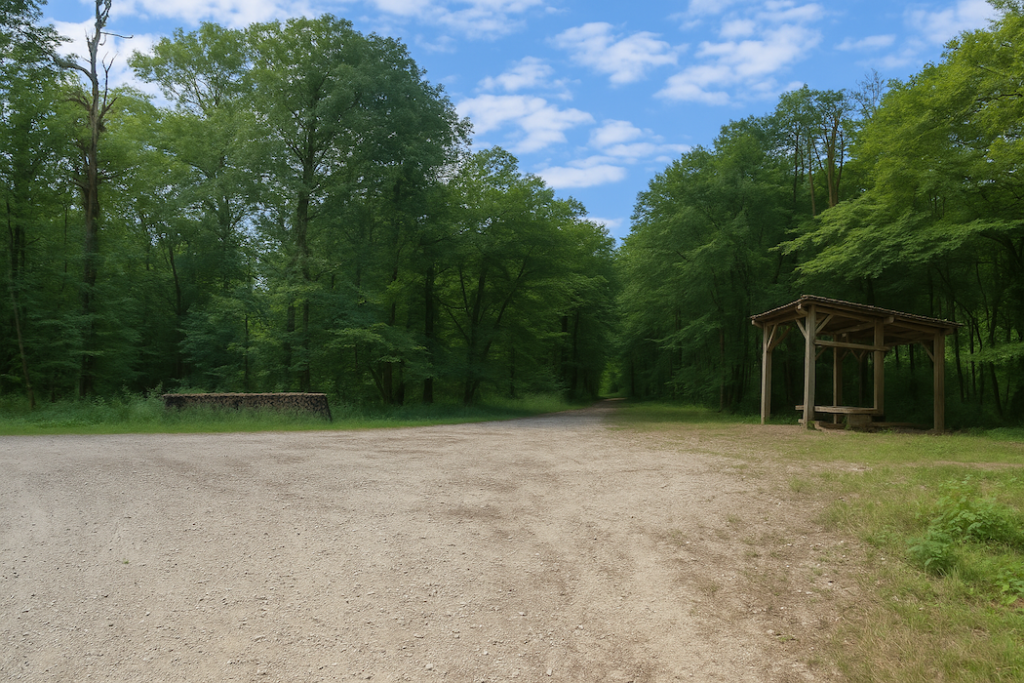
| At the end of this straight section, the path opens onto a small welcoming clearing, a peaceful haven where a rustic shelter and a picnic table invite you to rest and contemplate. |
 |
 |
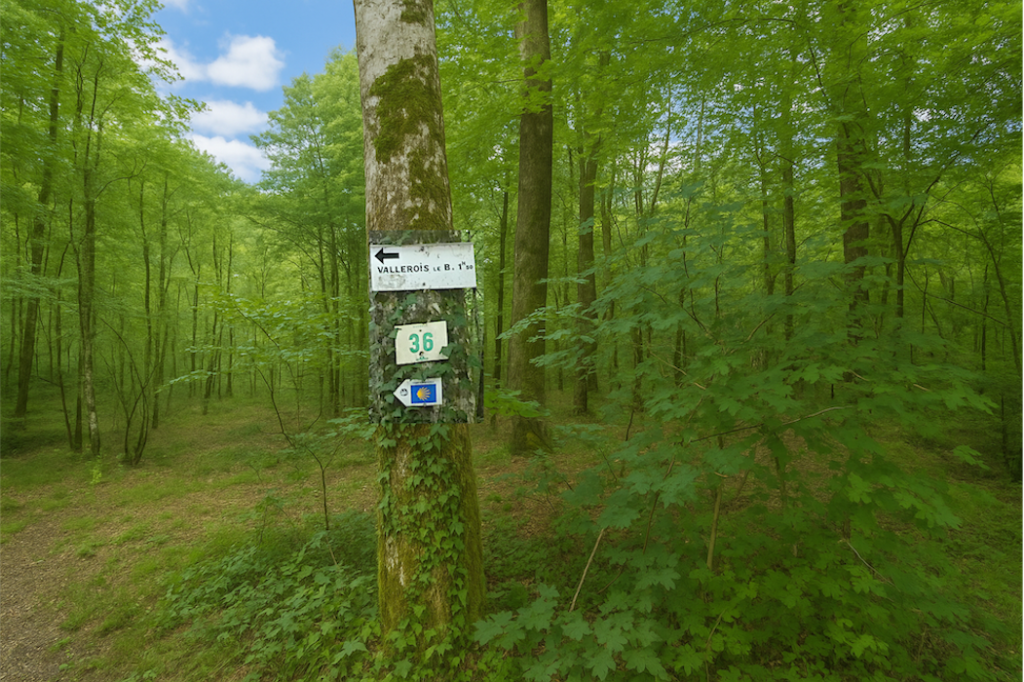
| You are now an hour’s walk from Vallerois-Le-Bois. The path, faithful companion, turns at a right angle, as if to guide the walker more clearly toward the continuation of the journey. |
 |
 |
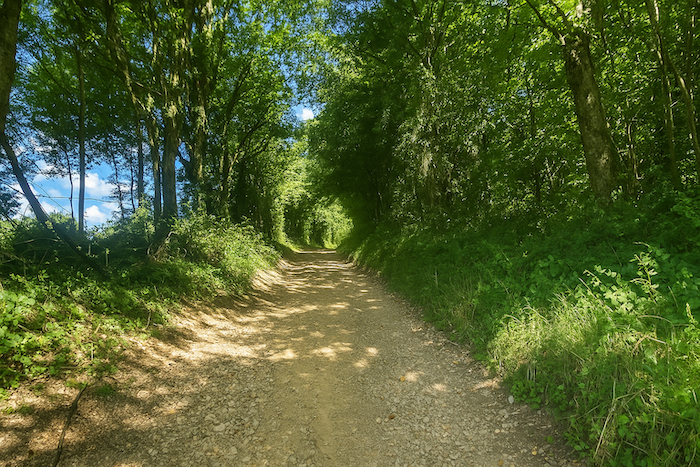
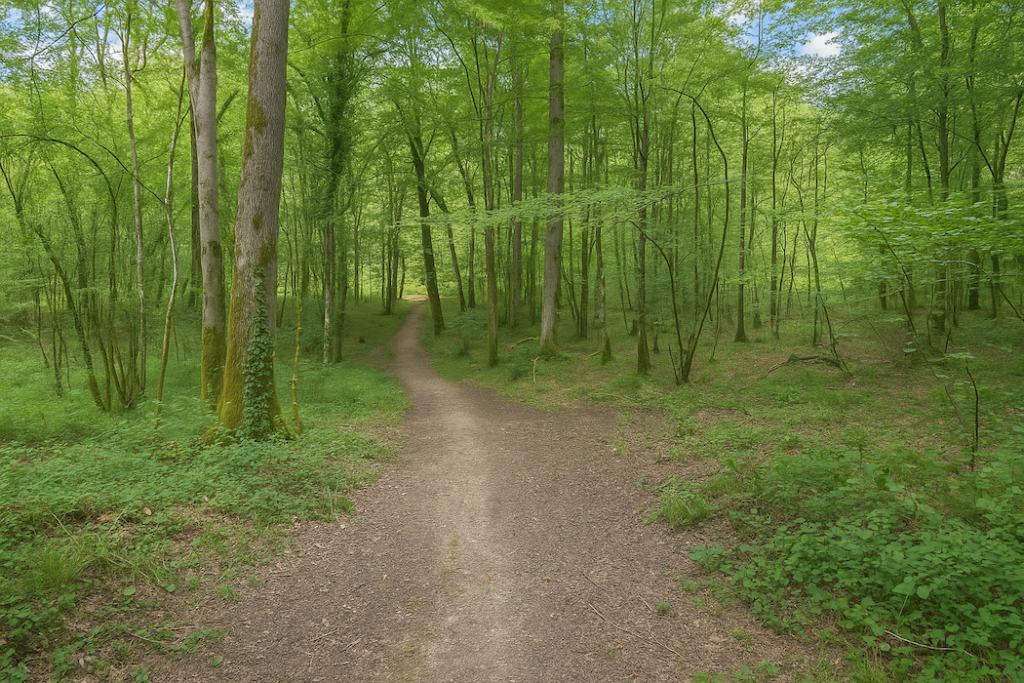
| As the path narrows, the beeches and oaks recover all their majesty, standing proudly along this narrow way. At times these forests seem to be filled with a magical aura, like a promise of wonder, an invitation to believe in the invisible. |
 |
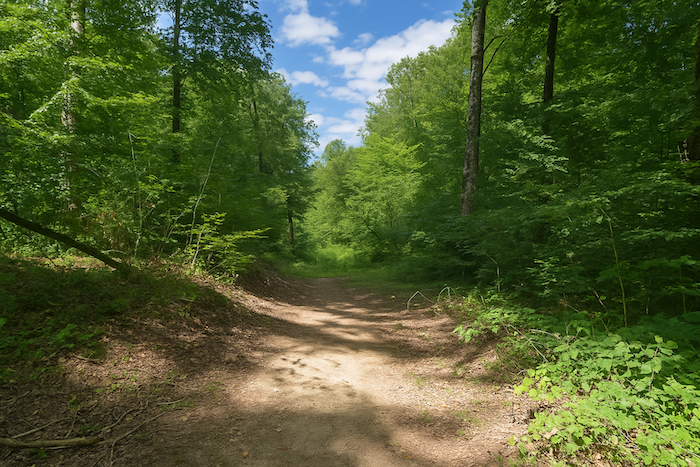 |
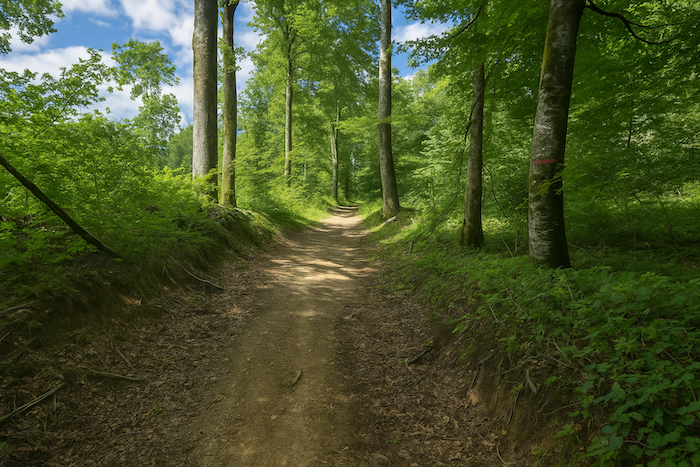
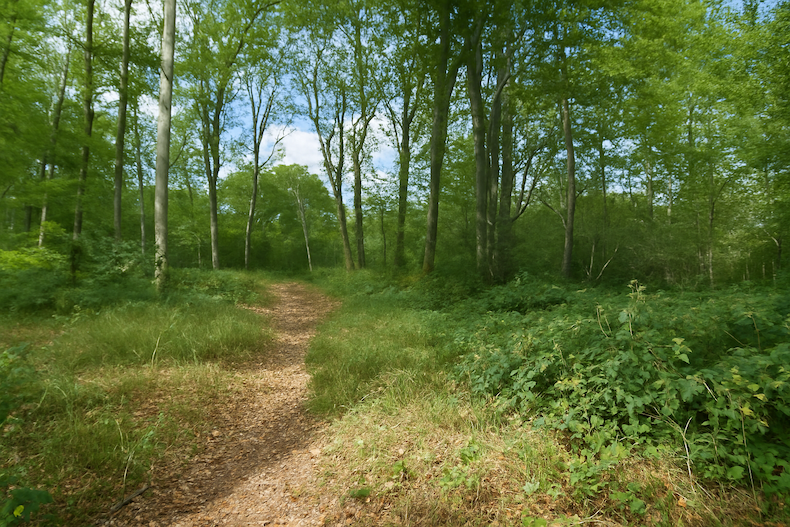
| Farther on again, the path allows itself a few meanders, a slow sinuous dance that adds to the mystery and grandeur of the place. |
 |
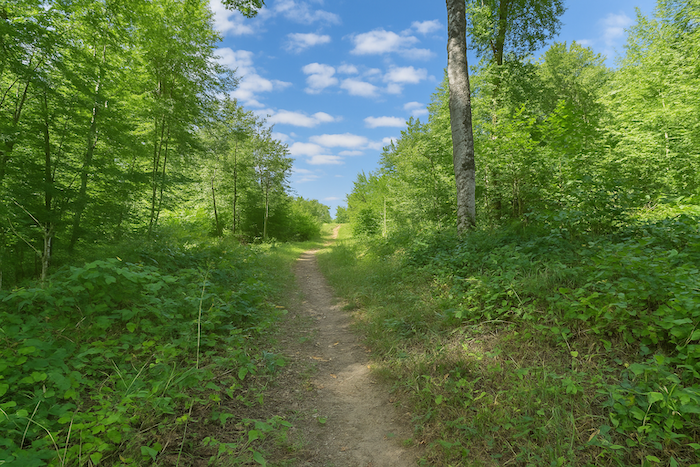 |
| Puis, le chemin s’élève doucement mais sûrement, dans une montée longue et régulière à travers le bois. Ce sera la seule pente un peu sérieuse de cette étape. Chaque pas est un pas vers le sommet, vers la lumière filtrée par les frondaisons. |
 |
 |
Section 3: From the forest to the countryside
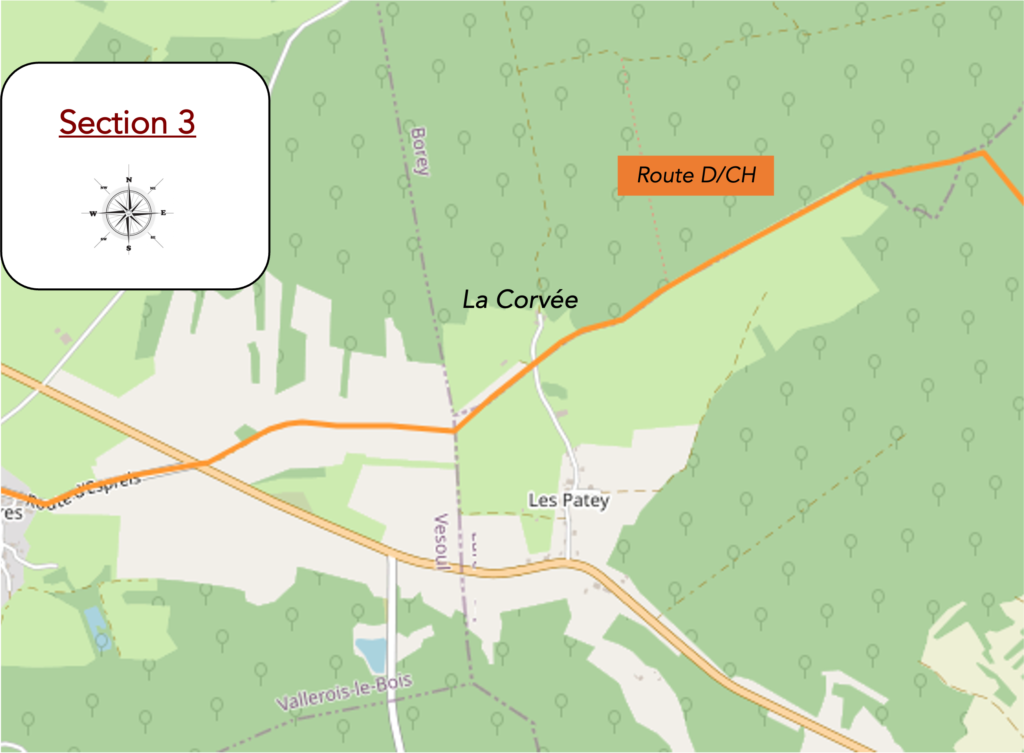
Overview of the route’s challenges: a few gentle slopes, then a route with no difficulty at all.
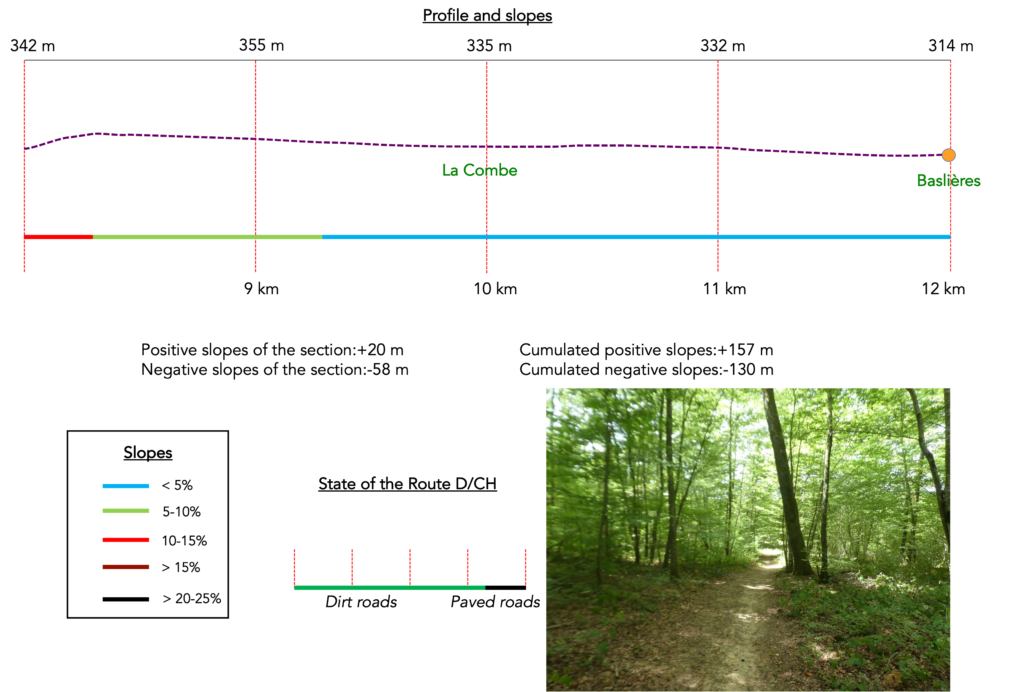
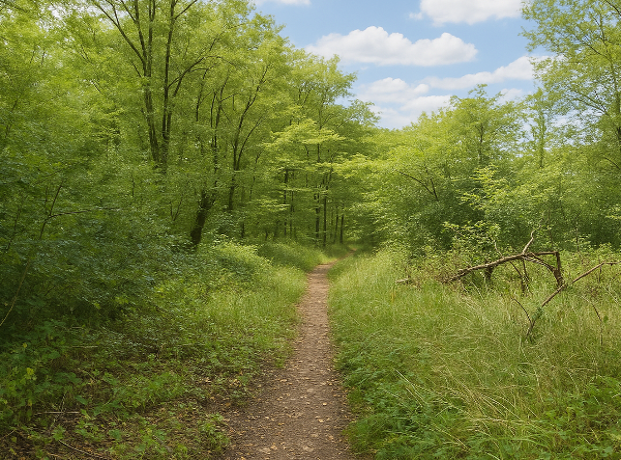
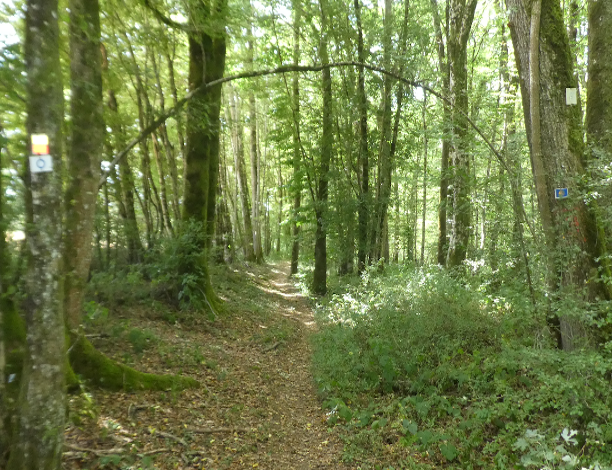
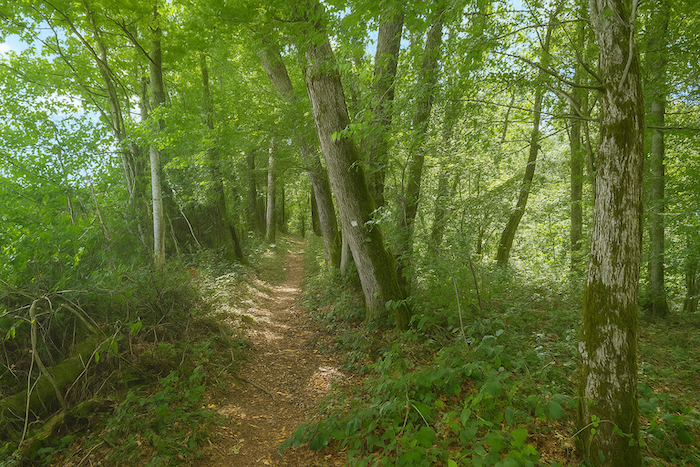
| The path continues its climb toward the top of the hill, like a continuous breath carrying the walker ever higher toward hidden horizons. In season, nature reveals itself as generous and nourishing. Bushes heavy with wild blackberries offer a sweet feast, almost miraculous. Here, the forest whispers that one could live here, almost apart from the world, cradled by simple, untamed abundance. |
 |
 |
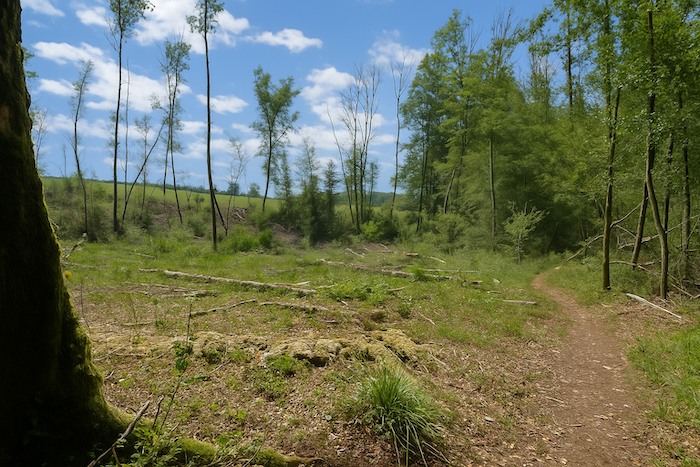
| Higher still, the forest gradually gives way to the wide-open space of a great clearing where the gaze opens and breathes. |
 |
 |
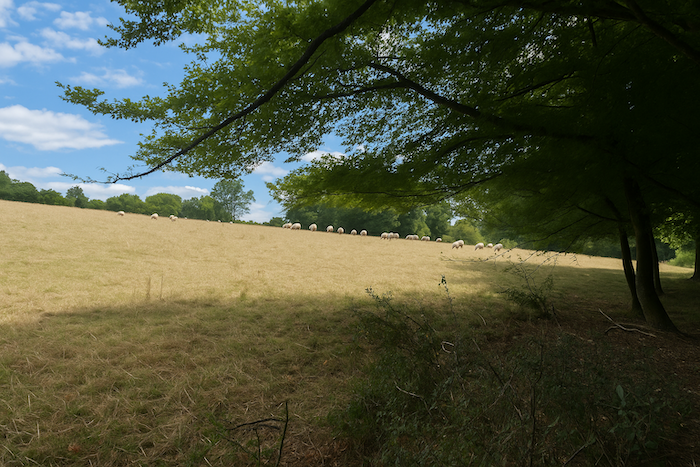
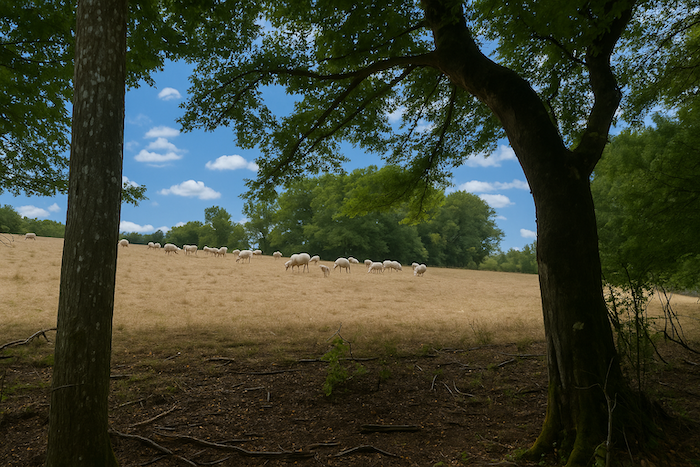
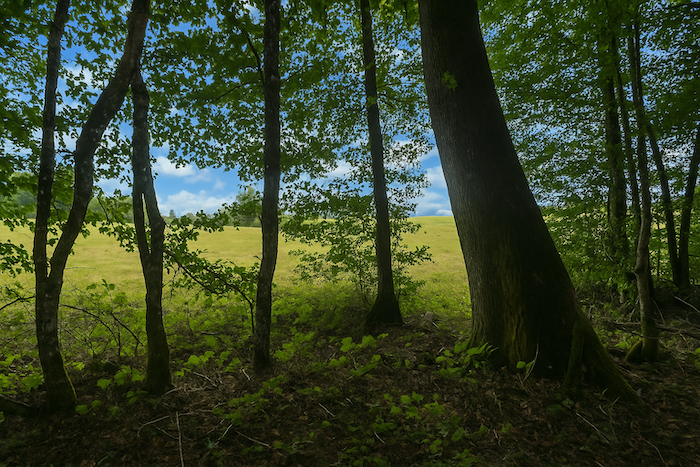
| Then the path stretches for a long time along the edge of the woods, as if hesitating between the protective shade of the trees and the brightness of the meadows. Here, Charolais cattle, calm and sturdy, graze peacefully, bringing a soft and reassuring life to the landscape, like a silent and familiar presence at the heart of this open countryside. |
 |
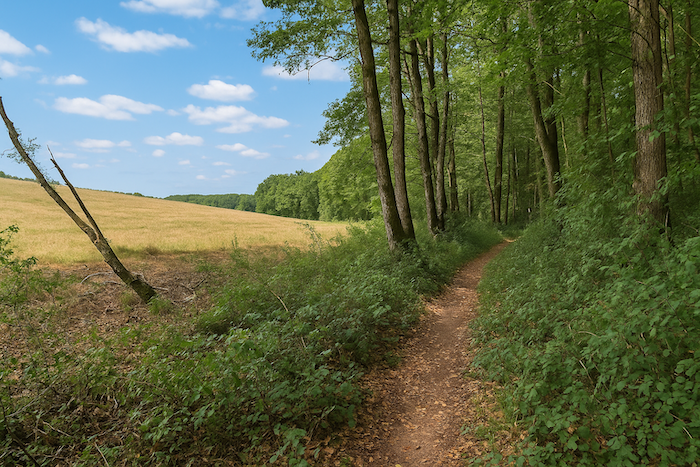 |
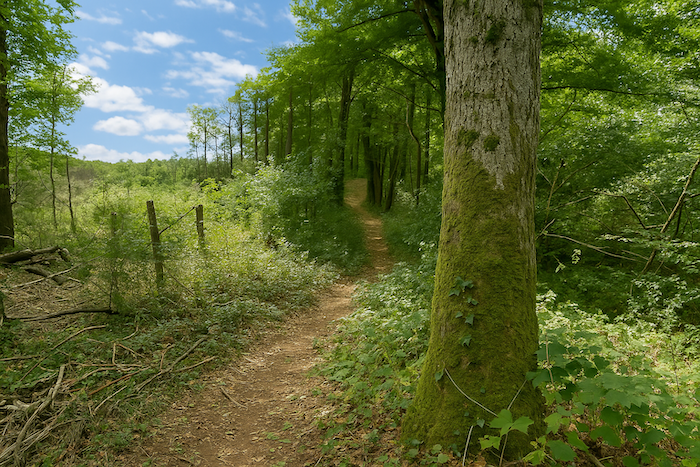
| The path then undulates gracefully through the undergrowth along the meadows. |
 |
 |
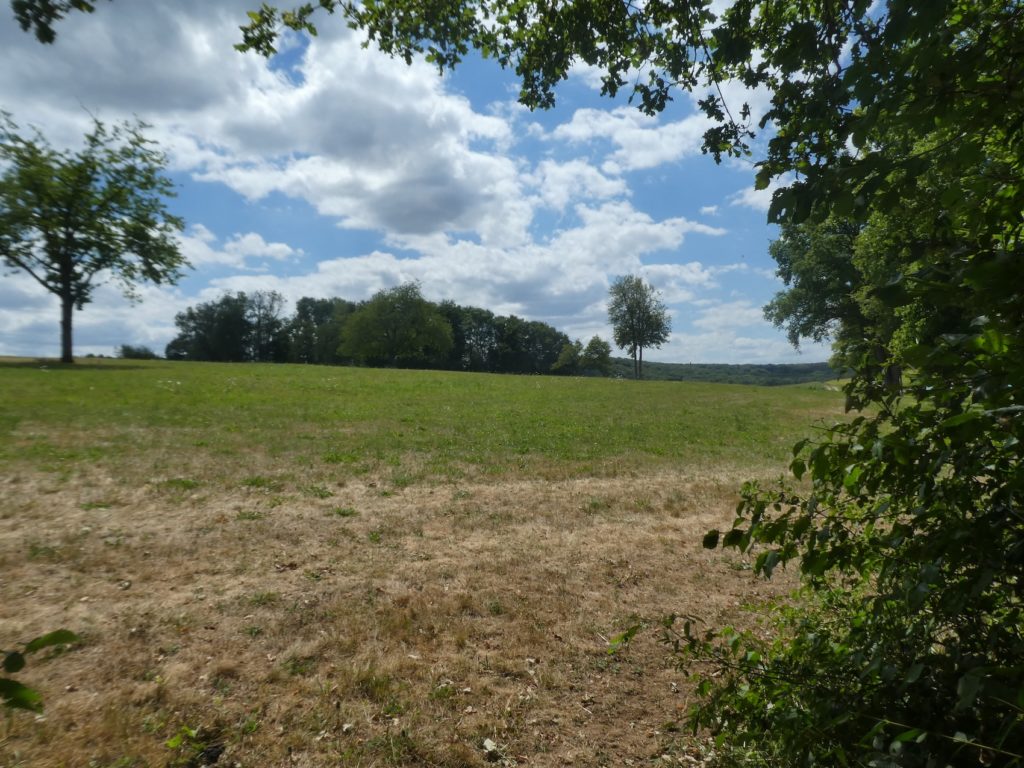
| Farther on, the path finally leaves the Forest of the Grands Bois, suddenly revealing the imposing silhouette of the great farm of La Corvée, a rural stronghold rooted in the land. Its massive buildings dominate the landscape, recalling the quiet strength and permanence of the agricultural world in the face of the seasons and the passing of time. |
 |
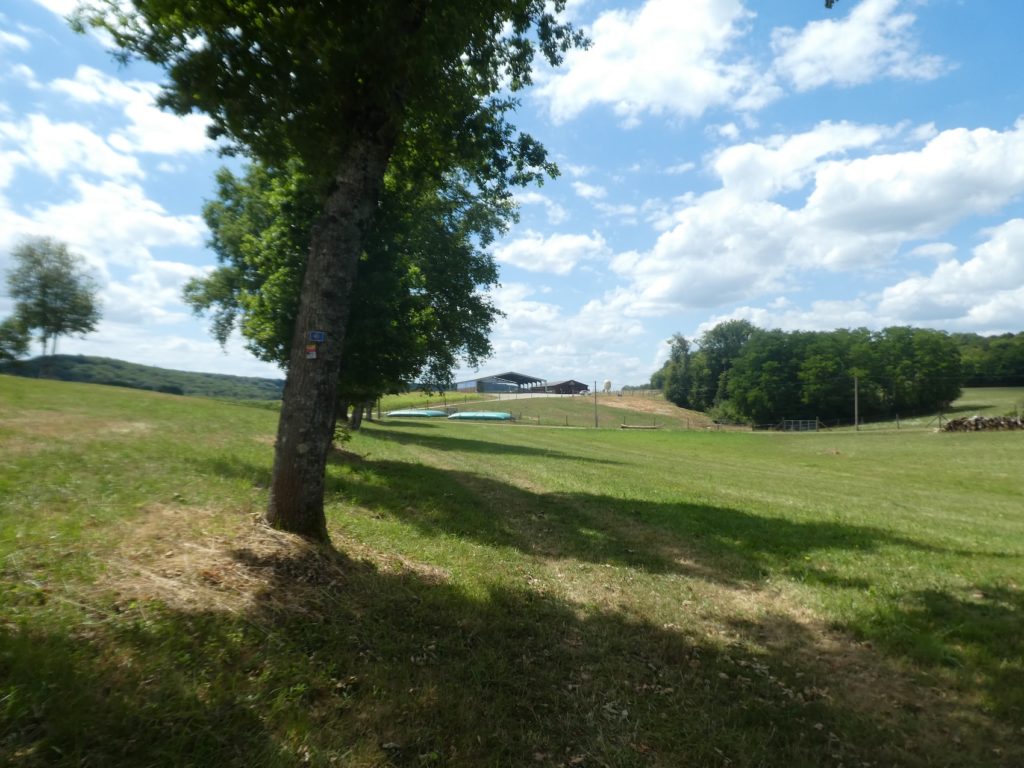 |
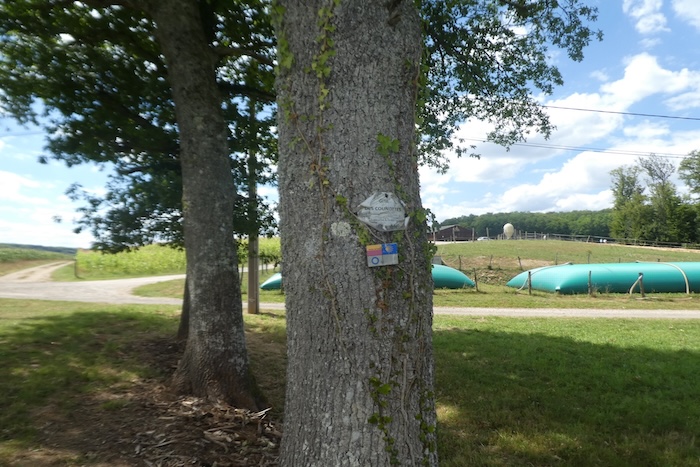
| At the next intersection, the path skirts the farm, and a discreet sign points to a guesthouse tucked away at Les Pateys, an invitation to a warm stop, a well-earned pause for those who walk these lands with patience and respect. |
 |
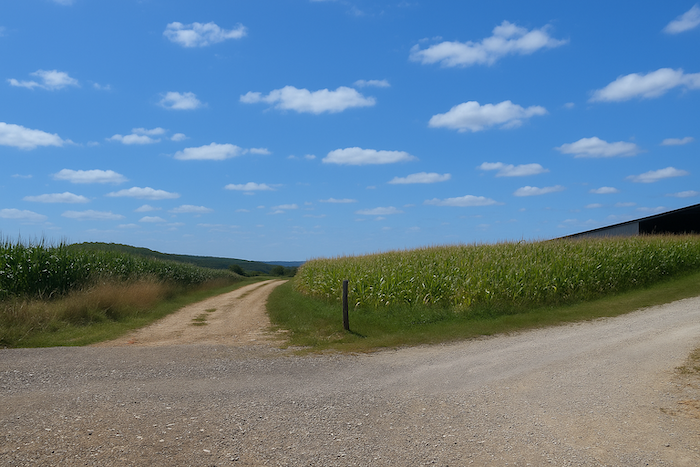 |
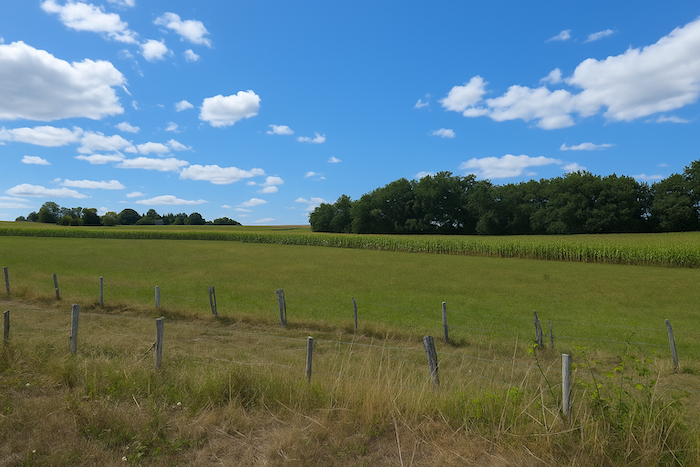
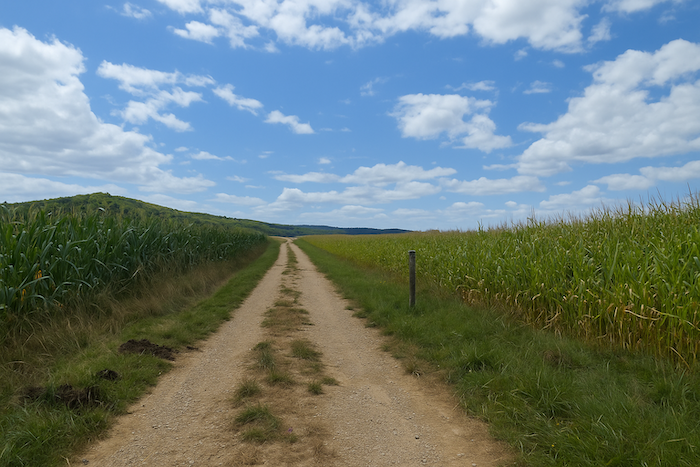
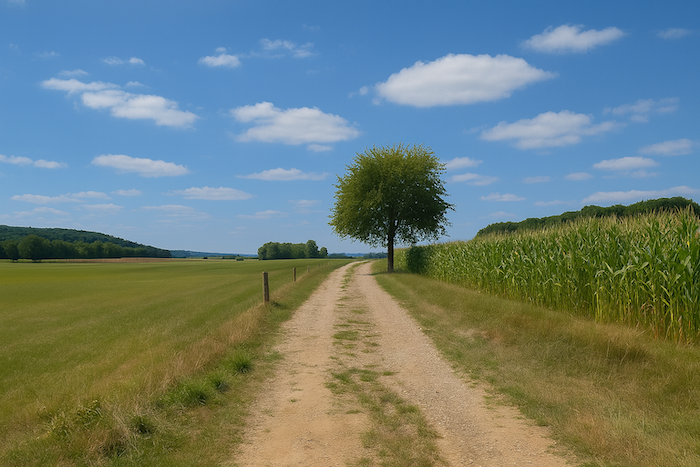
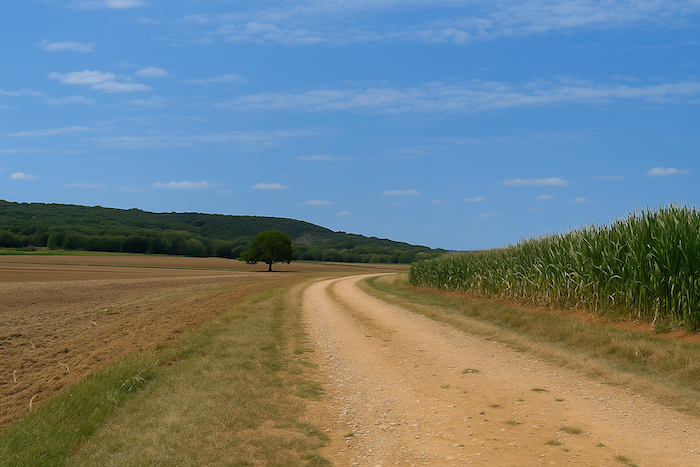
| After a long section beneath the protective vault of the woods, the landscape opens again onto bare countryside, marked by the monotonous succession of cornfields, austere and not very welcoming, golden or faded depending on the season. |
 |
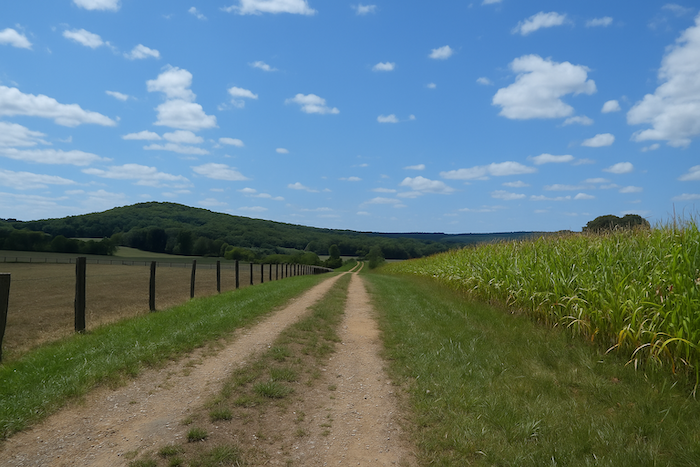 |
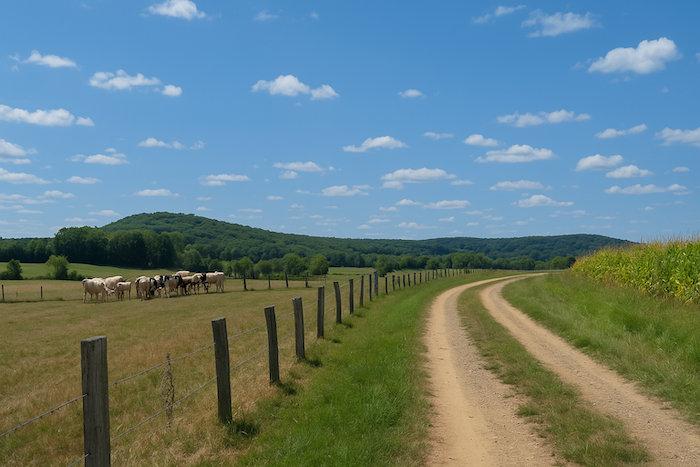
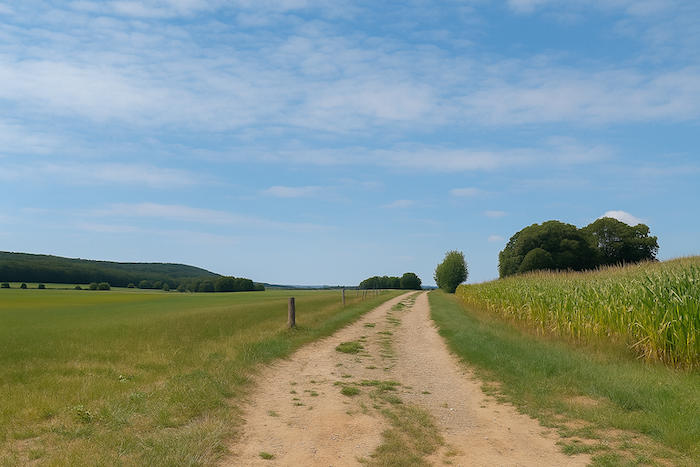
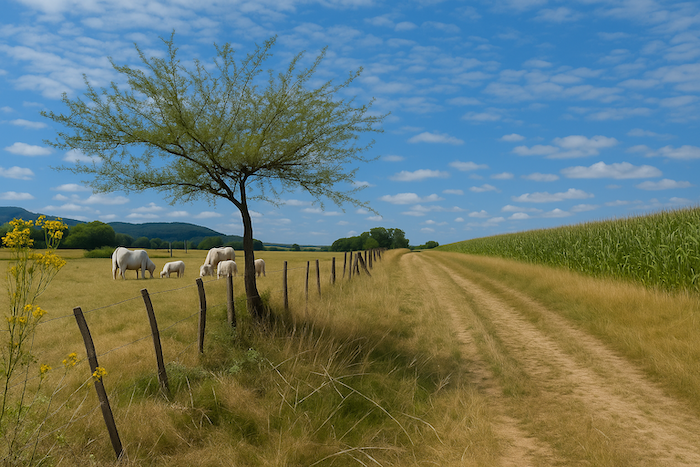
| Fortunately, a herd of Montbéliard cows sometimes breaks this monotony, their brown and white coats adding a touch of life and movement to this peaceful expanse. Farther on, soft, tender grass replaces the stony path, easing the walk and inviting daydreaming. . |
 |
 |
| The path unfolds slowly in a kind of quiet melancholy. In Franche-Comté, there are many such stretches where agricultural nature imposes its rhythm, sometimes austere, sometimes soothing. Farmers must also make their living in this generous land, between labor and patience, shaping a landscape to the rhythm of the seasons. |
 |
 |
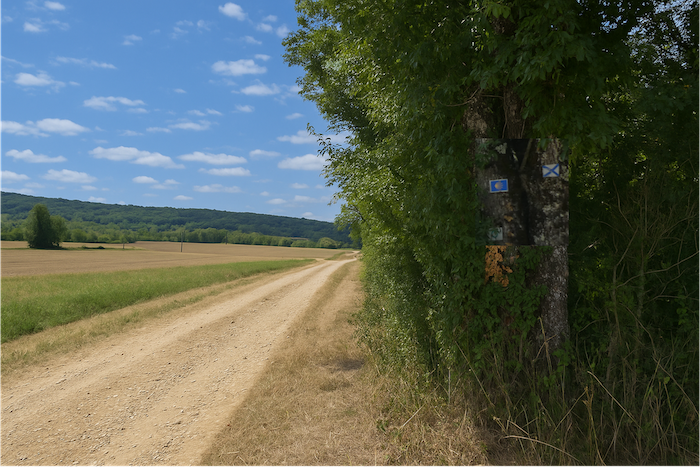
| The path then draws nearer in long strides to the departmental road D9, a major artery of the region that pulses like a vein of civilization crossing this rural world. |
 |
 |
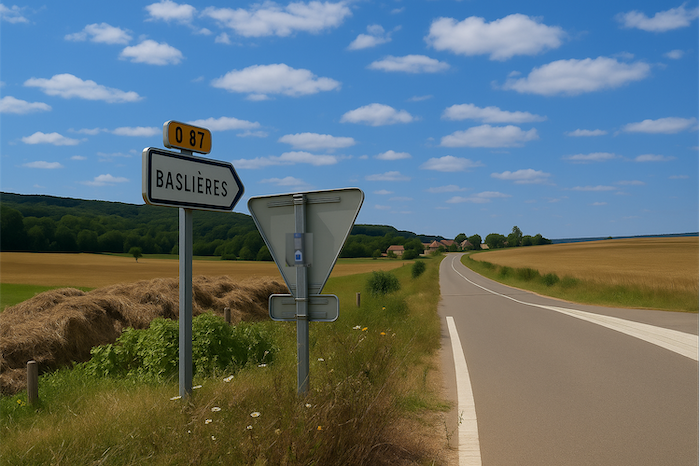
| After crossing this busy road, a small country road begins, winding and peaceful, toward Baslières, like one last quiet ribbon before arriving in the village. |
 |
 |
Section 4: Do you like cycle routes?
Overview of the route’s challenges: a route without difficulty.
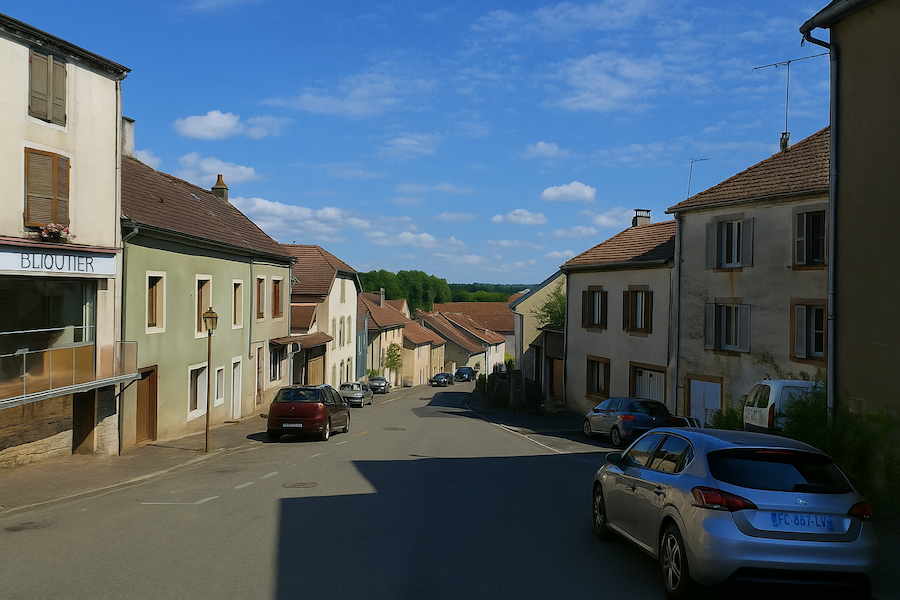
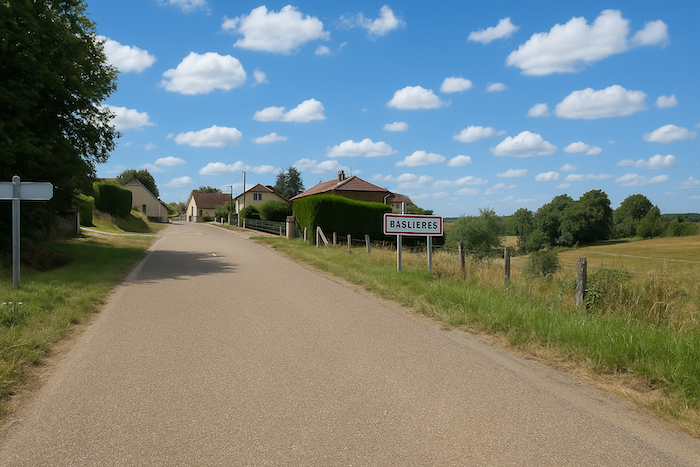
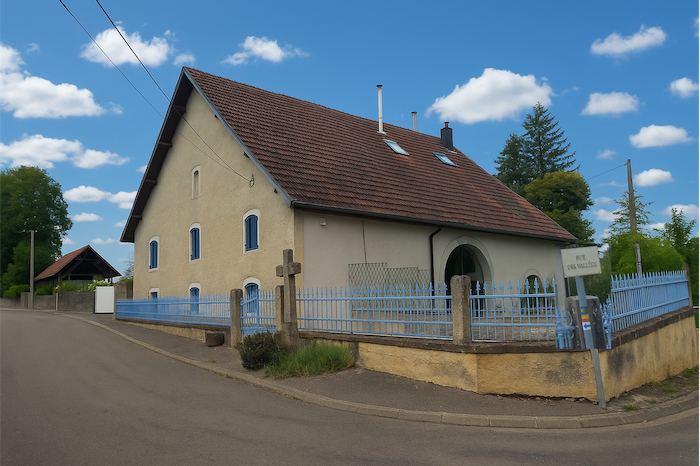
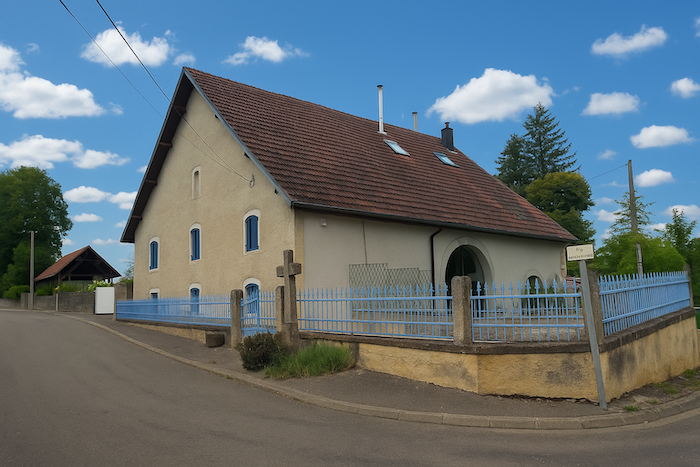
| Baslières is within reach, almost just a few steps away, nestled along the road and ready to welcome the walker in its setting of stone and memories. The village stretches modestly along the road, a hamlet where a few sturdy stone houses and old farms stand as witnesses to a past shaped by the land and by the patient work of people. These buildings, both solid and modest, seem to jealously keep the secrets of the generations who lived in them, offering the traveler a discreet but sincere welcome. |
 |
 |
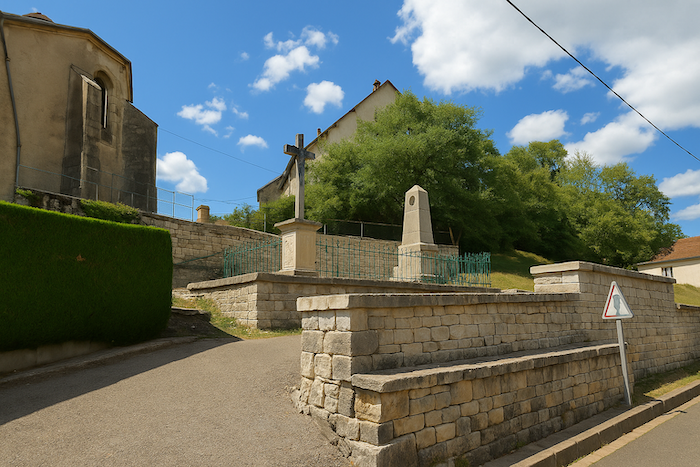
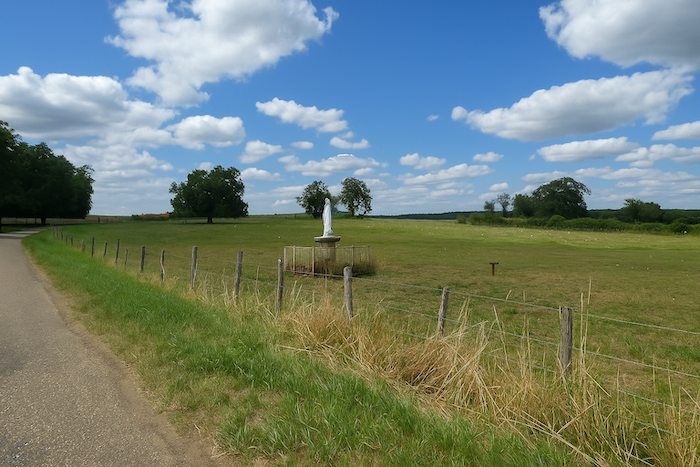
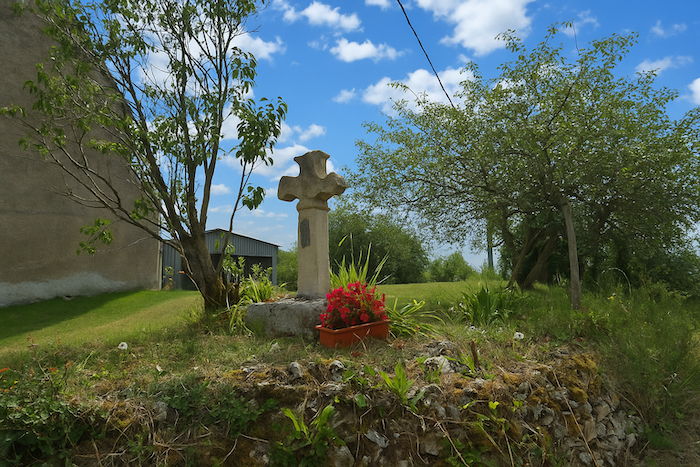
| At the exit of this peaceful village, the road gently fades into the expanse of fields, finding once again rural solitude. There, in the heart of the meadows, a discreet statue of the Virgin keeps watch in the soft morning light, like a motionless sentinel, guardian of souls and of the land, offering a silent and contemplative pause to those who pass. |
 |
 |
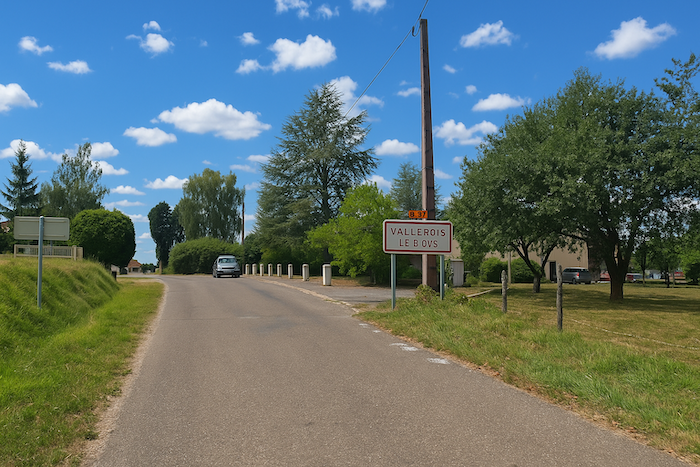
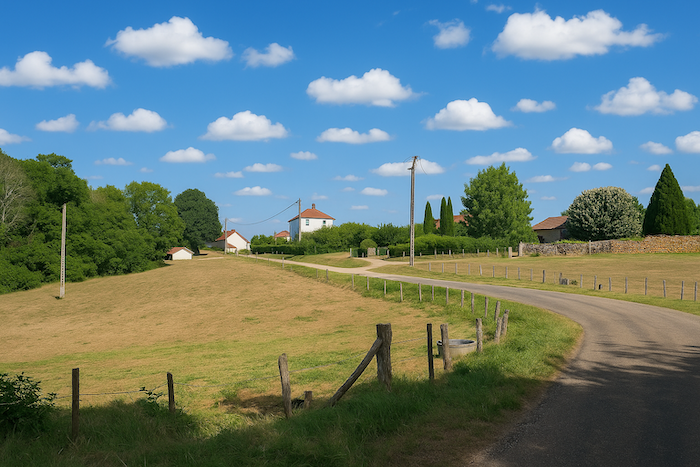
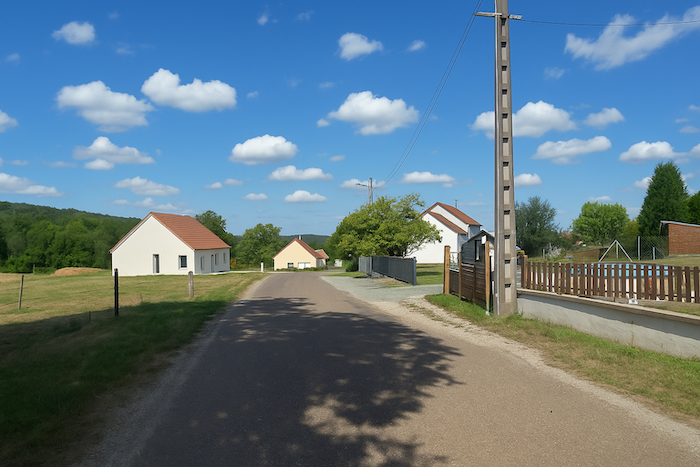
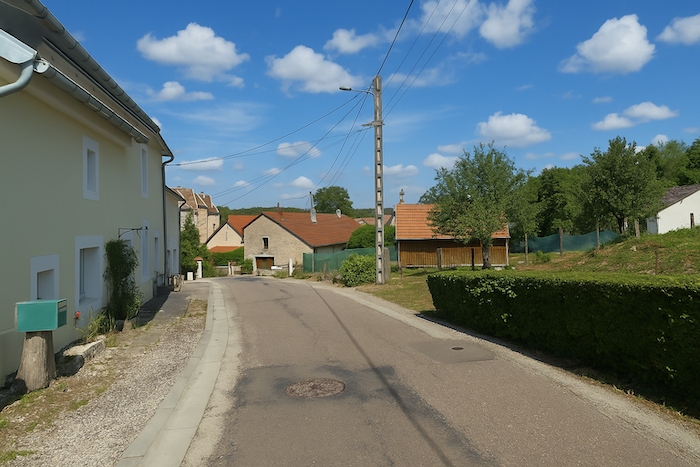
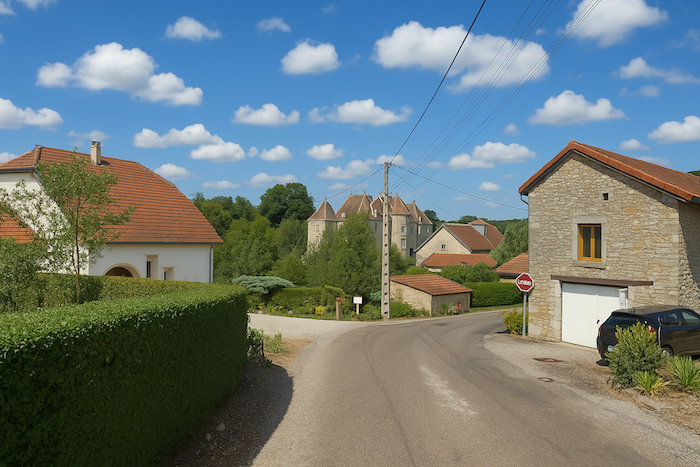
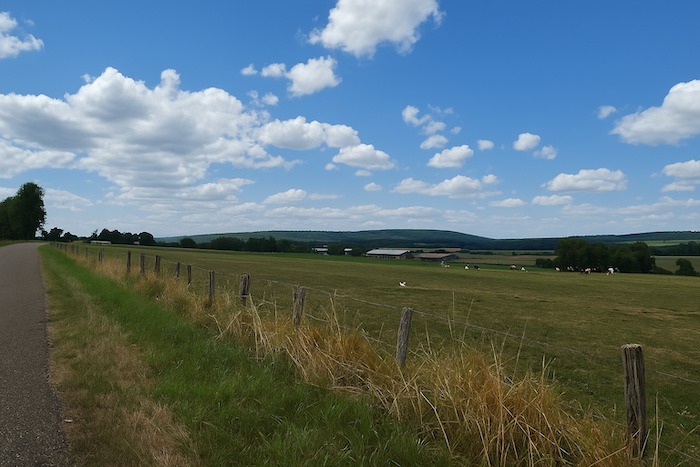
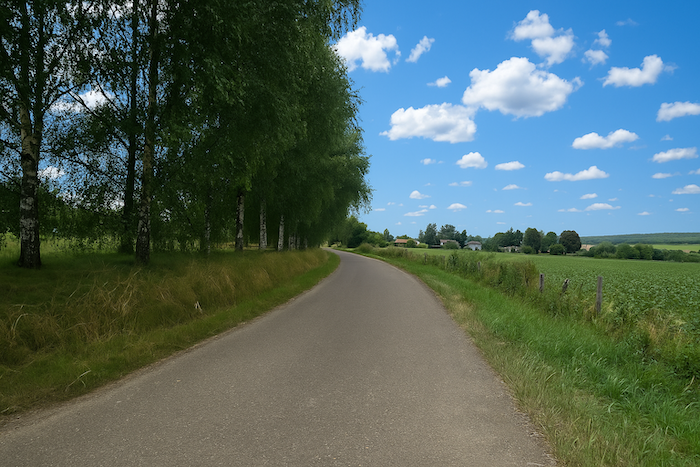
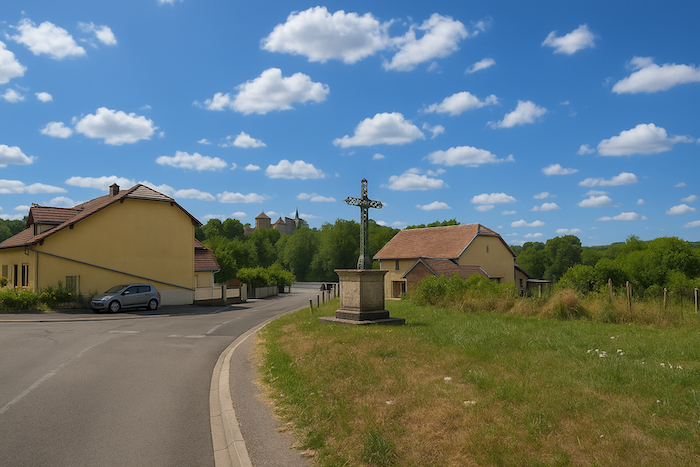
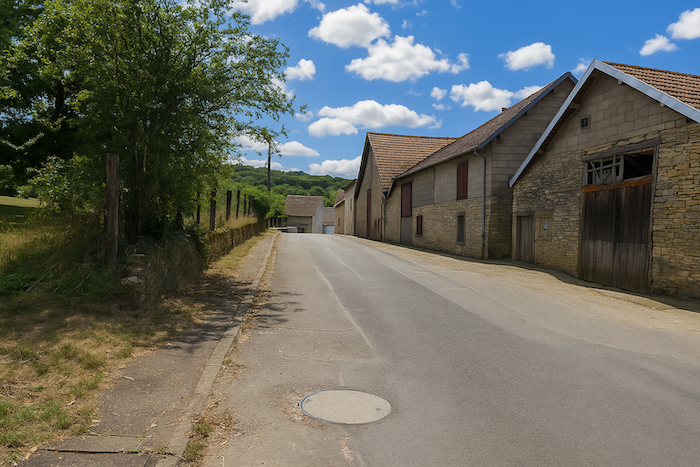
| Soon, the road leads to the village of Vallerois-Le-Bois, whose beautiful stone houses, solid and worn by time, form a living picture of rural authenticity. This village, with its simple and sincere charm, unfolds its quiet lanes beneath often clear skies, like an invitation to slow down and listen to the voices of the past. |
 |
 |
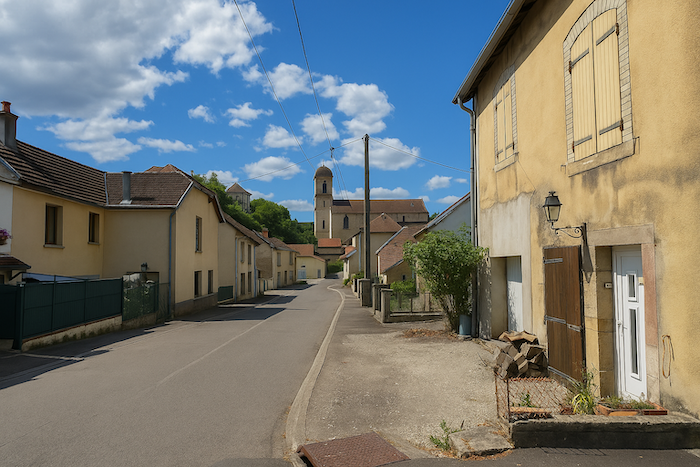
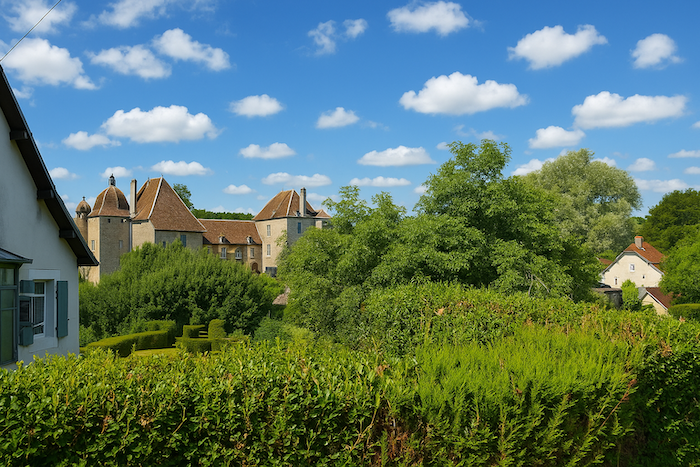
| At the heart of the village stand the church and the château, two major witnesses of local history. The fortified château, built in the twelfth century and altered over the centuries, remains a mysterious fortress, private and closed, keeping its secrets behind age-old walls. Not far away, the church of Saint Martin, built in the sixteenth century and rebuilt in the nineteenth century, proudly displays a Comtois bell tower, that bulb-shaped roof that punctuates the landscape of the region as a symbol of identity and tradition. |
 |
 |
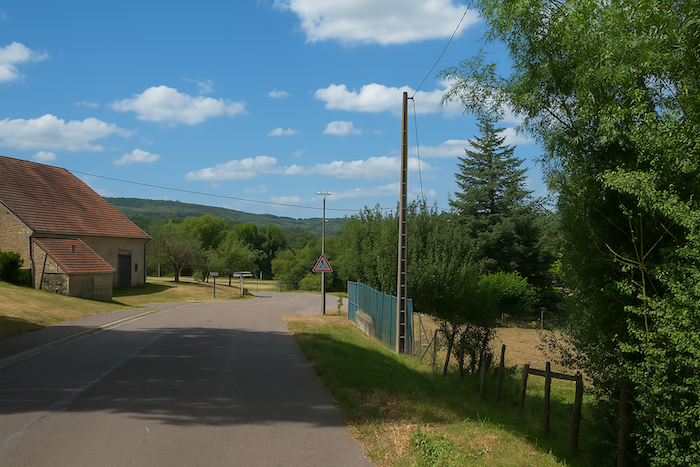
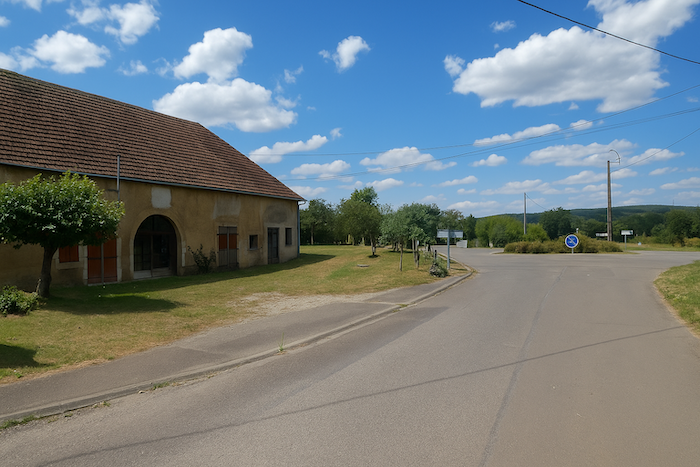
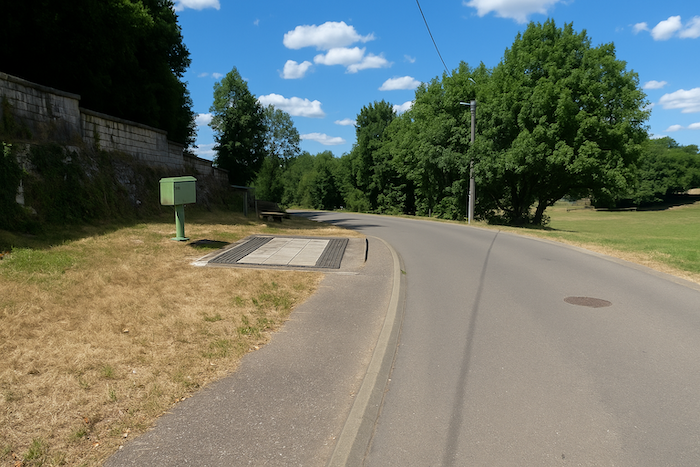
| The road then descends toward the lower part of the village in the direction of a roundabout. |
 |
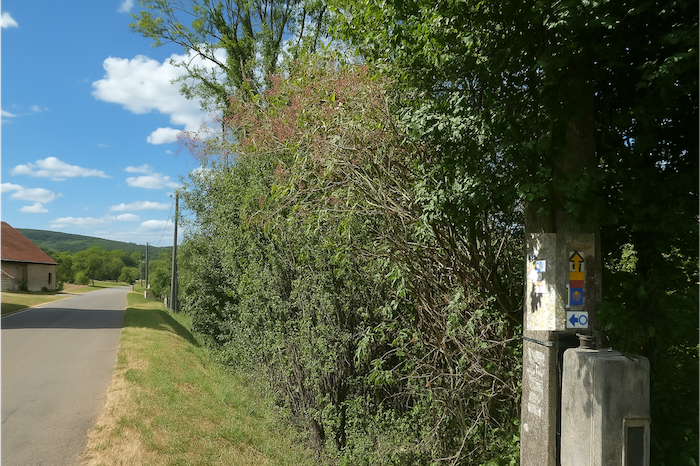 |
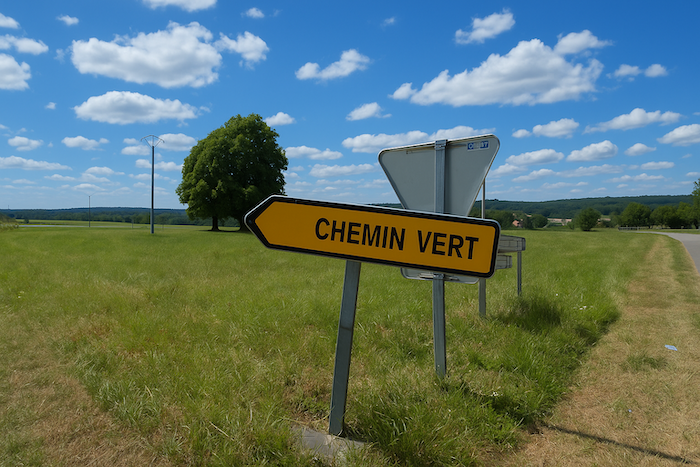
| There, a discreet sign guides the walker toward the Green Path, a promise of a new adventure, another chapter to travel. |
 |
 |
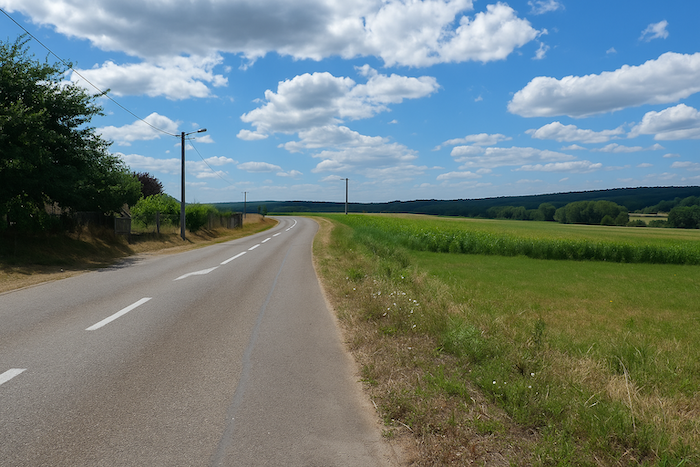
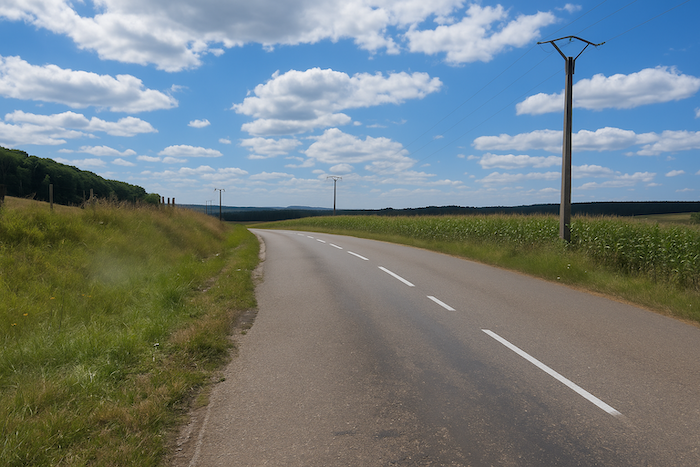
| To reach this path, you must first take a short section of the road to Dampierre, where traffic is rare and measured, almost in harmony with the surrounding calm. |
 |
 |
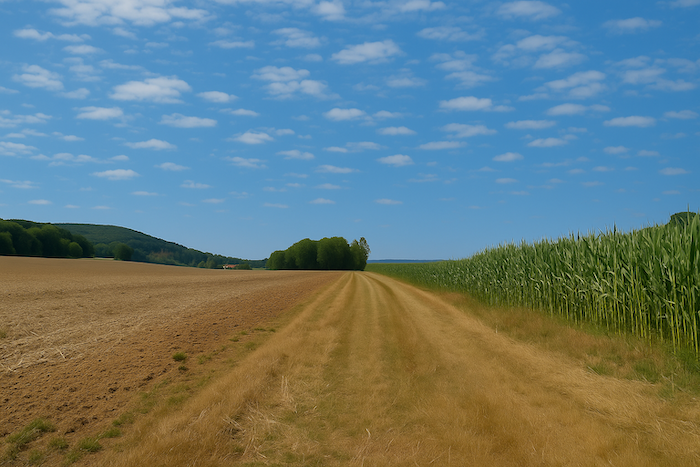
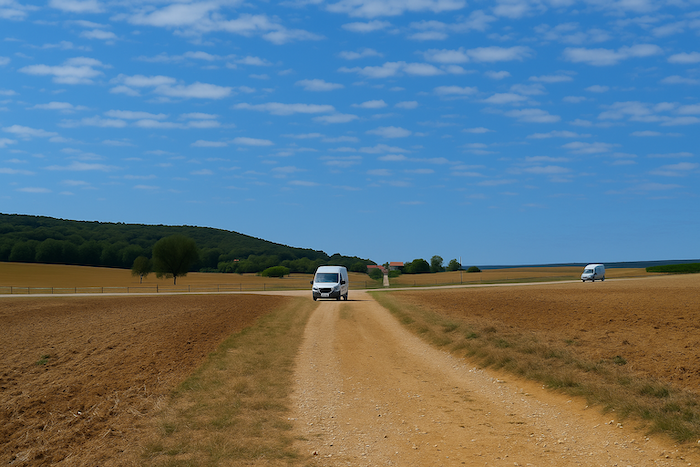
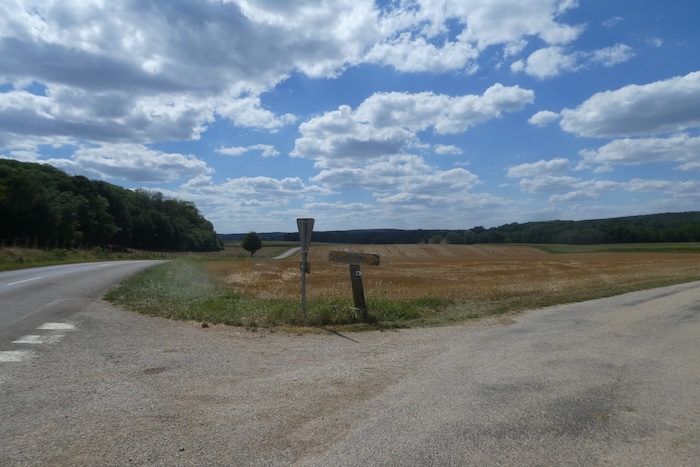
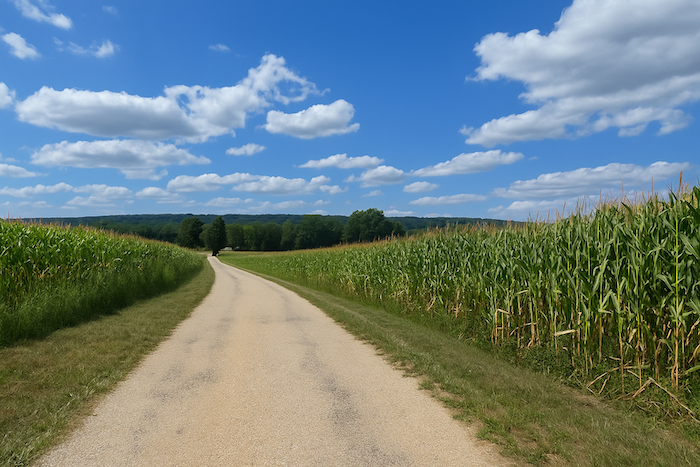
| Soon, the route leaves the asphalt and turns right, taking a dirt track that disappears between the rows of corn, a green undulating sea where nature reclaims its rights in an ancient dance. |
 |
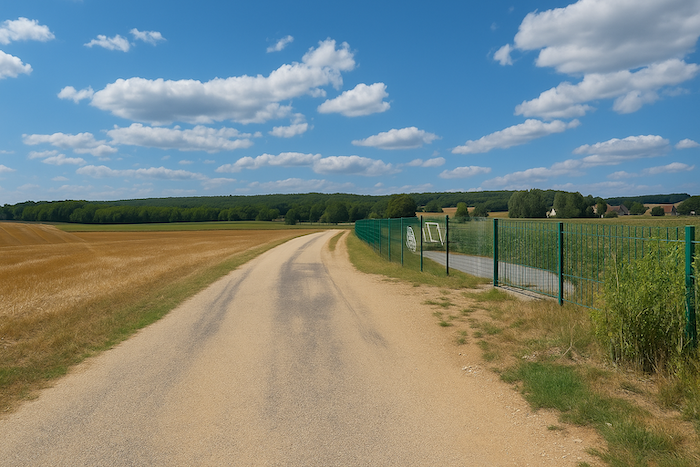 |
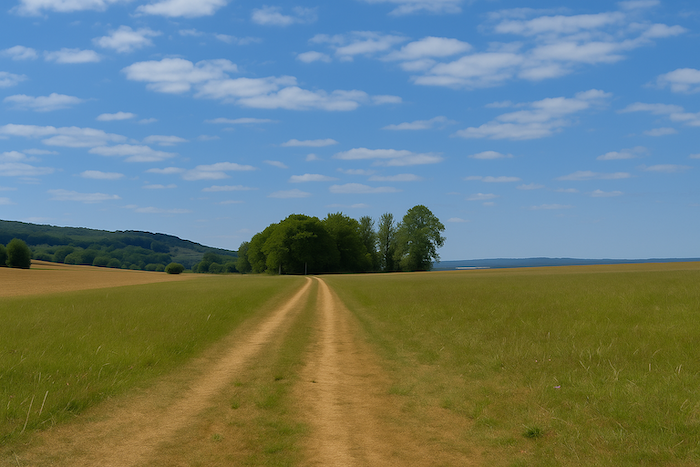
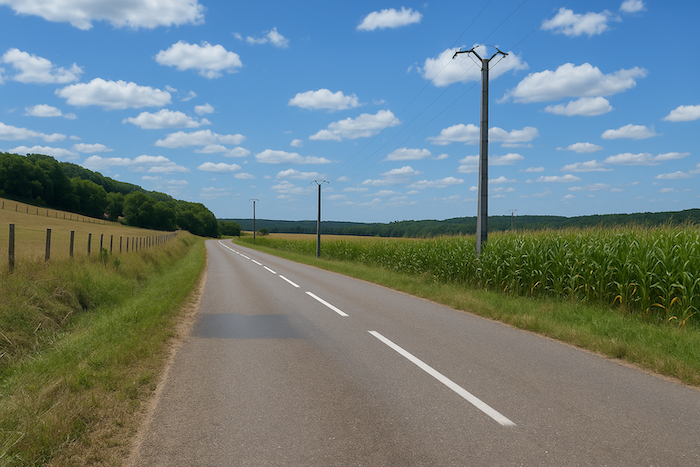
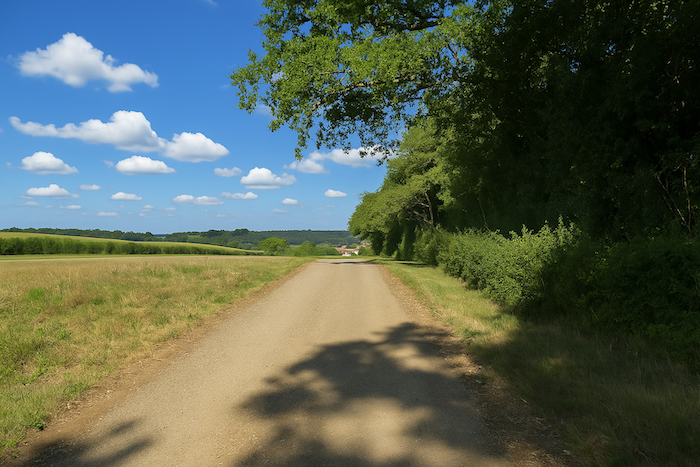
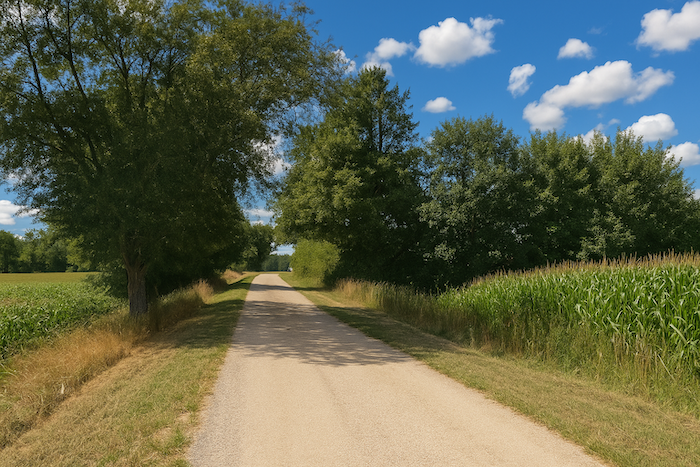
| Here, the track stretches in a perfectly straight line, a thread drawn across the countryside that seems to continue into infinity. |
 |
 |
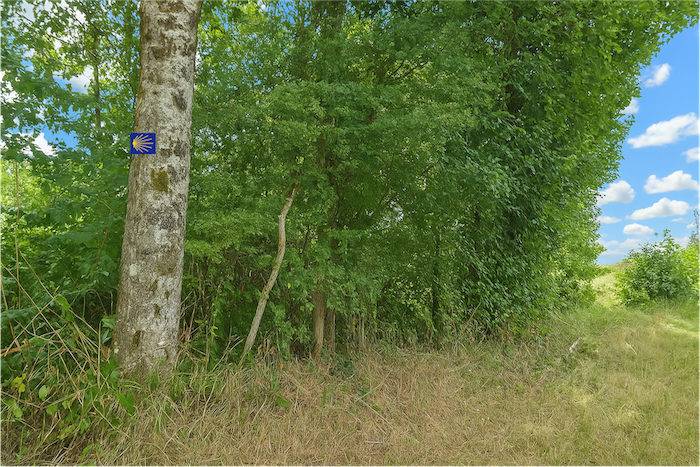
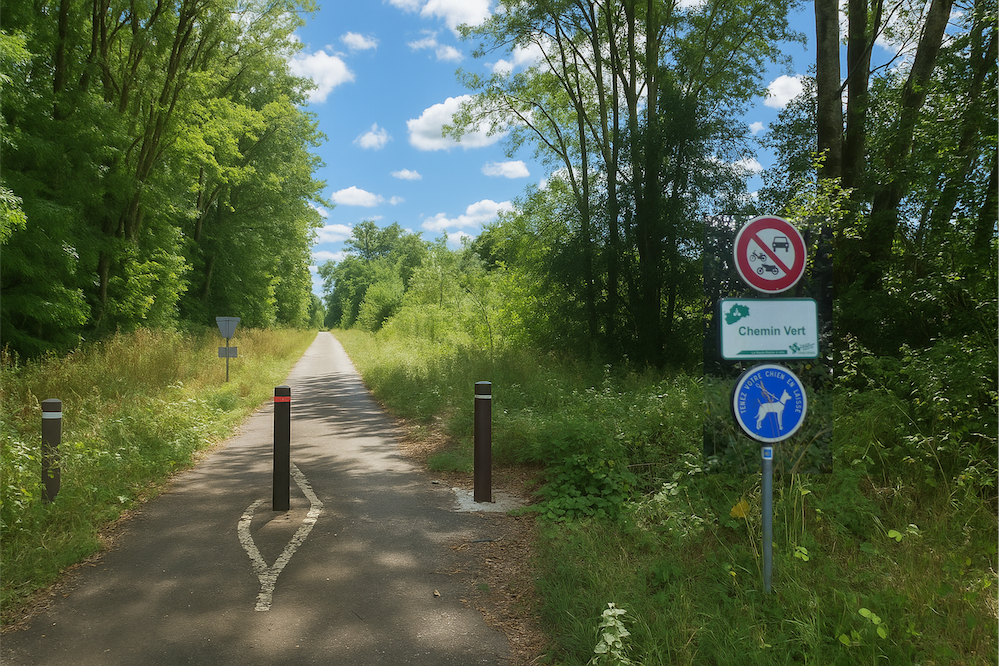
| And suddenly, on the left, the entrance to the cycle route appears, clearly marked by the scallop shell, an invitation to continue farther along this road that winds gently through the soft landscape. |
 |
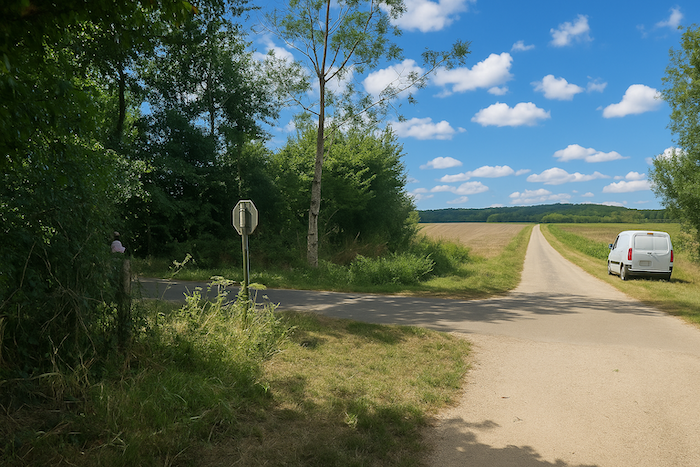 |
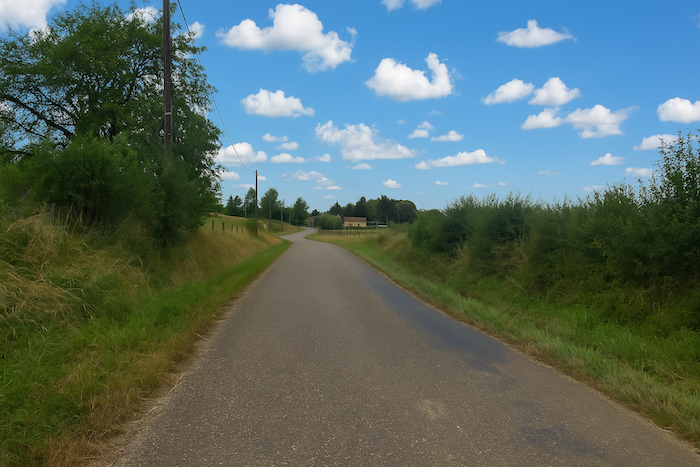
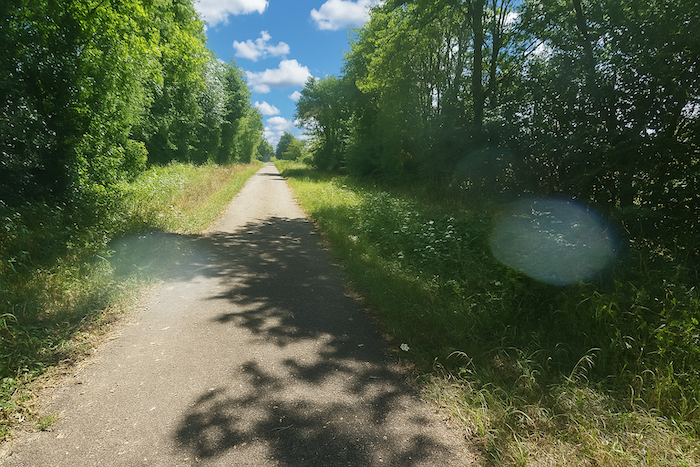
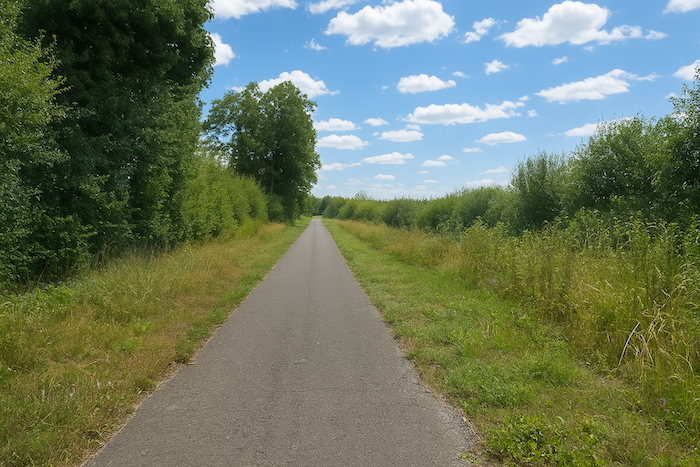
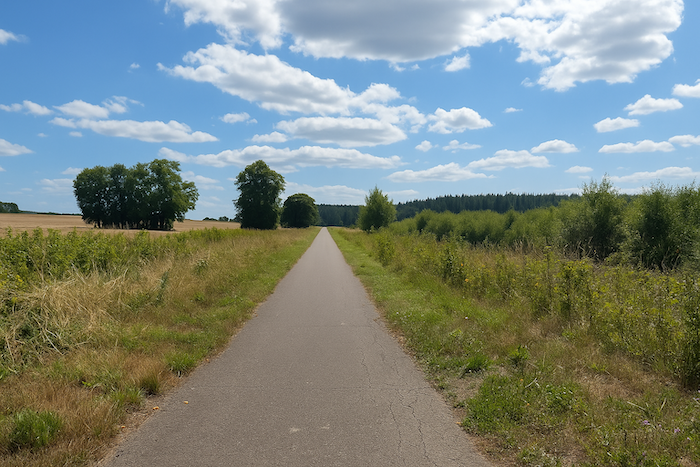
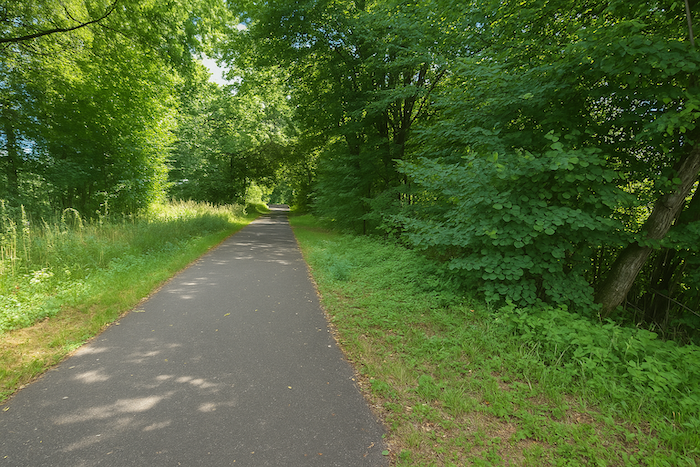
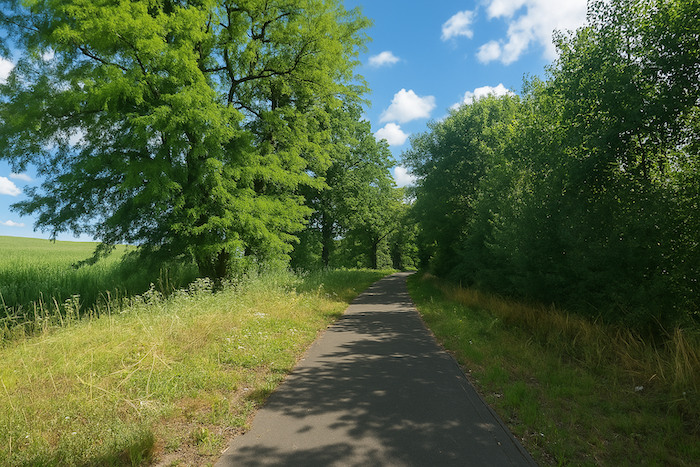
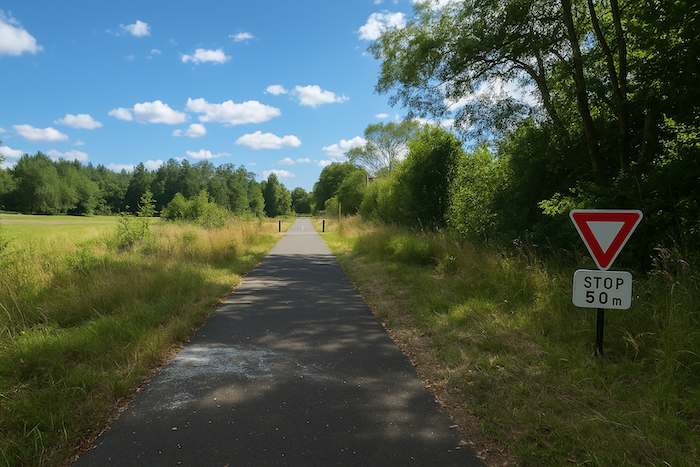
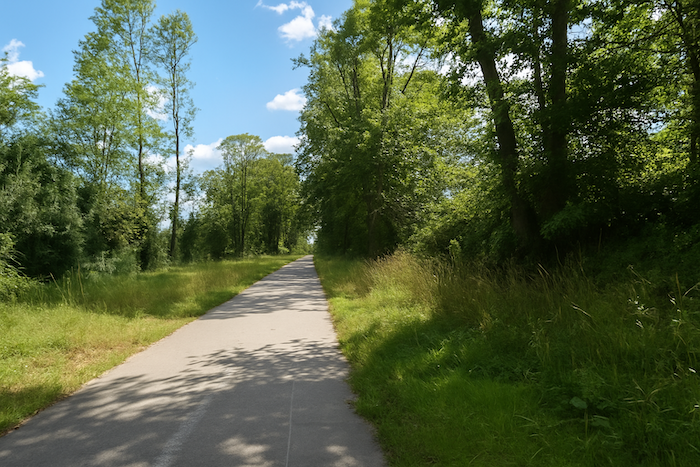
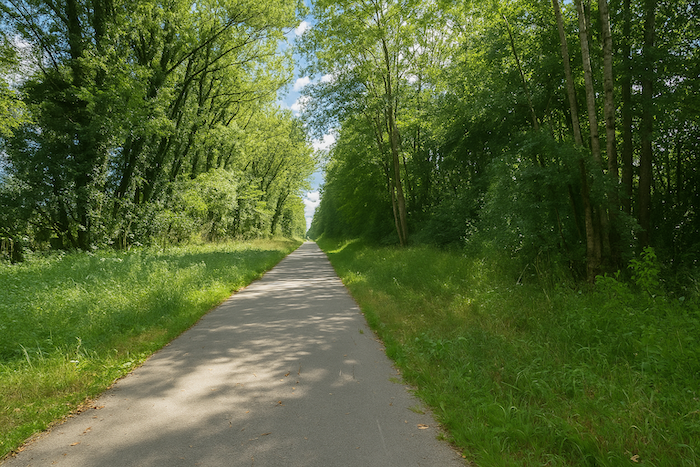
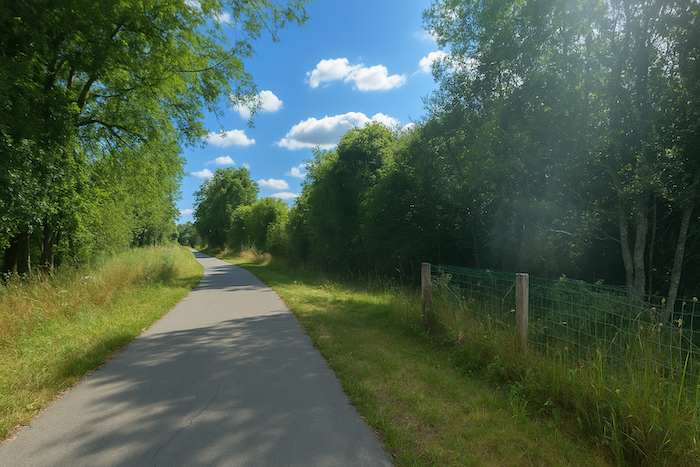
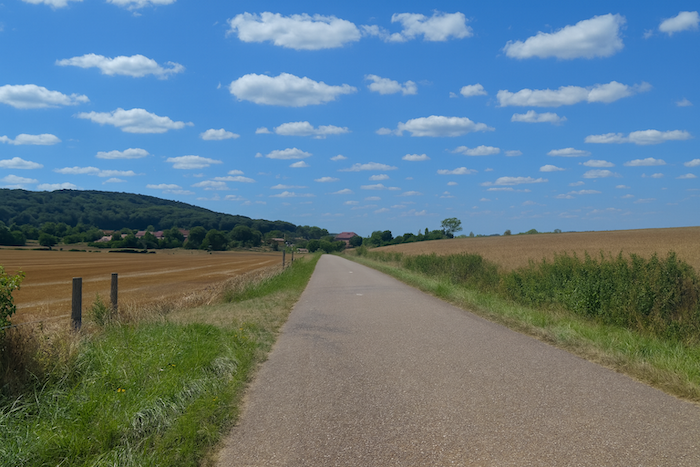
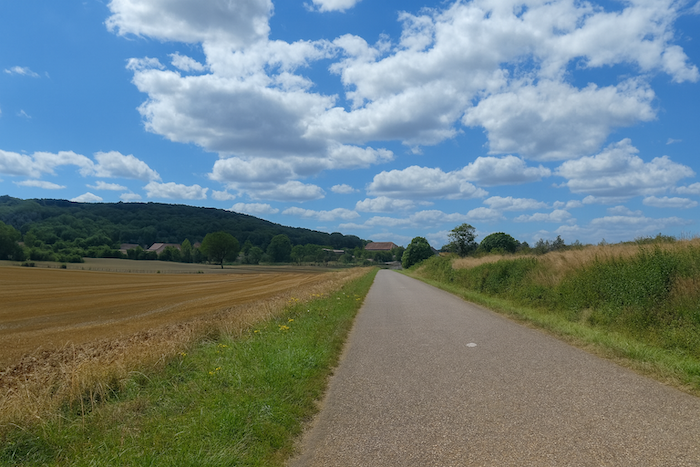
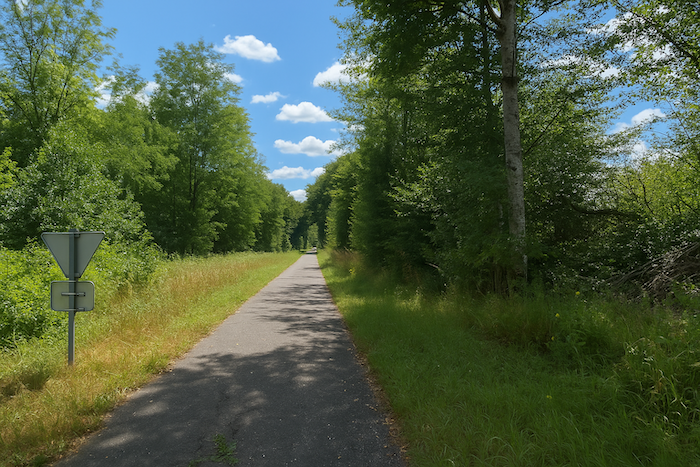
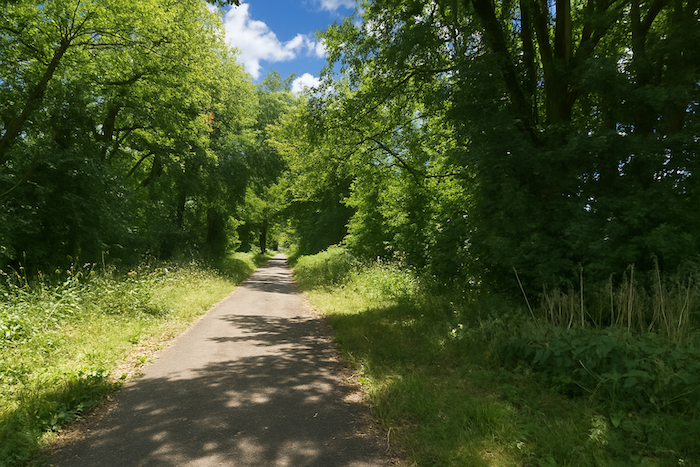
| The Green Path, about thirty kilometers long, is laid out on the site of a former railway line that once connected Vesoul to Besançon. The train has disappeared, but the spirit of travel remains, like a nod to a transformed railway past. The Green Path then stretches straight and faithful, the preferred axis of the trains of old, and you set out on a walk of more than four kilometers on a tarred surface, a black ribbon winding through fields and woods. |
 |
 |
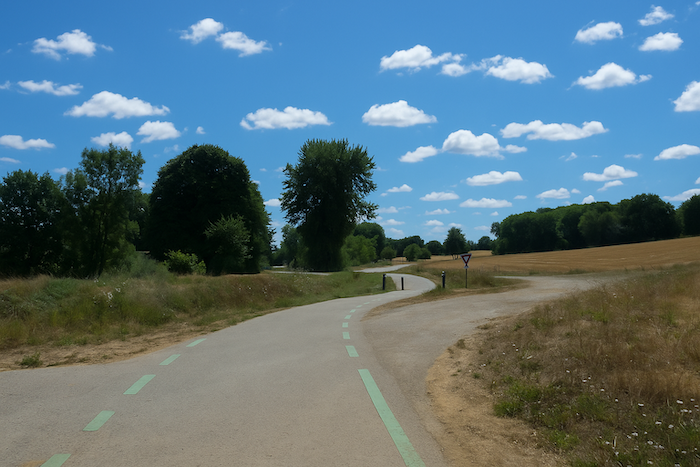
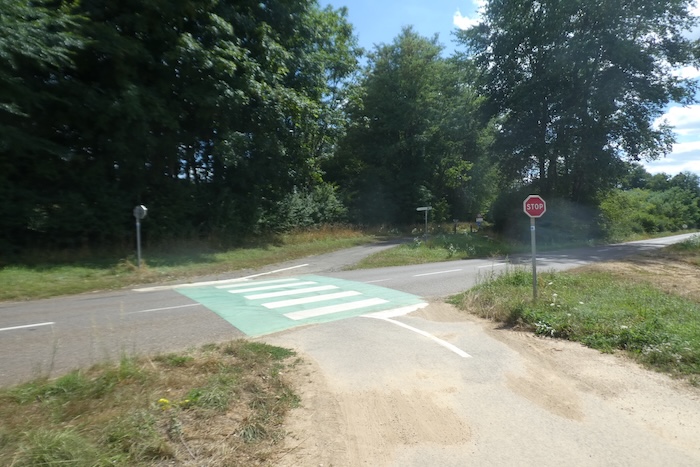
| After a kilometer, the cycle route crosses the road to Dampierre, a junction point where past and present meet. |
 |
 |
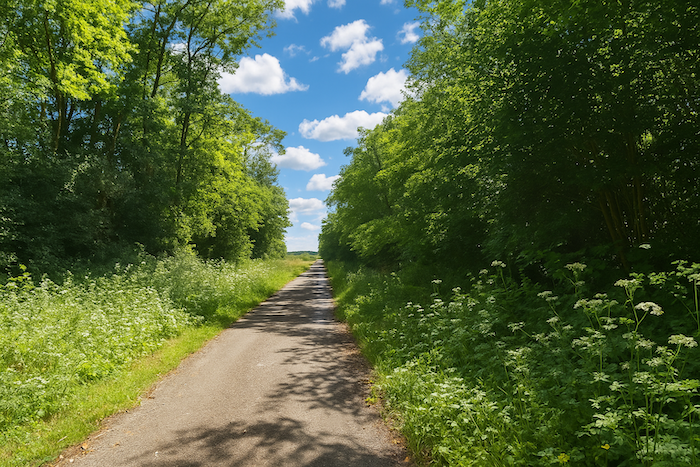
| At first, the cool shade of tall deciduous trees still surrounds you, offering shelter from the harsh light, but farther on, the route stretches toward the horizon, revealing a barer, more open landscape where the gaze is lost in distance. |
 |
 |
Section 5: Do you like cycle routes?
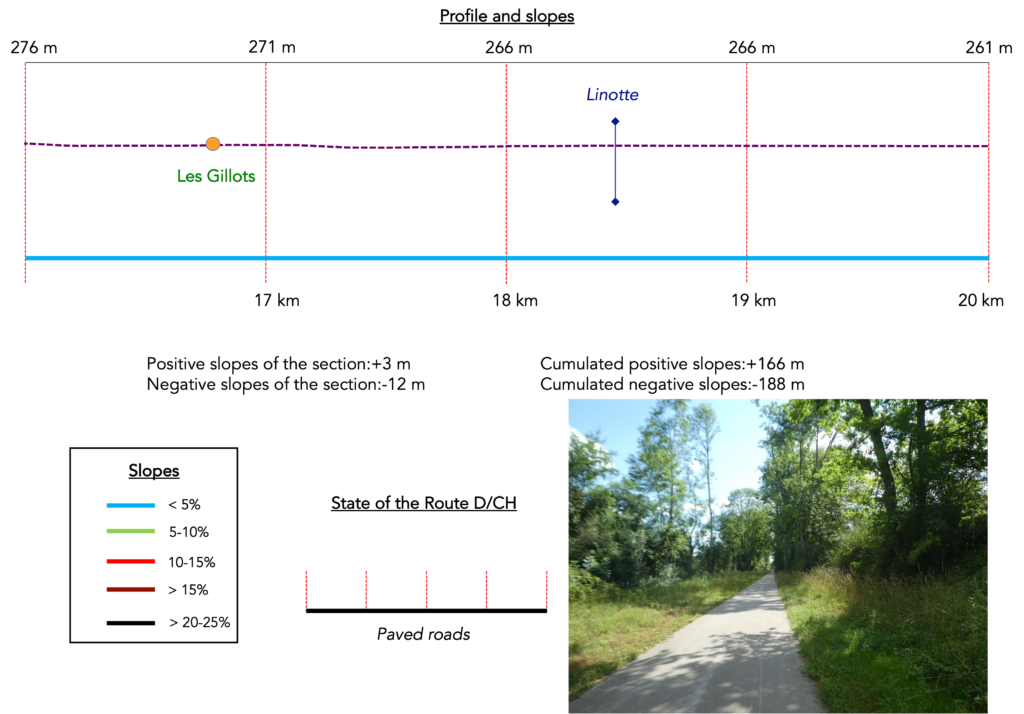
Overview of the route’s challenges: a route without difficulty.
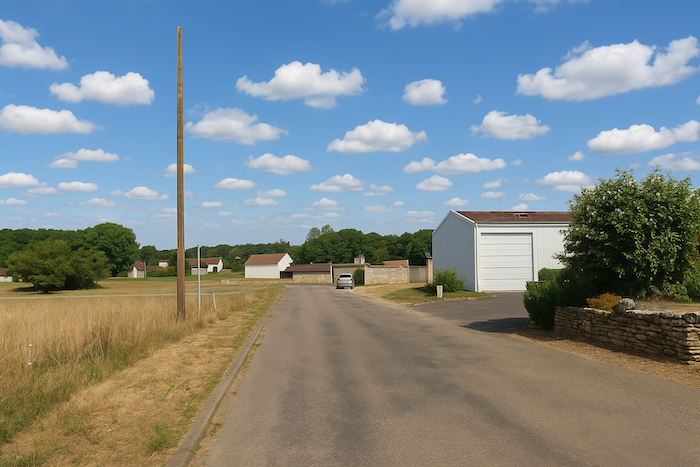
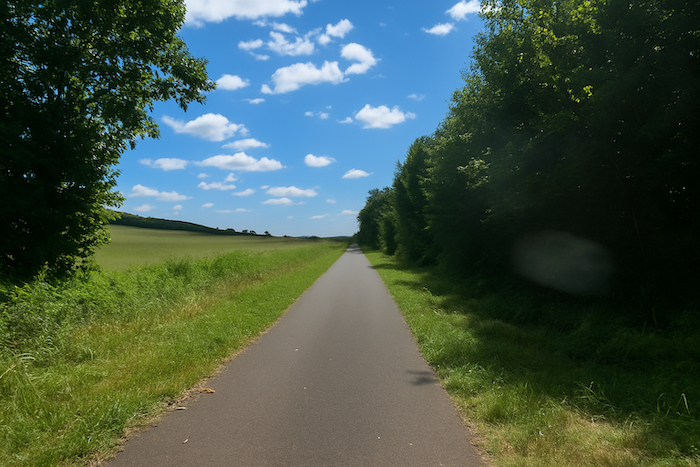
| For the next kilometer your gaze will be held by the austere outline of a huge hangar under construction, rising on the hillside like a modern fortress. When you come back here, perhaps the building will have completed its transformation, imposing its new presence above the rolling meadows, the fallow fields and the stretches of corn that color the surrounding plain with a living patchwork. |
 |
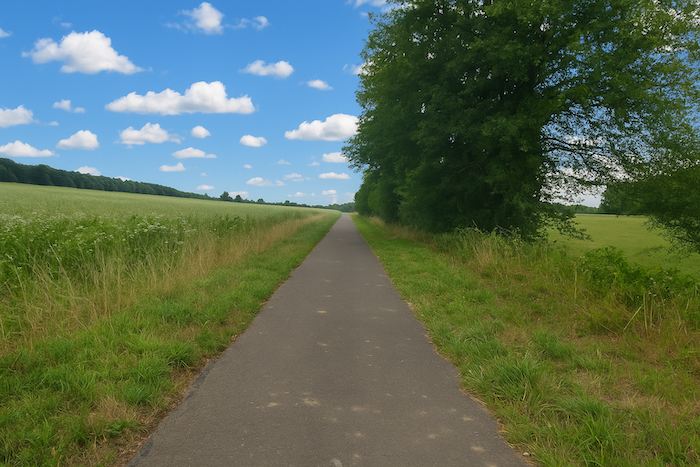 |
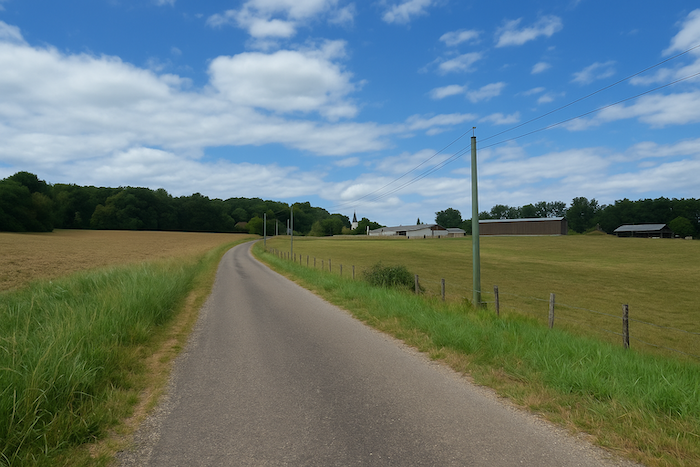
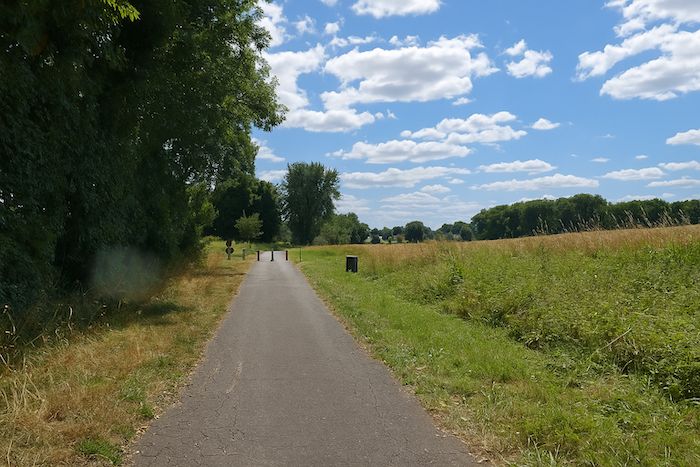
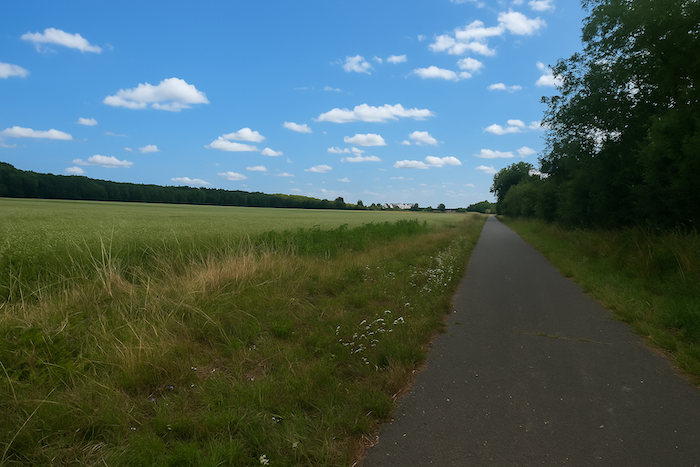
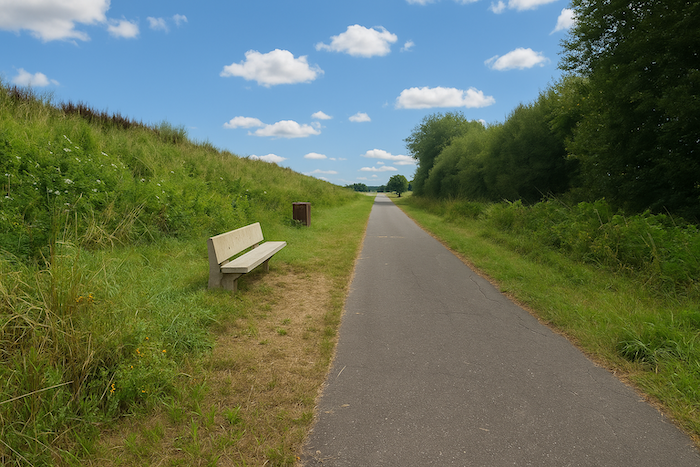
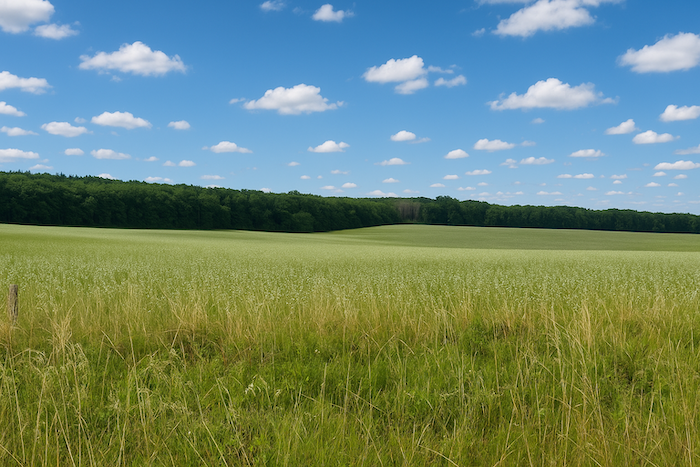
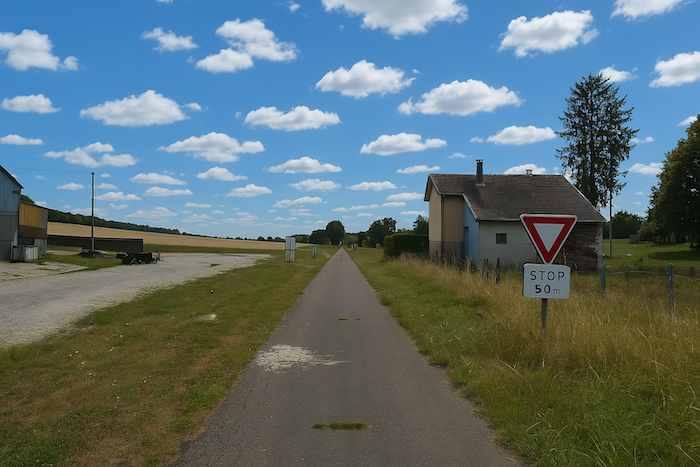
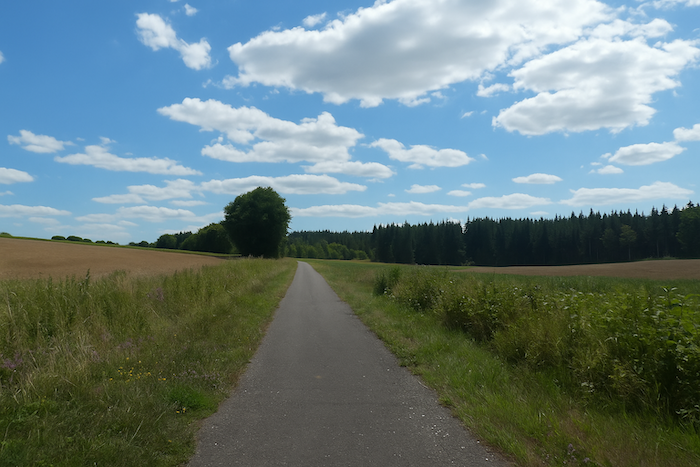
| Cycle routes often divide opinions. People either love them or dislike them, especially when they stubbornly refuse to turn and seem to stretch on in a line without end. Here, a bench has been provided, a humble refuge for the walker or tired cyclist. Yet who would dare stop here, what would there be to admire in such an unappealing landscape, deprived of the wild beauties that make the heart beat faster? |
 |
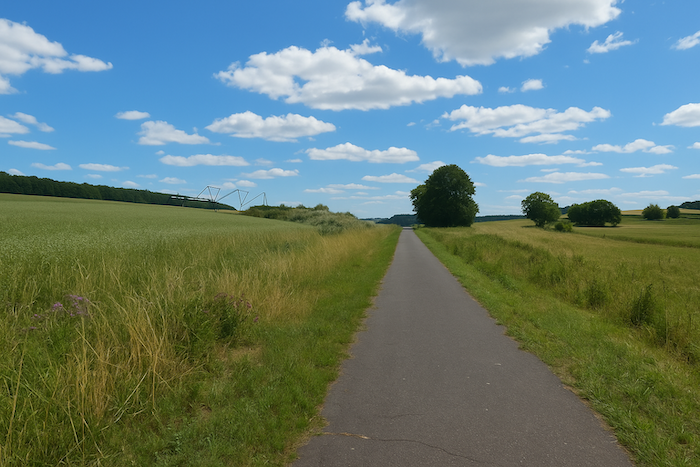 |
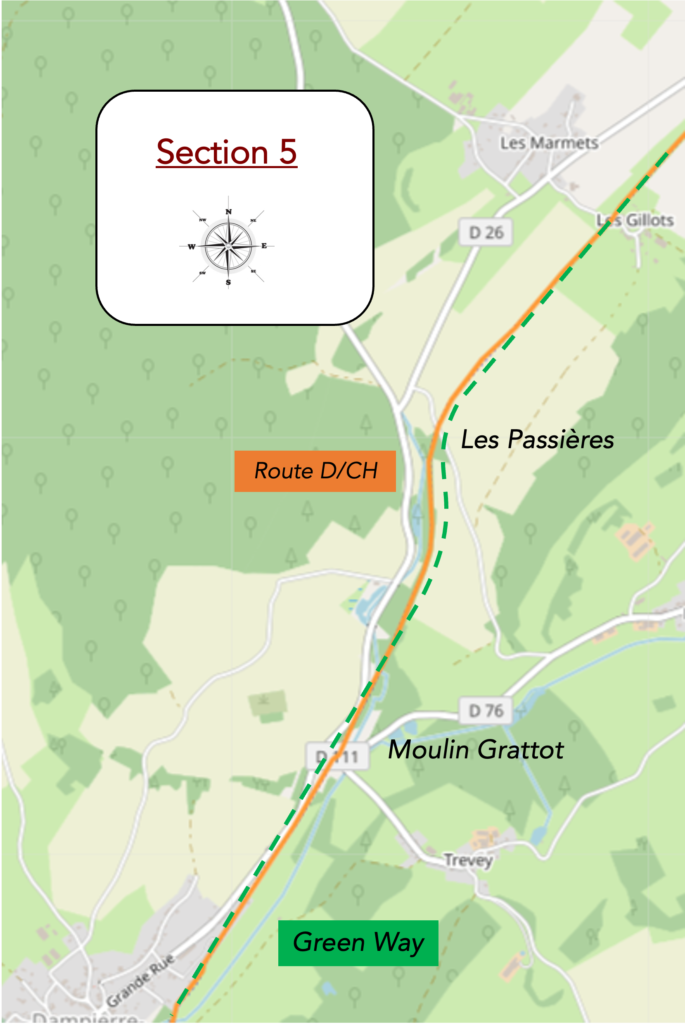
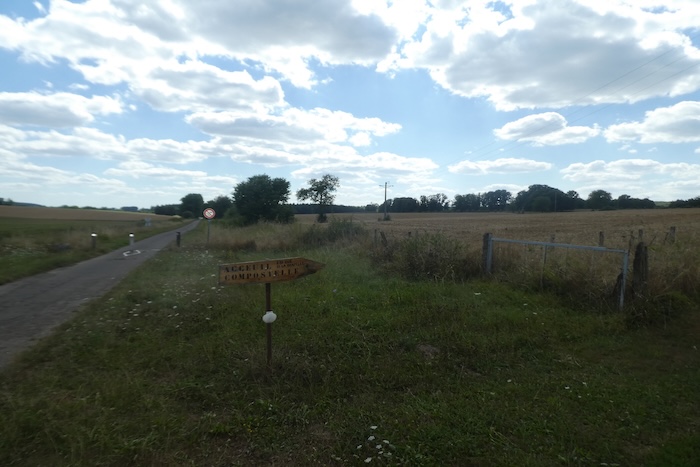
| Farther on, the road runs alongside a few scattered houses at the place known as Les Gillots, where, very close by, accommodation for pilgrims on the road to Compostela opens its doors. |
 |
 |
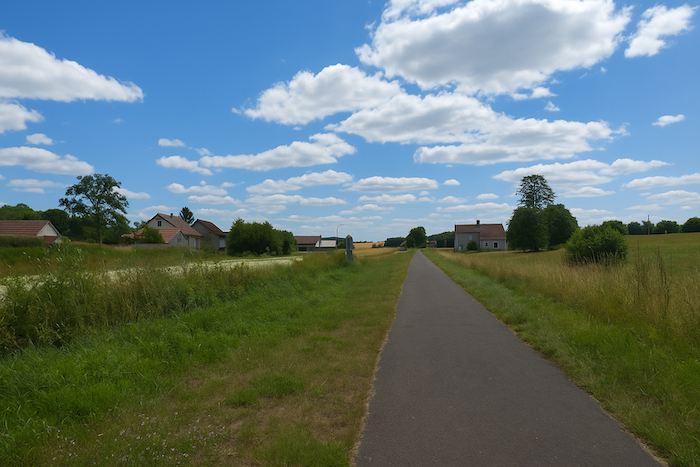
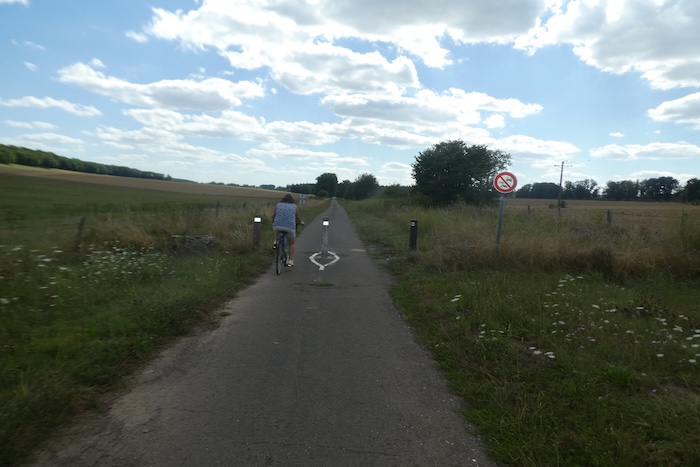
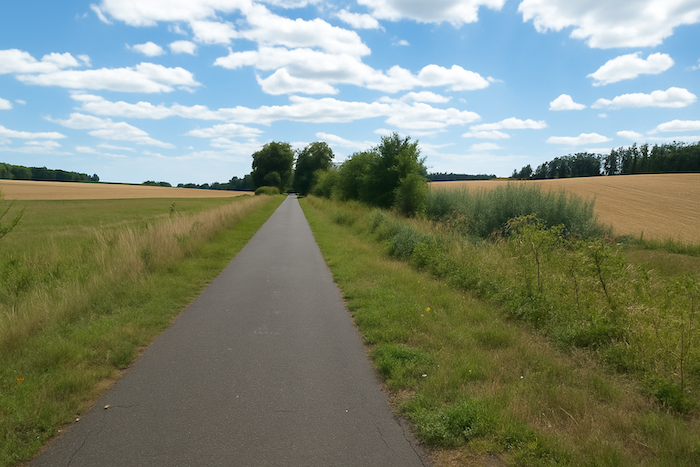
| The next two kilometers still unfold in a straight line without deviation. A woman walks ahead with a firm step, almost hurried, seeming isolated in this wide open space. However, do not be mistaken. You will meet many cycle tourists here, especially at weekends, when the paths fill with many lives, exchanged smiles and wordless conversations. |
 |
 |
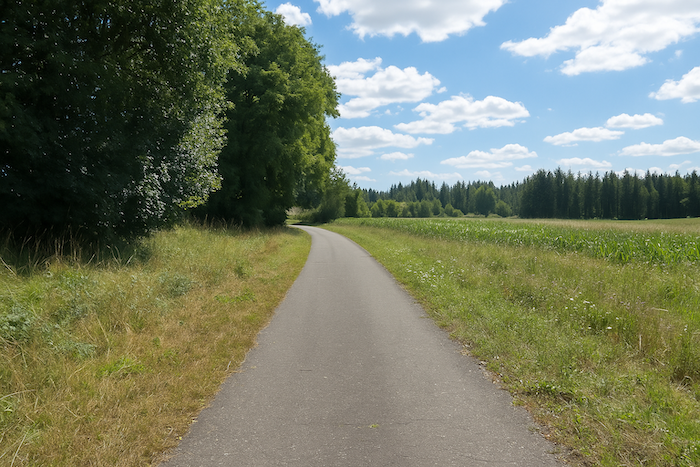
| Then, like an awaited miracle, the road bends gently to the right at the place called Les Passières, perhaps once the site of a forgotten railway station. This curve, discreet though it may be, changes the rhythm of the walk and brings new energy, a welcome softness after the stubborn straightness of the road. |
 |
 |
 |
. |
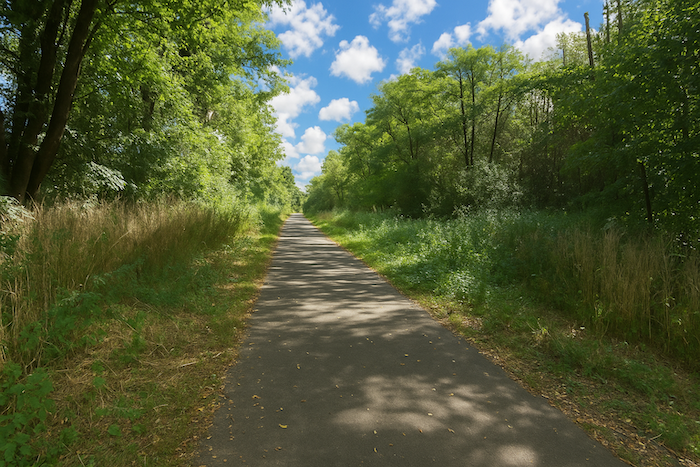
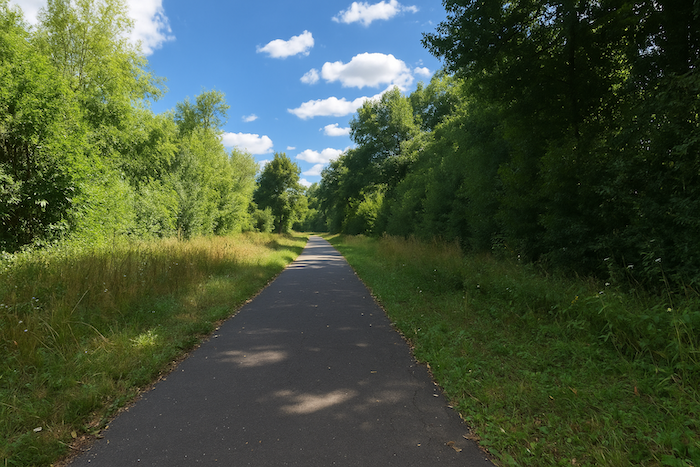
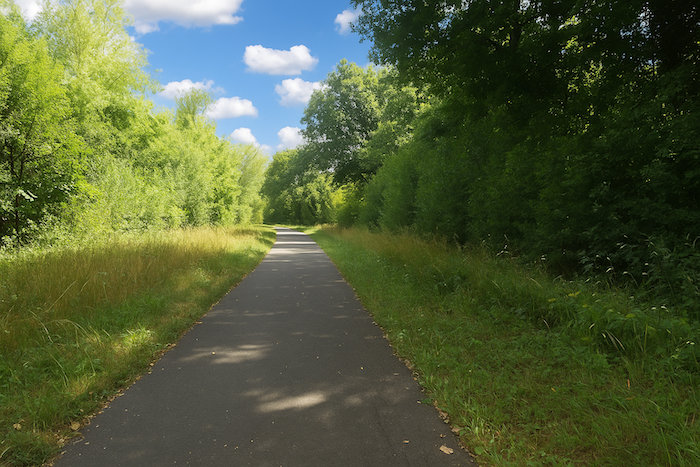
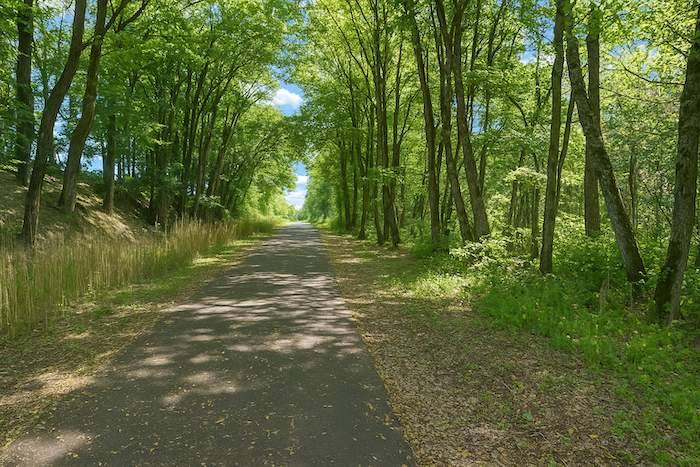
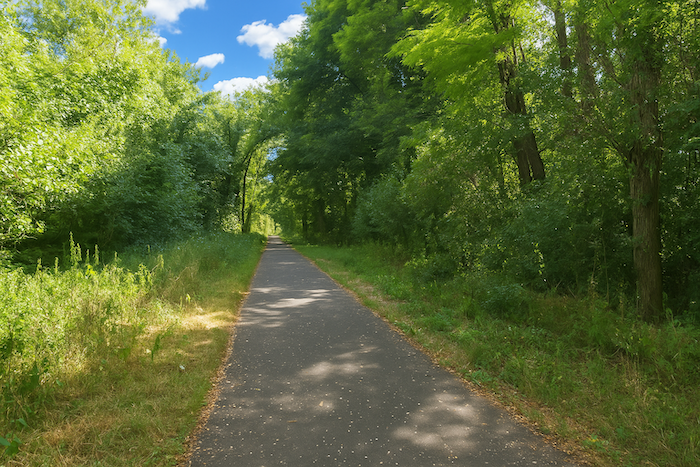
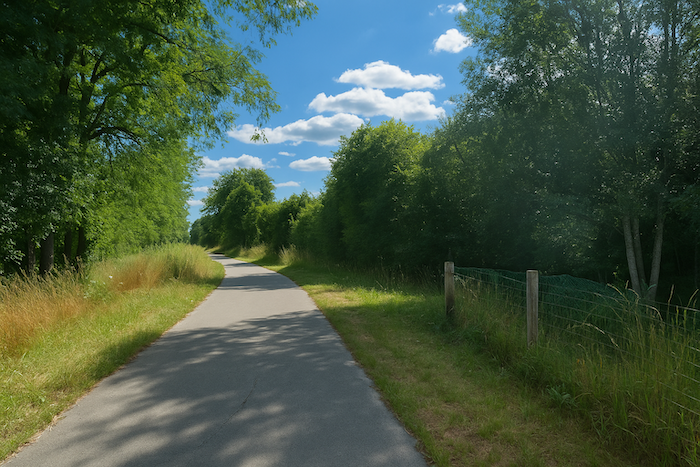
| The route has finally allowed itself a curve. But soon it regains its strictness and unfolds once again in a straight line, although now often protected under the familiar shade of deciduous trees. |
 |
 |
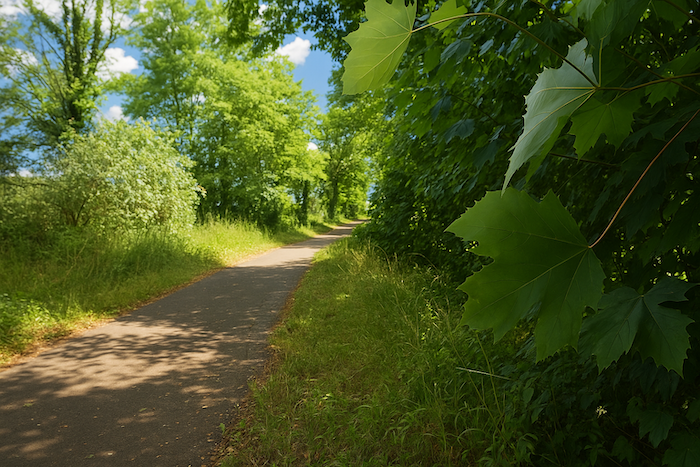
| Here, shy maples pierce the canopy, their young leaves mingling with beech shoots and stunted oaks, like a delicate palette of hope and renewal. |
 |
 |
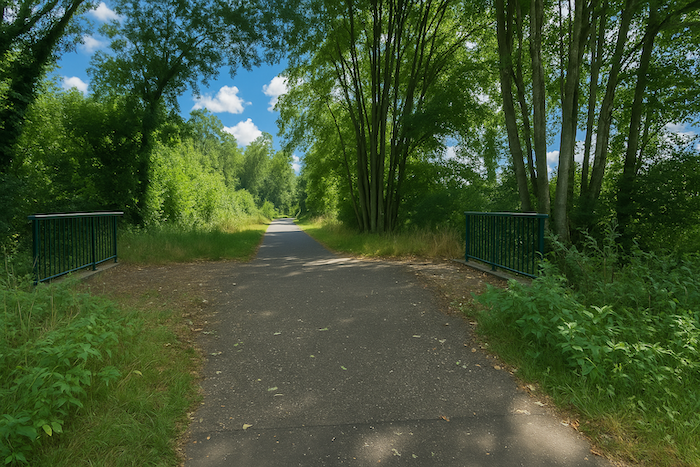
| Farther on, the route crosses the Linotte, a discreet and almost secret stream that murmurs its course to any attentive ear, bringing a bright note of running water to this green landscape. |
 |
 |
| A little farther still, the route arrives at the crossroads of roads at the place called Le Moulin Grattot, a symbolic stopping point. One senses that Dampierre is no longer far away, that the village is drawing nearer with large strides, ready to open its arms to the tired walker. |
 |
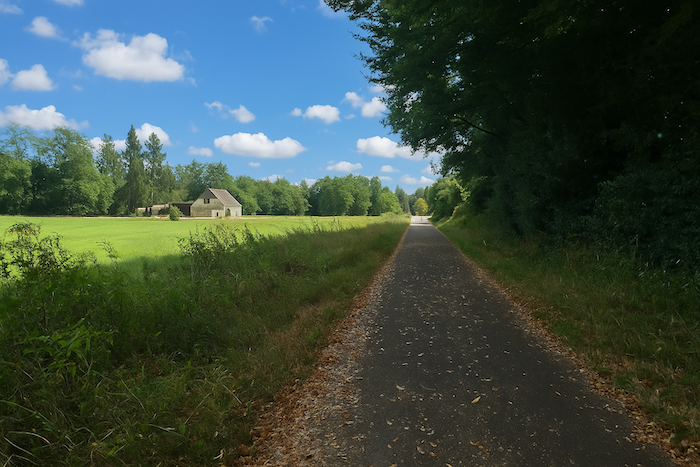 |
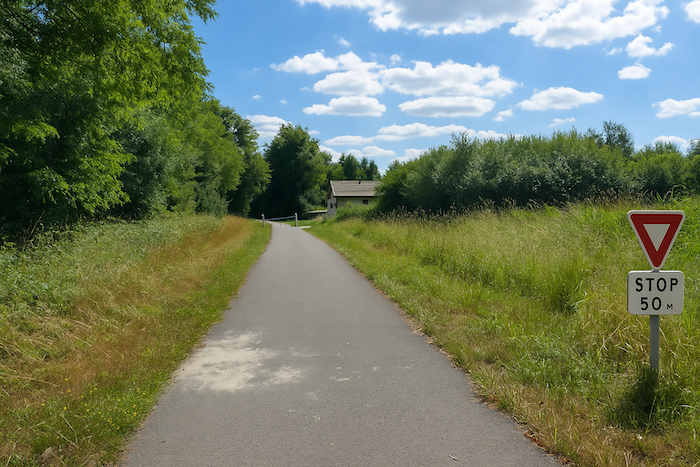
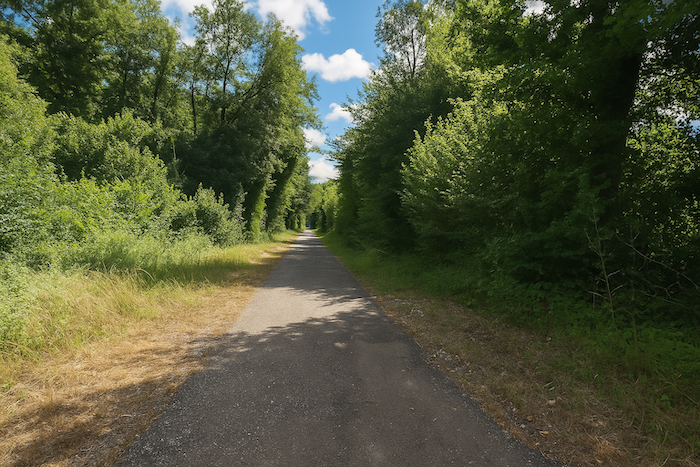
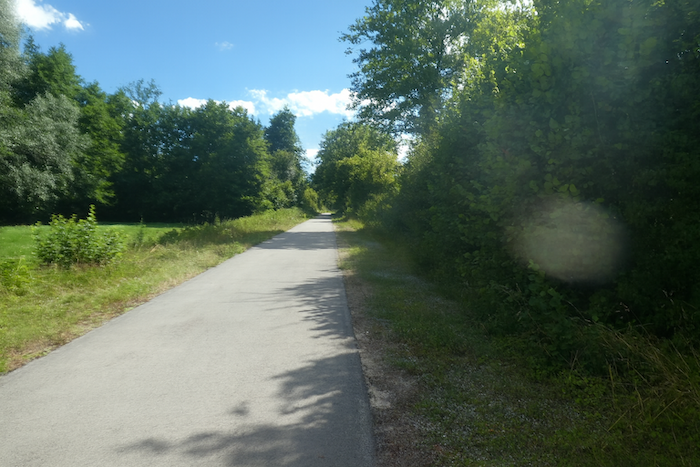
| After one more kilometer on this faithful cycle route, you will soon be delivered from it, free at last after these endless stretches |
 |
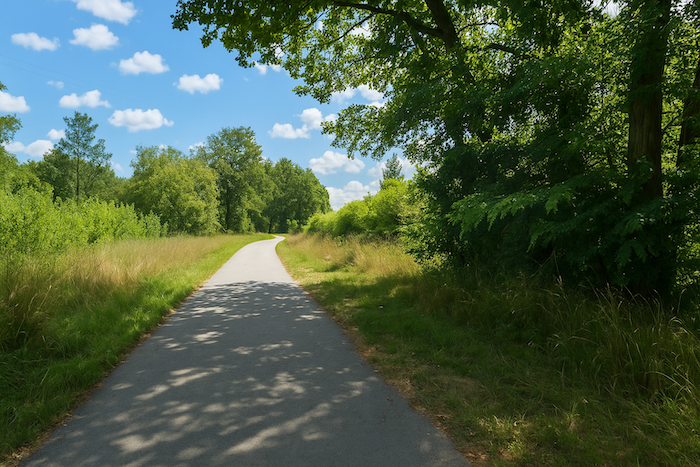 |
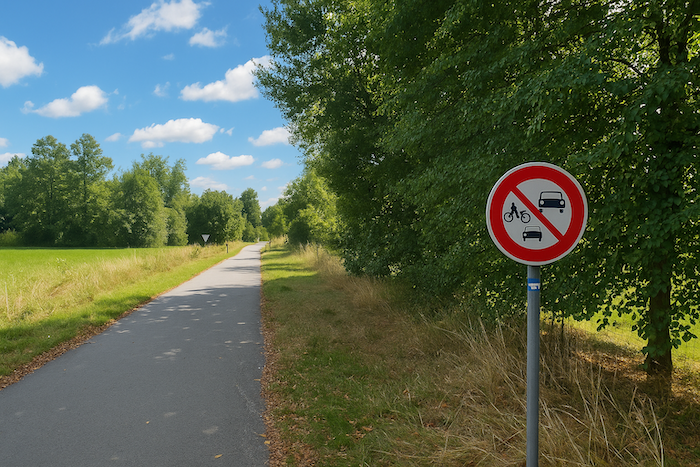
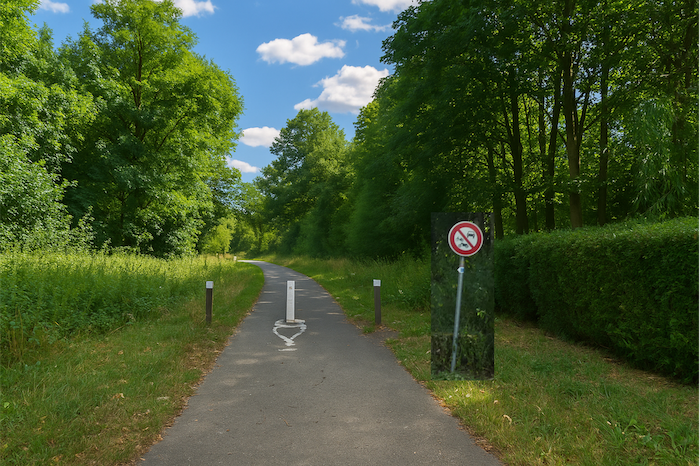
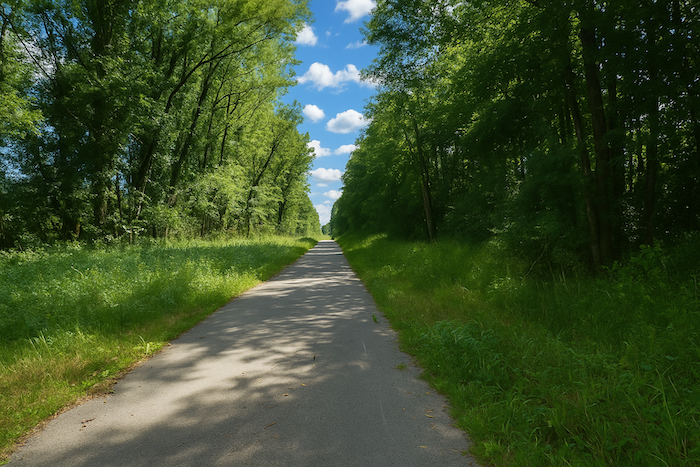
| Shortly after, the route also becomes accessible to local vehicles, even though traffic is prohibited, a tangible sign that Dampierre is fast approaching and that civilization is reclaiming its place over nature. |
 |
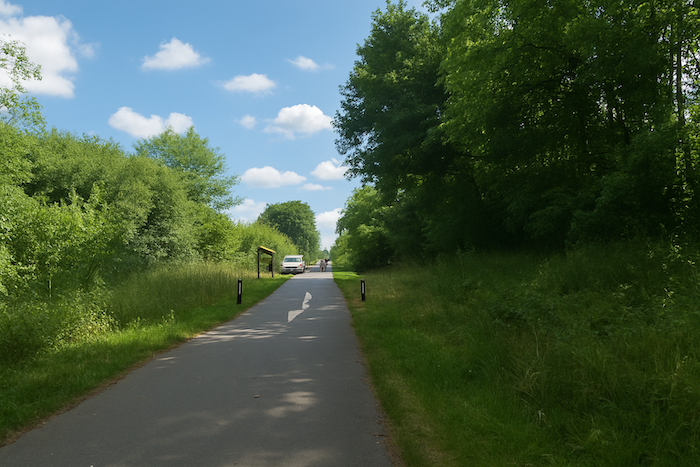 |
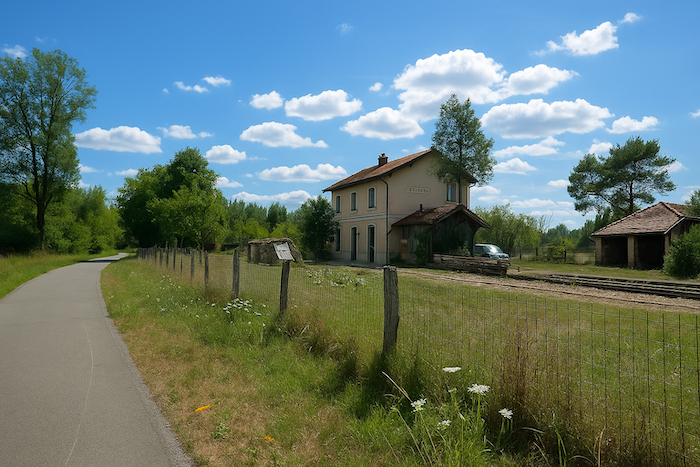
| The road then runs alongside the old station of Dampierre, a silent relic lost in the heart of nature that is slowly reclaiming its rights, mixing ruins and wild grasses in a strange melancholy. |
 |
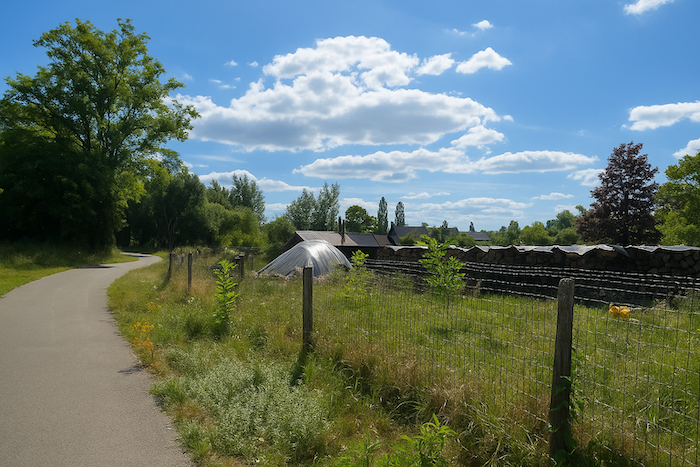 |
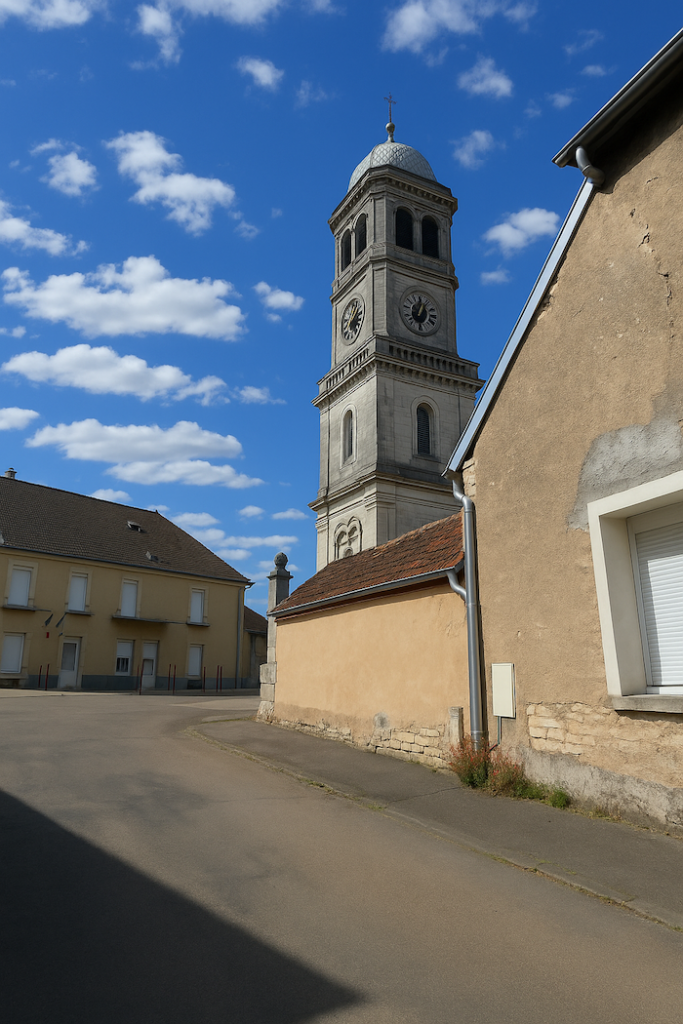
| From this point, the village steeple stands out on the horizon, rising proudly toward the sky. The road crosses the Linotte once again before finally entering the village, concluding this passage between the shade of the woods and the light of the houses. |
 |
 |
Section 6: Back into the woods and into the fields
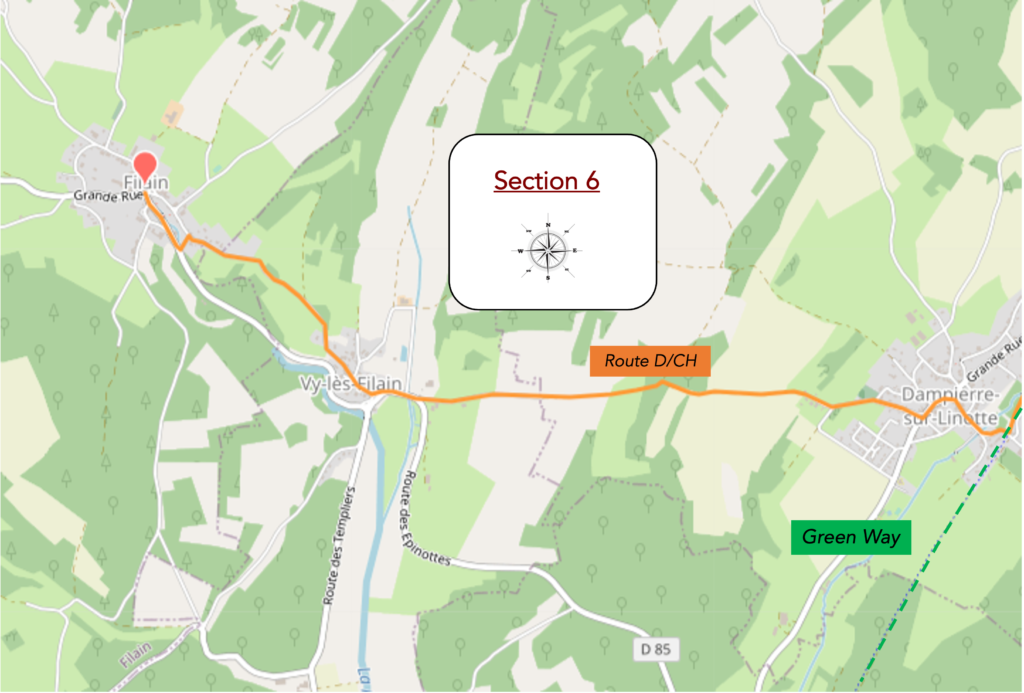
Overview of the route’s challenges: a route without difficulty.
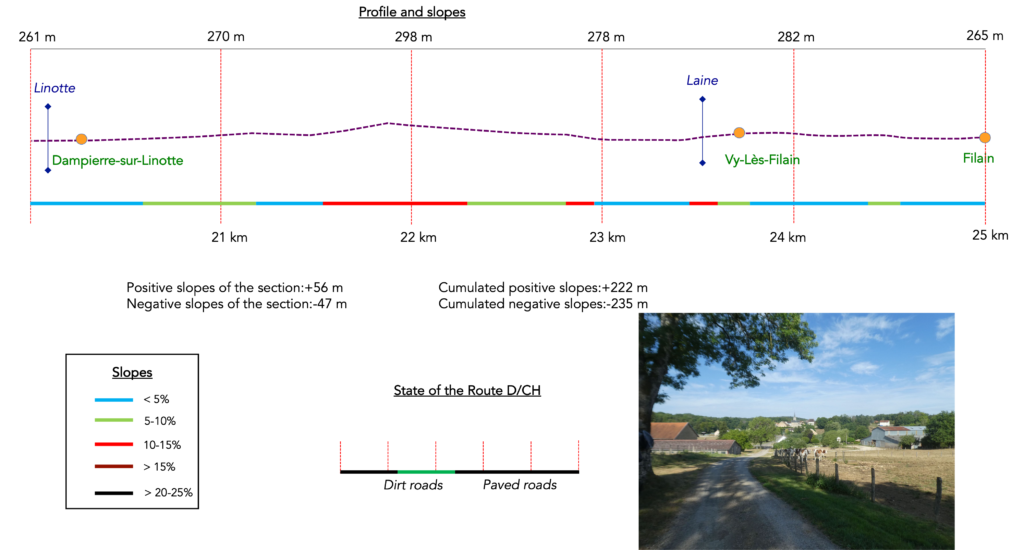
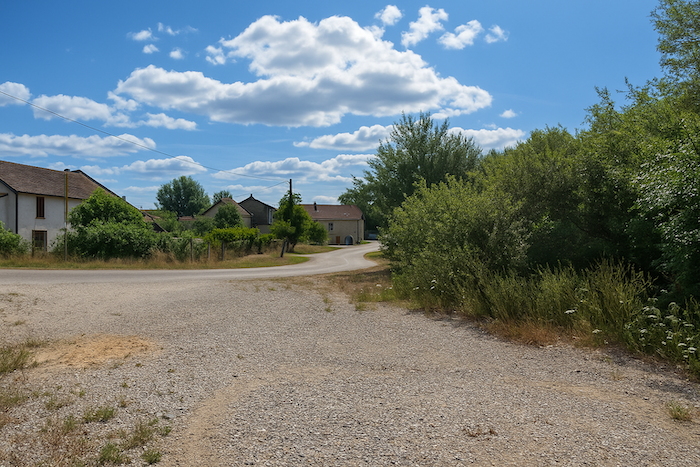
| Here, the route leaves the cycle route, which continues farther south, and turns right, heading toward the heart of the village. It meets the Linotte again, that modest stream which farther south will mingle its waters with those of the Laine, like a discreet murmur of life winding between the hills. |
 |
 |
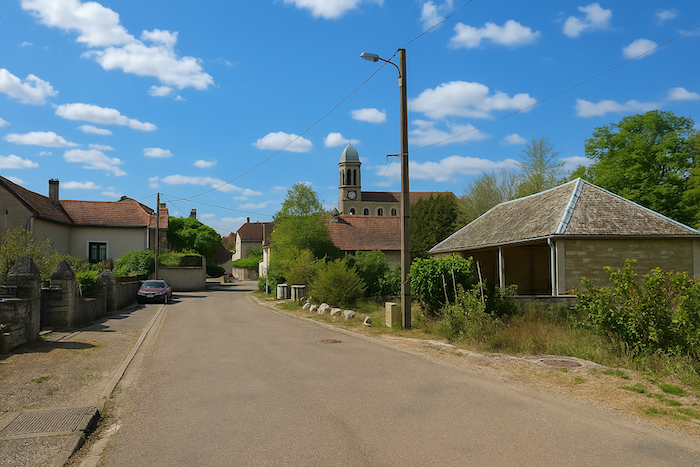
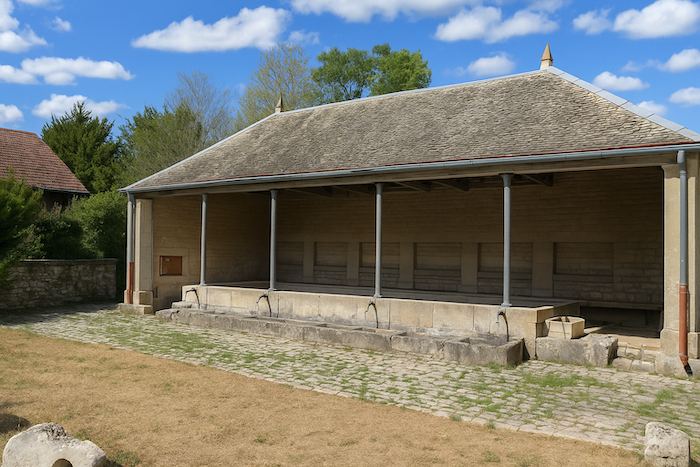
| Dampierre-sur-Linotte, with its roughly 750 inhabitants, unfolds a rare charm in this region often short of amenities. The village has what many others envy, a grocery shop for daily needs, a bakery whose scent of fresh bread fills the air, a pharmacy, and several restaurants where both body and spirit are warmed. It is an oasis of activity, all the more precious because the Way of Compostela runs through it, that spiritual thread linking people across time. The route passes by the communal washhouse, lying under the protective shade of the church, a vestige of the last century where washerwomen once gathered, their voices mingling with the passing of time. |
 |
 |
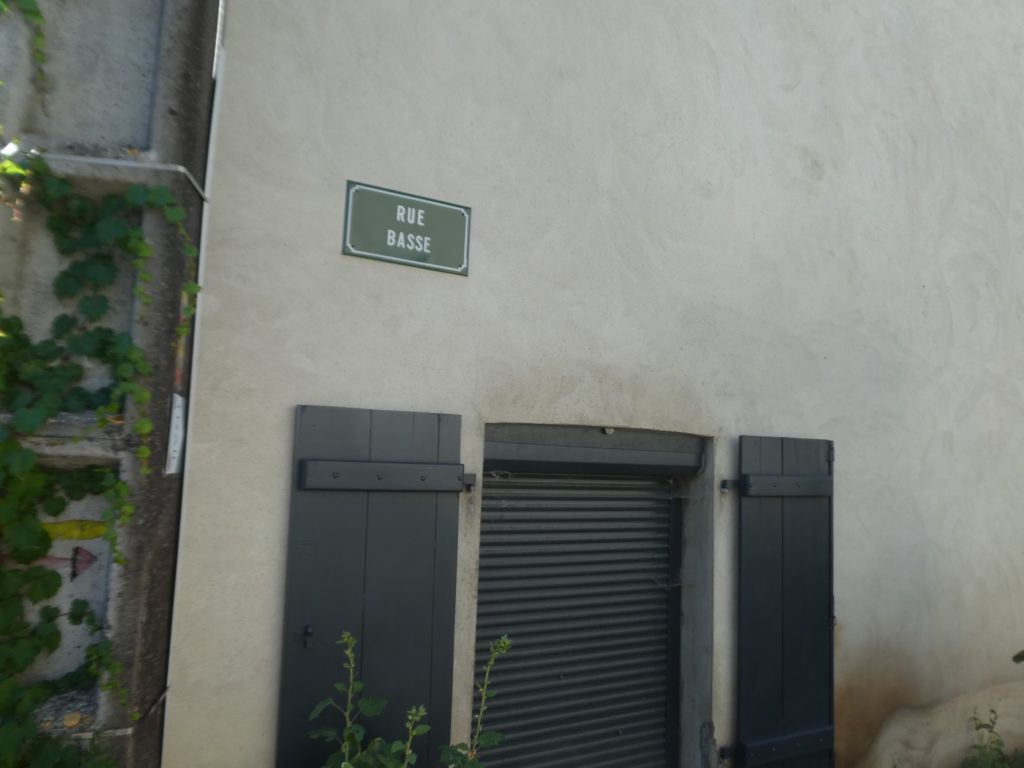
| The route leaves Dampierre along Rue Basse, the road that sinks toward the lower part of the village, like a final farewell to these stone walls that have witnessed so many stories. |
 |
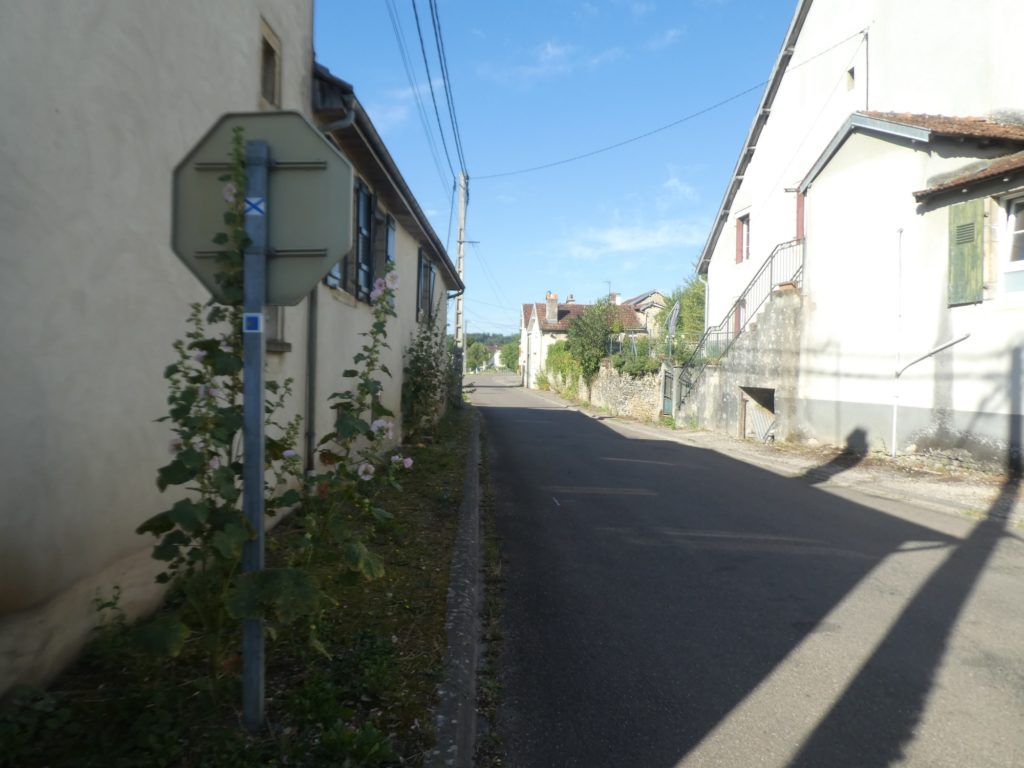 |
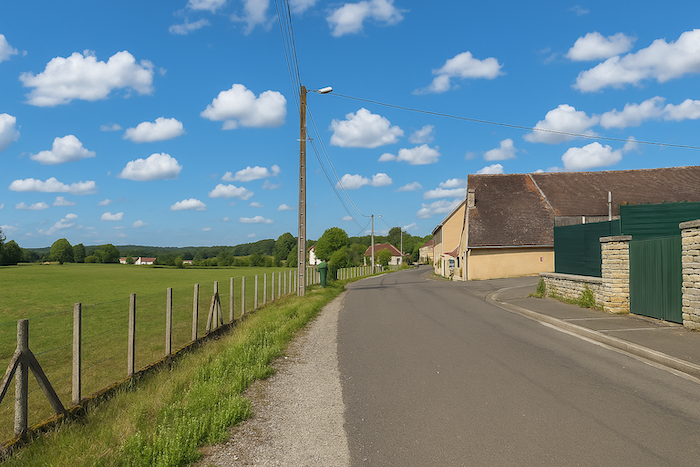
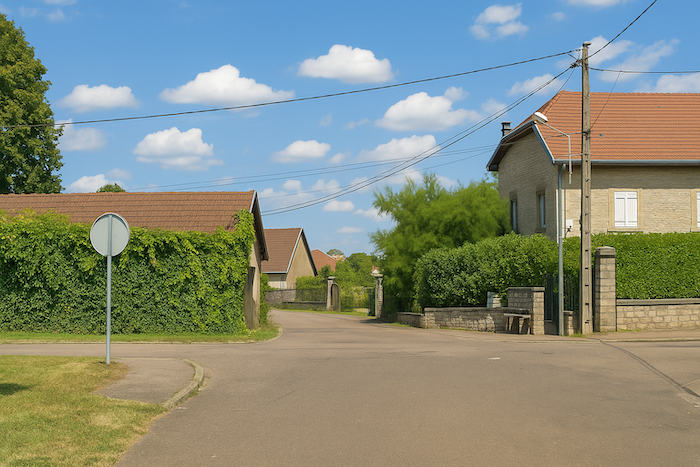
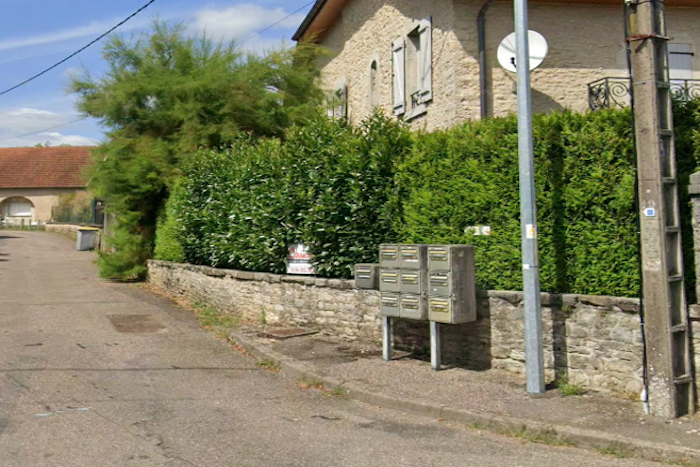
| But it takes time to truly move away. Here, the route passes from one narrow street to another, first taking Rue du Trieur and then continuing along Rue de la Tuilerie. |
 |
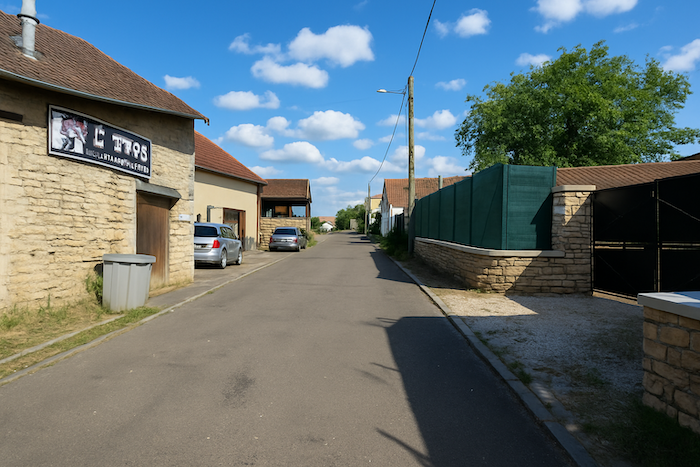 |
| These are neighborhoods of what is quite an extensive village. |
 |
 |
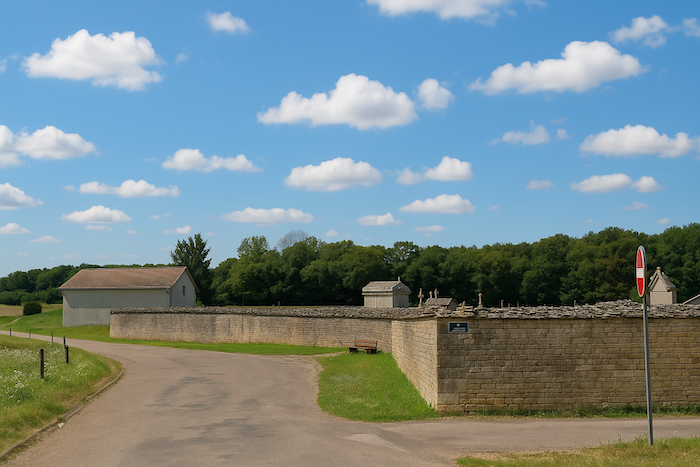
| Farther along, the road passes near the cemetery. |
 |
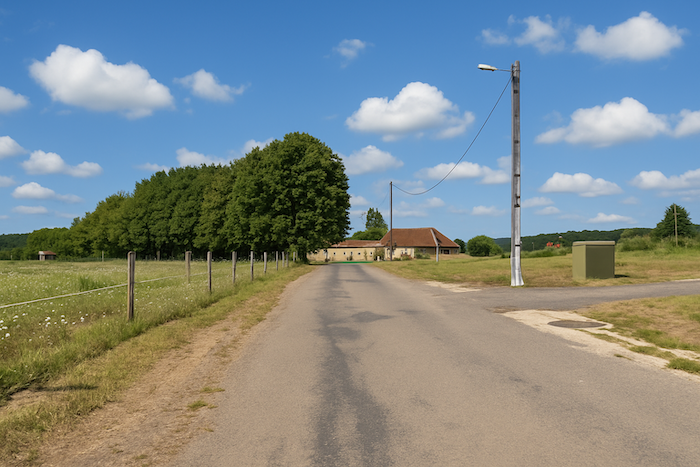 |
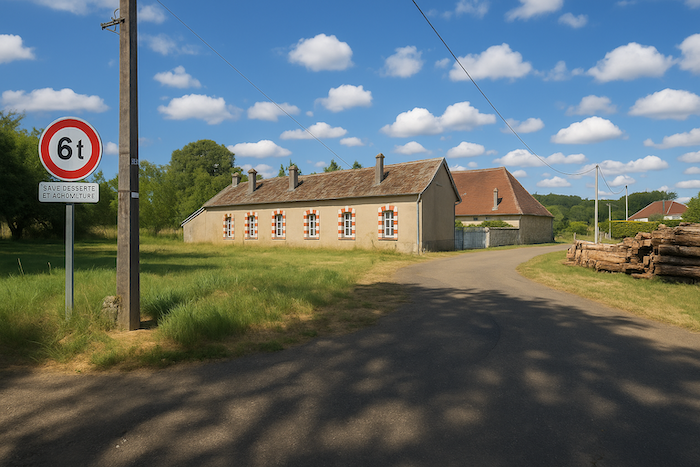
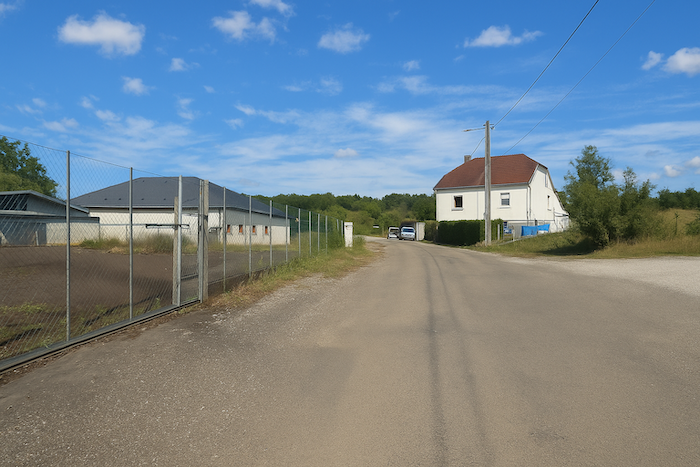
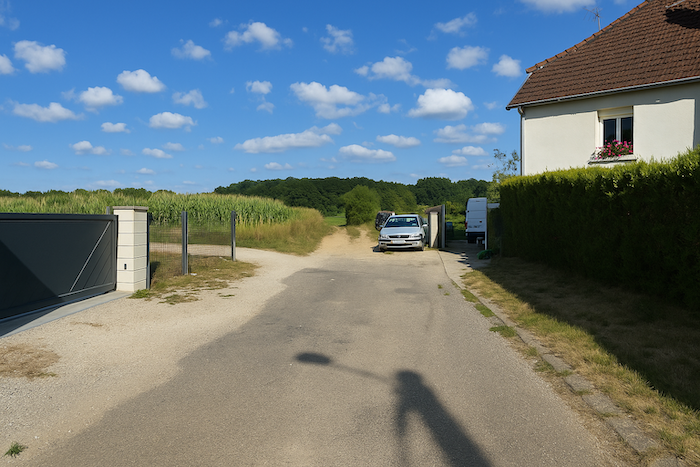
| It then crosses an area where a few buildings stand that look like former factories, witnesses to an industrial past that has faded, before finally taking a dirt path, more humble and more authentic. |
 |
 |
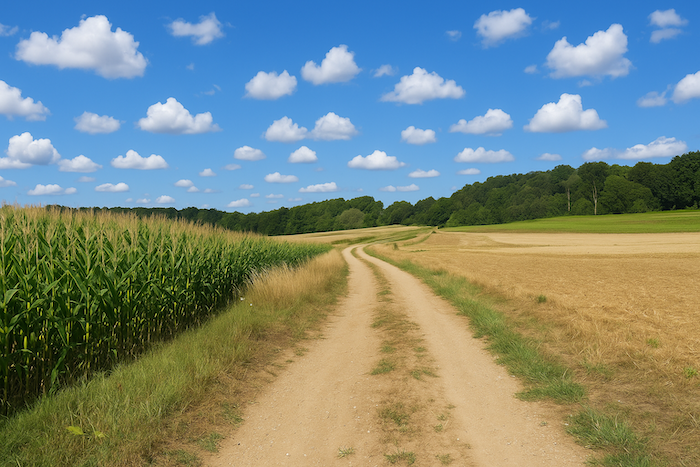
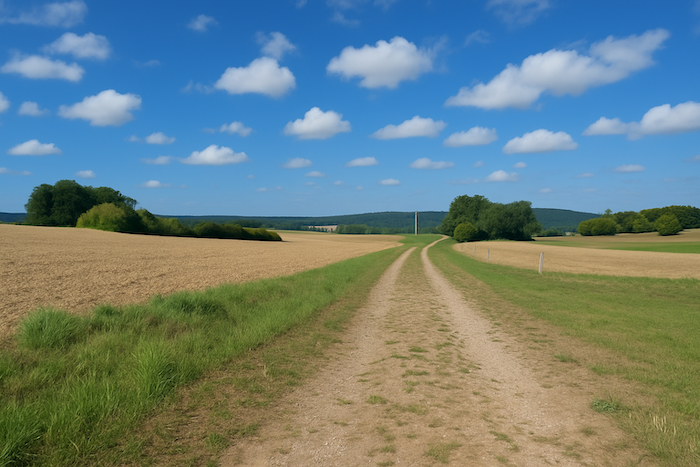
| At the dead end of the road, a wide path opens into the open countryside. |
 |
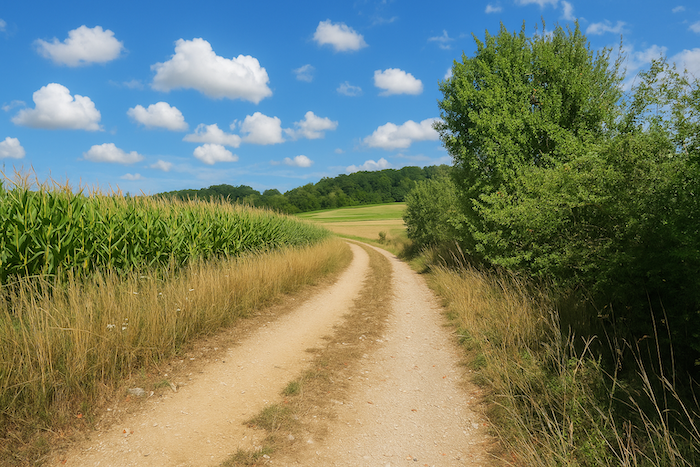 |
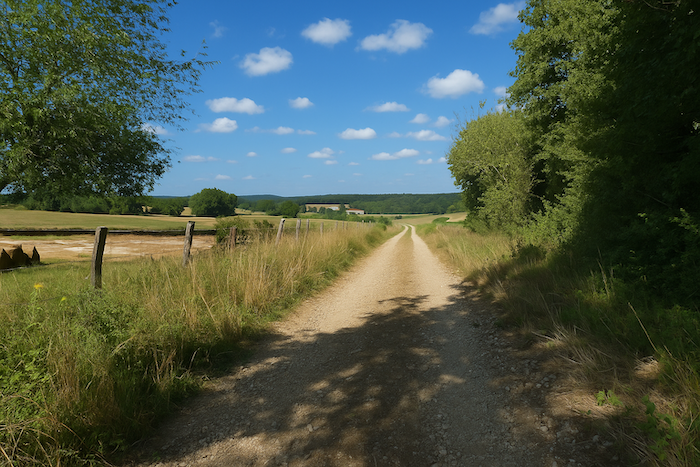
| It stretches between meadows and closely planted rows of corn, like an invitation to reconnect with nature and simplicity. |
 |
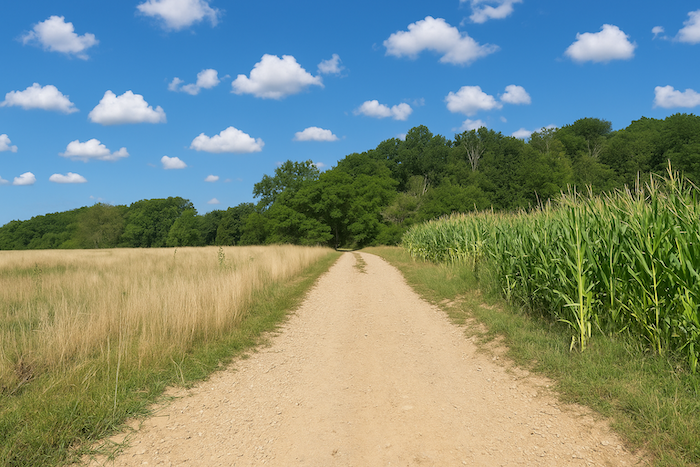 |
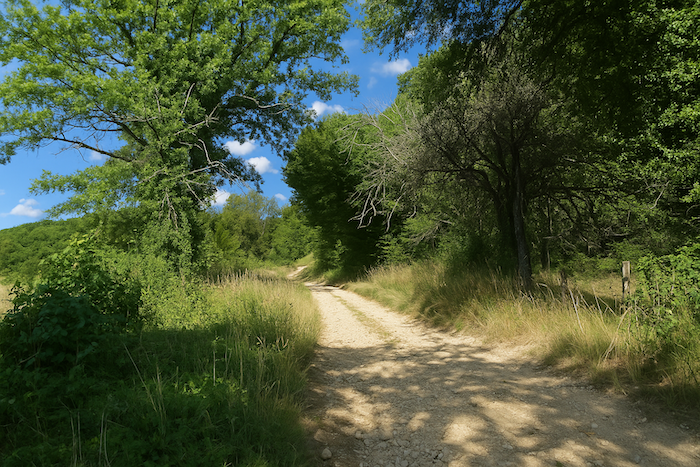
| Soon, the path climbs a fairly steep slope, rising among tall deciduous trees where the light dances through the leaves. Here, the woodland opens and is not dense, giving both space and air to breathe. |
 |
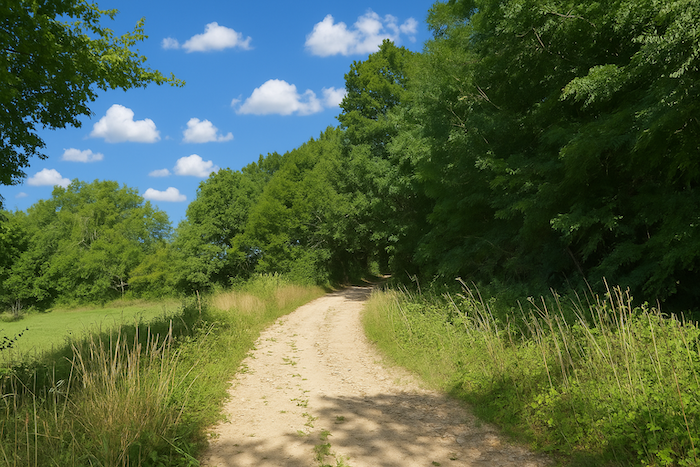 |
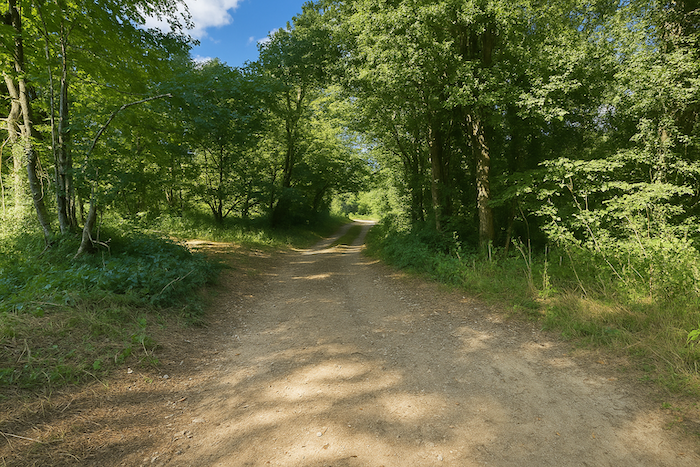
| The short ascent soon gives way to a gentler descent, a delicate offering from the hillside that fades to make room for the softness of the countryside. |
 |
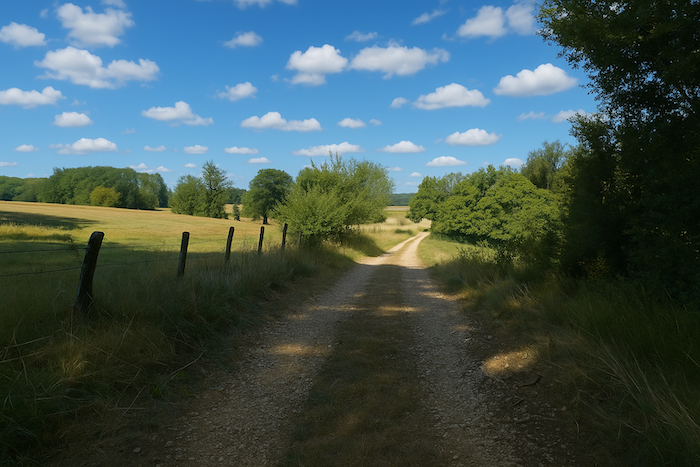 |
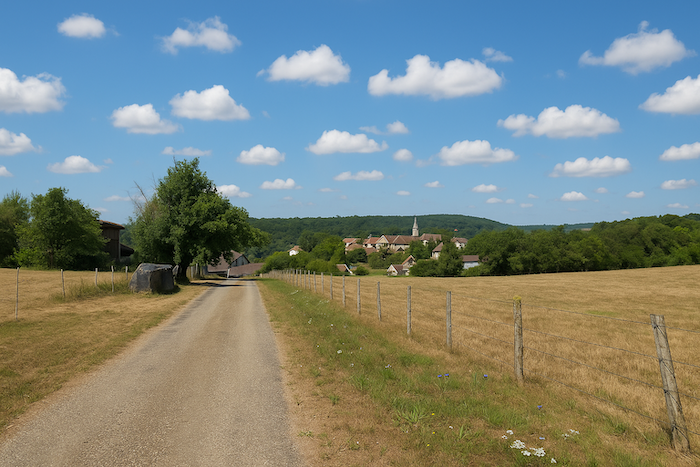
| Your gaze widens, discovering in the distance Vy-les-Filain, a village already sketched on the horizon like a living painting set into the landscape. |
 |
 |
| The path slowly approaches this village where timber work still fills the days and where the ancient breath of trees mingles with the rhythm of people. |
 |
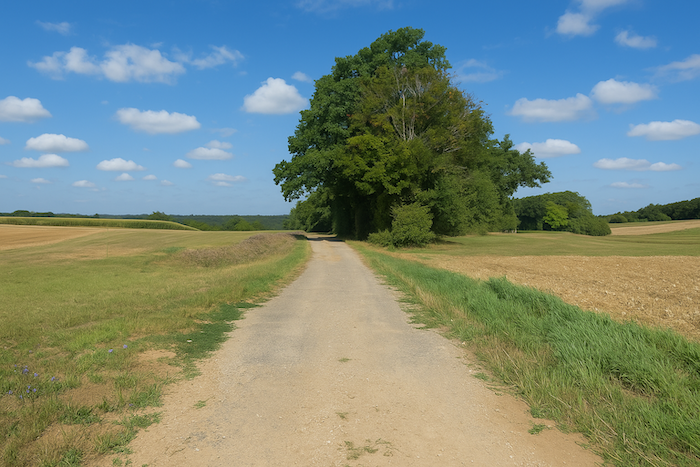 |
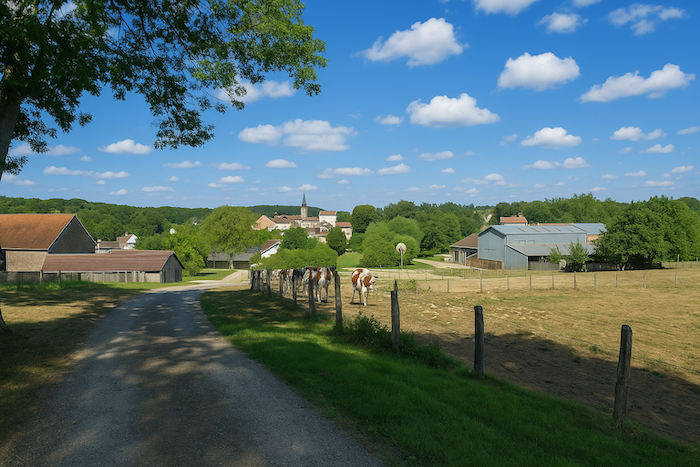
| Agricultural activity remains predominant, and Vy-les-Filain stands proudly on a small hill, like a guardian watching over the fertile hollow spread out at its feet. |
 |
 |
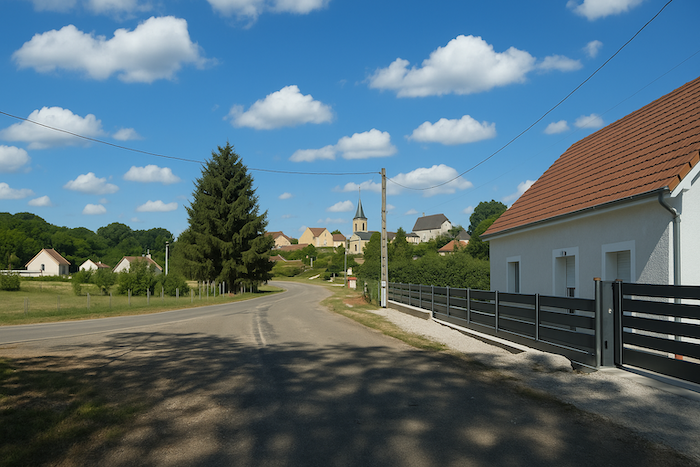
| At the bottom of the village, a road crosses the Laine, a modest river that flows peacefully and silently, a calm vein of water in the broad body of the countryside. |
 |
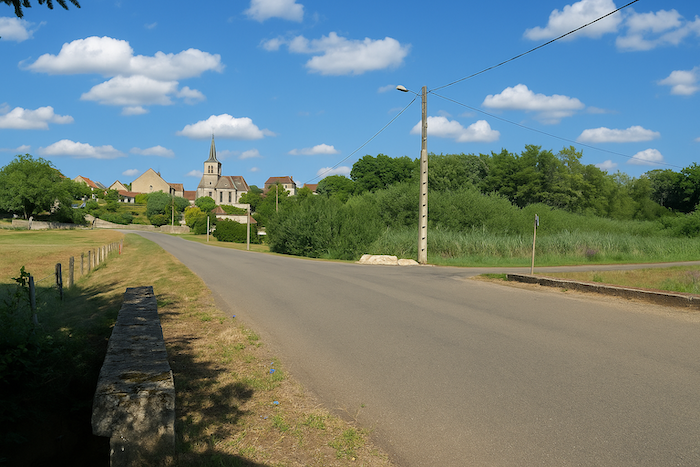 |
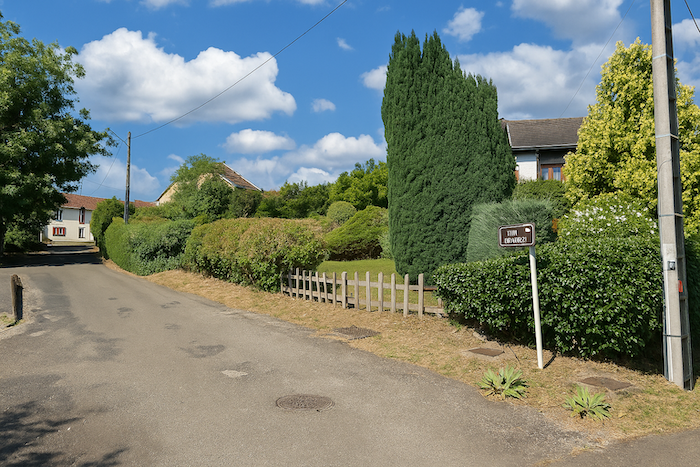
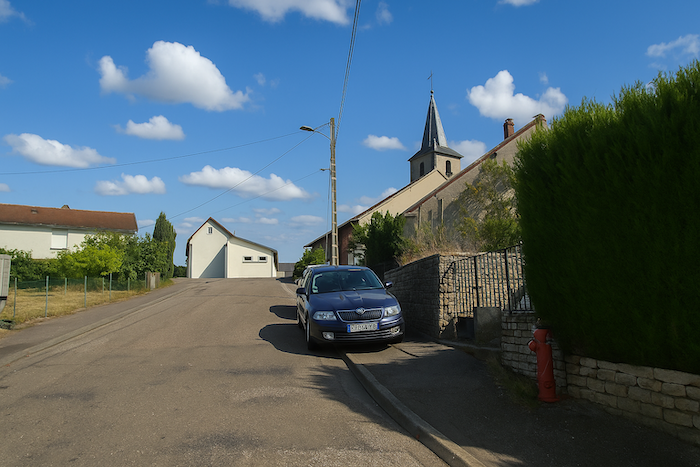
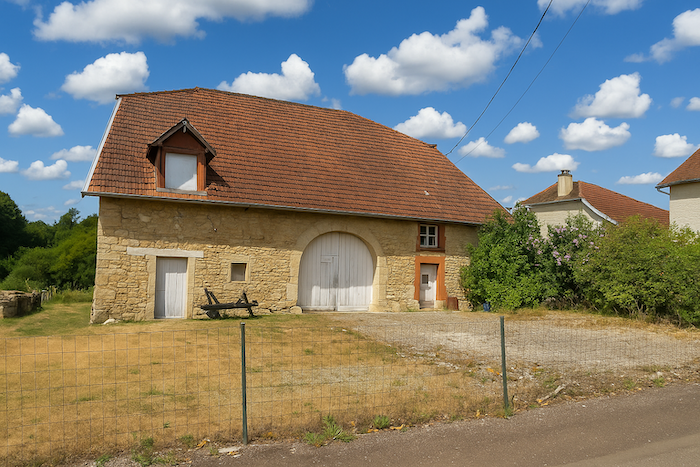
| A modest part of Vy-les-Filain stretches along the river, lying in the plain, while most of the village rises in terraces like an amphitheater of stone and roofs, peacefully overlooking the course of the Laine. Vy was once an annex of the Temple of Laine, mentioned as early as the thirteenth century. It was here that the Templars, those mysterious knights, founded a commandery at the place known as La Ferme, a neighboring hamlet only a few hundred meters from the village. Today the estate remains private property, closed to both time and curious eyes, preserved in an aura of history and secrecy. Rue de Compostelle, named as such, leads toward the upper part of the village. The number of roads that bear this name is astonishing, like discreet sentinels, while the pilgrims who tread these lands are fewer than one might imagine, bearing witness to a deep and ancient connection, almost invisible, with the great route. |
 |
 |
 |
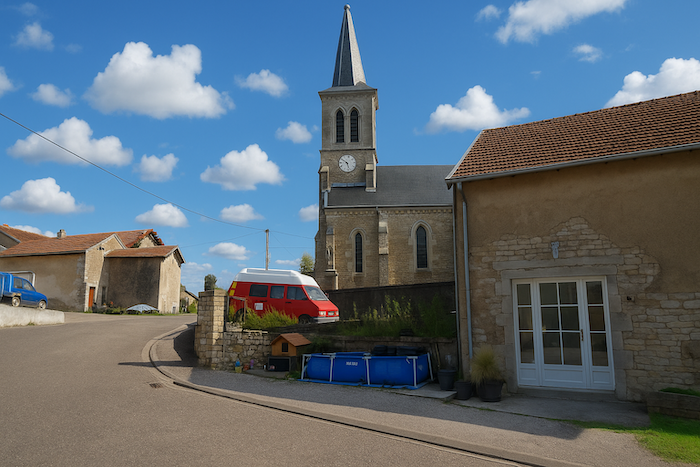 |
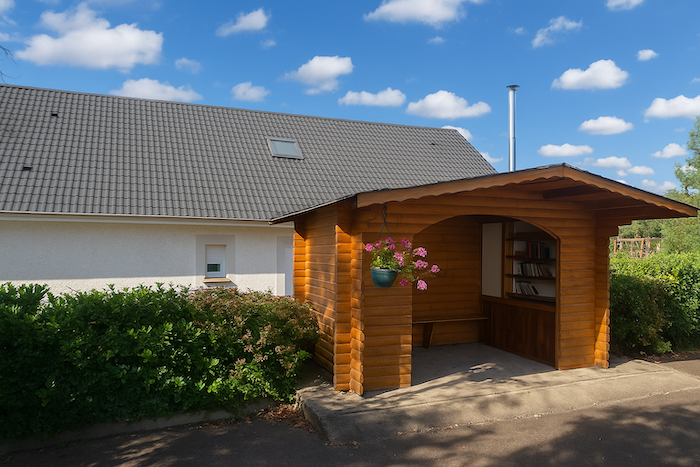
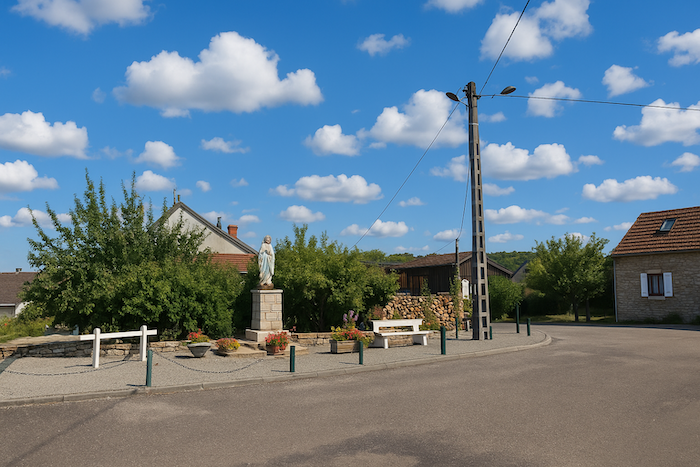
| On the Place de la Convivialité, a free little library seems to offer refuge to the mind, while a statue of the Virgin keeps silent watch, guarding the serenity of the place in front of the church, which also keeps watch like a caring mother at the heart of the village. |
 |
 |
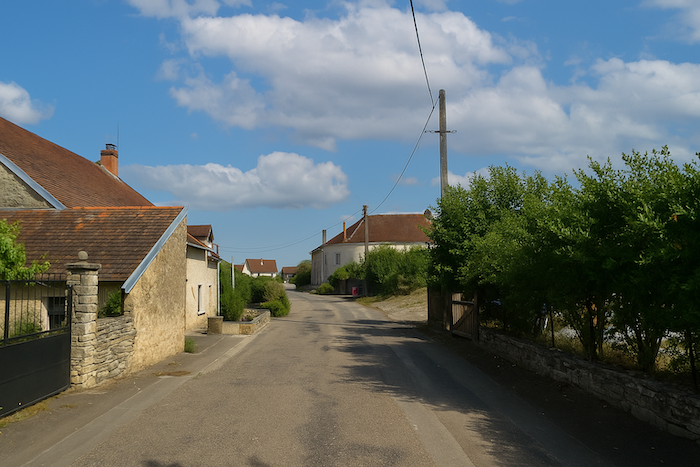
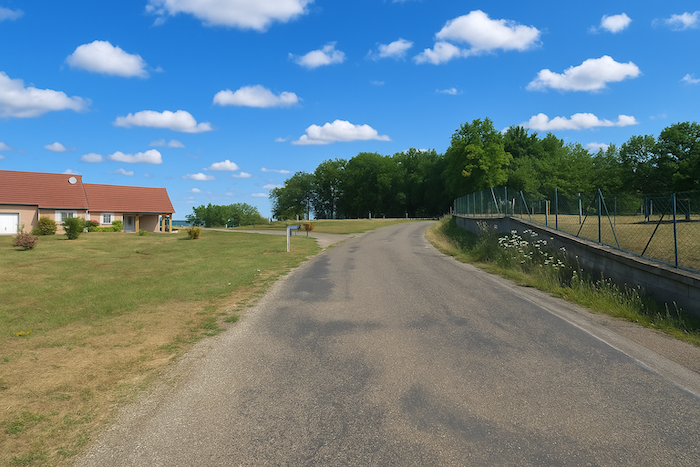
| The road then gradually moves away from Vy-les-Filain, gently leaving behind the life and the stone to venture out into open countryside. |
 |
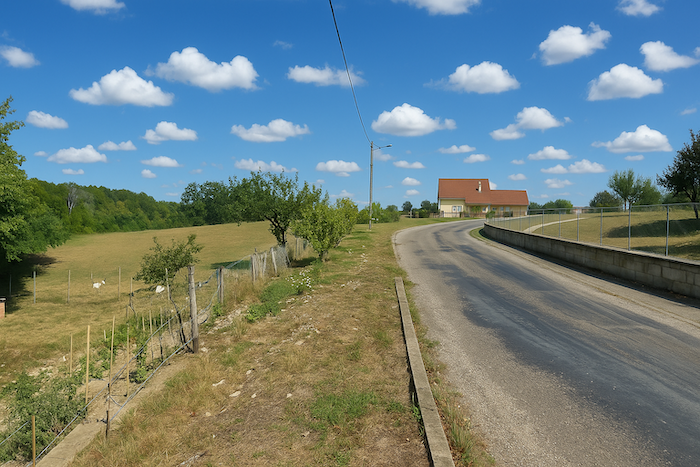 |
| It climbs in a gentle slope, caressing the side of a small hill, as if greeting the heights before continuing on its way. |
 |
 |
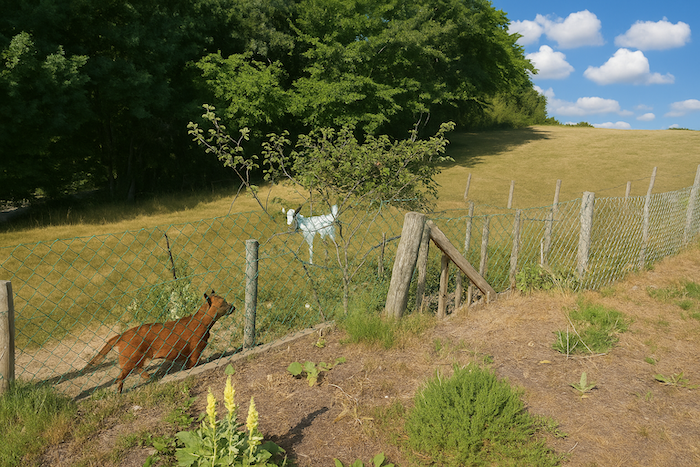
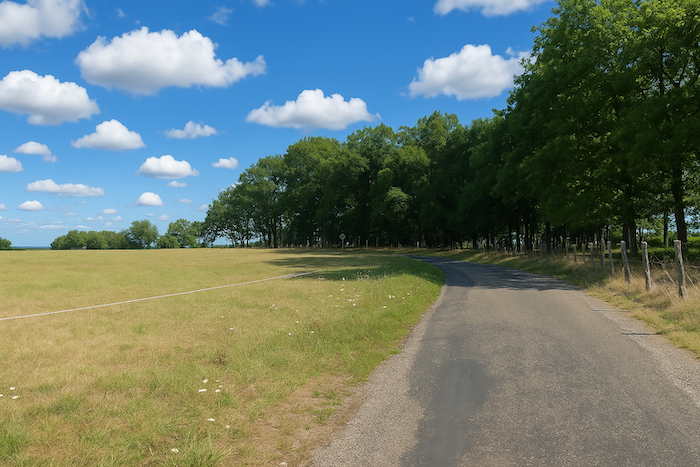
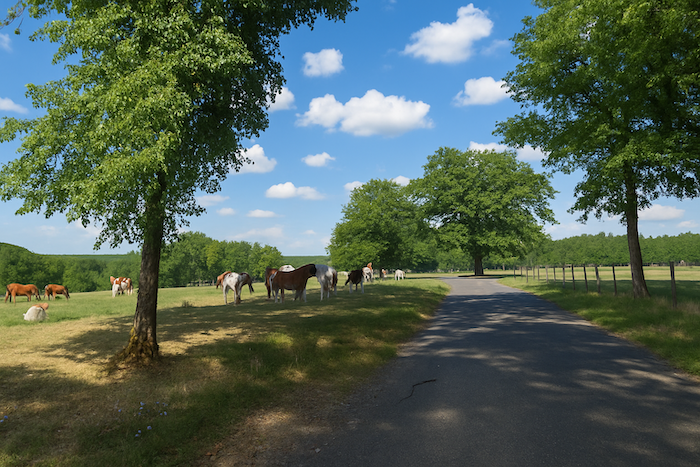
| The road sways slightly along the crest, winding between meadows where cattle graze beneath the protective vault of great centuries-old oaks. |
 |
 |
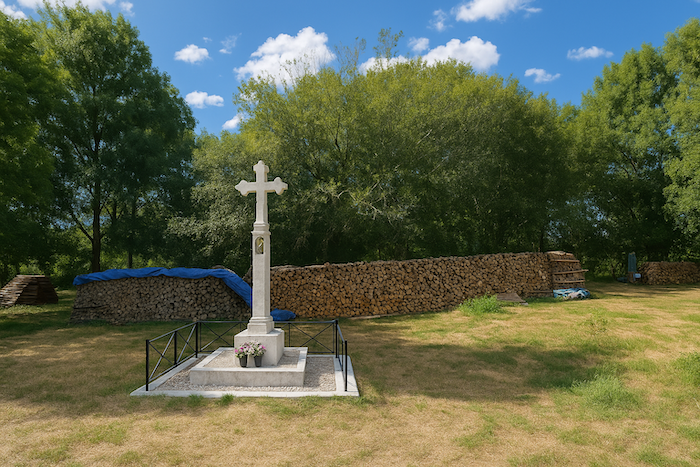
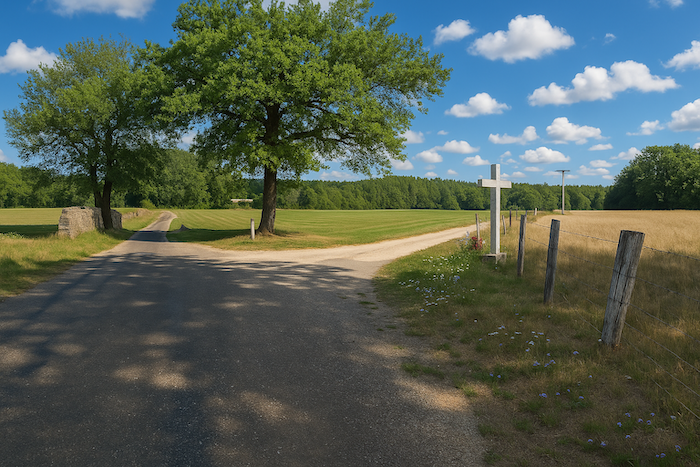
| Then it descends only a little, passing a wayside cross, a sign of deep and ancient faith, set like a marker in this landscape filled with silence. |
 |
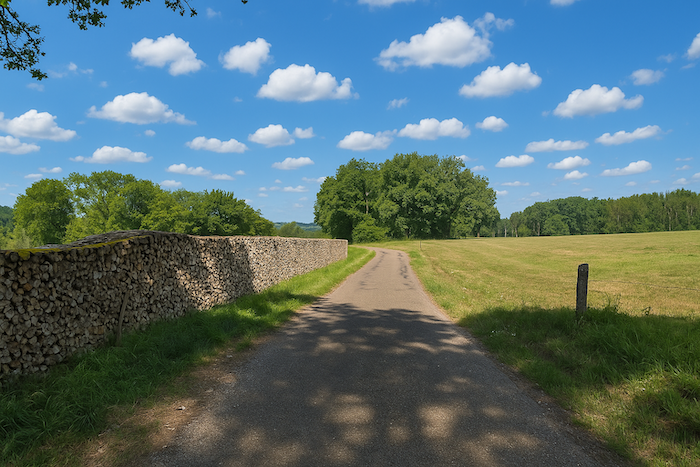 |
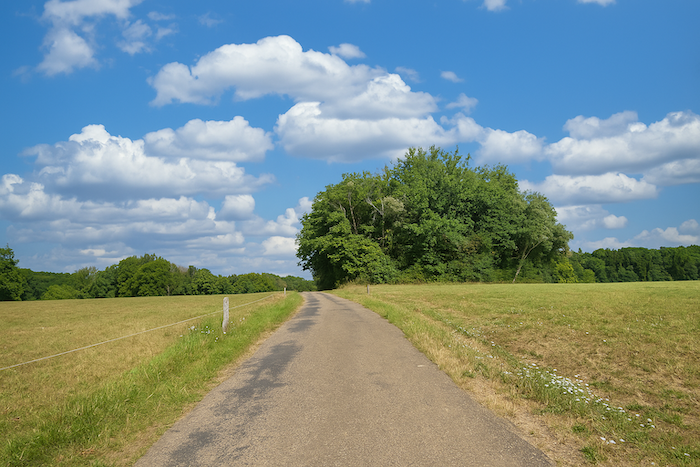
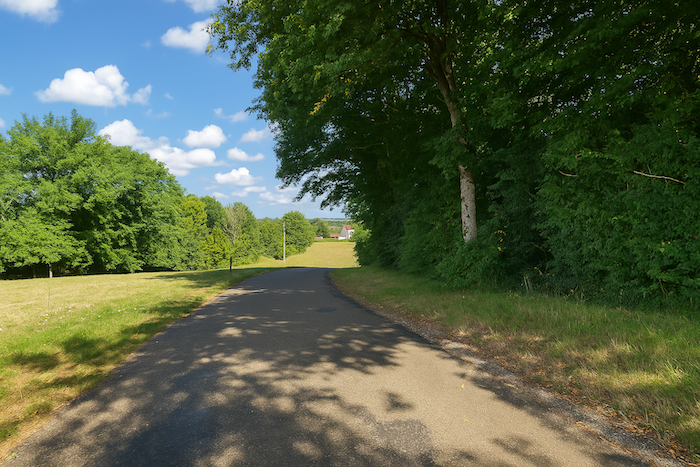
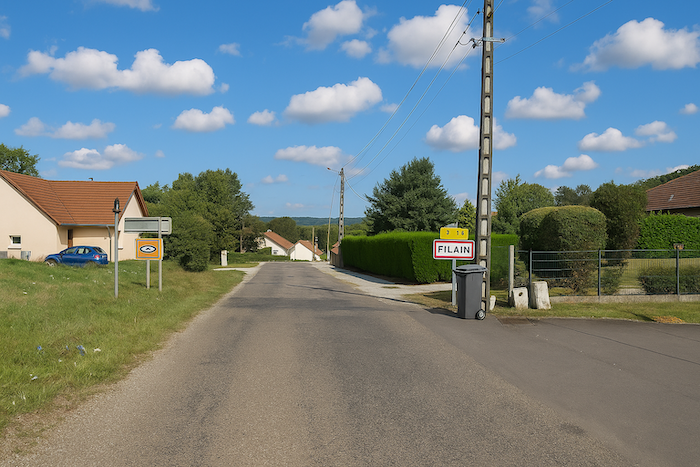
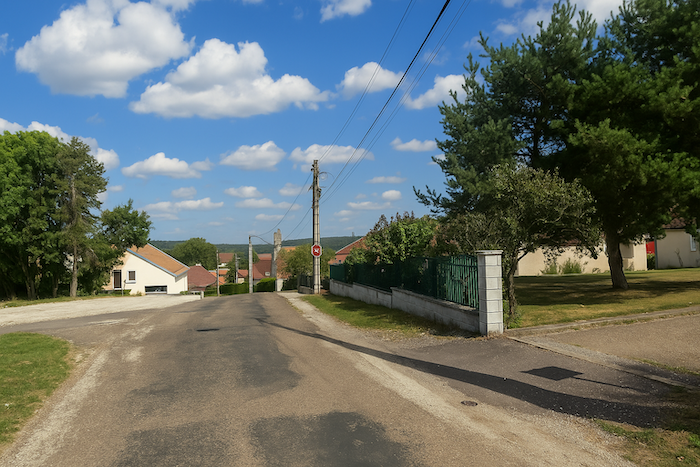
| Very soon, Filain appears ahead of you, simple and welcoming, lying among the fields like a peaceful stopping place. The road then enters the recent housing developments that mark the entrance to the village, gently contrasting with the age of the surroundings. |
 |
 |
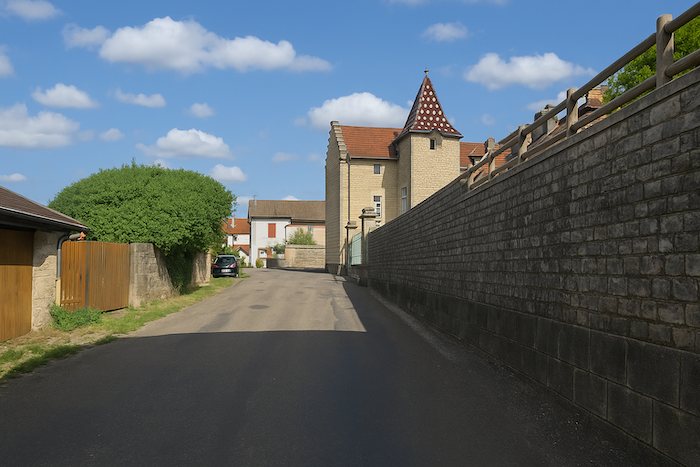
| It descends to the heart of the village, where the château and the church stand, witnesses of a rich past. In the Middle Ages, a family of gentlemen bearing the very name of the village lived here. The château, in Renaissance style, still keeps a few original elements from the fifteenth century. This building, fragile in its beauty, has undergone many alterations over the centuries and continues to change even today. Although listed as a Historic Monument, it remains private property, closed to visitors. |
 |
 |
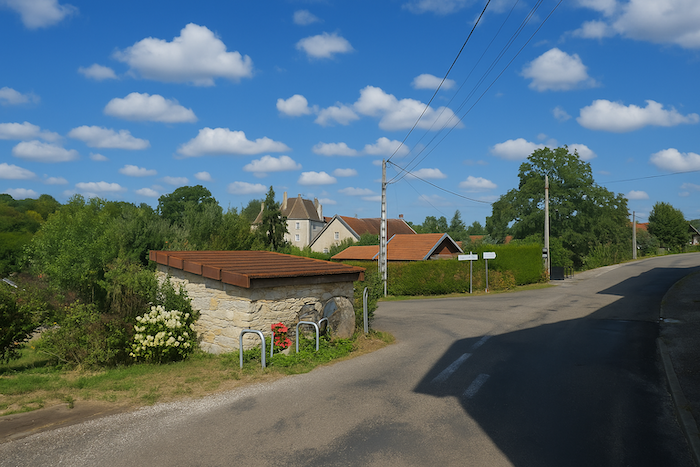
| The route then reaches the center, following the park that surrounds the château, this green heart breathing beneath the shade of the trees. |
 |
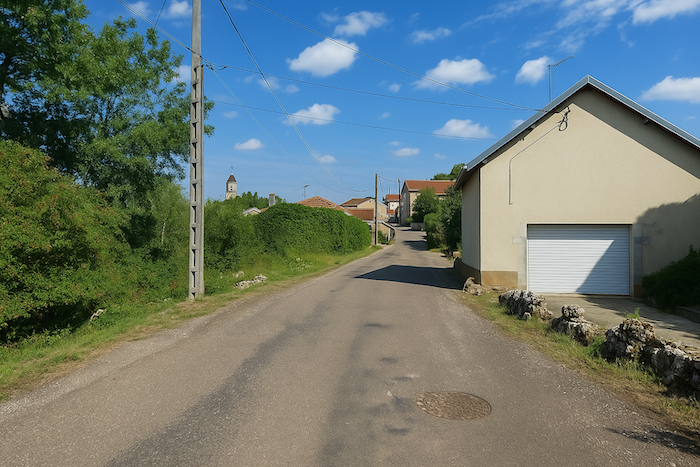 |
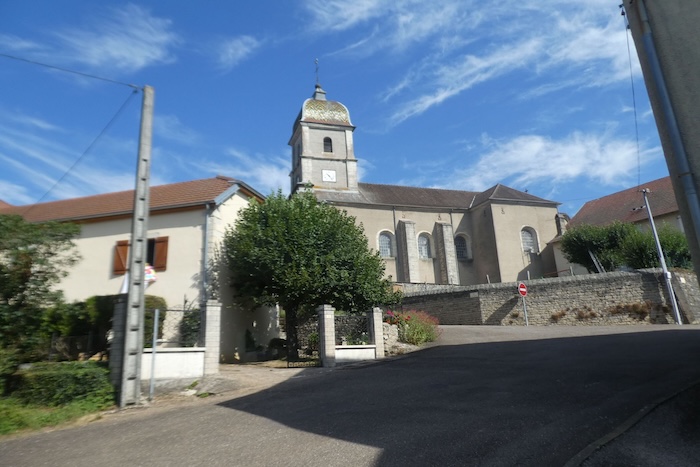
| The church, for its part, bears the scars of the twentieth century. Totally destroyed during the First World War and then damaged again by bombing in the Second World War, it is today a relatively recent structure, a symbol of rebirth and remembrance. |
 |
 |
Official accommodations in Burgundy/Franche-Comté
- La Caroline, 12 Rue Montgrenu, Filain; 03 84 78 39 13/06 70 92 37 8589 90 37; Guestroom
Jacquaire accommodations (see introduction)
- Moimay (1)
- Marast (1)
- Vallerois-le-Bois (1)
- Dampierre-sur-Linotte (1)
- Vy-lès-Filain (1)
- Filain (1)
Airbnb
- Moimay (1)
- Vallerois-le-Bois (2)
- Baslières (1)
- Dampierre-sur-Linotte (1)
- Filain (2)
Each year, the route changes. Some accommodations disappear, others appear. It is therefore impossible to draw up a definitive list. The following includes only places to stay that are located on the route or within one kilometer of it. For more detailed information, the guide Chemins de Compostelle en Rhône-Alpes, published by the Association des Amis de Compostelle, remains the main reference. It also provides useful addresses for bars, restaurants, and bakeries along the route. On this stage, there is not much official accommodation available at the end of the day. It has to be said that this region is not a tourist area. It offers other kinds of riches, but not an abundance of infrastructure. Today, Airbnb has become a new tourist reference that we cannot ignore. It has become the most important source of accommodation in all regions, even in those that are not particularly touristy. As you know, the exact addresses are not directly available. It is always strongly recommended to book in advance. Finding a bed at the last minute is sometimes a stroke of luck, but it is better not to rely on it every day. When making reservations, ask whether evening meals or breakfast are available..
Feel free to leave comments. That is often how one climbs the Google rankings, and how more pilgrims will gain access to the site.
|
 |
Next stage : Stage 7: From Filain to Maizières |
|
 |
Back to menu |