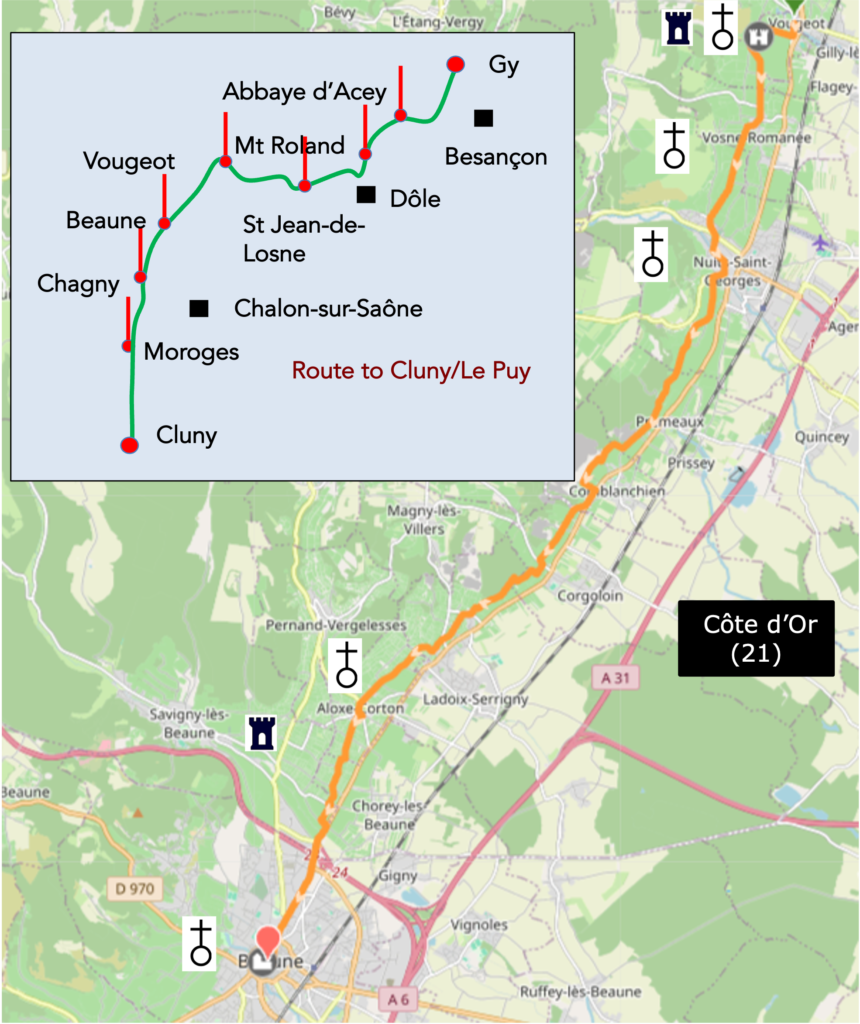
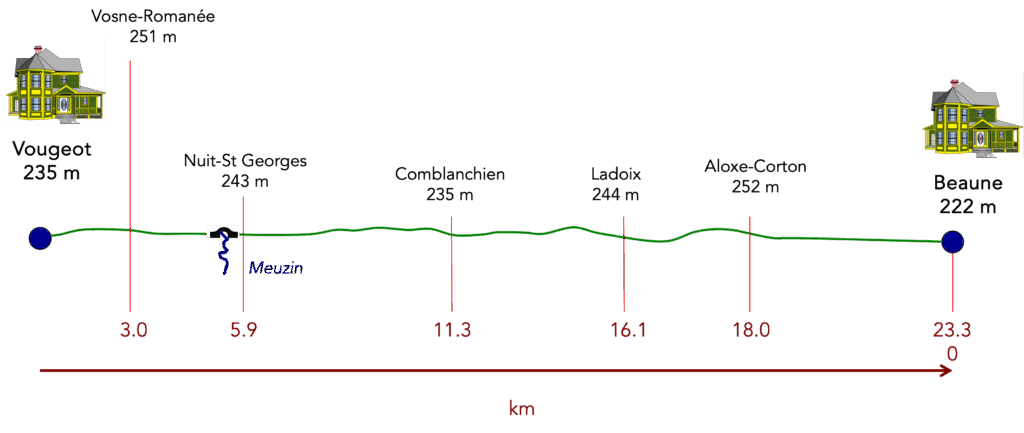
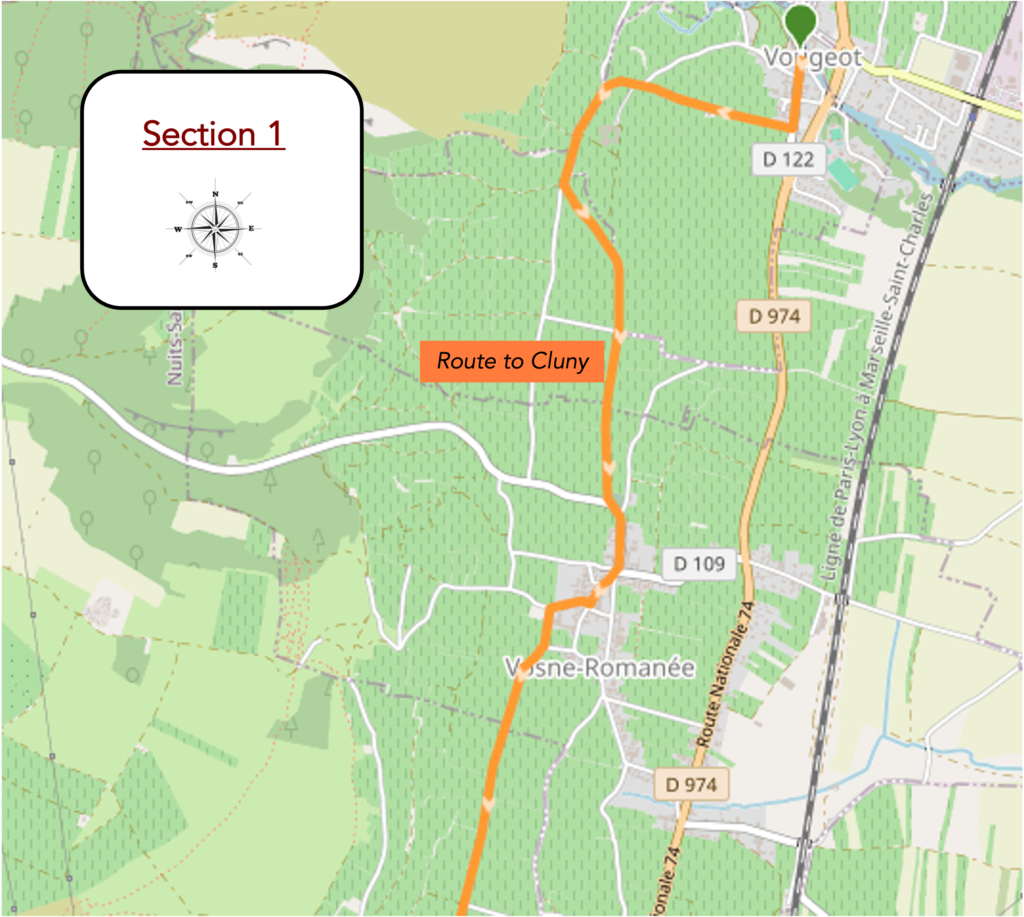
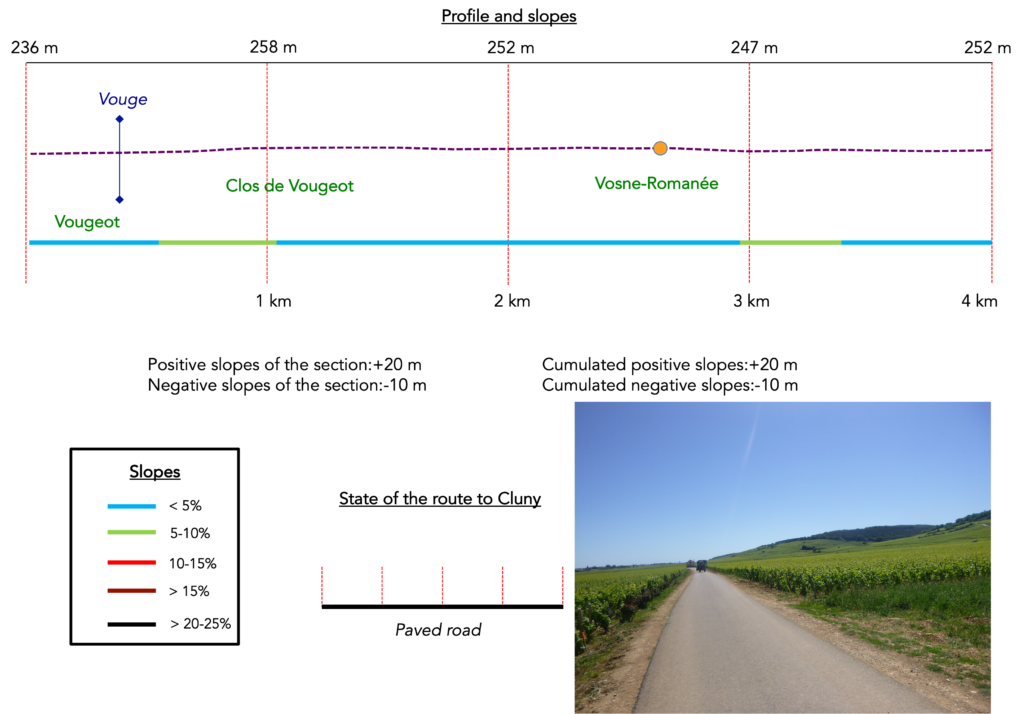
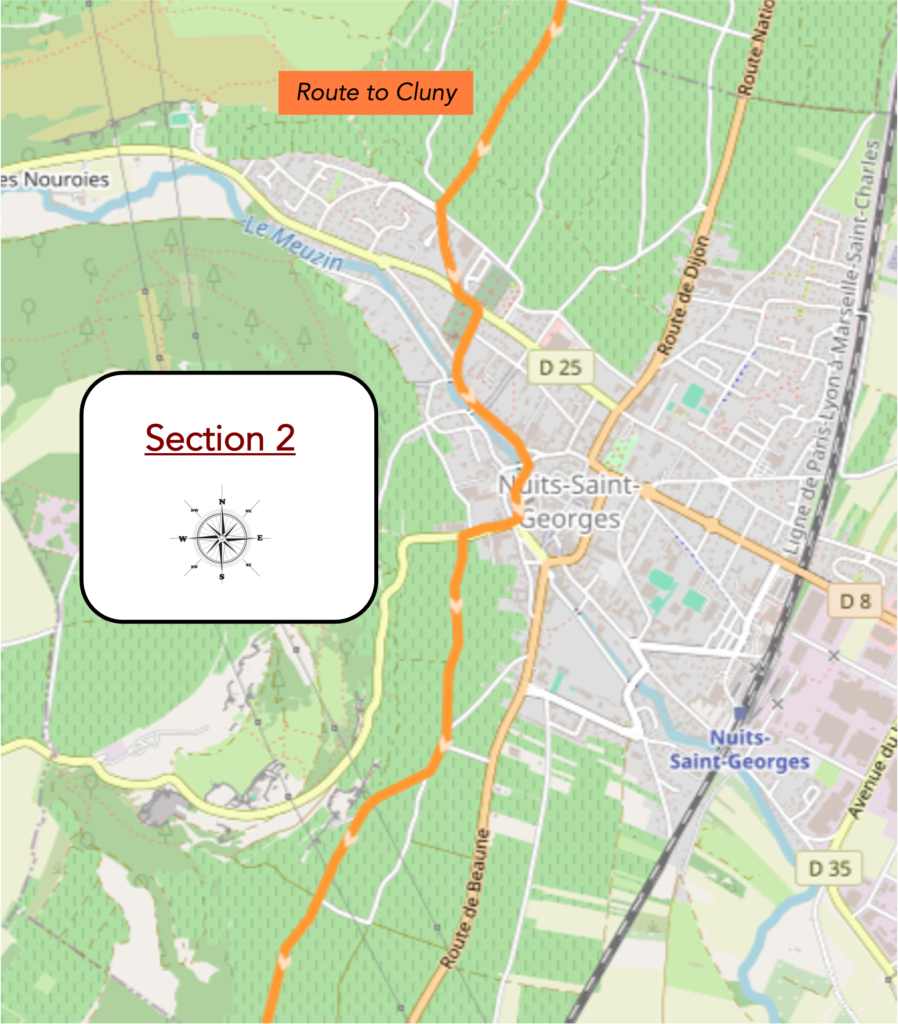
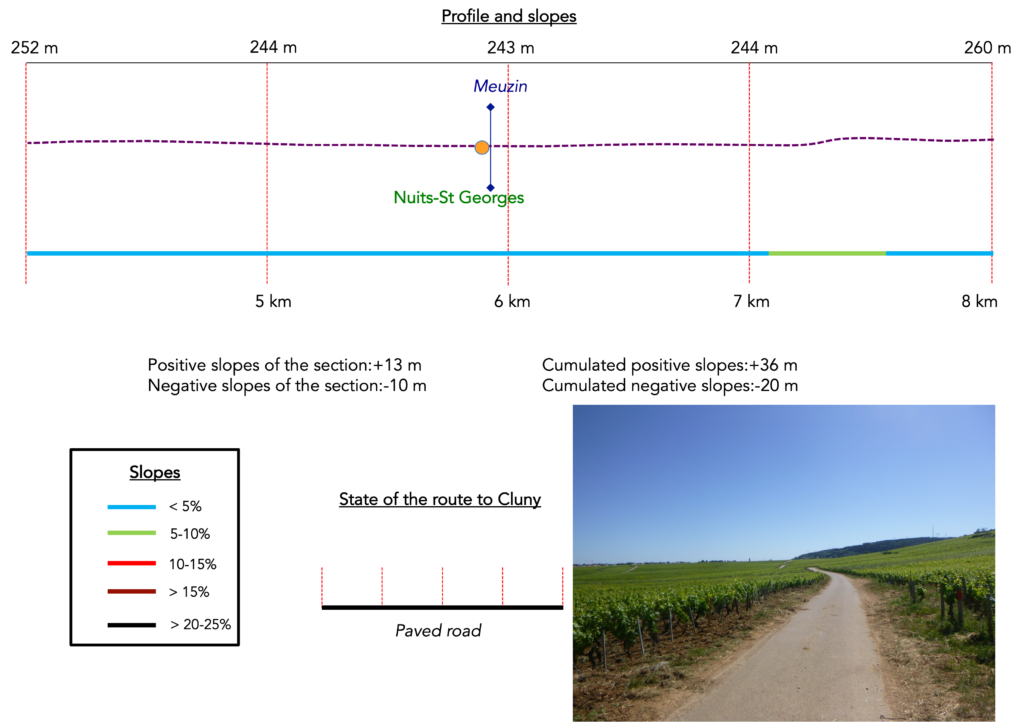
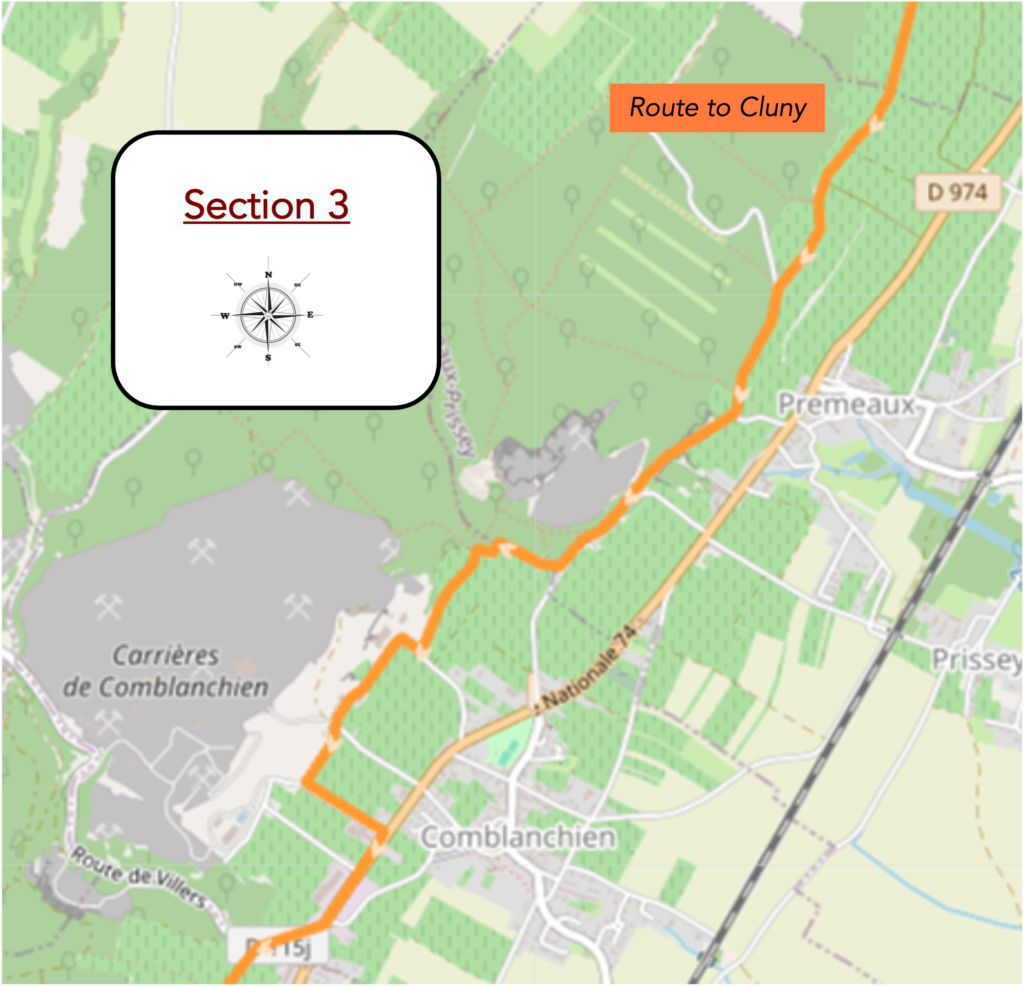
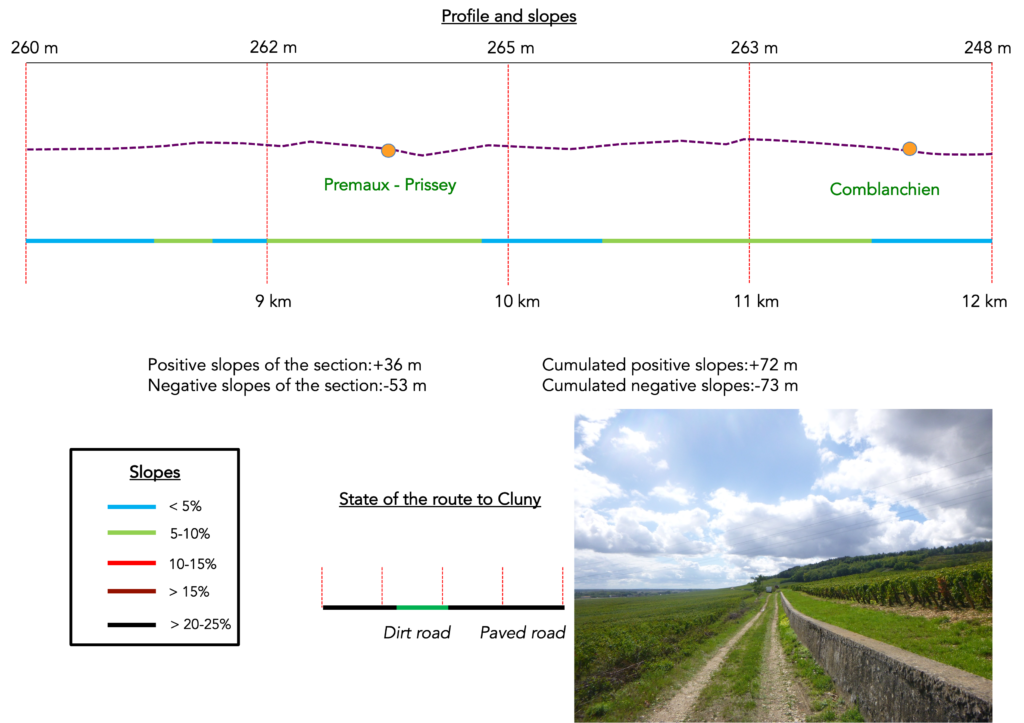
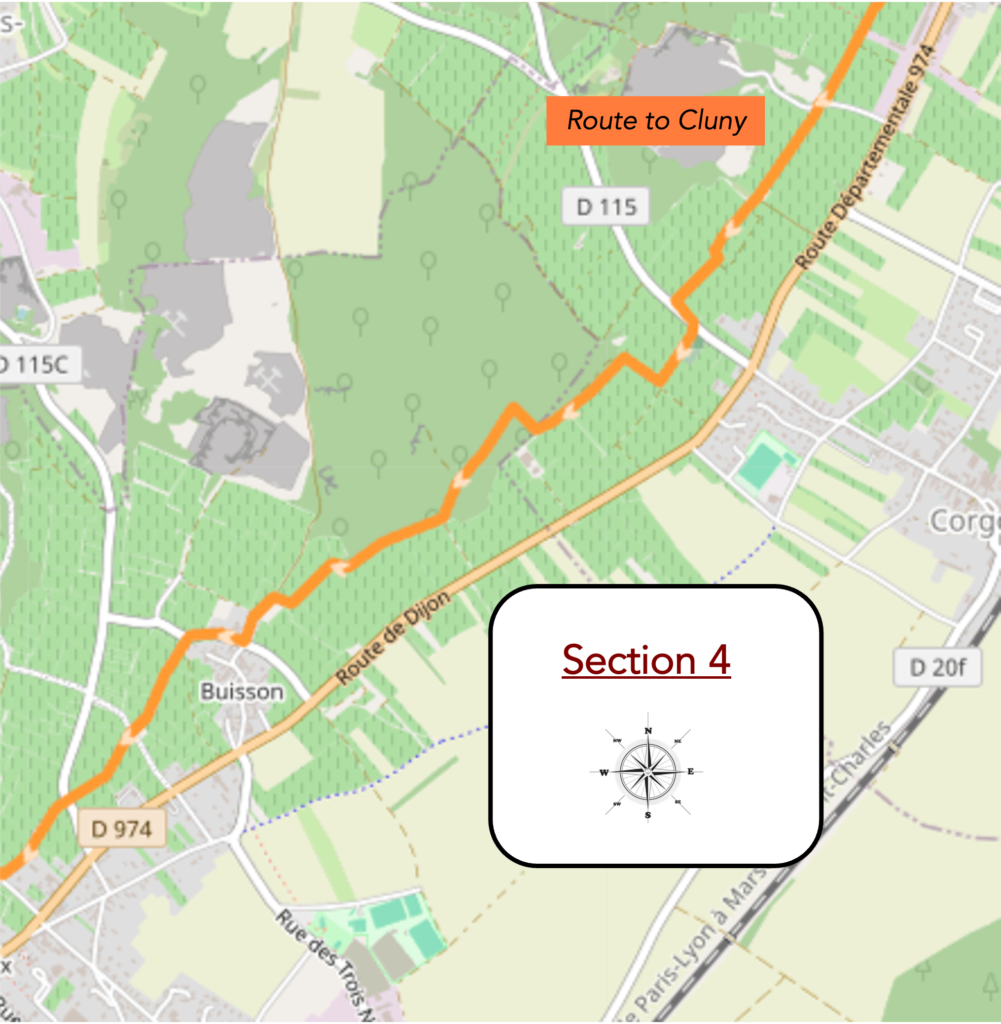
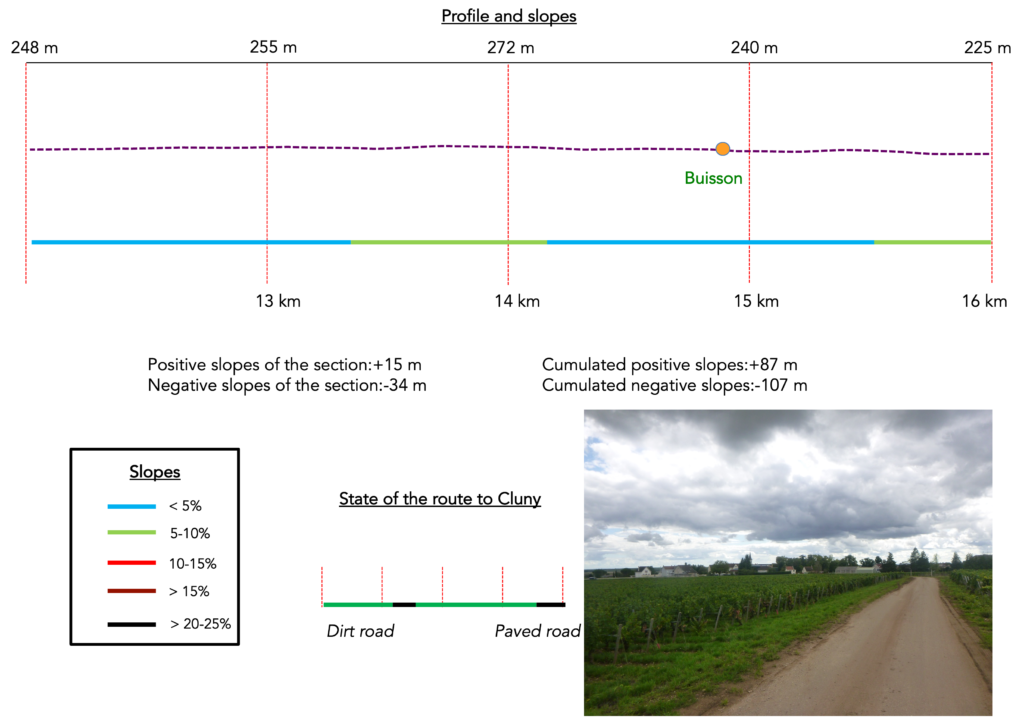
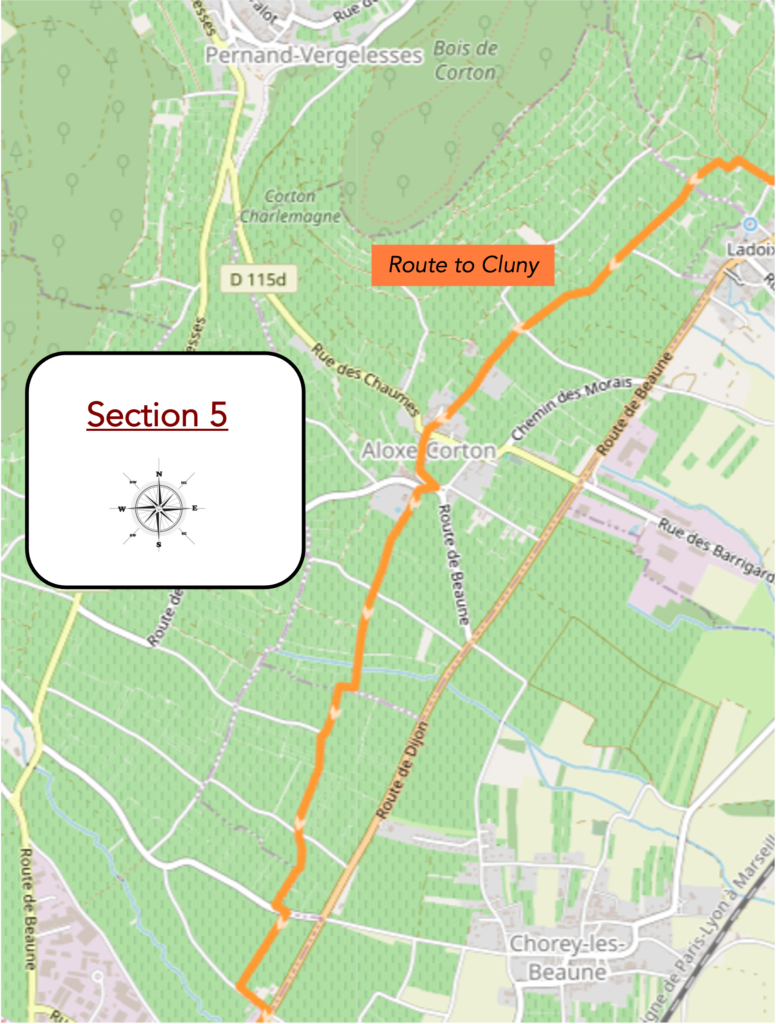
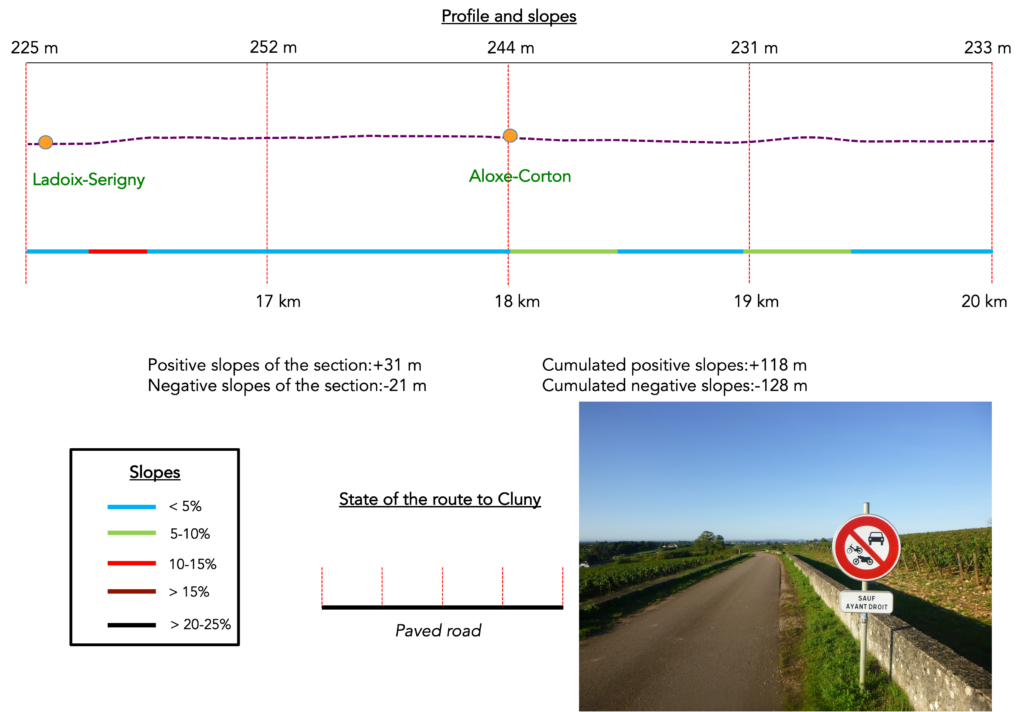
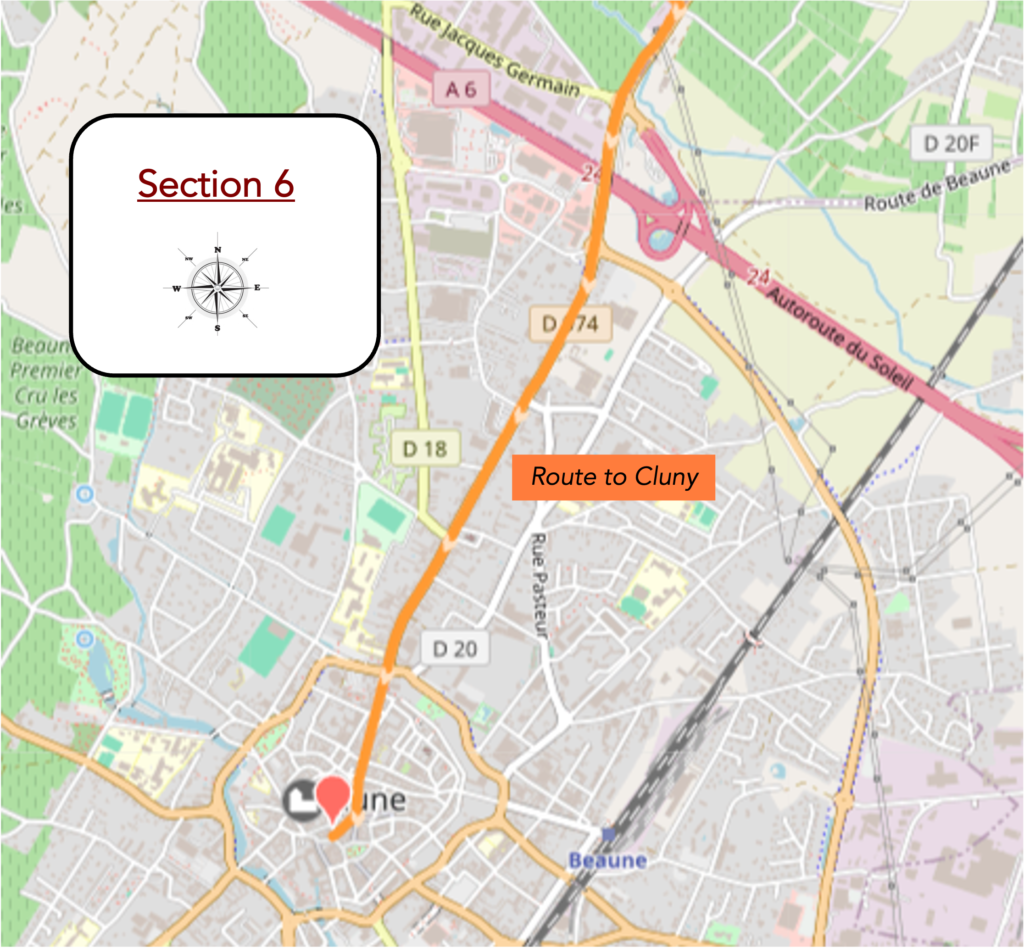
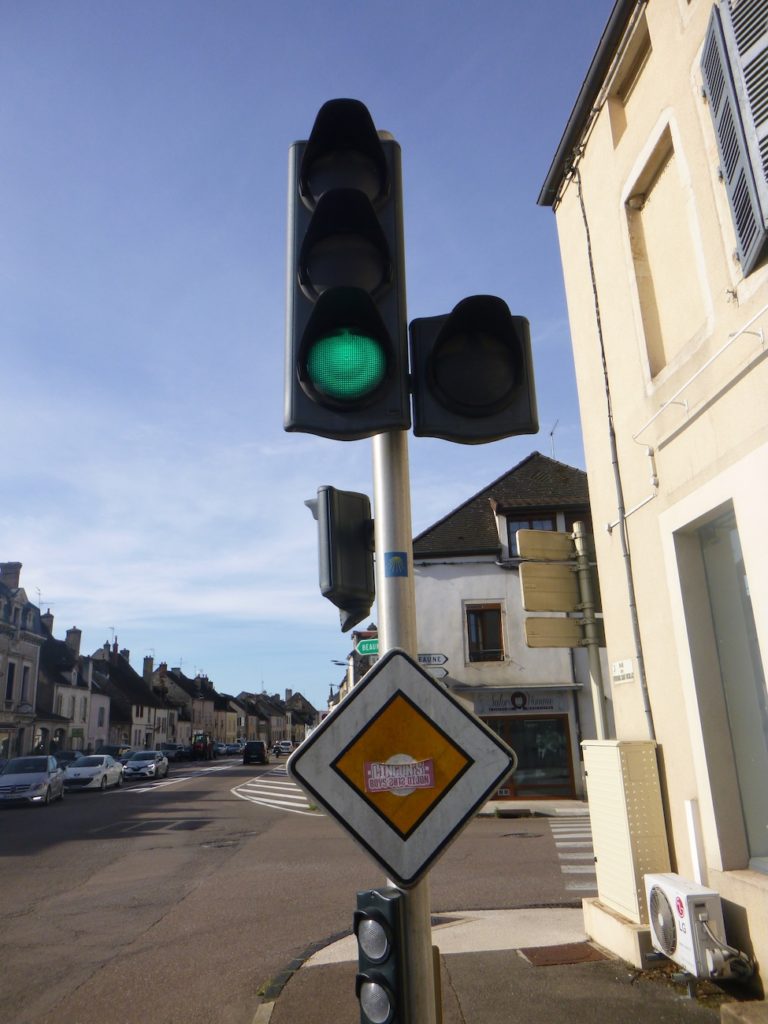
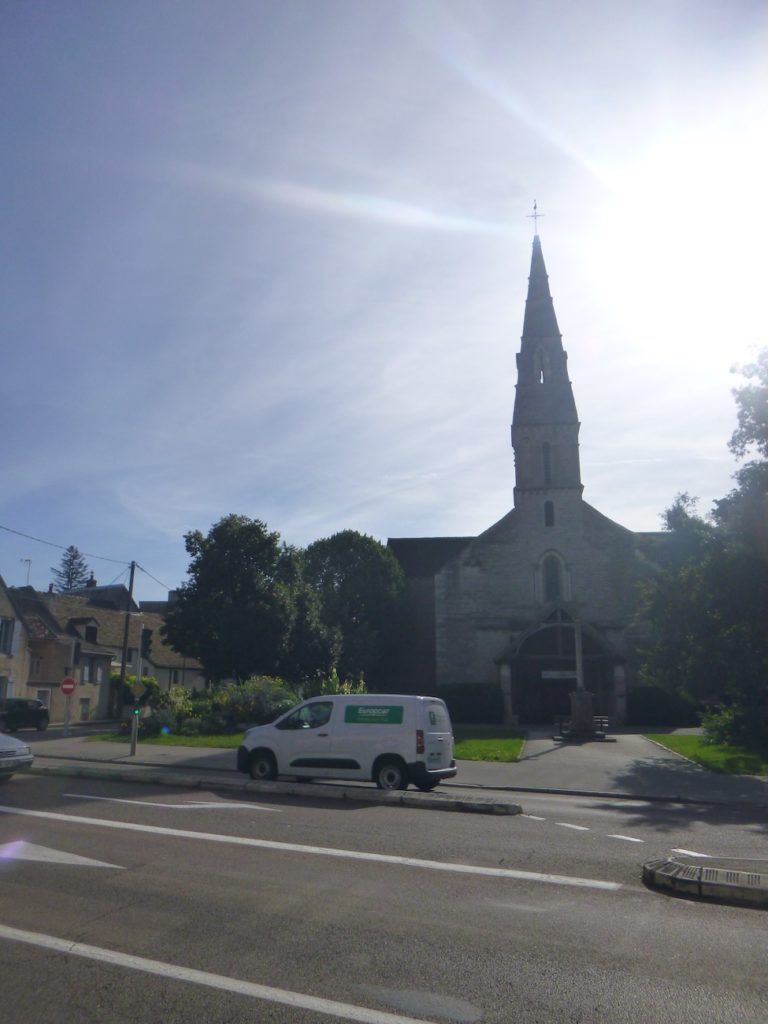
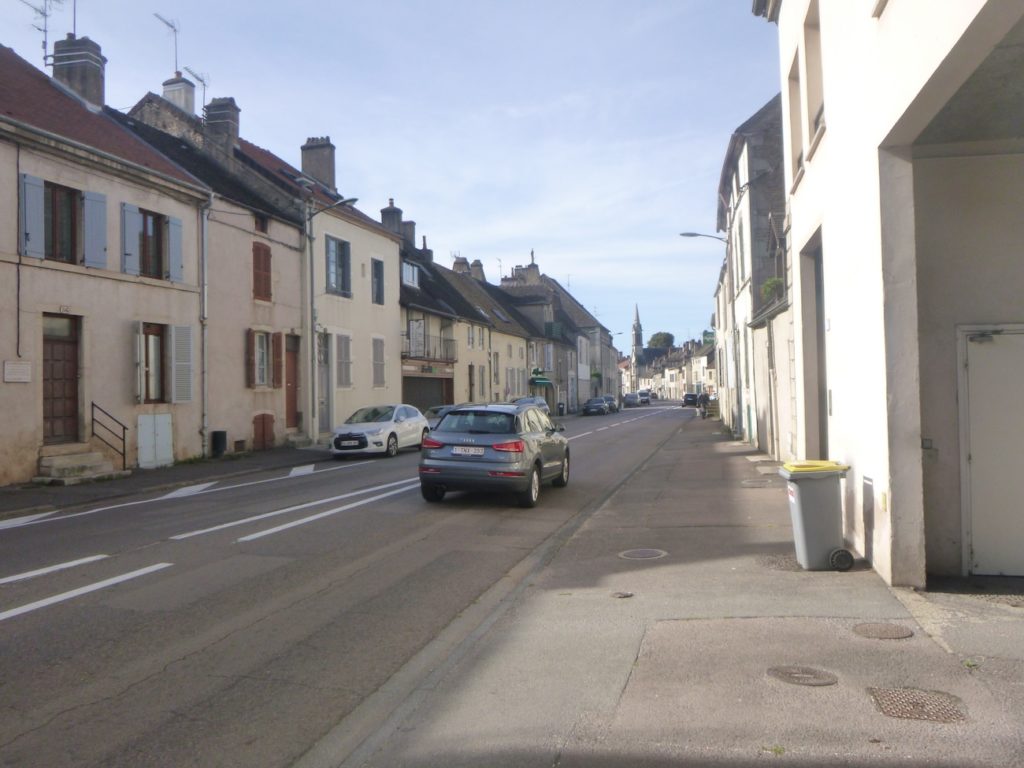
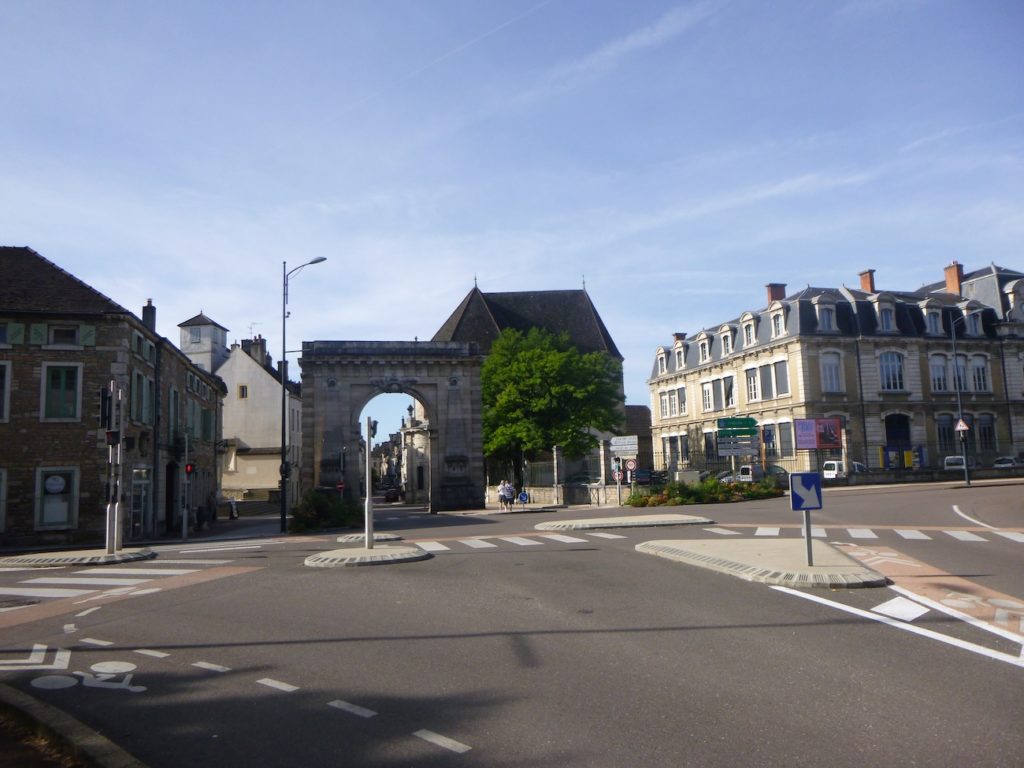
We divided the course into several sections to make it easier to see. For each section, the maps show the course, the slopes found on the course, and the state of the route (paved or dirt roads). The courses were drawn on the « Wikilocs » platform. Today, it is no longer necessary to walk around with detailed maps in your pocket or bag. If you have a mobile phone or tablet, you can easily follow routes live.
This is obviously not the case for all pilgrims, who may not feel comfortable reading GPS tracks and routes on a mobile phone, and there are still many places without an Internet connection. For this reason, you can find on Amazon a book that covers this route.
If you only want to consult lodging of the stage, go directly to the bottom of the page.
The vineyards of Burgundy unfold like a vast fresco, written by the hand of humankind and paced by the rhythm of the seasons. From Dijon to Mâcon, they stretch across a succession of slopes, walled enclosures and parcels, cut and arranged like precious stones set into the earth. Here, every name carries a promise: Gevrey-Chambertin, Vosne-Romanée, Pommard, Meursault, villages that have become universal emblems, where the vine produces not only wine, but memory and identity. Some of these climats are listed as UNESCO World Heritage sites, and together they tell the intimate story of an alliance between nature and human craftsmanship, UNESCO. For the Burgundian vineyard is not a fixed backdrop, but a living landscape shaped by daily care, patient pruning, meticulous harvesting and knowledge passed down through generations.
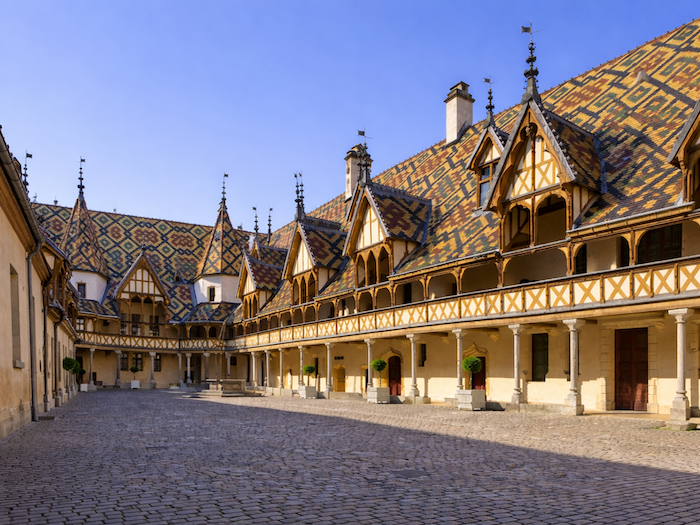
At the heart of this territory stands Beaune, the spiritual and economic capital of Burgundy wine. With its Flemish roofs and its famous Hospices crowned by a polychrome roof, the town is both a place of history and a vibrant city closely tied to its vineyard. Beneath its streets, cellars plunge deep into the ground, forming labyrinths where bottles rest in silence, while above, its streets welcome enthusiasts and connoisseurs from around the world each year. Beaune is a crossroads, once an ancient market where merchants from across Europe gathered, and still today a lively place where tradition and modernity meet. Here, wine is not spoken of merely as a product, but as a culture, almost as a language, where each cru becomes a word, each vintage a sentence, and each glass a story.
How do pilgrims plan their route? Some imagine that it is enough to follow the signposting, yet you will quickly discover, sometimes to your detriment, that the signposting is often inadequate. Others rely on guides found online, which are also frequently too basic. Some prefer to use GPS, provided they have downloaded the Compostela maps of the region onto their phone. With this method, if you are proficient in using GPS, you will not lose your way, even if the proposed route does not always exactly match the one indicated by the scallop shells. Still, you will reach the end of the stage safely. In this regard, the site considered official is the European Route of the Paths of Compostela, https://camino-europe.eu/. For the day’s stage, the map is accurate. With a GPS, it is even safer to use the Wikiloc maps that we make available, which describe the current signposted route. However, not all pilgrims are experts in this kind of walking, which for some distorts the spirit of the path. In that case, you can simply follow us and read along. Every junction on the route that is difficult to interpret has been indicated, so that you do not lose your way.
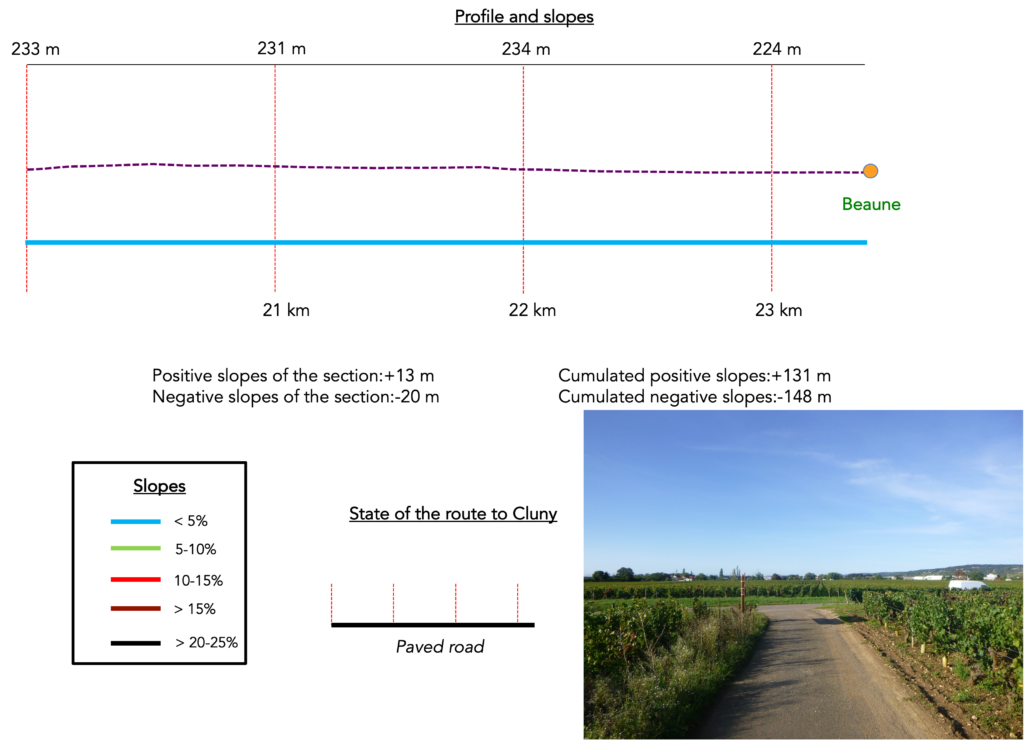
Difficulty level:Today’s route presents no real difficulty, with only gentle slopes (+131 meters/-148 meters).
State of the route:Today, roads clearly take precedence over paths, although they are small roads with very little traffic:
Paved oads: 19.2 km
Dirt roads: 4.1 km
Sometimes, for reasons of logistics or housing possibilities, these stages mix routes operated on different days, having passed several times on these routes. From then on, the skies, the rain, or the seasons can vary. But, generally this is not the case, and in fact this does not change the description of the course.
It is very difficult to specify with certainty the incline of the slopes, whatever the system you use.
For those seeking « true elevations » and enthusiasts of genuine altimetric challenges, carefully review the information on mileage at the beginning of the guide.
SSection 1: Through the magnificent vineyards of Vougeot and Vosne-Romanée
Overview of the route’s challenges: a route with no difficulty at all.
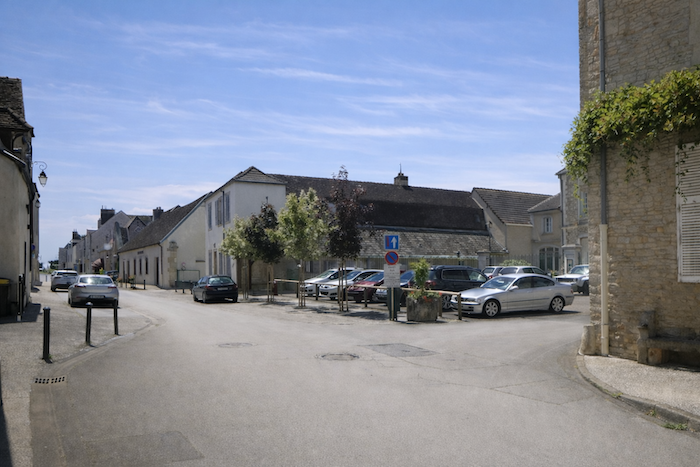
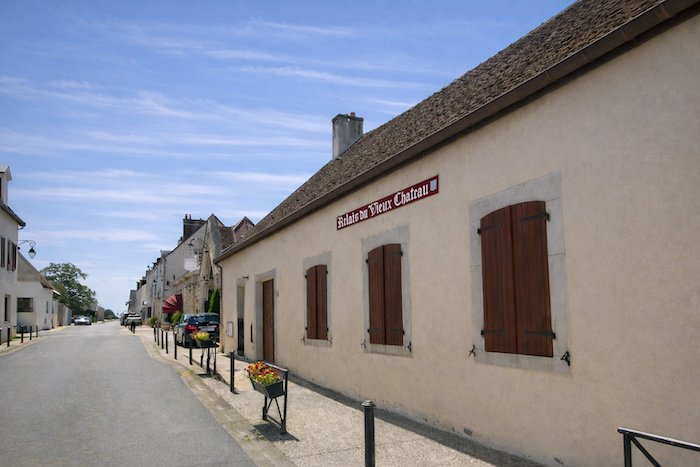
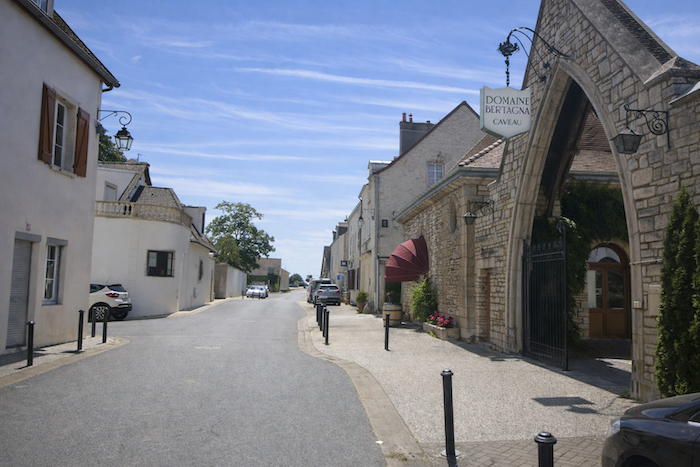
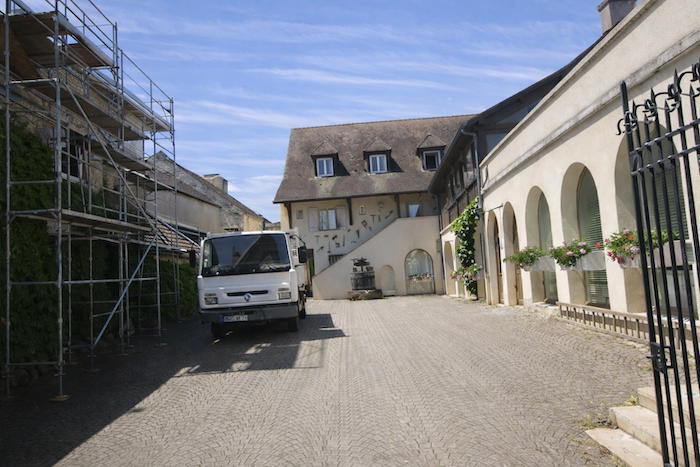
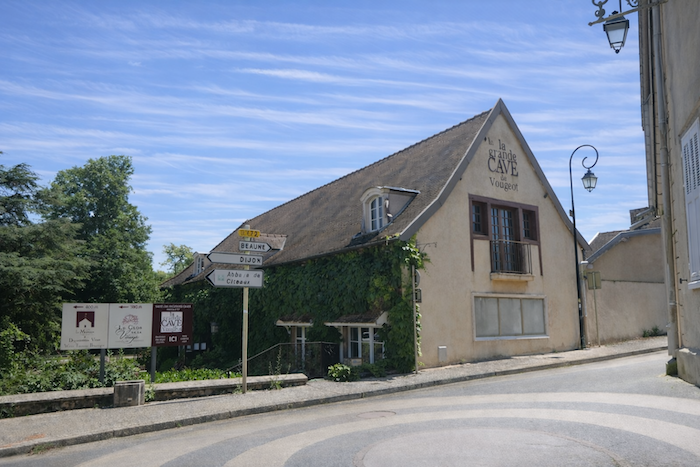
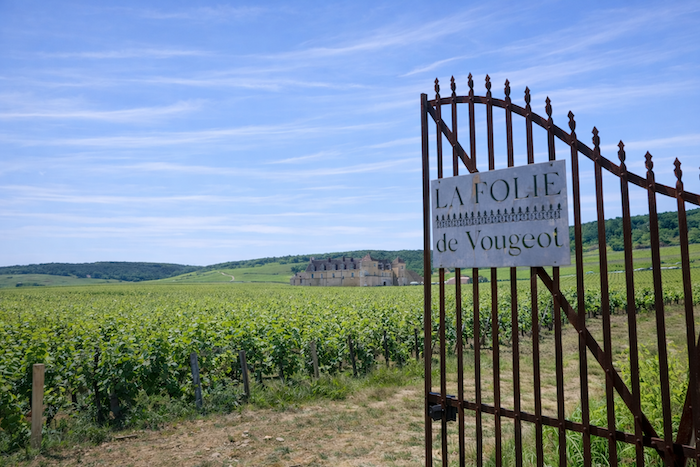
From the vibrant heart of Vougeot, your next stop can only be the Château du Clos de Vougeot, a sanctuary of stone and vine nestled just a short walk away. Two routes present themselves, like parallel lines of destiny winding toward history. One follows Rue de Vergy, rising directly opposite the Hôtel du Clos de Vougeot, while the other takes Rue du Vieux Château, a name that alone seems to whisper centuries of memory.
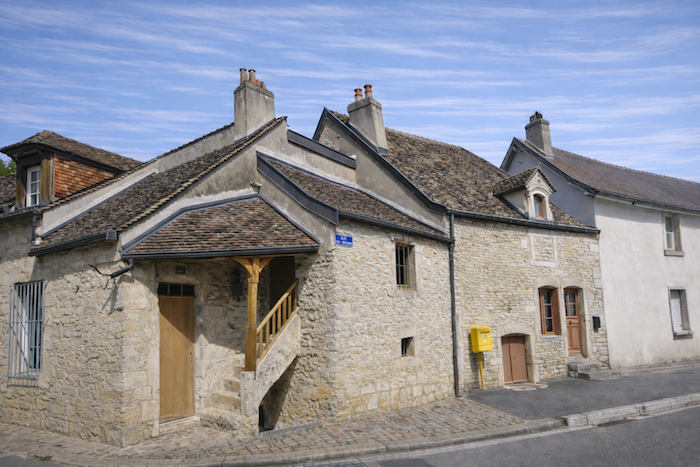
Along these quiet streets stand modest winegrowers’ houses, built of stone or coated in pale lime plaster, their surprisingly vast cellars revealing the wealth of their owners. These underground chambers are veritable vaults, where some of the most precious wines on the planet lie sleeping in silence.
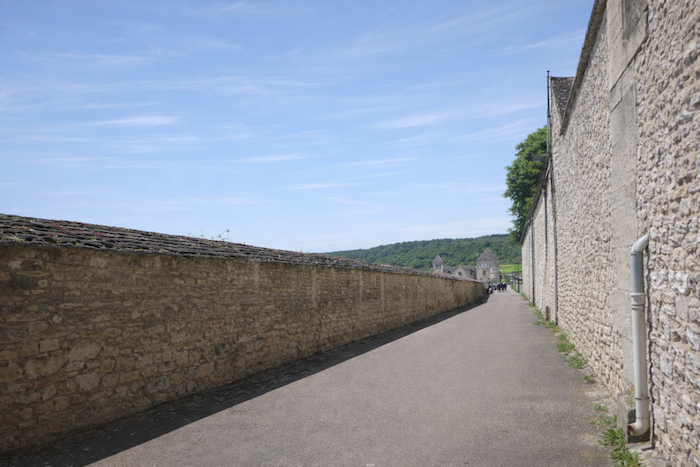
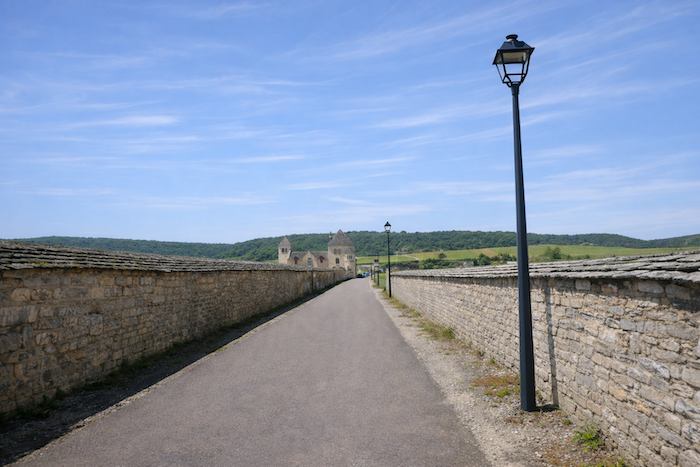
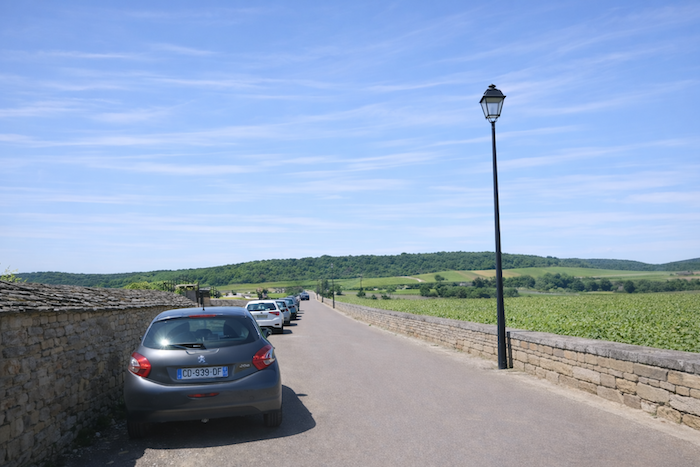
If your steps lead you toward Rue du Vieux Château, Rue de la Montagne appears discreetly at a corner. It slopes up gently, as if testing the walker’s breath, running alongside a high wall behind which the vines of the Clos hide jealously. These upright stones form a boundary, a mineral skin protecting a vegetal treasure.
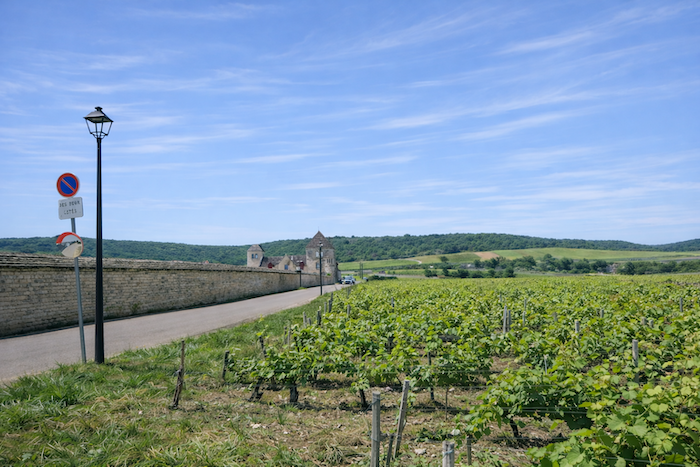
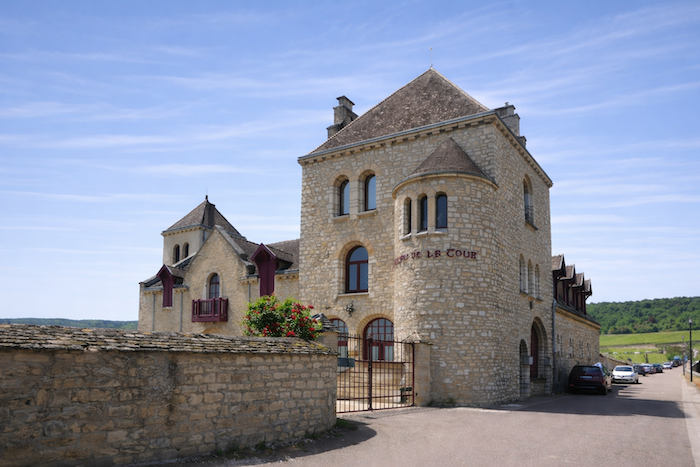
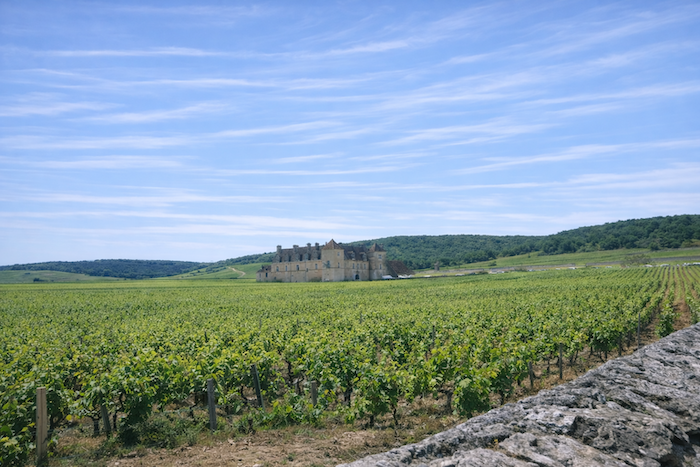
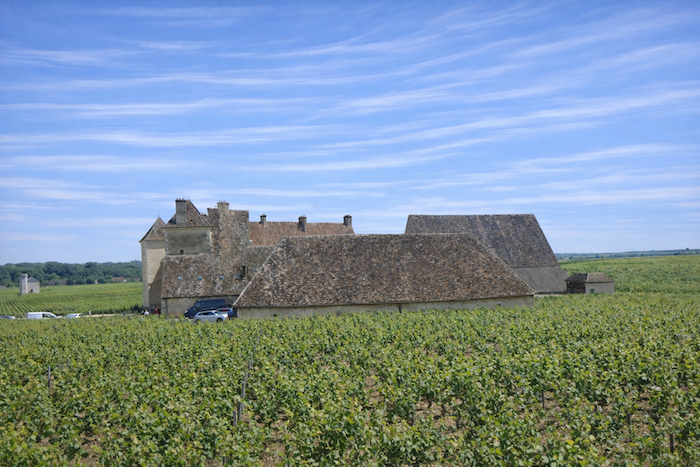
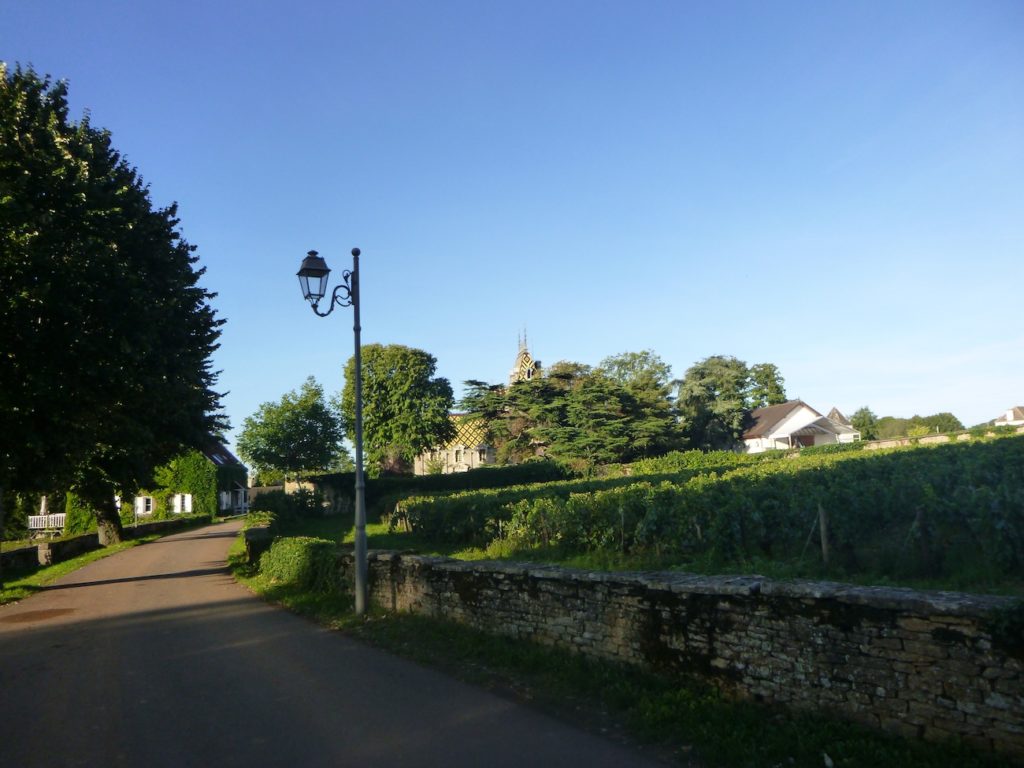
A little further on, the eye is drawn to the silhouette of the Château de la Tour. This stately stone residence seems to float in a green, undulating sea of vines. It stands there, immobile, like a granite vessel stranded among the rows of vines.
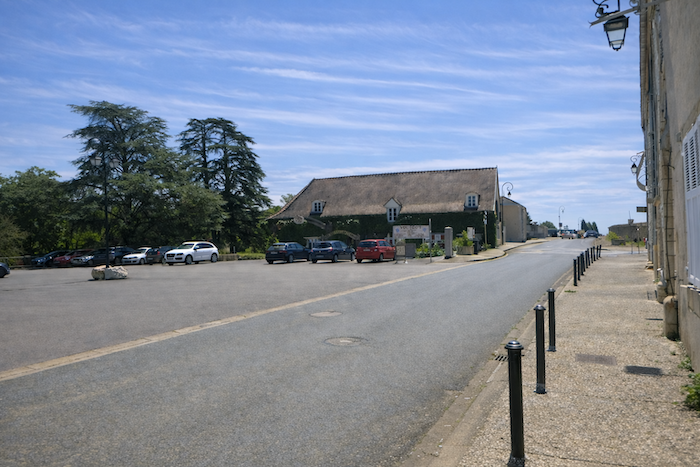
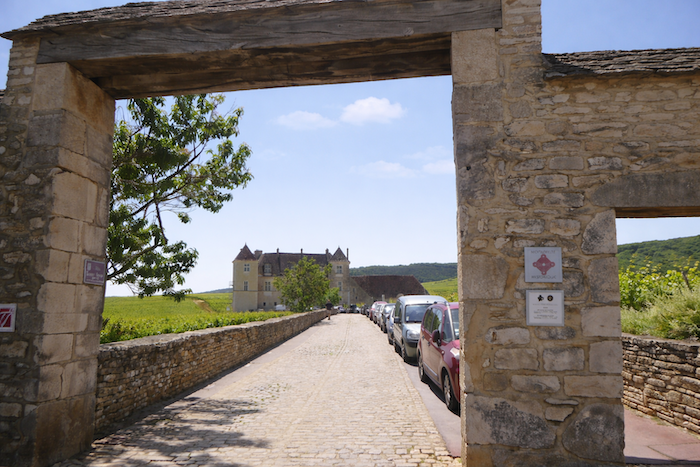
Motorists begin to slow down, searching for a place to stop, as the discreet parking area of the Clos de Vougeot signals the nearness of an unavoidable pause.
And suddenly, just a few steps away, the château itself appears, a place you have most likely visited the day before. We will therefore not linger here. The route continues instead along the Route des Grands Crus, above the château.
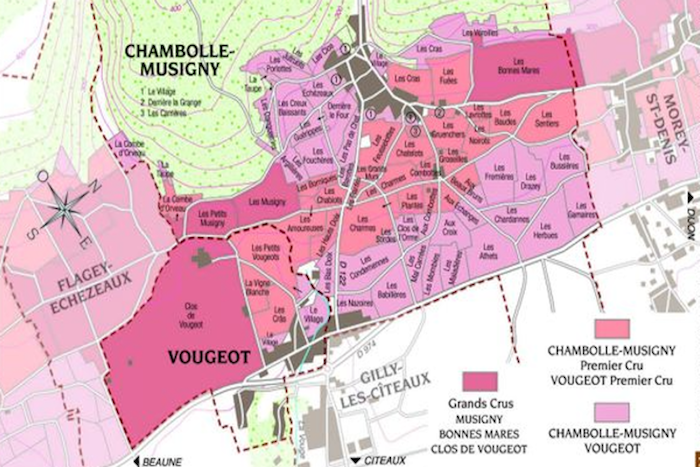
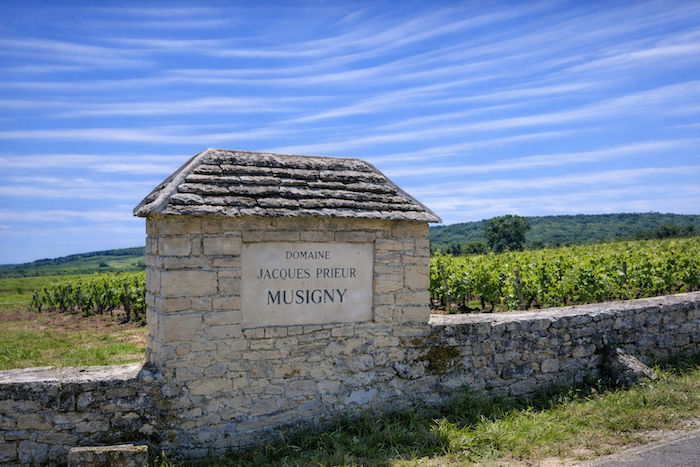
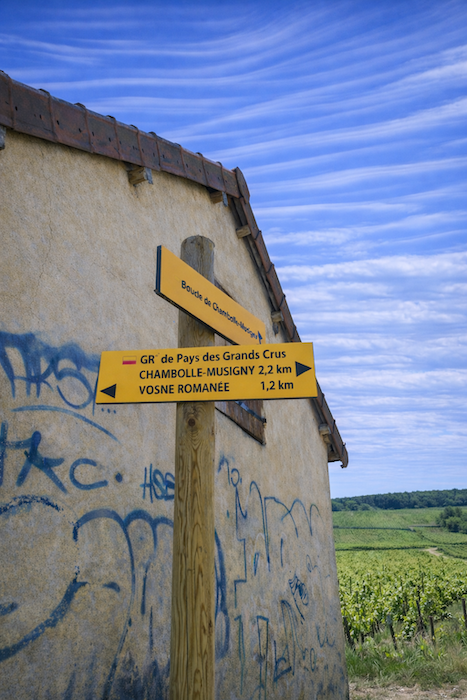
The route then sets out toward the most famous vineyards in the world, those stretching right up to the edges of the château. On the map of Burgundy’s “climats”, these parcels resemble jewels. Among them shines Chambolle-Musigny, crowned by its mythical cru, the rare and sumptuous Bonnes-Mares. Higher still, above the Clos de Vougeot, spreads Musigny, which without bearing the name Chambolle nonetheless embodies its purest soul, the undisputed jewel of the region, a wine said to unite the strength of stone with the grace of flowers.
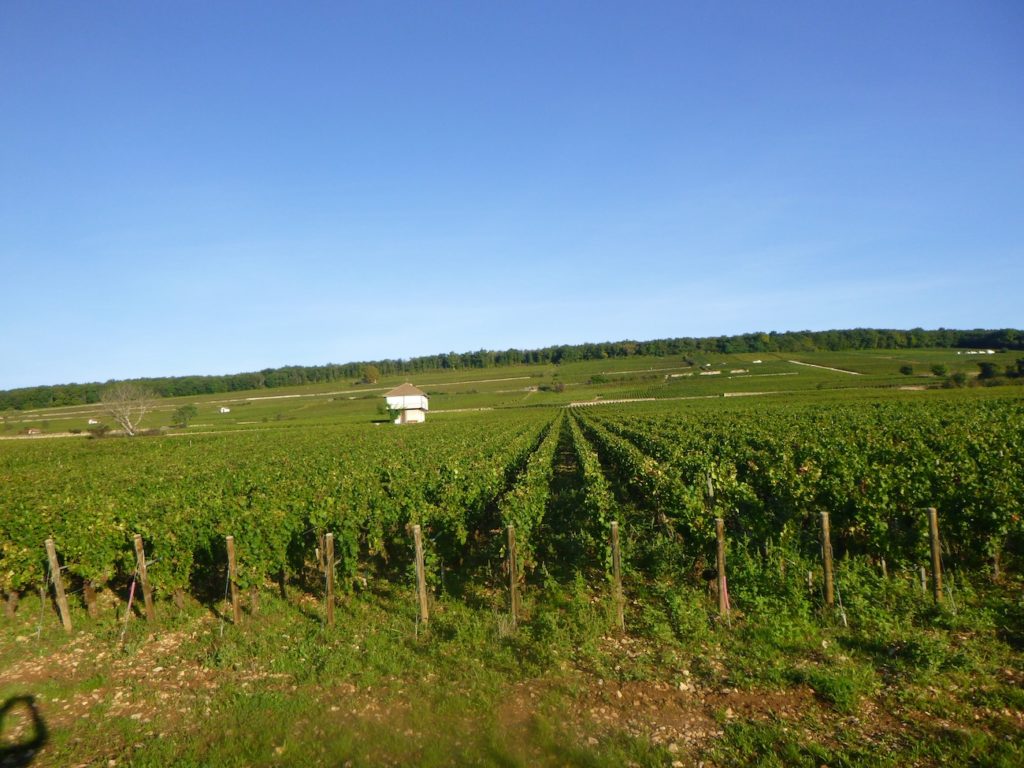
The Route des Grands Crus soon runs alongside these legendary terroirs, brushing past the clos where Musigny flourishes. Today, the great crus produced by the estates of Comte Georges de Vogüé, Louis Jadot or Joseph Drouhin are sold for their weight in gold, ranging from one thousand to one thousand five hundred euros per bottle, even for recent vintages. These sums, which may seem extravagant to the uninitiated, reflect here the alliance of centuries of tradition and the rarity of a nectar shaped with both science and patience. And yet, in a striking paradox, these exceptional vineyards advance right up to the walls of the Clos de Vougeot with apparent humility. To the untrained eye, nothing truly distinguishes these precious vines from an ordinary vineyard. The soil, the rows, the foliage all display the same simplicity, as if the miracle were born not from visible spectacle, but from a subterranean mystery rooted in the earth, the air and the age-old memory of the place.
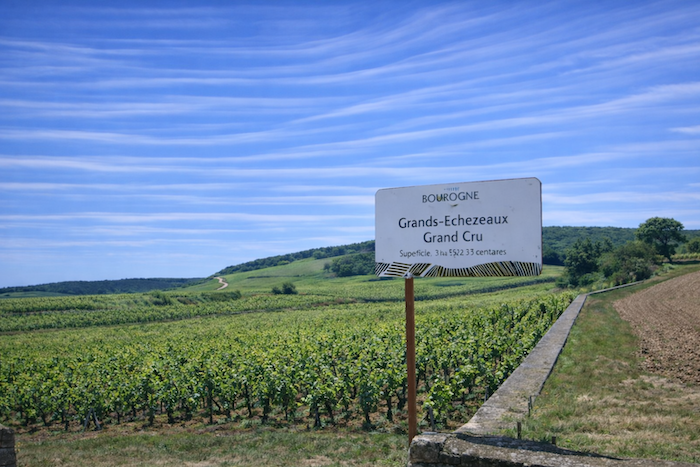
Adjoining the Musigny appellation lies the « Grand Échézeaux », its prestigious and capricious sibling, where prices also climb toward dizzying heights, ranging from three hundred to seven hundred euros per bottle. The hiker or the tourist, astonished, understands that here every name, every parcel, even every stone in these venerable walls drives the value of the wines ever higher, as if the land itself carried a treasure coveted by the entire world.
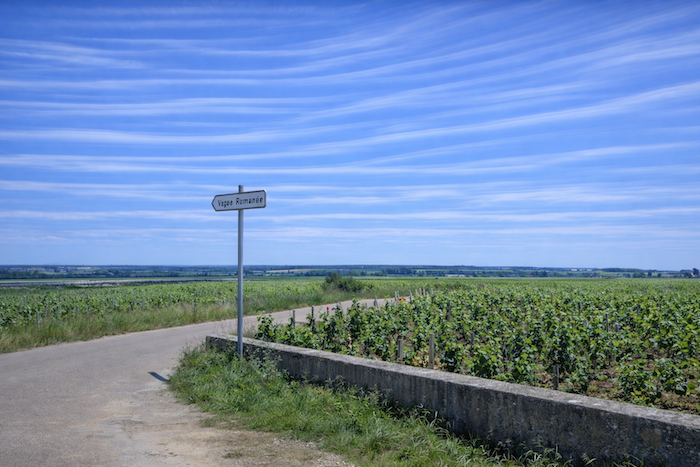
The vineyard road then turns toward Vosne-Romanée, a sacred territory that seems to draw all desires and legends toward itself like a magnet.
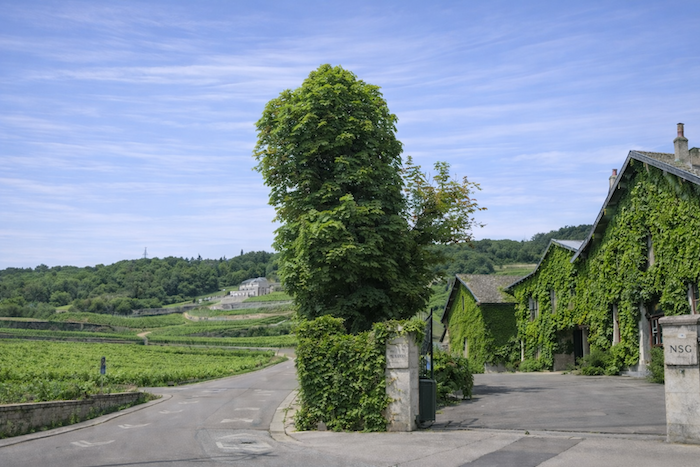
In this blessed region, no cellar interrupts the unbroken ribbon of vines. The soil is so precious that no owner would sacrifice a single vine to make room for a winery. The grand crus, set high on the slopes, divide the land with almost mathematical precision. The lower one descends toward the departmental road and the plain, the more modest the crus become and the lower the prices fall, revealing a lesson in geography as much as in sociology, where altitude dictates the nobility of the wine.
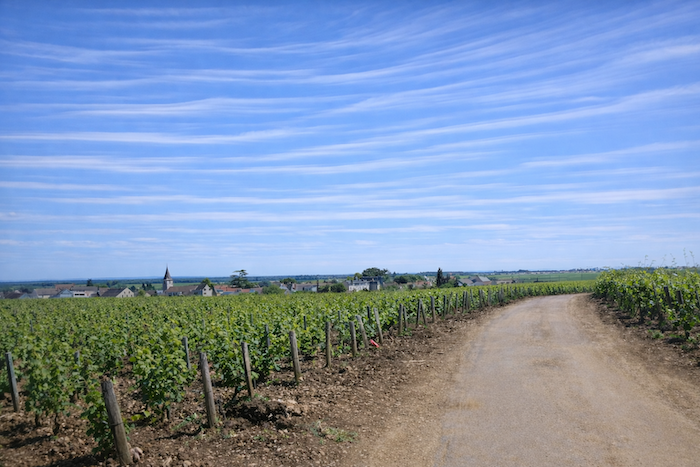
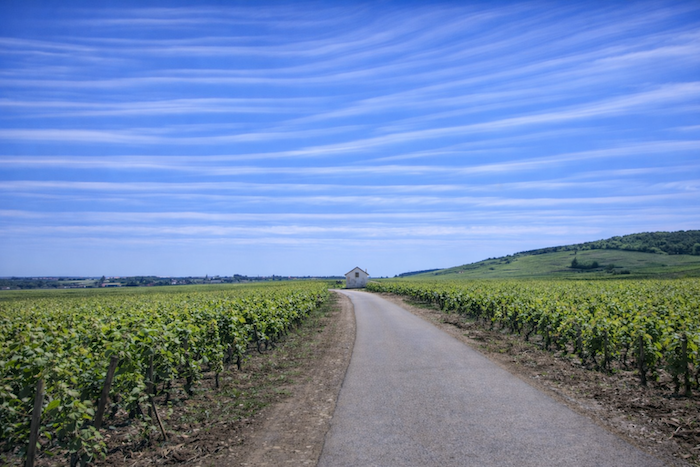
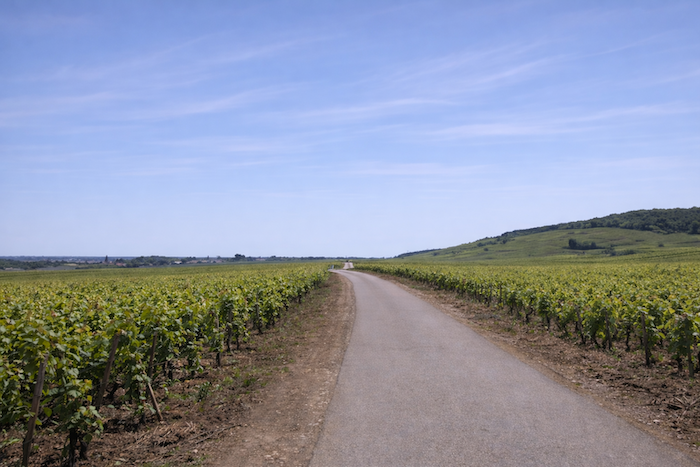
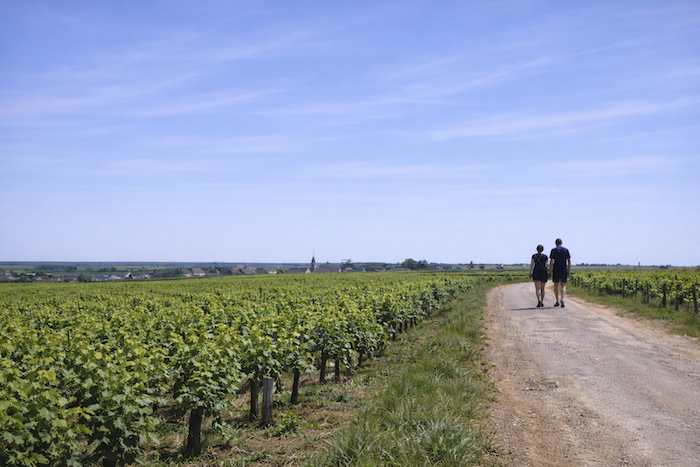
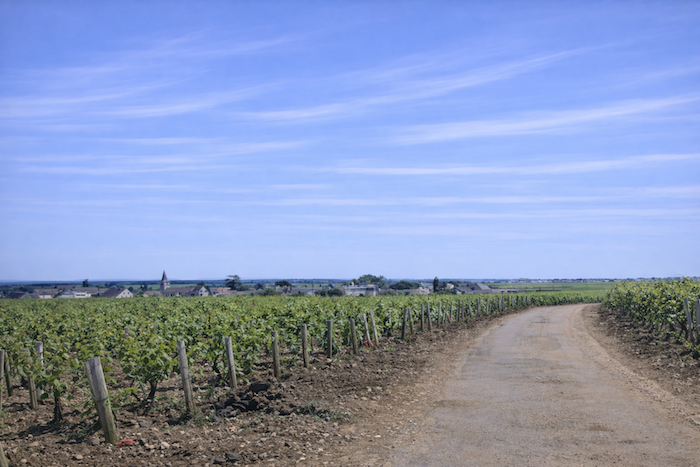
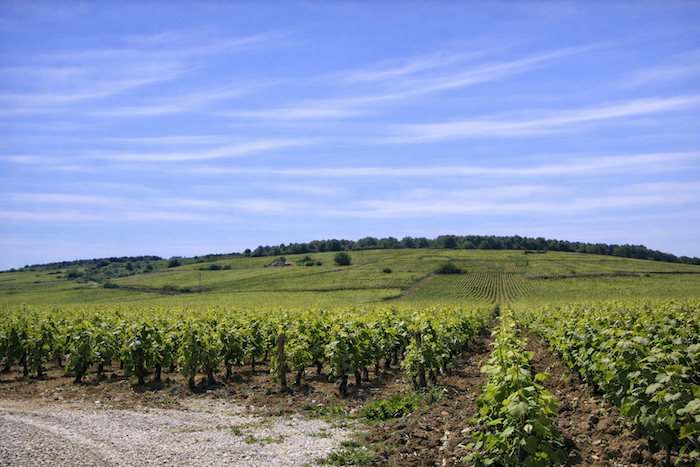
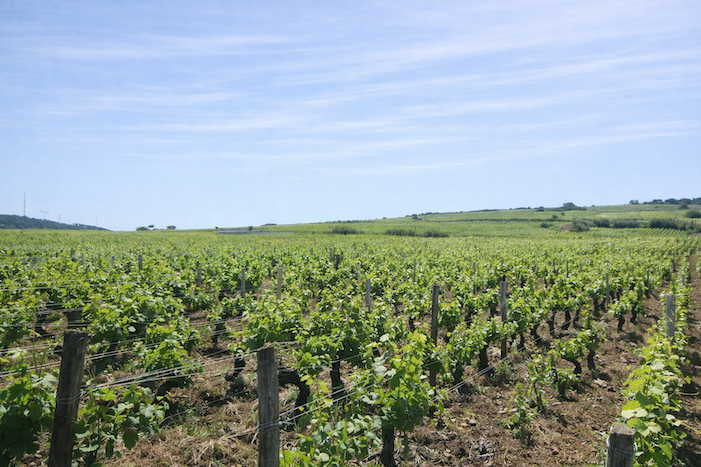
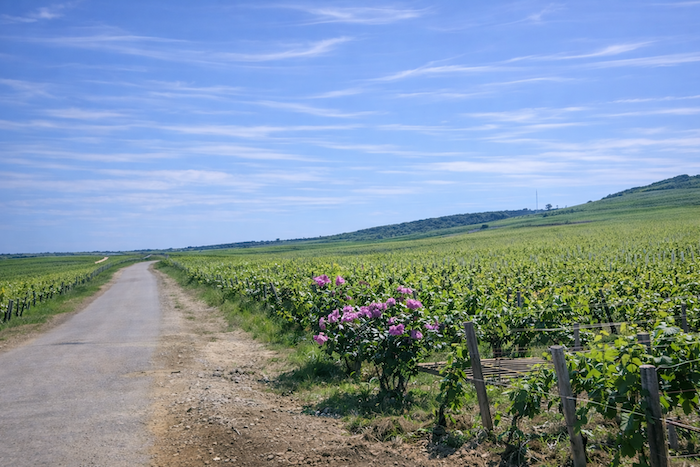
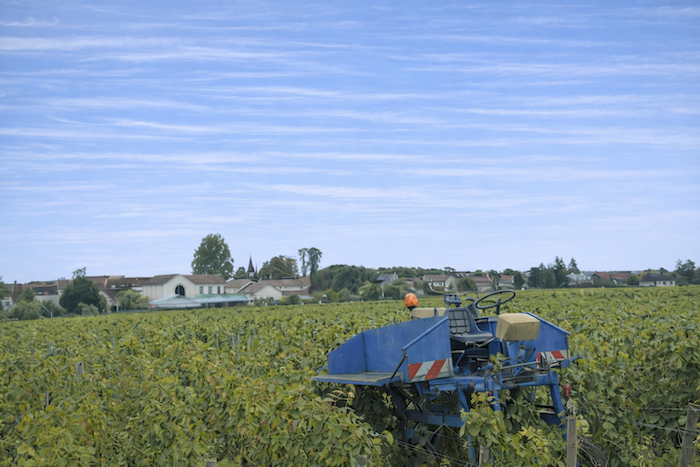
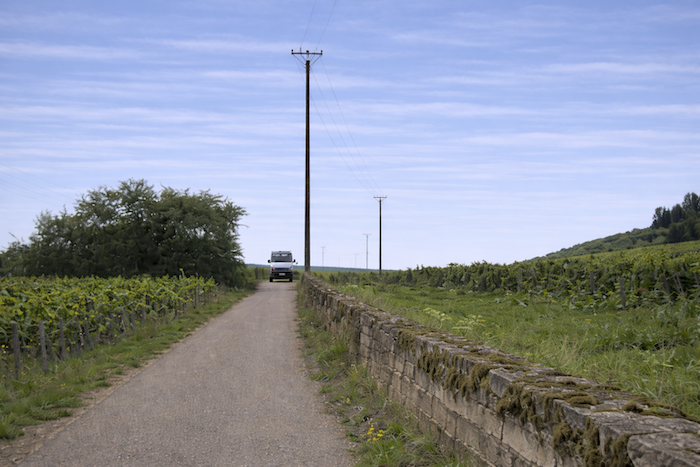
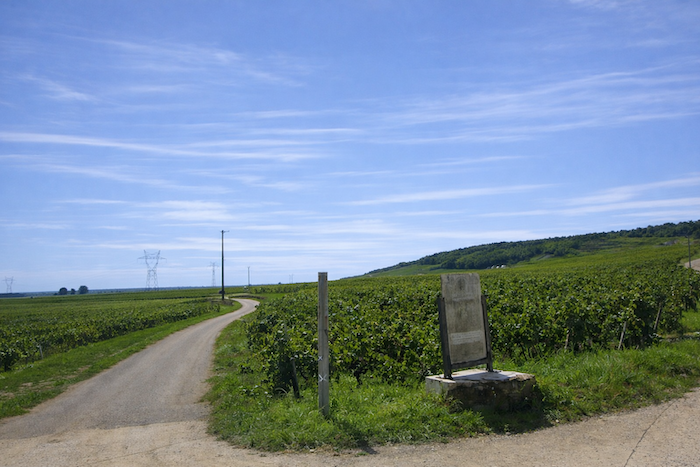
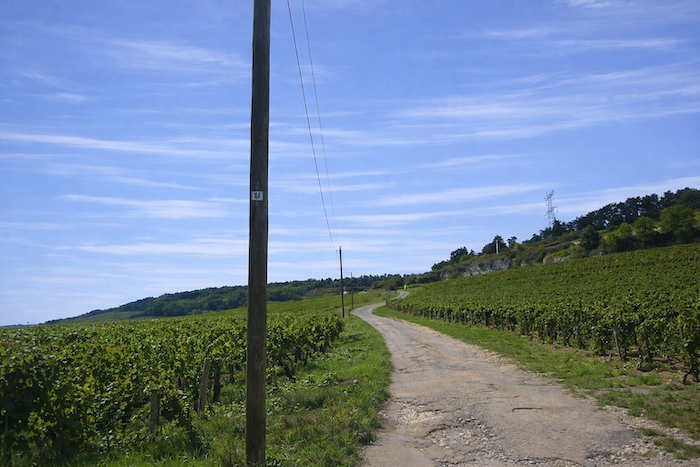
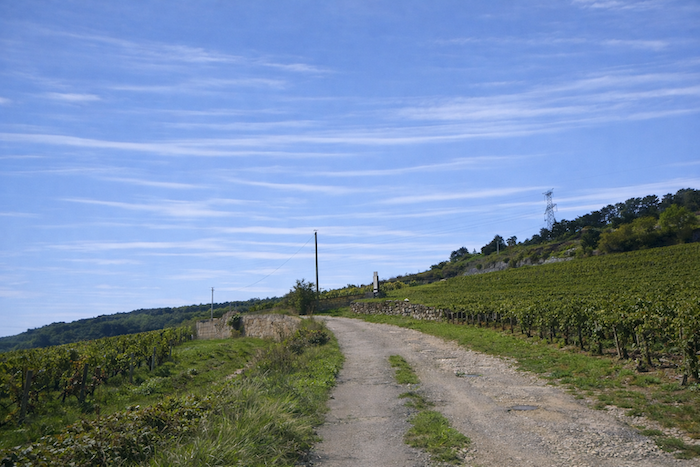
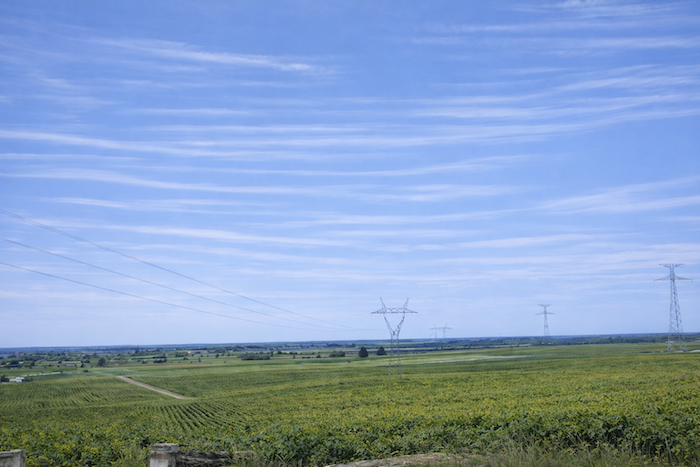
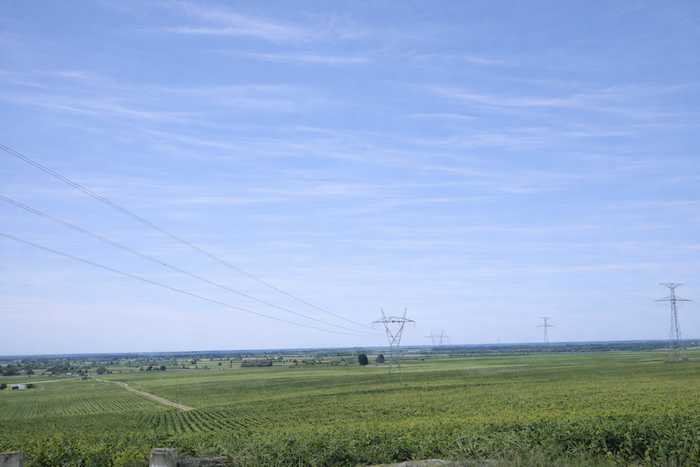
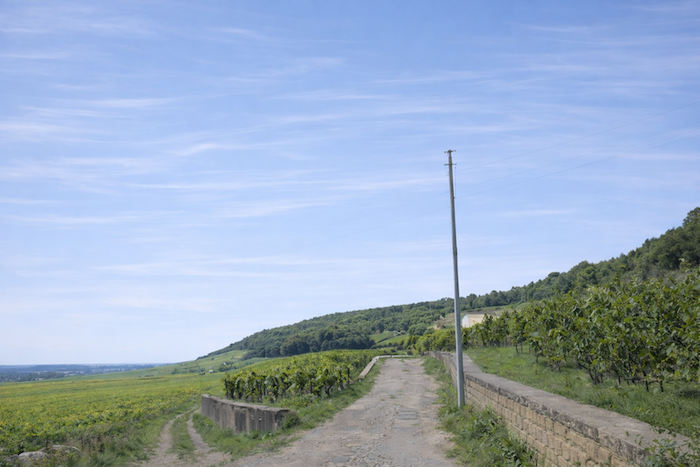
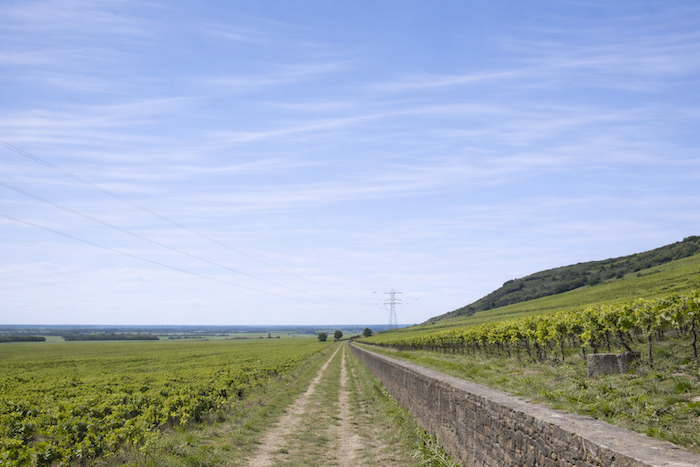
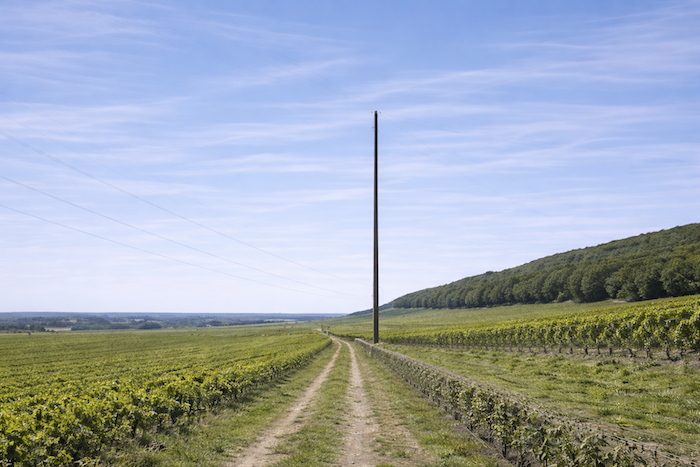
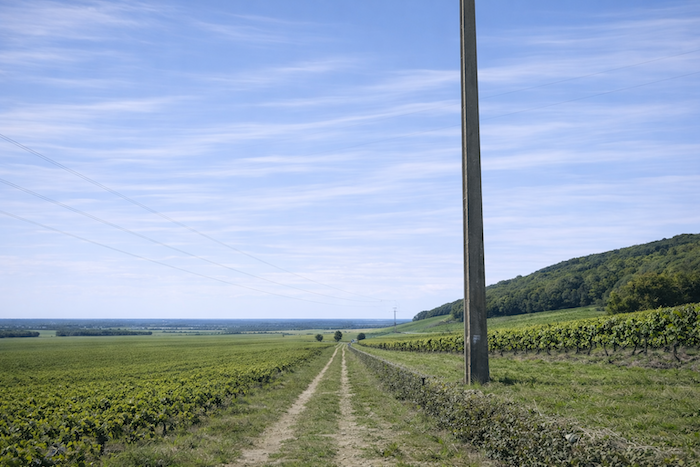
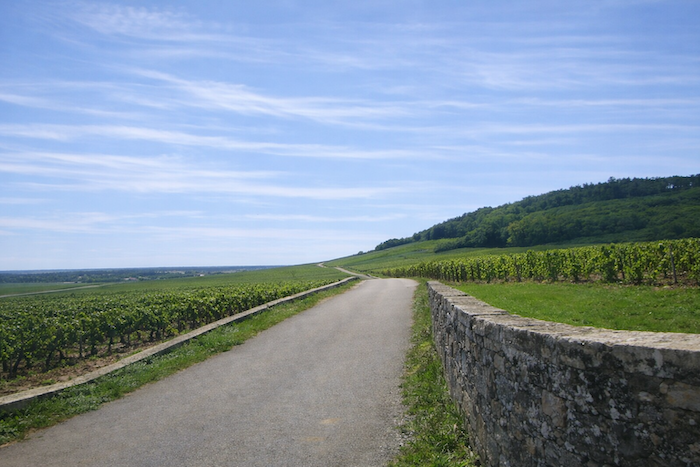
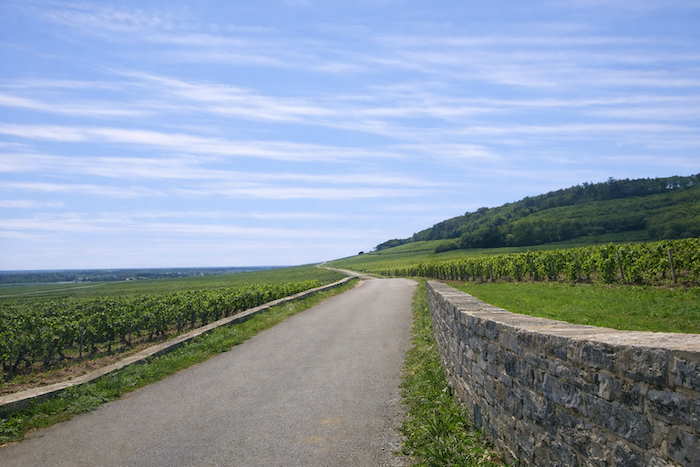
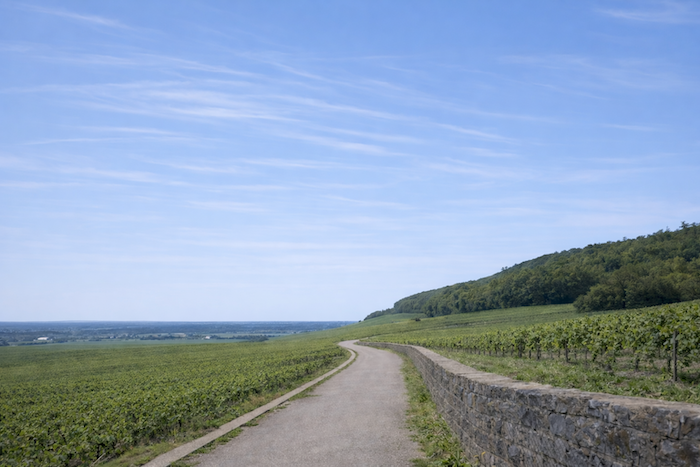
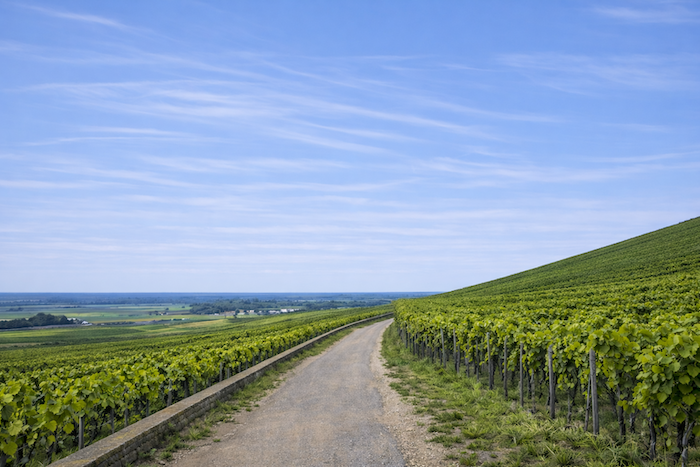
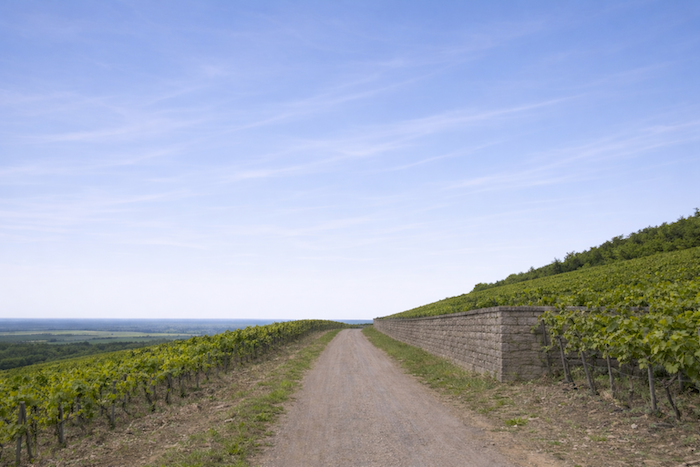
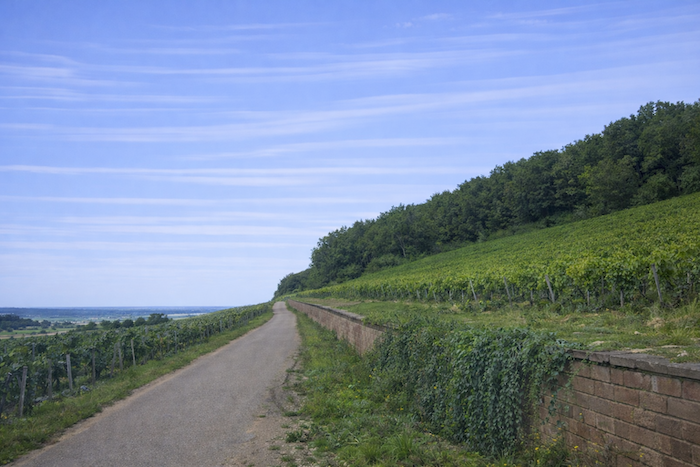
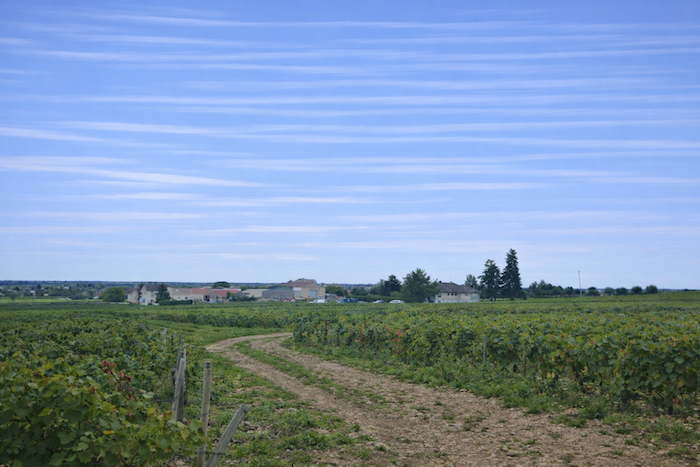
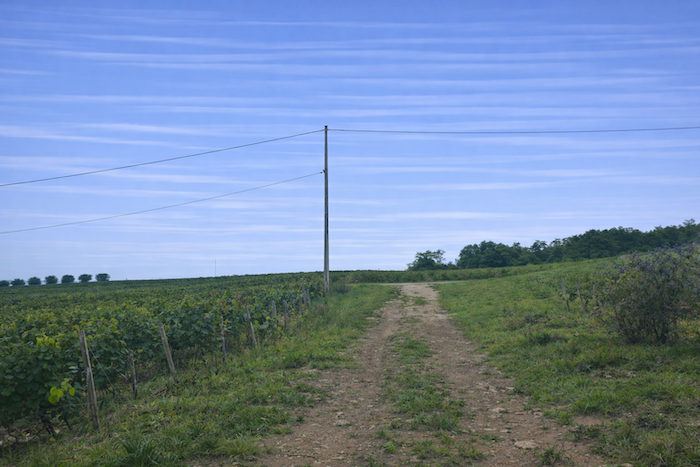
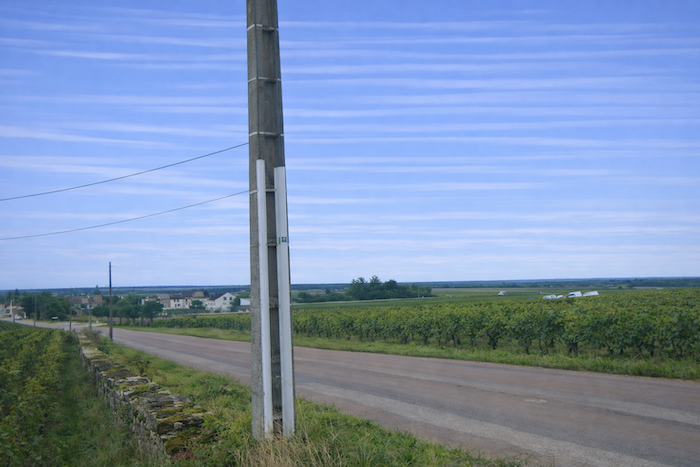
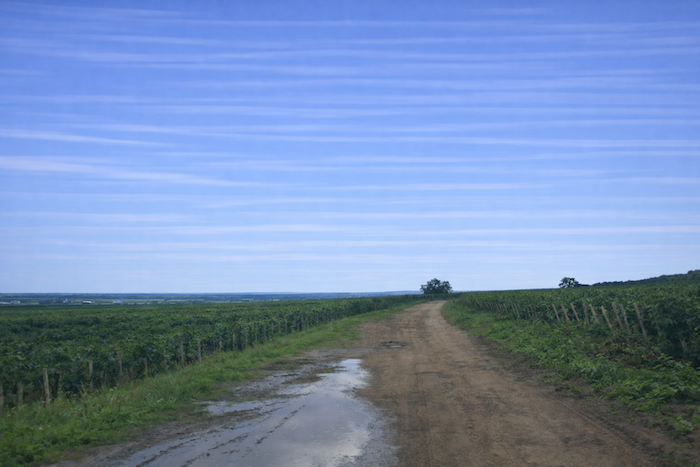
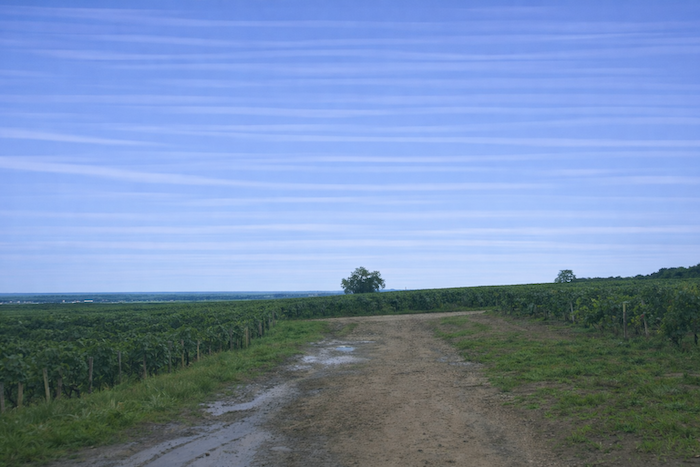
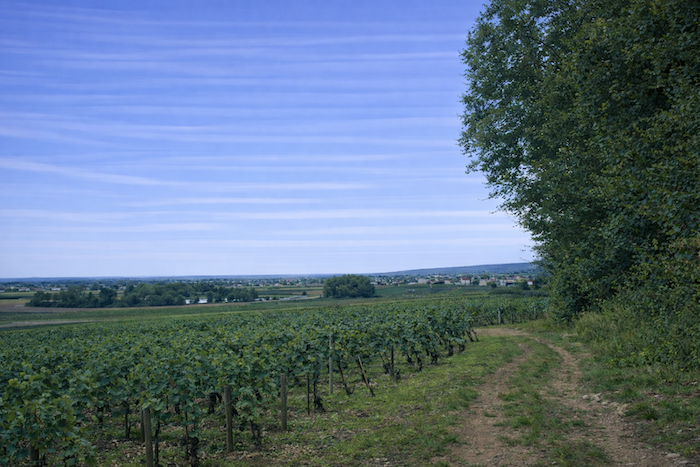
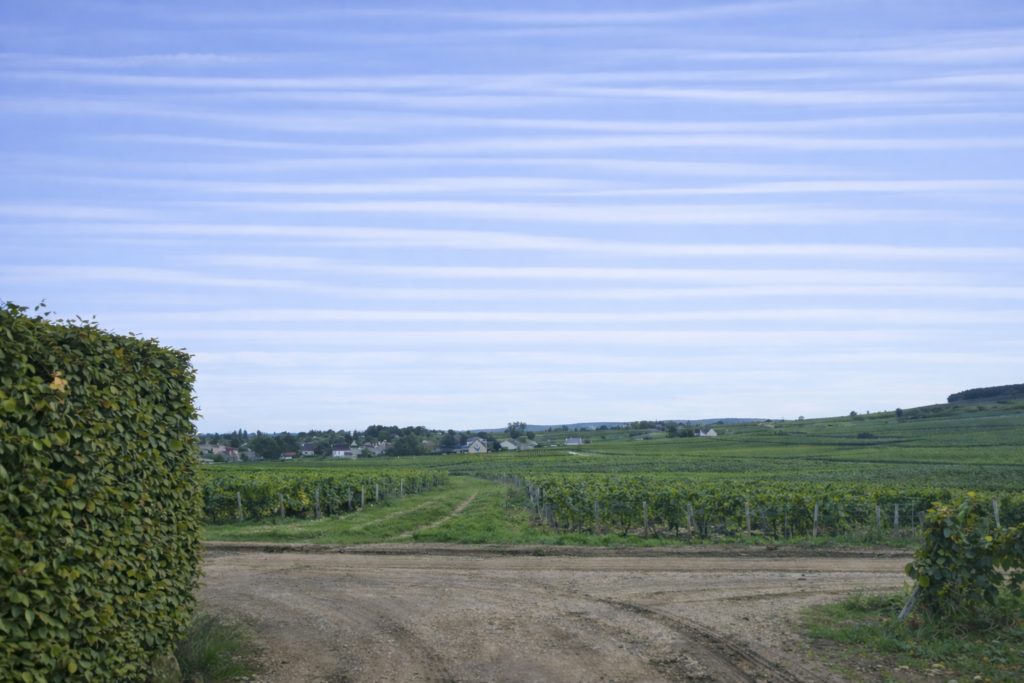
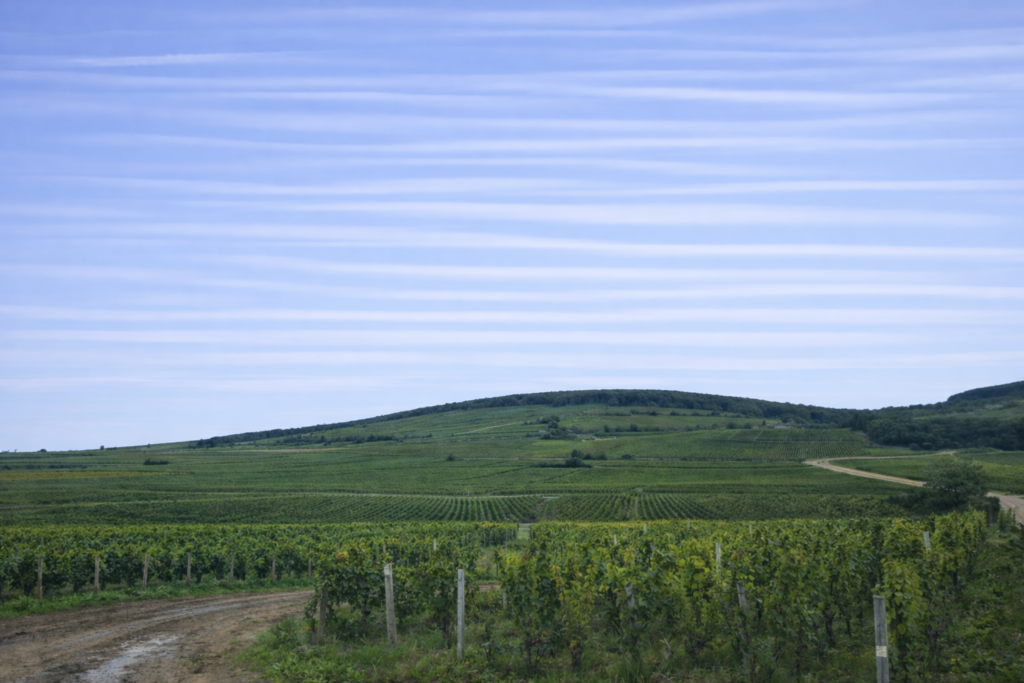
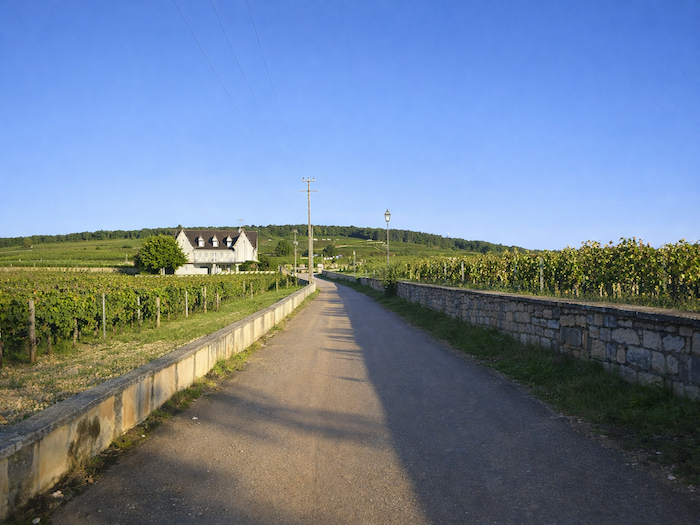
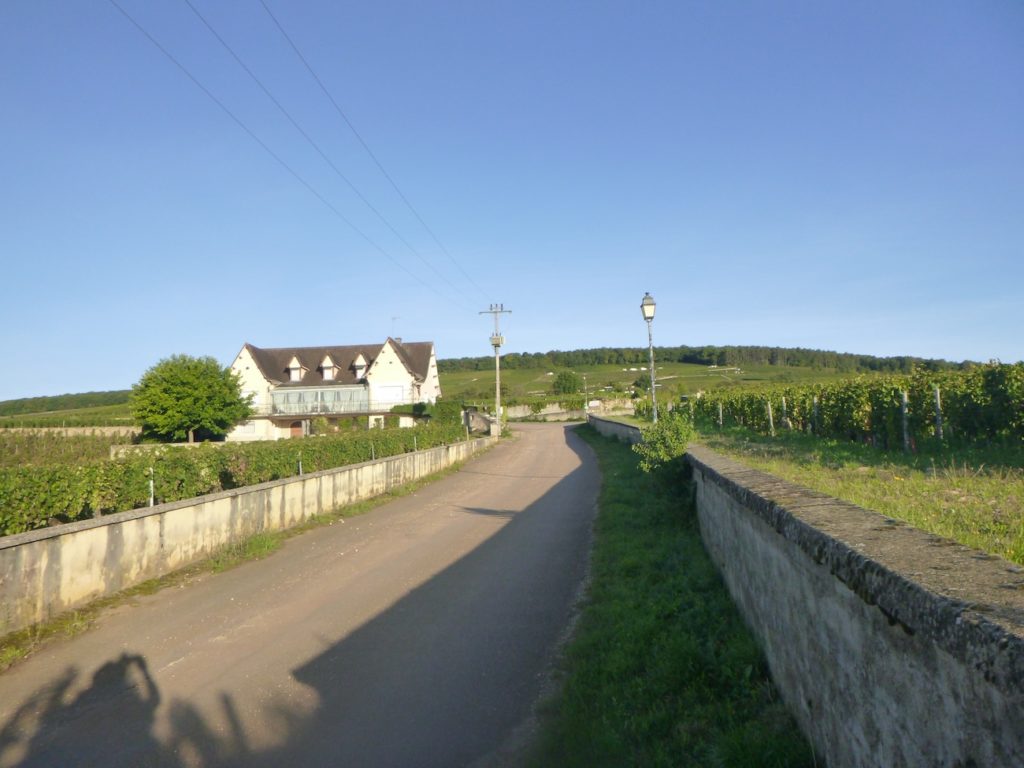
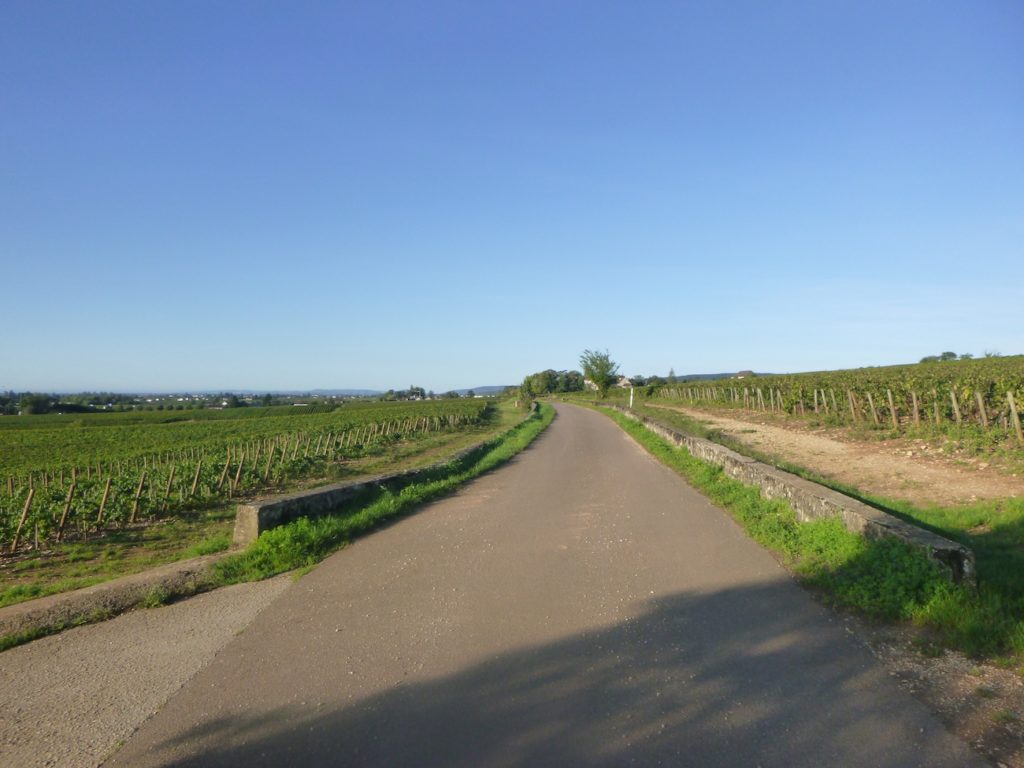
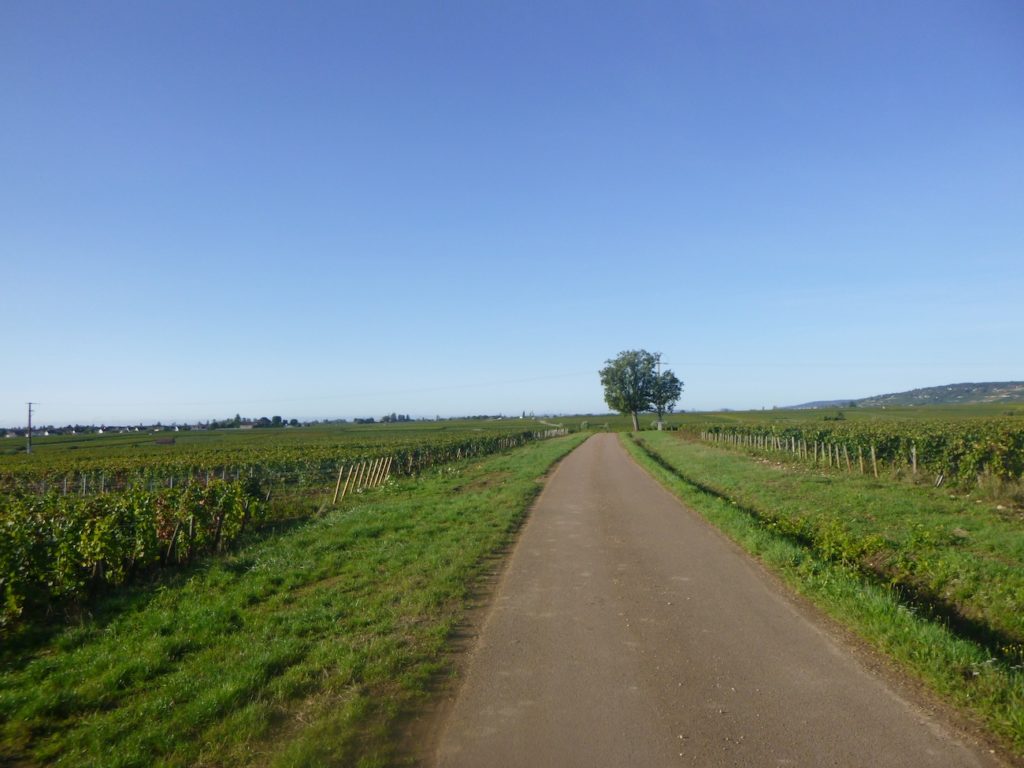
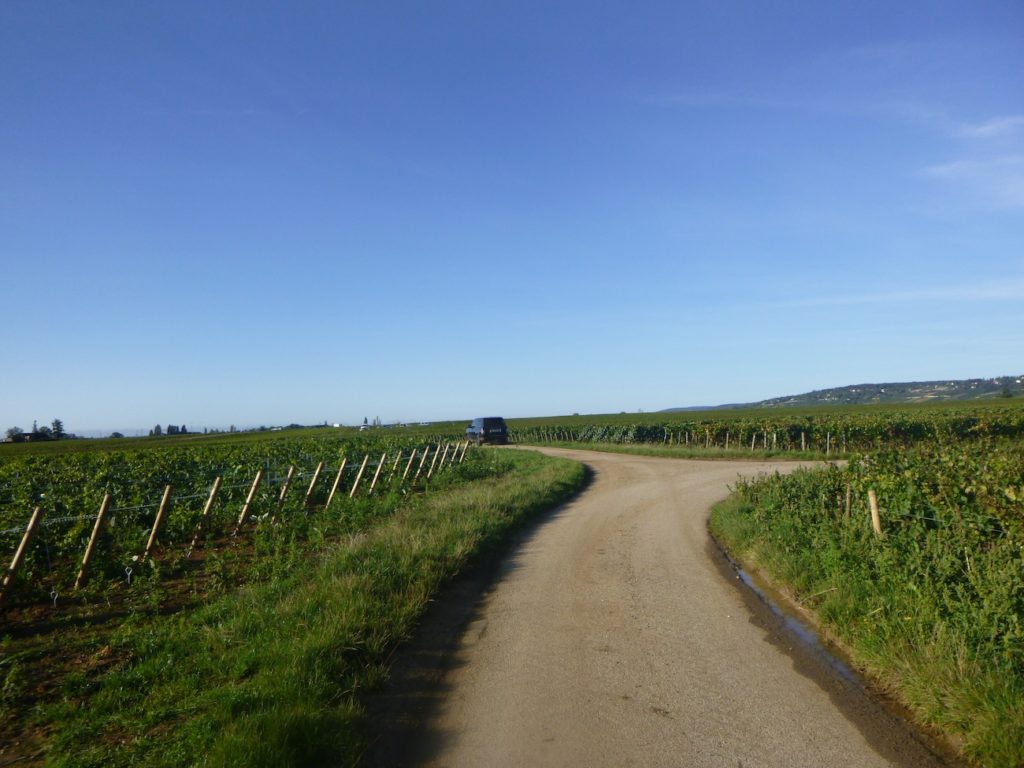
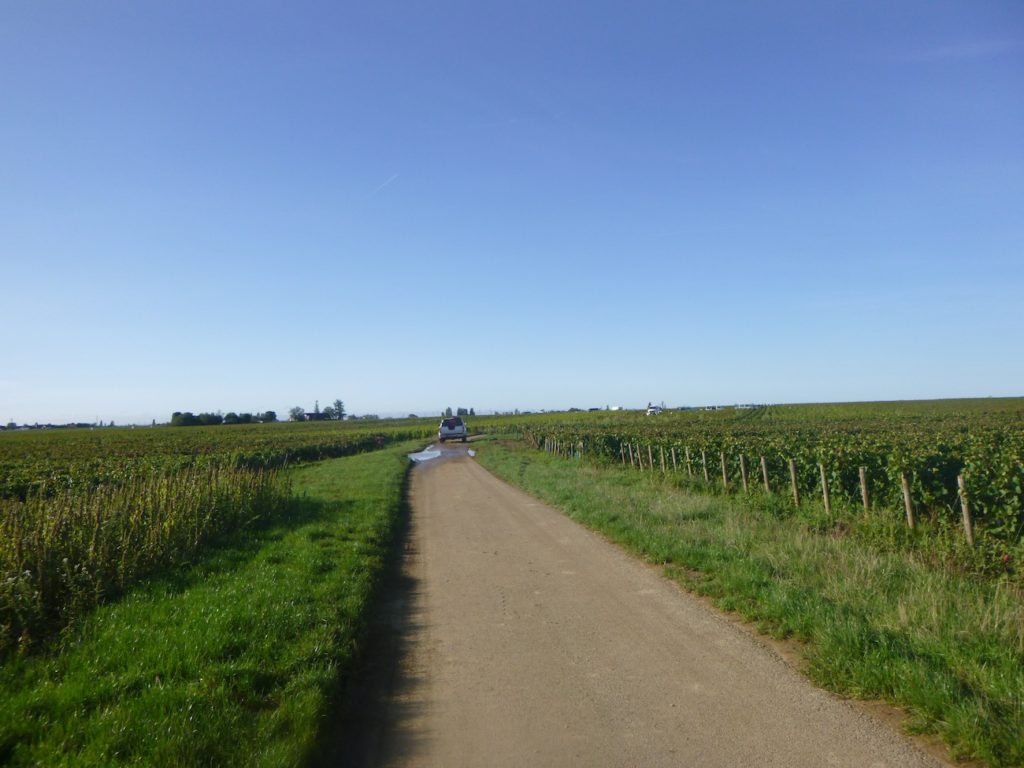
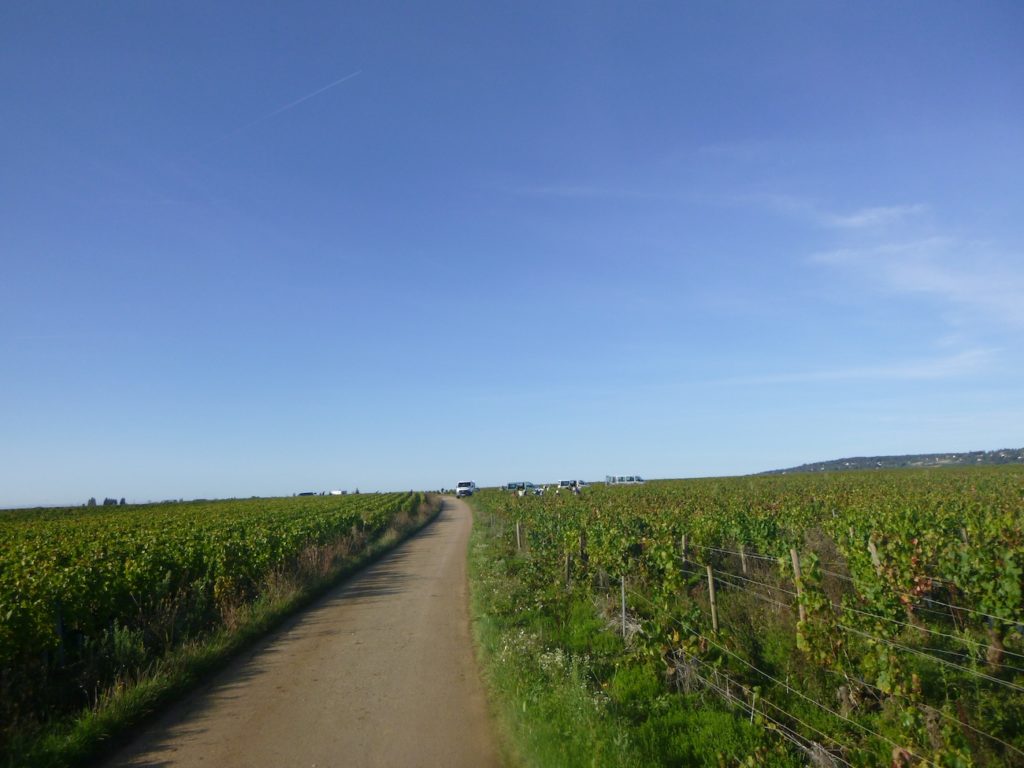
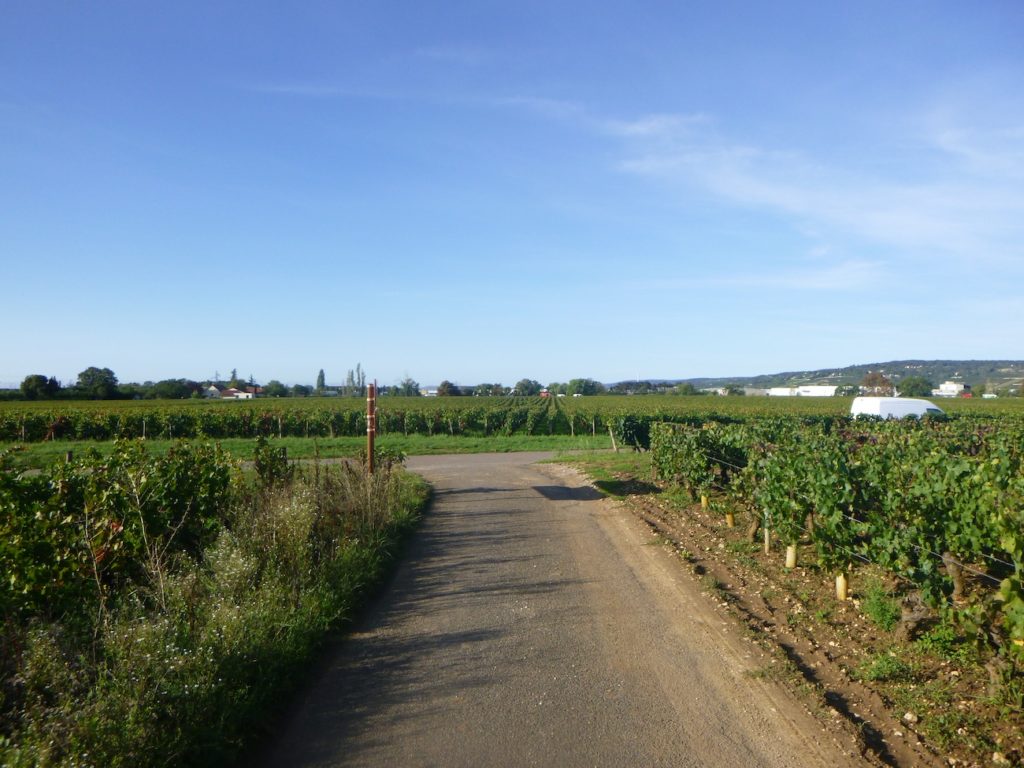
The vines climb toward the edge of the forest, as if seeking the shelter of the protective woods. Small roads wind across the slopes, granting access to vineyard work. Depending on the season, one might glimpse isolated vans in the green sea of parcels, or tall straddle tractors, curious machines that seem to swallow the rows as they pass over them. Sprayers, spreaders and grass cutters, all these modern tools extend ancestral gestures. Each instrument becomes an extension of the winegrower’s hand, in this age-old dialogue between humankind and vine. A little further on, rounding a bend in the road, the red roofs of Vosne-Romanée appear, set at the edge of the plain like a tiled sentinel guarding its treasures.
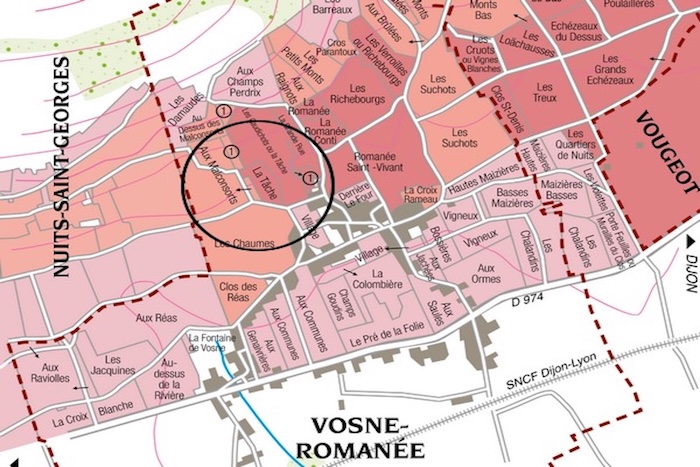
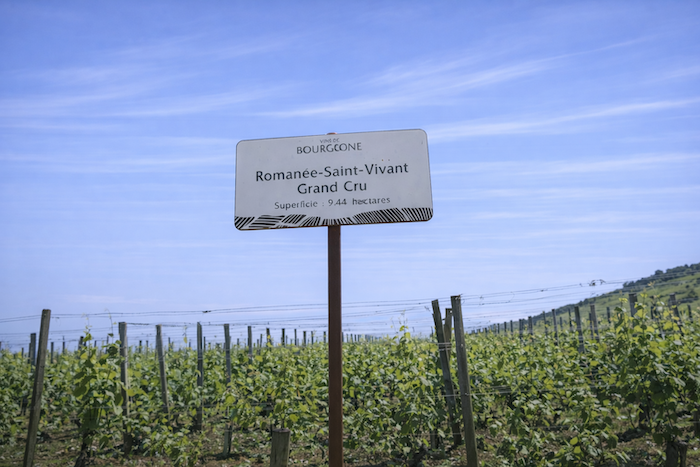
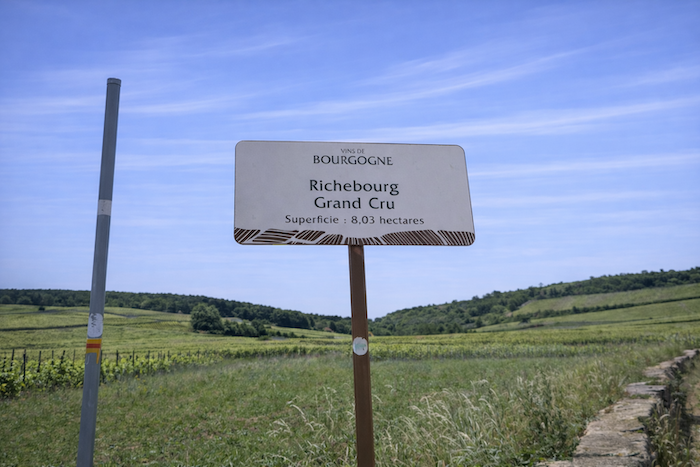
The road then crosses the « Romanée-Saint-Vivant » appellation, where prices reach vertiginous levels. Here, wine is traded on the scale of dreams. A single bottle of Romanée-Conti, even outside auction sales, commonly reaches twenty thousand euros. In October 2018, in New York, a 1945 Romanée-Conti was sold at Sotheby’s for the prodigious sum of 558,000 dollars, setting a world record. The Domaine de la Romanée-Conti, a name spoken almost as an incantation, also produces La Tâche at 4,900 euros, Richebourg at 3,400 euros, Romanée-Saint-Vivant at 2,800 euros, Grand Échézeaux at 2,600 euros and Échézeaux at 2,400 euros. To this constellation are added a little Corton and even a white Montrachet, whose rarity pushes the bottle to 8,000 euros. It is worth recalling that Alexandre Dumas had already, in his monumental Grand Dictionnaire de cuisine published in 1873 after his death, drawn up the ideal list of wines for a discerning cellar. Among these illustrious appellations, he cited with reverence Romanée-Saint-Vivant and Romanée-Conti. Shortly thereafter, the road slips into the intimacy of the Richebourg estate, a jewel of just eight hectares where each vine seems etched by history and caressed by time. Here, the air carries the concentrated scent of ripe grapes and limestone soil, and the entire landscape resonates with an ancient murmur, that of centuries of vines tended with almost monastic care, making this small estate one of the sanctuaries of the Côte de Nuits.
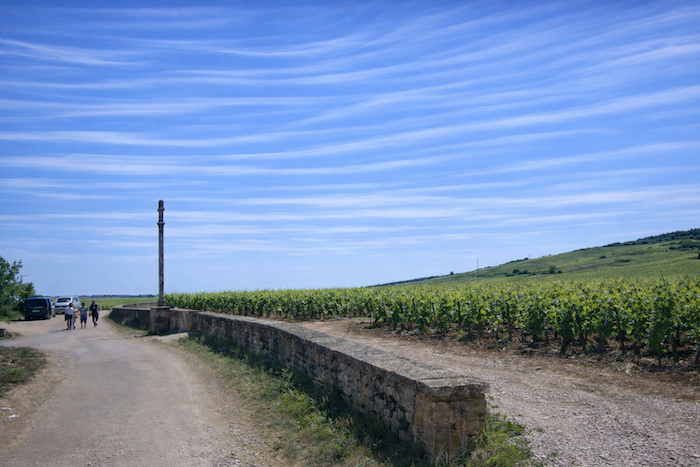
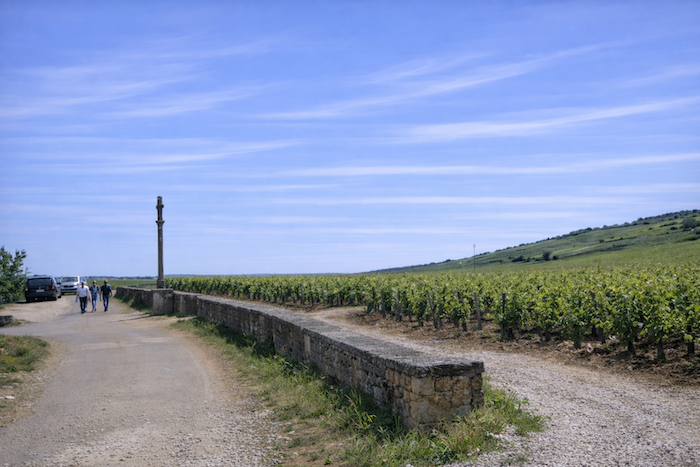
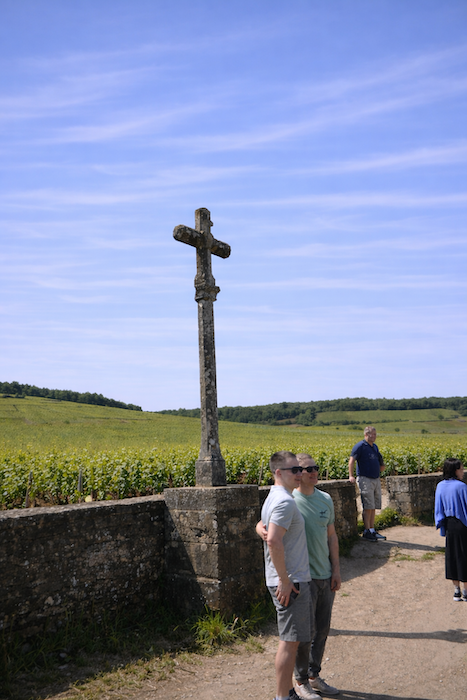
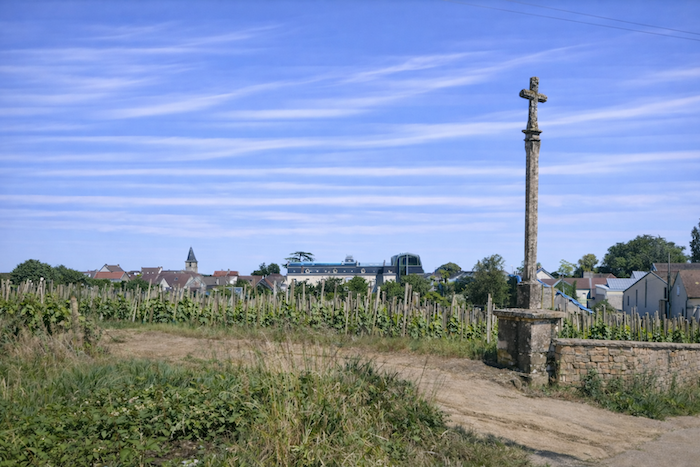
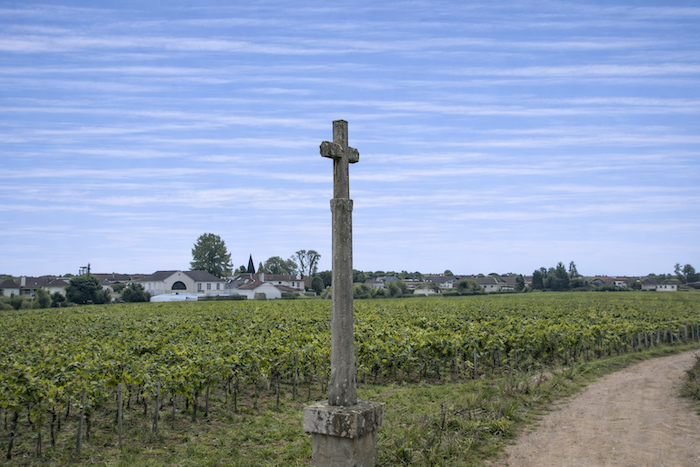
The small Route des Grands Crus then runs above the village of Vosne-Romanée, where fascinated visitors stop to be photographed beneath the stone cross, as if to claim, if only in image, these inaccessible vineyards. The stones seem to absorb both gaze and time, granting visitors the fleeting illusion of belonging, for a moment, to this sacred land.
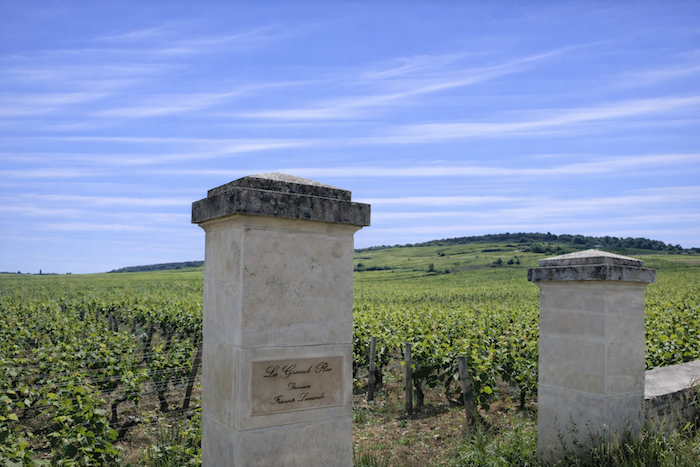
Above the road, the vines of the « Domaine de la Romanée-Conti » spread their dark green patchwork, punctuated by precise and disciplined rows like a living painting. Annual production is exceptionally limited, further amplifying the myth surrounding this wine. The estate produces only six thousand to eight thousand bottles per year across eight grand crus, with Romanée-Conti itself accounting for roughly 5,400 bottles, or 450 cases. This rarity, magnified by unrivalled quality, has made it a global treasure and, so it is said here, justifies its astronomical prices. Annual revenue thus reaches 120 million euros, an empire contained within a few thousand bottles. To put this scarcity into perspective, Château Pétrus produces around 30,000 bottles per year, and Sassicaia more than 200,000. By comparison, Romanée-Conti remains the embodiment of absolute exclusivity and international desire.
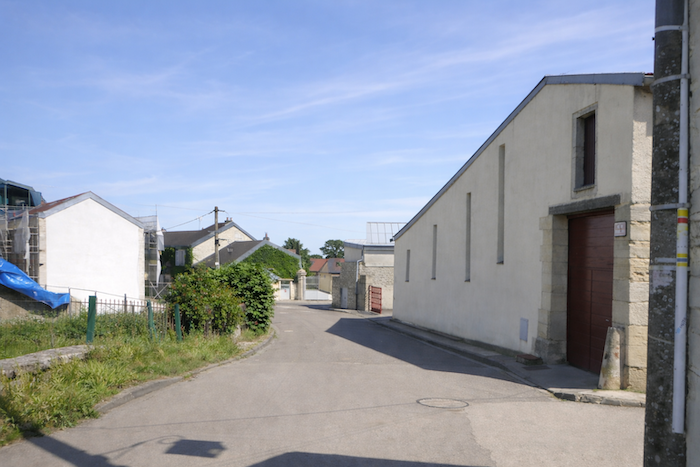
The road then descends toward the stone houses at the edge of the village of Vosne-Romanée, passing respectfully close to the stone cross that seems to watch over the history of the terroir. Every paving stone and every red roof echoes centuries of harvests and meticulous care devoted to the surrounding vines.
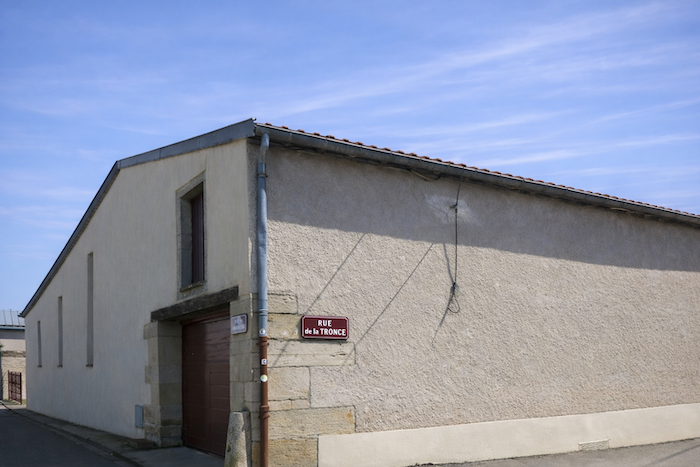
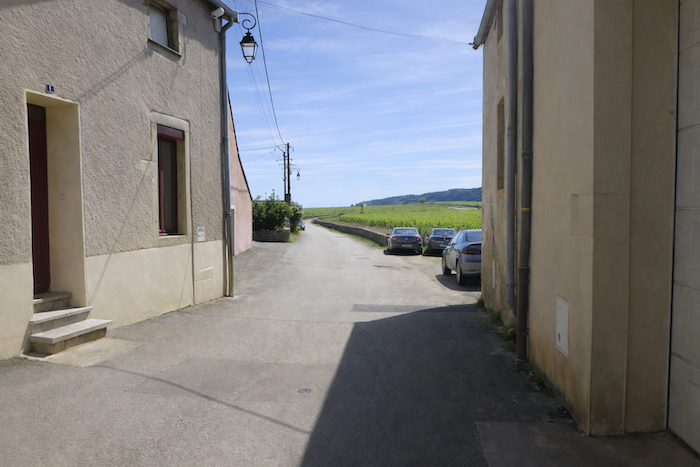
The route does not enter the village, but skirts it to reach Rue de la Tâche, where yet another exceptional vineyard unfolds, the second standard-bearer of Romanée-Conti. Here, the rows of vines align with almost architectural precision, and the limestone soil beneath one’s feet seems to whisper the secrets of past vintages. Each vine is a promise of finesse and concentrated power, a fragment of living heritage protected by time with infinite patience.
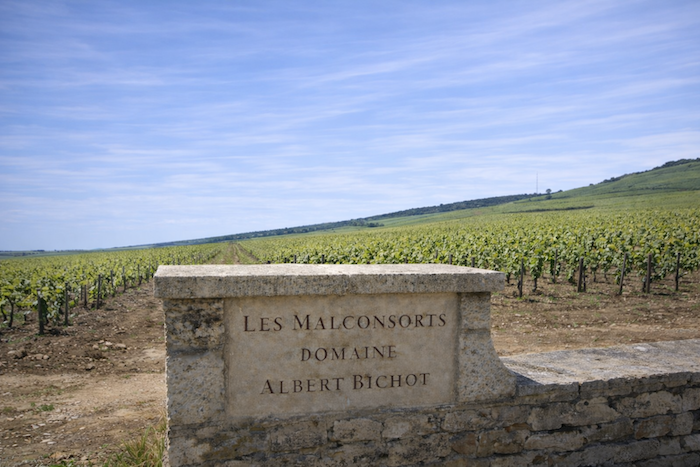
The road then leaves the great vineyard of Vosne-Romanée to enter the domain of Les Malconsorts. For tasters, Chambolle-Musigny evokes the delicacy of raspberry, while Vosne-Romanée exhales deep, dark blackcurrant. Here, everything is a matter of Climats, those singular parcels shaped by limestone, topography and light. Science can barely explain the subtlety of these differences. Taste and time are required to grasp them. For a Malconsorts worthy of its name, one must expect to pay between 400 and 1,000 euros per bottle, a sum that seems almost modest when set against the grandeur contained in each one, so it is said.
Section 2: Through the vineyards of Nuits-Saint-Georges
Overview of the route’s challenges: : a route with no difficulty at all.
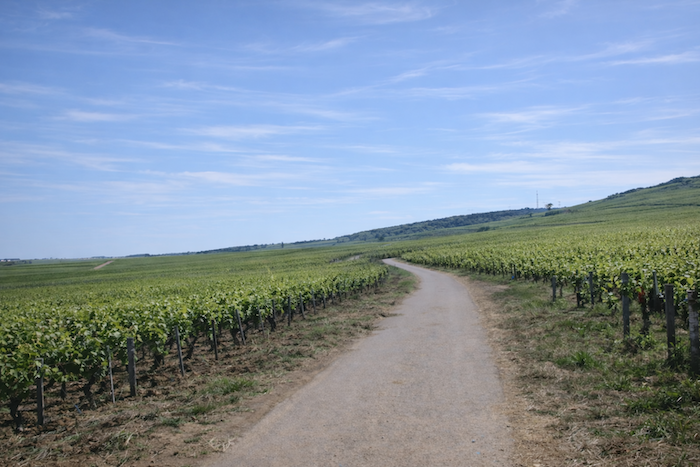
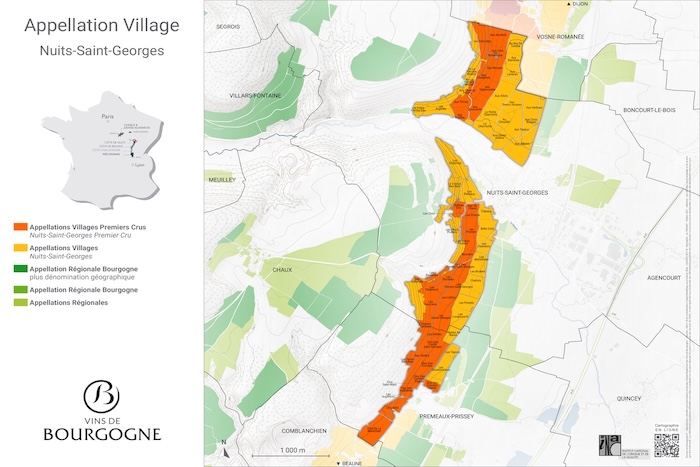
You now enter the vineyards of Nuits-Saint-Georges, where the road slopes up steadily yet gently, as if following the breath of the terroir toward the crest of the hill. The rows of vines seem to stretch endlessly, undulating softly with the slope, and with every step you feel closer to a world where time is measured in harvests and in centuries of patience.
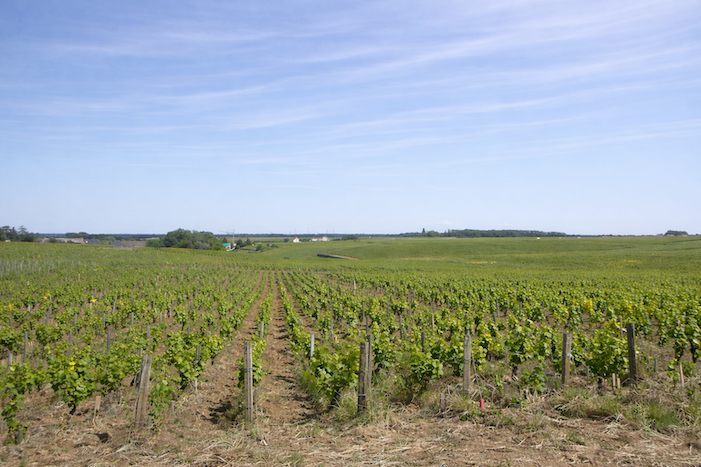
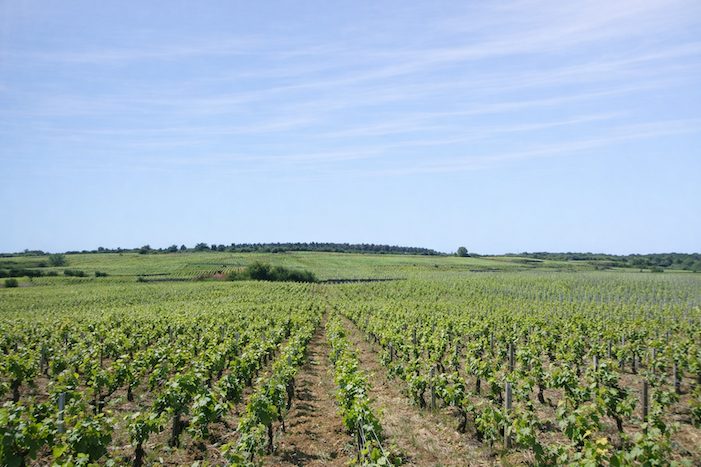
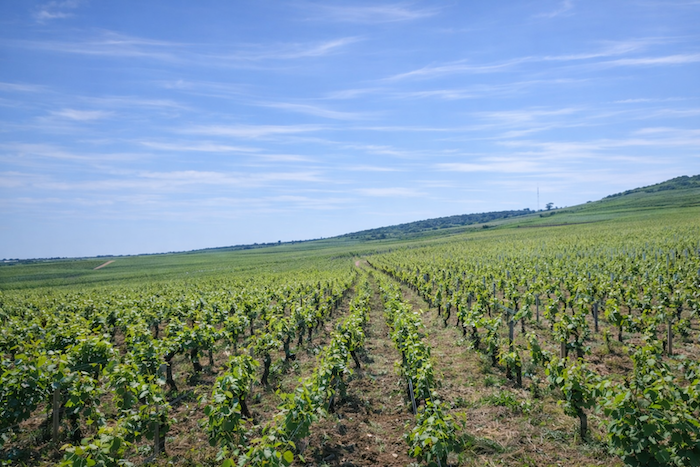
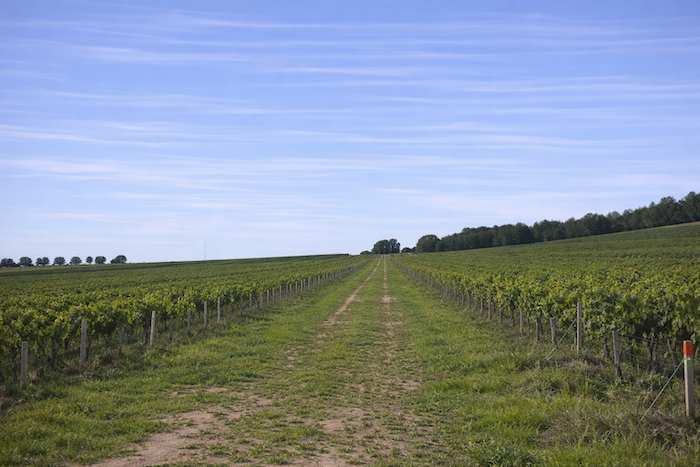
The vines are planted with almost geometric precision, in parallel rows that follow the contours of the hillside, allowing water to drain naturally and preventing it from pooling around the roots. This density forces the vines to sink deep into the soil in search of nutrients and moisture, a struggle that gives the wine its aromatic richness and subtle complexity. Each vine, trained in single or double Guyot pruning, extends one or two horizontal arms that bear the grapes, while its shoots are guided along wires stretched taut like harp strings to capture the sunlight. The soil, limestone-based and scattered with large stones, distinguishes the Burgundian terroir from the often clay-heavy soils of Bordeaux, imprinting the wine with its unique minerality and finely chiselled character.
The road continues its gentle ascent through the vineyard, offering a panoramic view of this uniform and almost hypnotic wine landscape. The prices of Nuits-Saint-Georges wines, while more approachable than some Burgundian legends, remain significant, reflecting the quality and reputation of the appellation. A Nuits-Saint-Georges Village typically ranges from 30 to 100 euros, while a Premier Cru sells for between 50 and 300 euros. Exceptional crus reach far higher sums at auction, often exceeding one thousand euros, each bottle becoming a fragment of liquid heritage.
The road finally reaches the heights above Nuits-Saint-Georges, a small town of 5,200 inhabitants, where the breath of the vineyard mingles with everyday life.
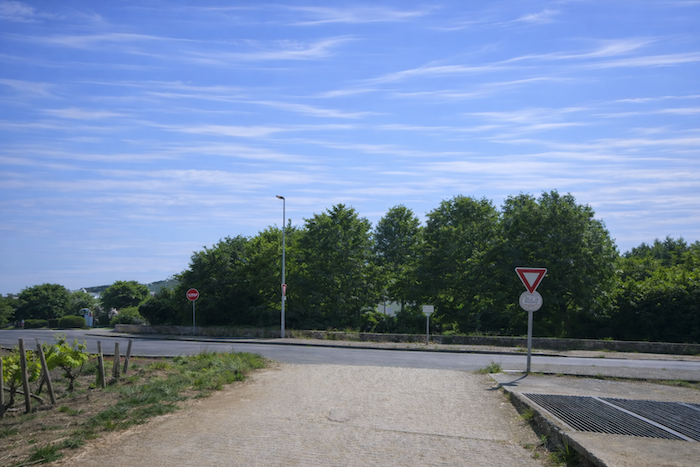
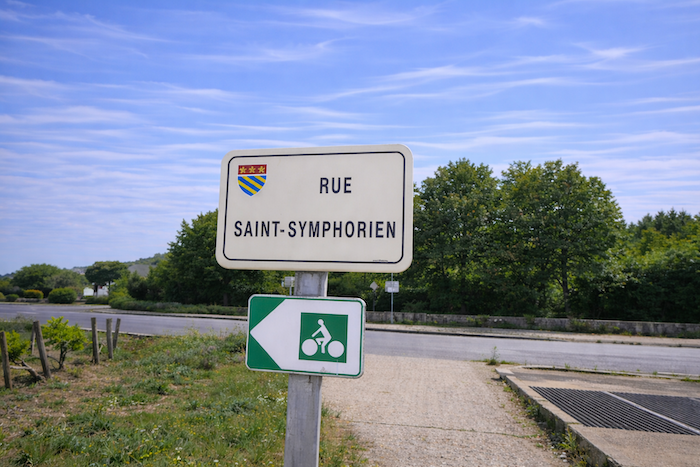
The wine route comes up against Rue des Charmottes before turning right into Rue St Symphorien.
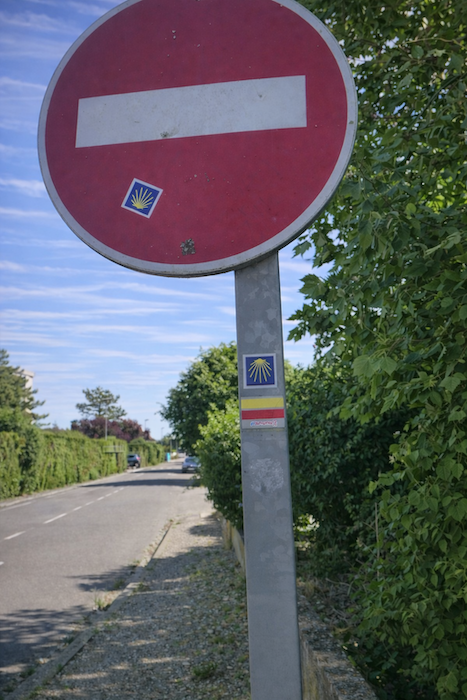
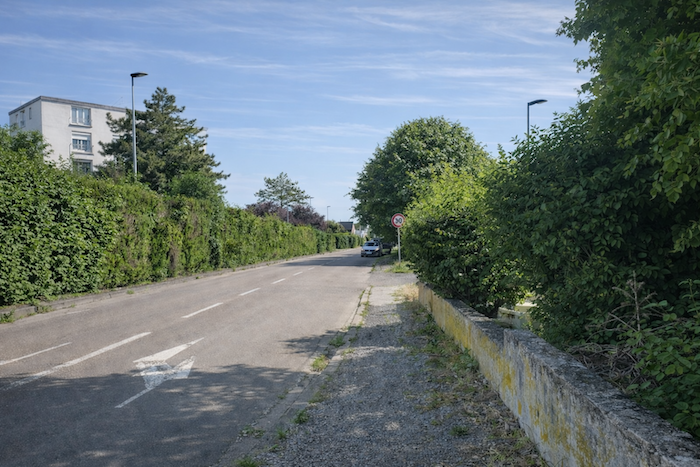
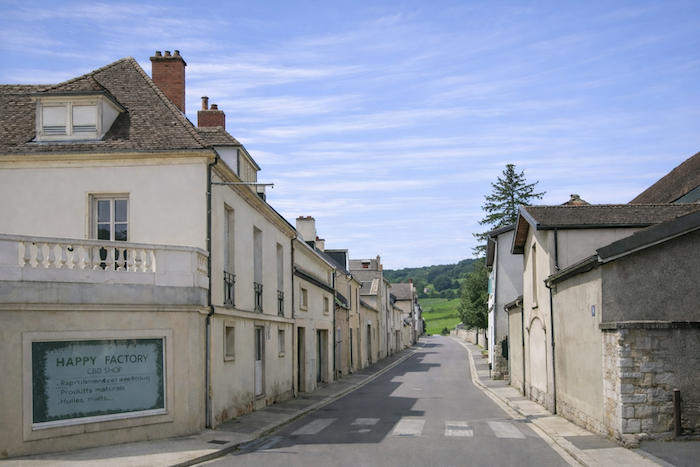
The street descends in a straight line into the outskirts of the town, as clearly indicated, for once, by a well-placed scallop shell.
It traces a kind of umbilical cord linking the periphery to the beating heart of the town, as though each step draws the traveler into a deeper intimacy with the city. Houses stretch discreetly along the route, silent witnesses to ancient stories. Nearby, a park offers a breath of greenery, a pause where one can almost imagine the seasons being written in the changing foliage of the trees.
The route runs alongside and passes in front of St Symphorien Church and its cemetery. The stones, softened by time, still carry the murmurs of generations past.
It then continues into Rue Félix Tisserand, an oblique road that seems to invite the walker onward toward the town center. Here the horizon tilts gently, and façades draw closer, as if preparing the traveler for an encounter with the living core of the city.
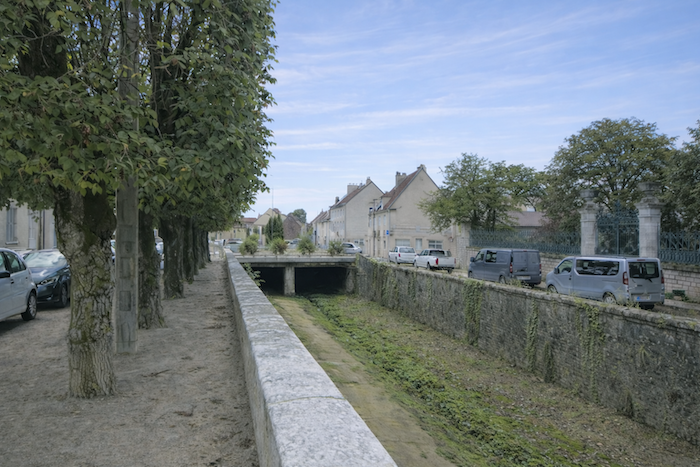
Shortly afterwards comes a turn in the route, to the right, at the level of the Meuzin stream. The route slips away, refusing to lose itself in the bustle of the town center!
The route does not enter the town center. Should you choose to do so, you will return here to resume the route, for the center itself is well worth a visit, even at the cost of a slight detour. Like a promise, it waits behind its narrow streets, ready to reveal its secrets of stone and light. If you head toward the center, continue along Rue Félix Tisserand, then Rue Port Fermerot. You will pass Saint-Denis Church, a noble and restrained silhouette raising its bell tower like a finger pointing toward the sky. You will then reach the Grande Rue and its shops, a pulsating artery where everyday life intertwines with old-world charm. Shop windows sparkle like fragments of life, and passers-by weave the living murmur of the town.
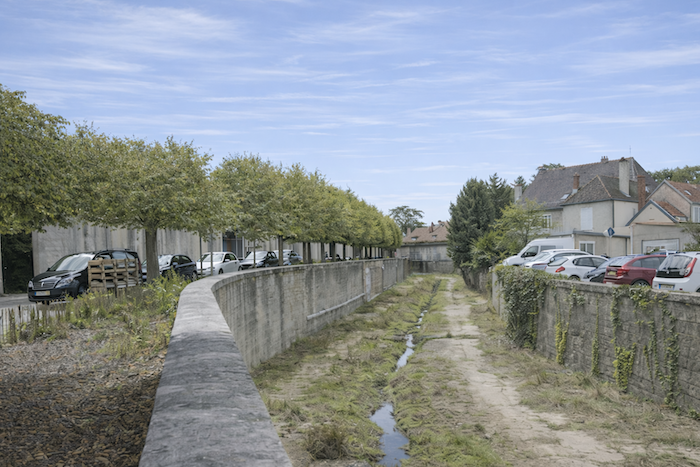
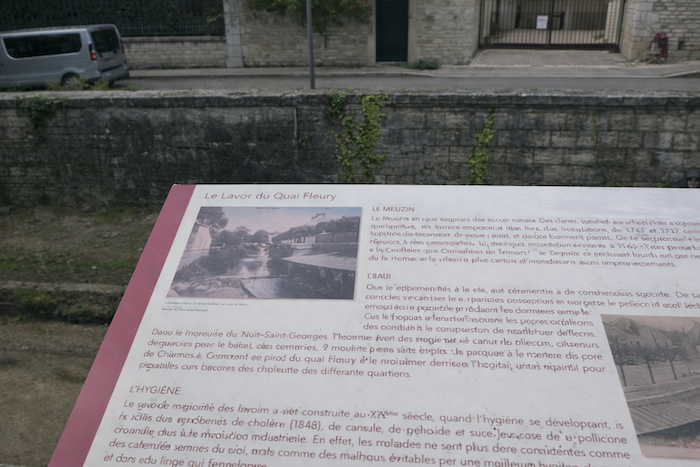
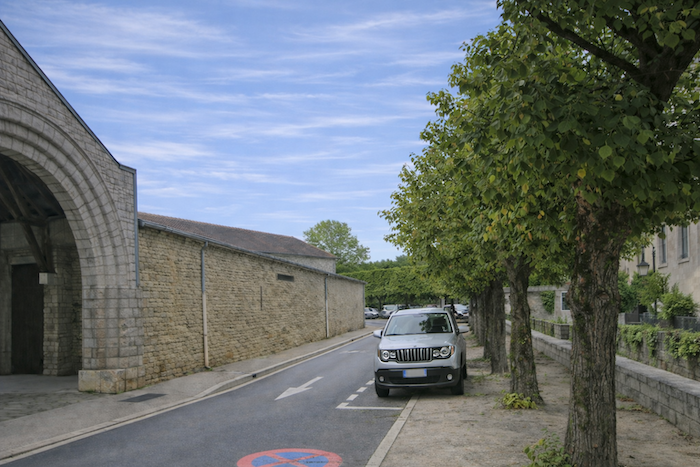
Back at the fork by the Meuzin stream, the route follows a tree-lined path, these trees acting as quiet guardians along the watercourse, like a watery scar in the landscape. This is Quai Fleury, once animated by a washhouse where conversations and daily gestures of washerwomen filled the air. Today, silence has settled in, yet the quay retains the memory of flowing water and vanished voices.
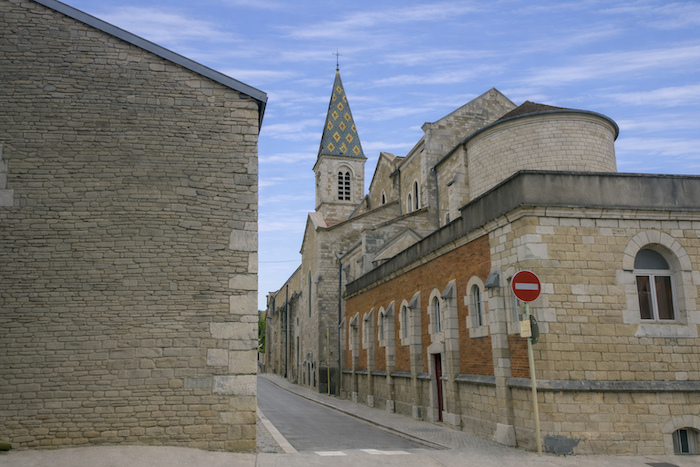
Behind cellars and the massive stone-built winegrowers’ houses, you pass near St Denis Church once more, an immutable landmark encountered again like an old acquaintance greeting the traveler at each stage.
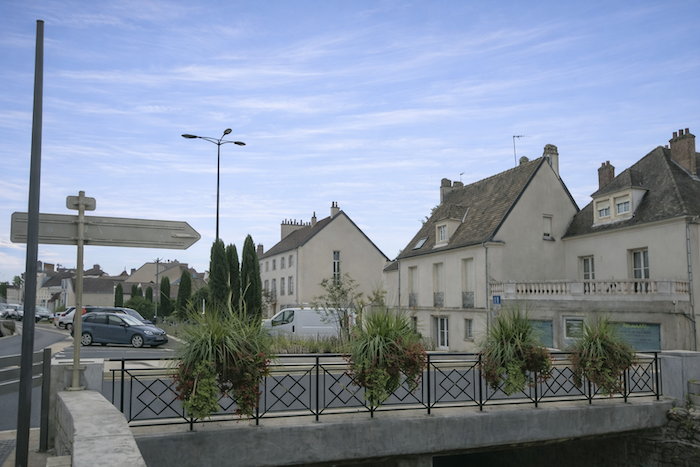
At the lower end of Quai Fleury, the route quickly leaves the town. Here, the Friends of Compostela have not marked the path, yet the attentive walker will recognize the turning. The first narrow street on the right, Rue de Chaux, just after the bridge, leads straight toward the vineyards. There, another adventure begins, between rows of vines aligned like a disciplined army and a sky stretching endlessly above.
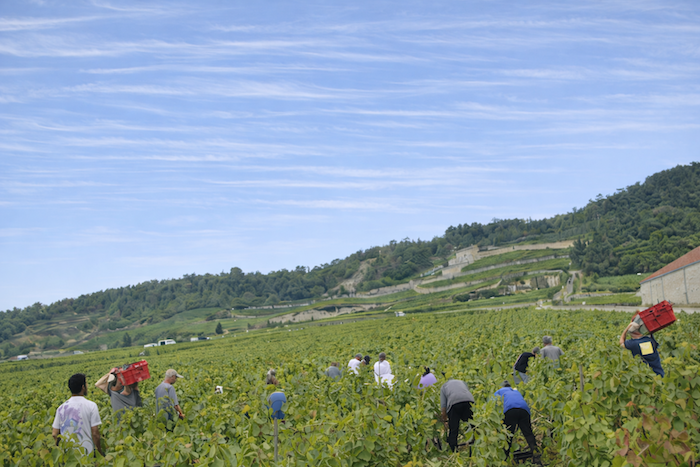
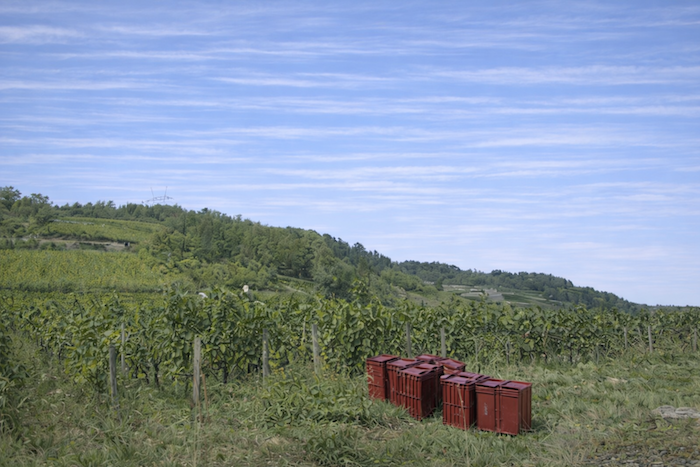
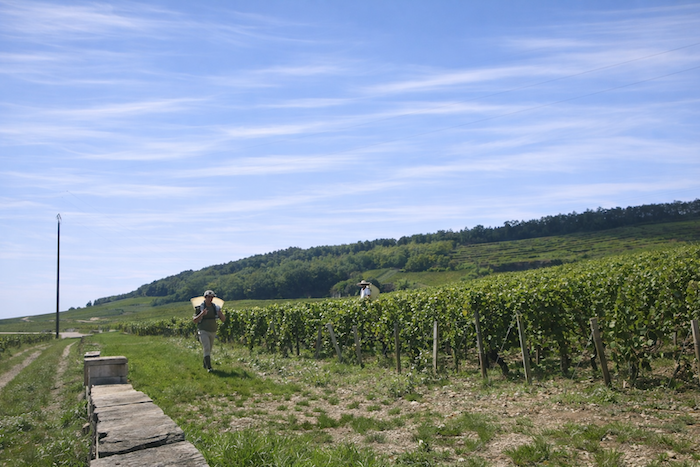
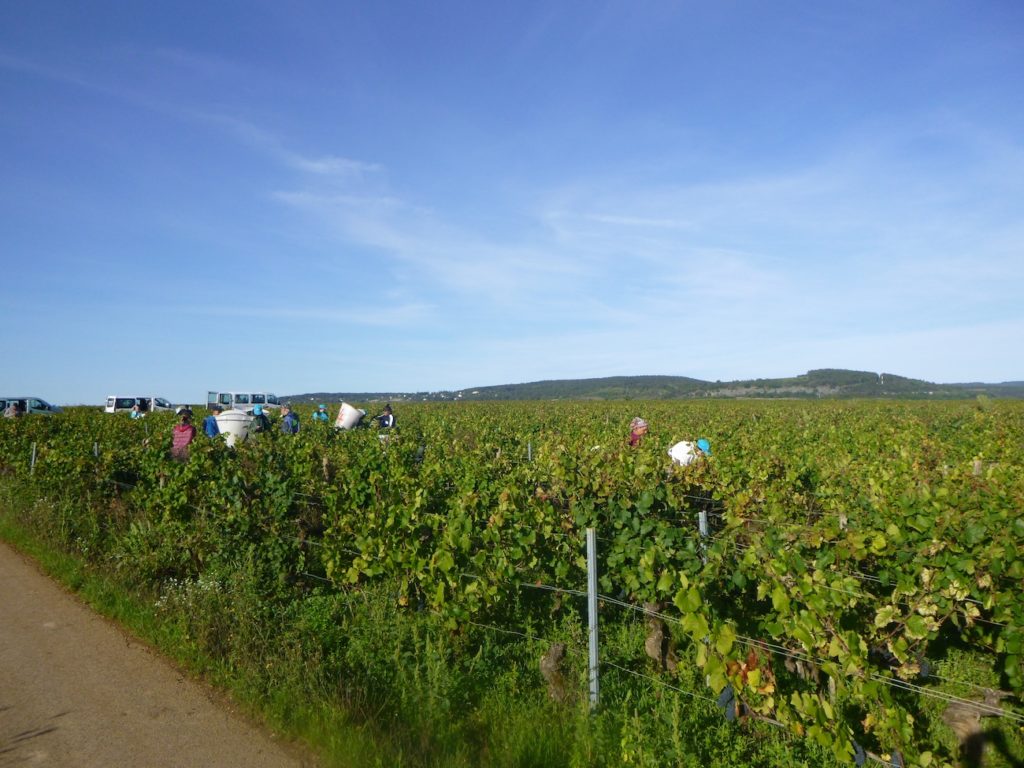
Here, the harvest is under way. In Burgundy, the rows of vines are so narrow and so tightly spaced that they form a barrier against mechanisation. Machines cannot enter. Everything is still done by hand. Patient hands pick the grapes, strong shoulders carry the brimming tubs, and an entire community of harvesters brings the vineyard to life with voices and gestures. It is a living scene, both immutable and ever renewed, telling the story of a tradition never broken.
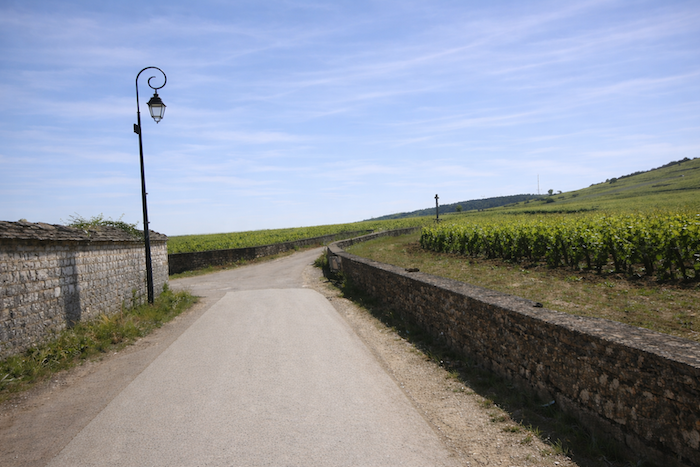
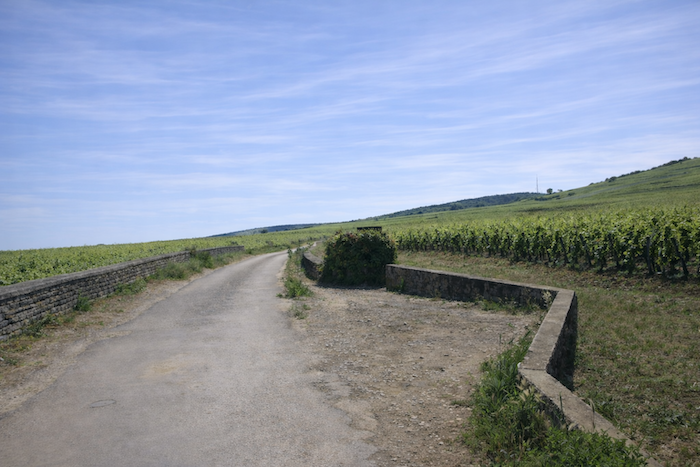
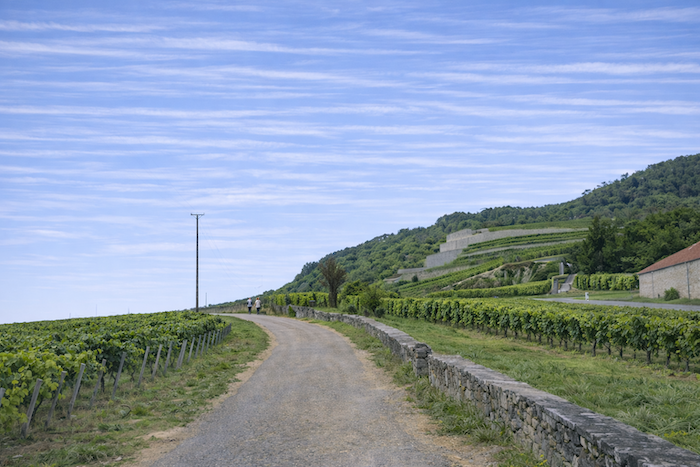
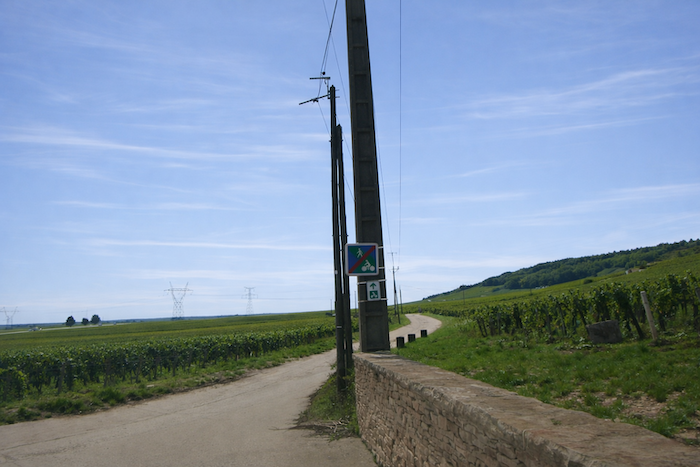
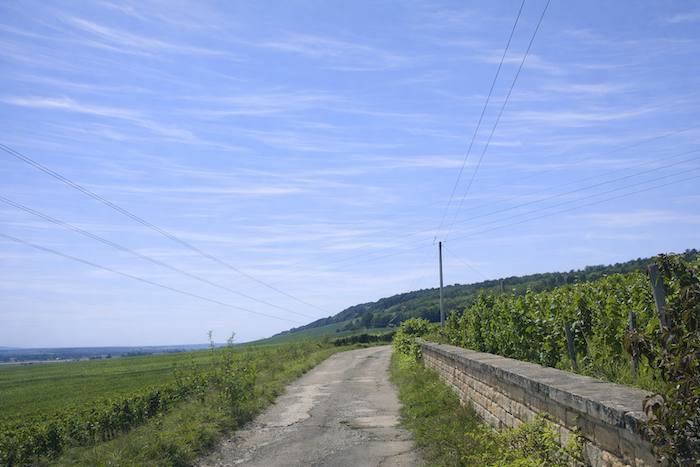
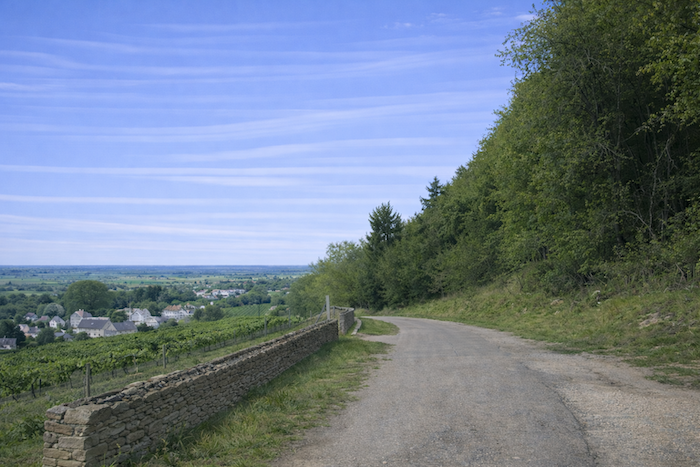
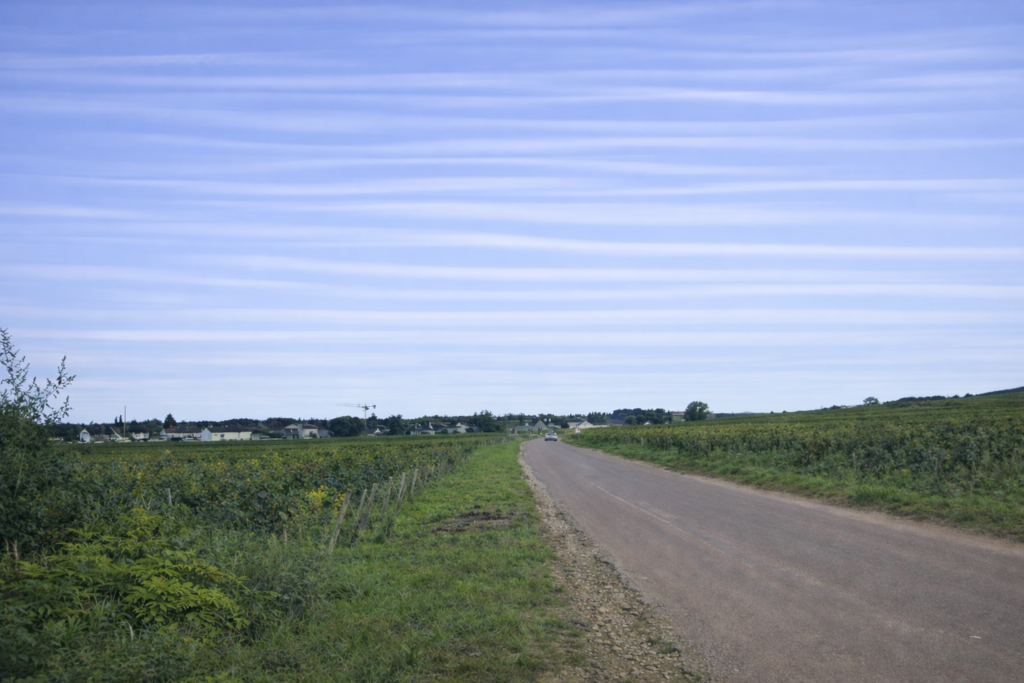
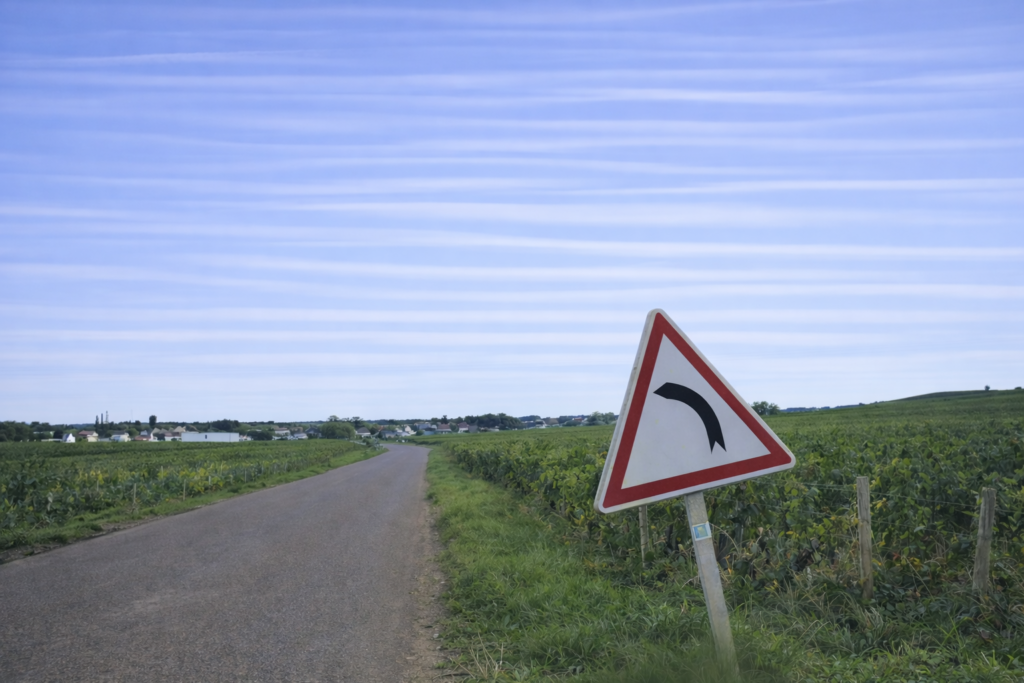
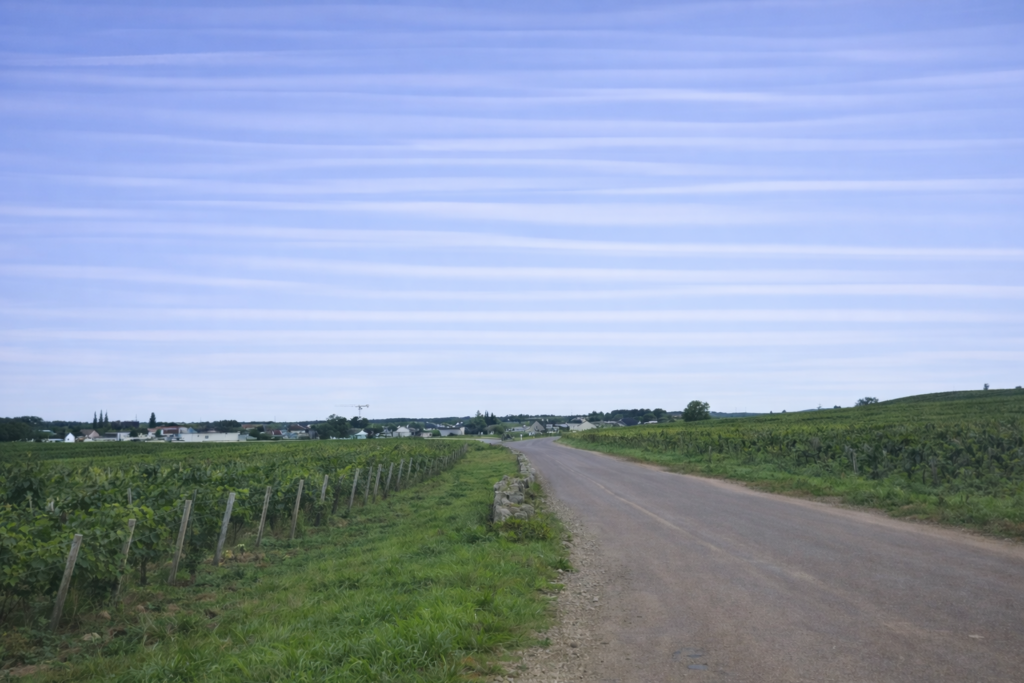
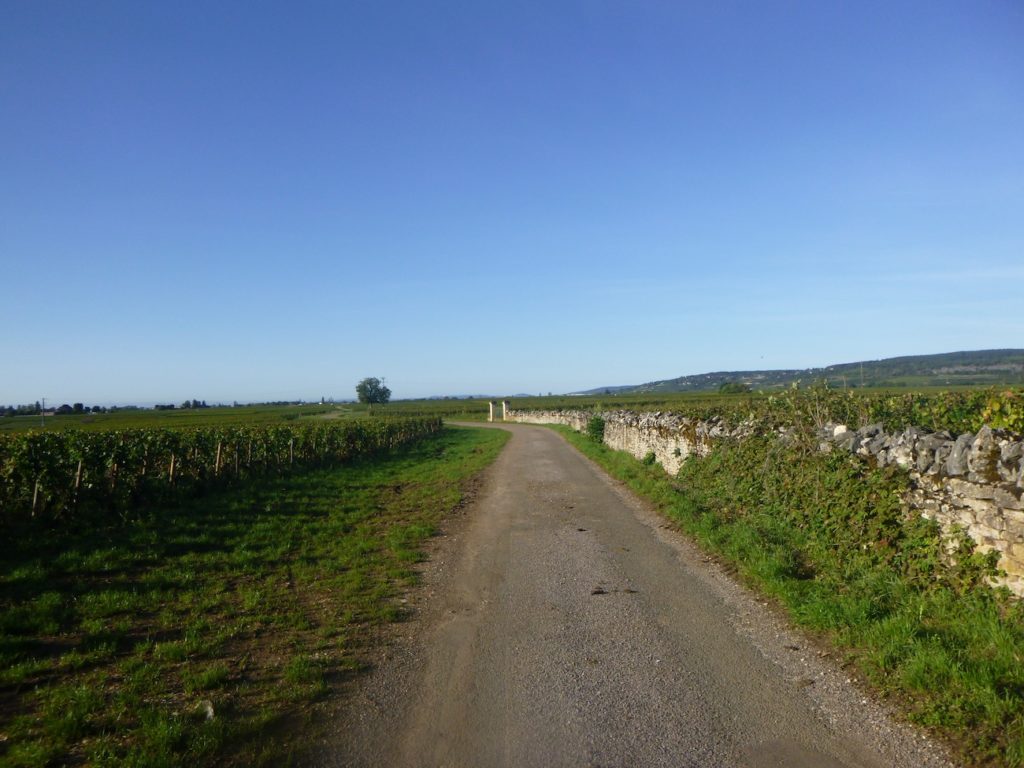
A small road slopes up gently through the heart of the vineyard. It winds between stone walls, austere yet proud, marking the boundaries of the estates. These walls, sometimes built several centuries ago, resemble luminous scars on the skin of the hillside.
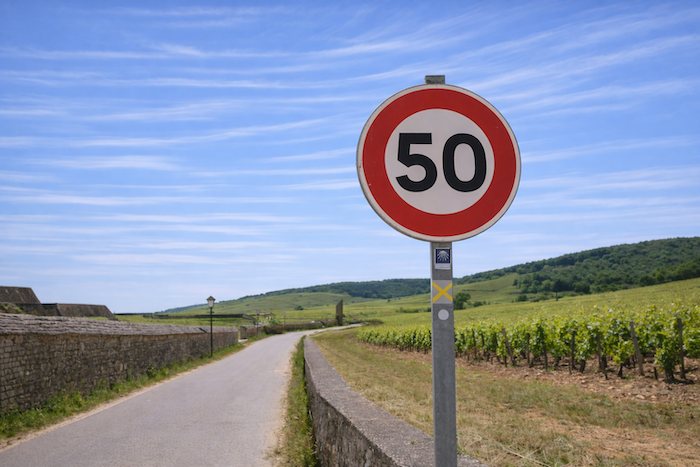
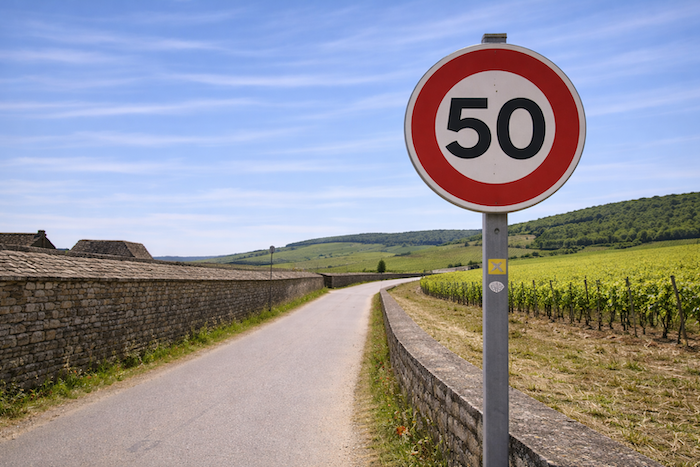
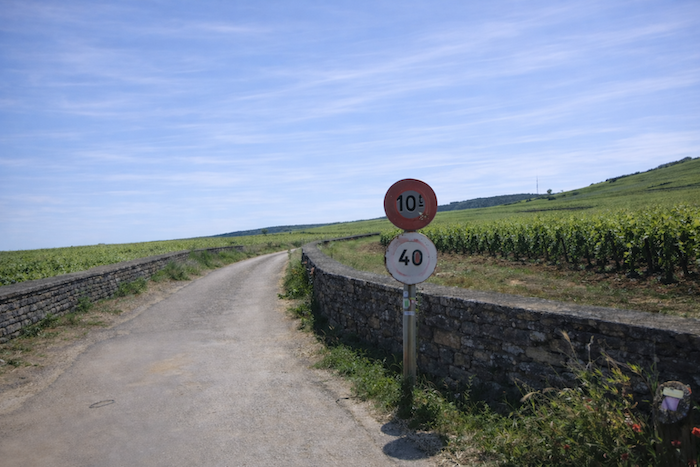
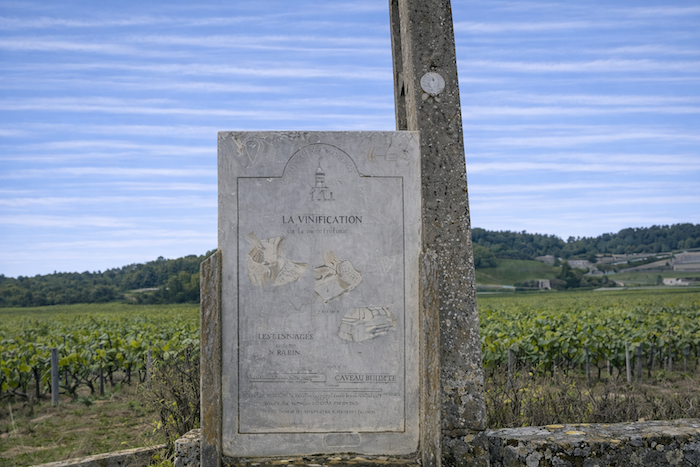
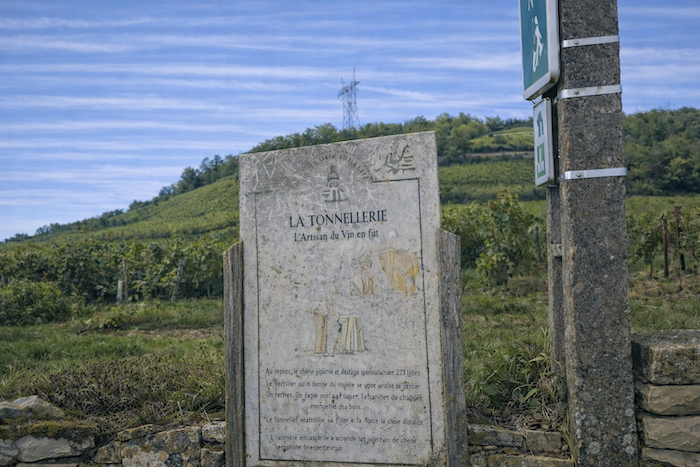
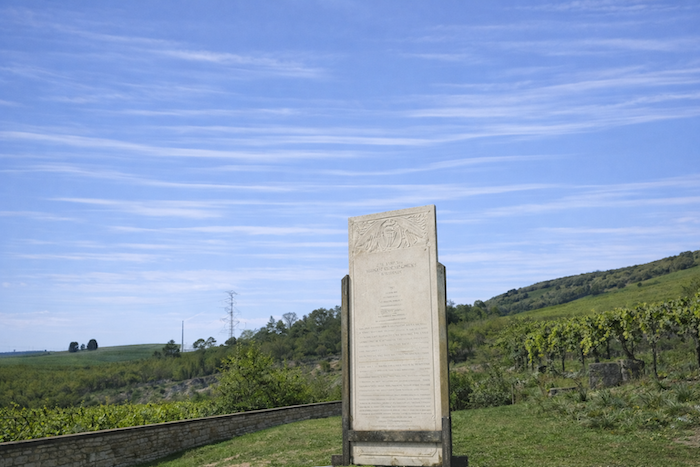
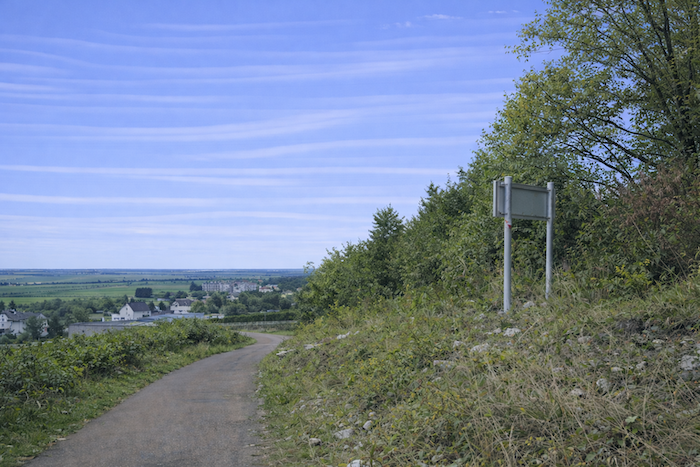
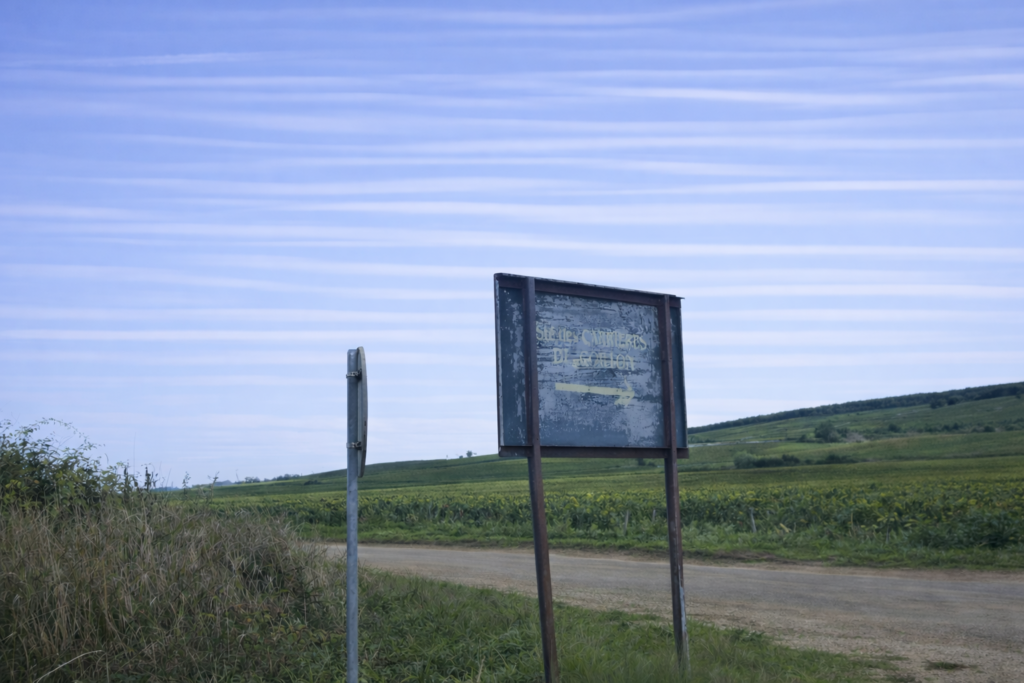
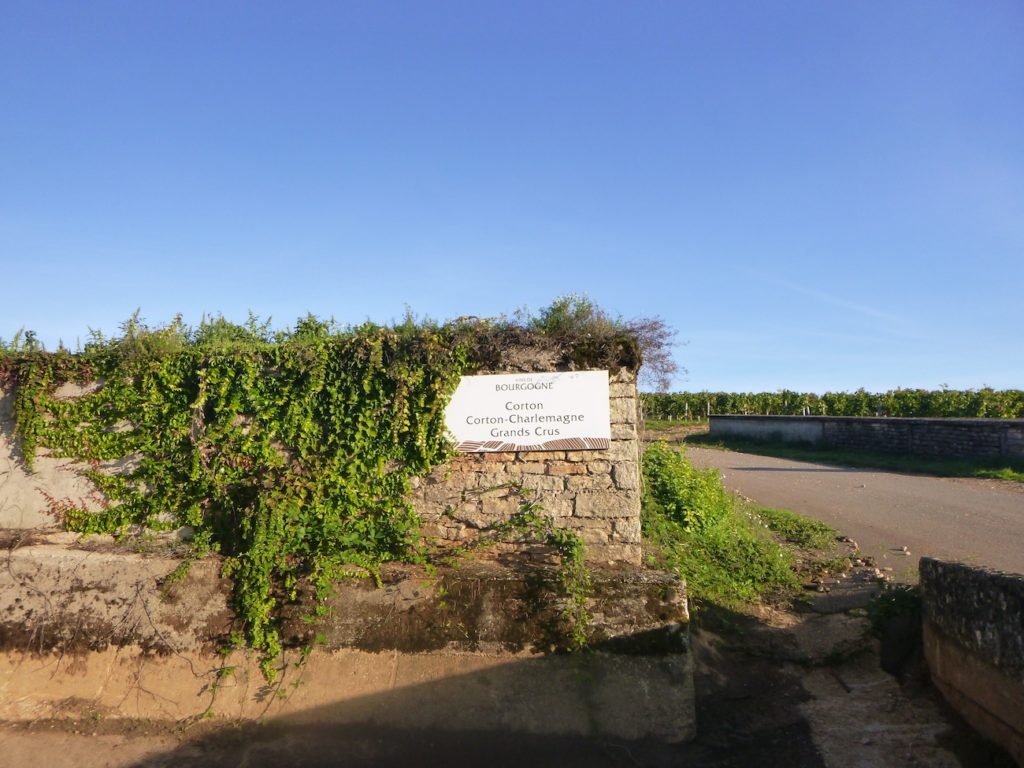
Here and there, old signs worn by weather and time bear witness to vineyard work and the prestigious names of the parcels. They stand like relics softened by age, still capable of whispering the history of these lands to passing travelers.
The Nuits-Saint-Georges AOC primarily produces red wines from Pinot Noir. A few rare whites, born of Chardonnay, appear as a bright exception. This prestigious terroir contains forty-one “climats” classified as Premier Cru, shared between Nuits-Saint-Georges and Prémeaux-Prissey. Unlike its illustrious neighbors, however, the town has no Grand Cru. Paradoxically, this absence is also a strength. Prices remain more accessible, allowing enthusiasts to discover deep and sincere wines without them being reserved for a privileged few. The town stands at the center of the vineyard like a pause between two slopes, dividing and uniting its parcels at once.
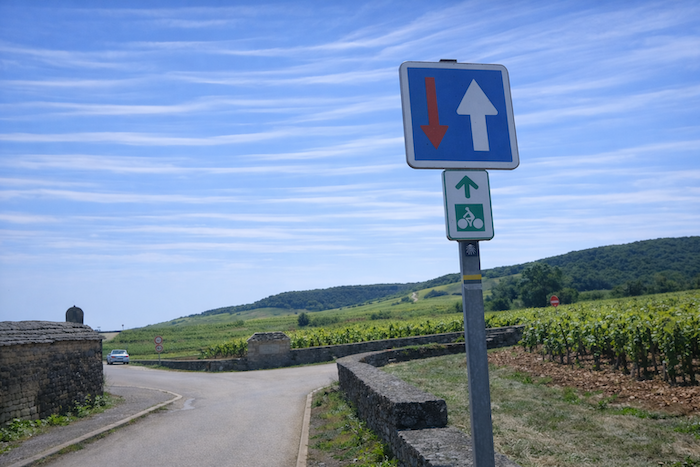
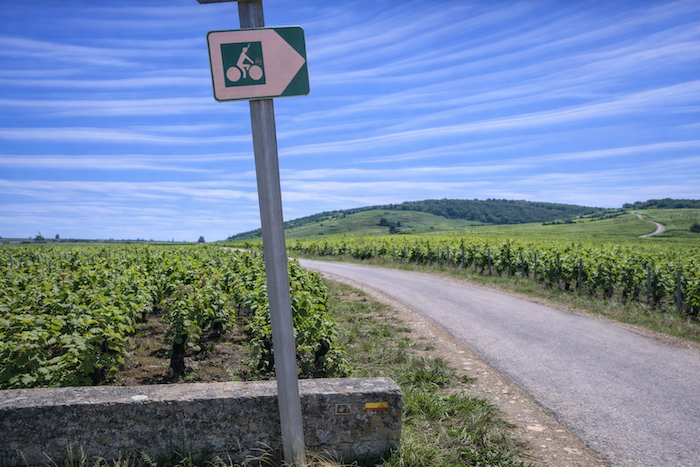
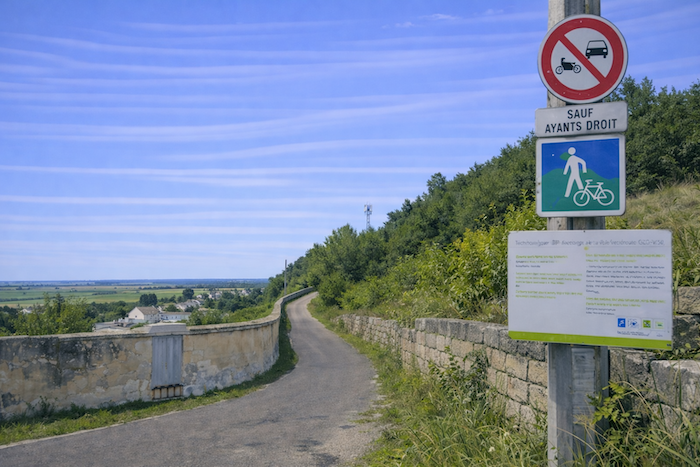
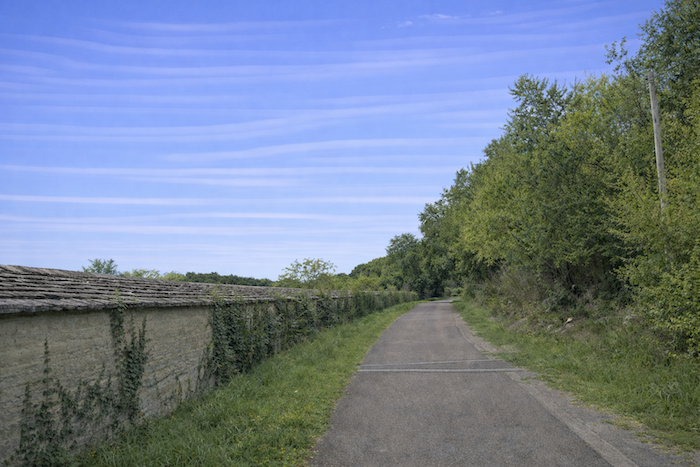
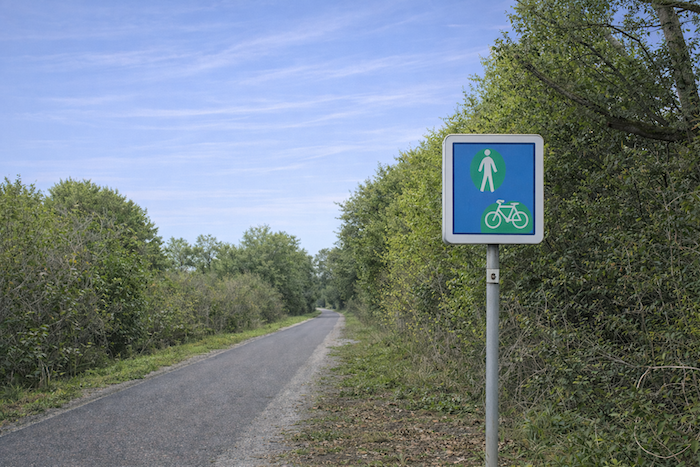
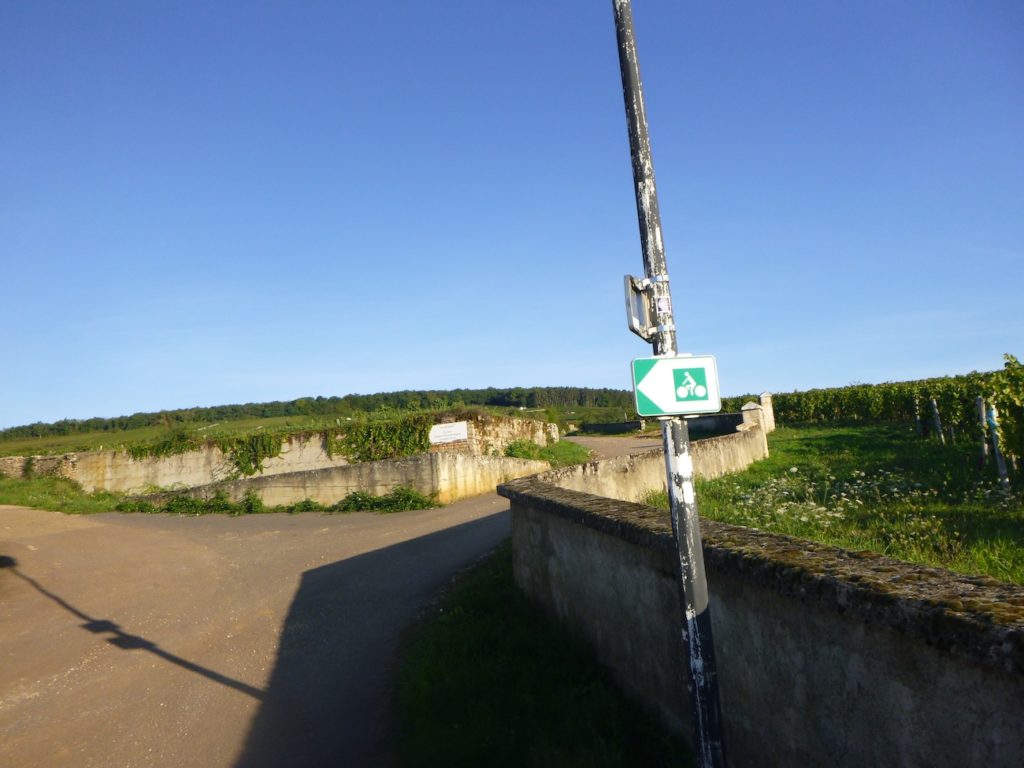
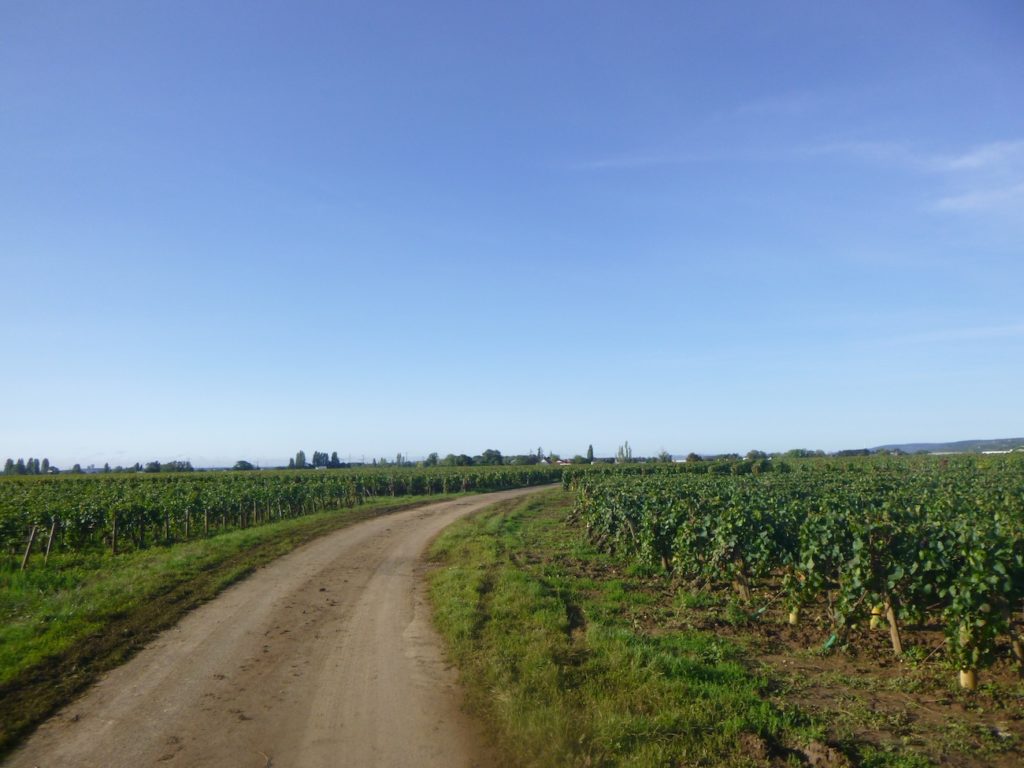
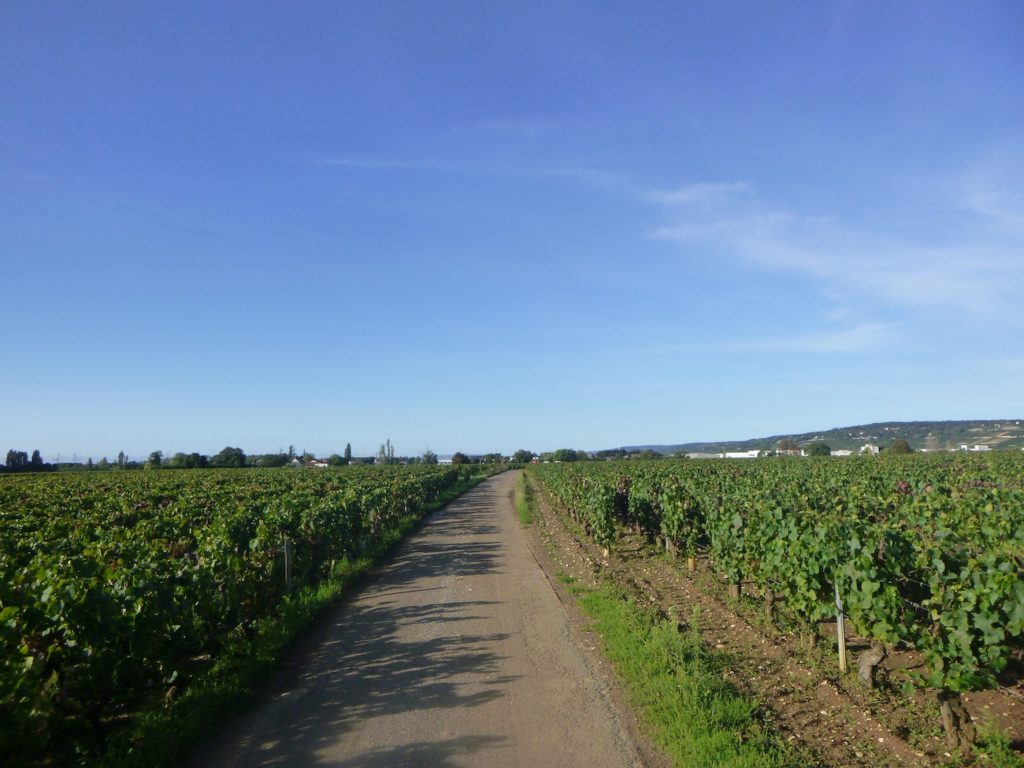
The route then follows, for a few hundred meters, the cycle path stretching straight ahead, gliding like a discreet thread between the rows of vines.
Further on, however, the route abandons this gentle line to climb toward the slopes. Faithful to the Compostela arrows, it leaves the softness of the plain and heads upward, inviting an ascent that is as inward as it is physical.
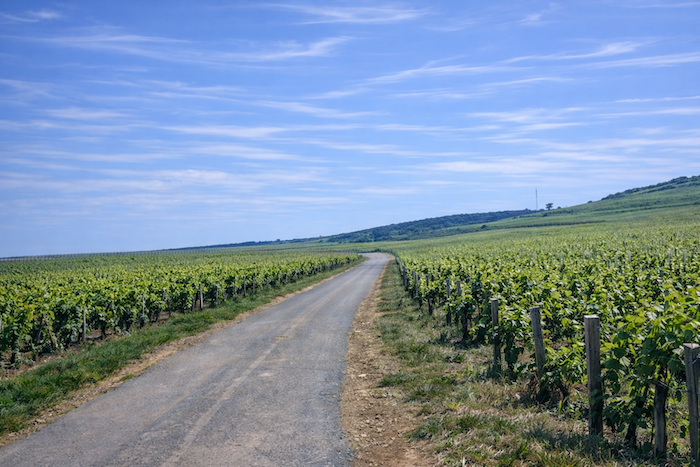
It is then an asphalt road, slightly uneven, that leads you higher onto the rise, running alongside the rows of vines.
Higher still, the road runs near the underground quarries of Nuits-Saint-Georges, immense galleries carved into the earth, true invisible cathedrals. They are sometimes compared to holes in Emmental cheese, so dense and labyrinthine is their network. These entrails of the land also tell the story of humankind, shaped in stone and in wine.
The vines stretch from the hilltop down into the plain, where the departmental road runs.
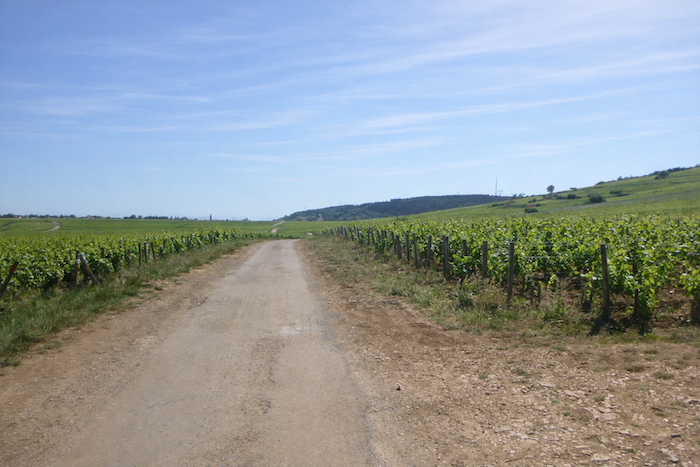
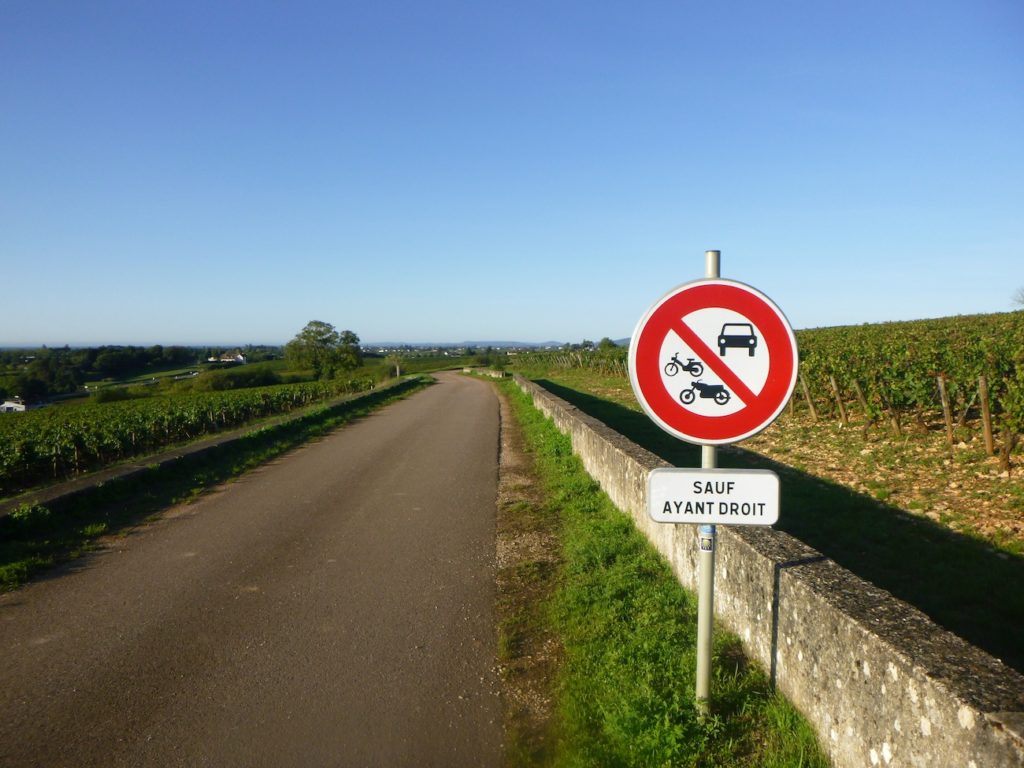
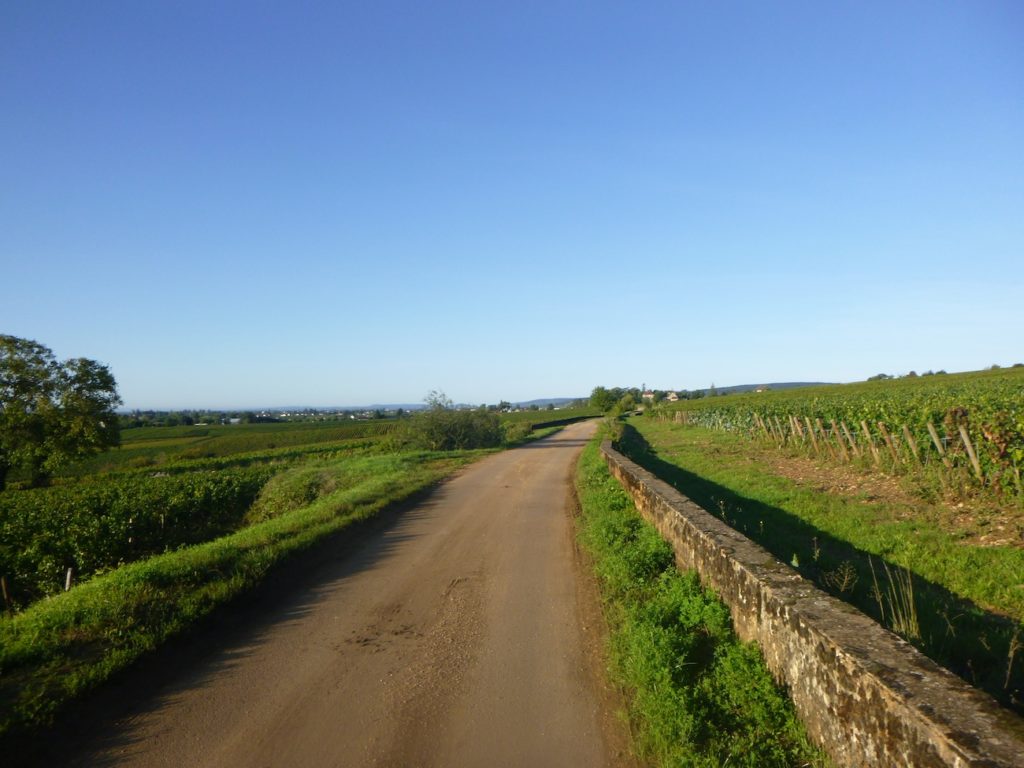
The route then briefly leaves the asphalt for dirt.
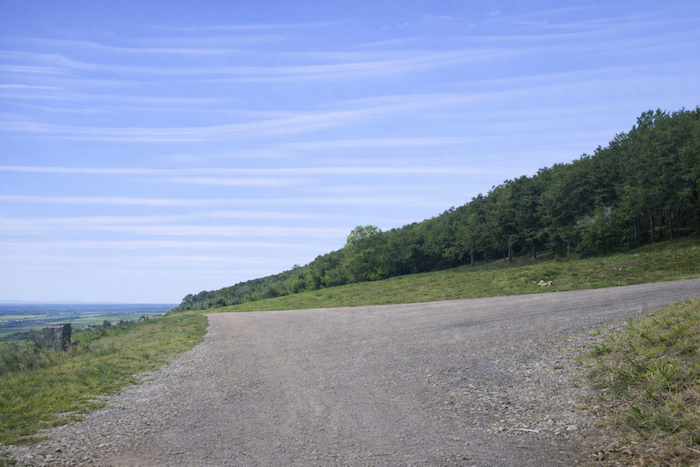
It plunges onto a stony path, flat yet harsh underfoot. Stones roll and grind beneath each step. All around, harvesters are still at work, bent silhouettes with baskets in hand, embodying the age-old alliance between human patience and the generosity of the soil, like a living painting written over centuries.
Section 3: From the vineyards of Nuits-Saint-Georges to those of Comblanchien
Overview of the route’s challenges: a route with no difficulty at all.
Further on, the stony ground disappears, replaced by asphalt.
The surface, smooth and dark, contrasts with the roughness of the stones, offering the pilgrim’s steps a moment of relief after the harshness of the path.
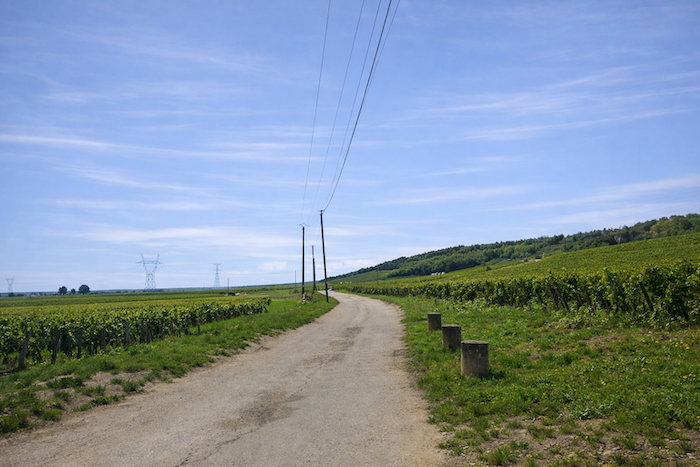
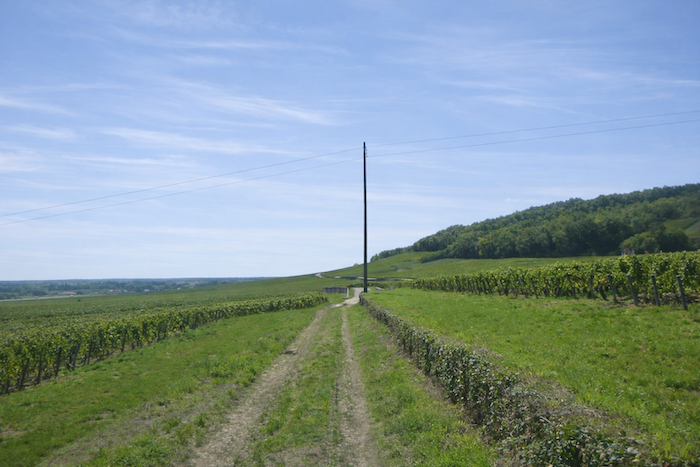
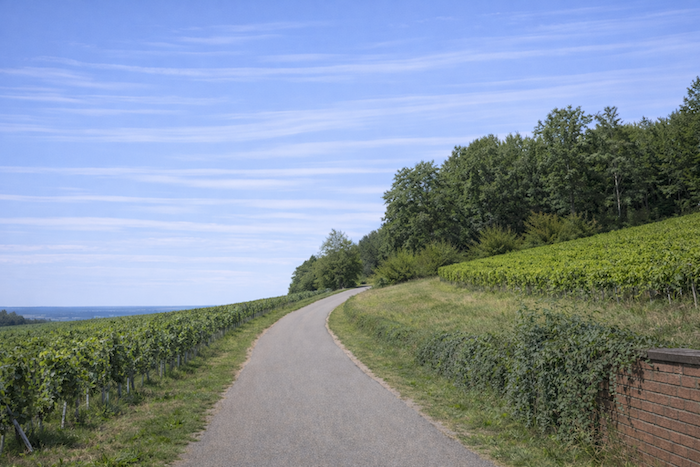
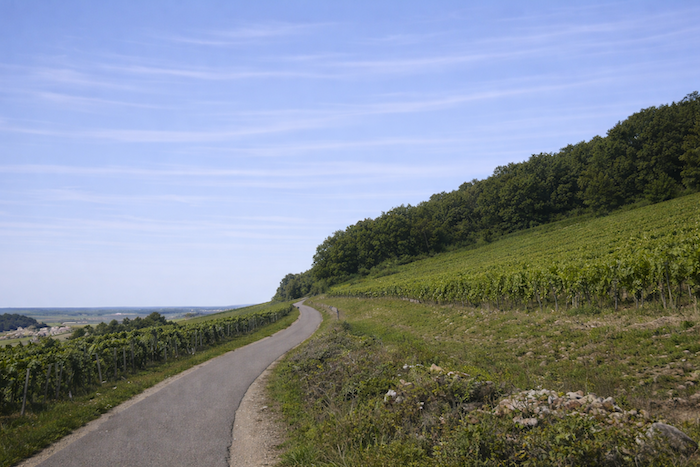
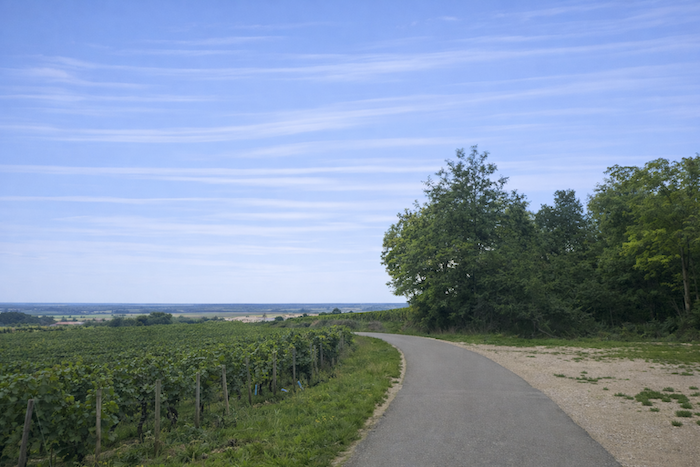
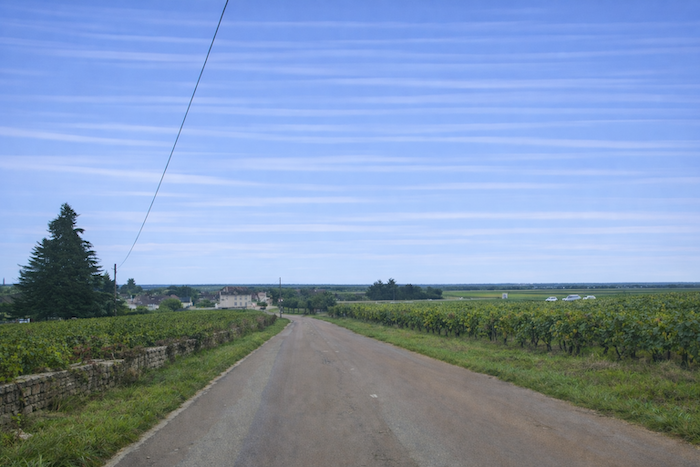
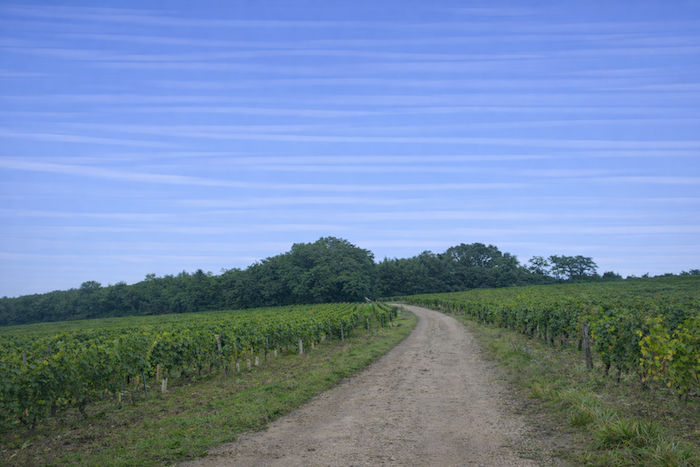
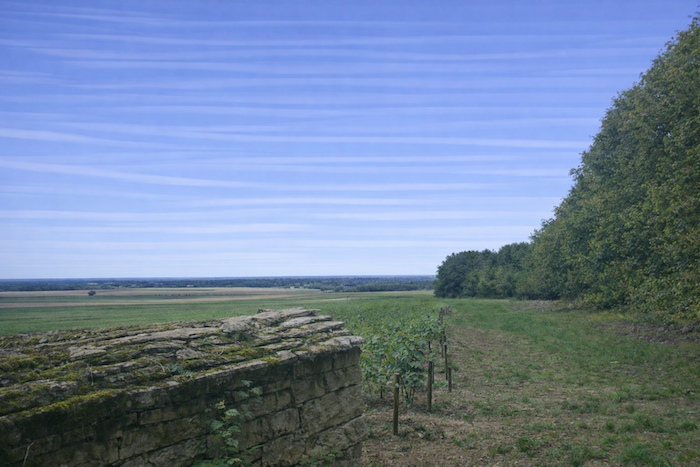
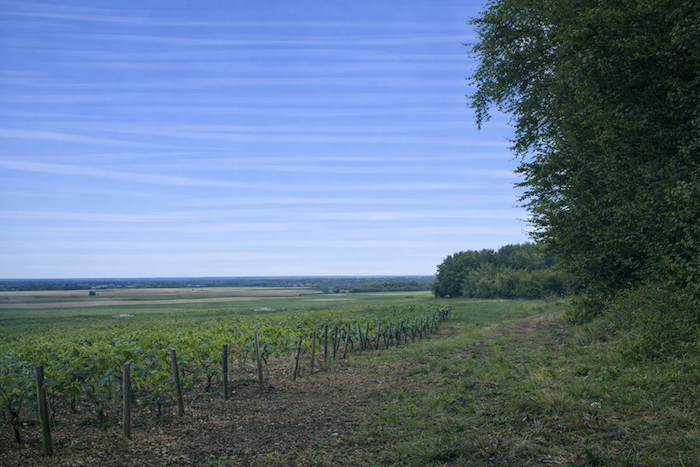
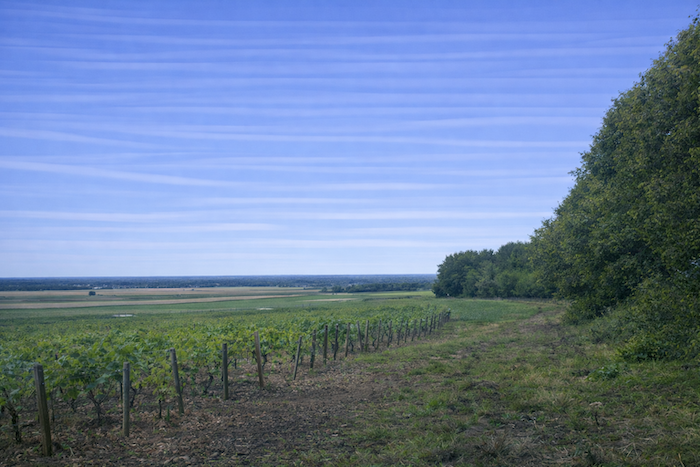
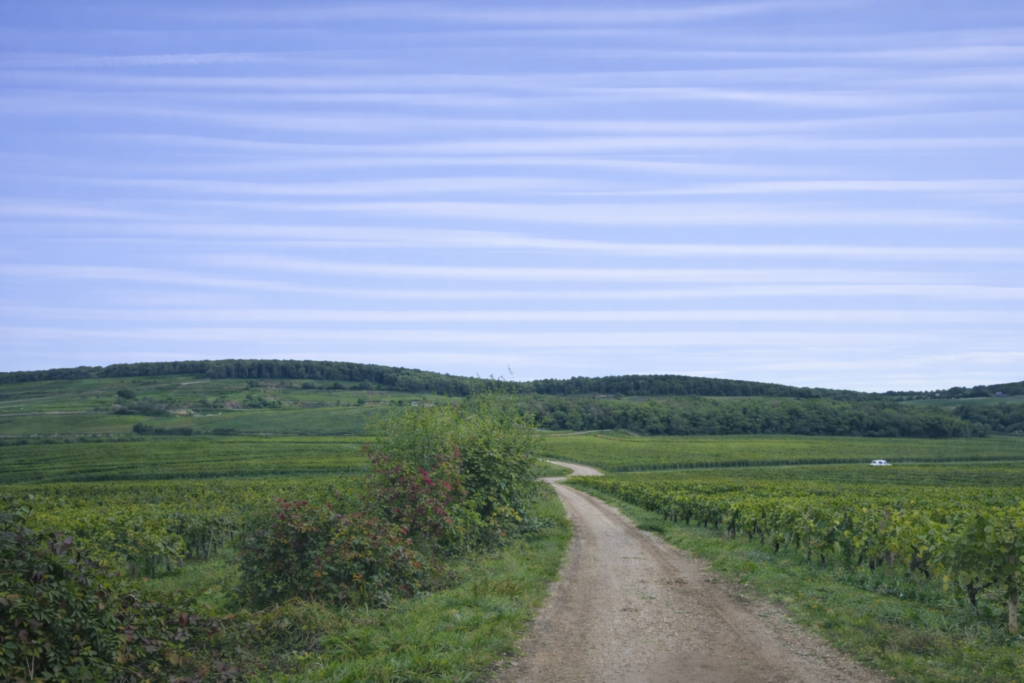
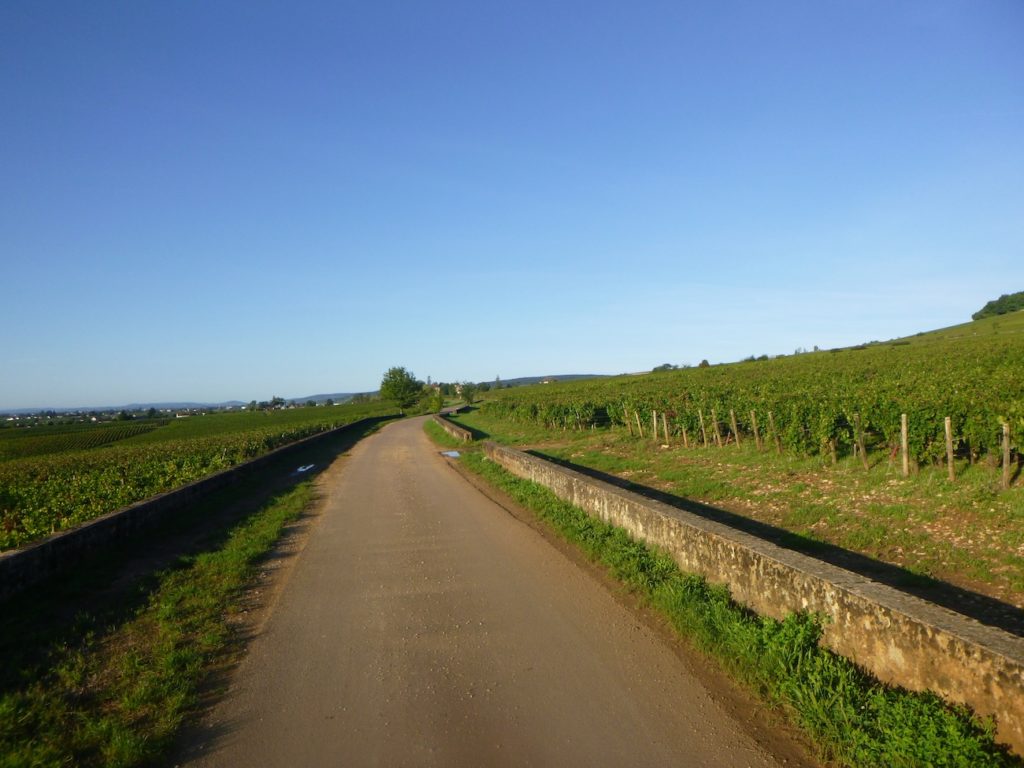
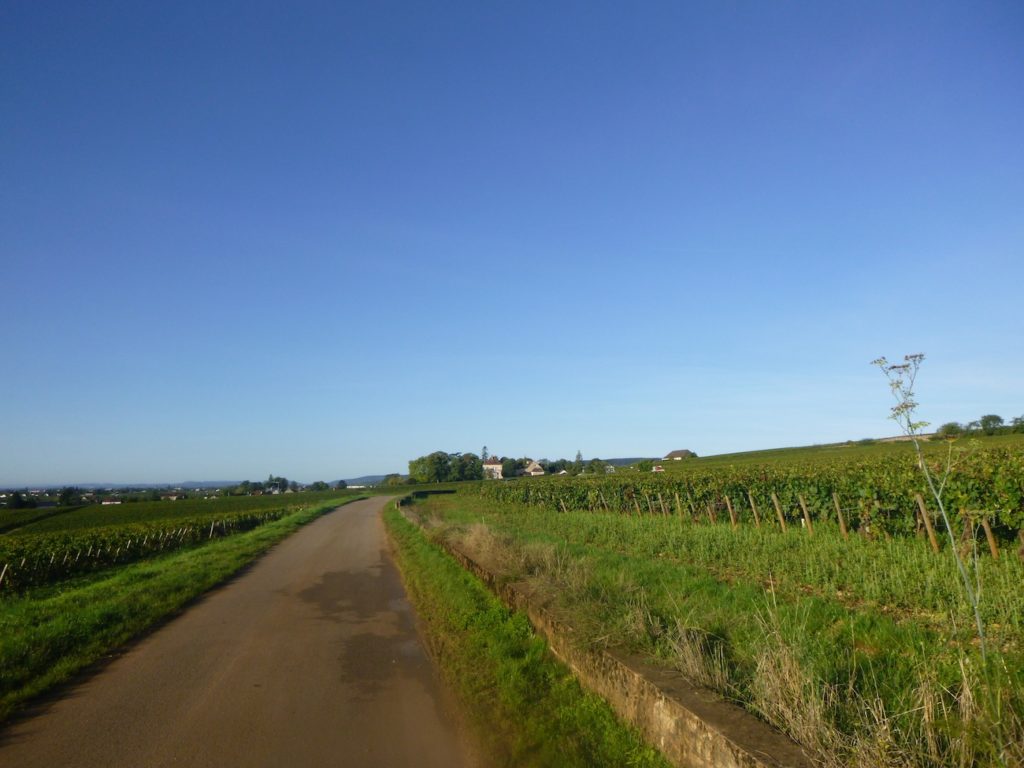
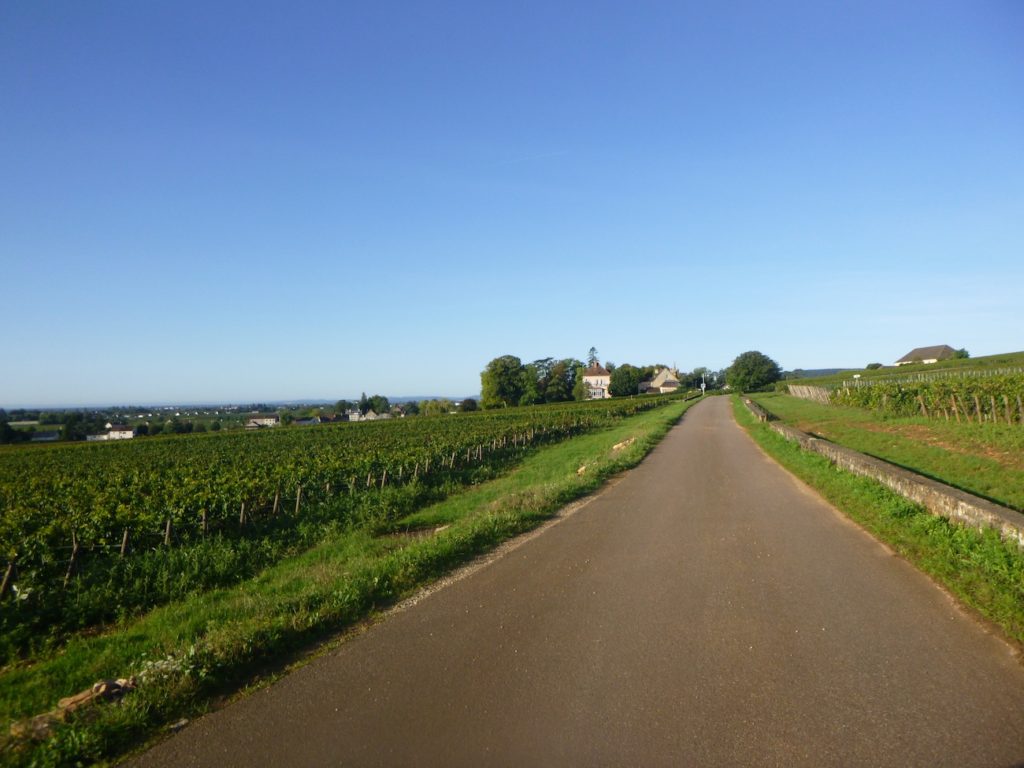
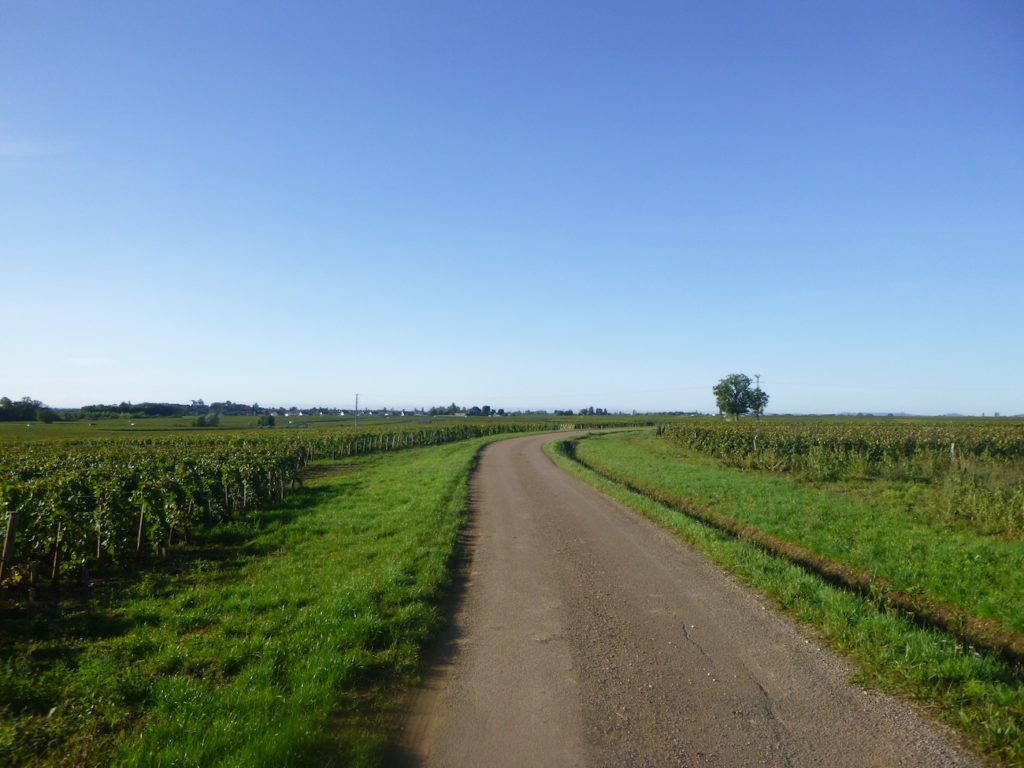
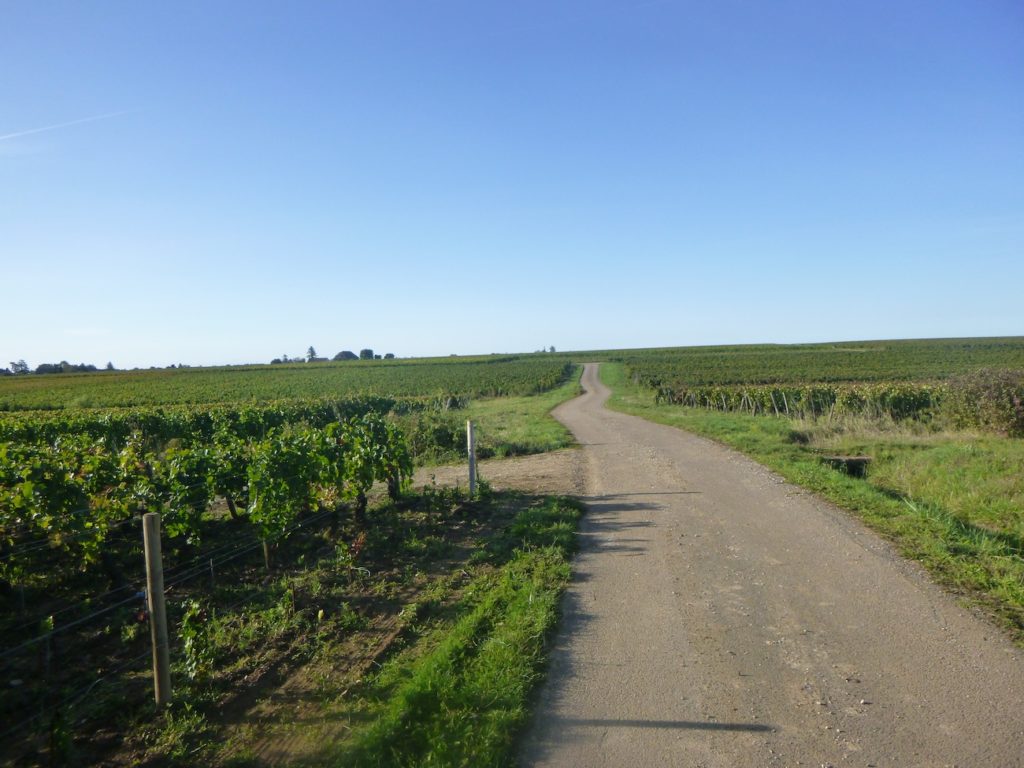
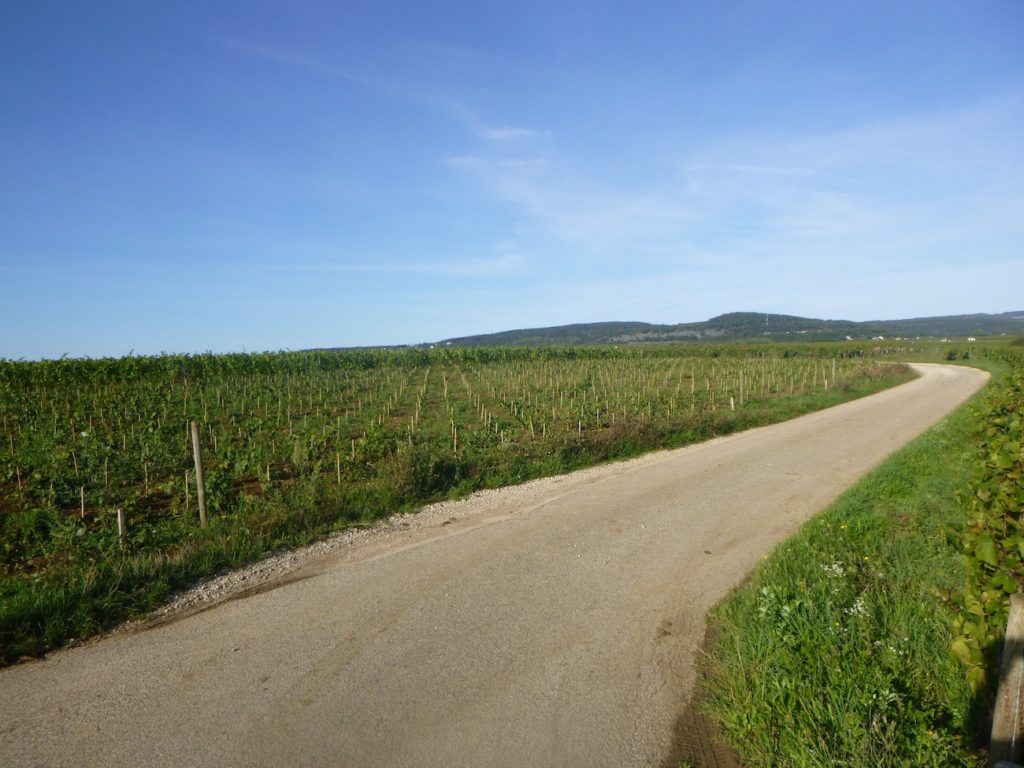
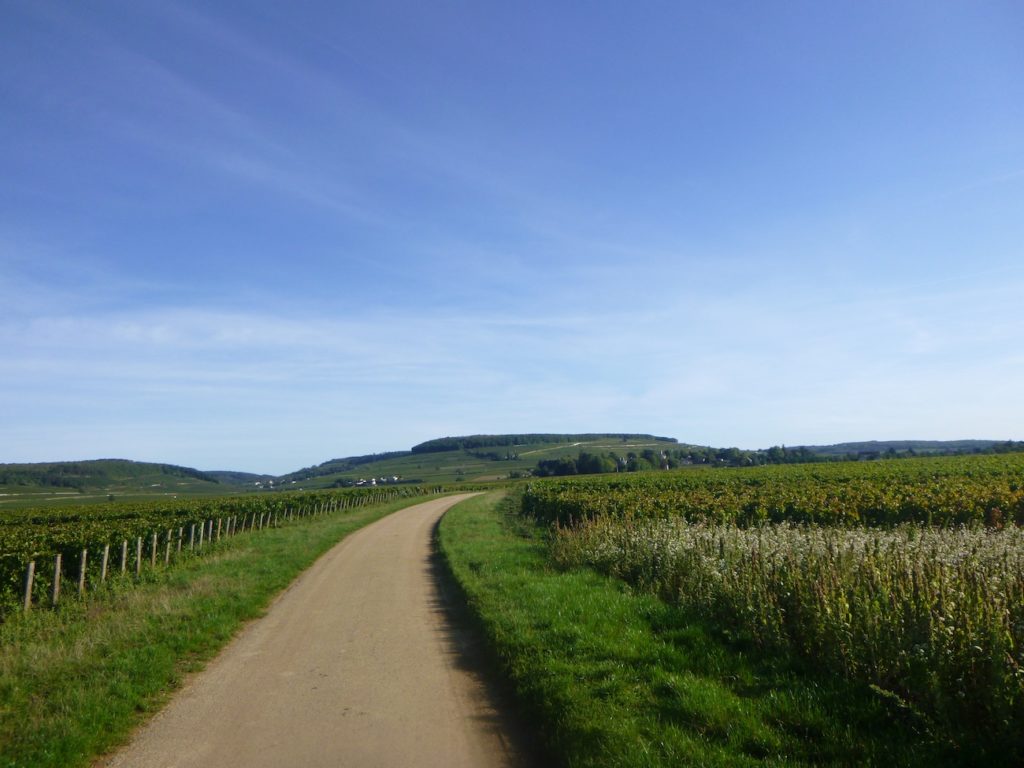
The small road then crosses the vineyard on a gentle slope. It winds like a drowsy serpent among the vines, tracing soft curves through a landscape that opens wide. On the horizon, the rows of vines gradually give way to the promise of a woodland edge, a distant green boundary.
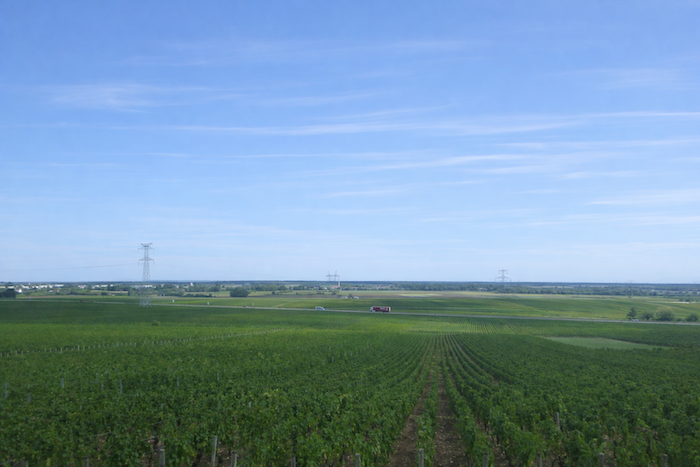
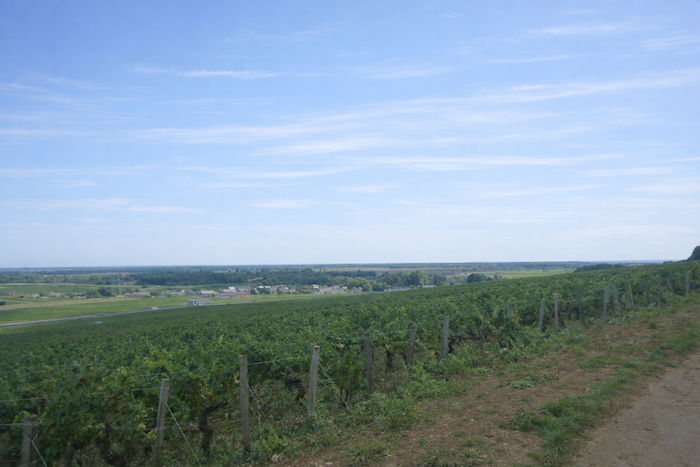
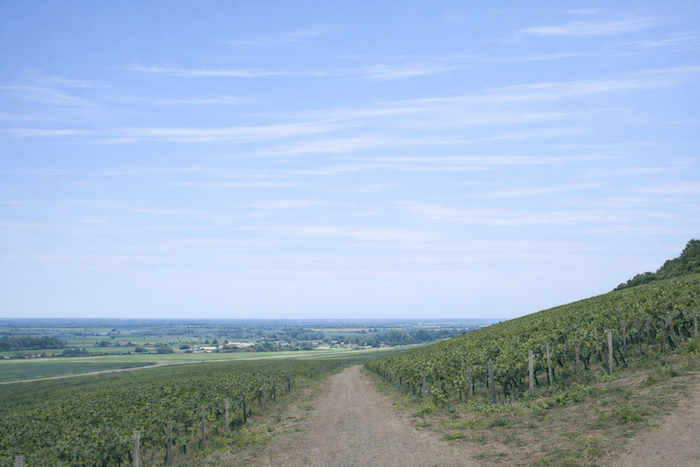
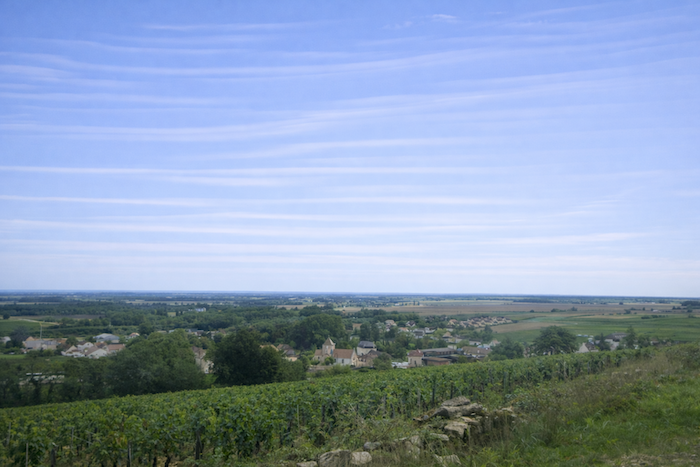
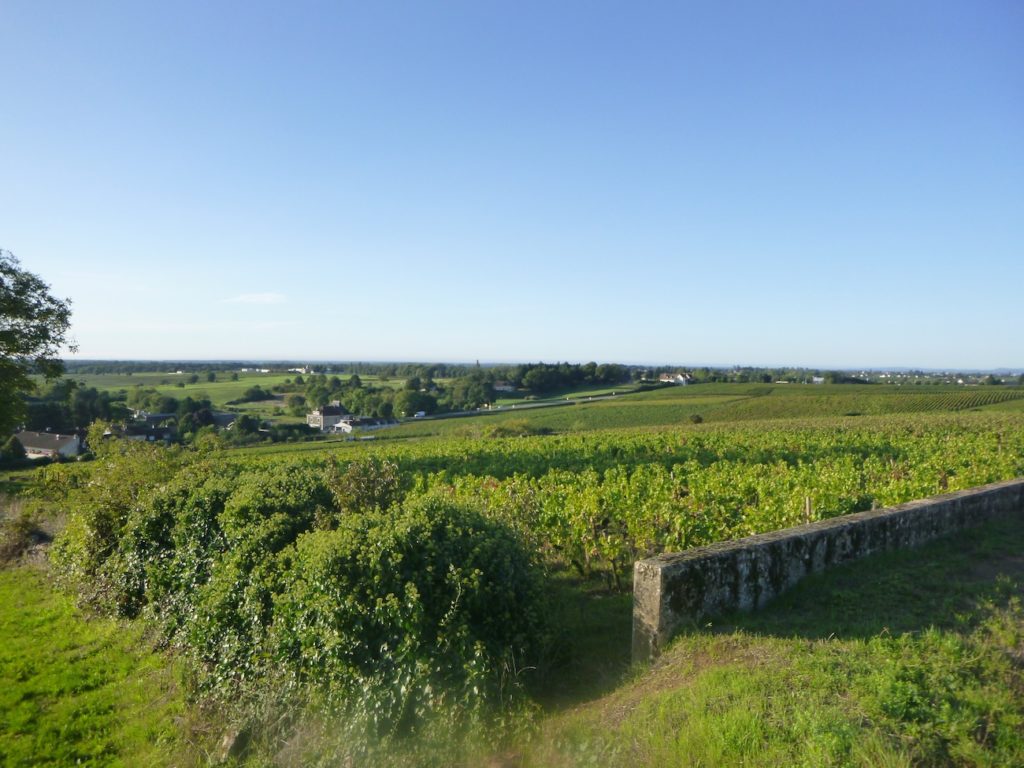
Below, the plain stretches as far as the eye can see, neatly patterned by vineyards. There, vehicles rush along the long straight road that cuts across the plain, a human trace that contrasts sharply with the unchanging slowness of vineyard work.
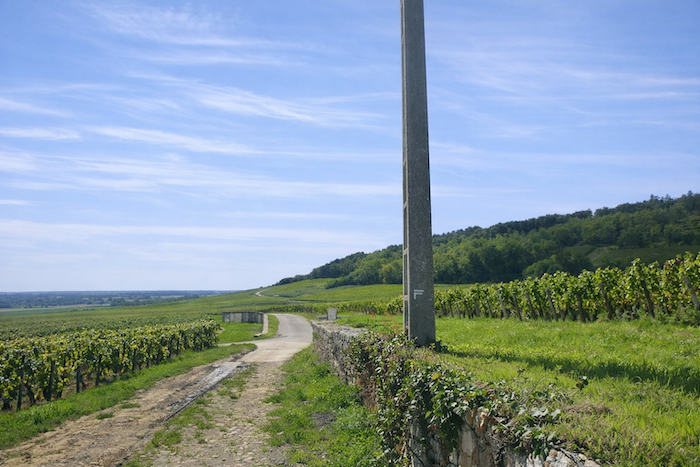
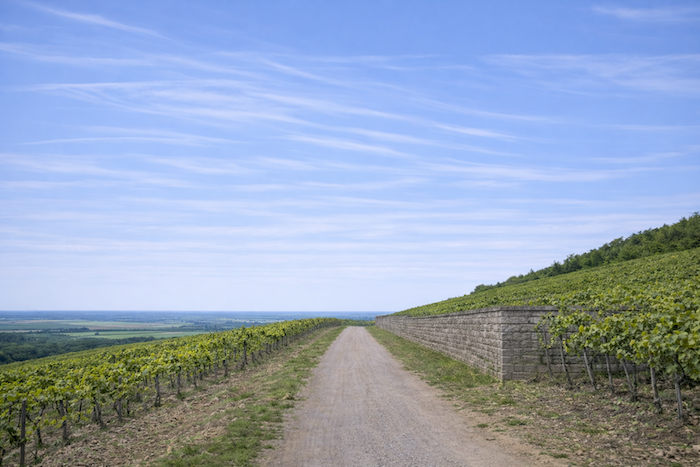
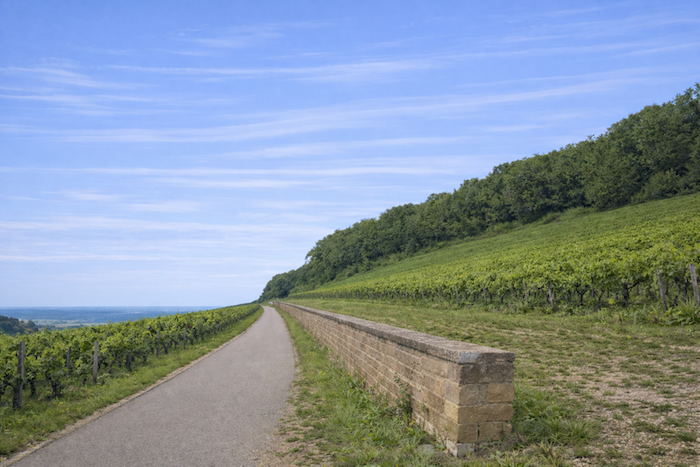
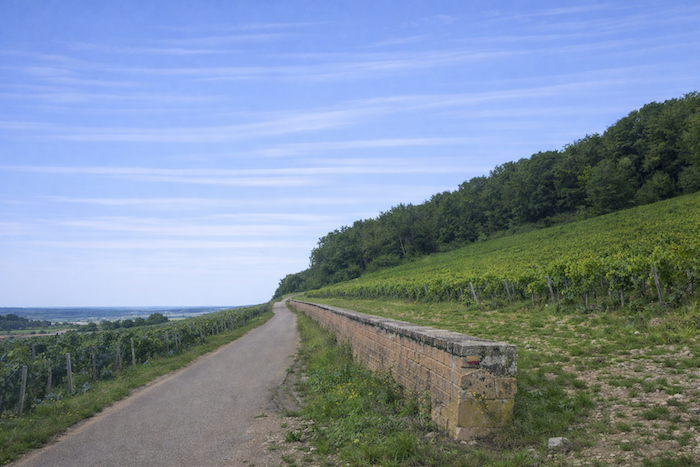
Further on, the road slopes up gently, without harshness. The stone walls lining it, sometimes collapsed, sometimes standing proudly, mark the boundaries of the parcels, as if to signal the importance of the crus they enclose. Behind these stones lie, no doubt, more prestigious “climats”, jealously preserved through generations.
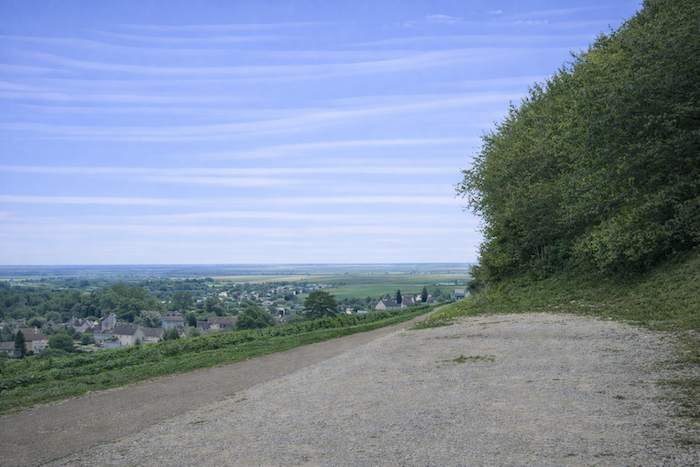
The road gradually reaches the top of the hill, then dips slightly. Below, the plain spreads out like a carpet, and the village of Prémeaux-Prissey can be glimpsed, set into the hollow of the landscape like a discreet jewel cradled in its setting of vines.
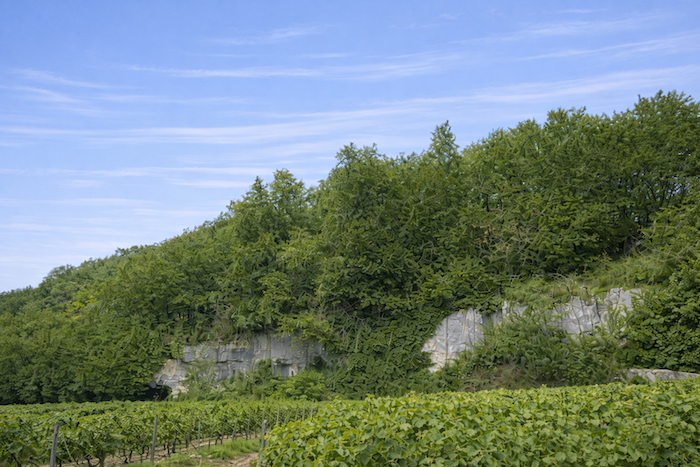
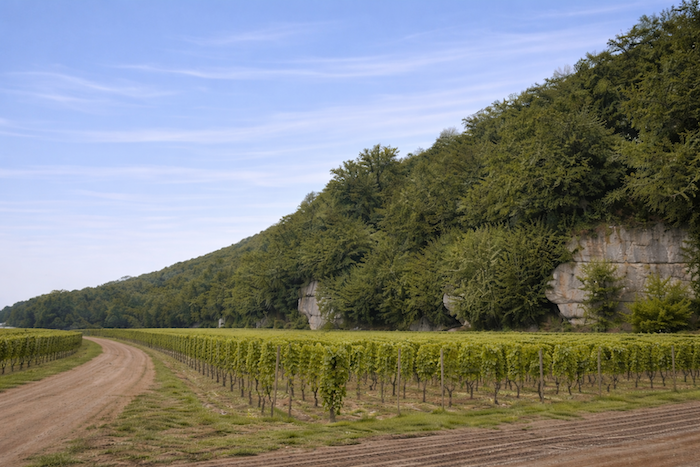
Here, the road brushes past the limestone cliffs of Nuits-Saint-Georges. These rocks, shaped over millennia, form the true framework of the Burgundian vineyard. It is in these subtle breaks, in these variations of slope and soil depth, that the diversity and richness of the crus find their explanation. Not every parcel has received the same geological favor, and not all enjoy a place at the summit of renown, yet each expresses a singular voice.
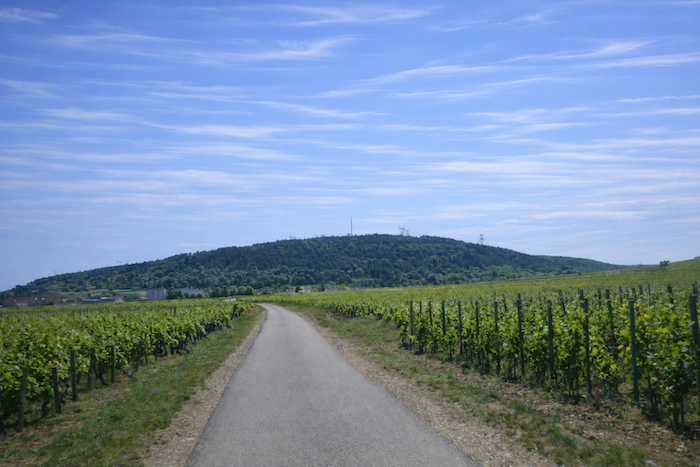
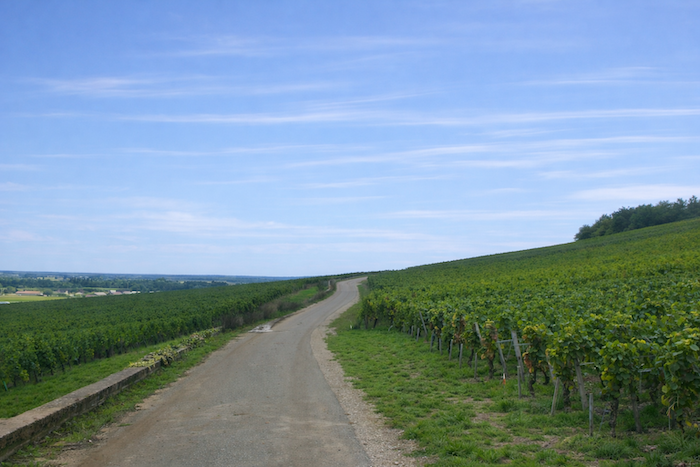
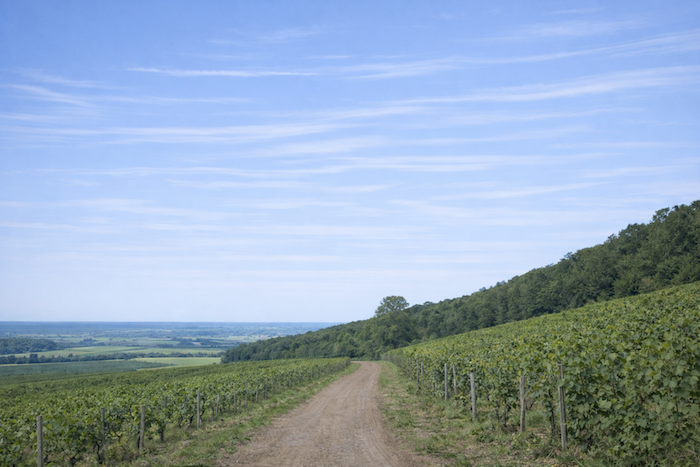
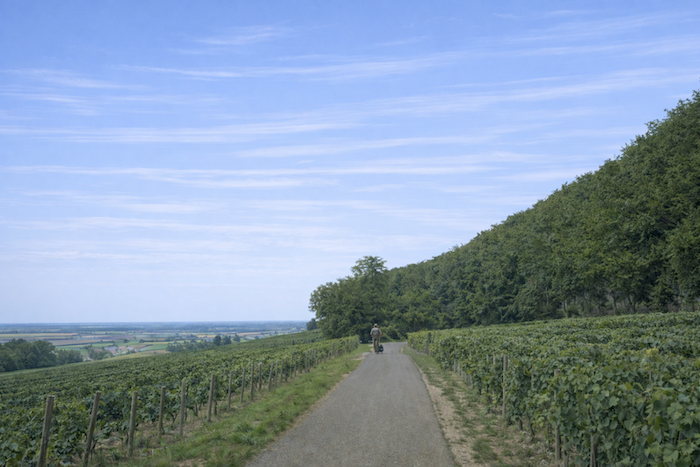
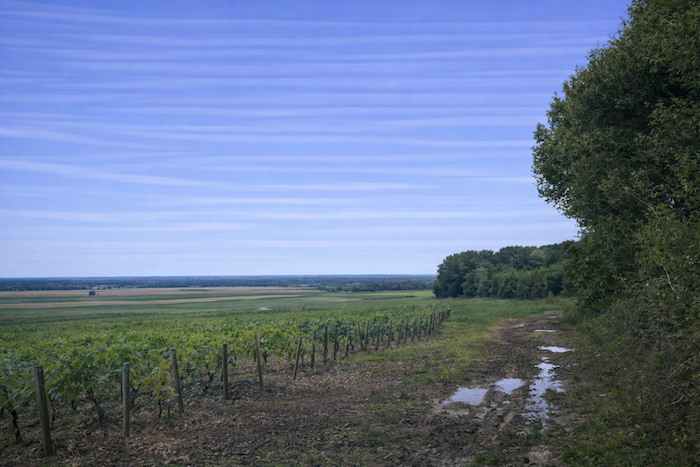
The road then undulates through the vineyard, gliding beneath the edge of the woodland. It stretches like a gentle caress along the hillside, half in shade, half in light.
It is like a concrete serpent, unhurried and subdued, threading through the beautiful vineyard just above Prémeaux-Prissey.
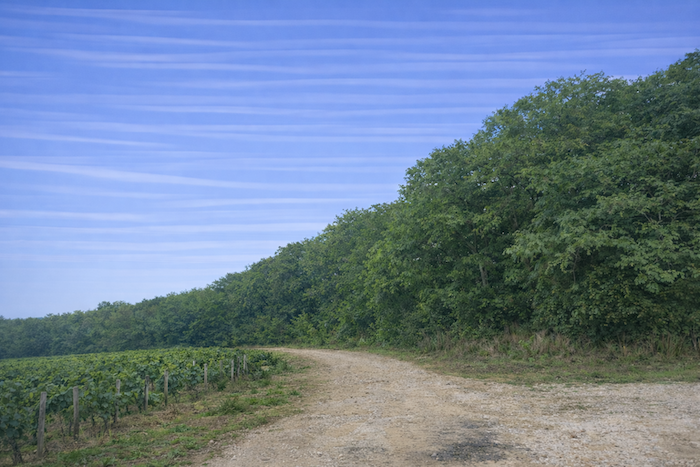
One last effort, a slightly more pronounced climb, and the road finally rejoins the hill and the woodland, just above the village. The pace naturally slows, as if the forest were imposing its own soothing rhythm.
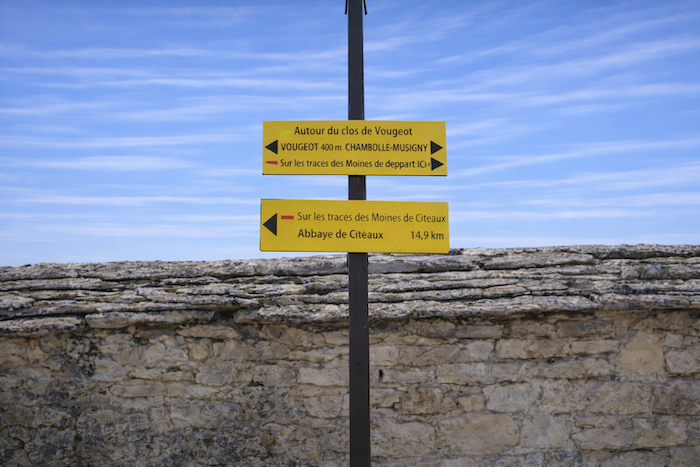
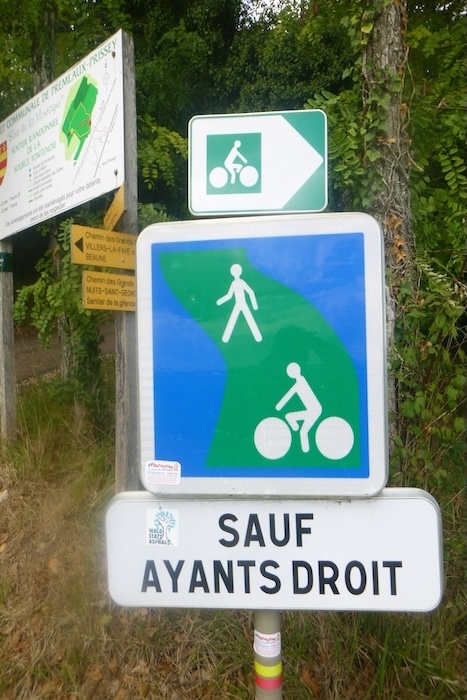
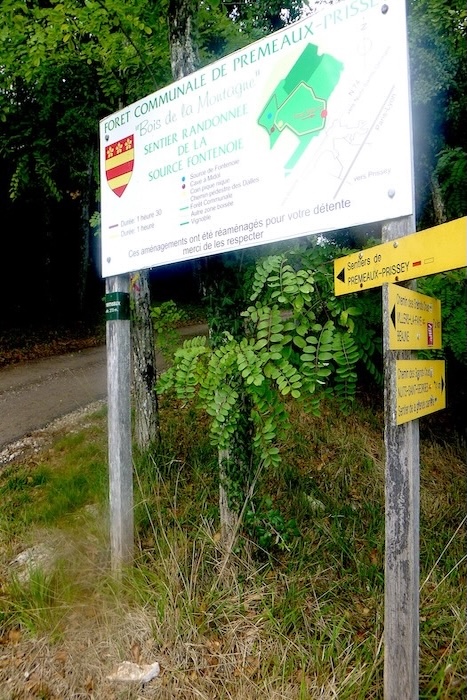
Signposts appear, recalling the various itineraries available in the region. Yet the way forward leaves no doubt. It continues straight ahead, self-evident, faithful to the line of Santiago.
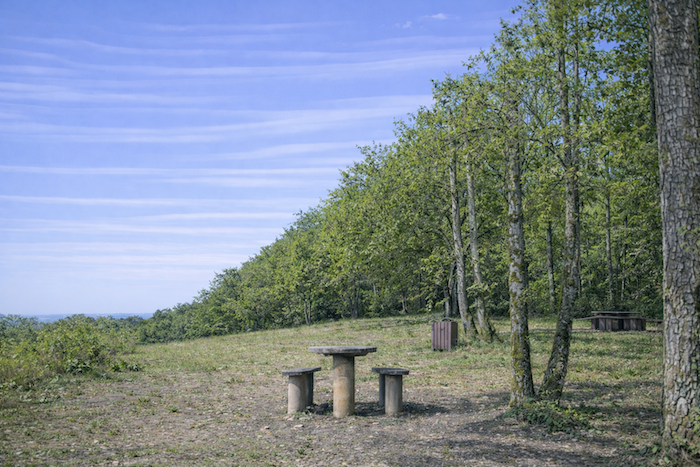
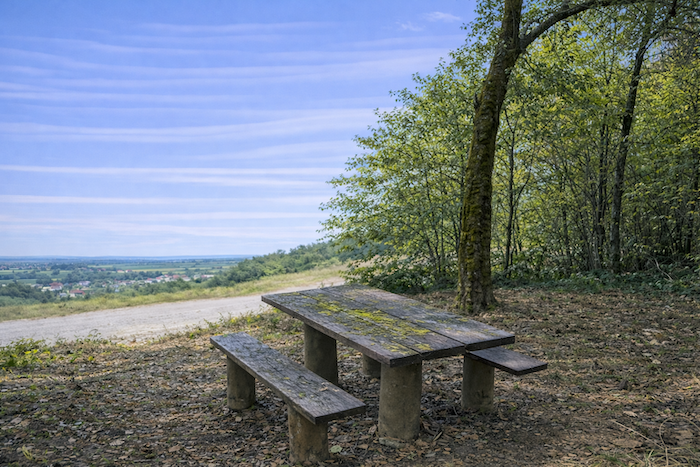
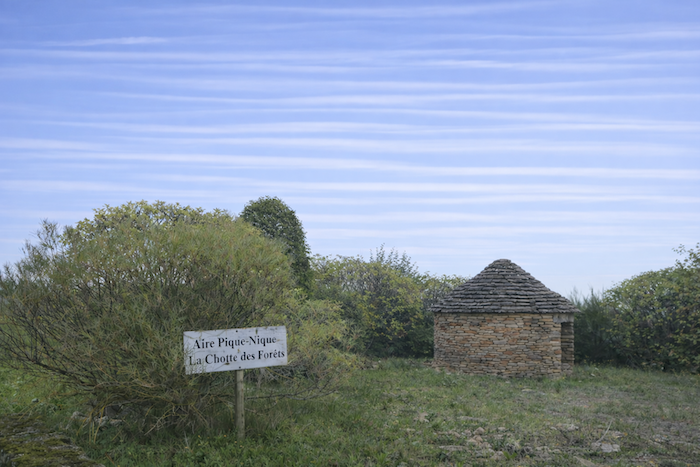
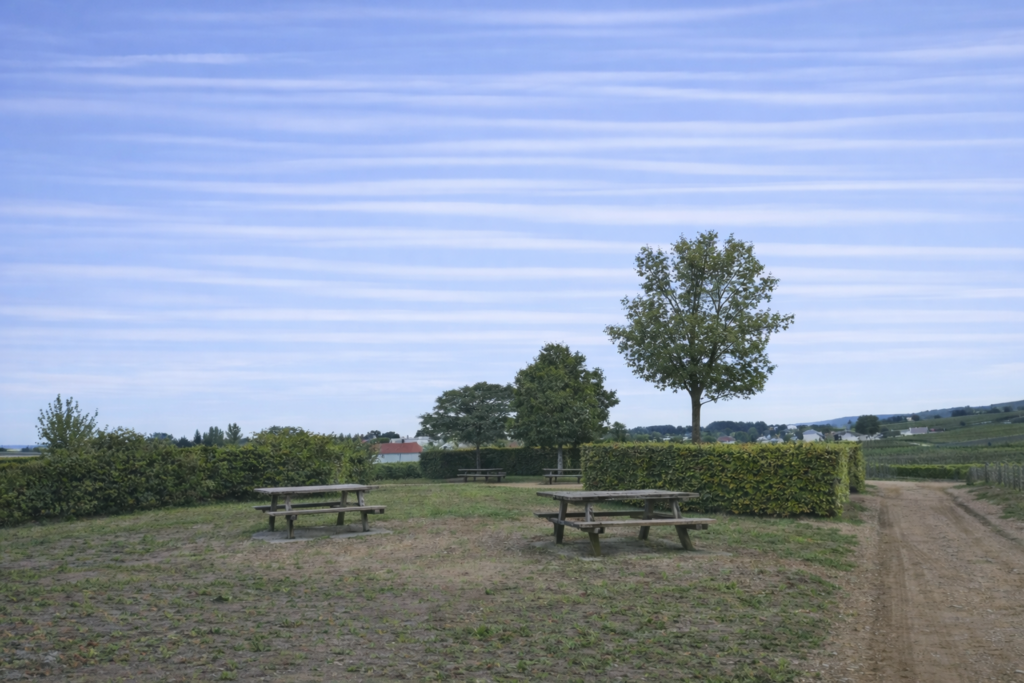
A rest area awaits walkers and cyclists beneath the generous shade of the trees. It is a welcoming pause, a place to sit and contemplate the landscape before gently descending into the valley.
From the picnic tables, the road descends softly from the hillside toward the village.
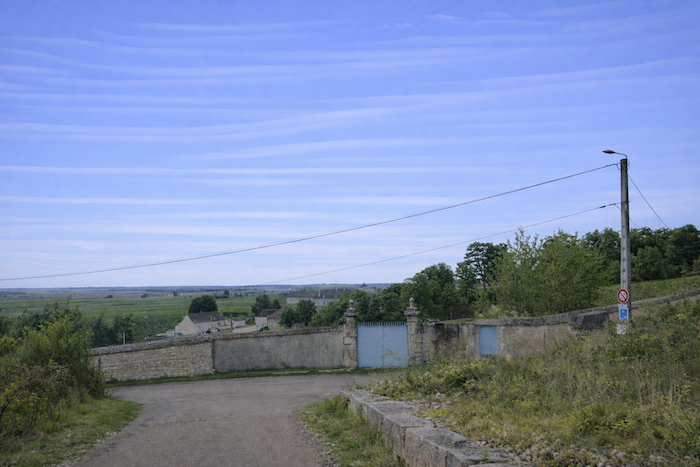
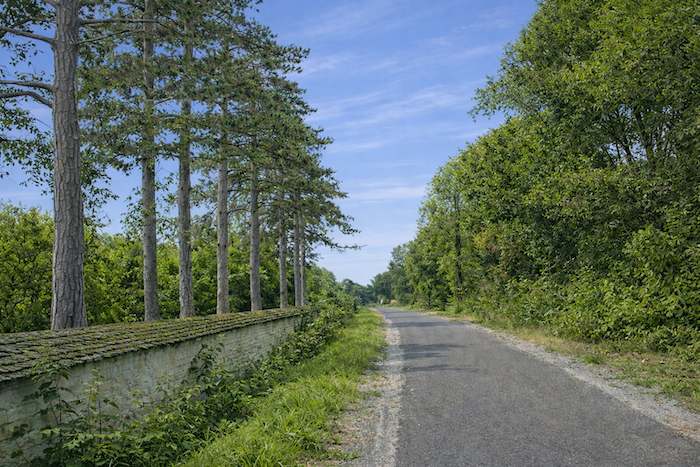
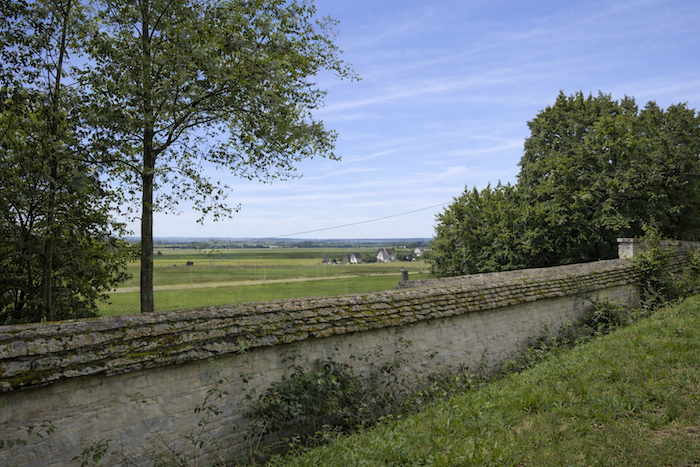
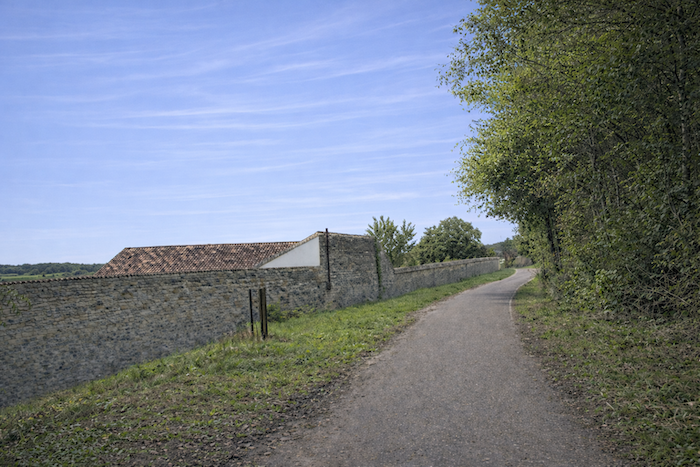
The road slopes down until it faces a large wall of dry stone. Imposing and austere, it seems to protect a highly reputed estate, jealously guarded behind its ramparts. The walker advances along this fortification as though confronting a secret the vineyard is unwilling to reveal too easily.
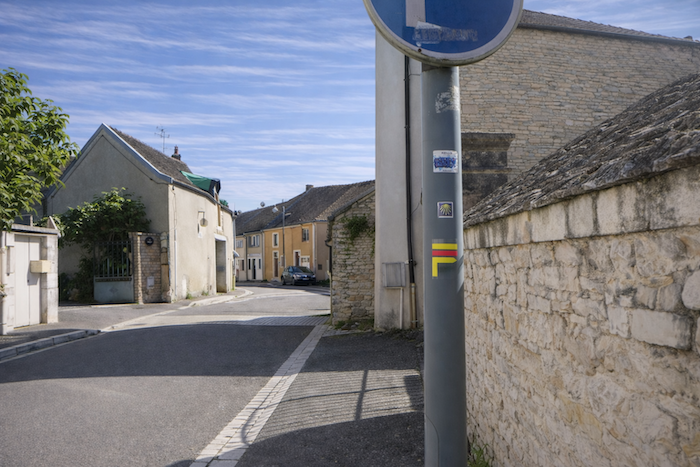
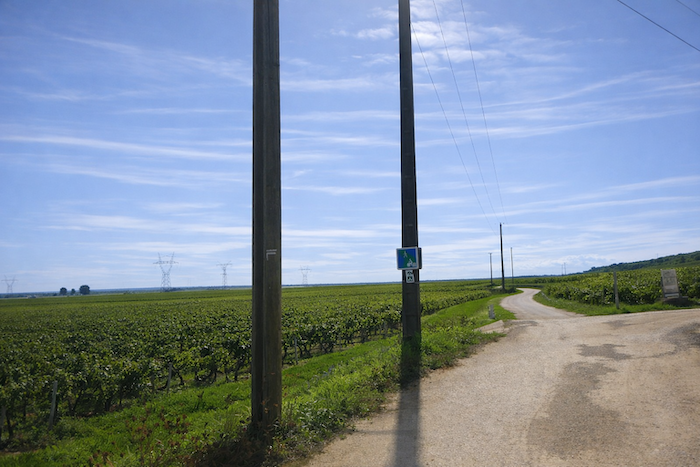
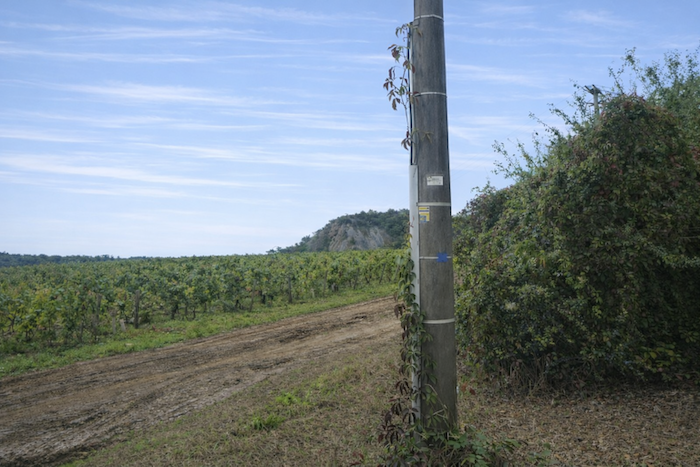
Here, the route avoids the village and commits itself to following the property wall without interruption, heading toward Comblanchien. Another marked itinerary overlaps here, identified by red and yellow signs indicating a short-distance hiking trail. These modest yet reassuring markings become beacons for walkers, guiding their steps through the vastness of the landscape.
The road continues to follow the property wall. The slope becomes slightly steeper, yet remains gentle, as if testing the breath without ever breaking it. Each step reveals new perspectives, the line of the wall extending like a stubborn boundary between the vineyard and the outside world.
Then the vines appear once more. Here, the atmosphere shifts. The vineyards of Nuits-Saint-Georges now lie behind you, giving way to those of Comblanchien, less prestigious perhaps, yet bathed in a serenity all their own.
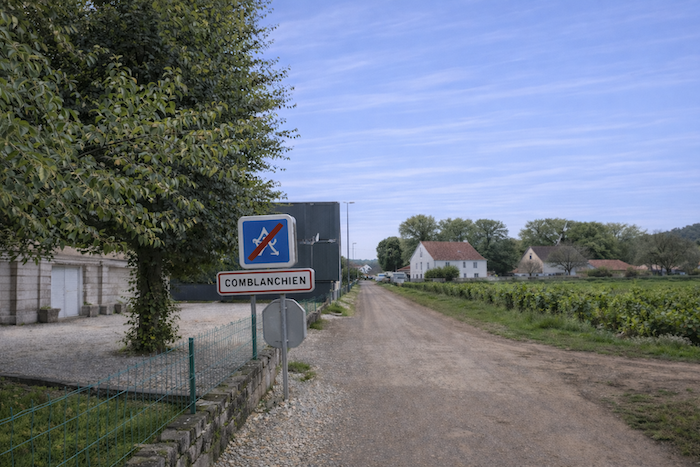
The road enters the village, sliding toward the main departmental road D974 that crosses the plain. Gradually, the murmur of passing cars rises to disturb the silence, a reminder that modern life is never far away, even in landscapes shaped by centuries of patience.
Section 4: From one large village to another
Overview of the route’s challenges: a route with no difficulty at all.
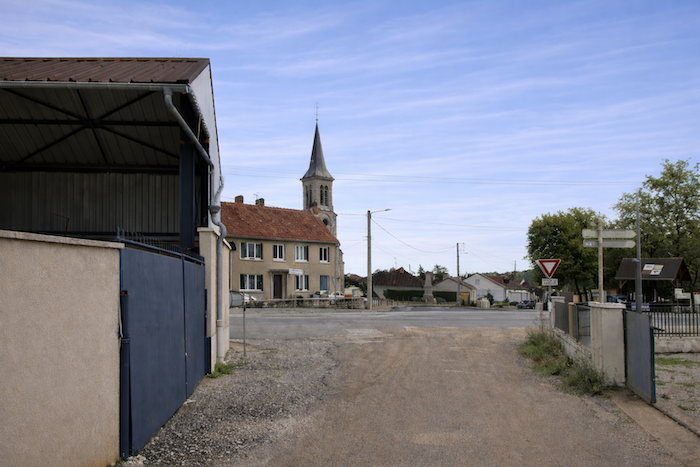
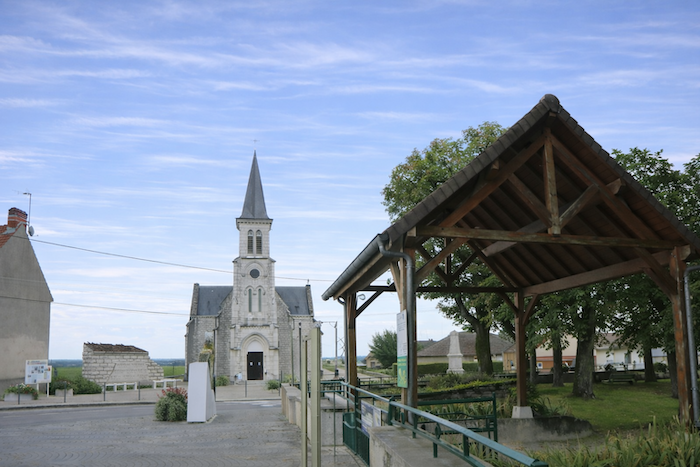
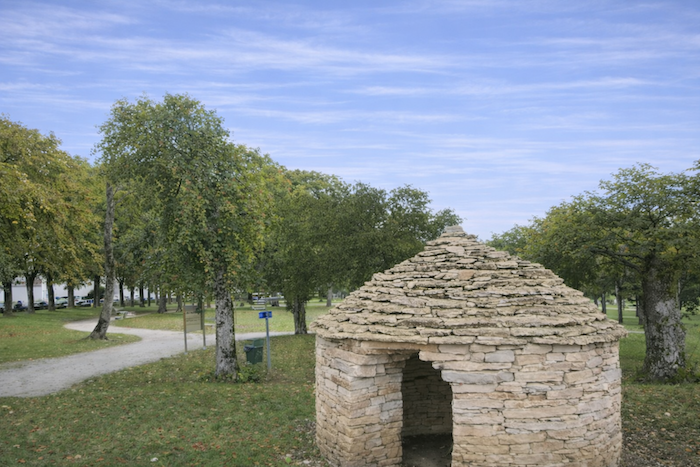
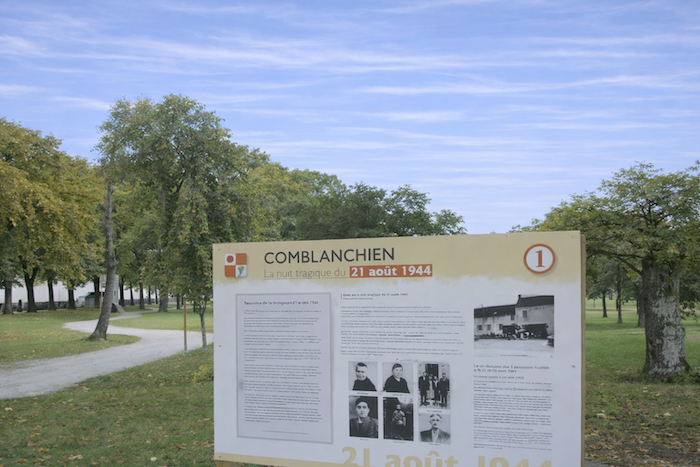
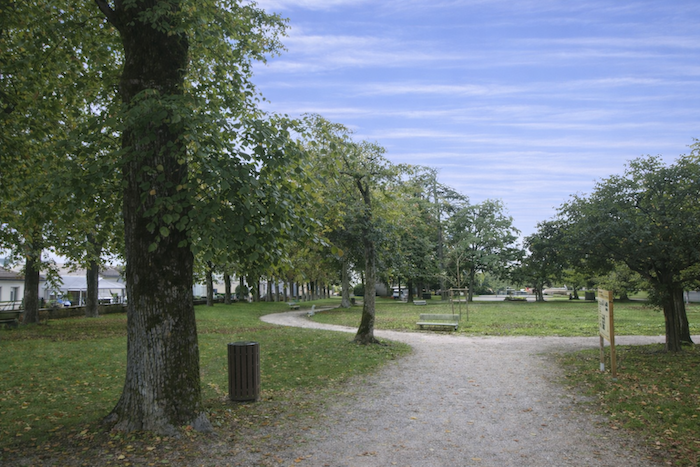
At the crossroads, near the church, a charming park opens like a cool interlude. Beneath its generous trees, the walker can finally set down their pack and let tired legs rest. It is a welcome pause, a moment of calm within the rhythm of the route.
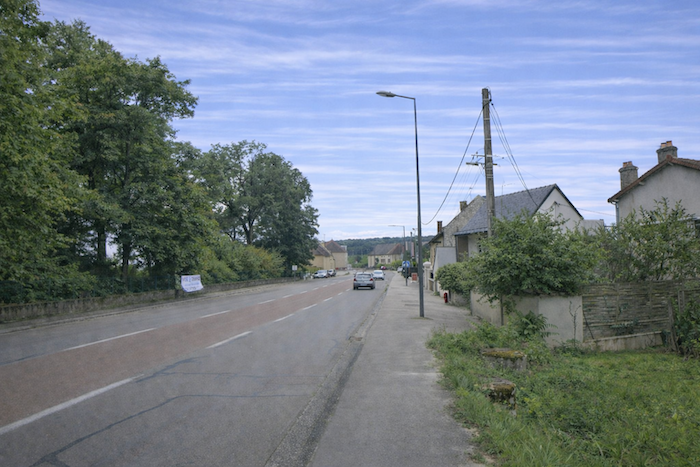
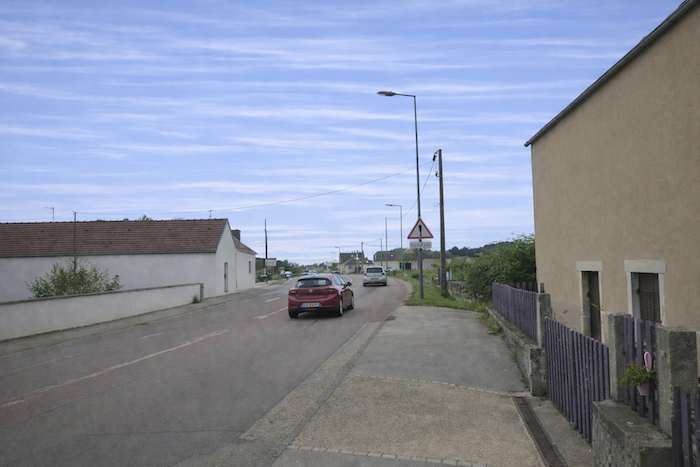
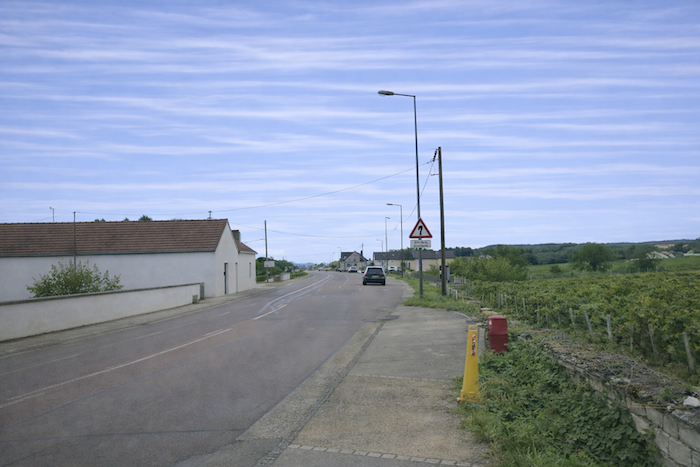
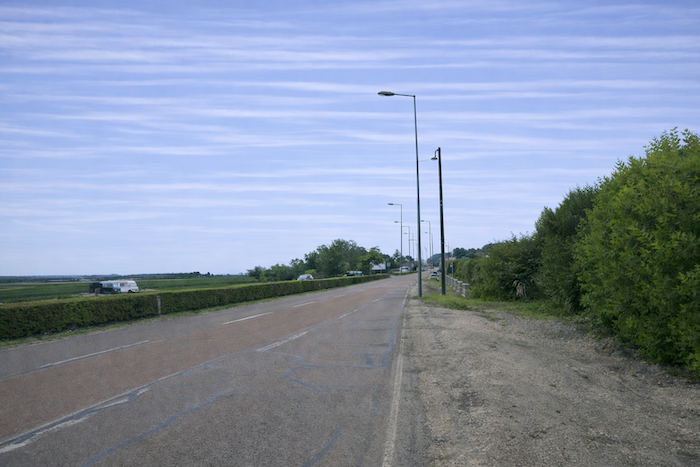
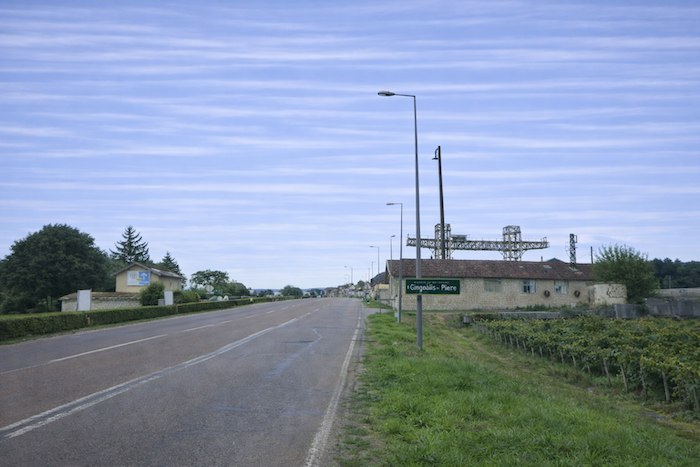
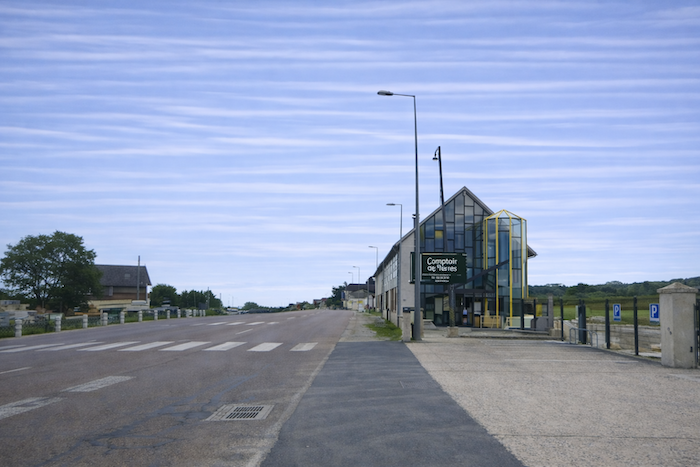
From here, for nearly a kilometer, the charm of the route fades and the walk becomes less pleasant. You must follow a noisy road, a major artery of the vineyard, where vehicles stream past without respite. Sometimes on a narrow pavement, sometimes on the grassy embankment, the pilgrim moves forward while battling the constant roar of engines.
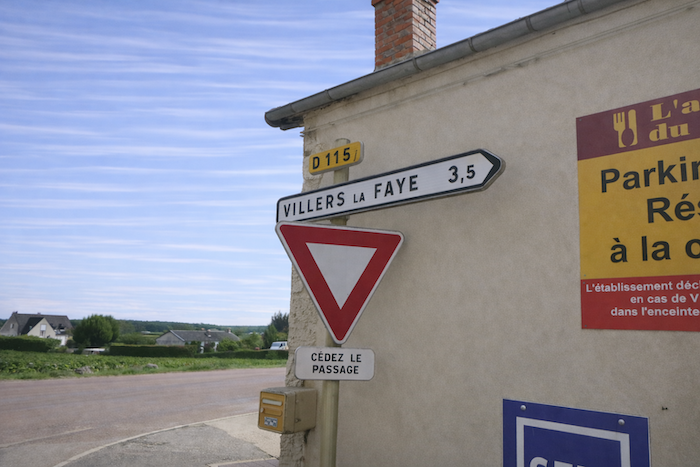
This ordeal lasts until the meeting with the D115j, a secondary road that escapes toward Villers-la-Faye. There, a promise emerges, that of finally leaving the turmoil behind and returning to the silence of the vines.
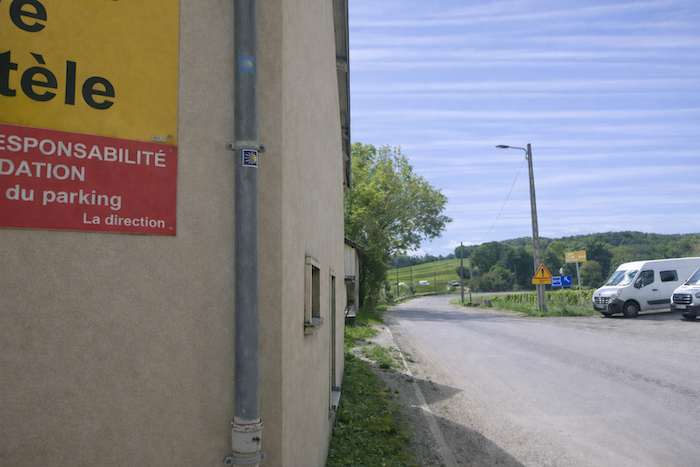
Here, the direction is clearly indicated, like a deliverance after the trial of the main road.
The passage on asphalt is brief.
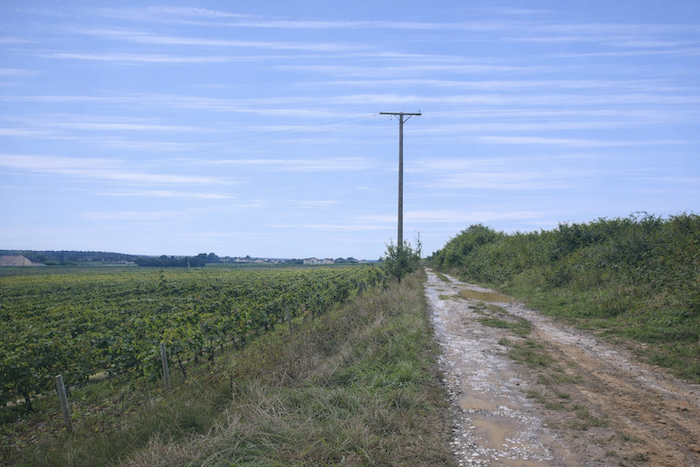
Very quickly, the route returns to packed earth and to the familiar presence of the vineyards. The walker’s breathing once again falls into step with the landscape, matching the soothing rhythm of the vineyard.
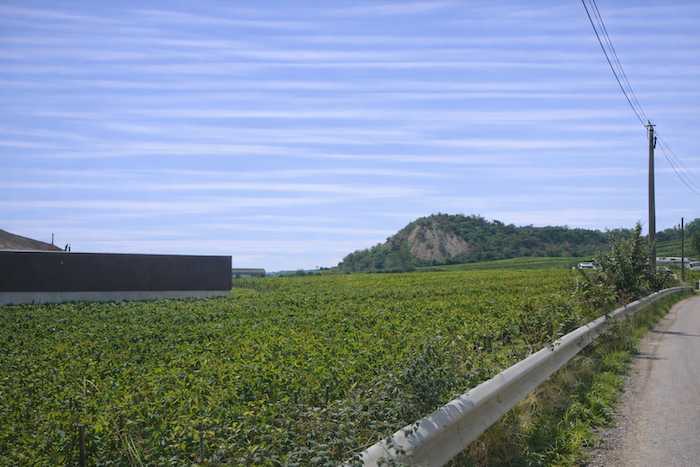
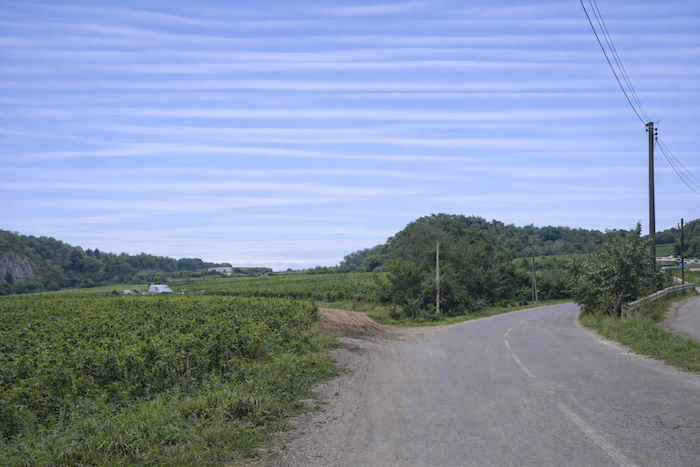
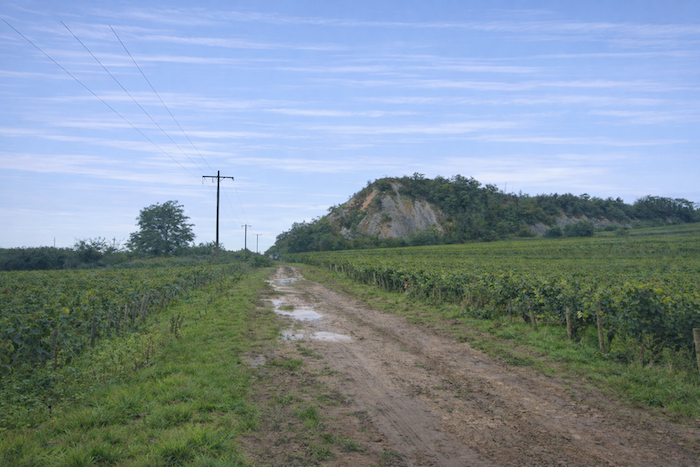
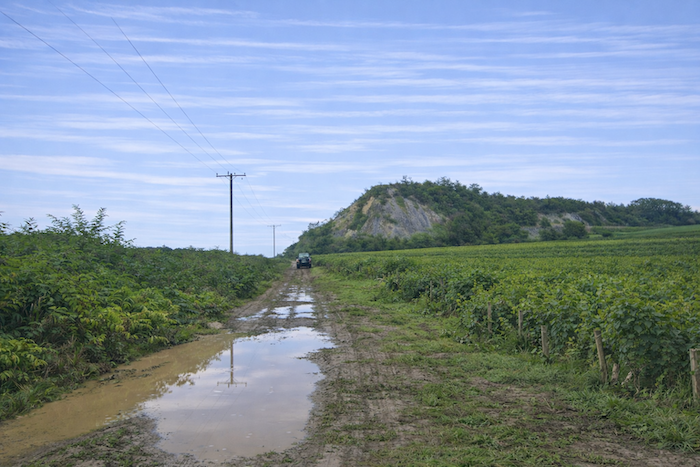
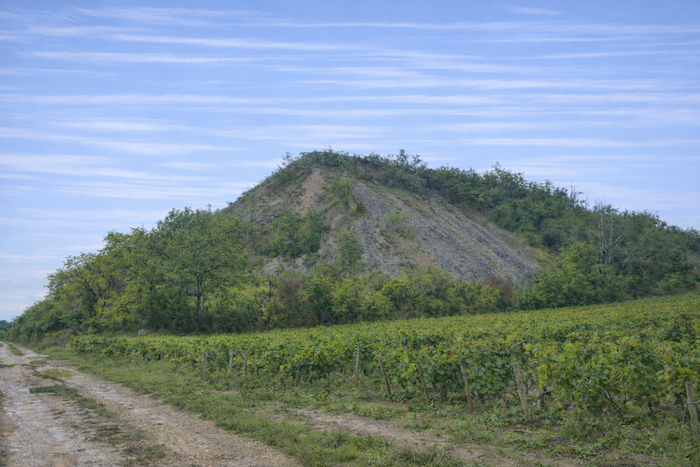
The ochre path sets out flat toward a hill rising like a spoil heap against the slope.
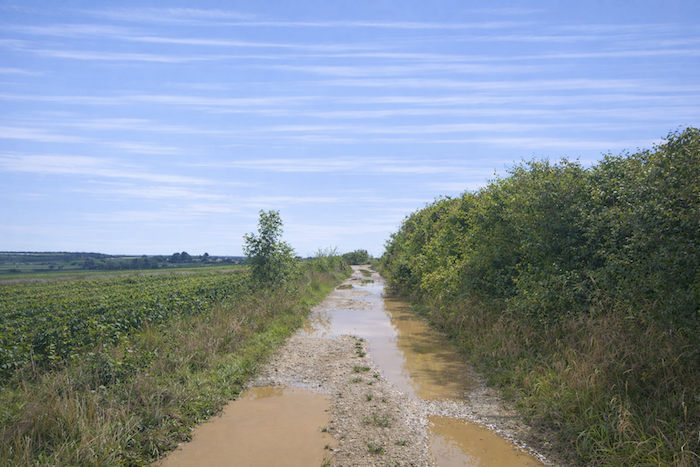
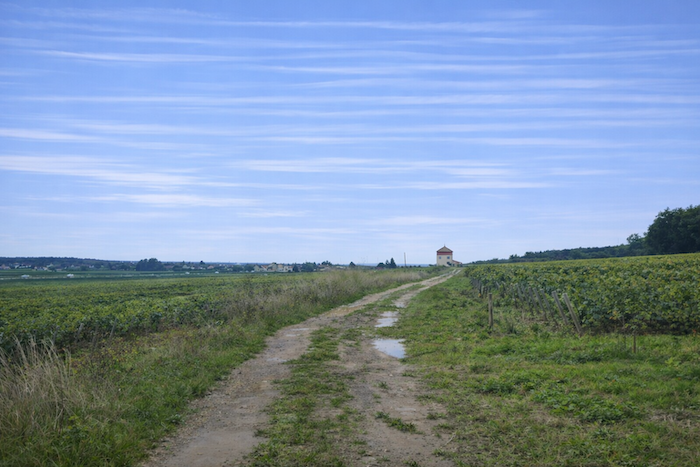
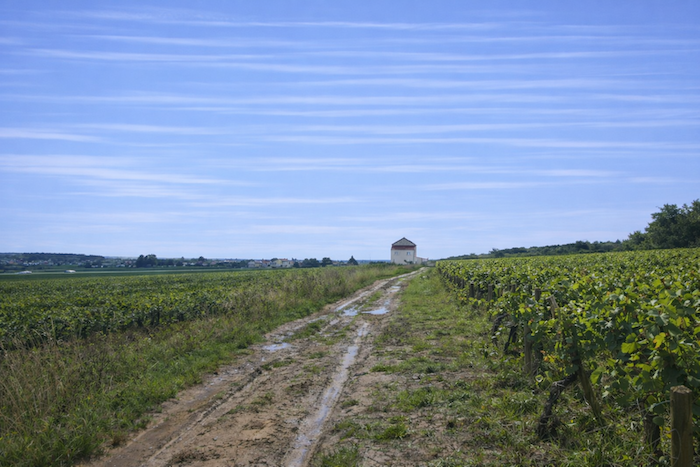
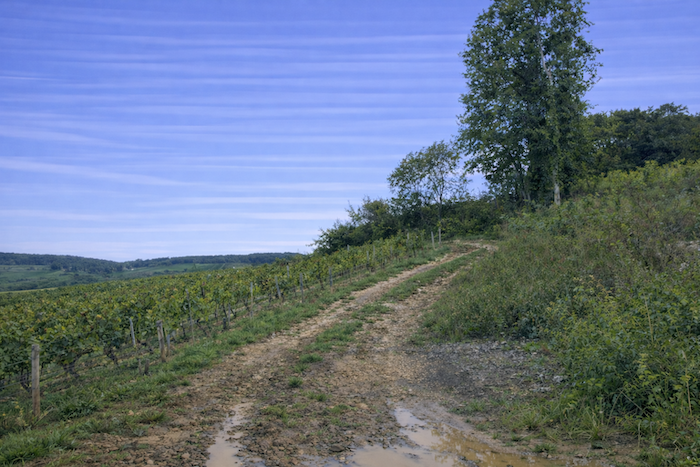
The day before, heavy rain fell across the region. The soil, dense and compact, is still saturated with water. Feet sink slightly, the path clings to the soles, a reminder that the vine and its hillsides are also children of this nourishing rain
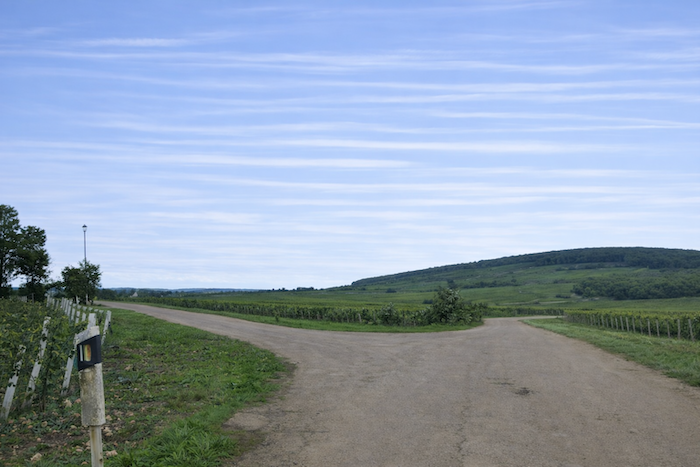
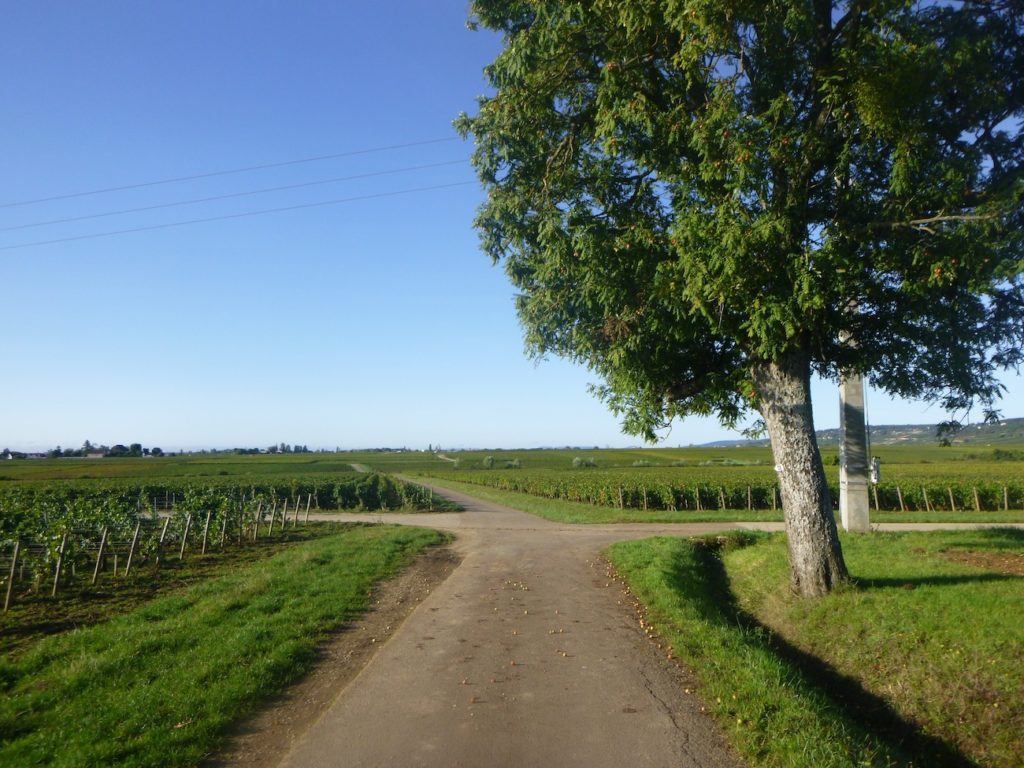
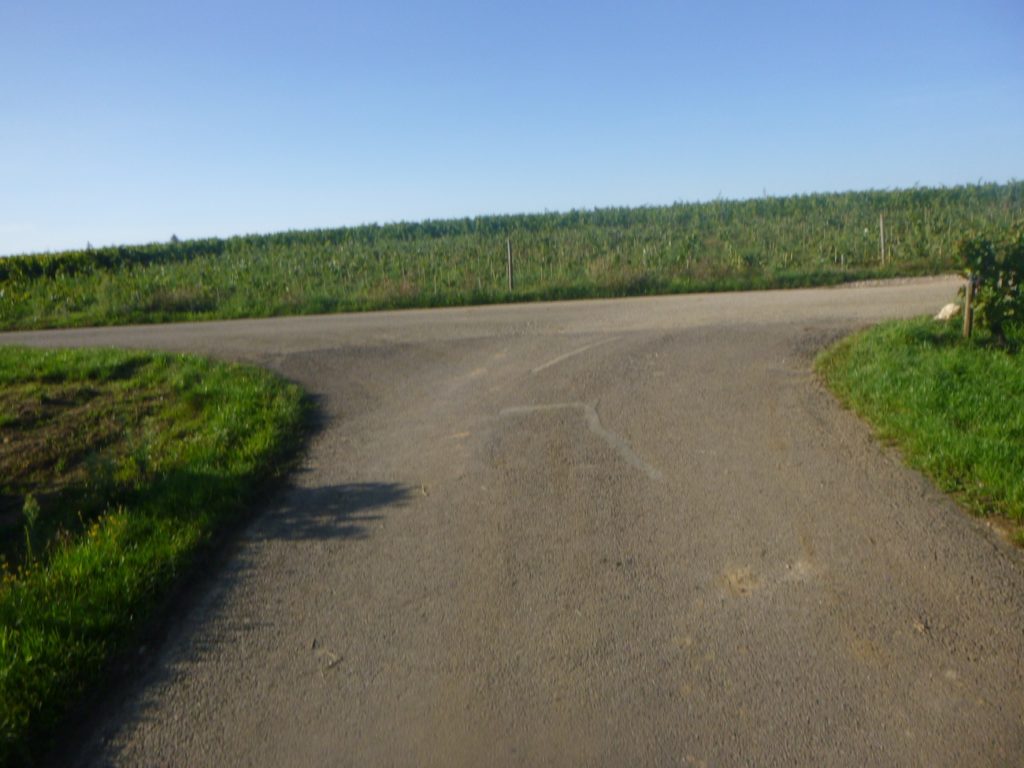
Soon after, the path reaches a crossroads. No scallop shell guides the pilgrim here. Yet common sense advises turning right. To the left, the path drops toward the noisy road, with no escape, drawing one back into the clamor just left behind. The path, faithful, continues flat, crossing a magnificent vineyard.
Soon after, the path reaches a crossroads. No scallop shell guides the pilgrim here. Yet common sense advises turning right. To the left, the path drops toward the noisy road, with no escape, drawing one back into the clamor just left behind. The path, faithful, continues flat, crossing a magnificent vineyard.
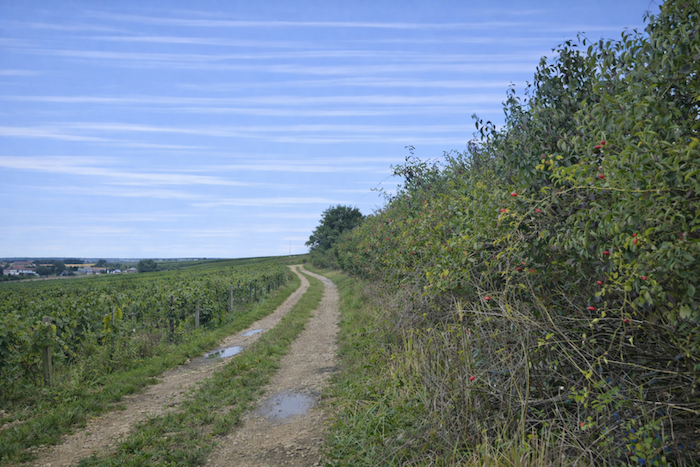
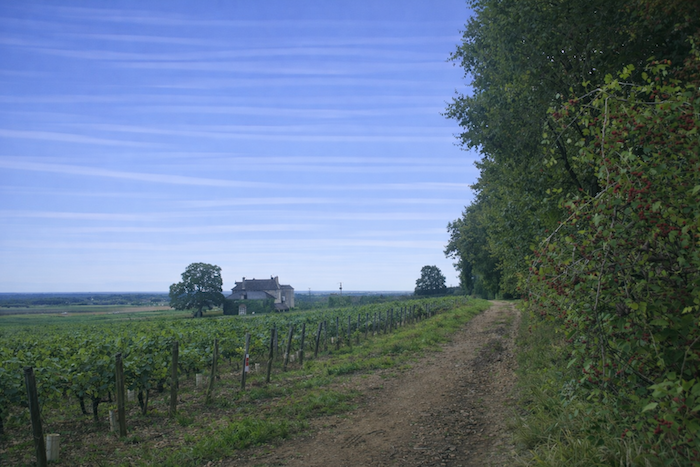
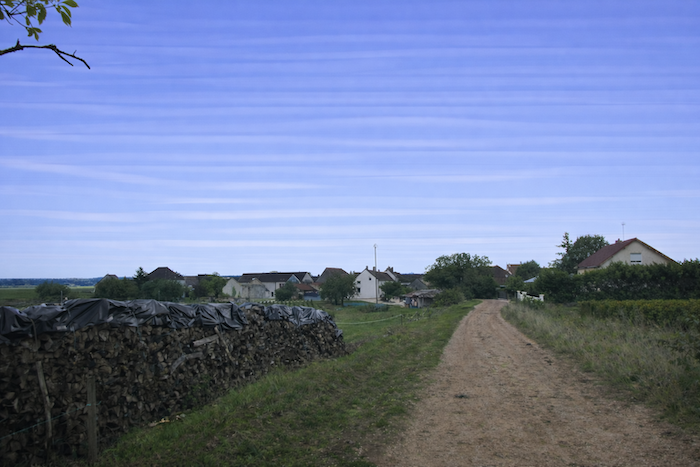
At times, the path slips alongside wild hedges, bristling with brambles and dotted with rose hips glowing like small red flames. These thickets, both hostile and generous, trace the natural edges of the vineyard. Through a break in the landscape, the village of Corgoloin comes into view, nestled not far from the departmental road. The outline of its rooftops cuts the horizon, like a possible halt.
The path, true to its calling, refuses to descend directly toward the village. It clings instead to the hillside, continuing across the vineyards it overlooks. In a stubborn straight line, it carries on until it meets an asphalt road, a clear boundary between earth and bitumen.
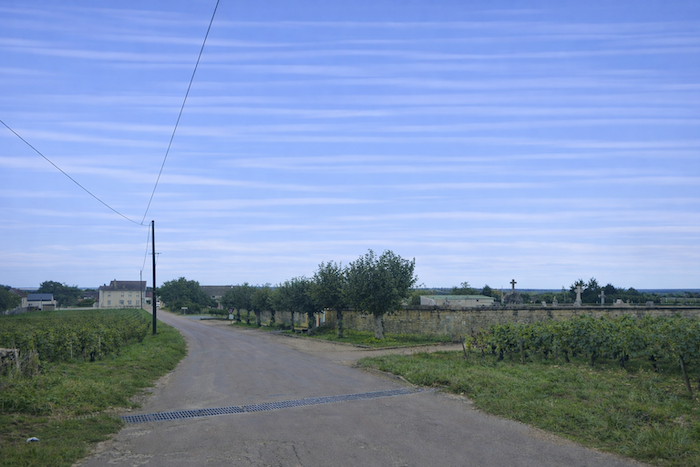
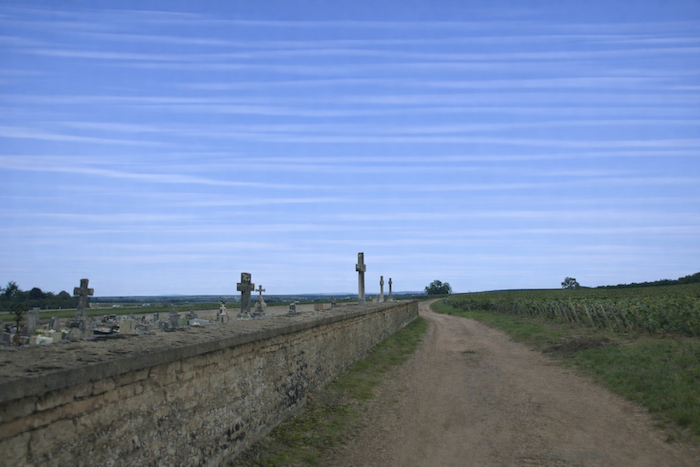
There, a scallop shell indicates the correct direction, toward the cemetery of Corgoloin. The sign is clear and almost reassuring at the threshold of this place of silence and memory.
Seated on the bench near the cemetery, thoughts begin to wander. Yet a question arises. What exactly does the small guide published by the Friends of Compostela say? It suggests following the cemetery, yes, but on which side, when the enclosure offers several possibilities? No scallop appears to resolve the doubt. To simplify matters, here is the truth. The path sets off to the right, along the dirt path that begins slightly above the cemetery. Walking is always gentler when one knows where to place one’s steps.
Shortly beyond the cemetery, another crossroads of paths appears, and once again the same dilemma presents itself, with no scallop and no indication. As so often on this path, intuition must be trusted. Turn right, climbing toward the woodland, where the light seems to beckon the walker.
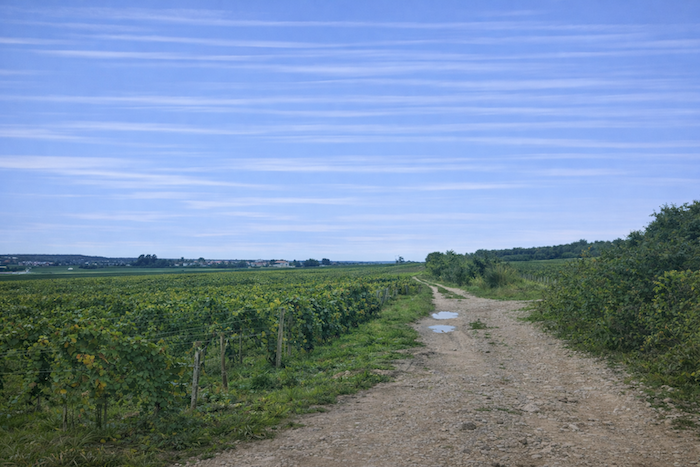
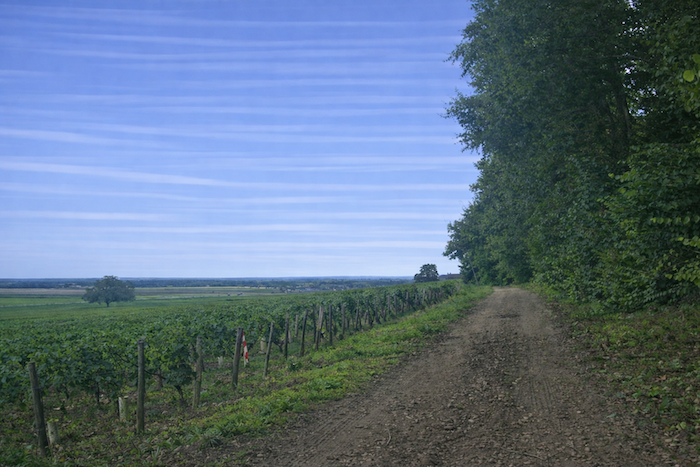
The path then undulates along the edge of the wood, acting as a narrow link between the shade of the trees and the disciplined order of the vines. This slender line skirts the vineyard, allowing distant glimpses of the regular rows stretching away.
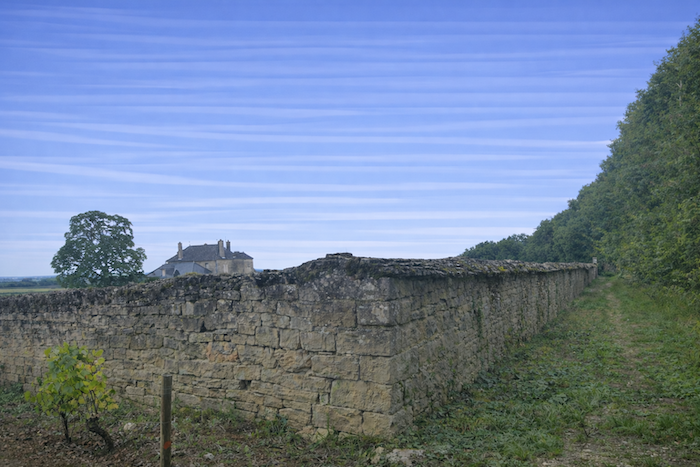
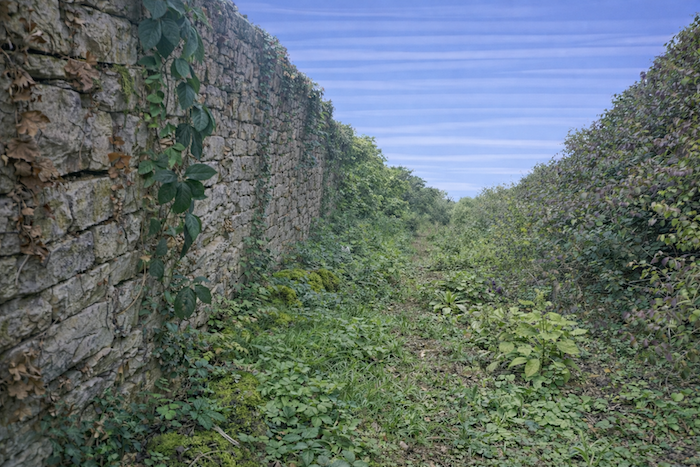
Soon, the path approaches a vast wine estate enclosed by high dry-stone walls. The enclosure commands respect, like a fortress devoted to wine. The path continues humbly along the wall, through grass and untamed vegetation, brushing the edge of the woodland.
At the end of the immense wall, the route still clings to its ribbon of stony grass, rough beneath the feet. .
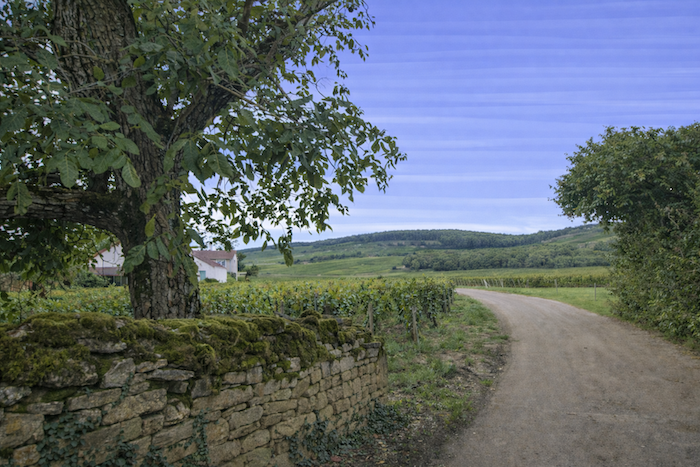
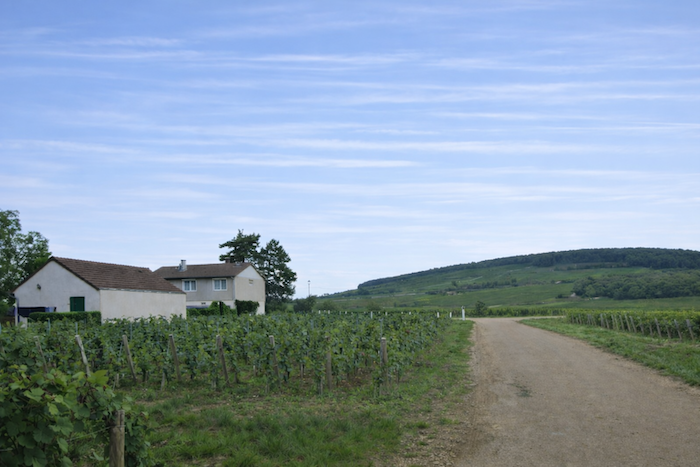
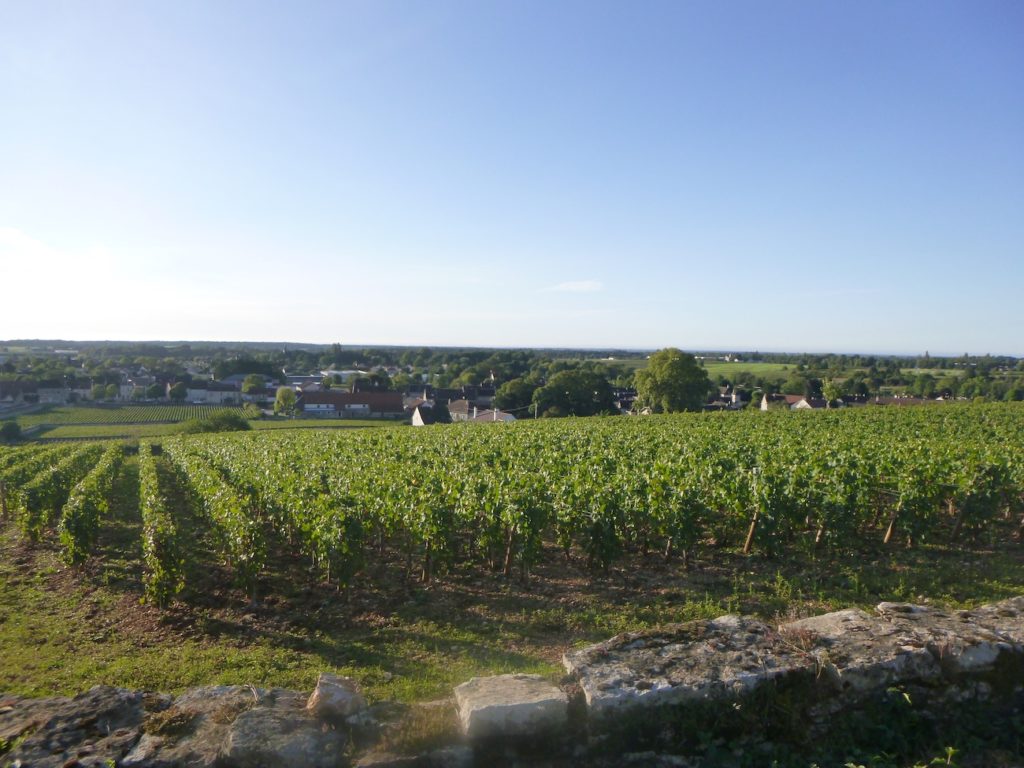
Below, the departmental road runs on relentlessly, loud and tireless. Yet around a fold in the path, the village of Buisson appears, peaceful and almost within reach. One detail cannot be missed. The ochre soil of the Burgundian vineyard is strewn with stones, as if the earth itself wished to remind the pilgrim that it is made of hardship as much as of generosity.
The path lingers a little longer among wild hedges and vines, as though delaying the moment of arrival. Gradually, however, it draws closer to the village.
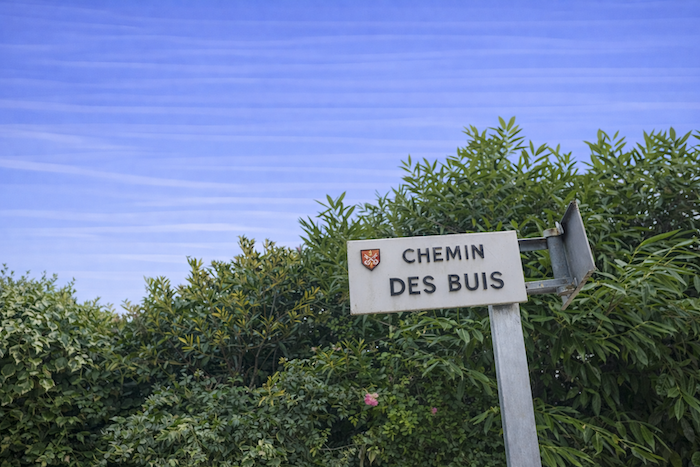
At last, you reach the end of the long Chemin des Buis, a true avenue leading toward the gates of Buisson.
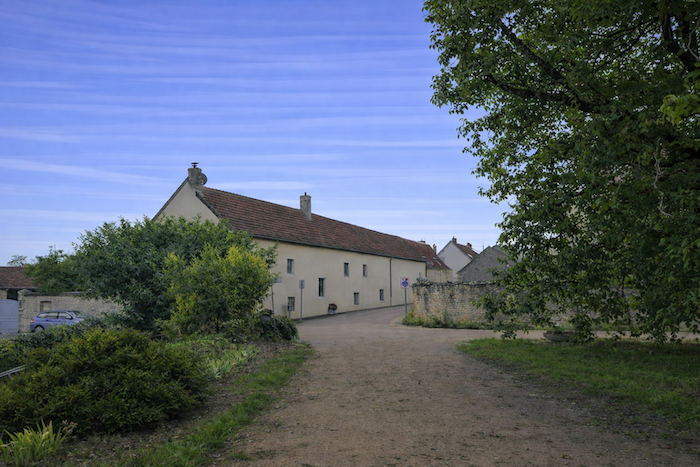
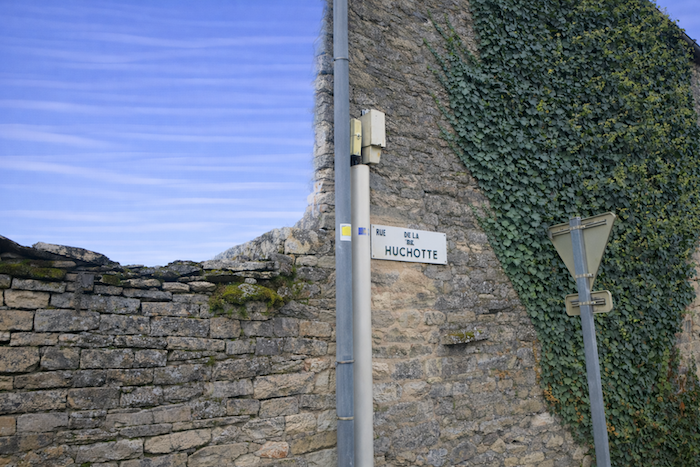
Yet the route prefers to skirt rather than enter. It brushes past the village, following it discreetly along Rue de la Huchotte, as if to preserve the tranquility of the place.
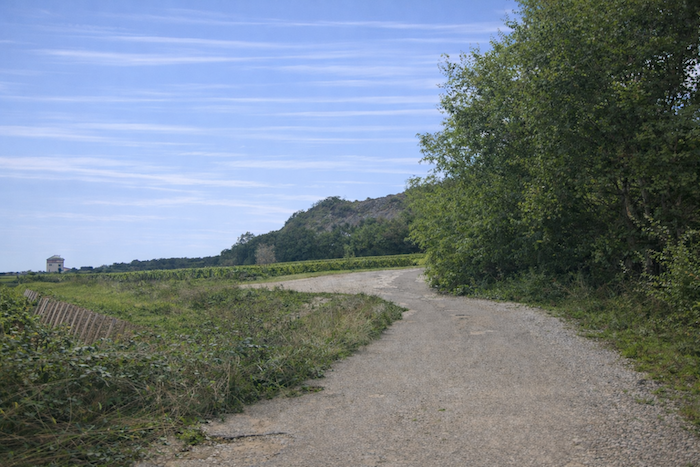
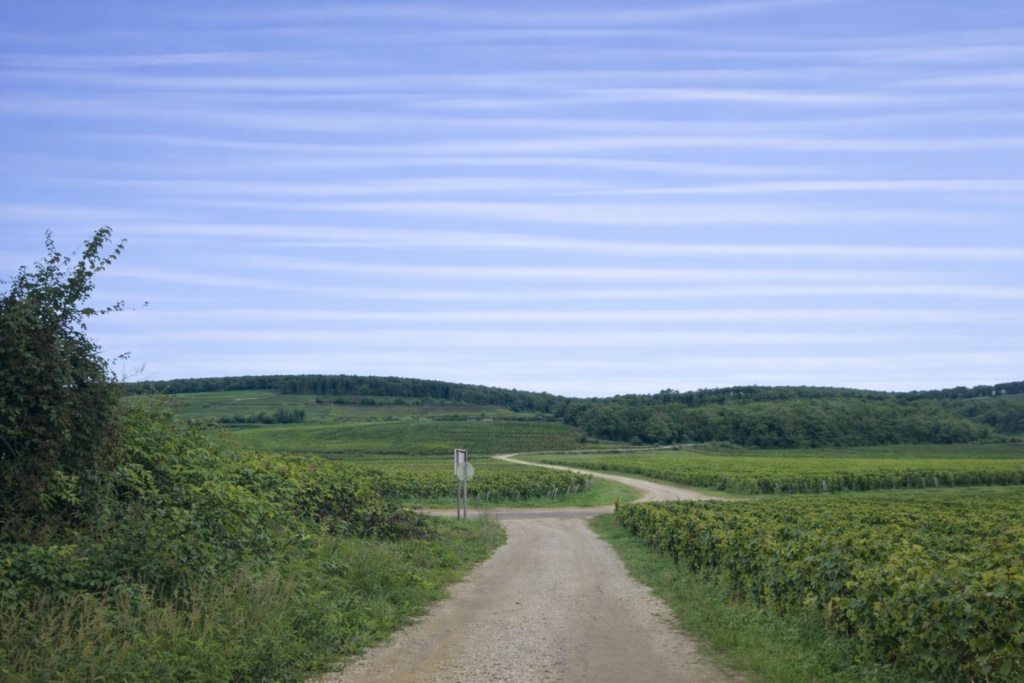
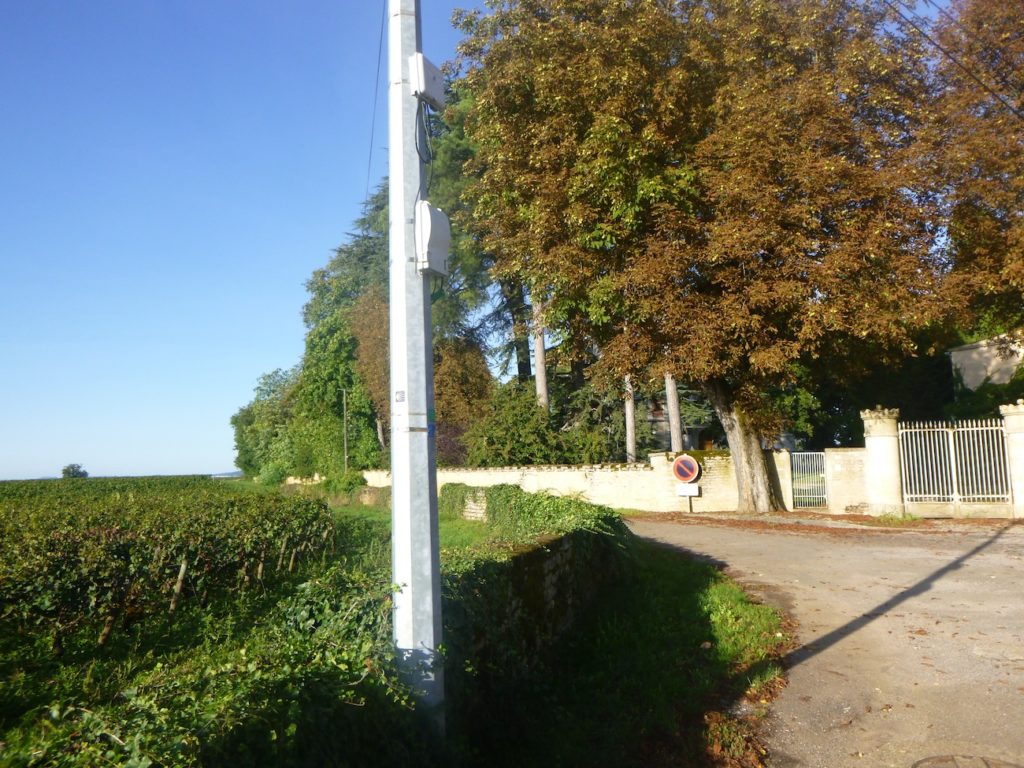
Soon after, another junction appears, bringing with it the same dilemma. No scallop indicates the way. Right or left? You tell yourself that the route is kind, that it will surely spare you the effort of climbing to the summit of the Corton hill, high above. So, you choose the gentle, smooth path opening to the left, a line that seems to flow naturally, like an invitation. And that is indeed the right choice.
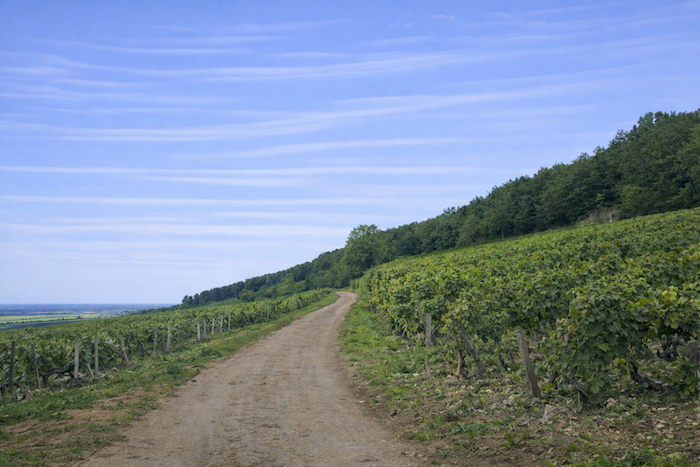
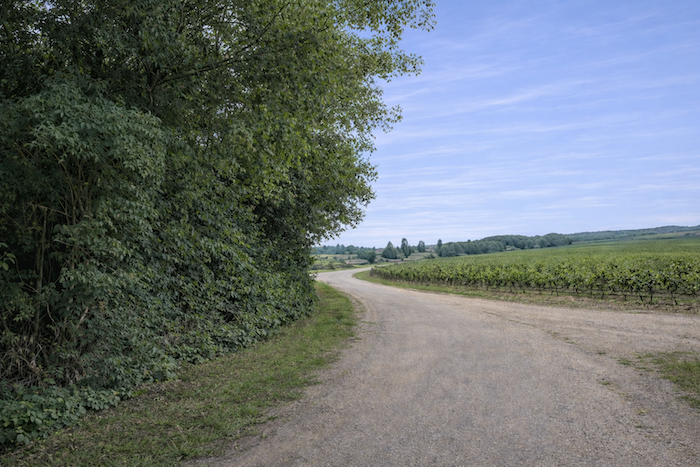
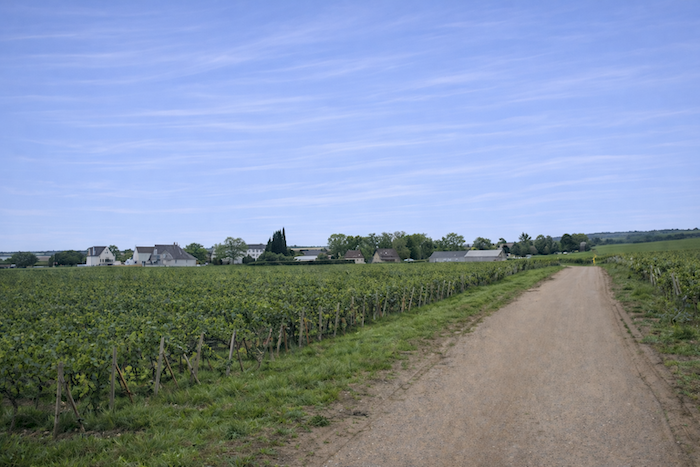
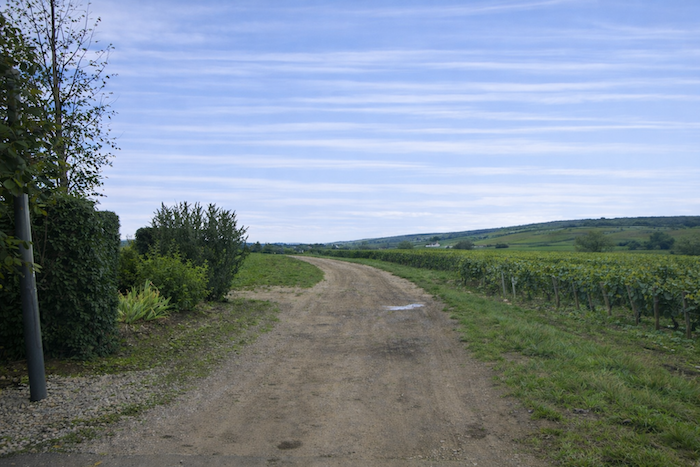
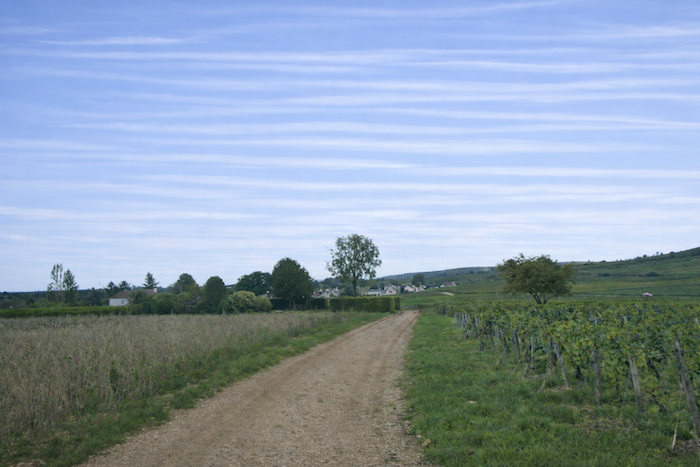
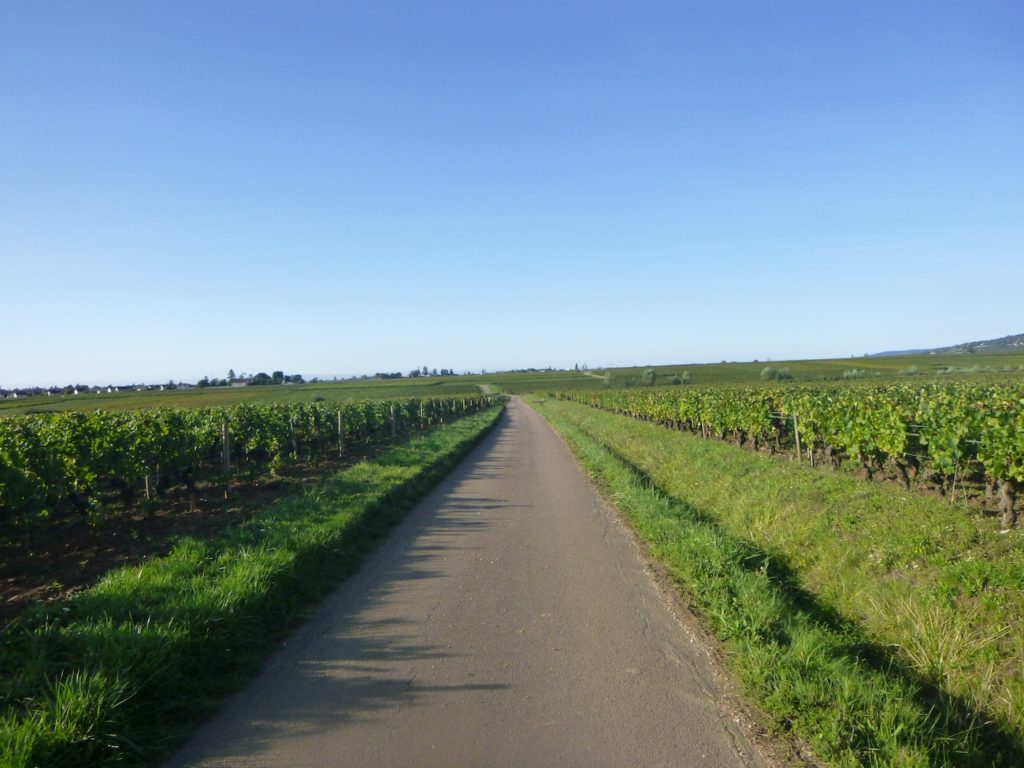
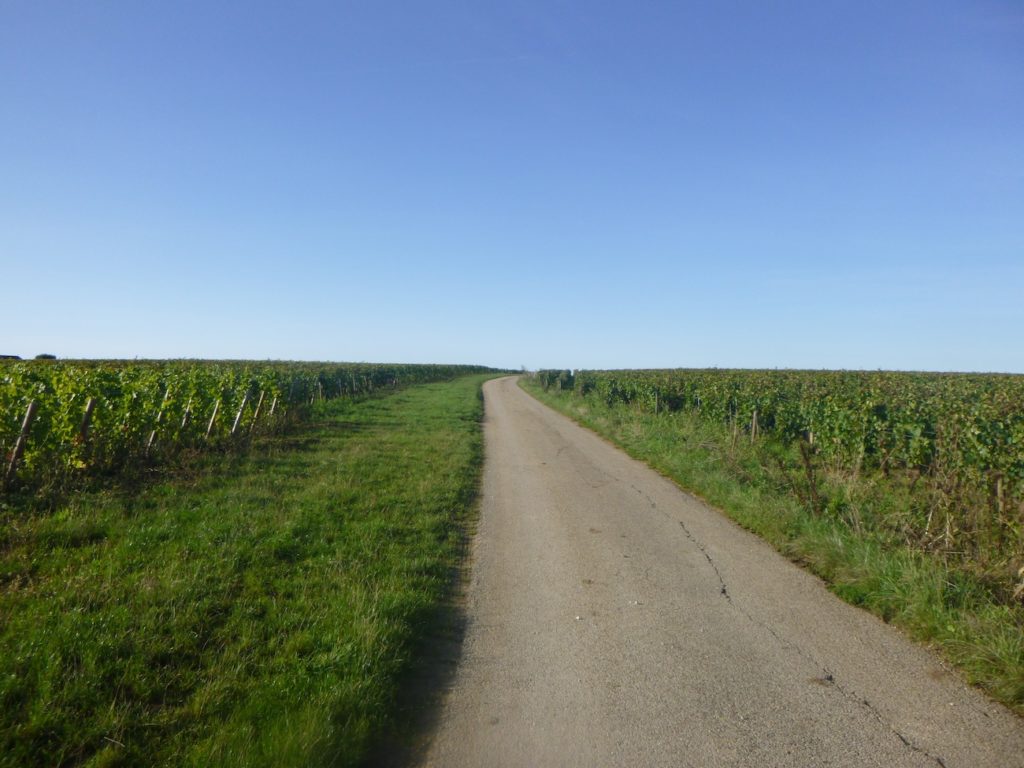
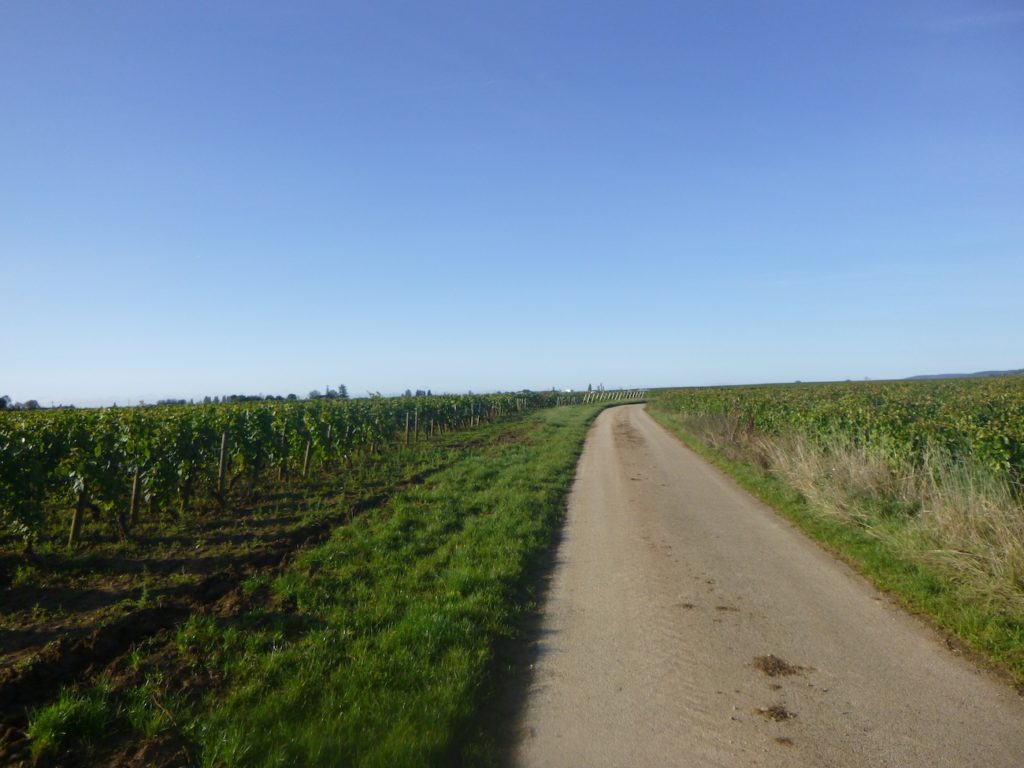
The broad ochre earth path resumes its course, flat and regular, winding through the vineyard with the calm of a deep breath. Walking here is easy, almost meditative, as the vines lining the path set the rhythm of your steps.
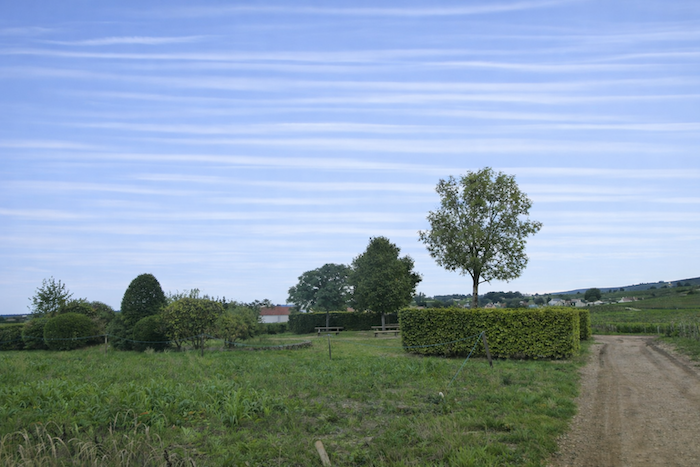
The path soon leads you toward a picnic area arranged beneath the trees, where benches and tables readily welcome walkers.
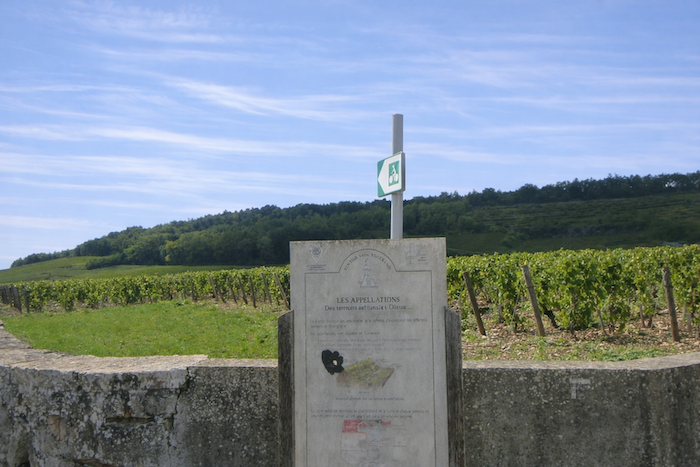
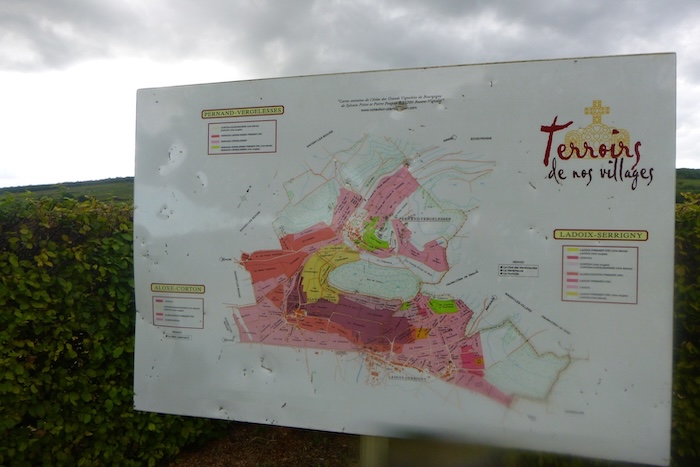
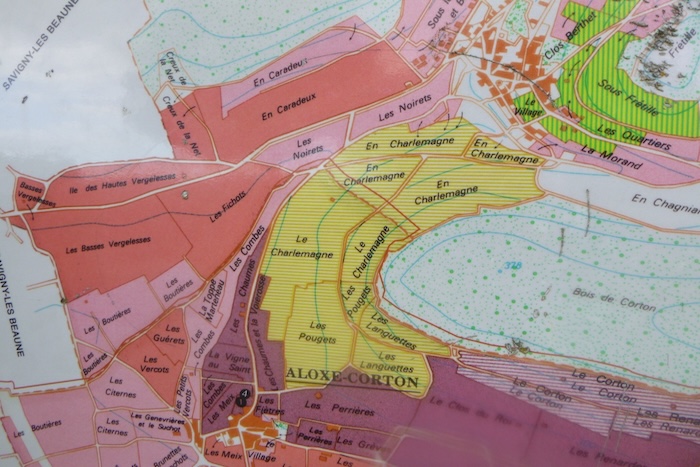
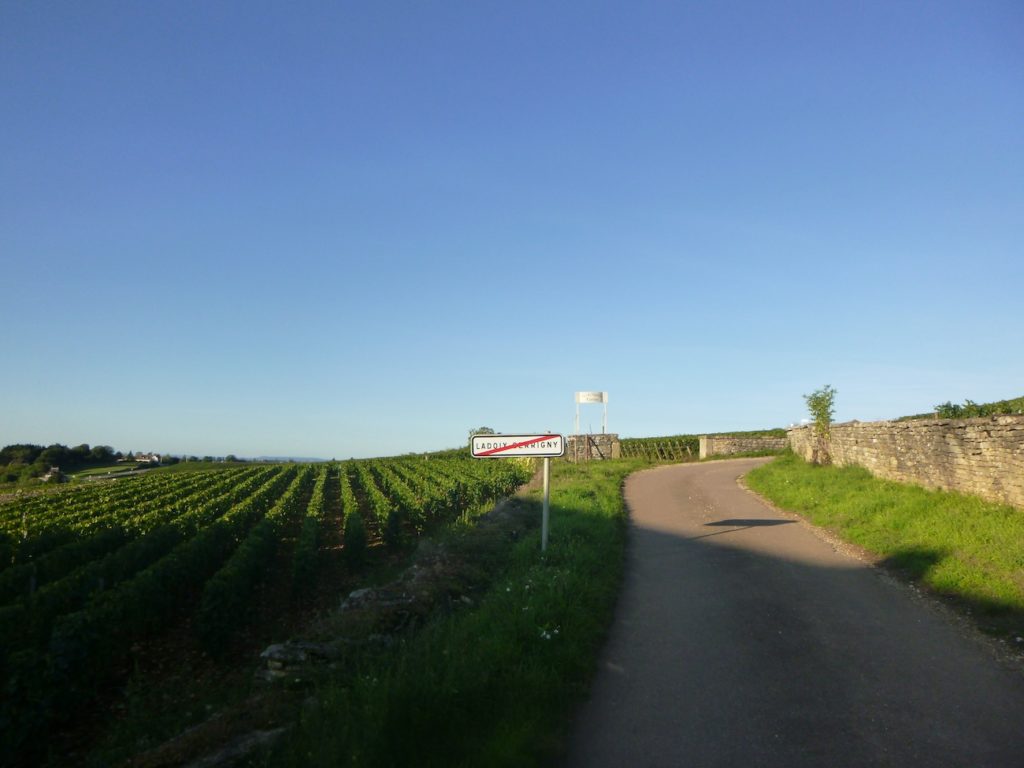
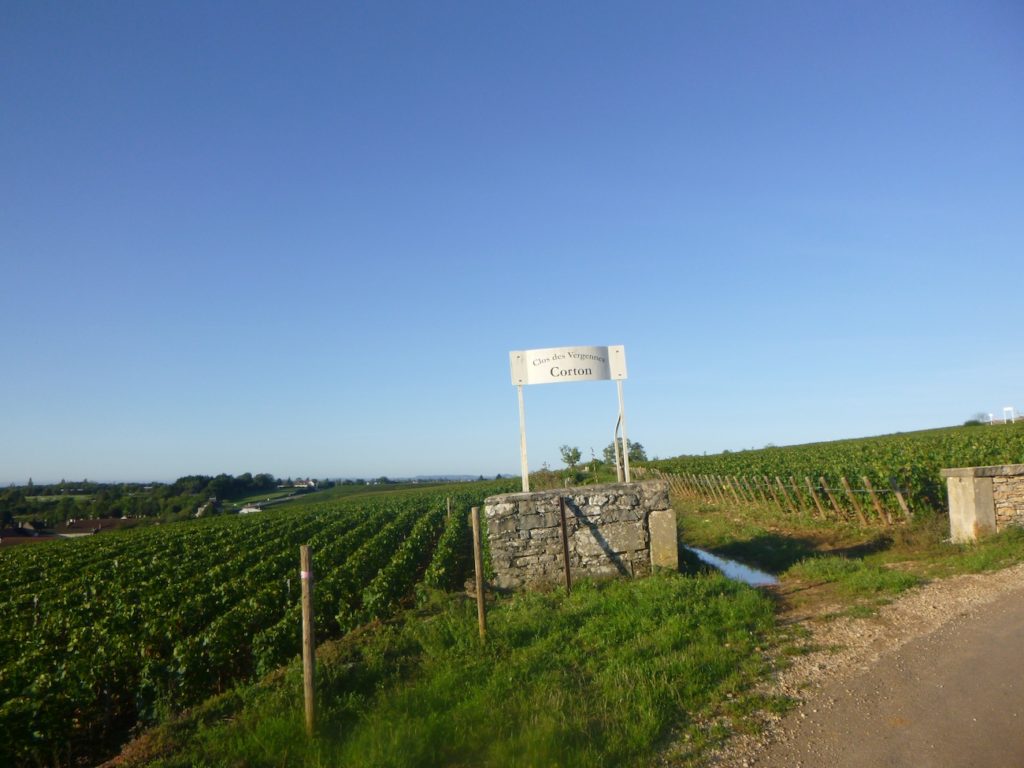
Yet it is not only the promise of cool shade that captures your attention. A sign stands here, a true lesson in terroir, detailing the wine-growing riches of the region. You are now at the heart of the Ladoix-Serrigny vineyard, a discreet land, less illustrious than its neighbors, yet rich in authenticity. For it is only at the summit of the steep hill, beneath the woodland canopy, that the famous Corton flourish. Their reputation rests on taste rather than price, enough to make any informed wine lover salivate, such is the intensity with which they express the very essence of what the vine can offer.
As you leave the picnic area, a trap awaits. Ladoix-Serrigny lies before you, and naively you convince yourself that the route leads there. Of course, no scallop appears to confirm this. What do the Friends of Compostela advise? In Rue de la Huchotte, turn right, then left, and reach the D115c. Clear? Not at all. Absurd, in fact, and entirely wrong. You are sent first right, then left, without any sense of where this elusive D115c might be, invisible in the landscape. If you were to give in to the pull of the village and head toward Ladoix, you would lose your way and need considerable effort to find the route again. No. The path here heads in the opposite direction, to the right. We are here to save you from that mistake.
A wide dirt path then opens before you, running toward the hill of Corton
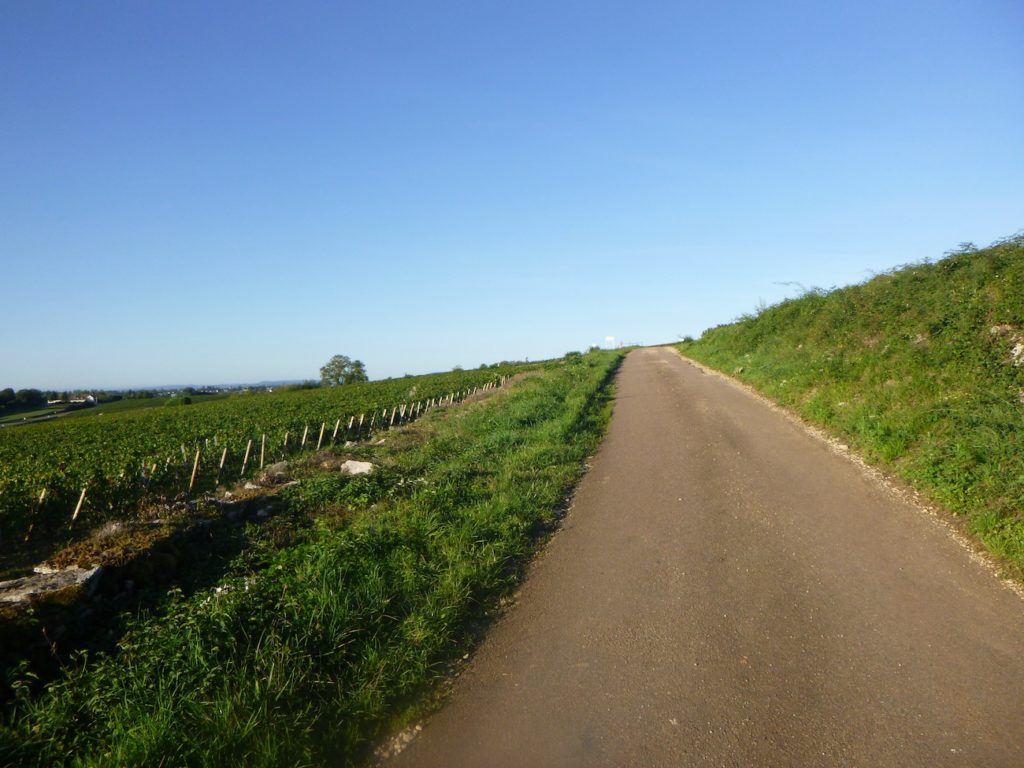
A few steps later, it leads onto a small asphalt road, discreet, which gently takes you by the hand and carries you onward.
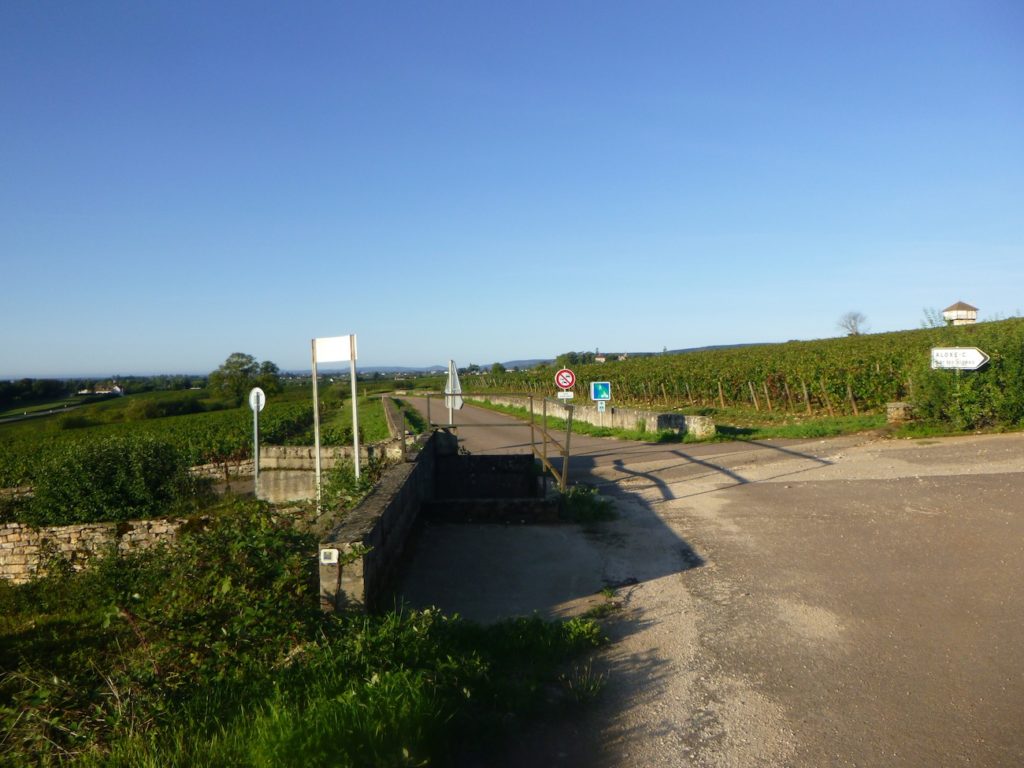
Is this finally the famous D115c you were looking for? Probably so, since a little further on a scallop appears, unnecessary yet reassuring. It confirms that you are on the correct route. One cannot help wondering why it was not placed at the picnic area. One might almost think that those who lay out the route in Burgundy take a mischievous pleasure in planting their scallops in the most obvious places, fixed to a post or a wall where no one needs them, when a clear indication would be far more useful in moments of uncertainty.
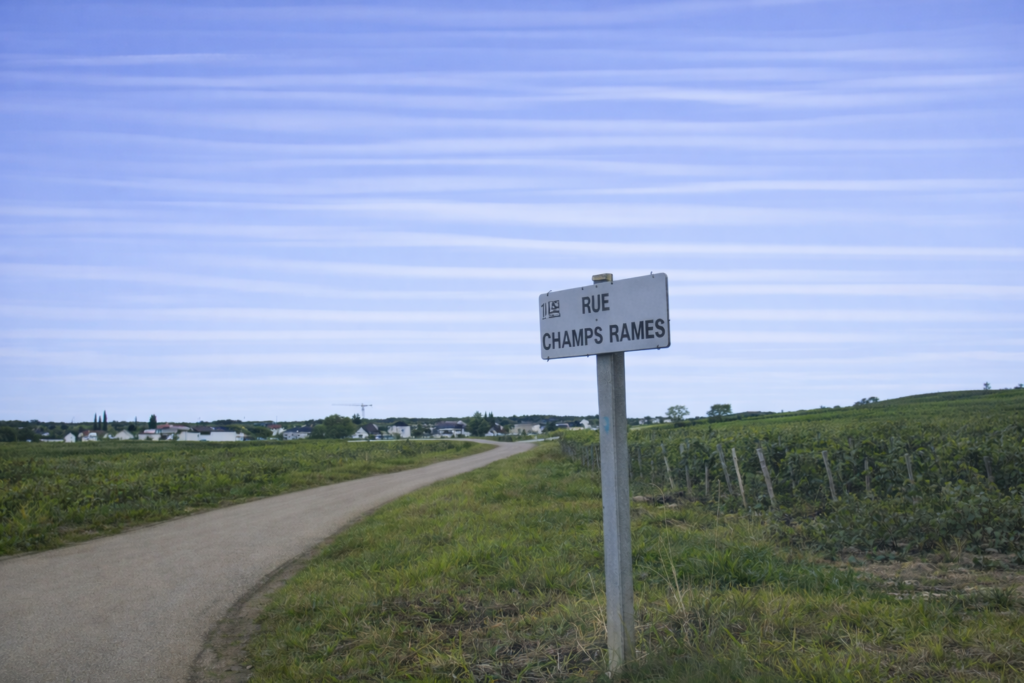
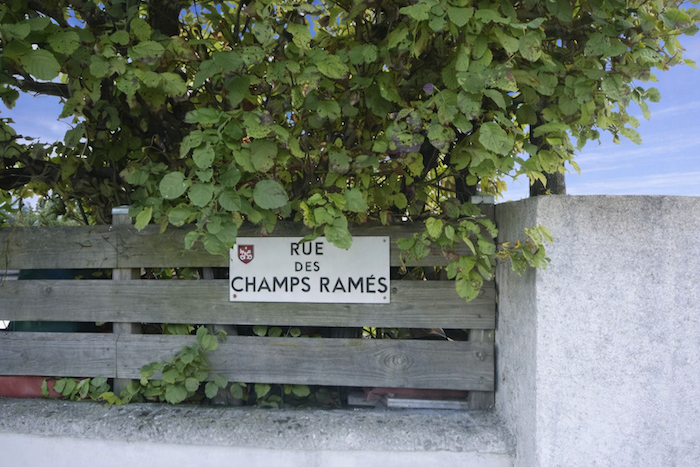
The road then draws closer to the heights of Ladoix-Serrigny and turns toward Rue des Champs Ramés. There, at last, a well-placed scallop confirms your progress, like a sign of encouragement after so much hesitation.
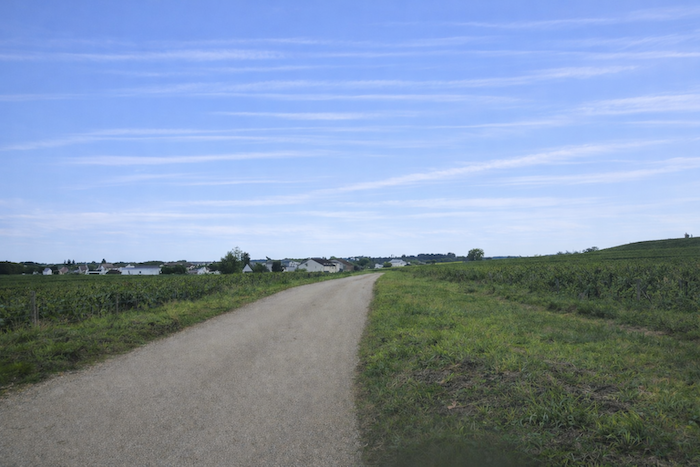
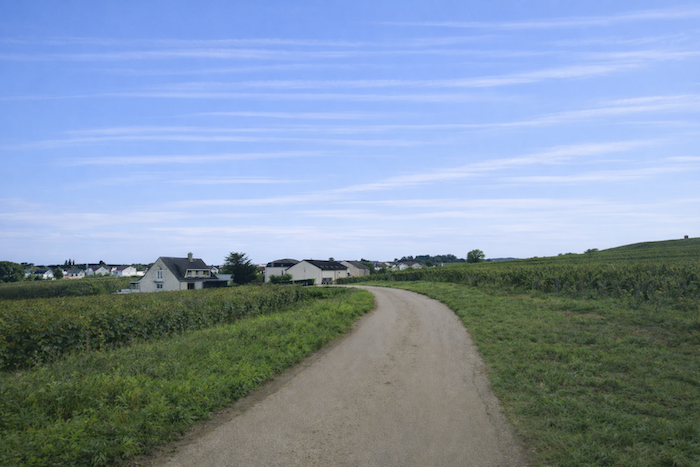
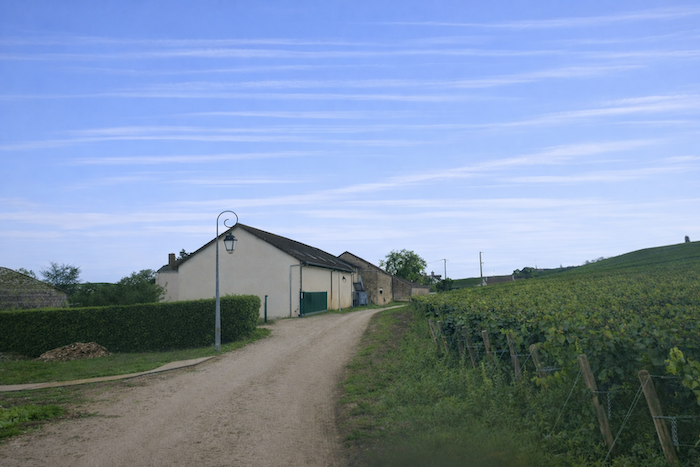
It is a dirt path, bordered by carefully aligned vines, that leads you to the upper entrance of Ladoix-Serrigny. Here, the vineyard stretches like a sea of vine shoots, vibrating in the light breeze, and opens the way toward the village.
Section 5: The beautiful vineyard of Corton
Overview of the route’s challenges: although the route presents no real difficulty, there is a short and steep climb as you leave Ladoix.
When you reach the end of Rue des Champs Ramés, an alternative presents itself. If fatigue sets in, or if the desire for a comforting pause arises, you may choose to continue straight ahead toward the village center. Ladoix-Serrigny offers several shops and a few accommodation options, ideal for regaining strength or lingering a little longer. .
Wandering through its narrow streets, you may even discover an unexpected jewel, a small eighteenth-century château bearing witness to a long family history. It belongs to the prestigious Mérode family, whose name resonates through aristocratic annals. The château and the lands of Serrigny have, in fact, belonged for more than two hundred and fifty years to the Brunet and Chailly families, then through successive inheritances to the Tillet, Clermont-Montoison, Clermont-Tonnerre and finally the Mérode family, the latter in direct lineage. Today, it is Prince de Mérode himself who owns a luxury estate adjoining the ancestral château. Should you be fortunate enough to be welcomed there, it would likely be by a cousin of the prince, a colourful character whose hospitality rivals his exuberance. Dividing his time between Paris, Brussels and Ladoix-Serrigny, he delights in returning to these walls to savour the gentle rhythm of Burgundy. Contrary to the classic image of the rural lord, he does not hunt, but prefers to let his English setters run free, elegant companions on his walks. His true pleasure lies in driving his tractor himself, fitted with a harrow, to maintain the paths of the vast park amid woods and the nearby river. If you take the time to listen, he will recount in vivid detail the inner workings of the Mérode family and the intrigues of the other lineages that have, over the centuries, left their mark on this estate. He will not fail to share a particularly savoury anecdote, that of the day Prince de Mérode sold a few vineyard parcels to the famous Domaine de la Romanée-Conti, so that their bottles might also carry a trace of this mythical Corton, whose reputation intoxicates palates around the world.
We spent the night here. After a peaceful night at the château, morning breaks beneath a clear and luminous sky. The first light catches the rooftops of Ladoix, the vines awaken under the rising sun, and everything seems ready for a new stage.
If you chose to stop in Ladoix, you must return to the intersection of Rue des Champs Ramés and Chemin des Carrières to rejoin the thread of the route.
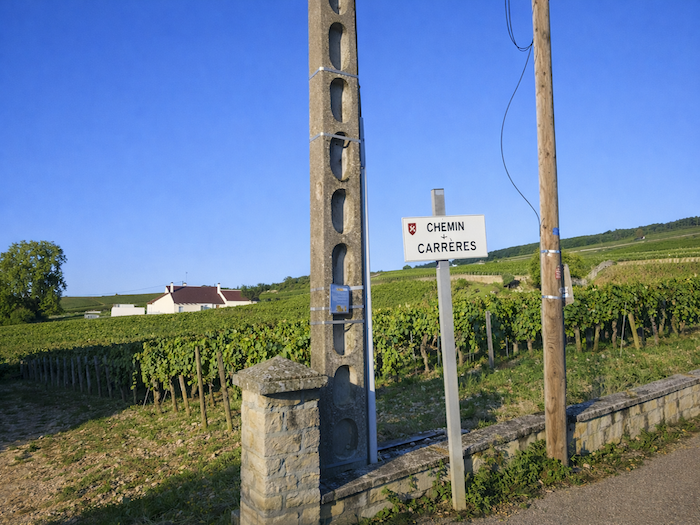
Chemin des Carrières must be earned. It is a climb, the first significant effort of this stage, winding its way through the vineyard.
The slope is sharp but short, and very quickly your steps brush the lower edges of the famous Corton wine estates. With every meter, the name resonates like a promise of wonder. Corton, a word that alone contains a share of Burgundian happiness.
The road then softens and continues to rise gently above the village of Ladoix, still surrounded by vines spreading out like a golden checkerboard.
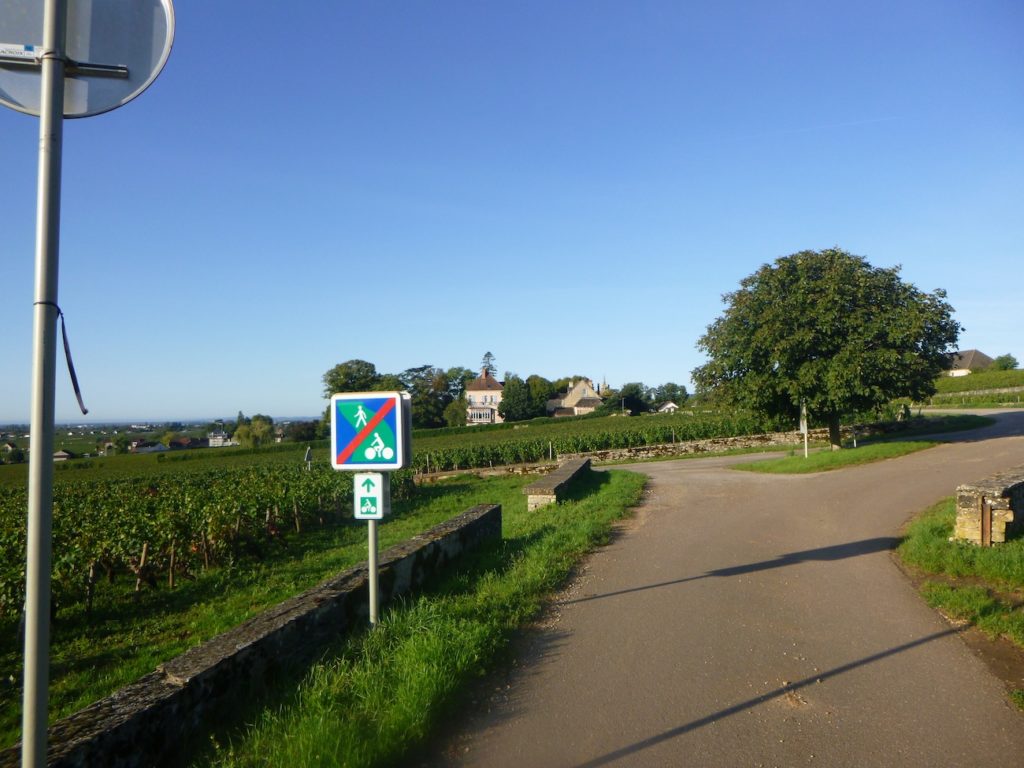
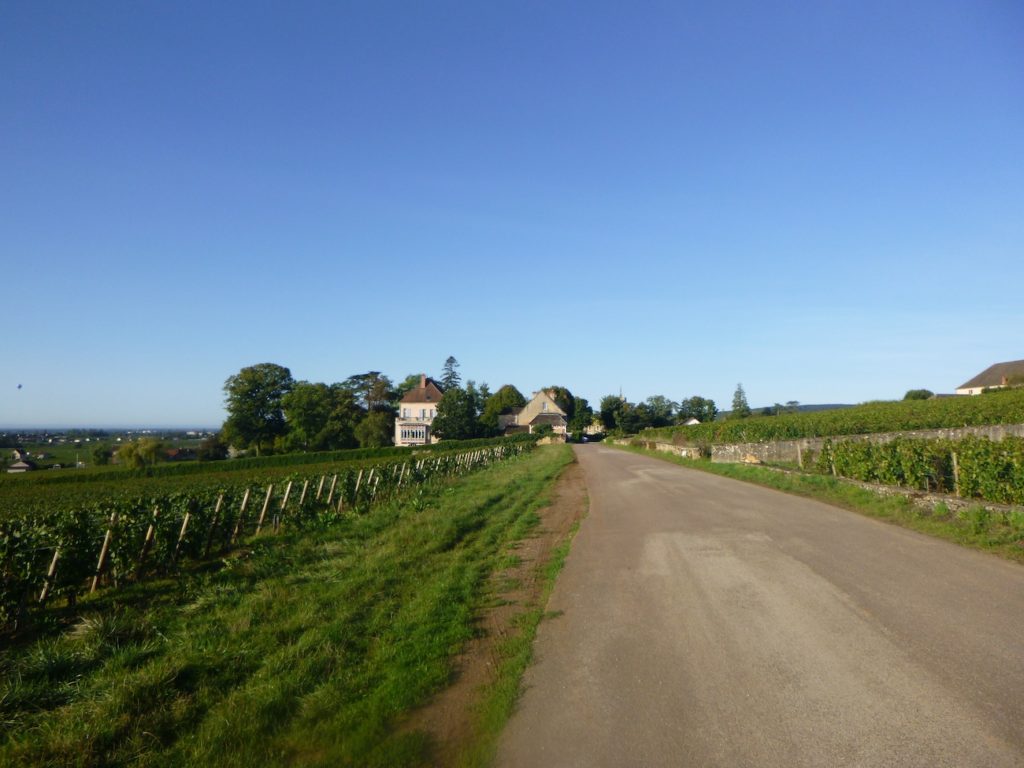
Soon, you join a discreet and peaceful cycle path that runs through the vineyard toward Aloxe-Corton.
Walking here becomes fluid and easy, almost a stroll. The road unrolls between aligned vines, and your steps fall into harmony with the rhythm of seasons and soil.
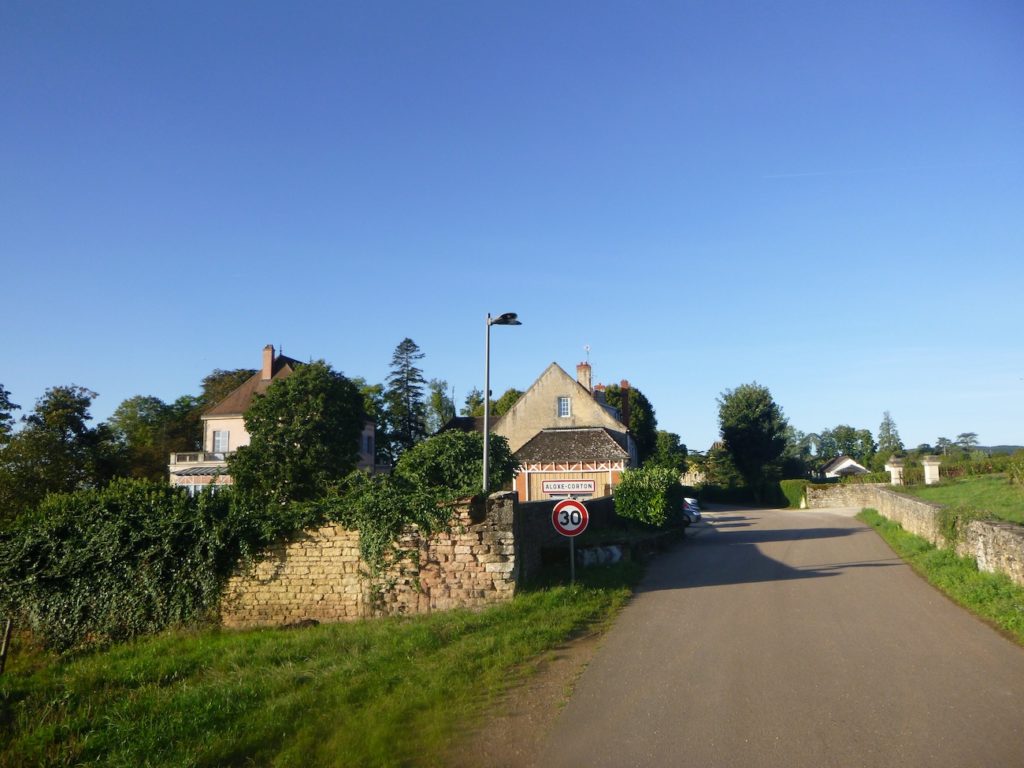
At the end of this long straight line, the road reaches a crossroads at the entrance to Aloxe-Corton.
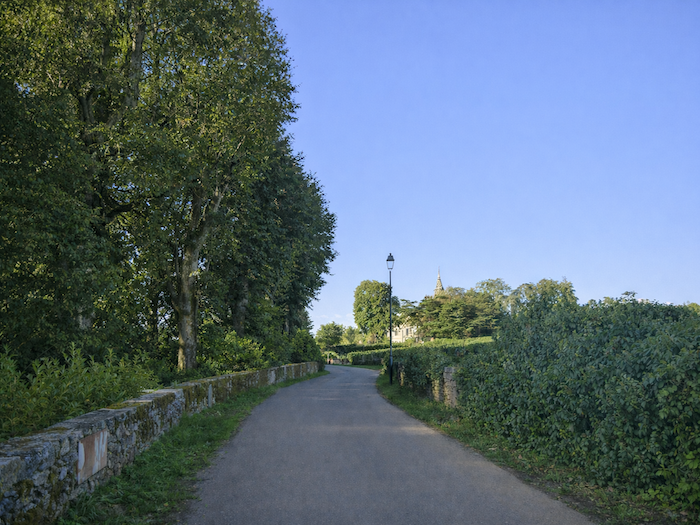
The village lies close at hand, nestled at the foot of the hill, appearing as a welcoming cocoon, a gentle halt at the heart of Burgundy.
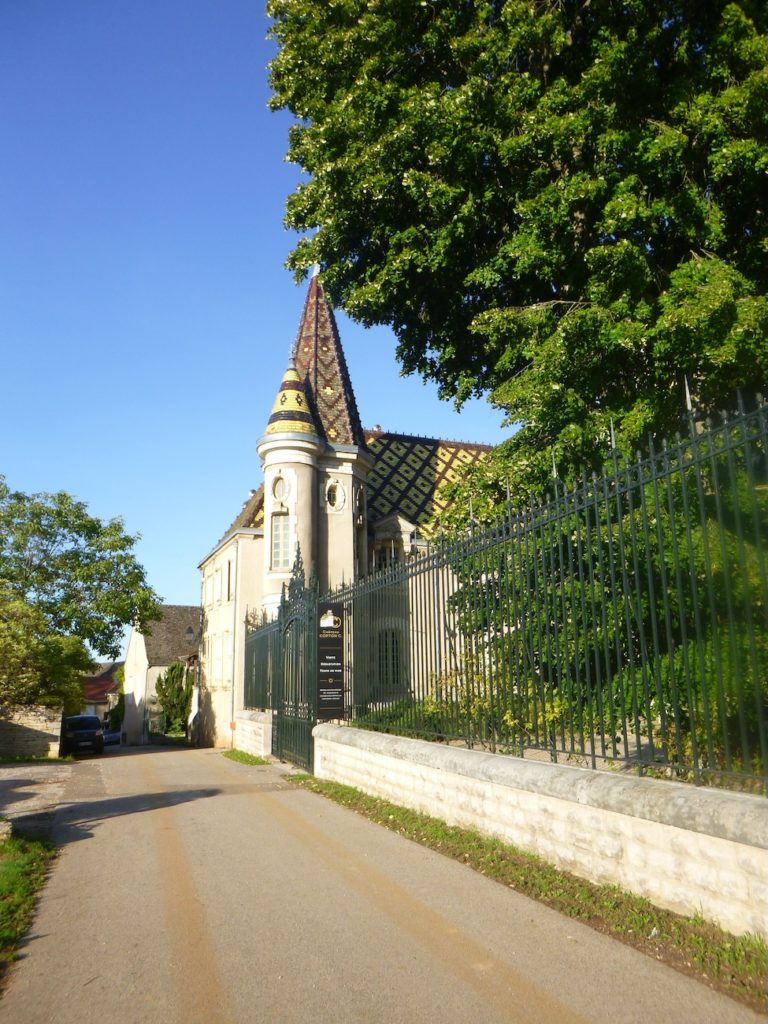
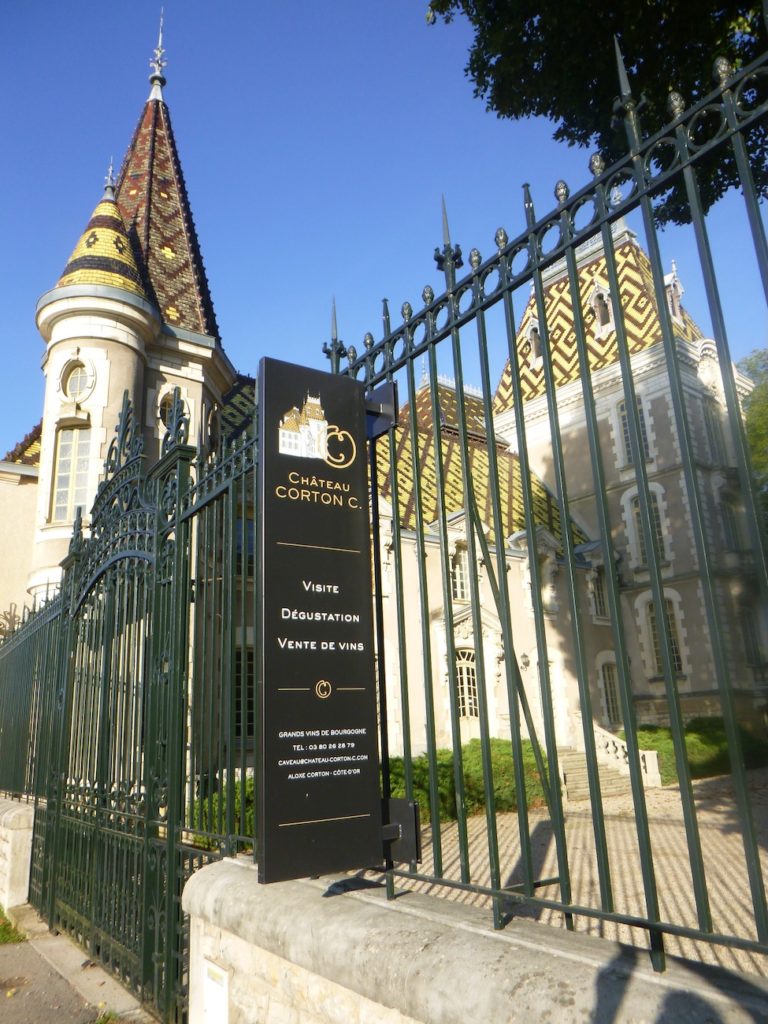
The road then heads toward Château Corton C. Majestic, it stands out from afar like a beacon at the heart of the vineyard, thanks to its brilliant roofs of glazed tiles shimmering in the sunlight. These vividly colored tiles form elegant geometric patterns and embody the Burgundian soul. Whether arriving on foot, by bicycle or by car, the pilgrim already feels the pull of history and wine upon glimpsing this noble silhouette set at the foot of the hill like an immutable sentinel.
Château Corton C. was built at the end of the nineteenth century, yet its roots reach much further back in time. It stands on the site of earlier constructions, of which a fifteenth-century vaulted cellar remains, a true underground cathedral where stone preserves the memory of centuries past. History, almost legend, tells that in the eighth century Emperor Charlemagne himself owned a vineyard here of around three and a half hectares. It was on these sunlit slopes, now known by the prestigious name of Corton-Charlemagne, that the emperor is said to have planted vines, giving birth to one of the most famous crus in the world.
The very name of the château carries this memory. Corton C., with the “C” standing for Corton-Charlemagne, is a vivid reminder of this exceptional terroir and of the unique “climat” that forged Burgundy’s reputation. For a long time, the estate was the seat of the Corton André house, one of the most illustrious in the region, renowned for the quality of its great crus, ambassadors of Burgundian excellence. Even today, the château, listed as a historic monument, continues to attract admiration. With its proud silhouette and refined architectural details, it has become one of the most photographed monuments in Burgundy, second only to the famous Hospices de Beaune, like a living postcard of the region’s wine-growing and cultural heritage.
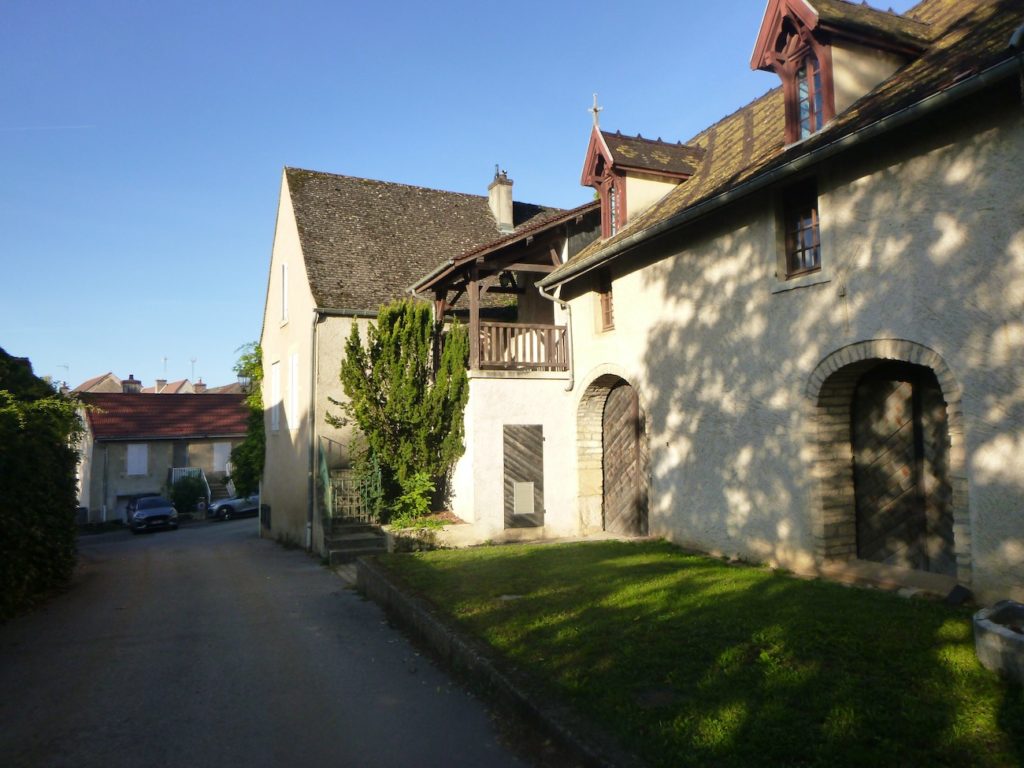
The route then crosses the village, weaving between winegrowers’ houses with stone façades. Cellars sometimes open to the passer-by’s curiosity, revealing damp vaults, sleeping barrels and promises of nectars patiently aged in the shade.
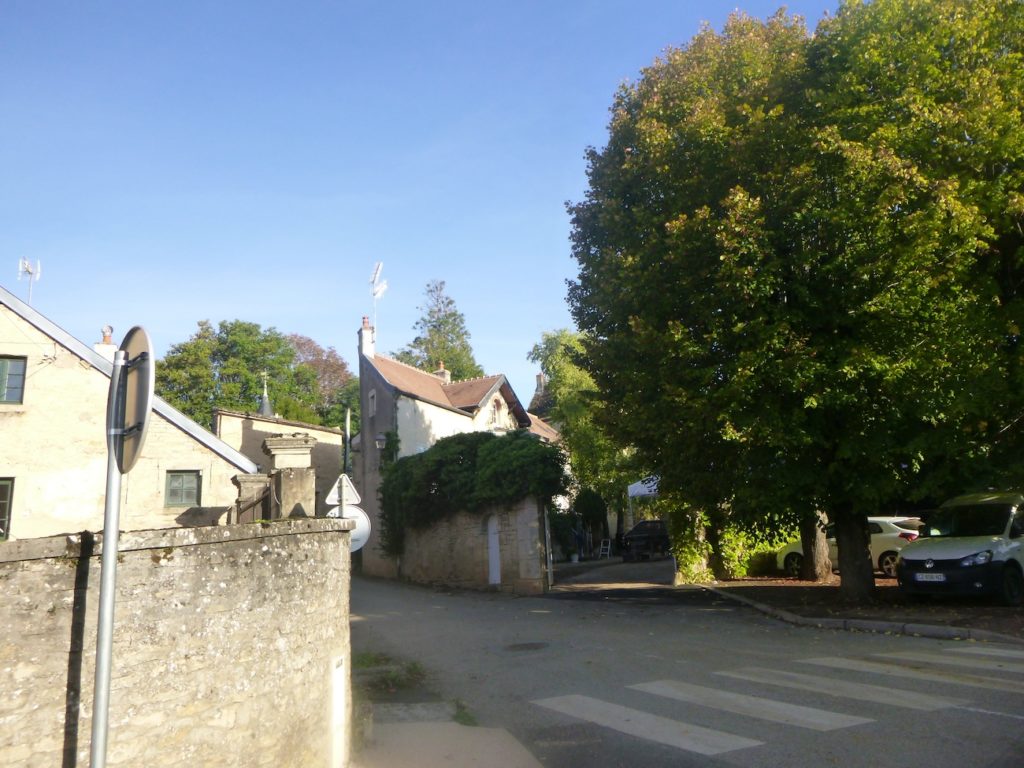
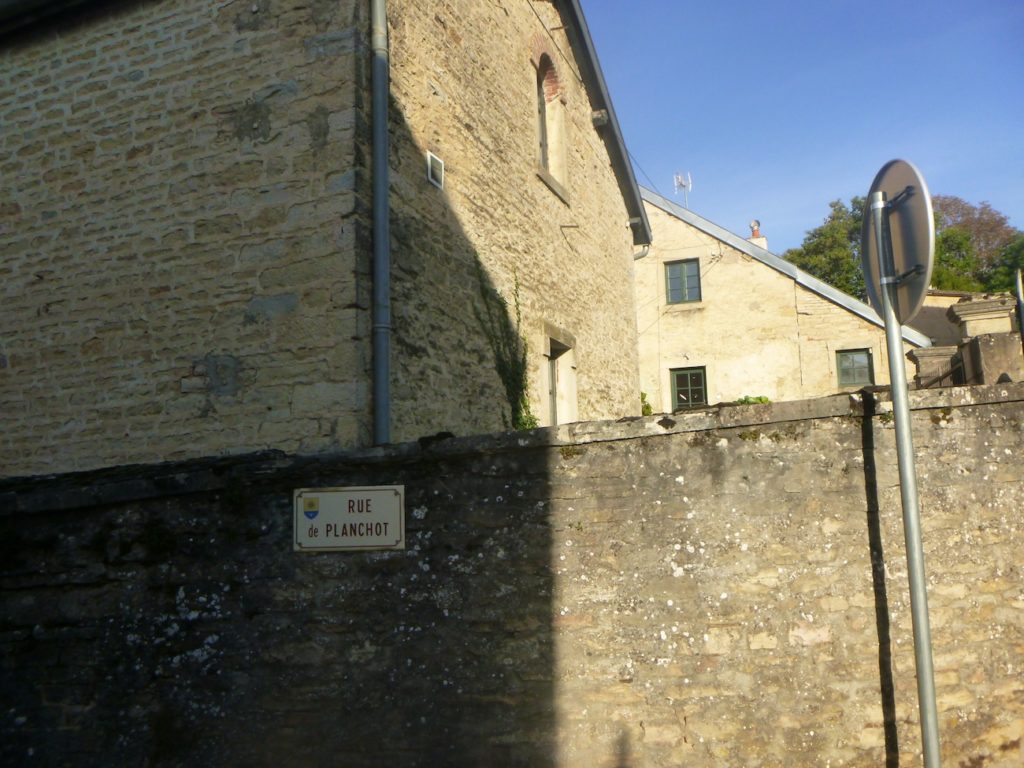
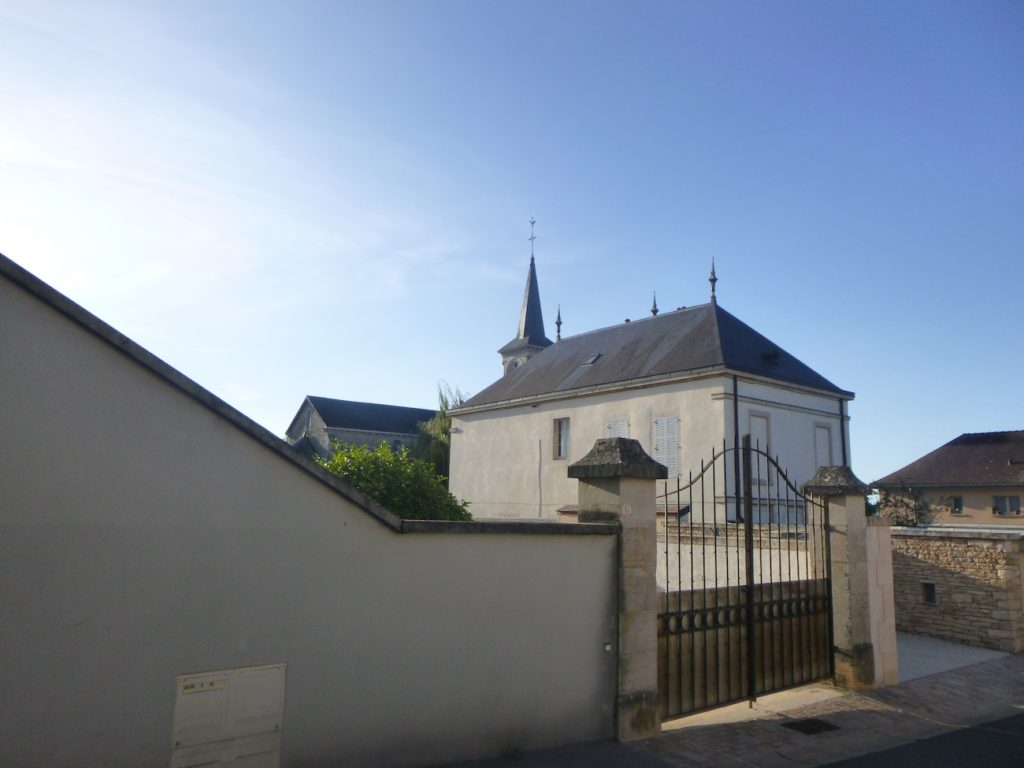
From the village square, the route slopes gently and descends Rue Planchot, slipping behind the church.
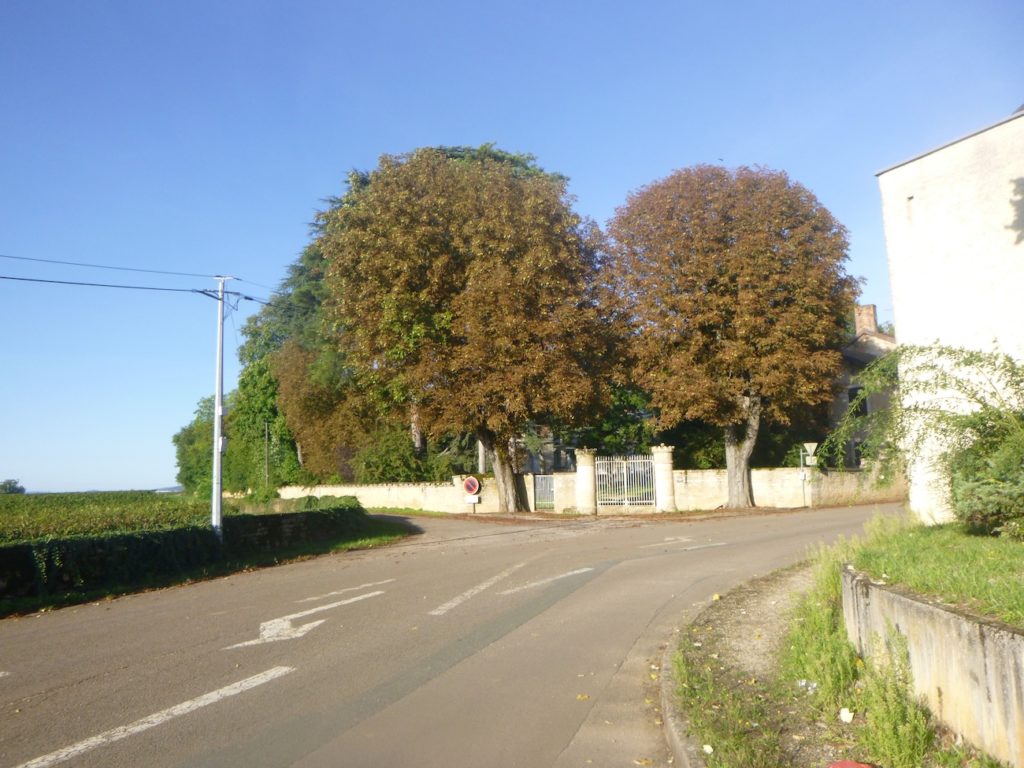
At the end of this descent, a crossroads opens, revealing a discreet château nestled within a park of ancient trees. It is not a great wine estate, lacking the solemn rows of vines and celebrated cellars that abound in Burgundy. Rather, it is a residential manor with aristocratic overtones, sheltered behind its walls and surrounded by outbuildings that breathe a sense of almost familial gentleness. Walking along the estate walls, one has the feeling of brushing past a secret, a pause outside of time, like a confidence murmured by stone.
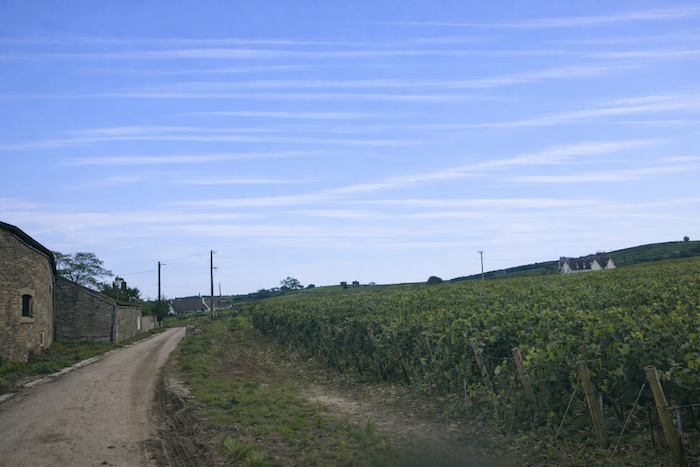
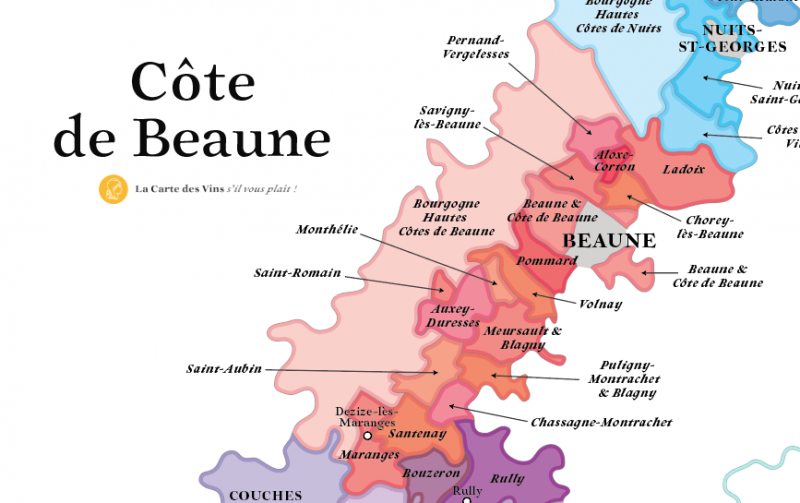
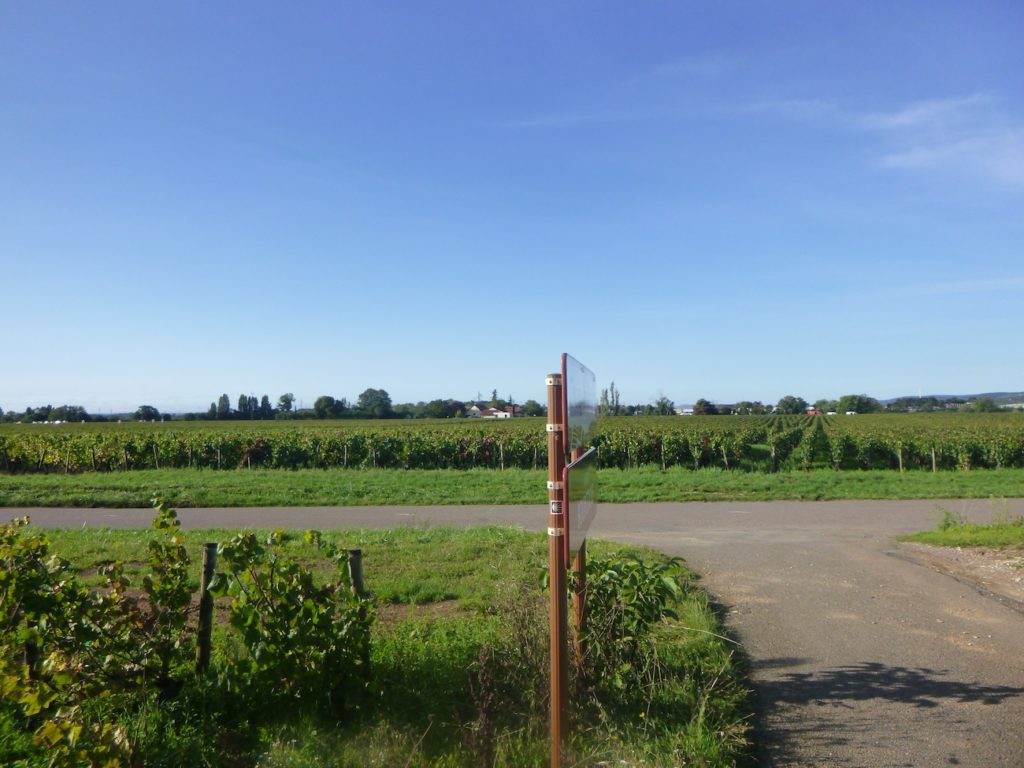
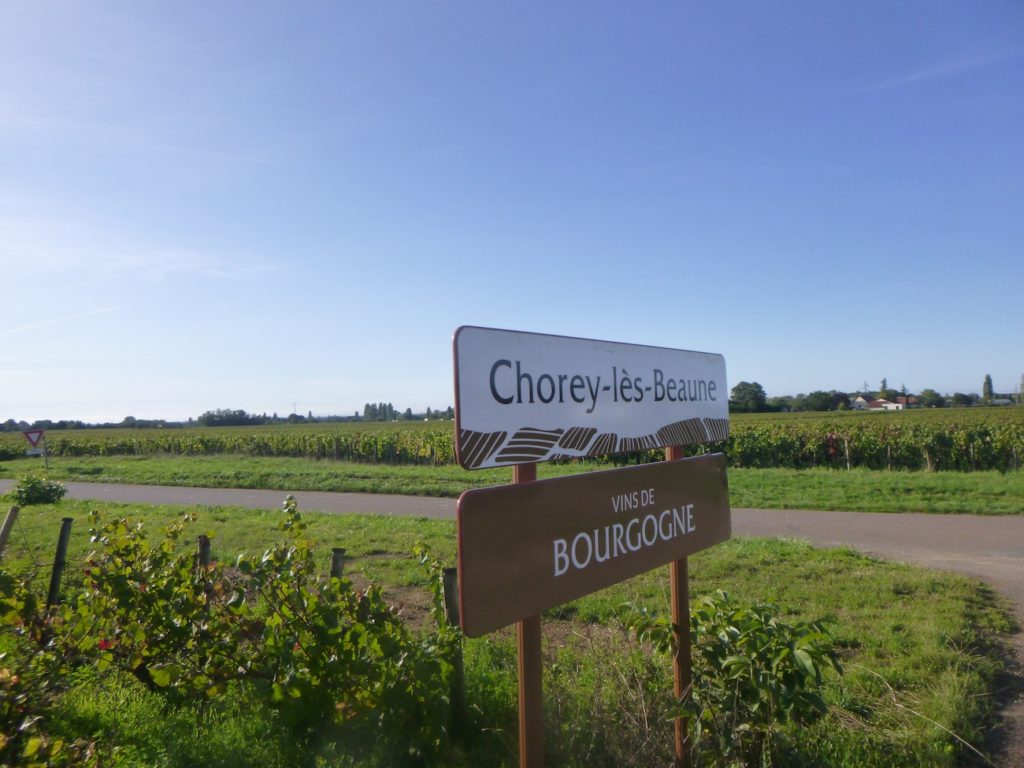
Beyond Aloxe-Corton, heading toward Beaune, the landscape subtly changes. The rows of vines spread wider, covering vast slopes that seem to stretch endlessly. Here begins the Beaune AOC appellation. Upon leaving the village, the walker quickly enters this immense ocean of vines, nearly four hundred hectares, more than three hundred of which are classified as Premier Cru, a treasure beneath the open sky. These estates form a living mosaic between Savigny-lès-Beaune, Chorey-lès-Beaune and the prestigious Côte de Beaune. They announce, like a musical prelude before the climax, the proximity of the town of Beaune, capital of Burgundy wines.
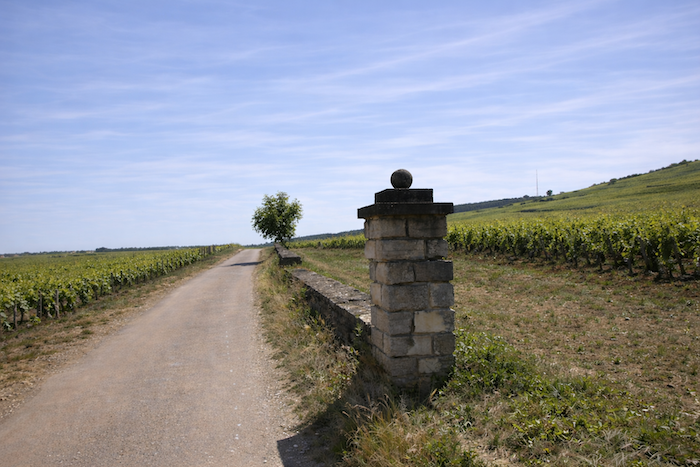
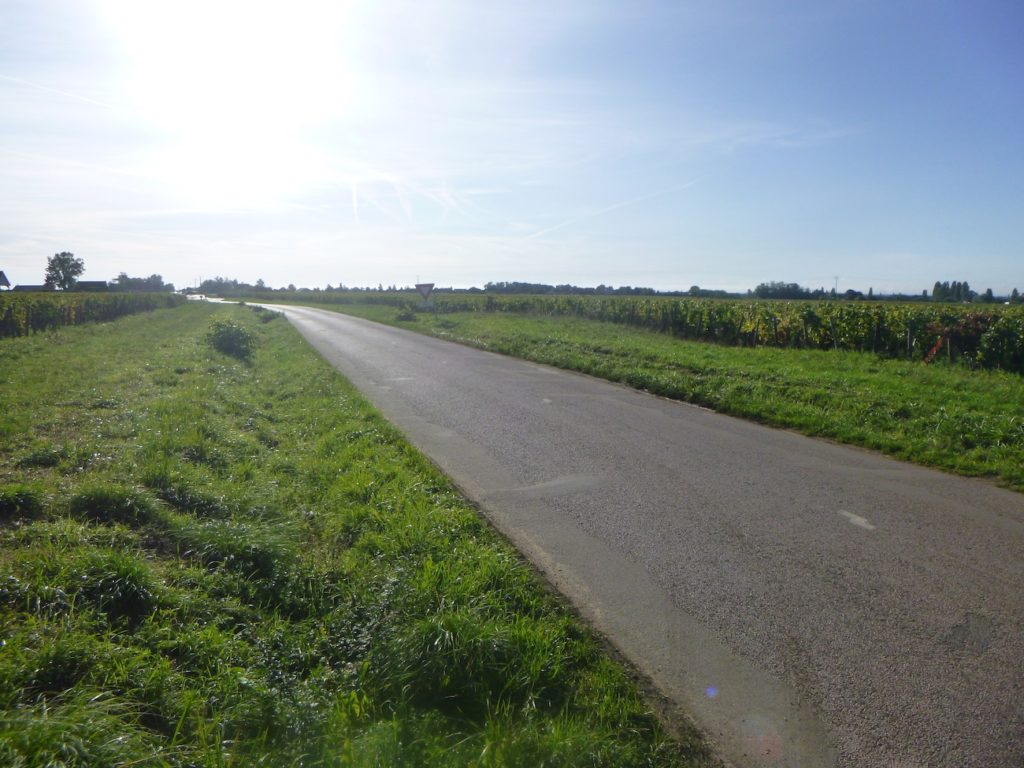
A small road then slips away, winding lazily through the vines. On either side, the vines align with the regularity of a silent army, and a few rare dry-stone walls punctuate the landscape like ancient scars, remnants of patient human labor.
Here, there are almost no trees to offer shade or temper the sun’s intensity. A scallop fixed to a solitary tree beside the path reassures the walker. The direction is simple. Continue straight ahead.
Yet the road grows long, almost interminable. The eye eventually tires of the obsessive repetition of vine rows stretching endlessly, as if the vineyard had no end. Monotony itself becomes a trial, an exercise in patience.
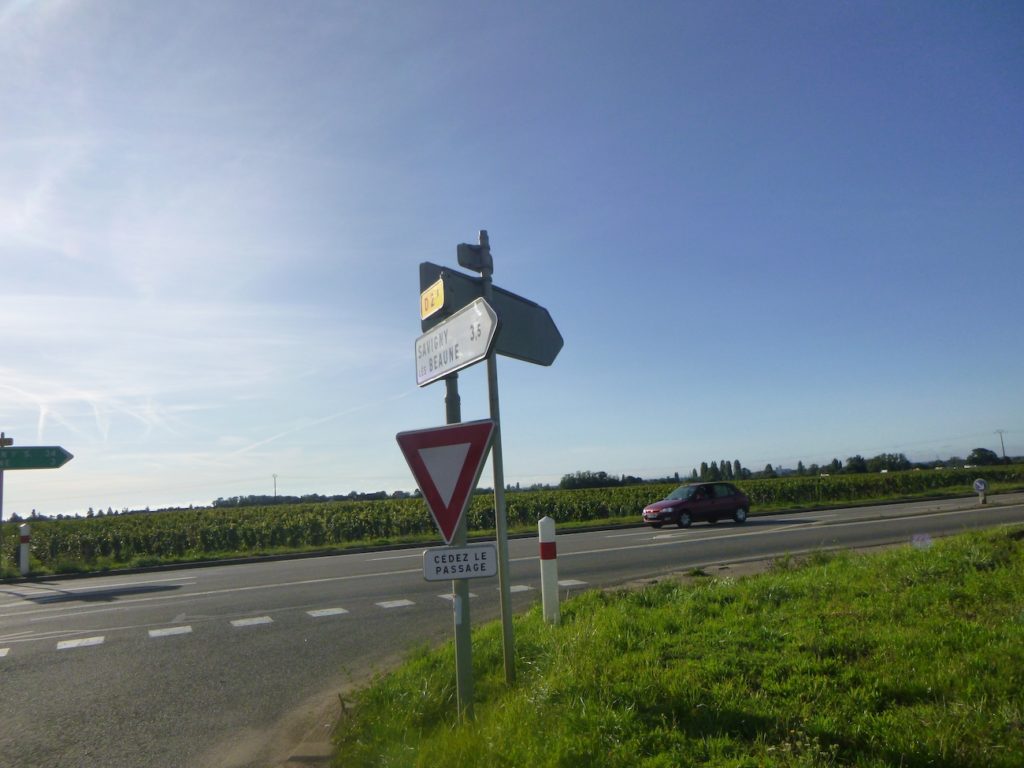
Suddenly, a junction appears. Naturally, there is no scallop to guide the way. Doubt sets in. One must not yield to the call of the left, which leads straight to the national road and its noise. Wisdom lies to the right, where the small road curves gently, like a discreet wink to those who know how to look.
The climb then resumes, steady and almost gentle, up the slope. There is no trap here. One must always follow the main road and resist the temptation of side tracks. Each step brings you closer to the summit, in the calm constancy of the rhythm.
And if you take the time to turn around, the sight is reassuring. The hill of Corton still stands proudly on the horizon, watching over Aloxe-Corton like a tutelary silhouette, immutable and comforting.
These days, the harvest is still in full swing, though its conclusion can already be sensed. Baskets fill, secateurs click like seasonal music, and the vineyard seems to take one last deep breath before slipping into autumnal rest.
A little further on, the outline of Beaune grows ever clearer, like a promise of rest and history after the long crossing of the vineyards.
The route then emerges at a crossroads. Here, a salvational scallop firmly indicates a left turn. A small sign of trust that restores confidence just as doubt might have taken hold.
Here you walk at the heart of the vast domain of Chorey-lès-Beaune. This generous terroir unfolds like a great wine-growing plain, less steep than the slopes yet equally marked by human labor.
The road then turns toward the large departmental road. Soon, you leave the vineyard’s embrace and approach the city, a brutal yet inevitable transition announcing that Beaune stands at the walker’s gates.
Section 6: In Beaune, capital of the vineyard
Overview of the route’s challenges: a route with no difficulty at all.
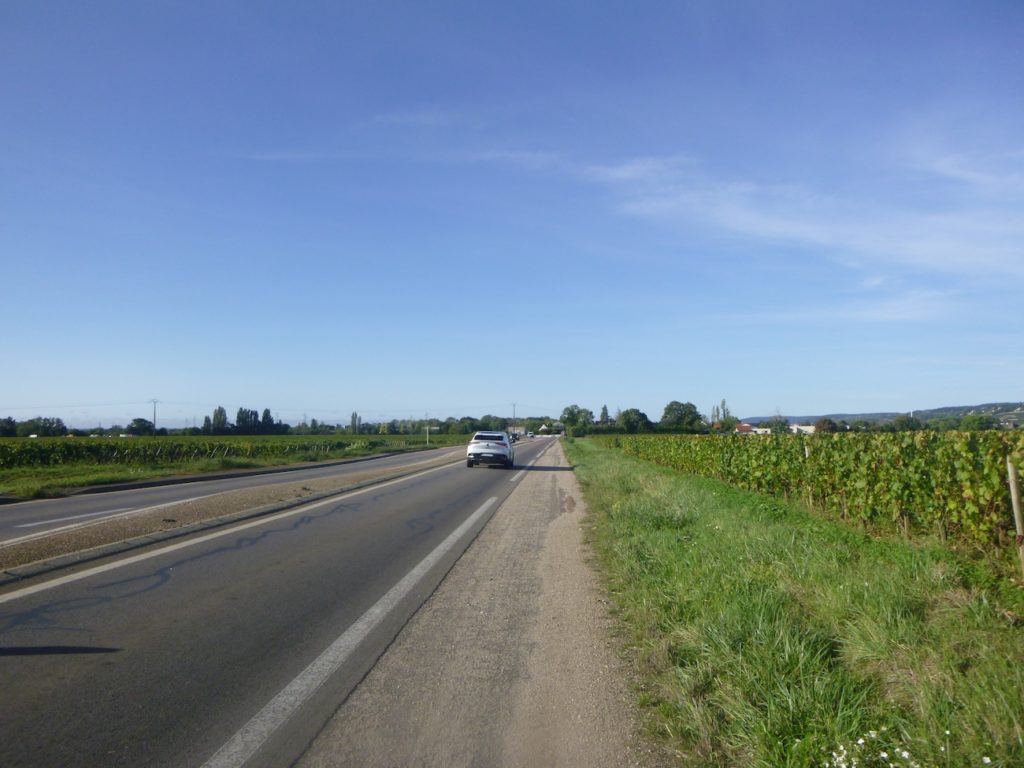
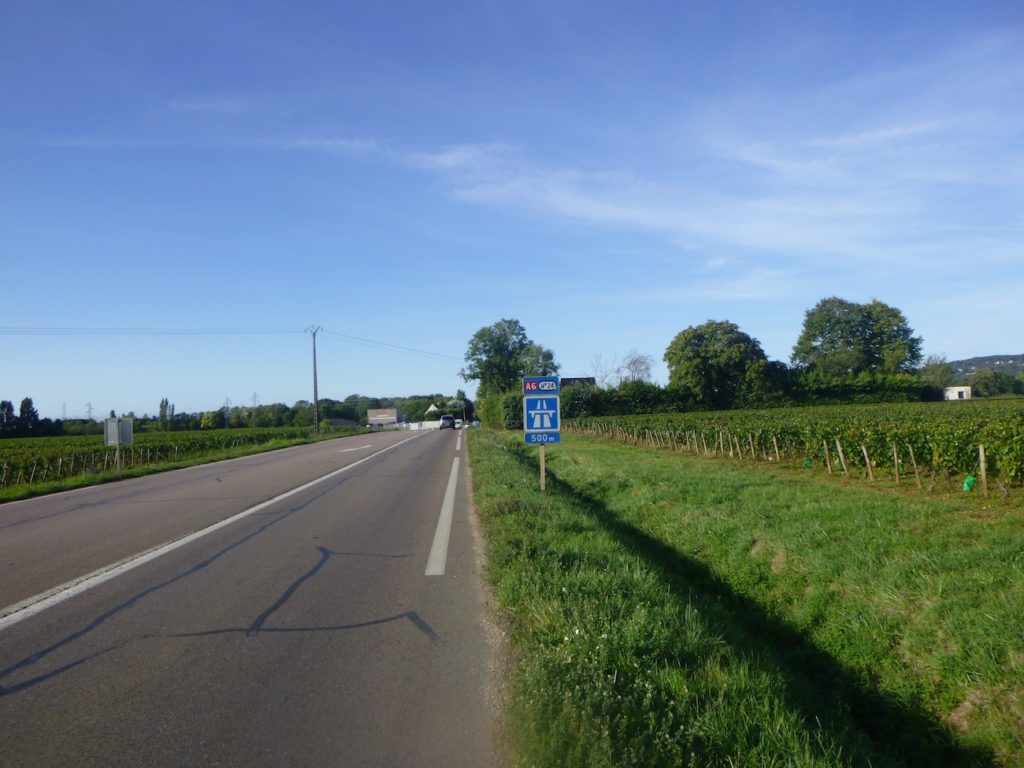
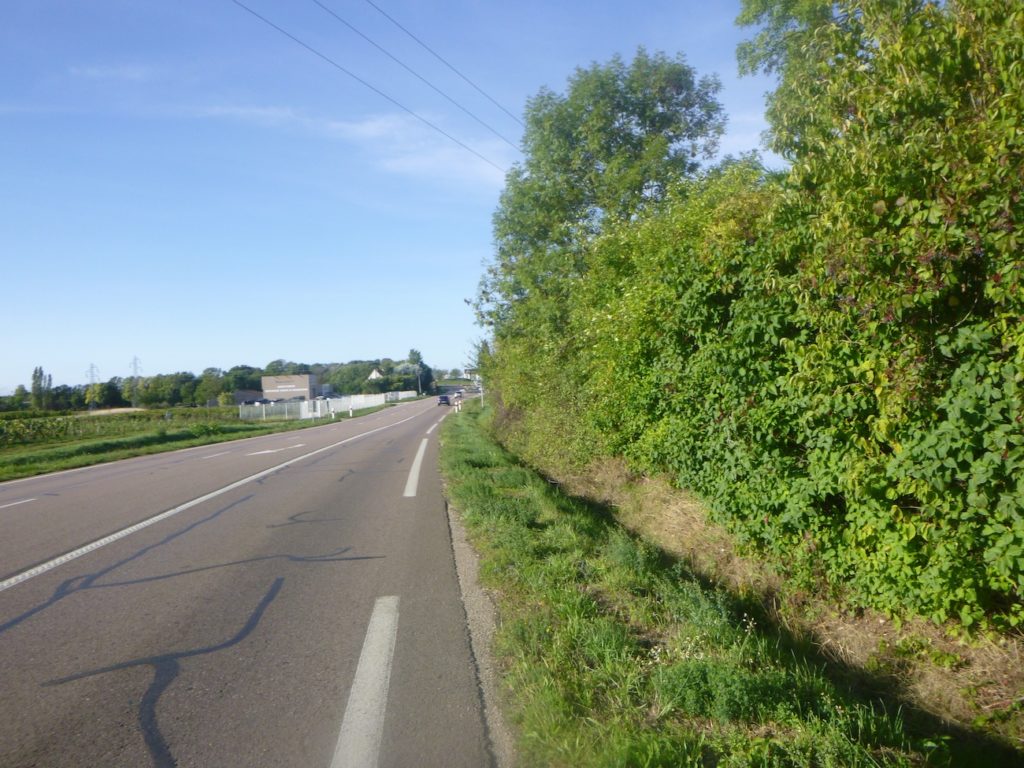
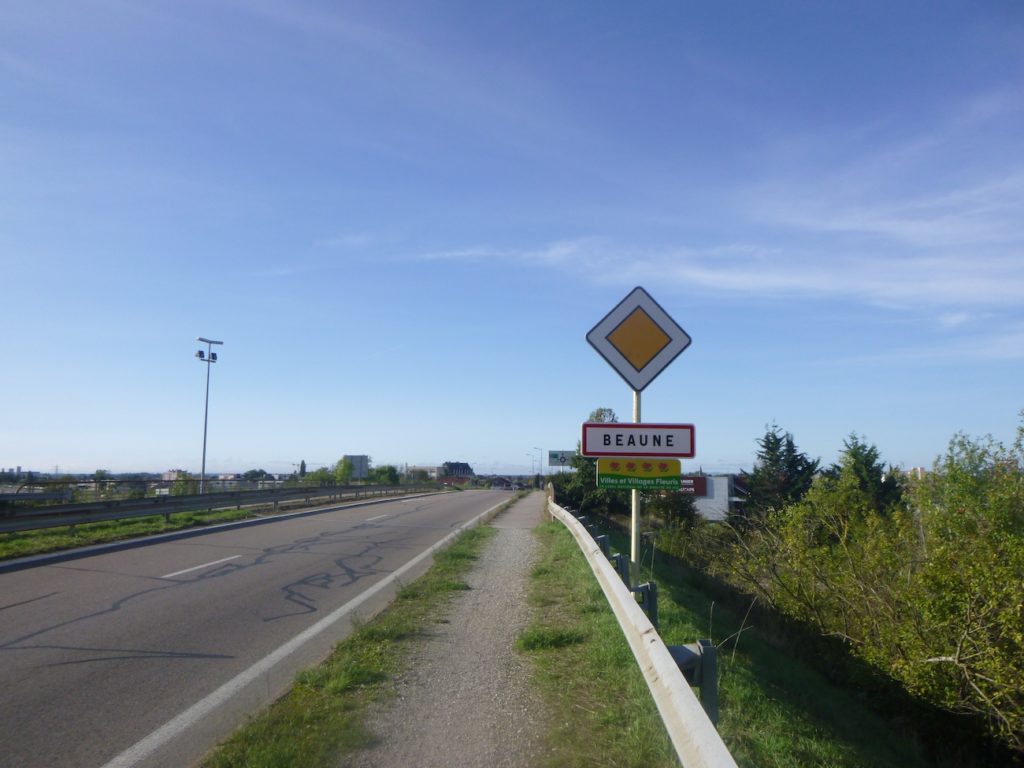
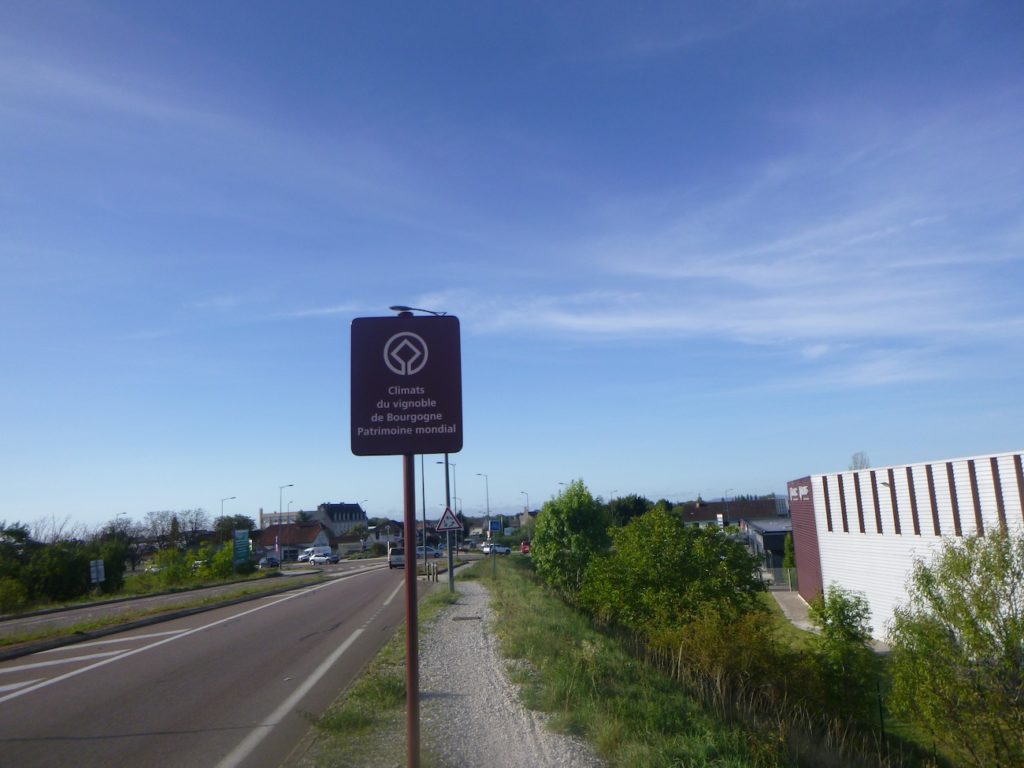
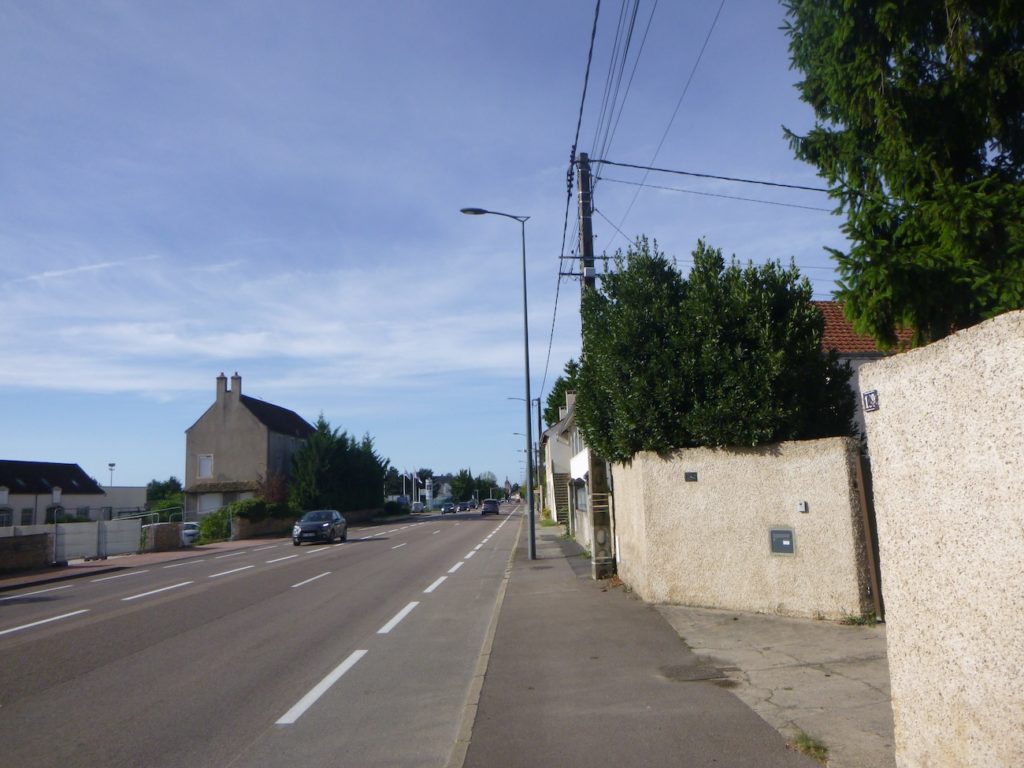
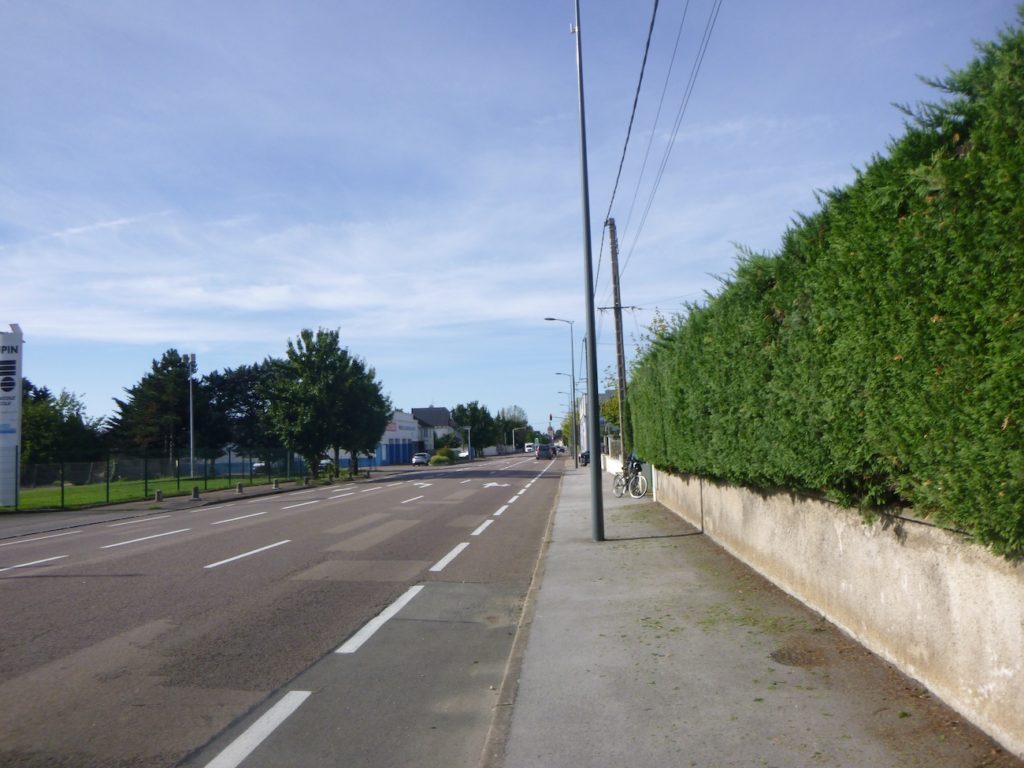
You must now follow the road, where the constant roar of vehicles reminds you that the peaceful countryside is behind you. Road signs soon announce the proximity of the motorway.
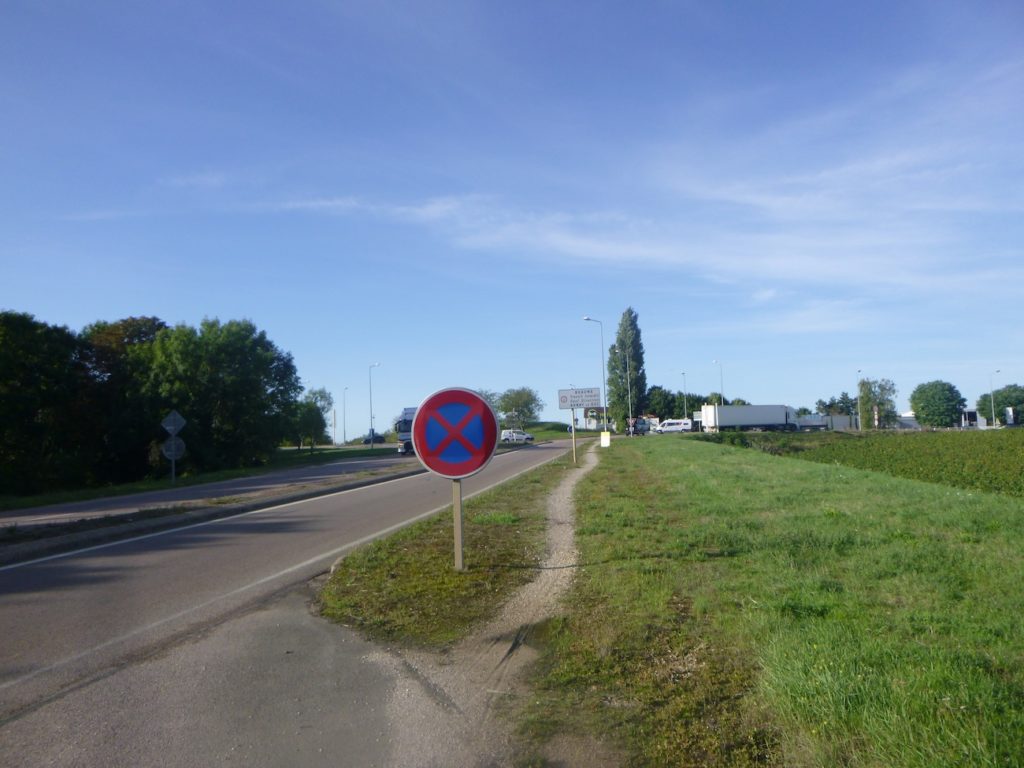
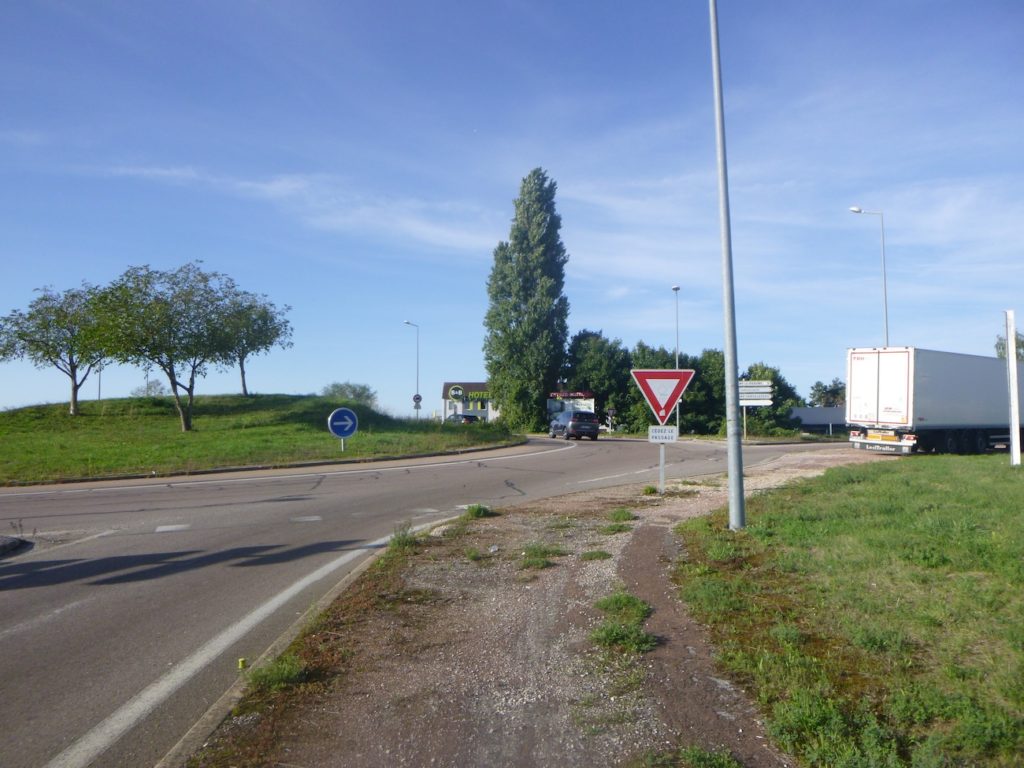
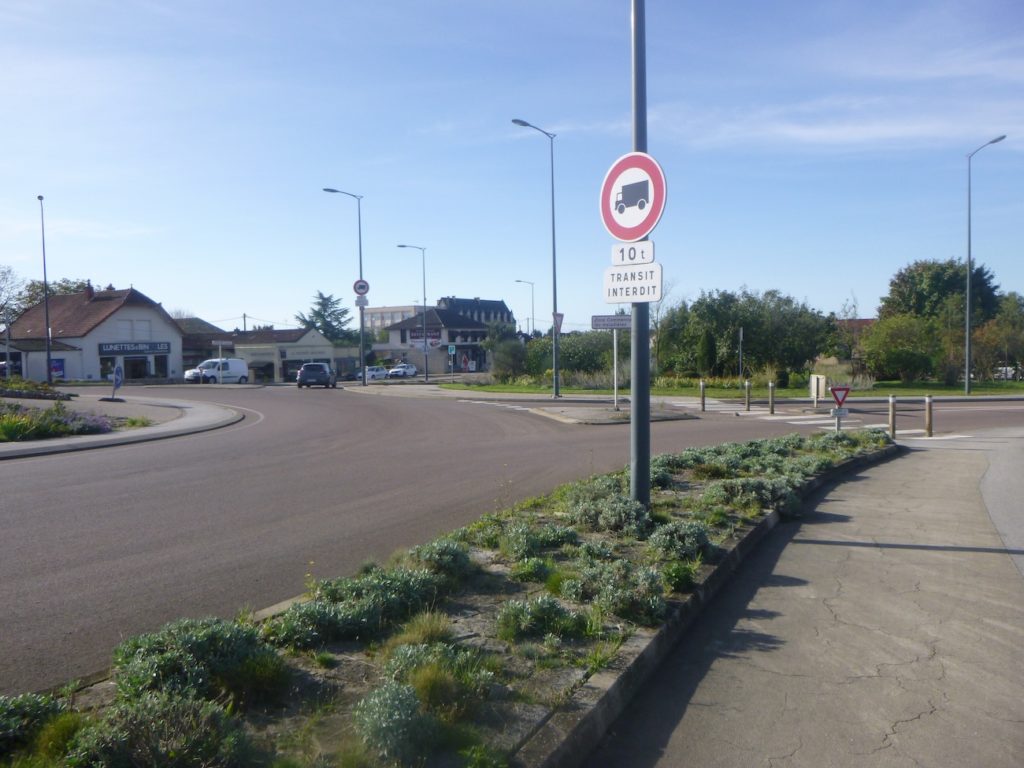
The road continues and further on opens onto a large roundabout, a true crossroads of directions, where traffic intensifies and forces the walker to be especially vigilant.
It is a roundabout saturated with cars, animated by multiple flows, where each sign seems to offer a new possibility.
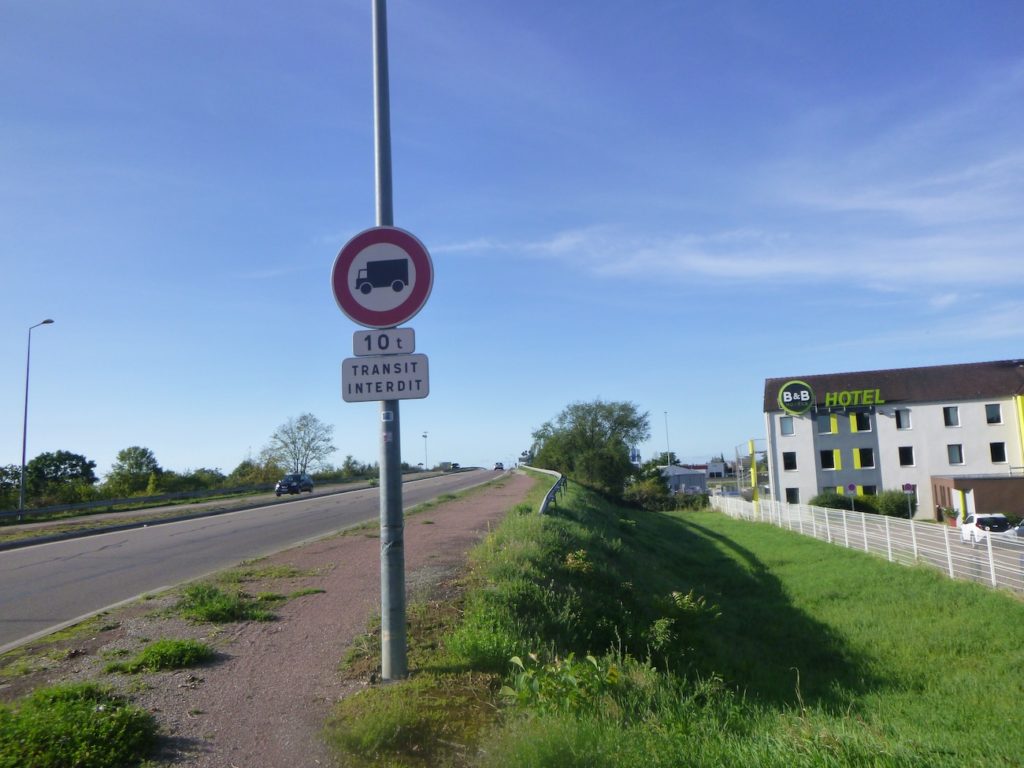
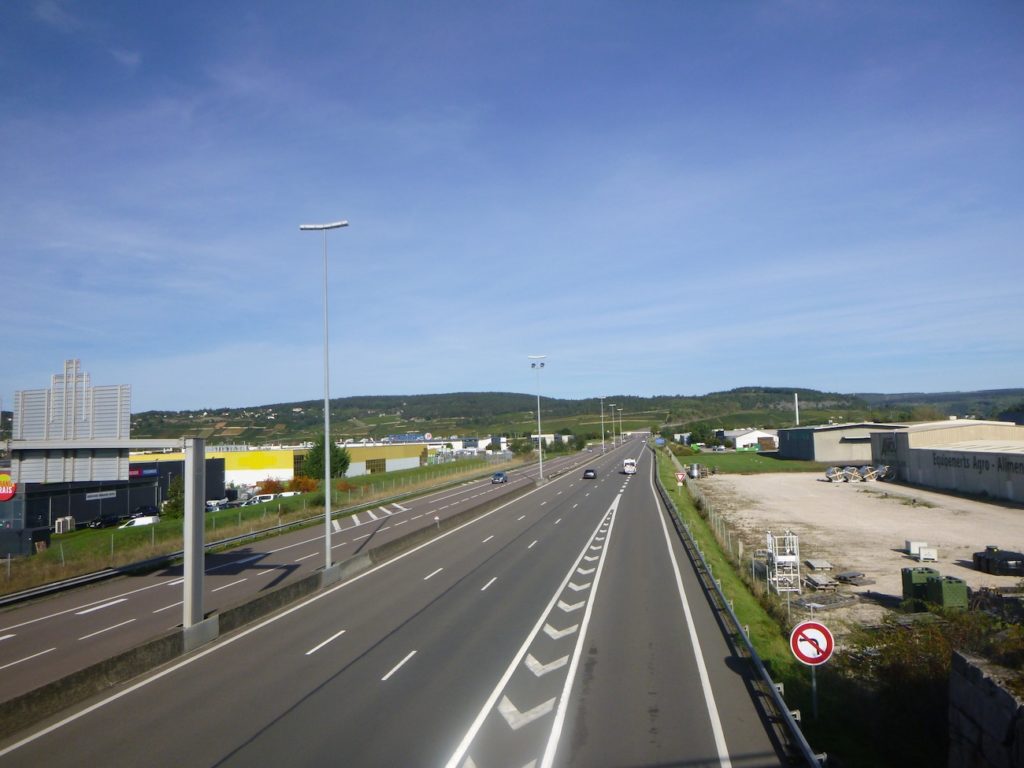
The roadway then heads toward Beaune and crosses the A6 motorway, the busy artery linking Paris to the south of France. The contrast is abrupt. After days spent among vineyards, modernity surrounds you with its noise and restless rhythm.
Yet you are not quite in the city proper. Further on, a second roundabout rises like a true gateway. It marks the real entrance into Beaune.
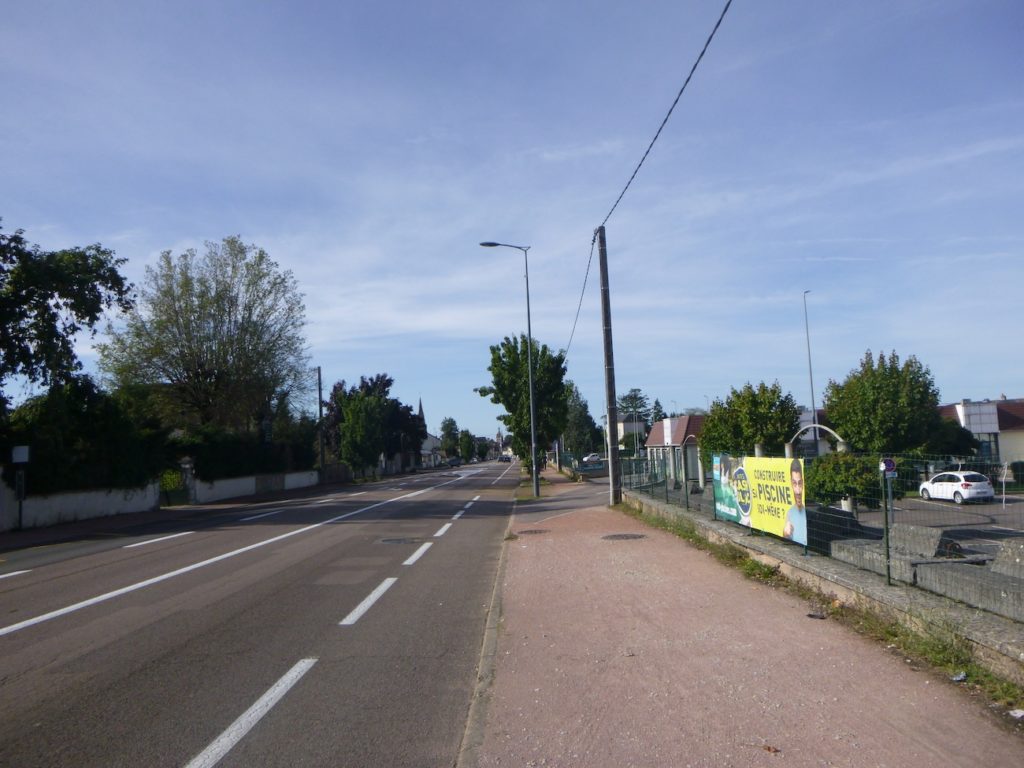
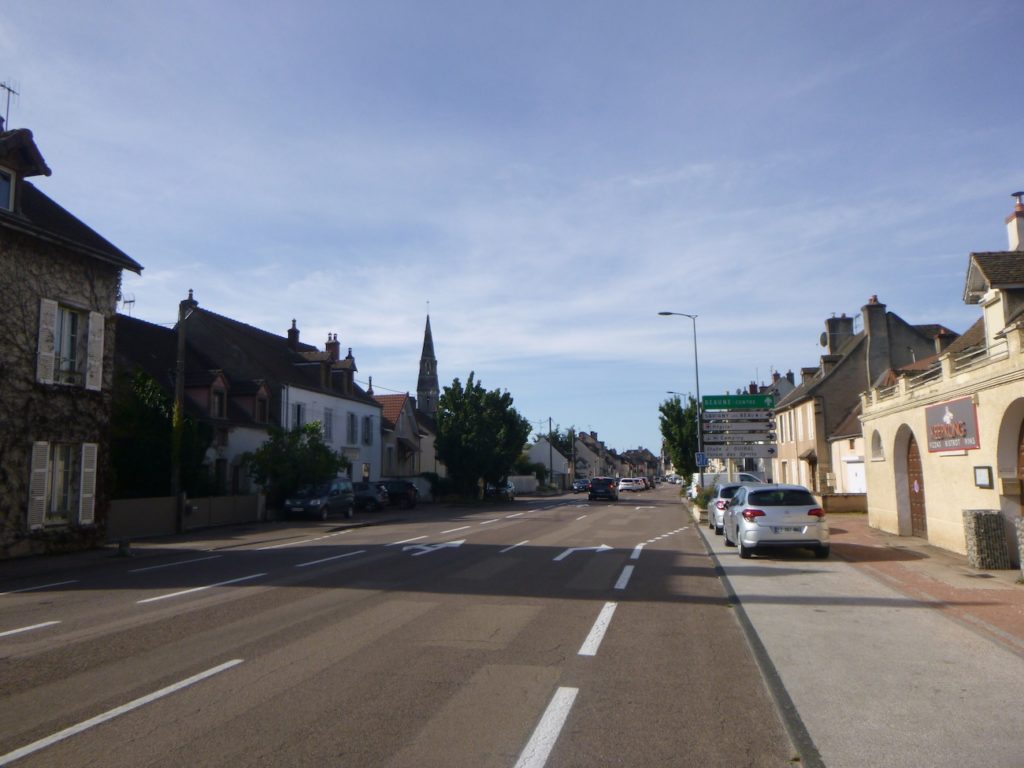
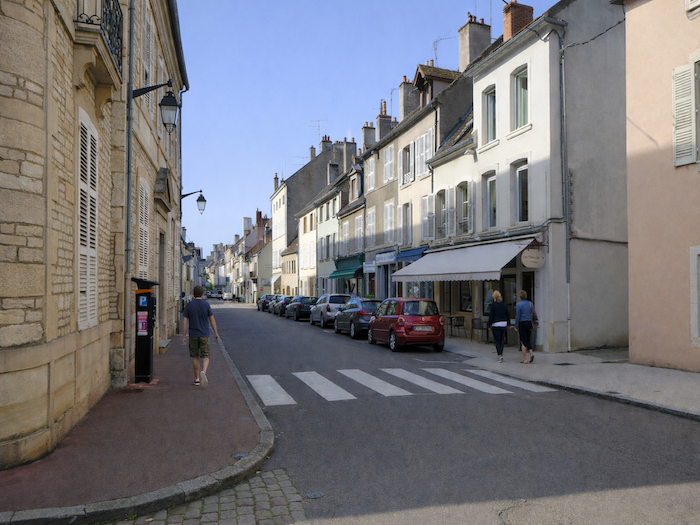
A long walk then begins, sometimes wearisome, along the pavement of Rue du Faubourg St Nicolas. The gaze drifts across aligned façades and successive shop signs, and the step becomes almost mechanical, paced by urban monotony.
The street soon runs alongside St Nicolas Church. Built in the twelfth century outside the city walls, it underwent several alterations in the fourteenth and fifteenth centuries that gave it its present appearance. Its discreet silhouette accompanies the walker like a spiritual pause within the stone.
At last, at the end of the street, the route reaches Porte Sat Nicolas. Once, this city entrance was fortified and protected by a drawbridge. In the eighteenth century, however, Beaune’s ramparts lost their military purpose and many were dismantled. The gate you pass through today, softened by time, is the heir to that transformation.
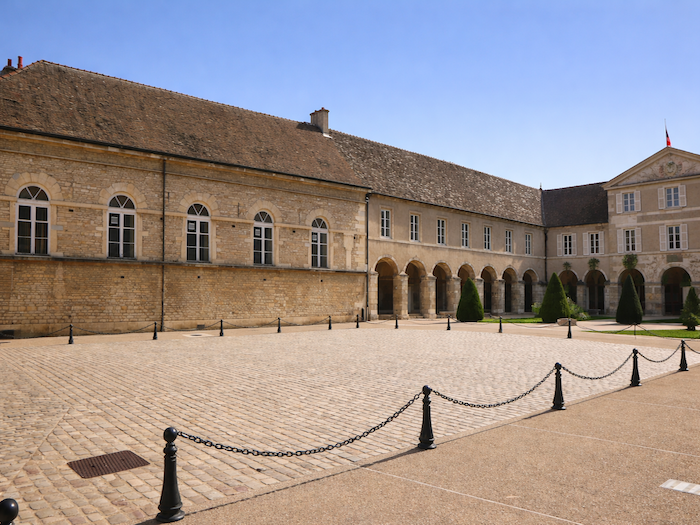
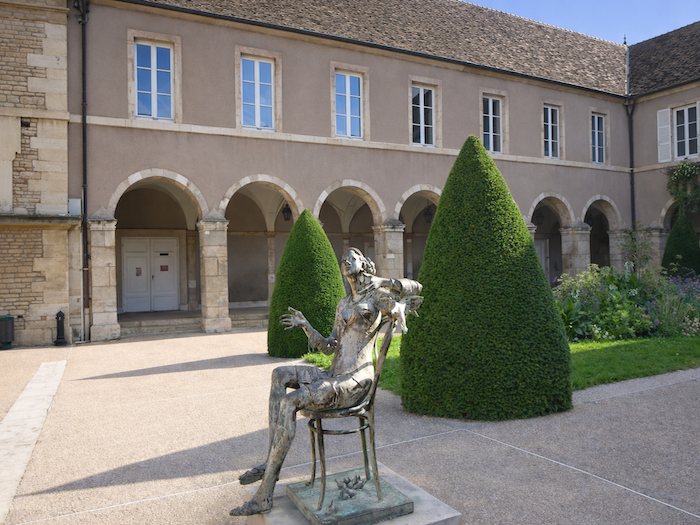
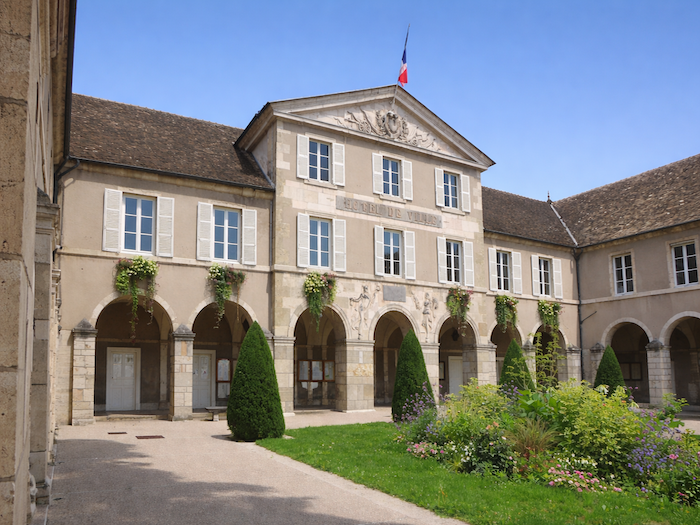
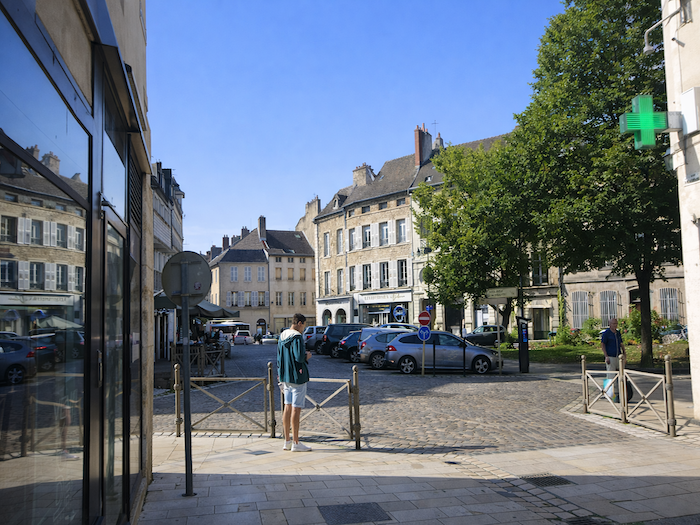
Just steps beyond the gate, on a square that opens like a breath at the heart of the city, stands the Town Hall. This fine building, bathed today in an almost monastic calm, did not always serve a civic function. It was once a place of silence and prayer, the former Ursuline convent, whose foundations date back to the seventeenth century. Its sober walls, still bearing the imprint of religious austerity, now host the public and civic life of Beaune.
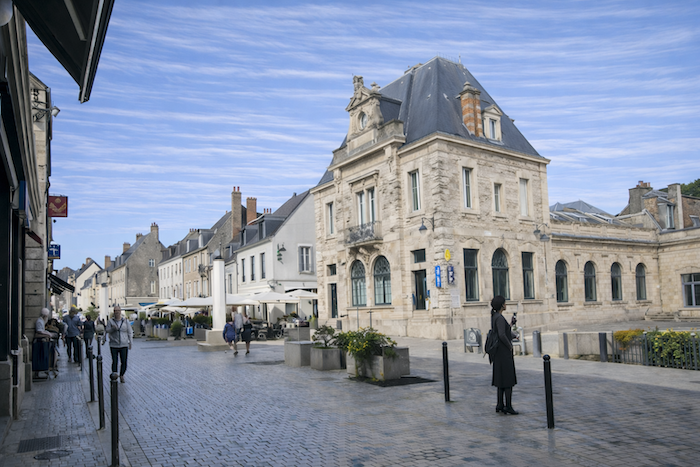
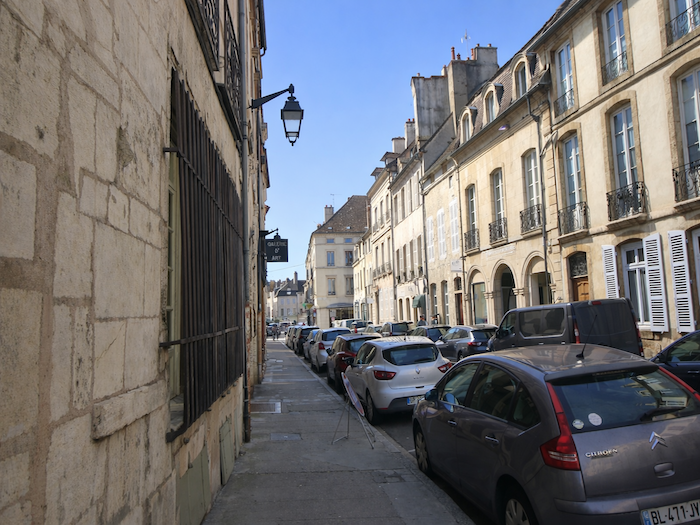
The route then follows Rue de Lorraine. Here, houses succeed one another, offering at every step a delight of elegant façades, sometimes proudly restored, sometimes discreetly marked by time. The visitor looks upward. Carved lintels, wrought-iron details, soft colors or hues mellowed by the seasons appear like open pages of a book of stone, guiding you toward Place Monge.
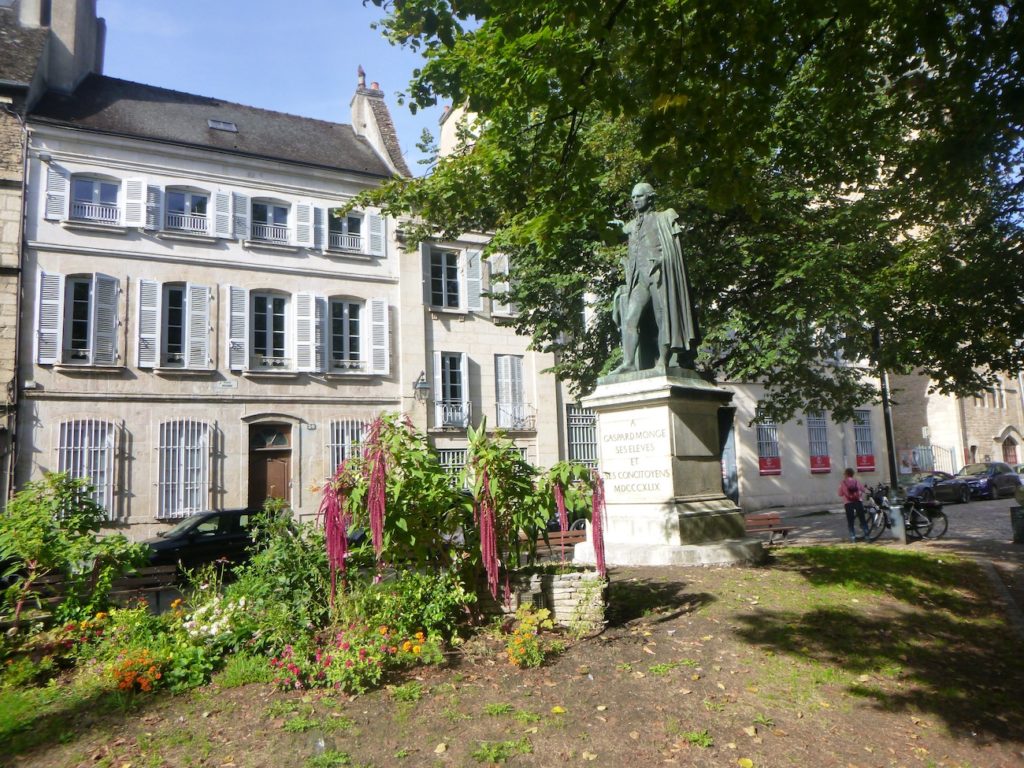
When one speaks of Monge in Beaune, it is not merely a square that is meant, but a tutelary figure, a prodigious child of the city. Gaspard Monge, born in 1746 and deceased in 1818, a visionary mathematician and inventor of descriptive geometry, was born here. This man, who gave mathematical form to the language of space and volume, was also a major political figure of the French Revolution.
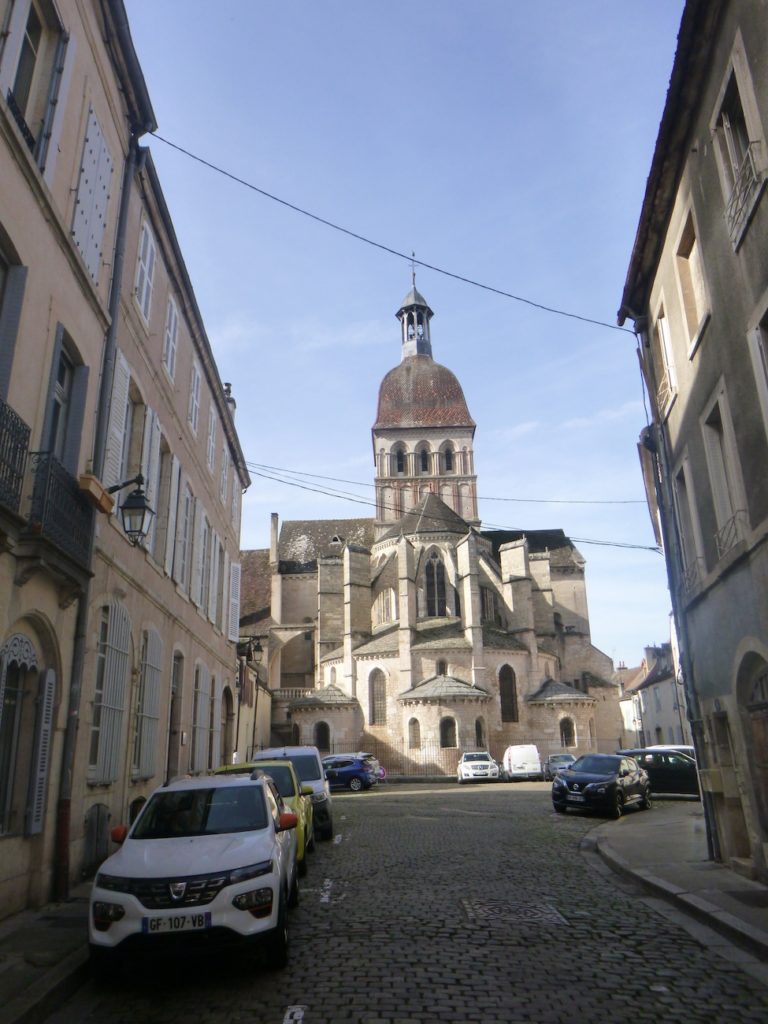
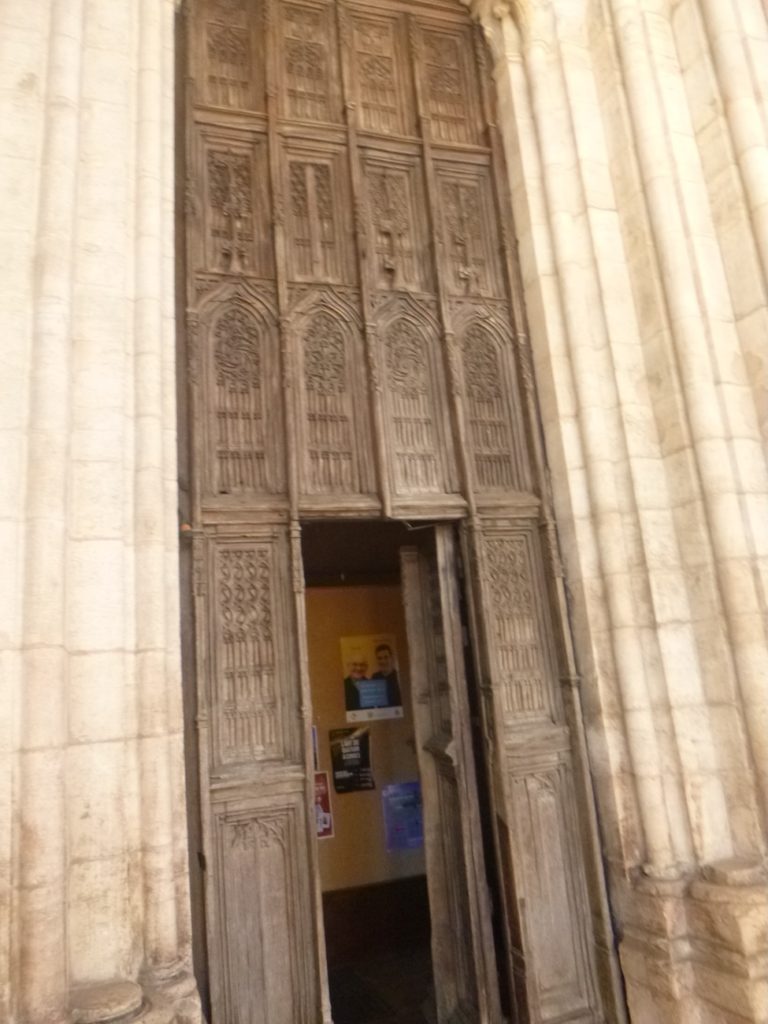
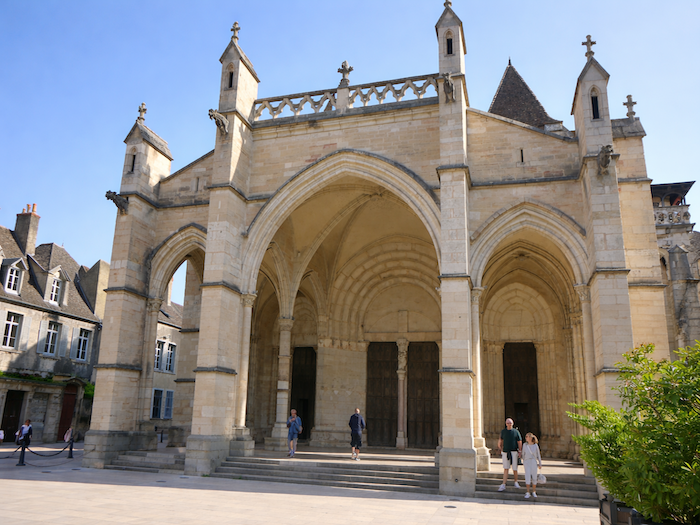
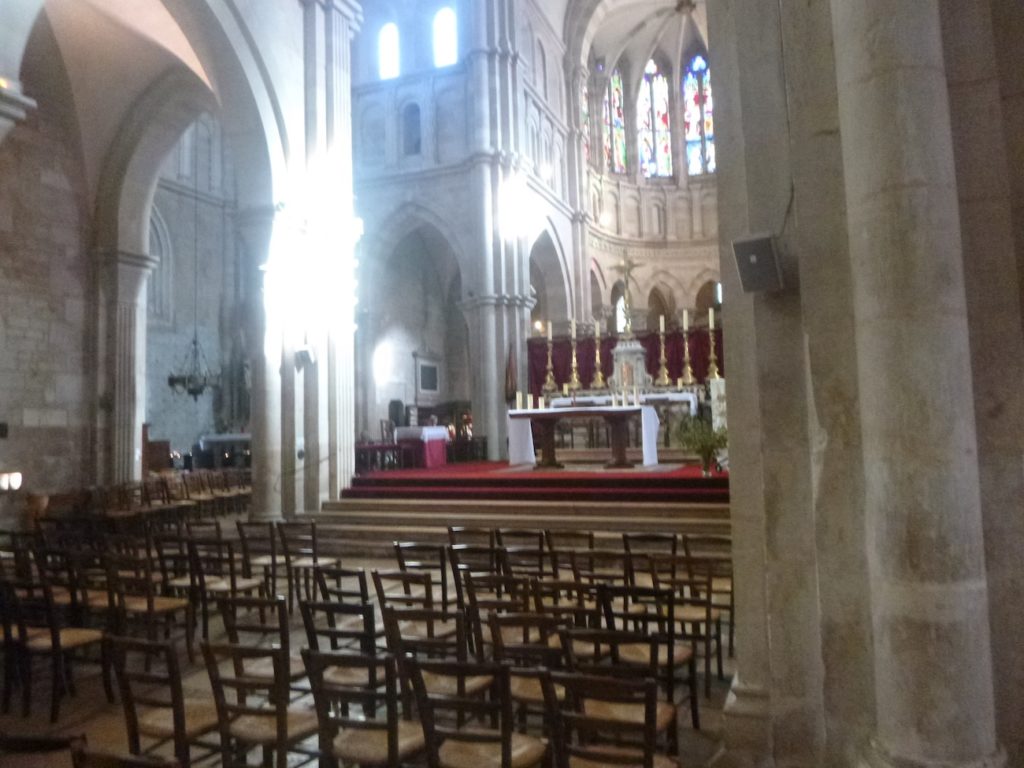
A few steps further, you discover one of the jewels of the city, the collegiate church of Notre-Dame. Many call it a cathedral, seduced by its imposing and solemn appearance, yet it never held an episcopal seat. Its austere façade, severe in beauty, seems at first to restrain emotion, but in truth it heightens it.
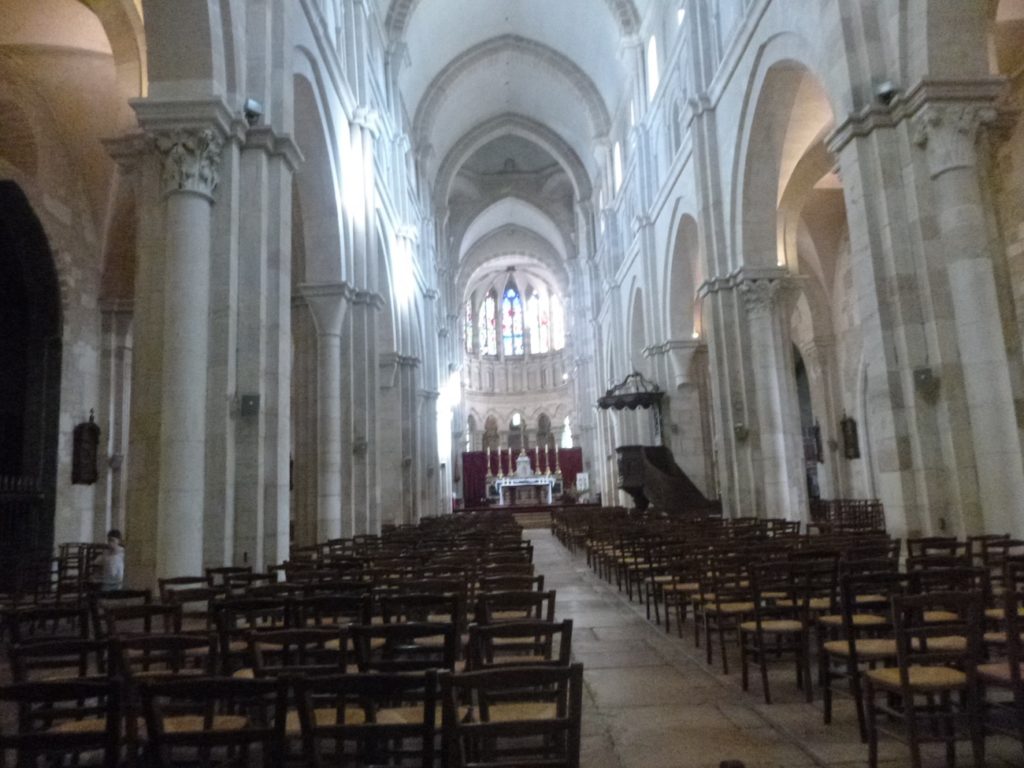
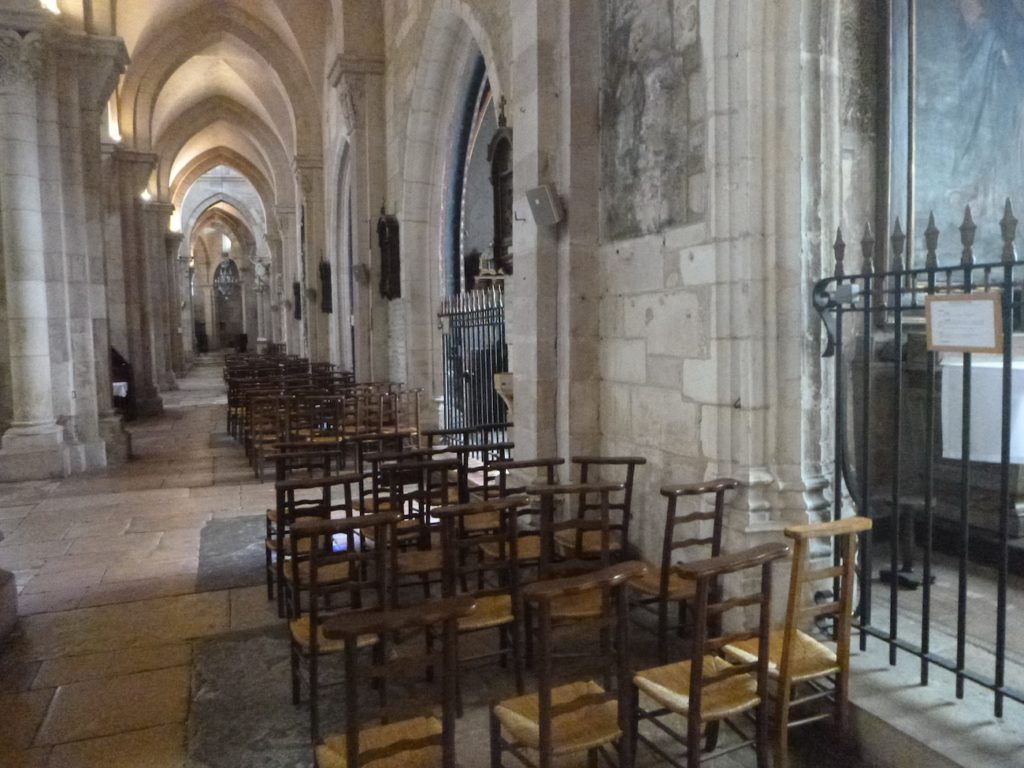
Its history dates back to the twelfth century, in the lineage of Burgundy’s great Romanesque buildings, heirs to Cluny and Autun. Inside, the Romanesque nave, massive and restrained, rises with a harmony that commands respect. You sense the rigor of the stone, the balance of proportions and the gravity of filtered light. Later, in the fourteenth and fifteenth centuries, the Gothic impulse mingled with this Romanesque austerity, bringing bolder vaults, more generous openings and finer sculpture.
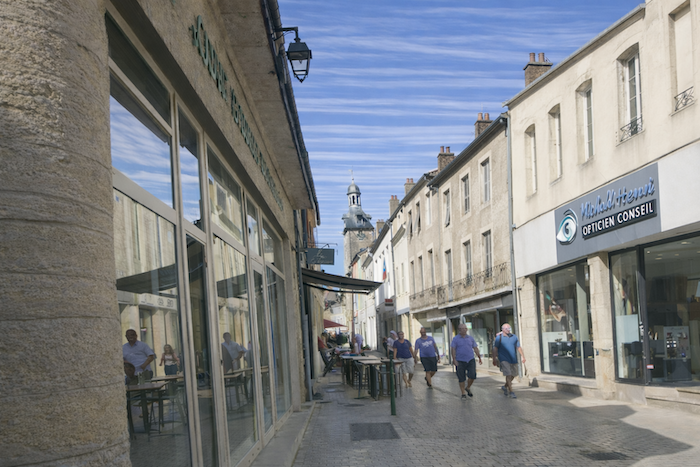
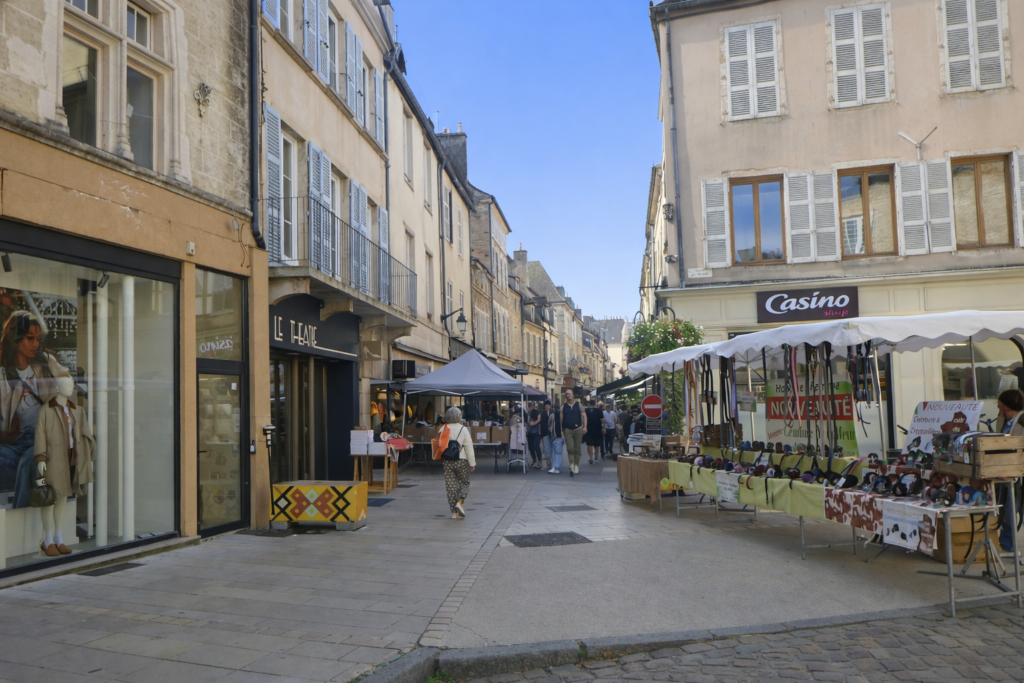
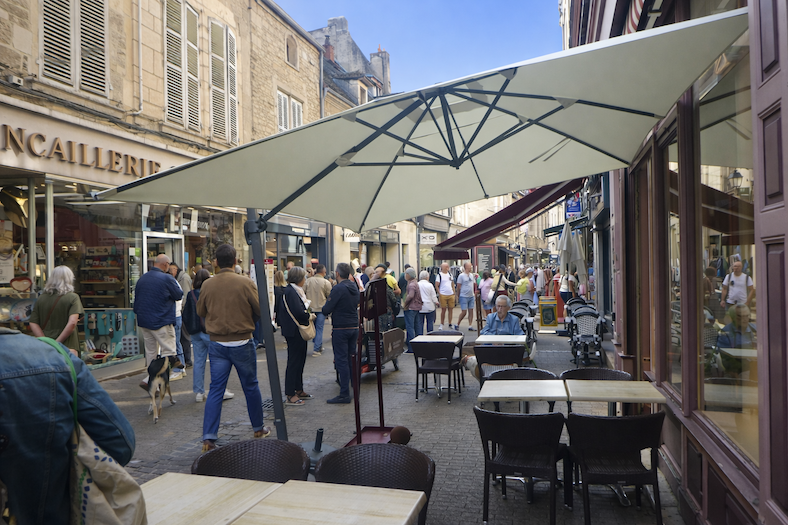
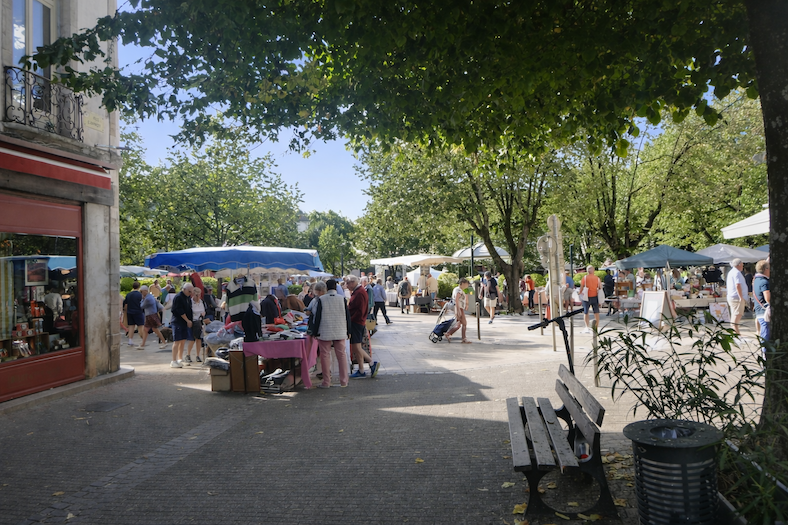
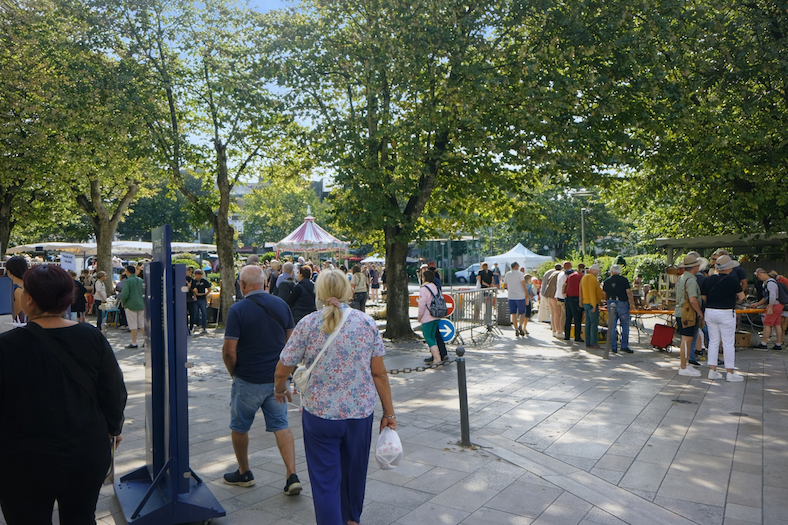
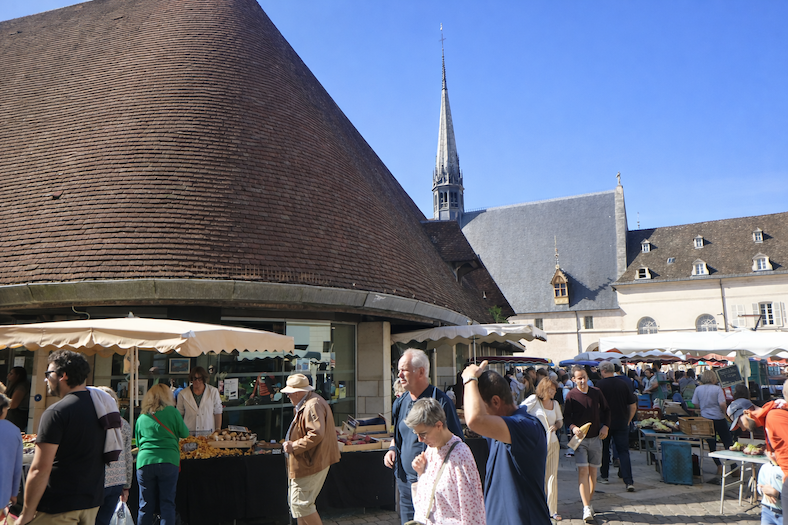
Further on, Rue Carnot opens before you, a lively commercial artery of a city of twenty-one thousand inhabitants. That day, a market day, it was literally overflowing, with a crowd so dense that it was difficult to slip through the cheerful din.
At the end of this bustling street stretches Place de la Halle, the true beating heart of Beaune. It is here that residents and visitors converge, as if the entire city had agreed to meet in this vibrant space. Around it, old façades seem to preserve the memory of centuries of fairs and exchanges that shaped the city’s commercial soul.
The Beaune market hall, with its vast timber frame that both impresses and reassures, is far more than a covered market. It is a place of memory and continuity. Built in the nineteenth century to replace medieval halls, it perpetuates a tradition dating back to the Middle Ages, when grain, livestock, wine and produce from the surrounding countryside were sold here. Even today, it pulses with the rhythm of food markets. Yet the hall is not only a commercial space. It also hosts wine fairs, gourmet exhibitions and cultural events, transforming its immense nave into an open stage of flavors and cultures. And it is here, on the third Sunday of every November, that the event takes place which has carried Beaune’s name across the world, the famous Hospices wine auction. Since 1859, this prestigious auction has drawn collectors, restaurateurs, wine merchants and enthusiasts from every corner of the globe. The barrels, produced from the sixty hectares of Hospices vineyards rich in premier crus and grand crus, are fiercely contested in an atmosphere that is at once solemn and festive. Beneath the beams of this hall, bids echo like a celebration of vine and time, where tradition, charity and viticultural excellence unite in a single movement.
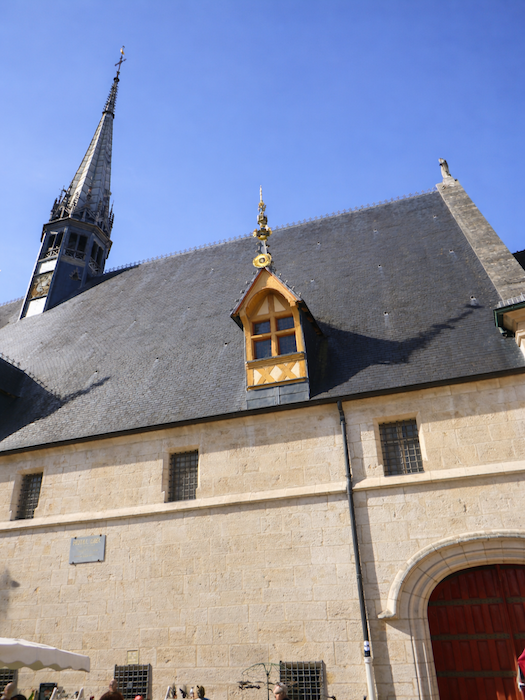
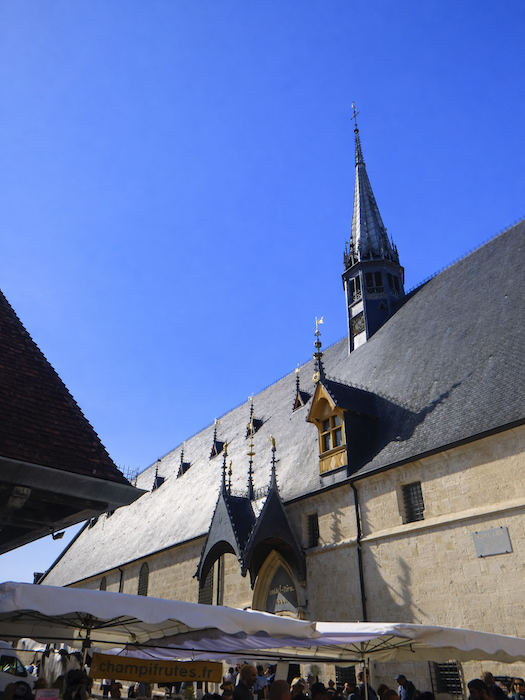
And of course, Beaune is above all the Hôtel-Dieu. Founded in 1443 by Nicolas Rolin, chancellor to Philip the Good, Duke of Burgundy, the Hôtel-Dieu was conceived as a haven of charity, a hospital where poverty and illness could find refuge in dignity and care, at a time when Burgundy was emerging scarred from famine and the ravages of the Hundred Years’ War. The building, born of faith and humanity, has remained a jewel of the Middle Ages, whose unparalleled architecture continues to astonish tourists.
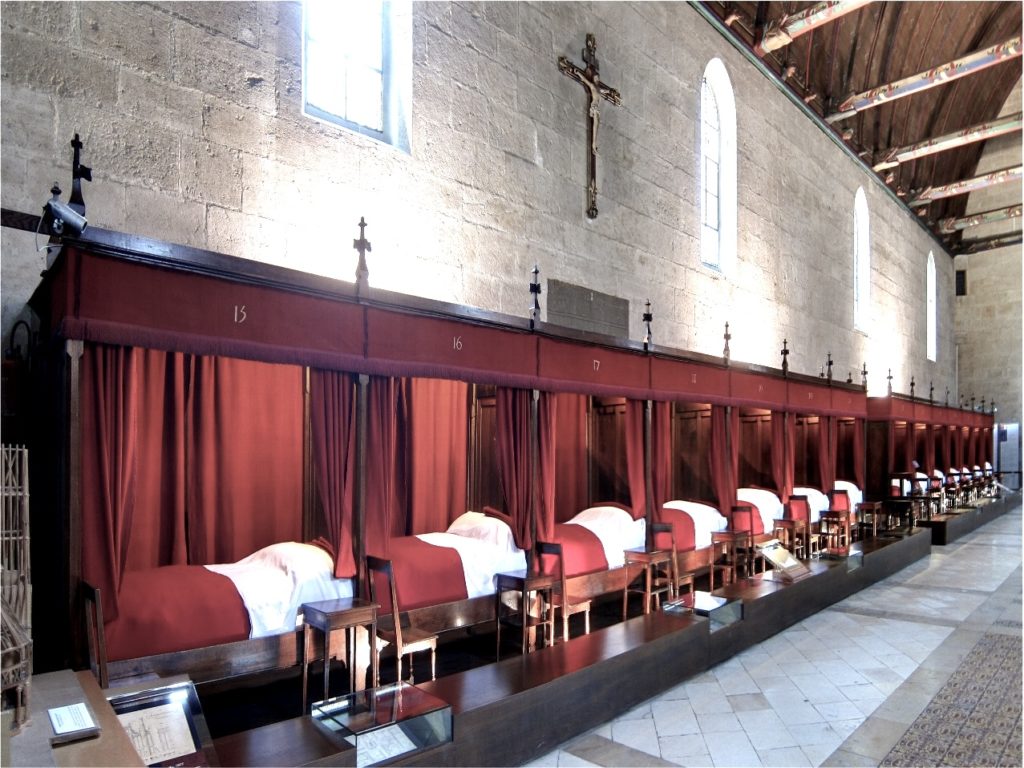
Behind its sober, almost austere façade, the surprise is sudden. A ceremonial courtyard of theatrical proportions unfolds, framed by slender Gothic galleries and crowned with the famous polychrome glazed roofs. These diamond-patterned tiles play with the light like a blazing mosaic, now a universal symbol of Burgundy. Inside, the majestic Hall of the Poor reveals a nave fifty meters long, topped by a roof structure shaped like an upturned ship’s hull. One can still feel the breath of compassion and prayer there, while the rows of carved wooden beds recall the original purpose of the place, to heal and to welcome. The echo of that vocation has crossed the centuries, as the hospital continued to care for the sick until the twentieth century. Today, the Hôtel-Dieu is an essential museum, a heritage beacon that attracts hundreds of thousands of visitors each year.
Official accommodations in Burgundy/Franche-Comté
Hôtel-restaurant Le Richebourg, Ruelle du Pont, Vosne-Romanée; 03 80 61 59 59; H0tel
Nuits et Jardin, Avenue de Concoeur, Nuits-St Georges; 03 80 62 84 61; Guestroom
Hôtel-bar de l’Etoile, 5 Place de la Libération, Nuits-St Georges; 03 80 61 04 68; Hotel
Each year, the route changes. Some accommodations disappear; others appear. It is therefore impossible to create a definitive list. This list includes only lodgings located on the route itself or within one kilometre of it. For more detailed information, the guide Chemins de Compostelle en Rhône-Alpes, published by the Association of the Friends of Compostela, remains the reference. It also contains useful addresses for bars, restaurants, and bakeries along the way. On this stage, there should not be major difficulties finding a place to stay. It must be said: the region is not touristy. It offers other kinds of richness, but not abundant infrastructure. Today, Airbnb has become a new tourism reference that we cannot ignore. It has become the most important source of accommodations in all regions, even in those with limited tourist infrastructure. As you know, the addresses are not directly available. It is always strongly recommended to book in advance. Finding a bed at the last minute is sometimes a stroke of luck; better not rely on that every day. When making reservations, ask about available meals or breakfast options.
Feel free to leave comments. That is often how one climbs the Google rankings, and how more pilgrims will gain access to the site.